Jessica Rainey
           AET/545
   Dr. Linda Justus
November 19, 2012
In this training you will :
 Learn to write clear and objective
  observations
 Use written observations to add and
  extend daily activities in the classroom
 Use written observations to complete
  assessments
 Qualityobservations can be made at any
 time throughout the day

 Makesmall notes through out
 week, record all at once
 Criteria for On-Target child development
  based on Early Learning and Development
  Standards in
 Infants, Toddlers Pre Kindergarten, and
  School-Age children
 Free Play
 Structured Activities
 Outdoor or Gross Motor Play
 Meal Times & Self-Care Practices
 Subject
 Skillor Action
 The setting or scenario if it aids in
  description of the skill or action
 Objective
 Direct quotations if possible
In this video clip:
 Observe the child with the Dino-Mite shirt
 After the video:
  ~ Write one observation about the child in
  the video
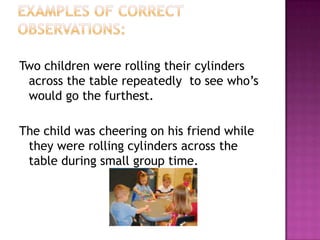
Two children were rolling their cylinders
 across the table repeatedly to see who’s
 would go the furthest.

The child was cheering on his friend while
 they were rolling cylinders across the
 table during small group time.
In this video clip:
 Observe the child with the blue shirt
 After the video:
    Write one observation about the child in the
     video
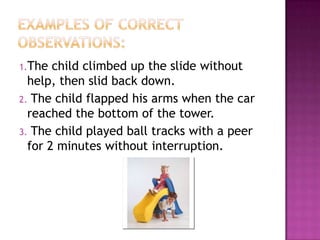
1.The  child climbed up the slide without
  help, then slid back down.
2. The child flapped his arms when the car
  reached the bottom of the tower.
3. The child played ball tracks with a peer
  for 2 minutes without interruption.
 In   this video clip:
   Observe the 2 children in the video
   After the video:
     Write one observation about the child in

      the video
1.The  child said she “brought her blanket
  today because she’s extra tired.”
2. The child shared toy knife with her friend
  and asked her “Do you want to cut with
  me?”
3. The two girls we playing cooperatively in
  the home center, they were pretending to
  cut fruit for their babies.
   How to Extend Activities:
     Brainstorm
     Add enhancing items to activities or center
     Develop open-ended questions to enhance
      discussions about activities.
     Align activities with standards used in classroom


   Why extend?
     Develop interests
     Develop skills
 Video 1:
   Using rolling pins with play dough

   Sort & Classify things that roll

   Provide various size cylinders for children to explore

 Video 2:
   Help children build roads and different towers for the
               children to use in car center
   Explore how the small balls roll on other surfaces,

               including various textures.
 Video 3:
   Incorporate items from lesson theme into Home Center to
               extend theme
   Make a “Favorite Foods” chart for the classroom

   Practice using plastic knives during meal time
   When completing assessments:
     Checklists
     Rating Scale


   Using a standard rating scale to determine to what level
    of competency the children can complete or
    demonstrate a particular skill.
   One example of a rating scale would be:
       Does the child demonstrate ______ skill ?
           Possible Answers: Not Yet, Occasionally, Proficient, Mastered
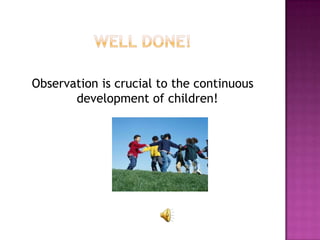
Observation is crucial to the continuous
       development of children!

Observation Tutorial

  • 1.
    Jessica Rainey AET/545 Dr. Linda Justus November 19, 2012
  • 2.
    In this trainingyou will :  Learn to write clear and objective observations  Use written observations to add and extend daily activities in the classroom  Use written observations to complete assessments
  • 3.
     Qualityobservations canbe made at any time throughout the day  Makesmall notes through out week, record all at once
  • 4.
     Criteria forOn-Target child development based on Early Learning and Development Standards in  Infants, Toddlers Pre Kindergarten, and School-Age children  Free Play  Structured Activities  Outdoor or Gross Motor Play  Meal Times & Self-Care Practices
  • 5.
     Subject  SkillorAction  The setting or scenario if it aids in description of the skill or action  Objective  Direct quotations if possible
  • 6.
    In this videoclip:  Observe the child with the Dino-Mite shirt  After the video: ~ Write one observation about the child in the video
  • 7.
    Two children wererolling their cylinders across the table repeatedly to see who’s would go the furthest. The child was cheering on his friend while they were rolling cylinders across the table during small group time.
  • 8.
    In this videoclip:  Observe the child with the blue shirt  After the video:  Write one observation about the child in the video
  • 9.
    1.The childclimbed up the slide without help, then slid back down. 2. The child flapped his arms when the car reached the bottom of the tower. 3. The child played ball tracks with a peer for 2 minutes without interruption.
  • 10.
     In this video clip:  Observe the 2 children in the video  After the video:  Write one observation about the child in the video
  • 11.
    1.The childsaid she “brought her blanket today because she’s extra tired.” 2. The child shared toy knife with her friend and asked her “Do you want to cut with me?” 3. The two girls we playing cooperatively in the home center, they were pretending to cut fruit for their babies.
  • 12.
    How to Extend Activities:  Brainstorm  Add enhancing items to activities or center  Develop open-ended questions to enhance discussions about activities.  Align activities with standards used in classroom  Why extend?  Develop interests  Develop skills
  • 13.
     Video 1:  Using rolling pins with play dough  Sort & Classify things that roll  Provide various size cylinders for children to explore  Video 2:  Help children build roads and different towers for the children to use in car center  Explore how the small balls roll on other surfaces, including various textures.  Video 3:  Incorporate items from lesson theme into Home Center to extend theme  Make a “Favorite Foods” chart for the classroom  Practice using plastic knives during meal time
  • 14.
    When completing assessments:  Checklists  Rating Scale  Using a standard rating scale to determine to what level of competency the children can complete or demonstrate a particular skill.  One example of a rating scale would be:  Does the child demonstrate ______ skill ?  Possible Answers: Not Yet, Occasionally, Proficient, Mastered
  • 15.
    Observation is crucialto the continuous development of children!

Editor's Notes

  • #15 As the teacher collects observations on their students, keeping a checklist of skills observed would help to determine what skills children are exhibiting as well as what skills need to be observed in certain children. This organization will help when completing assessments as the teacher will be sure that the skills being assessed have been observed.