STI, EARLY
PREGNANCY,
METHODS OF
CONTRACEPTION
AND THE
REPRODUCTIVE
HEALTH LAW
Explain the
causes, effects,
and prevention of
sexually
transmitted
infections (STIs),
and describe
available
methods of
contraception in
line with the
Reproductive
Health Law.
early
pregnancy
Learning
Points
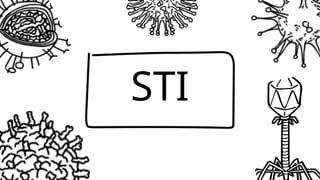
STI
STI means,
Sexually
Transmitted
Infections
Sexually transmitted
infections (STI) are infections
or conditions that you can get
from any kind of sexual
activity involving your mouth,
anus, vagina or penis.
STIs are highly contagious. If
you’re sexually active, you can
have (and pass on) an STI
without even knowing it.
STIs are serious illnesses that
need treatment. Some, like
the human immunodeficiency
virus (HIV), have no cure and
can be life-threatening
without treatment.
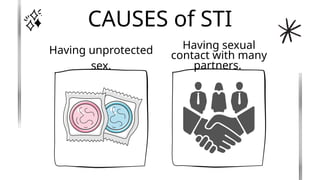
CAUSES of STI
Having unprotected
sex.
Having sexual
contact with many
partners.
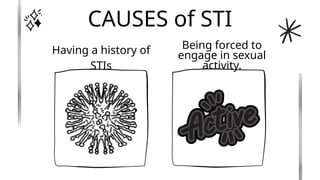
CAUSES of STI
Having a history of
STIs
Being forced to
engage in sexual
activity.
CAUSES of STI
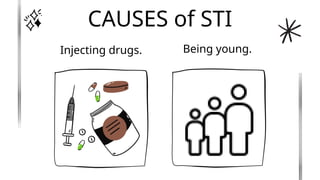
Injecting drugs. Being young.
WHAT ARE
THE EFFECTS
OF STIs?
STIs have a profound
impact on health. If
untreated, they can lead to
serious consequences
including neurological and
cardiovascular disease,
infertility, ectopic
pregnancy, stillbirths, and
increased risk of Human
Immunodeficiency Virus
(HIV).
PREVENTION
TAKE CARE
OF YOUR
HEALTH!
Avoid sex or sexual activity.
Stay with one uninfected partner.
Wait and test.
Use condoms and dental dams
consistently and correctly.
TAKE CARE
OF YOUR
HEALTH!
TAKE CARE
OF YOUR
HEALTH!
PREVENTION
Don't drink alcohol excessively or
use illegal drugs.
Talk to your partner.
Think about male circumcision.
TAKE CARE
OF YOUR
HEALTH!
TAKE CARE
OF YOUR
HEALTH!
TAKE CARE
OF YOUR
HEALTH!
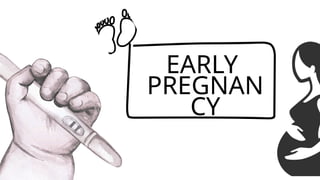
EARLY
PREGNAN
CY
Early pregnancy is a global and
national health concern, particularly
among adolescents. It refers to
pregnancy occurring during the first
trimester of gestation, but in public
health discourse, it often highlights
pregnancies among young women
(15–19 years old).
Responsible
Parenthood and
Reproductive
Health (RPRH) Law
of 2012 (Republic
Act No. 10354)
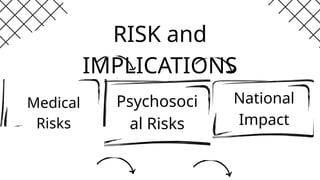
Medical
Risks
National
Impact
Psychosoci
al Risks
RISK and
IMPLICATIONS
Contracepti
ve Methods
under the
Reproductiv
e Health
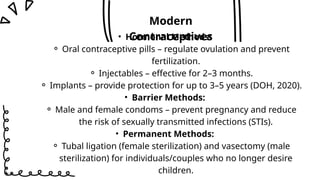
• Hormonal Methods:
⚬ Oral contraceptive pills – regulate ovulation and prevent
fertilization.
⚬ Injectables – effective for 2–3 months.
⚬ Implants – provide protection for up to 3–5 years (DOH, 2020).
• Barrier Methods:
⚬ Male and female condoms – prevent pregnancy and reduce
the risk of sexually transmitted infections (STIs).
• Permanent Methods:
⚬ Tubal ligation (female sterilization) and vasectomy (male
sterilization) for individuals/couples who no longer desire
children.
Modern
Contraceptives
• Calendar method
• Basal body temperature method
• Cervical mucus method
• Lactational amenorrhea method
(LAM)
Natural Family
Planning (NFP)
CONCLUSIO
N
Learning about STIs, early pregnancy, and
contraceptives under the Reproductive Health
Law is very important because it helps people
make safe and responsible decisions. It teaches
how to prevent diseases, avoid unplanned
pregnancies, and understand the rights and
services available for reproductive health.

OBJECTIVE 5.OBJECTIVE 5OBJECTIVE 5OBJECTIVE 5pptx

  • 1.
  • 2.
    Explain the causes, effects, andprevention of sexually transmitted infections (STIs), and describe available methods of contraception in line with the Reproductive Health Law. early pregnancy Learning Points
  • 3.
  • 4.
  • 5.
    Sexually transmitted infections (STI)are infections or conditions that you can get from any kind of sexual activity involving your mouth, anus, vagina or penis.
  • 6.
    STIs are highlycontagious. If you’re sexually active, you can have (and pass on) an STI without even knowing it.
  • 7.
    STIs are seriousillnesses that need treatment. Some, like the human immunodeficiency virus (HIV), have no cure and can be life-threatening without treatment.
  • 8.
    CAUSES of STI Havingunprotected sex. Having sexual contact with many partners.
  • 9.
    CAUSES of STI Havinga history of STIs Being forced to engage in sexual activity.
  • 10.
    CAUSES of STI Injectingdrugs. Being young.
  • 11.
    WHAT ARE THE EFFECTS OFSTIs? STIs have a profound impact on health. If untreated, they can lead to serious consequences including neurological and cardiovascular disease, infertility, ectopic pregnancy, stillbirths, and increased risk of Human Immunodeficiency Virus (HIV).
  • 12.
    PREVENTION TAKE CARE OF YOUR HEALTH! Avoidsex or sexual activity. Stay with one uninfected partner. Wait and test. Use condoms and dental dams consistently and correctly. TAKE CARE OF YOUR HEALTH! TAKE CARE OF YOUR HEALTH!
  • 13.
    PREVENTION Don't drink alcoholexcessively or use illegal drugs. Talk to your partner. Think about male circumcision. TAKE CARE OF YOUR HEALTH! TAKE CARE OF YOUR HEALTH! TAKE CARE OF YOUR HEALTH!
  • 14.
  • 15.
    Early pregnancy isa global and national health concern, particularly among adolescents. It refers to pregnancy occurring during the first trimester of gestation, but in public health discourse, it often highlights pregnancies among young women (15–19 years old).
  • 16.
    Responsible Parenthood and Reproductive Health (RPRH)Law of 2012 (Republic Act No. 10354)
  • 17.
  • 18.
  • 19.
    • Hormonal Methods: ⚬Oral contraceptive pills – regulate ovulation and prevent fertilization. ⚬ Injectables – effective for 2–3 months. ⚬ Implants – provide protection for up to 3–5 years (DOH, 2020). • Barrier Methods: ⚬ Male and female condoms – prevent pregnancy and reduce the risk of sexually transmitted infections (STIs). • Permanent Methods: ⚬ Tubal ligation (female sterilization) and vasectomy (male sterilization) for individuals/couples who no longer desire children. Modern Contraceptives
  • 20.
    • Calendar method •Basal body temperature method • Cervical mucus method • Lactational amenorrhea method (LAM) Natural Family Planning (NFP)
  • 21.
    CONCLUSIO N Learning about STIs,early pregnancy, and contraceptives under the Reproductive Health Law is very important because it helps people make safe and responsible decisions. It teaches how to prevent diseases, avoid unplanned pregnancies, and understand the rights and services available for reproductive health.