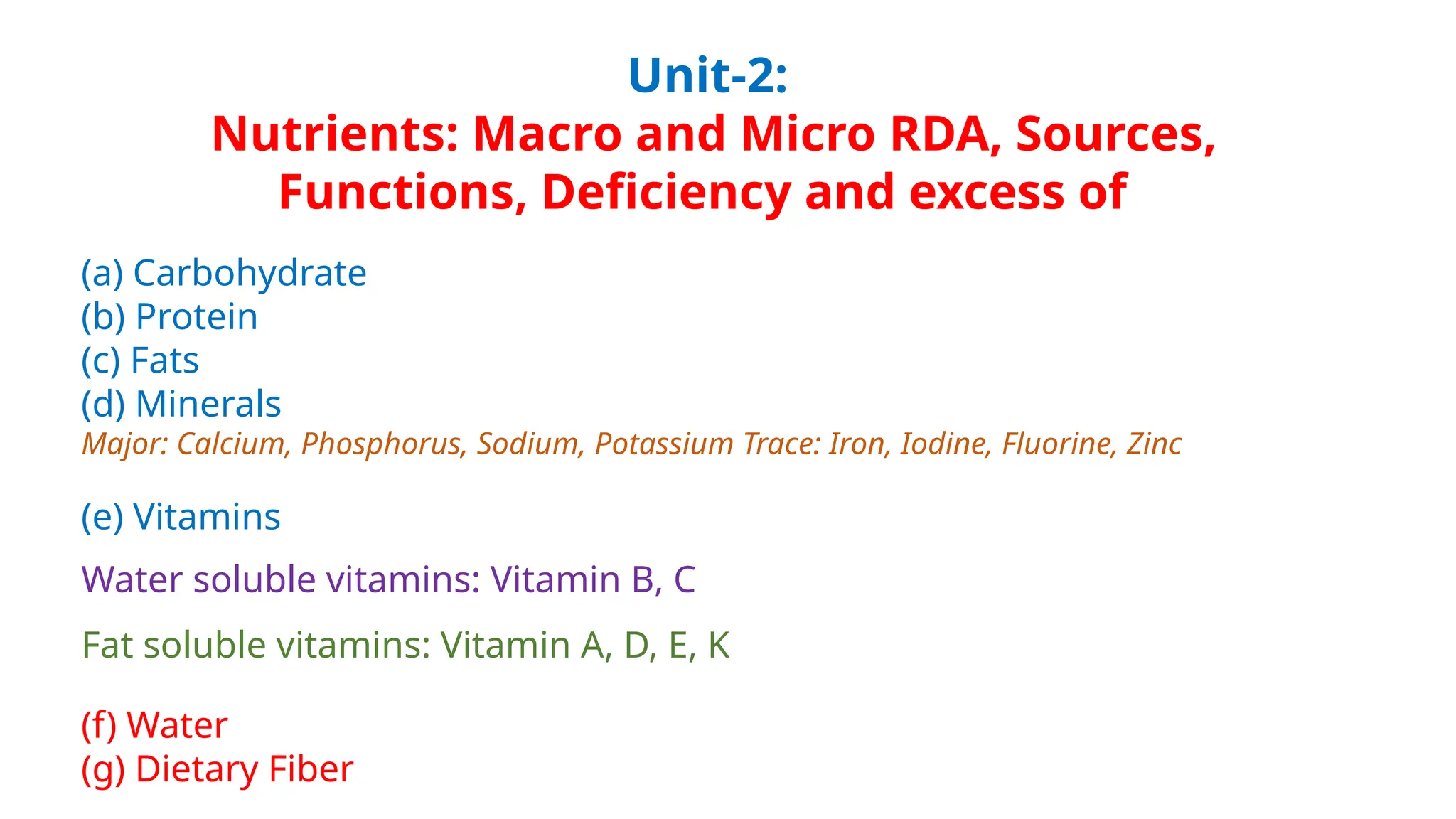
Unit-2:
Nutrients: Macro and Micro RDA, Sources,
Functions, Deficiency and excess of
(a) Carbohydrate
(b) Protein
(c) Fats
(d) Minerals
Major: Calcium, Phosphorus, Sodium, Potassium Trace: Iron, Iodine, Fluorine, Zinc
(e) Vitamins
Water soluble vitamins: Vitamin B, C
Fat soluble vitamins: Vitamin A, D, E, K
(f) Water
(g) Dietary Fiber
Carbohydrat
e
Carbohydrate are the aldehyde or ketone derivative of polyhydric alcohol having an empirical formula
with the ratio C, H, O as 1,2,1 ratio
Carbohydrate
Simple carbohydrate Polysaccharides
 Monosaccharide
 e.g. - Triose, Tetrose, Pentose,
hexose and heptoses
 Disaccharide
e.g.- Sucrose, Lactose, Maltose
 They are composed of many single
monosaccharide units.
 These polysaccharides include-
Starch, Glycogen and Dietary Fiber
Note: Sometimes,
Oligosaccharides is also
classified which is the 3-6
monosaccharides
molecules
Functions
• Source of energy reserves, • Special functions in body tissue- • Triggers appetite, hunger
Protein paring action,
Anti-ketogenic effect,
Reserve glycogen,
Proper functioning of CNS,
Regulate heart action,
Oxidation of fat
Requirements
In a well-balanced diet, at least 40% of the caloric needs of the body should be met from carbohydrate
Deficiency symptoms
 Weight loss if carbohydrate intake is reduced, body feels cold quickly, body bruises easily, body will
not receive enough Vitamin A, D, E and K
 Meals containing low glycaemic index foods reduce both postprandial blood glucose and insulin
response.
 Low GI diets reduced mean blood glucose concentration, reduced insulin secretion and reduce
serum triglycerides in individuals with hyperglycaemia.
Food Sources
Dairy (Milk, Yoghurt, ice-cream),
Fruit (Whole fruit and fruit juice),
Grains (Bread, rice, cereals),
Legumes (Beans and other plant-based proteins) and
Starchy vegetables.
Food %
Carbohydrate
Cal/100gram
edible portion
Rice, Raw millet 78.2 348
Wheat flour 69.4 346
Dal, green gram 59.9 351
Sugar 99.4 398
Banana, ordinary 24.6 104
Potato 22.6 97
Mango, ripe 11.8 50
Carrot 10.6 47
Milk cow’s 4.4 67
Brinjal 4.0 24
Cauliflower 4.0 30
Sources: Human Nutrition; Principle and application in
India
Protein
Proteins are large biomolecules and macromolecules that comprise one or more long chains of amino
acid residues.
 A linear chain of amino acid residues is called a polypeptide
 A protein contains at least one long polypeptide.
 Short polypeptides, containing less than 20–30 residues, are rarely considered to be proteins and
are commonly called peptides
 Most proteins consist of linear polymers built from series of up to
20 different L-α- amino acids
 All proteinogenic amino acids possess common structural features,
including an α-carbon to which an amino group, a carboxyl group,
and a variable side chain are bonded
 Only proline differs from this basic structure as it contains an
unusual ring to the N-end amine group, which forces the CO–NH
amide moiety into a fixed conformation
Protein
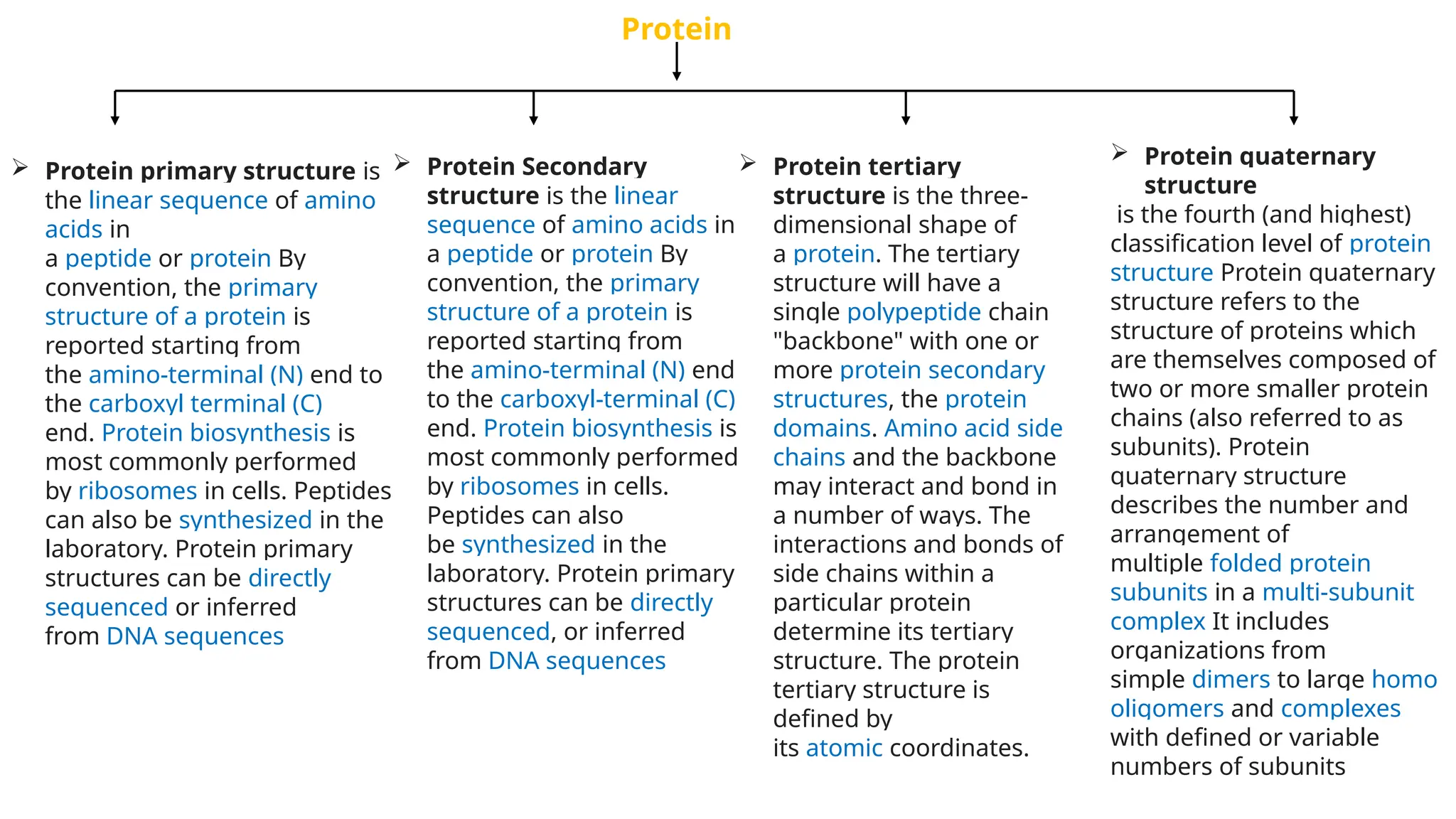
 Protein primary structure is
the linear sequence of amino
acids in
a peptide or protein By
convention, the primary
structure of a protein is
reported starting from
the amino-terminal (N) end to
the carboxyl terminal (C)
end. Protein biosynthesis is
most commonly performed
by ribosomes in cells. Peptides
can also be synthesized in the
laboratory. Protein primary
structures can be directly
sequenced or inferred
from DNA sequences
 Protein Secondary
structure is the linear
sequence of amino acids in
a peptide or protein By
convention, the primary
structure of a protein is
reported starting from
the amino-terminal (N) end
to the carboxyl-terminal (C)
end. Protein biosynthesis is
most commonly performed
by ribosomes in cells.
Peptides can also
be synthesized in the
laboratory. Protein primary
structures can be directly
sequenced, or inferred
from DNA sequences
 Protein tertiary
structure is the three-
dimensional shape of
a protein. The tertiary
structure will have a
single polypeptide chain
"backbone" with one or
more protein secondary
structures, the protein
domains. Amino acid side
chains and the backbone
may interact and bond in
a number of ways. The
interactions and bonds of
side chains within a
particular protein
determine its tertiary
structure. The protein
tertiary structure is
defined by
its atomic coordinates.
 Protein quaternary
structure
is the fourth (and highest)
classification level of protein
structure Protein quaternary
structure refers to the
structure of proteins which
are themselves composed of
two or more smaller protein
chains (also referred to as
subunits). Protein
quaternary structure
describes the number and
arrangement of
multiple folded protein
subunits in a multi-subunit
complex It includes
organizations from
simple dimers to large homo
oligomers and complexes
with defined or variable
numbers of subunits
Classification of
Protein based on
shape
Fibrous protein
They are long and less
soluble in water.
E.g. elastin, collagen etc.
Globular protein
They are compact
and spherical and
usually soluble in
water.
E.g. Enzymes,
hormones,
antibodies etc.
Classification of
Protein based on
function
Simple protein: contains
only amino acids or
their derivates.
E.g. insulin, albumin.
Complex proteins
Simple protein +
non-protein group
• Lipoprotein
• Phosphoprotein
• Nucleoprotein such as DNA
• Glycoproteins and mycoproteins
• Chromoproteins
• Metalloproteins
The role in body structure and metabolism
a. Contractile protein
b. Structural protein
c. Hormones
d. Enzymes
e. Blood proteins
f. Antibodies
Functions
• Growth and maintenance of body tissue
• Cause biochemical reactions (digestion, blood clotting, muscle contraction)
• Act as a messenger (transmit information between cells, tissues and organs)
• Provides Structure to body parts
• Transport and store nutrients
• Strengthen immune health
• Balance body fluids between blood and surrounding tissue.
Requirements
The US RDA standard has generally been set for adults at 0.8g/kg of body weight.
This amount is about 56 g daily for a man weighing 79 Kg and 50 g daily for a woman weighing 63 kg.
A total of at least 60 and 50 g daily for a woman weighing 63 kg, a total of at least 60 to 65 g daily is needed
during pregnancy, and lactation. The requirement for infants and children varied according to age and
growth patterns.
• On an average 1 gram / kg body weight/day
• Women 45 gram/day
• Pregnant women 55 gram/day
• Nursing mother 65 gram/day
• Adolescent children 50-60 gram/day
Deficiency symptoms
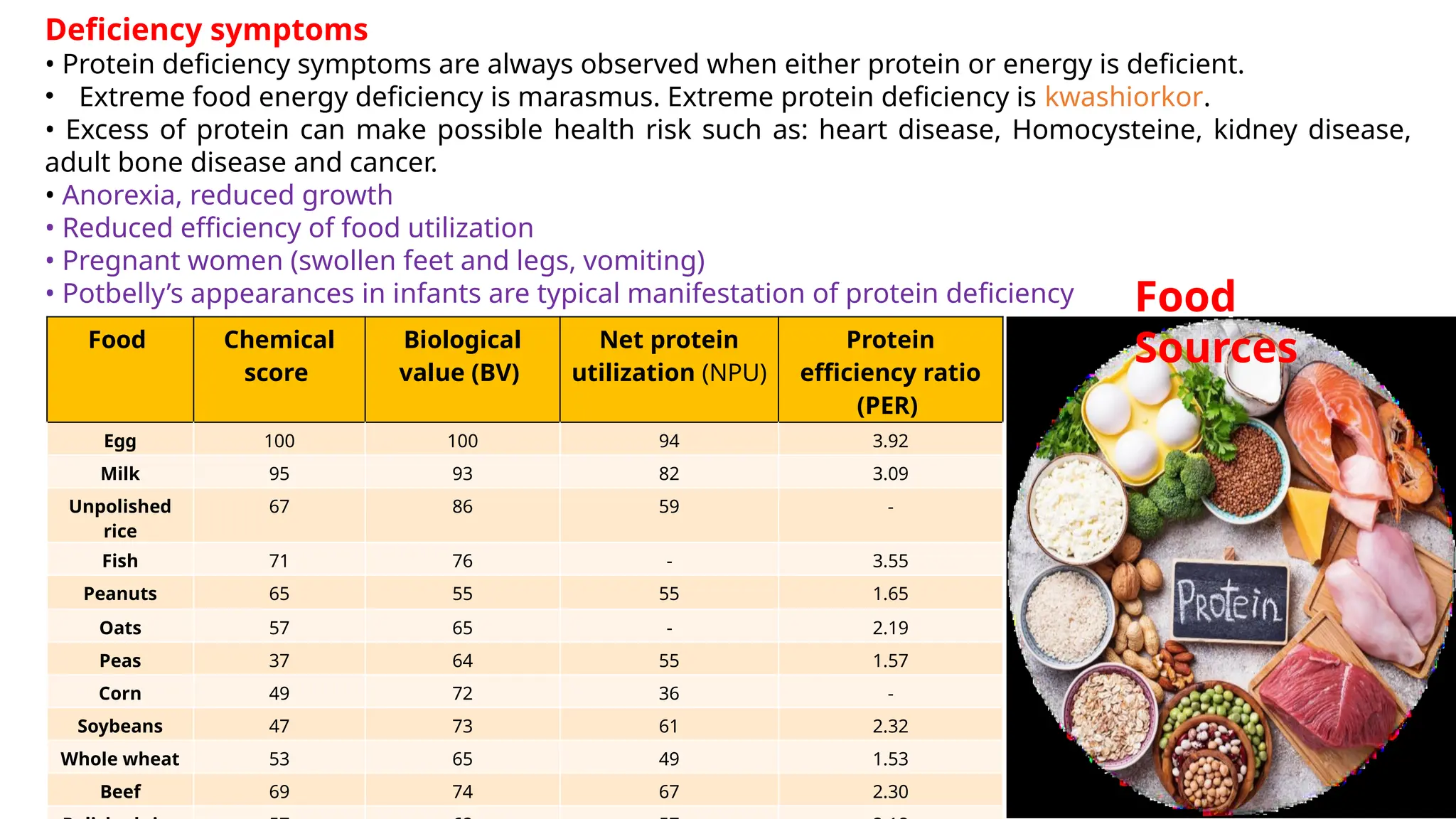
• Protein deficiency symptoms are always observed when either protein or energy is deficient.
• Extreme food energy deficiency is marasmus. Extreme protein deficiency is kwashiorkor.
• Excess of protein can make possible health risk such as: heart disease, Homocysteine, kidney disease,
adult bone disease and cancer.
• Anorexia, reduced growth
• Reduced efficiency of food utilization
• Pregnant women (swollen feet and legs, vomiting)
• Potbelly’s appearances in infants are typical manifestation of protein deficiency
Food Chemical
score
Biological
value (BV)
Net protein
utilization (NPU)
Protein
efficiency ratio
(PER)
Egg 100 100 94 3.92
Milk 95 93 82 3.09
Unpolished
rice
67 86 59 -
Fish 71 76 - 3.55
Peanuts 65 55 55 1.65
Oats 57 65 - 2.19
Peas 37 64 55 1.57
Corn 49 72 36 -
Soybeans 47 73 61 2.32
Whole wheat 53 65 49 1.53
Beef 69 74 67 2.30
Food
Sources
Lipids/fats
Fats or lipids are a group of organic substances- fats, oils and waxes, and related compounds that are
greasy to touch and not soluble in water
Lipids/Fats
Simple lipids Derived
lipids
Compound lipids
 They are neutral fats and
waxes.
 Neutral fats are compounds of
fatty acids and glycerol in the
ratio of three fatty acids to
each glycerol base.
 Thus, they are called
triglycerides
 Similarly, waxes are
compounds of fatty acids with
straight chain alcohols.
 Waxes have no nutrition in
human nutrition.
 Compound lipids are various
combinations of neutral fat with
other components.
 Three example of compound lipids
important in human nutrition are-
phospholipids (e.g. lecithin),
 glycolipids (composed of fatty
acids, nitrogen and carbohydrates,
found chiefly in brain tissue as
cerebrosides) and
 lipoproteins (complexes of various
lipids with protein and transport fat
in the blood).
 Fat substances may be
derived from simple
and compound lipids
by hydrolysis and
enzymatic breakdown.
 Three important
members of this group
are fatty acids, glycerol
and steroids that
contain cholesterol
Lipids are a broad group of organic compounds which
include Fats, waxes, sterols, fat-soluble vitamins
eg: vitamins A, D, E and K,
 monoglycerides, diglycerides, phospholipids, and others.
 The functions of lipids include
eg: storing energy, signaling, and acting as structural
components of cell membrane.
Functions
• Thermal insulation: The layer of fat directly underneath the body’s protective covering of the skin
controls body temperature within the vital range necessary for life.
• Energy supply: This energy may be available directly as a fuel from food consumed or indirectly
from stored adipose tissue.
• Nerve impulse transmission: Fat insulation surrounding myelinated nerve fibers provide with
electric insulation and metabolic across the cell membrane.
• Essential fatty acid supply: Food fats supply essential fatty acids, Linoleic acids, vital to body
metabolism, normal heart action and tissue integrity.
• Food satiety: It adds to the taste and makes the food palatable. It contributes to the feeling of
satisfaction after eating.
• Tissue structure: fat serve as a vital constituent of cell membrane and participate in the transport if
nutrient materials and metabolites around the cell membranes.
• Cell metabolism: Combination of fat and protein are important as cell constituent and lipoprotein
carriers of fat throughout body’s blood circulation to all tissues.
Requirements
Dietary fat provides 30-40% of total energy intake in developed countries. WHO has recommended 20-
30% of total dietary energy sources. At least 50% of fat intake should consist of oils rich in essential
fatty acids. ICMR (Indian Council of Medical Research) 1989, has recommended 20% of the total energy
intake from fats.
Deficiency
Deficiency of essential fatty acids in the diet is associated with rough and dry skin a condition is known as
phrynodermas or toad skin. It is characterized by horny popular eruptions on the posterior and lateral
aspects of limbs and on back and buttocks.
Excess of fat
• Obesity: A diet rich in fat can compose a threat to human health by encouraging obesity. In fat people
adipose tissue may increase up to 30%.
• Cancer: Diets high in fats increase the risk of colon cancer and breast cancer.
• Coronary heart disease: High fat intake is major risk factor in contrary disease.
Food Fat% Calories/100gram edible portion
Vegetable cooking oil 100 900
Ghee 99.5 895
Butter 81.5 729
Oil seed and nuts 37.5 to 64.5 530 to 687
Banaspati 100 900
Mutton(muscles) 13.3 194
Egg, hen 13.3 173
Milk, cows 4.1 67
Water
 Water is a universal solvent. It is made up of tiny molecule of hydrogen and oxygen. Pure water is
colorless, odorless and tasteless.
 Water exist in three forms on the earth i.e. solid (ice, hail, snow or frost), liquid (in lakes, oceans, rain,
dew, fog or mist) and gas (steam or water vapor “invisible” water in the air).
 On an average, 65% of human body is made up of water.
 Percentage of water in human body decreases with the age and deposition of fat.
 About 70% of water as fluid within the cell is intracellular fluid and remaining 30% outside the cell is
extracellular fluids.
• Intracellular water (within cell)
• Extracellular water (outside cell)
• Metabolic water
• Bound water (combined with the constitution of protoplasm)
Functions
• Transportation of nutrients
• Digestion
• Regulation of body temperature (perspiration)
• Metabolism of nutrients
• Act as a cushion (cerebrospinal fluid)
• Lubrication of joints (synovial fluid)
Requirements
2100-2800 ml/day (i.e. approx. 2600 ml/day) which comprises Liquid (1200-1500),
In food (700-1000), Metabolism (200-300).
Deficiency symptoms
• Heat Exhaustion: characterized by headache, clammy skin, fatigue, increased thirst, rapid heartbeat,
dizziness, nausea, vomiting, stomach cramps and increased sweating.
Dehydration: Characterized by dry mouth, headache, constipation, fatigue, weakness, thirst, dizziness
and decreased urine output
• Hypovolemic shock: characterized by sweating, weakness, pale skin, decreased urine output, clammy
skin and agitation
• Seizure: involuntary muscle contractions, or seizures, and loss of consciousness. If lest untreated,
dehydration-induced seizures can lead to death.
Food Sources
• Water is provided through drinking
• Water obtained in food items
• Bound water (protoplasm)
• Metabolic water: end product of oxidation of organic compounds such as fat, proteins and
carbohydrates and their synthesis
Vitamins
 Vitamins are organic compounds, which are required in small amounts for normal growth and
maintenance of life. There are at least 15 vitamins, which have been accepted as essential food factors.
It is convenient to divide vitamins into two groups.
 Fat soluble vitamins (persist in liver, renal fat in body for long, toxic of high
accumulation)
Vitamin A (Retinol)
• Functions: Rhodopsin production, prevent infection, epithelial tissue formation
• Requirement: Adult 5000 IU, Children 1500-5000 IU, Pregnant women 6000 IU
• Deficiency symptoms: Night blindness, Keratinization of epithelium, Follicular
hyperkeratosis, skin and mucus infection, Xeropthalmia, faulty tooth formation
• Food sources: Milk, Butter, Eggs, Liver, Green leaves, ripe yellow fruits, tomato,
ghee
Vitamin D2 (Ergocalciferol)
• Functions: Absorption and metabolism of bone, Ca and Magnesium
• Requirements: Adult 100 IU, Pregnancy and Lactation 400 IU, Infants
and Children 200 IU
• Deficiency symptoms: Faulty bone growth, Rickets, Osteomalacia
• Food sources: Fortified milk, Fish oils
Vitamin D3 (Cholecalciferol)
• Functions: Control neuromuscular function, Bone metabolism
• Requirements: 10 mcg for adult per day
• Deficiency symptoms: Osteomalacia, Rickets
• Food sources: Fish, liver muscles
Vitamin E (Tocoferol)
• Functions: Reproductive health, Hemolysis processing of unsaturated
fatty acids
• Requirements: Adult 25-30 mg, Children 3-7 mg
• Deficiency symptoms: Hair loss, muscle cramp, infertility, gastro
intestinal disease
• Food sources: Vegetables
Vitamin K (Phylloquinone)
• Functions: Forms prothrombin by liver, constituent of blood responsible to blood clotting
• Requirement: 90 mcg/ day
• Deficiency symptoms: Osteoporosis, Coronary Heart disease (CHD)
• Sources: Green leafy vegetables
Water soluble vitamins
Vitamin B1 (Thiamine)
• Functions: Breaking down of CHO and Glucose to release energy, nervous system
and heart functions
• Requirements: 0.5 mg/ 1000 calories
• Deficiency symptoms: Disturbances of digestive system, nerve disturbances,
Nausea, Vomiting, Constipation, Beri-Beri
• Food sources: Oilseeds, pulses, cereals, milk, beans, liver, pork, nuts, fruits,
vegetables
Vitamin B2 (Riboflavin):
• Functions: Cell respiration, need for growth, affect eyes, skin and nerve functioning
• Requirements: 0.6 mg/ 1000 calories
• Deficiency symptoms: Eye problems, Photophobia, skin changes, swollen tongues
• Food sources: Cereals, liver, pulses, nuts, milk, eggs, radish leaves, Sitaphal
Vitamin B3 (Niacin)
• Functions: Coenzymes in tissue oxidation to produce ATP, nervous, digestive, skin health
• Requirement: 6.6 mg/ 1000 Kcal of energy
• Deficiency symptoms: Pellagra, Diarrhoea, Dermatitis, Dementia, Skin itching, CNS affected, Dizziness,
mental depression
• Food sources: Yeast, Liver, Sheep, Ground nut, Fish, Pulses, Vegetables and Fruits, Flesh food, Cereals
Vitamin B6 (Pyridoxine)
• Functions: Part of enzyme system which removes Co2 from acid group of certain amino acid, CHO,
protein and fat metabolism
• Requirement: 2 mg/day
• Deficiency symptoms: Anemia
• Food sources: Wheat, Corn, meat, liver, cabbage, carrot, peanuts
Vitamin B7 (Biotin)
• Functions: Coenzyme in synthesis of asparatic acid that help in protein synthesis
• Requirements: Microbe synthesize as non-essential
• Deficiency symptoms: Skin lesion, Scaly skin, deterioration of nerve fibre.
• Food sources: Microbial synthesis in intestine
Vitamin B9 (Folic Acid)
• Functions: Formation of blood cells by bone marrow, involved in formation of haemoglobin, synthesize
amino acids
• Requirements: 0.4 mg/day, pregnancy 0.8 mg/day, lactation 0.5 mg/day
• Deficiency symptoms: Pernicious and megaloblastic anemia
• Food sources: Green vegetables, Nuts, beans, Liver
Vitamin B12 (Cynacobalamine)
• Functions: Coenzyme in protein synthesis, formation of nucleic acid, Transmethylation
• Requirements: 2.4 mcg/adult/day, 1.6 mcg-pregnant, 2.8 mcg-lactation
• Deficiency symptoms: Pernicious anemia
• Food sources: In cereals, fish, egg, milk, meat, except vegetable source. Bacteria synthesizes in the
body.
Vitamin C (Ascorbic acid)
• Functions: Collagen formation, Capillary walls, haemoglobin formation, RBC maturation, Wound healing,
fever and infection resistance, absorption of Calcium
• Requirements: Adult 60 mg/day, Infants 35 mg/day, Children 40 mg/day
• Deficiency symptoms: Scurvy, Megaloblastic, anemia, delayed wound healing, susceptible to fever and
infections
• Food sources: Amla, Guava, drumsticks, Cabbage, Amaranth, Orange, Papaya, Pineapple, tomato,
fruits and other vegetables
Minerals
Minerals constitute an important group of nutrients essential for growth and the upkeep of the body.
When plants and animals are burnt these minerals remain as ash. Minerals are divides into two groups
on the basis of their concentration in the body.
A) Major minerals/ Macro-minerals (≥ 100 mg)
Calcium, Phosphorous, Potassium, Sulphur, Sodium, Chlorine and Magnesium
B) Minor/ micro/ trace minerals (<100 mg)
Manganese, Iron, Copper, Iodine, Cobalt, Zinc, Fluorine, Chromium, Selenium, and Molybdenum
C) Essentiality Unclear: Vanadium, Silicon, Nickel, Tin, Cadmium, Arsenic, Aluminum and Boron
1) Calcium:
• Functions: Bone and teeth formation, Blood clotting, Stability to the fibrin threads, Muscle
contraction and relaxation, Cell membrane permeability and enzyme activation
• Requirements: Adult; 800 mg/day, Pregnancy and Lactation; 1200 mg/day, Infants: 400-600
mg/day, Children 800-1200 mg/day
• Deficiency symptoms: Tetany (decreased in ionized serum calcium), Osteoporosis (abnormal
thinning of bone tissue in older person), Rickets and osteomalacia
• Food sources: Milk (120-200 mg), Dairy products, Eggs, Pulses (60-150 mg)
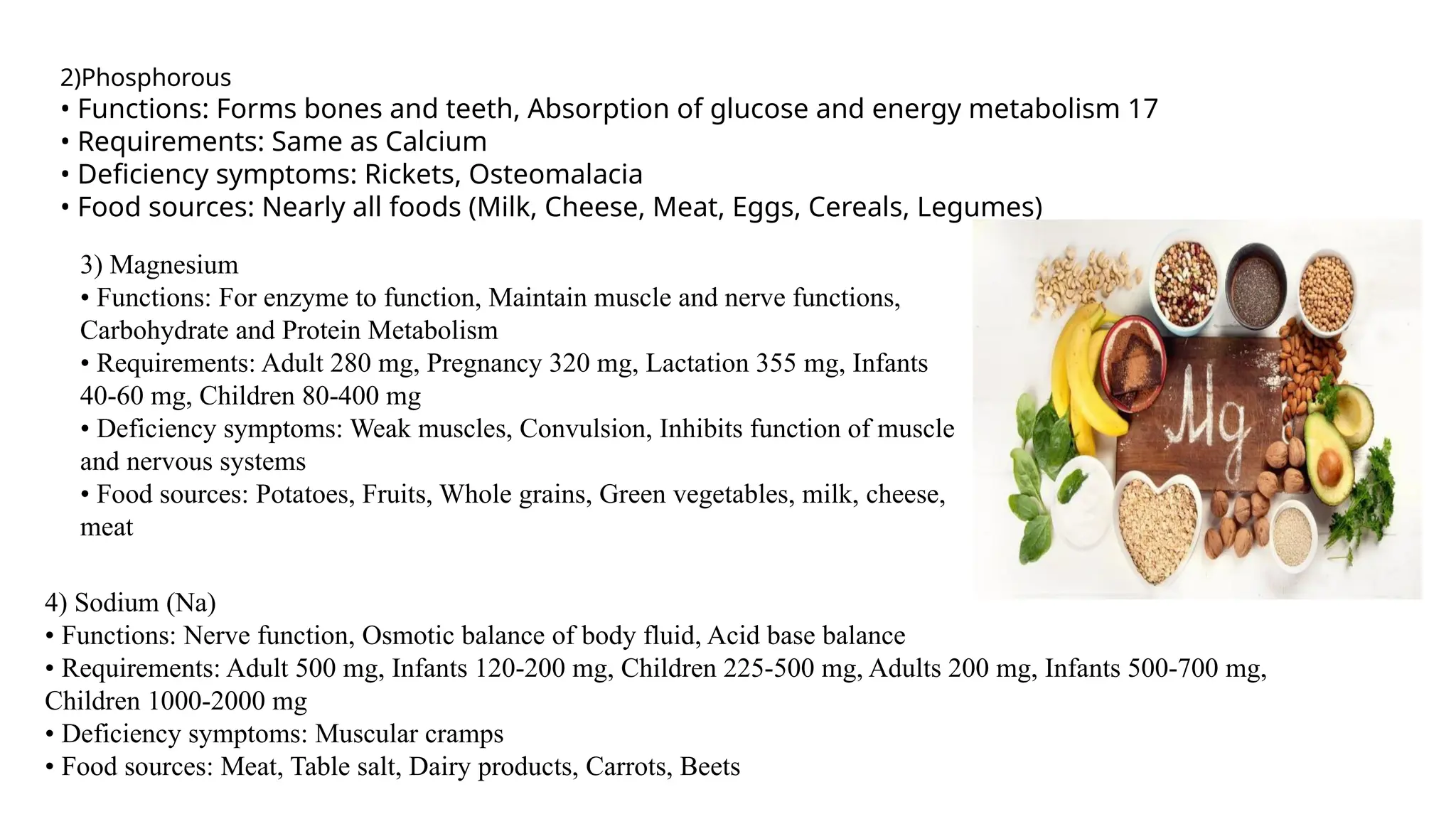
2)Phosphorous
• Functions: Forms bones and teeth, Absorption of glucose and energy metabolism 17
• Requirements: Same as Calcium
• Deficiency symptoms: Rickets, Osteomalacia
• Food sources: Nearly all foods (Milk, Cheese, Meat, Eggs, Cereals, Legumes)
3) Magnesium
• Functions: For enzyme to function, Maintain muscle and nerve functions,
Carbohydrate and Protein Metabolism
• Requirements: Adult 280 mg, Pregnancy 320 mg, Lactation 355 mg, Infants
40-60 mg, Children 80-400 mg
• Deficiency symptoms: Weak muscles, Convulsion, Inhibits function of muscle
and nervous systems
• Food sources: Potatoes, Fruits, Whole grains, Green vegetables, milk, cheese,
meat
4) Sodium (Na)
• Functions: Nerve function, Osmotic balance of body fluid, Acid base balance
• Requirements: Adult 500 mg, Infants 120-200 mg, Children 225-500 mg, Adults 200 mg, Infants 500-700 mg,
Children 1000-2000 mg
• Deficiency symptoms: Muscular cramps
• Food sources: Meat, Table salt, Dairy products, Carrots, Beets
5) Potassium (K)
• Functions: Potassium helps in carbohydrate metabolism
• Requirements: Adults 200 mg, Infants 500-700 mg, Children 1000-2000 mg
• Deficiency symptoms: Hyperkalemia, Paralysis, Hypokalmia, Hypertensions
• Food sources: Bananas, Vegetables, Meat, Milk
6) Chlorine (Cl)
• Functions: Osmotic balance of body fluid, Acid base balance, maintain gastric acidity
• Requirements: Adults 750 mg, Infants 180-300 mg, Children 350-750 mg
• Deficiency symptoms: Gastrointestinal disorder (hyperchloremic alkalosis)
• Food sources: Table salts
7) Sulphur (S)
• Functions: Maintain protein structure, energy metabolism, detoxification
• Requirements: Diets adequate in protein contain adequate Sulphur
• Deficiency symptoms: Cystinuria (Excessive urinary excretion of cystine), Renal calculus
• Food sources: Egg, Meat, Nuts, Legumes
8) Iron (Fe)
• Functions: Oxygen transport, Cellular oxidation of glucose
• Requirements:
• Deficiency symptoms: Anemia
• Food sources: Green leafy vegetables, Liver, Meat, Egg yolk, Beans, Nuts
9) Iodine (I)
• Functions: Synthesis of thyroid hormones that regulate growth and metabolism
• Requirements: Adult men 10 mg, Adult women 15 mg, Pregnancy and lactation 15-30 mg, Infants 6-10 mg, Children
10-15 mg
• Deficiency symptoms: Goiter (enlarged thyroid gland in the adult), Cretinism (in children)
• Food sources: Iodized salt, Sea food and Sea weed
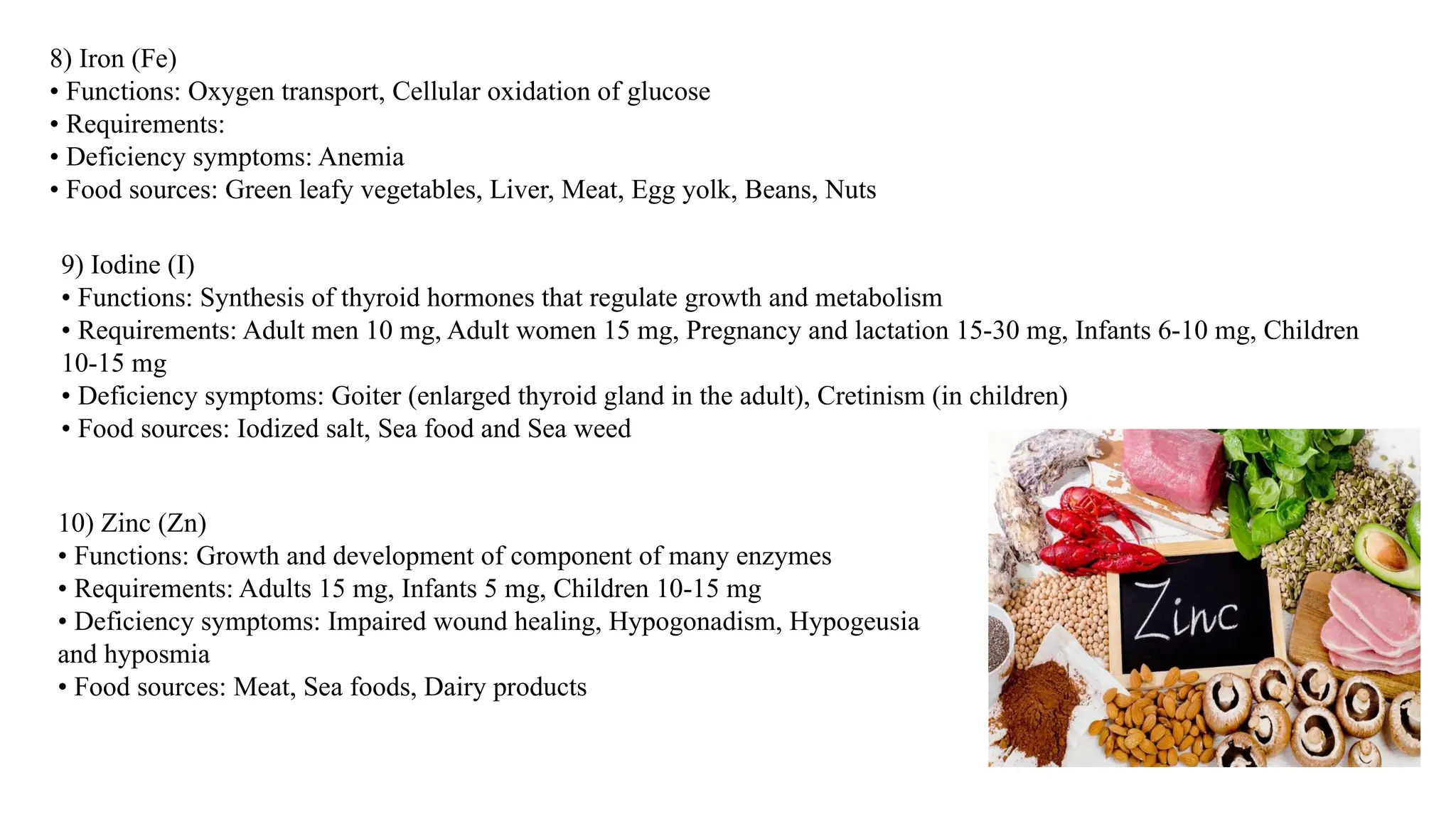
10) Zinc (Zn)
• Functions: Growth and development of component of many enzymes
• Requirements: Adults 15 mg, Infants 5 mg, Children 10-15 mg
• Deficiency symptoms: Impaired wound healing, Hypogonadism, Hypogeusia
and hyposmia
• Food sources: Meat, Sea foods, Dairy products
11) Copper (Cu)
• Functions: Involved in metallo-protein enzymes
• Requirements: Adults 1.5-3 mg, Infants 0.4-0.7 mg, Children 1.5 mg
• Deficiency symptoms: Hypocupremia (low serum copper level), Wilson’s disease
• Food sources: Meat, Liver, Legumes, Nuts, Copper cook ware
12) Manganese (Mn)
• Functions: Protein, CHO and fat metabolism
• Requirements: Adults 2 mg, Infants 0.3-1 mg, Children 1.5 mg
• Deficiency symptoms: Neurological disorder
• Food sources: Wide spread in food
13) Chromium (Cr)
• Functions: Binding the insulin to the cell membrane
• Requirements:
• Deficiency symptoms: Diabetes mellitus
• Food sources: Broccoli, Nuts, Non-polished rice
14) Cobalt (Co)
• Functions: Components of Vitamin B12 and formation of RBCs
• Requirements:
• Deficiency symptoms: No Report
• Food sources: Vitamin B12
15) Selenium (Se)
• Functions: Integral component of Glutathione peroxidase, Works as an antioxidant, Needed for synthesis of thyroid
hormone
• Requirements: Adult 55-70 mcg, Infants 10-15 mcg, Children 25-250 mcg
• Deficiency symptoms: Keshan disease (form of heart disease), Keshin_beck disease (bone and joint disease), Male
infertility
• Food sources: Sea food, Cereals, Vegetables, Legumes, Dairy products
16) Molybdenum (Mo)
• Functions: Component of Xanthenes oxidase
• Requirements: Adults 75-250 mcg, Infants 15-40 mcg, Children 25-250 mcg
• Deficiency symptoms:
• Food sources: Legumes, Meat
17) Fluorine
• Functions: Accumulation of bone and teeth
• Requirements: Adults 1.5-4 mg, Infants 0.1-1 mg, Children 0.5-2.5 mg
• Deficiency symptoms: Dental caries, Osteoporosis
• Food sources: Fish, tea, drinking water

Nutrients: Macro and Micro RDA, Sources, Functions, Deficiency

  • 1.
    Unit-2: Nutrients: Macro andMicro RDA, Sources, Functions, Deficiency and excess of (a) Carbohydrate (b) Protein (c) Fats (d) Minerals Major: Calcium, Phosphorus, Sodium, Potassium Trace: Iron, Iodine, Fluorine, Zinc (e) Vitamins Water soluble vitamins: Vitamin B, C Fat soluble vitamins: Vitamin A, D, E, K (f) Water (g) Dietary Fiber
  • 2.
    Carbohydrat e Carbohydrate are thealdehyde or ketone derivative of polyhydric alcohol having an empirical formula with the ratio C, H, O as 1,2,1 ratio Carbohydrate Simple carbohydrate Polysaccharides  Monosaccharide  e.g. - Triose, Tetrose, Pentose, hexose and heptoses  Disaccharide e.g.- Sucrose, Lactose, Maltose  They are composed of many single monosaccharide units.  These polysaccharides include- Starch, Glycogen and Dietary Fiber Note: Sometimes, Oligosaccharides is also classified which is the 3-6 monosaccharides molecules Functions • Source of energy reserves, • Special functions in body tissue- • Triggers appetite, hunger Protein paring action, Anti-ketogenic effect, Reserve glycogen, Proper functioning of CNS, Regulate heart action, Oxidation of fat
  • 3.
    Requirements In a well-balanceddiet, at least 40% of the caloric needs of the body should be met from carbohydrate Deficiency symptoms  Weight loss if carbohydrate intake is reduced, body feels cold quickly, body bruises easily, body will not receive enough Vitamin A, D, E and K  Meals containing low glycaemic index foods reduce both postprandial blood glucose and insulin response.  Low GI diets reduced mean blood glucose concentration, reduced insulin secretion and reduce serum triglycerides in individuals with hyperglycaemia. Food Sources Dairy (Milk, Yoghurt, ice-cream), Fruit (Whole fruit and fruit juice), Grains (Bread, rice, cereals), Legumes (Beans and other plant-based proteins) and Starchy vegetables.
  • 4.
    Food % Carbohydrate Cal/100gram edible portion Rice,Raw millet 78.2 348 Wheat flour 69.4 346 Dal, green gram 59.9 351 Sugar 99.4 398 Banana, ordinary 24.6 104 Potato 22.6 97 Mango, ripe 11.8 50 Carrot 10.6 47 Milk cow’s 4.4 67 Brinjal 4.0 24 Cauliflower 4.0 30 Sources: Human Nutrition; Principle and application in India
  • 5.
    Protein Proteins are largebiomolecules and macromolecules that comprise one or more long chains of amino acid residues.  A linear chain of amino acid residues is called a polypeptide  A protein contains at least one long polypeptide.  Short polypeptides, containing less than 20–30 residues, are rarely considered to be proteins and are commonly called peptides  Most proteins consist of linear polymers built from series of up to 20 different L-α- amino acids  All proteinogenic amino acids possess common structural features, including an α-carbon to which an amino group, a carboxyl group, and a variable side chain are bonded  Only proline differs from this basic structure as it contains an unusual ring to the N-end amine group, which forces the CO–NH amide moiety into a fixed conformation
  • 6.
    Protein  Protein primarystructure is the linear sequence of amino acids in a peptide or protein By convention, the primary structure of a protein is reported starting from the amino-terminal (N) end to the carboxyl terminal (C) end. Protein biosynthesis is most commonly performed by ribosomes in cells. Peptides can also be synthesized in the laboratory. Protein primary structures can be directly sequenced or inferred from DNA sequences  Protein Secondary structure is the linear sequence of amino acids in a peptide or protein By convention, the primary structure of a protein is reported starting from the amino-terminal (N) end to the carboxyl-terminal (C) end. Protein biosynthesis is most commonly performed by ribosomes in cells. Peptides can also be synthesized in the laboratory. Protein primary structures can be directly sequenced, or inferred from DNA sequences  Protein tertiary structure is the three- dimensional shape of a protein. The tertiary structure will have a single polypeptide chain "backbone" with one or more protein secondary structures, the protein domains. Amino acid side chains and the backbone may interact and bond in a number of ways. The interactions and bonds of side chains within a particular protein determine its tertiary structure. The protein tertiary structure is defined by its atomic coordinates.  Protein quaternary structure is the fourth (and highest) classification level of protein structure Protein quaternary structure refers to the structure of proteins which are themselves composed of two or more smaller protein chains (also referred to as subunits). Protein quaternary structure describes the number and arrangement of multiple folded protein subunits in a multi-subunit complex It includes organizations from simple dimers to large homo oligomers and complexes with defined or variable numbers of subunits
  • 7.
    Classification of Protein basedon shape Fibrous protein They are long and less soluble in water. E.g. elastin, collagen etc. Globular protein They are compact and spherical and usually soluble in water. E.g. Enzymes, hormones, antibodies etc. Classification of Protein based on function Simple protein: contains only amino acids or their derivates. E.g. insulin, albumin. Complex proteins Simple protein + non-protein group • Lipoprotein • Phosphoprotein • Nucleoprotein such as DNA • Glycoproteins and mycoproteins • Chromoproteins • Metalloproteins The role in body structure and metabolism a. Contractile protein b. Structural protein c. Hormones d. Enzymes e. Blood proteins f. Antibodies
  • 8.
    Functions • Growth andmaintenance of body tissue • Cause biochemical reactions (digestion, blood clotting, muscle contraction) • Act as a messenger (transmit information between cells, tissues and organs) • Provides Structure to body parts • Transport and store nutrients • Strengthen immune health • Balance body fluids between blood and surrounding tissue. Requirements The US RDA standard has generally been set for adults at 0.8g/kg of body weight. This amount is about 56 g daily for a man weighing 79 Kg and 50 g daily for a woman weighing 63 kg. A total of at least 60 and 50 g daily for a woman weighing 63 kg, a total of at least 60 to 65 g daily is needed during pregnancy, and lactation. The requirement for infants and children varied according to age and growth patterns. • On an average 1 gram / kg body weight/day • Women 45 gram/day • Pregnant women 55 gram/day • Nursing mother 65 gram/day • Adolescent children 50-60 gram/day
  • 9.
    Deficiency symptoms • Proteindeficiency symptoms are always observed when either protein or energy is deficient. • Extreme food energy deficiency is marasmus. Extreme protein deficiency is kwashiorkor. • Excess of protein can make possible health risk such as: heart disease, Homocysteine, kidney disease, adult bone disease and cancer. • Anorexia, reduced growth • Reduced efficiency of food utilization • Pregnant women (swollen feet and legs, vomiting) • Potbelly’s appearances in infants are typical manifestation of protein deficiency Food Chemical score Biological value (BV) Net protein utilization (NPU) Protein efficiency ratio (PER) Egg 100 100 94 3.92 Milk 95 93 82 3.09 Unpolished rice 67 86 59 - Fish 71 76 - 3.55 Peanuts 65 55 55 1.65 Oats 57 65 - 2.19 Peas 37 64 55 1.57 Corn 49 72 36 - Soybeans 47 73 61 2.32 Whole wheat 53 65 49 1.53 Beef 69 74 67 2.30 Food Sources
  • 10.
    Lipids/fats Fats or lipidsare a group of organic substances- fats, oils and waxes, and related compounds that are greasy to touch and not soluble in water Lipids/Fats Simple lipids Derived lipids Compound lipids  They are neutral fats and waxes.  Neutral fats are compounds of fatty acids and glycerol in the ratio of three fatty acids to each glycerol base.  Thus, they are called triglycerides  Similarly, waxes are compounds of fatty acids with straight chain alcohols.  Waxes have no nutrition in human nutrition.  Compound lipids are various combinations of neutral fat with other components.  Three example of compound lipids important in human nutrition are- phospholipids (e.g. lecithin),  glycolipids (composed of fatty acids, nitrogen and carbohydrates, found chiefly in brain tissue as cerebrosides) and  lipoproteins (complexes of various lipids with protein and transport fat in the blood).  Fat substances may be derived from simple and compound lipids by hydrolysis and enzymatic breakdown.  Three important members of this group are fatty acids, glycerol and steroids that contain cholesterol
  • 11.
    Lipids are abroad group of organic compounds which include Fats, waxes, sterols, fat-soluble vitamins eg: vitamins A, D, E and K,  monoglycerides, diglycerides, phospholipids, and others.  The functions of lipids include eg: storing energy, signaling, and acting as structural components of cell membrane.
  • 12.
    Functions • Thermal insulation:The layer of fat directly underneath the body’s protective covering of the skin controls body temperature within the vital range necessary for life. • Energy supply: This energy may be available directly as a fuel from food consumed or indirectly from stored adipose tissue. • Nerve impulse transmission: Fat insulation surrounding myelinated nerve fibers provide with electric insulation and metabolic across the cell membrane. • Essential fatty acid supply: Food fats supply essential fatty acids, Linoleic acids, vital to body metabolism, normal heart action and tissue integrity. • Food satiety: It adds to the taste and makes the food palatable. It contributes to the feeling of satisfaction after eating. • Tissue structure: fat serve as a vital constituent of cell membrane and participate in the transport if nutrient materials and metabolites around the cell membranes. • Cell metabolism: Combination of fat and protein are important as cell constituent and lipoprotein carriers of fat throughout body’s blood circulation to all tissues.
  • 13.
    Requirements Dietary fat provides30-40% of total energy intake in developed countries. WHO has recommended 20- 30% of total dietary energy sources. At least 50% of fat intake should consist of oils rich in essential fatty acids. ICMR (Indian Council of Medical Research) 1989, has recommended 20% of the total energy intake from fats. Deficiency Deficiency of essential fatty acids in the diet is associated with rough and dry skin a condition is known as phrynodermas or toad skin. It is characterized by horny popular eruptions on the posterior and lateral aspects of limbs and on back and buttocks. Excess of fat • Obesity: A diet rich in fat can compose a threat to human health by encouraging obesity. In fat people adipose tissue may increase up to 30%. • Cancer: Diets high in fats increase the risk of colon cancer and breast cancer. • Coronary heart disease: High fat intake is major risk factor in contrary disease.
  • 14.
    Food Fat% Calories/100gramedible portion Vegetable cooking oil 100 900 Ghee 99.5 895 Butter 81.5 729 Oil seed and nuts 37.5 to 64.5 530 to 687 Banaspati 100 900 Mutton(muscles) 13.3 194 Egg, hen 13.3 173 Milk, cows 4.1 67 Water  Water is a universal solvent. It is made up of tiny molecule of hydrogen and oxygen. Pure water is colorless, odorless and tasteless.  Water exist in three forms on the earth i.e. solid (ice, hail, snow or frost), liquid (in lakes, oceans, rain, dew, fog or mist) and gas (steam or water vapor “invisible” water in the air).  On an average, 65% of human body is made up of water.  Percentage of water in human body decreases with the age and deposition of fat.  About 70% of water as fluid within the cell is intracellular fluid and remaining 30% outside the cell is extracellular fluids.
  • 15.
    • Intracellular water(within cell) • Extracellular water (outside cell) • Metabolic water • Bound water (combined with the constitution of protoplasm) Functions • Transportation of nutrients • Digestion • Regulation of body temperature (perspiration) • Metabolism of nutrients • Act as a cushion (cerebrospinal fluid) • Lubrication of joints (synovial fluid) Requirements 2100-2800 ml/day (i.e. approx. 2600 ml/day) which comprises Liquid (1200-1500), In food (700-1000), Metabolism (200-300).
  • 16.
    Deficiency symptoms • HeatExhaustion: characterized by headache, clammy skin, fatigue, increased thirst, rapid heartbeat, dizziness, nausea, vomiting, stomach cramps and increased sweating. Dehydration: Characterized by dry mouth, headache, constipation, fatigue, weakness, thirst, dizziness and decreased urine output • Hypovolemic shock: characterized by sweating, weakness, pale skin, decreased urine output, clammy skin and agitation • Seizure: involuntary muscle contractions, or seizures, and loss of consciousness. If lest untreated, dehydration-induced seizures can lead to death. Food Sources • Water is provided through drinking • Water obtained in food items • Bound water (protoplasm) • Metabolic water: end product of oxidation of organic compounds such as fat, proteins and carbohydrates and their synthesis
  • 17.
    Vitamins  Vitamins areorganic compounds, which are required in small amounts for normal growth and maintenance of life. There are at least 15 vitamins, which have been accepted as essential food factors. It is convenient to divide vitamins into two groups.  Fat soluble vitamins (persist in liver, renal fat in body for long, toxic of high accumulation) Vitamin A (Retinol) • Functions: Rhodopsin production, prevent infection, epithelial tissue formation • Requirement: Adult 5000 IU, Children 1500-5000 IU, Pregnant women 6000 IU • Deficiency symptoms: Night blindness, Keratinization of epithelium, Follicular hyperkeratosis, skin and mucus infection, Xeropthalmia, faulty tooth formation • Food sources: Milk, Butter, Eggs, Liver, Green leaves, ripe yellow fruits, tomato, ghee
  • 18.
    Vitamin D2 (Ergocalciferol) •Functions: Absorption and metabolism of bone, Ca and Magnesium • Requirements: Adult 100 IU, Pregnancy and Lactation 400 IU, Infants and Children 200 IU • Deficiency symptoms: Faulty bone growth, Rickets, Osteomalacia • Food sources: Fortified milk, Fish oils Vitamin D3 (Cholecalciferol) • Functions: Control neuromuscular function, Bone metabolism • Requirements: 10 mcg for adult per day • Deficiency symptoms: Osteomalacia, Rickets • Food sources: Fish, liver muscles Vitamin E (Tocoferol) • Functions: Reproductive health, Hemolysis processing of unsaturated fatty acids • Requirements: Adult 25-30 mg, Children 3-7 mg • Deficiency symptoms: Hair loss, muscle cramp, infertility, gastro intestinal disease • Food sources: Vegetables
  • 19.
    Vitamin K (Phylloquinone) •Functions: Forms prothrombin by liver, constituent of blood responsible to blood clotting • Requirement: 90 mcg/ day • Deficiency symptoms: Osteoporosis, Coronary Heart disease (CHD) • Sources: Green leafy vegetables Water soluble vitamins Vitamin B1 (Thiamine) • Functions: Breaking down of CHO and Glucose to release energy, nervous system and heart functions • Requirements: 0.5 mg/ 1000 calories • Deficiency symptoms: Disturbances of digestive system, nerve disturbances, Nausea, Vomiting, Constipation, Beri-Beri • Food sources: Oilseeds, pulses, cereals, milk, beans, liver, pork, nuts, fruits, vegetables Vitamin B2 (Riboflavin): • Functions: Cell respiration, need for growth, affect eyes, skin and nerve functioning • Requirements: 0.6 mg/ 1000 calories • Deficiency symptoms: Eye problems, Photophobia, skin changes, swollen tongues • Food sources: Cereals, liver, pulses, nuts, milk, eggs, radish leaves, Sitaphal
  • 20.
    Vitamin B3 (Niacin) •Functions: Coenzymes in tissue oxidation to produce ATP, nervous, digestive, skin health • Requirement: 6.6 mg/ 1000 Kcal of energy • Deficiency symptoms: Pellagra, Diarrhoea, Dermatitis, Dementia, Skin itching, CNS affected, Dizziness, mental depression • Food sources: Yeast, Liver, Sheep, Ground nut, Fish, Pulses, Vegetables and Fruits, Flesh food, Cereals Vitamin B6 (Pyridoxine) • Functions: Part of enzyme system which removes Co2 from acid group of certain amino acid, CHO, protein and fat metabolism • Requirement: 2 mg/day • Deficiency symptoms: Anemia • Food sources: Wheat, Corn, meat, liver, cabbage, carrot, peanuts Vitamin B7 (Biotin) • Functions: Coenzyme in synthesis of asparatic acid that help in protein synthesis • Requirements: Microbe synthesize as non-essential • Deficiency symptoms: Skin lesion, Scaly skin, deterioration of nerve fibre. • Food sources: Microbial synthesis in intestine
  • 21.
    Vitamin B9 (FolicAcid) • Functions: Formation of blood cells by bone marrow, involved in formation of haemoglobin, synthesize amino acids • Requirements: 0.4 mg/day, pregnancy 0.8 mg/day, lactation 0.5 mg/day • Deficiency symptoms: Pernicious and megaloblastic anemia • Food sources: Green vegetables, Nuts, beans, Liver Vitamin B12 (Cynacobalamine) • Functions: Coenzyme in protein synthesis, formation of nucleic acid, Transmethylation • Requirements: 2.4 mcg/adult/day, 1.6 mcg-pregnant, 2.8 mcg-lactation • Deficiency symptoms: Pernicious anemia • Food sources: In cereals, fish, egg, milk, meat, except vegetable source. Bacteria synthesizes in the body. Vitamin C (Ascorbic acid) • Functions: Collagen formation, Capillary walls, haemoglobin formation, RBC maturation, Wound healing, fever and infection resistance, absorption of Calcium • Requirements: Adult 60 mg/day, Infants 35 mg/day, Children 40 mg/day • Deficiency symptoms: Scurvy, Megaloblastic, anemia, delayed wound healing, susceptible to fever and infections • Food sources: Amla, Guava, drumsticks, Cabbage, Amaranth, Orange, Papaya, Pineapple, tomato, fruits and other vegetables
  • 23.
    Minerals Minerals constitute animportant group of nutrients essential for growth and the upkeep of the body. When plants and animals are burnt these minerals remain as ash. Minerals are divides into two groups on the basis of their concentration in the body. A) Major minerals/ Macro-minerals (≥ 100 mg) Calcium, Phosphorous, Potassium, Sulphur, Sodium, Chlorine and Magnesium B) Minor/ micro/ trace minerals (<100 mg) Manganese, Iron, Copper, Iodine, Cobalt, Zinc, Fluorine, Chromium, Selenium, and Molybdenum C) Essentiality Unclear: Vanadium, Silicon, Nickel, Tin, Cadmium, Arsenic, Aluminum and Boron 1) Calcium: • Functions: Bone and teeth formation, Blood clotting, Stability to the fibrin threads, Muscle contraction and relaxation, Cell membrane permeability and enzyme activation • Requirements: Adult; 800 mg/day, Pregnancy and Lactation; 1200 mg/day, Infants: 400-600 mg/day, Children 800-1200 mg/day • Deficiency symptoms: Tetany (decreased in ionized serum calcium), Osteoporosis (abnormal thinning of bone tissue in older person), Rickets and osteomalacia • Food sources: Milk (120-200 mg), Dairy products, Eggs, Pulses (60-150 mg)
  • 24.
    2)Phosphorous • Functions: Formsbones and teeth, Absorption of glucose and energy metabolism 17 • Requirements: Same as Calcium • Deficiency symptoms: Rickets, Osteomalacia • Food sources: Nearly all foods (Milk, Cheese, Meat, Eggs, Cereals, Legumes) 3) Magnesium • Functions: For enzyme to function, Maintain muscle and nerve functions, Carbohydrate and Protein Metabolism • Requirements: Adult 280 mg, Pregnancy 320 mg, Lactation 355 mg, Infants 40-60 mg, Children 80-400 mg • Deficiency symptoms: Weak muscles, Convulsion, Inhibits function of muscle and nervous systems • Food sources: Potatoes, Fruits, Whole grains, Green vegetables, milk, cheese, meat 4) Sodium (Na) • Functions: Nerve function, Osmotic balance of body fluid, Acid base balance • Requirements: Adult 500 mg, Infants 120-200 mg, Children 225-500 mg, Adults 200 mg, Infants 500-700 mg, Children 1000-2000 mg • Deficiency symptoms: Muscular cramps • Food sources: Meat, Table salt, Dairy products, Carrots, Beets
  • 25.
    5) Potassium (K) •Functions: Potassium helps in carbohydrate metabolism • Requirements: Adults 200 mg, Infants 500-700 mg, Children 1000-2000 mg • Deficiency symptoms: Hyperkalemia, Paralysis, Hypokalmia, Hypertensions • Food sources: Bananas, Vegetables, Meat, Milk 6) Chlorine (Cl) • Functions: Osmotic balance of body fluid, Acid base balance, maintain gastric acidity • Requirements: Adults 750 mg, Infants 180-300 mg, Children 350-750 mg • Deficiency symptoms: Gastrointestinal disorder (hyperchloremic alkalosis) • Food sources: Table salts 7) Sulphur (S) • Functions: Maintain protein structure, energy metabolism, detoxification • Requirements: Diets adequate in protein contain adequate Sulphur • Deficiency symptoms: Cystinuria (Excessive urinary excretion of cystine), Renal calculus • Food sources: Egg, Meat, Nuts, Legumes
  • 26.
    8) Iron (Fe) •Functions: Oxygen transport, Cellular oxidation of glucose • Requirements: • Deficiency symptoms: Anemia • Food sources: Green leafy vegetables, Liver, Meat, Egg yolk, Beans, Nuts 9) Iodine (I) • Functions: Synthesis of thyroid hormones that regulate growth and metabolism • Requirements: Adult men 10 mg, Adult women 15 mg, Pregnancy and lactation 15-30 mg, Infants 6-10 mg, Children 10-15 mg • Deficiency symptoms: Goiter (enlarged thyroid gland in the adult), Cretinism (in children) • Food sources: Iodized salt, Sea food and Sea weed 10) Zinc (Zn) • Functions: Growth and development of component of many enzymes • Requirements: Adults 15 mg, Infants 5 mg, Children 10-15 mg • Deficiency symptoms: Impaired wound healing, Hypogonadism, Hypogeusia and hyposmia • Food sources: Meat, Sea foods, Dairy products
  • 27.
    11) Copper (Cu) •Functions: Involved in metallo-protein enzymes • Requirements: Adults 1.5-3 mg, Infants 0.4-0.7 mg, Children 1.5 mg • Deficiency symptoms: Hypocupremia (low serum copper level), Wilson’s disease • Food sources: Meat, Liver, Legumes, Nuts, Copper cook ware 12) Manganese (Mn) • Functions: Protein, CHO and fat metabolism • Requirements: Adults 2 mg, Infants 0.3-1 mg, Children 1.5 mg • Deficiency symptoms: Neurological disorder • Food sources: Wide spread in food 13) Chromium (Cr) • Functions: Binding the insulin to the cell membrane • Requirements: • Deficiency symptoms: Diabetes mellitus • Food sources: Broccoli, Nuts, Non-polished rice
  • 28.
    14) Cobalt (Co) •Functions: Components of Vitamin B12 and formation of RBCs • Requirements: • Deficiency symptoms: No Report • Food sources: Vitamin B12 15) Selenium (Se) • Functions: Integral component of Glutathione peroxidase, Works as an antioxidant, Needed for synthesis of thyroid hormone • Requirements: Adult 55-70 mcg, Infants 10-15 mcg, Children 25-250 mcg • Deficiency symptoms: Keshan disease (form of heart disease), Keshin_beck disease (bone and joint disease), Male infertility • Food sources: Sea food, Cereals, Vegetables, Legumes, Dairy products 16) Molybdenum (Mo) • Functions: Component of Xanthenes oxidase • Requirements: Adults 75-250 mcg, Infants 15-40 mcg, Children 25-250 mcg • Deficiency symptoms: • Food sources: Legumes, Meat
  • 29.
    17) Fluorine • Functions:Accumulation of bone and teeth • Requirements: Adults 1.5-4 mg, Infants 0.1-1 mg, Children 0.5-2.5 mg • Deficiency symptoms: Dental caries, Osteoporosis • Food sources: Fish, tea, drinking water