© 2010 Pearson Education, Inc.
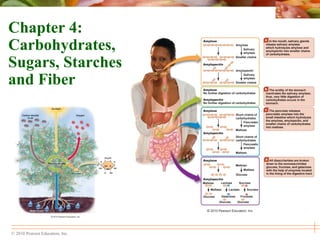
Chapter 4:
Carbohydrates,
Sugars, Starches
and Fiber
© 2010 Pearson Education, Inc.
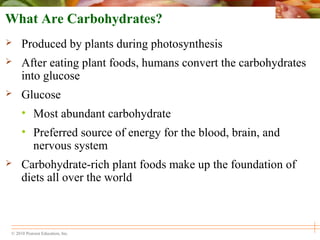
What Are Carbohydrates?
 Produced by plants during photosynthesis
 After eating plant foods, humans convert the carbohydrates
into glucose
 Glucose
• Most abundant carbohydrate
• Preferred source of energy for the blood, brain, and
nervous system
 Carbohydrate-rich plant foods make up the foundation of
diets all over the world
© 2010 Pearson Education, Inc.
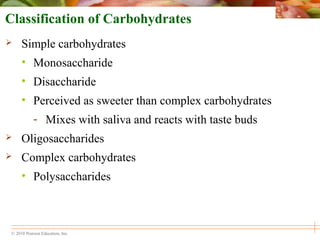
Classification of Carbohydrates
 Simple carbohydrates
• Monosaccharide
• Disaccharide
• Perceived as sweeter than complex carbohydrates
- Mixes with saliva and reacts with taste buds
 Oligosaccharides
 Complex carbohydrates
• Polysaccharides
© 2010 Pearson Education, Inc.
Monosaccharides
 Three nutritionally important monosaccharides
• Glucose
• Fructose
• Galactose
© 2010 Pearson Education, Inc.
Monosaccharides
 Glucose
• Blood glucose and blood sugar in the body
• Most abundant monosaccharide in the body
- Is the preferred and main source of energy for the
brain and red blood cells
• Part of every disaccharide
• Only monosaccharide in starches
© 2010 Pearson Education, Inc.
Monosaccharides
 Fructose
• Sweetest of natural sugars
• Found abundantly in fruits
• Part of high-fructose corn syrup
 Galactose
• Commonly occurs as part of dissaccharide lactose
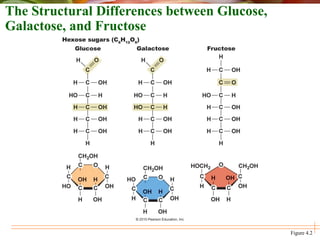
Figure 4.2
The Structural Differences between Glucose,
Galactose, and Fructose
© 2010 Pearson Education, Inc.
Disaccharides
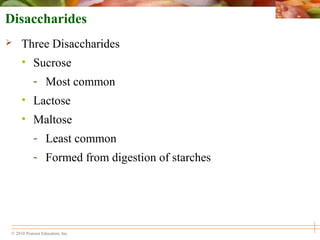
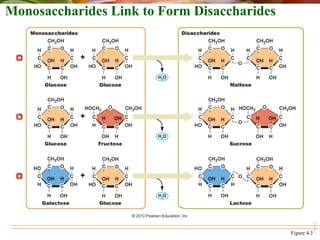
 Three Disaccharides
• Sucrose
- Most common
• Lactose
• Maltose
- Least common
- Formed from digestion of starches
Figure 4.3
Monosaccharides Link to Form Disaccharides
© 2010 Pearson Education, Inc.
Polysaccharides
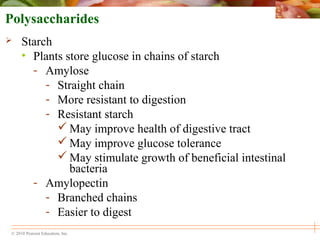
 Starch
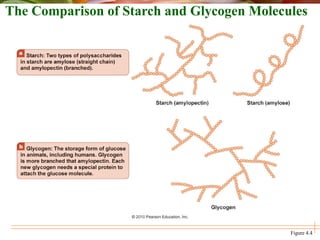
• Plants store glucose in chains of starch
- Amylose
- Straight chain
- More resistant to digestion
- Resistant starch
 May improve health of digestive tract
 May improve glucose tolerance
 May stimulate growth of beneficial intestinal
bacteria
- Amylopectin
- Branched chains
- Easier to digest
© 2010 Pearson Education, Inc.
Polysaccharides
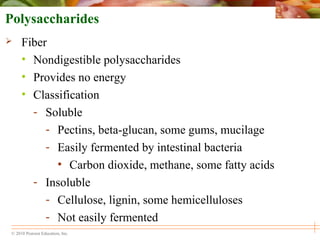
 Fiber
• Nondigestible polysaccharides
• Provides no energy
• Classification
- Soluble
- Pectins, beta-glucan, some gums, mucilage
- Easily fermented by intestinal bacteria
• Carbon dioxide, methane, some fatty acids
- Insoluble
- Cellulose, lignin, some hemicelluloses
- Not easily fermented
© 2010 Pearson Education, Inc.
Fiber Health Benefits
 Soluble fibers
• Slow gastric emptying and may delay absorption of some
nutrients
- Helps reduce serum cholesterol
- Improve appetite control
- Normalize blood glucose levels
• May help protect against colon cancer
 Insoluble fibers
• Relieves constipation
 Most plant foods contain both soluble and insoluble fibers
© 2010 Pearson Education, Inc.
Polysaccharides
 Glycogen
• Storage form of glucose in animals
• Long, branched chains of glucose
• Stored in liver and muscle
• Liver glycogen response to blood glucose (BG) levels
 BG  glycogen breakdown   BG
• Muscle glycogen can be broken down for energy for the
muscle
Figure 4.4
The Comparison of Starch and Glycogen Molecules
© 2010 Pearson Education, Inc.
Oligosaccharides
 Similar in length to simple carbohydrates
 Similar in makeup to polysaccharides
 Humans lack the enzymes necessary to digest them
 Intestinal microflora digest and ferment them
• Cause bloating, discomfort, and flatulence
 Food sources
• Legumes, beans, cabbage, brussels sprouts, broccoli
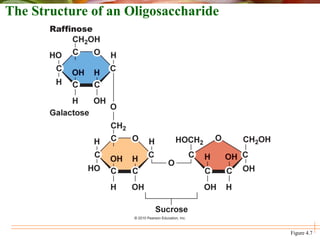
Figure 4.7
The Structure of an Oligosaccharide
© 2010 Pearson Education, Inc.
Quick Review
 Complex carbohydrates
• Polysaccharides: starch, fiber, glycogen
• Fiber
- Soluble – fermented by intestinal bacteria; moves
slowly
- Insoluble – moves quickly through and reduces
constipation
- Functional – added to foods
 Oligosaccharides
• Contain three to ten units
• Part of cellulose in cell walls
© 2010 Pearson Education, Inc.
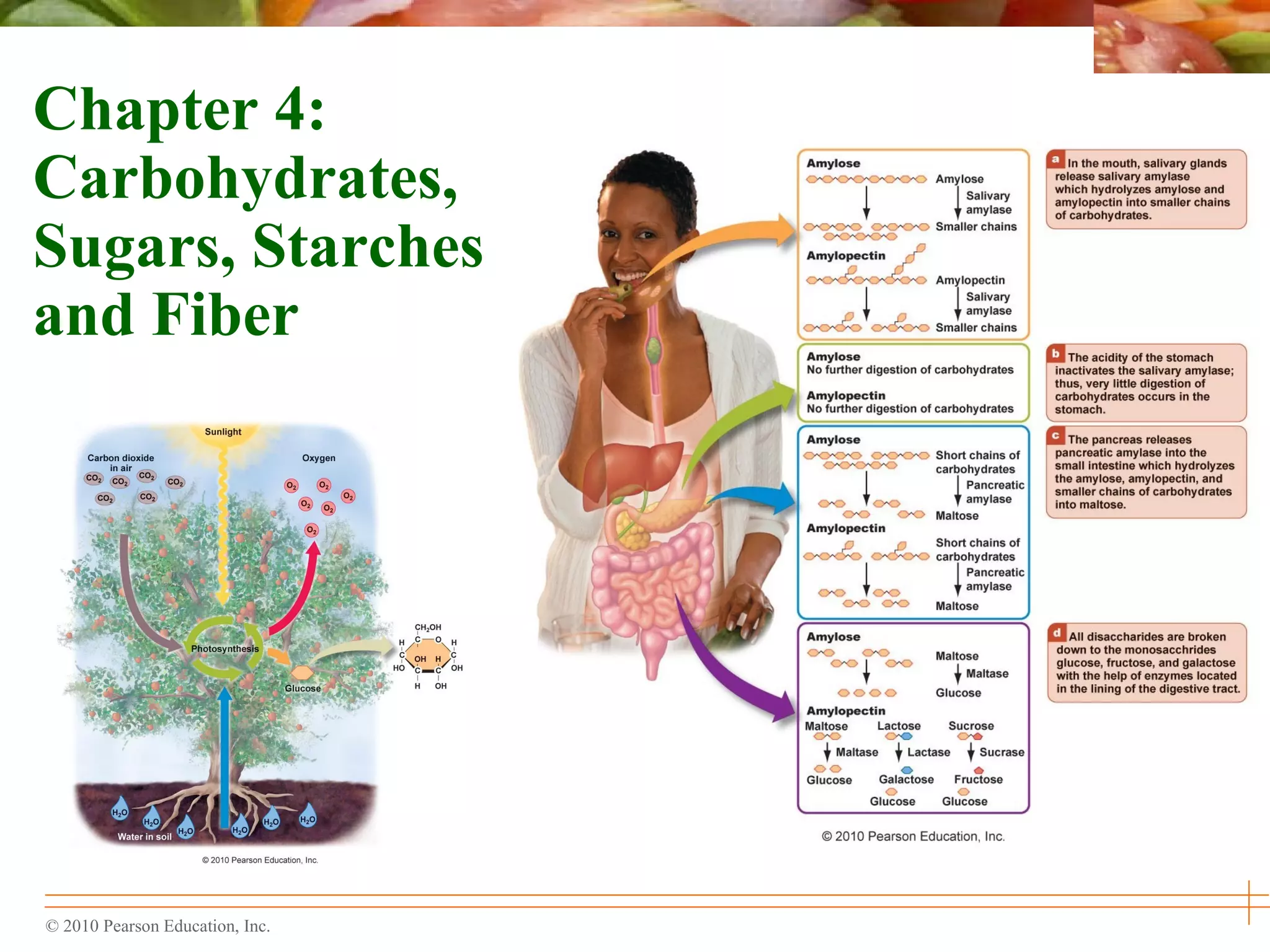
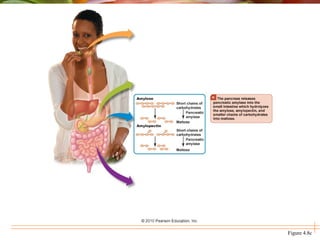
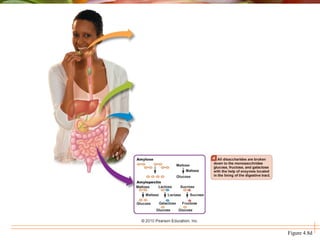
Carbohydrate Digestion and Absorption
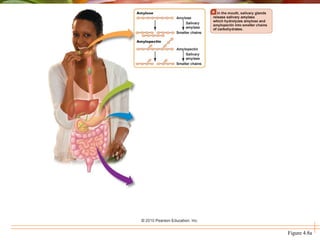
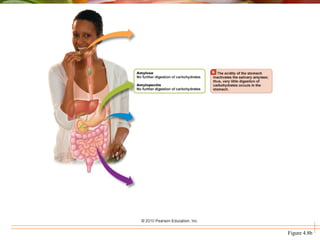
 Disaccharides and starches are digested to monosaccharides
 Monosaccharides are easily absorbed
 Fiber passes through the GI tract undigested
Figure 4.8a
Figure 4.8b
Figure 4.8c
Figure 4.8d
© 2010 Pearson Education, Inc.
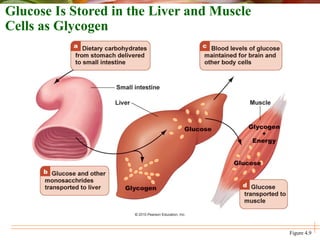
Absorption of Carbohydrates
 Once digested to monosaccharides
• Absorbed through the intestinal cell mucosa
• Transported to the liver via the portal vein
• Metabolic needs direct fate of the monosaccharides
- Galactose and fructose
• Used by the liver for energy
• Converted to glucose
- Glucose
• Used for energy
• Converted to glycogen through glycogenesis
• Converted to glycerol and fatty acids for storage in
addipocytes
Figure 4.9
Glucose Is Stored in the Liver and Muscle
Cells as Glycogen
© 2010 Pearson Education, Inc.
Quick Review
 Digestion of carbohydrates begins in the mouth
 Most carbohydrate digestion takes place in the small
intestine
 Carbohydrates are broken down to monosaccharides for
absorption
 Monosaccharides are converted to glucose in the liver and
• Used as energy
• Stored as glycogen in the liver and muscle cells
• Stored as glycerol and fatty acids in the adipocytes
 Fiber travels to the colon undigested and most is eliminated
from the body
© 2010 Pearson Education, Inc.
Lactose Intolerance
 Deficiency of lactase, the enzyme that digest lactose
• Maldigestion – inability to digest lactose due to low
levels of the enzyme
• Intolerance
- Maldigestion resulting in nausea, cramps, bloating,
flatulence, and diarrhea
© 2010 Pearson Education, Inc.
Functions of Carbohydrate
 Provide energy
• 4 kilocalories per gram
 Maintain blood glucose
• Carbohydrate intake
• Glycogenolysis > 4 hours after a meal
 Spare protein
• Prevents the need for glyconogenesis
 Prevents ketosis
© 2010 Pearson Education, Inc.
How to Maintain Blood Glucose Levels
 Goal for blood glucose is 70–100 mg/dl
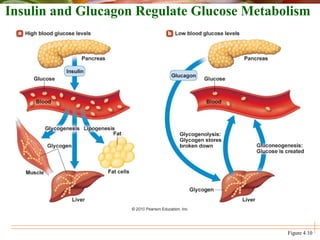
 Insulin – lowers blood glucose levels
• Needed for glucose to enter the cell from the blood
stream
- Exception: liver, kidney, and brain cells
• Helps convert glucose to glycogen through glycogenesis
• Helps convert glucose to fatty acids through lipogenesis
• Inhibits lipolysis
 Glucagon – increases blood glucose levels
• Stimulates the release of glucose into the blood
• Stimulates glycogenolysis
• Stimulates gluconeogensis
Figure 4.10
Insulin and Glucagon Regulate Glucose Metabolism
© 2010 Pearson Education, Inc.
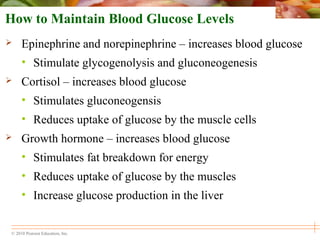
How to Maintain Blood Glucose Levels
 Epinephrine and norepinephrine – increases blood glucose
• Stimulate glycogenolysis and gluconeogenesis
 Cortisol – increases blood glucose
• Stimulates gluconeogensis
• Reduces uptake of glucose by the muscle cells
 Growth hormone – increases blood glucose
• Stimulates fat breakdown for energy
• Reduces uptake of glucose by the muscles
• Increase glucose production in the liver
© 2010 Pearson Education, Inc.
Quick Review
 Glucose is the body’s preferred source of energy
• Especially the brain and red blood cells
 Adequate carbohydrate intake
• Maintains blood glucose levels
• Spares protein
• Prevents ketosis
 Blood glucose levels are maintained by two hormones
• Insulin which lowers blood glucose levels
• Glucagon which raises blood glucose levels
 Epinephrine, norepinephrine, corisol, and growth hormone
raise blood glucose levels.
© 2010 Pearson Education, Inc.
Glycemic Index
 Classifies the effects of carbohydrate-containing foods on
blood glucose
 May be helpful for diabetics
 Glycemic index (GI) refers to the measured upward rise,
peaks, and falls of blood glucose following consumption of
high-carbohydrate food
• Ranks foods according blood glucose
© 2010 Pearson Education, Inc.
Glycemic Load
 Glycemic load (GL) – adjust GI by taking into account the
amount of carbohydrate consumed in a typical serving of
food
 Factors affecting GI
• Ripeness of fruit
• Cooking
• Processing
• Size of food pieces
• Amount of fiber
• Combinations of food eaten
© 2010 Pearson Education, Inc.
Glycemic Index and Glycemic Load
 Usefulness of GI and GL for disease prevention and weight
management is controversial
 Is helpful in educating people about
• Carbohydrate content of foods
• Portion sizes
• Serving numbers
© 2010 Pearson Education, Inc.
Dietary Fiber
 Benefits
• Helps lower risk of
- Bowel irregularity
- Obesity
- Heart disease
- Cancer
- Diabetes mellitus
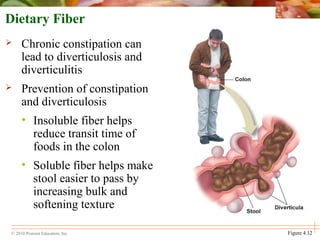
© 2010 Pearson Education, Inc. Figure 4.12
Dietary Fiber
 Chronic constipation can
lead to diverticulosis and
diverticulitis
 Prevention of constipation
and diverticulosis
• Insoluble fiber helps
reduce transit time of
foods in the colon
• Soluble fiber helps make
stool easier to pass by
increasing bulk and
softening texture
© 2010 Pearson Education, Inc. Figure 4.13
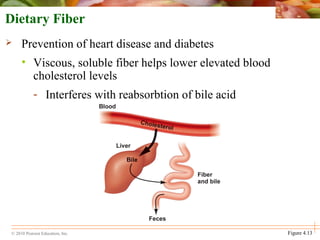
Dietary Fiber
 Prevention of heart disease and diabetes
• Viscous, soluble fiber helps lower elevated blood
cholesterol levels
- Interferes with reabsorbtion of bile acid
© 2010 Pearson Education, Inc.
Dietary Fiber
• Slow moving, viscous, soluble fiber may reduce the rate
which fat and carbohydrate are absorbed
- Decreasing level of fat in blood and improving insulin
sensitivity, decrease risk of heart disease
• Insoluble fiber has been shown to promote heart health
• Viscous soluble fiber helps slow digestion and
absorption helping control blood glucose levels
© 2010 Pearson Education, Inc.
Dietary Fiber
 Fiber helps reduce the incidence of several cancers
• Decreases the amount of time cancer-promoting
substances spend in contact with the intestinal lining
• Encourages the growth of colon-friendly bacteria
• Reduces acid in the colon
 Helps prevent obesity
• Increase satiety
• Reduce food intake
Caution: Increase dietary fiber and fluid intake
gradually
© 2010 Pearson Education, Inc.
Quick Review
 Glycemic index (GI) ranks foods according to effects on
glucose levels compared to white bread or pure glucose
 Glycemic load adjust for serving size
 Foods that contain high fiber or are eaten with protein and
fat generally have a lower GI.
 High-fiber diet health benefits include reduced risk of
• Constipation
• Diverticulosis
• Heart disease
• Obesity
• Diabetes Mellitus
• Cancer
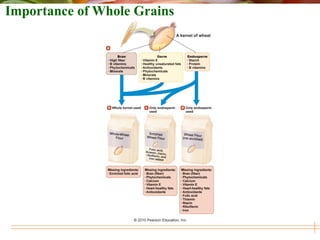
Importance of Whole Grains
© 2010 Pearson Education, Inc.
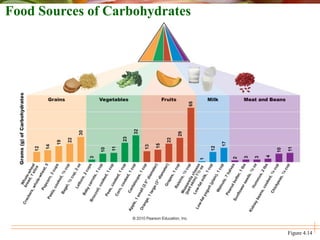
Carbohydrate Sources
 Best choices should include nutrient-dense, low-saturated
fat foods, simple carbohydrates, fiber, complex
carbohydrates
Figure 4.14
Food Sources of Carbohydrates
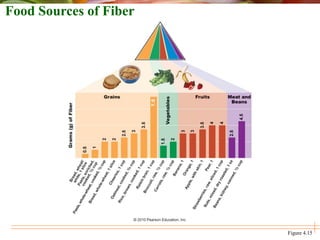
Figure 4.15
Food Sources of Fiber
© 2010 Pearson Education, Inc.
• Legumes
• Low-fat dairy products
• Legumes
• Nuts
• Seeds
Quick Review
 Best sources of carbohydrates are
• Fresh fruits and vegetables
• Whole grains
 Excellent sources of fiber are
• Whole grains
• Fruits
• Vegetables
 Packaged foods can be good sources of starch and fiber
• Read label carefully
• Avoid too much sugar, fat, and kilocalories
© 2010 Pearson Education, Inc.
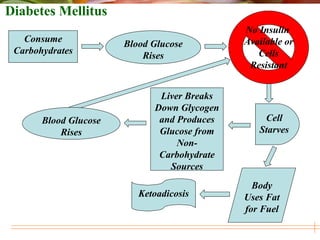
Diabetes Mellitus
 Occurs when an individual either doesn’t make enough, or
is unable to utilize, the hormone insulin to regulate blood
glucose levels
 Epidemic
• Sixth leading cause of death in the United States
• Costs the U.S. almost $100 billion annually
• Number of people with diabetes is rising annually
Liver Breaks
Down Glycogen
and Produces
Glucose from
Non-
Carbohydrate
Sources
Consume
Carbohydrates
Blood Glucose
Rises
Body
Uses Fat
for Fuel
Ketoadicosis
Blood Glucose
Rises
No Insulin
Available or
Cells
Resistant
Cell
Starves
Diabetes Mellitus
© 2010 Pearson Education, Inc.
Forms of Diabetes
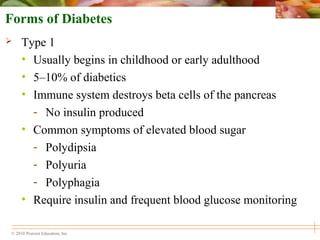
 Type 1
• Usually begins in childhood or early adulthood
• 5–10% of diabetics
• Immune system destroys beta cells of the pancreas
- No insulin produced
• Common symptoms of elevated blood sugar
- Polydipsia
- Polyuria
- Polyphagia
• Require insulin and frequent blood glucose monitoring
© 2010 Pearson Education, Inc.
Forms of Diabetes
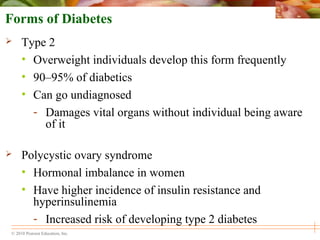
 Type 2
• Overweight individuals develop this form frequently
• 90–95% of diabetics
• Can go undiagnosed
- Damages vital organs without individual being aware
of it
 Polycystic ovary syndrome
• Hormonal imbalance in women
• Have higher incidence of insulin resistance and
hyperinsulinemia
- Increased risk of developing type 2 diabetes
© 2010 Pearson Education, Inc.
Forms of Diabetes
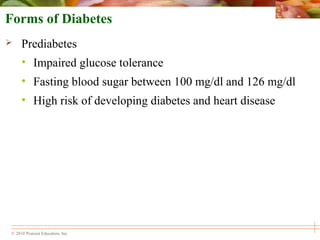
 Prediabetes
• Impaired glucose tolerance
• Fasting blood sugar between 100 mg/dl and 126 mg/dl
• High risk of developing diabetes and heart disease
© 2010 Pearson Education, Inc.
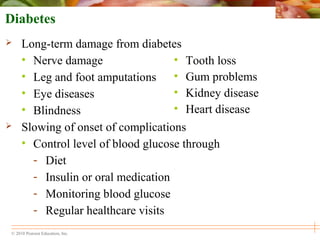
• Tooth loss
• Gum problems
• Kidney disease
• Heart disease
Diabetes
 Long-term damage from diabetes
• Nerve damage
• Leg and foot amputations
• Eye diseases
• Blindness
 Slowing of onset of complications
• Control level of blood glucose through
- Diet
- Insulin or oral medication
- Monitoring blood glucose
- Regular healthcare visits
© 2010 Pearson Education, Inc.
Diabetes
 Slowing of onset of complications
• Control level of blood glucose through
- Diet
- Insulin or oral medication
- Monitoring blood glucose
- Regular health care visits
© 2010 Pearson Education, Inc.
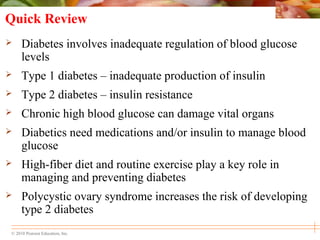
Quick Review
 Diabetes involves inadequate regulation of blood glucose
levels
 Type 1 diabetes – inadequate production of insulin
 Type 2 diabetes – insulin resistance
 Chronic high blood glucose can damage vital organs
 Diabetics need medications and/or insulin to manage blood
glucose
 High-fiber diet and routine exercise play a key role in
managing and preventing diabetes
 Polycystic ovary syndrome increases the risk of developing
type 2 diabetes
© 2010 Pearson Education, Inc.
• Confused
• Weak
• Shaky
• Sweaty
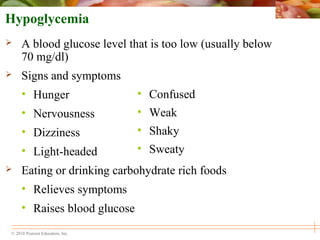
Hypoglycemia
 A blood glucose level that is too low (usually below
70 mg/dl)
 Signs and symptoms
• Hunger
• Nervousness
• Dizziness
• Light-headed
 Eating or drinking carbohydrate rich foods
• Relieves symptoms
• Raises blood glucose
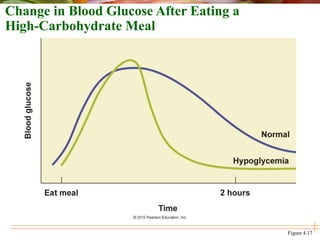
Figure 4.17
Change in Blood Glucose After Eating a
High-Carbohydrate Meal
© 2010 Pearson Education, Inc.
Fasting Hypoglycemia
 Occurs in the morning after an overnight fast
 Occurs during long stretches between meals or after
exercise
 May be caused by
• Medications
• Illness
• Drinking too much alcohol
• Certain tumors
• Hormone imbalances
© 2010 Pearson Education, Inc.
Quick Review
 Symptoms of hypoglycemia
• Hungry, nervous, light-headed, shaky, and/or sweaty
 Diabetics who take medications and/or insulin and do not
eat properly are at risk
 Individuals without diabetes may experience reactive
hypoglycemia several hours after meals
 Fasting hypoglycemia may occur upon awaking in the
morning
 Can be caused by medications, illnesses, hormone
imbalances, or excessive consumption of alcohol
© 2010 Pearson Education, Inc.
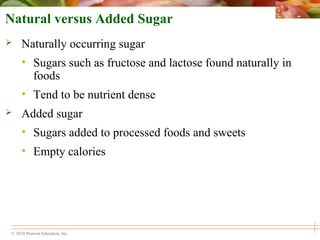
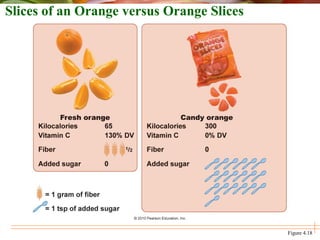
Natural versus Added Sugar
 Naturally occurring sugar
• Sugars such as fructose and lactose found naturally in
foods
• Tend to be nutrient dense
 Added sugar
• Sugars added to processed foods and sweets
• Empty calories
Figure 4.18
Slices of an Orange versus Orange Slices
© 2010 Pearson Education, Inc.
Added Sugar
 Reasons sugar is added to foods
• To keep product moist
• To turn pastries a golden brown
• Preservative
• Thickening agent
• Make yeast rise
• Make foods taste sweet
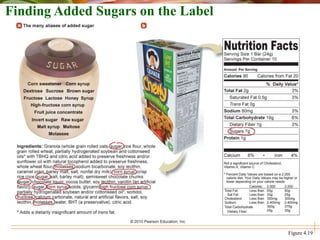
Figure 4.19
Finding Added Sugars on the Label
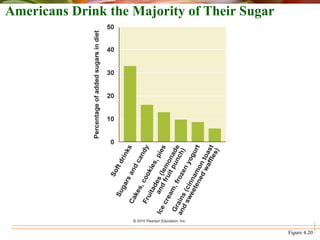
Figure 4.20
Americans Drink the Majority of Their Sugar
© 2010 Pearson Education, Inc.
Health Effects of Sugar
 Sugar can contribute to
• Dental carries
• Elevated level of fat in the blood
• Lowing of HDL cholesterol
 Sugar does not cause
• Increased risk of diabetes
• Hyperactivity in children
 Sugar is not considered an addictive substance
© 2010 Pearson Education, Inc.
Quick Review
 Taste buds do not distinguish between naturally occurring
sugar and added sugar
 Foods with naturally occurring sugar provide more
nutrition and satiation than empty-calorie sweets
 There are numerous names for added sugar
 Soft drinks are the number-one contributor of added sugars
to U.S. diets
© 2010 Pearson Education, Inc.
Putting It All Together
 Carbohydrates are an important part of a healthy diet
 Whole grains, fruits, vegetables, and lean dairy products
• Provide carbohydrates and vitamins and minerals
• Should be the predominant source of carbohydrates
 Whole grains, fruits, and vegetables are a good source of
fiber and phytochemicals
• Adequate amounts of these can prevent many chronic
disease
 Sugary foods should be eaten in moderation

Nut chapter 4_lecture

  • 1.
    © 2010 PearsonEducation, Inc. Chapter 4: Carbohydrates, Sugars, Starches and Fiber
  • 2.
    © 2010 PearsonEducation, Inc. What Are Carbohydrates?  Produced by plants during photosynthesis  After eating plant foods, humans convert the carbohydrates into glucose  Glucose • Most abundant carbohydrate • Preferred source of energy for the blood, brain, and nervous system  Carbohydrate-rich plant foods make up the foundation of diets all over the world
  • 3.
    © 2010 PearsonEducation, Inc. Classification of Carbohydrates  Simple carbohydrates • Monosaccharide • Disaccharide • Perceived as sweeter than complex carbohydrates - Mixes with saliva and reacts with taste buds  Oligosaccharides  Complex carbohydrates • Polysaccharides
  • 4.
    © 2010 PearsonEducation, Inc. Monosaccharides  Three nutritionally important monosaccharides • Glucose • Fructose • Galactose
  • 5.
    © 2010 PearsonEducation, Inc. Monosaccharides  Glucose • Blood glucose and blood sugar in the body • Most abundant monosaccharide in the body - Is the preferred and main source of energy for the brain and red blood cells • Part of every disaccharide • Only monosaccharide in starches
  • 6.
    © 2010 PearsonEducation, Inc. Monosaccharides  Fructose • Sweetest of natural sugars • Found abundantly in fruits • Part of high-fructose corn syrup  Galactose • Commonly occurs as part of dissaccharide lactose
  • 7.
    Figure 4.2 The StructuralDifferences between Glucose, Galactose, and Fructose
  • 8.
    © 2010 PearsonEducation, Inc. Disaccharides  Three Disaccharides • Sucrose - Most common • Lactose • Maltose - Least common - Formed from digestion of starches
  • 9.
    Figure 4.3 Monosaccharides Linkto Form Disaccharides
  • 10.
    © 2010 PearsonEducation, Inc. Polysaccharides  Starch • Plants store glucose in chains of starch - Amylose - Straight chain - More resistant to digestion - Resistant starch  May improve health of digestive tract  May improve glucose tolerance  May stimulate growth of beneficial intestinal bacteria - Amylopectin - Branched chains - Easier to digest
  • 11.
    © 2010 PearsonEducation, Inc. Polysaccharides  Fiber • Nondigestible polysaccharides • Provides no energy • Classification - Soluble - Pectins, beta-glucan, some gums, mucilage - Easily fermented by intestinal bacteria • Carbon dioxide, methane, some fatty acids - Insoluble - Cellulose, lignin, some hemicelluloses - Not easily fermented
  • 12.
    © 2010 PearsonEducation, Inc. Fiber Health Benefits  Soluble fibers • Slow gastric emptying and may delay absorption of some nutrients - Helps reduce serum cholesterol - Improve appetite control - Normalize blood glucose levels • May help protect against colon cancer  Insoluble fibers • Relieves constipation  Most plant foods contain both soluble and insoluble fibers
  • 13.
    © 2010 PearsonEducation, Inc. Polysaccharides  Glycogen • Storage form of glucose in animals • Long, branched chains of glucose • Stored in liver and muscle • Liver glycogen response to blood glucose (BG) levels  BG  glycogen breakdown   BG • Muscle glycogen can be broken down for energy for the muscle
  • 14.
    Figure 4.4 The Comparisonof Starch and Glycogen Molecules
  • 15.
    © 2010 PearsonEducation, Inc. Oligosaccharides  Similar in length to simple carbohydrates  Similar in makeup to polysaccharides  Humans lack the enzymes necessary to digest them  Intestinal microflora digest and ferment them • Cause bloating, discomfort, and flatulence  Food sources • Legumes, beans, cabbage, brussels sprouts, broccoli
  • 16.
    Figure 4.7 The Structureof an Oligosaccharide
  • 17.
    © 2010 PearsonEducation, Inc. Quick Review  Complex carbohydrates • Polysaccharides: starch, fiber, glycogen • Fiber - Soluble – fermented by intestinal bacteria; moves slowly - Insoluble – moves quickly through and reduces constipation - Functional – added to foods  Oligosaccharides • Contain three to ten units • Part of cellulose in cell walls
  • 18.
    © 2010 PearsonEducation, Inc. Carbohydrate Digestion and Absorption  Disaccharides and starches are digested to monosaccharides  Monosaccharides are easily absorbed  Fiber passes through the GI tract undigested
  • 19.
  • 20.
  • 21.
  • 22.
  • 23.
    © 2010 PearsonEducation, Inc. Absorption of Carbohydrates  Once digested to monosaccharides • Absorbed through the intestinal cell mucosa • Transported to the liver via the portal vein • Metabolic needs direct fate of the monosaccharides - Galactose and fructose • Used by the liver for energy • Converted to glucose - Glucose • Used for energy • Converted to glycogen through glycogenesis • Converted to glycerol and fatty acids for storage in addipocytes
  • 24.
    Figure 4.9 Glucose IsStored in the Liver and Muscle Cells as Glycogen
  • 25.
    © 2010 PearsonEducation, Inc. Quick Review  Digestion of carbohydrates begins in the mouth  Most carbohydrate digestion takes place in the small intestine  Carbohydrates are broken down to monosaccharides for absorption  Monosaccharides are converted to glucose in the liver and • Used as energy • Stored as glycogen in the liver and muscle cells • Stored as glycerol and fatty acids in the adipocytes  Fiber travels to the colon undigested and most is eliminated from the body
  • 26.
    © 2010 PearsonEducation, Inc. Lactose Intolerance  Deficiency of lactase, the enzyme that digest lactose • Maldigestion – inability to digest lactose due to low levels of the enzyme • Intolerance - Maldigestion resulting in nausea, cramps, bloating, flatulence, and diarrhea
  • 27.
    © 2010 PearsonEducation, Inc. Functions of Carbohydrate  Provide energy • 4 kilocalories per gram  Maintain blood glucose • Carbohydrate intake • Glycogenolysis > 4 hours after a meal  Spare protein • Prevents the need for glyconogenesis  Prevents ketosis
  • 28.
    © 2010 PearsonEducation, Inc. How to Maintain Blood Glucose Levels  Goal for blood glucose is 70–100 mg/dl  Insulin – lowers blood glucose levels • Needed for glucose to enter the cell from the blood stream - Exception: liver, kidney, and brain cells • Helps convert glucose to glycogen through glycogenesis • Helps convert glucose to fatty acids through lipogenesis • Inhibits lipolysis  Glucagon – increases blood glucose levels • Stimulates the release of glucose into the blood • Stimulates glycogenolysis • Stimulates gluconeogensis
  • 29.
    Figure 4.10 Insulin andGlucagon Regulate Glucose Metabolism
  • 30.
    © 2010 PearsonEducation, Inc. How to Maintain Blood Glucose Levels  Epinephrine and norepinephrine – increases blood glucose • Stimulate glycogenolysis and gluconeogenesis  Cortisol – increases blood glucose • Stimulates gluconeogensis • Reduces uptake of glucose by the muscle cells  Growth hormone – increases blood glucose • Stimulates fat breakdown for energy • Reduces uptake of glucose by the muscles • Increase glucose production in the liver
  • 31.
    © 2010 PearsonEducation, Inc. Quick Review  Glucose is the body’s preferred source of energy • Especially the brain and red blood cells  Adequate carbohydrate intake • Maintains blood glucose levels • Spares protein • Prevents ketosis  Blood glucose levels are maintained by two hormones • Insulin which lowers blood glucose levels • Glucagon which raises blood glucose levels  Epinephrine, norepinephrine, corisol, and growth hormone raise blood glucose levels.
  • 32.
    © 2010 PearsonEducation, Inc. Glycemic Index  Classifies the effects of carbohydrate-containing foods on blood glucose  May be helpful for diabetics  Glycemic index (GI) refers to the measured upward rise, peaks, and falls of blood glucose following consumption of high-carbohydrate food • Ranks foods according blood glucose
  • 33.
    © 2010 PearsonEducation, Inc. Glycemic Load  Glycemic load (GL) – adjust GI by taking into account the amount of carbohydrate consumed in a typical serving of food  Factors affecting GI • Ripeness of fruit • Cooking • Processing • Size of food pieces • Amount of fiber • Combinations of food eaten
  • 34.
    © 2010 PearsonEducation, Inc. Glycemic Index and Glycemic Load  Usefulness of GI and GL for disease prevention and weight management is controversial  Is helpful in educating people about • Carbohydrate content of foods • Portion sizes • Serving numbers
  • 35.
    © 2010 PearsonEducation, Inc. Dietary Fiber  Benefits • Helps lower risk of - Bowel irregularity - Obesity - Heart disease - Cancer - Diabetes mellitus
  • 36.
    © 2010 PearsonEducation, Inc. Figure 4.12 Dietary Fiber  Chronic constipation can lead to diverticulosis and diverticulitis  Prevention of constipation and diverticulosis • Insoluble fiber helps reduce transit time of foods in the colon • Soluble fiber helps make stool easier to pass by increasing bulk and softening texture
  • 37.
    © 2010 PearsonEducation, Inc. Figure 4.13 Dietary Fiber  Prevention of heart disease and diabetes • Viscous, soluble fiber helps lower elevated blood cholesterol levels - Interferes with reabsorbtion of bile acid
  • 38.
    © 2010 PearsonEducation, Inc. Dietary Fiber • Slow moving, viscous, soluble fiber may reduce the rate which fat and carbohydrate are absorbed - Decreasing level of fat in blood and improving insulin sensitivity, decrease risk of heart disease • Insoluble fiber has been shown to promote heart health • Viscous soluble fiber helps slow digestion and absorption helping control blood glucose levels
  • 39.
    © 2010 PearsonEducation, Inc. Dietary Fiber  Fiber helps reduce the incidence of several cancers • Decreases the amount of time cancer-promoting substances spend in contact with the intestinal lining • Encourages the growth of colon-friendly bacteria • Reduces acid in the colon  Helps prevent obesity • Increase satiety • Reduce food intake Caution: Increase dietary fiber and fluid intake gradually
  • 40.
    © 2010 PearsonEducation, Inc. Quick Review  Glycemic index (GI) ranks foods according to effects on glucose levels compared to white bread or pure glucose  Glycemic load adjust for serving size  Foods that contain high fiber or are eaten with protein and fat generally have a lower GI.  High-fiber diet health benefits include reduced risk of • Constipation • Diverticulosis • Heart disease • Obesity • Diabetes Mellitus • Cancer
  • 42.
  • 43.
    © 2010 PearsonEducation, Inc. Carbohydrate Sources  Best choices should include nutrient-dense, low-saturated fat foods, simple carbohydrates, fiber, complex carbohydrates
  • 44.
    Figure 4.14 Food Sourcesof Carbohydrates
  • 45.
  • 46.
    © 2010 PearsonEducation, Inc. • Legumes • Low-fat dairy products • Legumes • Nuts • Seeds Quick Review  Best sources of carbohydrates are • Fresh fruits and vegetables • Whole grains  Excellent sources of fiber are • Whole grains • Fruits • Vegetables  Packaged foods can be good sources of starch and fiber • Read label carefully • Avoid too much sugar, fat, and kilocalories
  • 47.
    © 2010 PearsonEducation, Inc. Diabetes Mellitus  Occurs when an individual either doesn’t make enough, or is unable to utilize, the hormone insulin to regulate blood glucose levels  Epidemic • Sixth leading cause of death in the United States • Costs the U.S. almost $100 billion annually • Number of people with diabetes is rising annually
  • 48.
    Liver Breaks Down Glycogen andProduces Glucose from Non- Carbohydrate Sources Consume Carbohydrates Blood Glucose Rises Body Uses Fat for Fuel Ketoadicosis Blood Glucose Rises No Insulin Available or Cells Resistant Cell Starves Diabetes Mellitus
  • 49.
    © 2010 PearsonEducation, Inc. Forms of Diabetes  Type 1 • Usually begins in childhood or early adulthood • 5–10% of diabetics • Immune system destroys beta cells of the pancreas - No insulin produced • Common symptoms of elevated blood sugar - Polydipsia - Polyuria - Polyphagia • Require insulin and frequent blood glucose monitoring
  • 50.
    © 2010 PearsonEducation, Inc. Forms of Diabetes  Type 2 • Overweight individuals develop this form frequently • 90–95% of diabetics • Can go undiagnosed - Damages vital organs without individual being aware of it  Polycystic ovary syndrome • Hormonal imbalance in women • Have higher incidence of insulin resistance and hyperinsulinemia - Increased risk of developing type 2 diabetes
  • 51.
    © 2010 PearsonEducation, Inc. Forms of Diabetes  Prediabetes • Impaired glucose tolerance • Fasting blood sugar between 100 mg/dl and 126 mg/dl • High risk of developing diabetes and heart disease
  • 52.
    © 2010 PearsonEducation, Inc. • Tooth loss • Gum problems • Kidney disease • Heart disease Diabetes  Long-term damage from diabetes • Nerve damage • Leg and foot amputations • Eye diseases • Blindness  Slowing of onset of complications • Control level of blood glucose through - Diet - Insulin or oral medication - Monitoring blood glucose - Regular healthcare visits
  • 53.
    © 2010 PearsonEducation, Inc. Diabetes  Slowing of onset of complications • Control level of blood glucose through - Diet - Insulin or oral medication - Monitoring blood glucose - Regular health care visits
  • 55.
    © 2010 PearsonEducation, Inc. Quick Review  Diabetes involves inadequate regulation of blood glucose levels  Type 1 diabetes – inadequate production of insulin  Type 2 diabetes – insulin resistance  Chronic high blood glucose can damage vital organs  Diabetics need medications and/or insulin to manage blood glucose  High-fiber diet and routine exercise play a key role in managing and preventing diabetes  Polycystic ovary syndrome increases the risk of developing type 2 diabetes
  • 56.
    © 2010 PearsonEducation, Inc. • Confused • Weak • Shaky • Sweaty Hypoglycemia  A blood glucose level that is too low (usually below 70 mg/dl)  Signs and symptoms • Hunger • Nervousness • Dizziness • Light-headed  Eating or drinking carbohydrate rich foods • Relieves symptoms • Raises blood glucose
  • 57.
    Figure 4.17 Change inBlood Glucose After Eating a High-Carbohydrate Meal
  • 58.
    © 2010 PearsonEducation, Inc. Fasting Hypoglycemia  Occurs in the morning after an overnight fast  Occurs during long stretches between meals or after exercise  May be caused by • Medications • Illness • Drinking too much alcohol • Certain tumors • Hormone imbalances
  • 59.
    © 2010 PearsonEducation, Inc. Quick Review  Symptoms of hypoglycemia • Hungry, nervous, light-headed, shaky, and/or sweaty  Diabetics who take medications and/or insulin and do not eat properly are at risk  Individuals without diabetes may experience reactive hypoglycemia several hours after meals  Fasting hypoglycemia may occur upon awaking in the morning  Can be caused by medications, illnesses, hormone imbalances, or excessive consumption of alcohol
  • 60.
    © 2010 PearsonEducation, Inc. Natural versus Added Sugar  Naturally occurring sugar • Sugars such as fructose and lactose found naturally in foods • Tend to be nutrient dense  Added sugar • Sugars added to processed foods and sweets • Empty calories
  • 61.
    Figure 4.18 Slices ofan Orange versus Orange Slices
  • 62.
    © 2010 PearsonEducation, Inc. Added Sugar  Reasons sugar is added to foods • To keep product moist • To turn pastries a golden brown • Preservative • Thickening agent • Make yeast rise • Make foods taste sweet
  • 63.
    Figure 4.19 Finding AddedSugars on the Label
  • 64.
    Figure 4.20 Americans Drinkthe Majority of Their Sugar
  • 65.
    © 2010 PearsonEducation, Inc. Health Effects of Sugar  Sugar can contribute to • Dental carries • Elevated level of fat in the blood • Lowing of HDL cholesterol  Sugar does not cause • Increased risk of diabetes • Hyperactivity in children  Sugar is not considered an addictive substance
  • 66.
    © 2010 PearsonEducation, Inc. Quick Review  Taste buds do not distinguish between naturally occurring sugar and added sugar  Foods with naturally occurring sugar provide more nutrition and satiation than empty-calorie sweets  There are numerous names for added sugar  Soft drinks are the number-one contributor of added sugars to U.S. diets
  • 67.
    © 2010 PearsonEducation, Inc. Putting It All Together  Carbohydrates are an important part of a healthy diet  Whole grains, fruits, vegetables, and lean dairy products • Provide carbohydrates and vitamins and minerals • Should be the predominant source of carbohydrates  Whole grains, fruits, and vegetables are a good source of fiber and phytochemicals • Adequate amounts of these can prevent many chronic disease  Sugary foods should be eaten in moderation