
Chapter 3 Lecture
Chapter 3:
Carbohydrates
Plant-Derived
Energy Nutrients
© 2016 Pearson Education, Inc.
Learning Outcomes
1. Distinguish between simple and complex
carbohydrates.
2. List four functions of carbohydrates in our body.
3. Explain how carbohydrates are digested and
absorbed by our body.
4. Define the glycemic index and glycemic load.
© 2016 Pearson Education, Inc.
Learning Outcomes
5. Identify the RDA and the AMDR for
carbohydrates, and the AI for fiber.
6. Identify the most common dietary sources of
added sugars and the potential health risks of a
diet high in added sugars.
7. List five foods that are good sources of fiber-
rich carbohydrates.
© 2016 Pearson Education, Inc.
Learning Outcomes
8. Compare and contrast a variety of alternative
sweeteners.
9. Distinguish between type 1 diabetes, type 2
diabetes, and prediabetes.
10.Describe the lifestyle behaviors that can
prevent or control diabetes.
© 2016 Pearson Education, Inc.
What Are Carbohydrates?
• Carbohydrates
• One of the three macronutrients
• A primary energy source, especially for nerve
cells
• Molecules composed of carbon, hydrogen,
and oxygen atoms
• Most come from plant sources
© 2016 Pearson Education, Inc.
What Are Carbohydrates?
• Glucose
• The most abundant carbohydrate
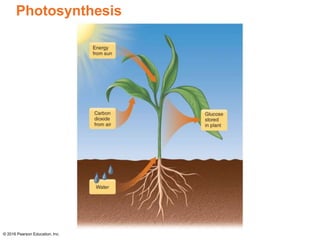
• Produced by plants through photosynthesis
© 2016 Pearson Education, Inc.
Photosynthesis
© 2016 Pearson Education, Inc.
What Are Carbohydrates?
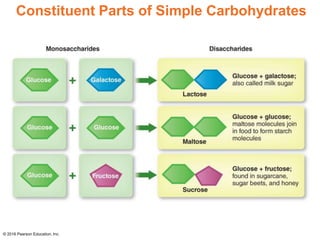
• Simple carbohydrates are sugars
• Contain one or two molecules
• Monosaccharides contain only one molecule.
• Glucose, fructose, galactose
• Disaccharides contain two molecules.
• Lactose, maltose, sucrose
© 2016 Pearson Education, Inc.
Constituent Parts of Simple Carbohydrates
© 2016 Pearson Education, Inc.
What Are Carbohydrates?
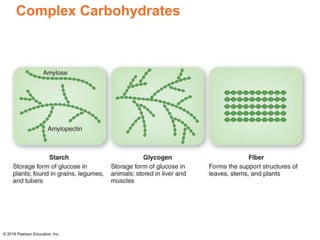
• Complex carbohydrates
• Long chains of glucose molecules
• Also called polysaccharides
• Starch, glycogen, and fiber
© 2016 Pearson Education, Inc.
Complex Carbohydrates
© 2016 Pearson Education, Inc.
Complex Carbohydrates
• Starch
• Plants store carbohydrates as starch.
• Humans digest (break down) starch into
glucose.
• Grains, legumes, and tubers are good
sources of starch in our diet.
© 2016 Pearson Education, Inc.
Complex Carbohydrates
• Fiber
• Fiber is the non-digestible part of plants.
• Dietary Fiber occurs naturally in foods.
• Found in whole grains, vegetables, seeds,
legumes, fruits
• Functional fiber is carbohydrate that is
manufactured and added to food.
• Cellulose, guar gum, pectin, psyllium
• Total fiber = dietary + functional fiber
© 2016 Pearson Education, Inc.
Complex Carbohydrates
• Soluble fiber
• Soluble in water and viscous (forms a gel
when wet)
• Found in citrus fruits, berries, oats and beans
• May reduce risk of cardiovascular disease
and Type 2 diabetes
• Insoluble fiber
• Insoluble in water
• Found in whole grains and vegetables
• Promote regular bowel movements
© 2016 Pearson Education, Inc.
Complex Carbohydrates
1. If you had to give nutrition advice to the general
public, what foods would you recommend for
increasing fiber intake?
2. Average fiber intake for Americans is much lower
than recommended levels. What are the reasons
Americans consume lower than recommended
amounts of fiber in their daily diet?
3. How might one's living environment, cultural
practices, socioeconomic status, and education
level limit their consumption of fiber rich foods?
© 2016 Pearson Education, Inc.
Complex Carbohydrates
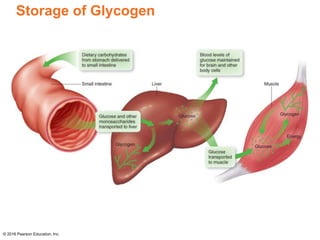
• Glycogen
• Animals store carbohydrate as glycogen.
• Stored in the liver and muscles
• Broken down into glucose
• Rarely found in food and therefore not a
dietary source of carbohydrate
© 2016 Pearson Education, Inc.
Complex Carbohydrates
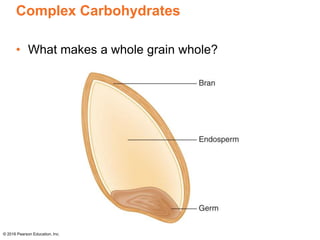
• What makes a whole grain whole?
© 2016 Pearson Education, Inc.
Whole Grains
1. How can we raise consumer awareness that there
is a discrepancy between the marketing of grain
products and the actual contents of grain products
for consumption?
2. How can companies be held to a better standard to
be more honest regarding the contents of
products?
3. Provide an argument for the need for the FDA to
define whole grains.
© 2016 Pearson Education, Inc.
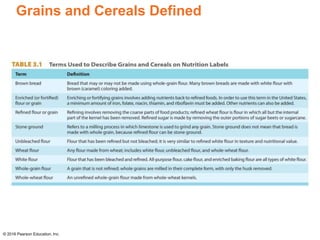
Grains and Cereals Defined
© 2016 Pearson Education, Inc.
Why Do We Need to Eat Carbohydrates?
• Energy
• Each gram of carbohydrate = 4 kcal
• Important source of energy for all cells
• Critical energy source for brain cells and red
blood cells
• Glucose is especially important for energy
during exercise.
© 2016 Pearson Education, Inc.
Why Do We Need to Eat Carbohydrates?
• Energy
• Insufficient carbohydrate intake causes the
body to find an alternate source of glucose.
• Often proteins are broken down and used for
gluconeogenesis – the production of new
glucose.
© 2016 Pearson Education, Inc.
Why Do We Need to Eat Carbohydrates?
• Fiber-rich carbohydrates
• May reduce the risk of colon cancer
• May reduce the risk of heart disease
• May enhance weight loss
• May reduce risk of type 2 diabetes
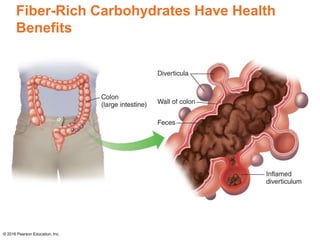
• Help prevent hemorrhoids, constipation, and
diverticulosis
© 2016 Pearson Education, Inc.
Fiber-Rich Carbohydrates Have Health
Benefits
© 2016 Pearson Education, Inc.
Fiber-Rich Carbohydrates Have Health
Benefits
© 2016 Pearson Education, Inc.
Next slide to view video.
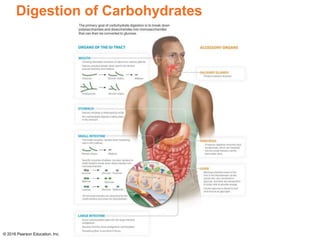
Digestion of Carbohydrates
© 2016 Pearson Education, Inc.
What Happens to the Carbohydrates We
Eat?
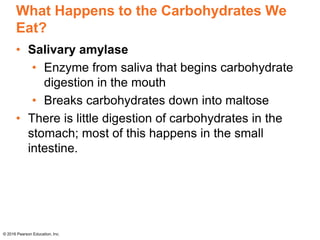
• Salivary amylase
• Enzyme from saliva that begins carbohydrate
digestion in the mouth
• Breaks carbohydrates down into maltose
• There is little digestion of carbohydrates in the
stomach; most of this happens in the small
intestine.
© 2016 Pearson Education, Inc.
What Happens to the Carbohydrates We
Eat?
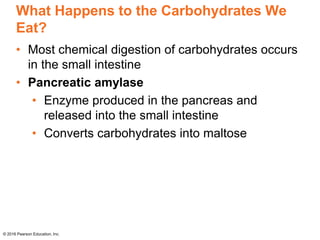
• Most chemical digestion of carbohydrates occurs
in the small intestine
• Pancreatic amylase
• Enzyme produced in the pancreas and
released into the small intestine
• Converts carbohydrates into maltose
© 2016 Pearson Education, Inc.
What Happens to the Carbohydrates We
Eat?
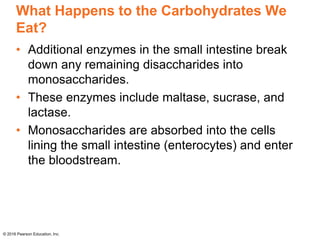
• Additional enzymes in the small intestine break
down any remaining disaccharides into
monosaccharides.
• These enzymes include maltase, sucrase, and
lactase.
• Monosaccharides are absorbed into the cells
lining the small intestine (enterocytes) and enter
the bloodstream.
© 2016 Pearson Education, Inc.
Lactose Intolerance
• Lactose intolerance
• Insufficient lactase production causes an
inability to completely digest the lactose
found in dairy products.
• Symptoms include intestinal gas, bloating,
nausea, cramping, diarrhea.
• Lactose-intolerant people may need to find
alternate sources of calcium.
© 2016 Pearson Education, Inc.
The Liver Converts All Sugars into Glucose
• Once absorbed into the bloodstream, all
monosaccharides are converted to glucose by
the liver.
• Glucose circulating in the blood is our primary
energy source.
• Excess glucose is converted to glycogen by the
liver.
© 2016 Pearson Education, Inc.
Absorption of Carbohydrates
© 2016 Pearson Education, Inc.
Click on the Carbohydrate
Absorption link separate from
the power point.
Digestion of Carbohydrates
• We do not have the enzymes necessary to
digest fiber.
• Bacteria in the large intestine can break down
some fiber.
• Most fiber remains undigested and is eliminated
with feces.
© 2016 Pearson Education, Inc.
Storage of Glycogen
© 2016 Pearson Education, Inc.
Digestion of Carbohydrates
© 2016 Pearson Education, Inc.
Click on the Carbohydrate
Digestion link separate
from the power point.
Regulation of Blood Glucose
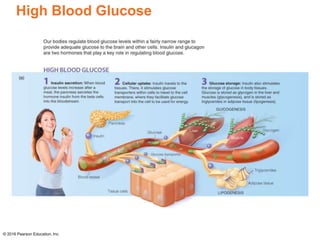
• The level of glucose in the blood must be closely
regulated.
• Two hormones, insulin and glucagon, control
the level of glucose in the blood.
© 2016 Pearson Education, Inc.
Insulin
• Insulin
• Produced by beta cells of the pancreas
• Helps cells take in glucose from the blood
• Stimulates the liver to take up glucose and
convert it to glycogen
© 2016 Pearson Education, Inc.
High Blood Glucose
© 2016 Pearson Education, Inc.
Glucagon
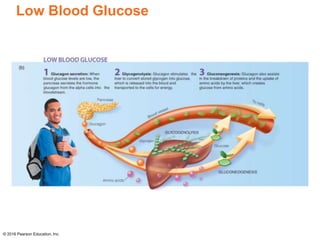
• Glucagon
• Produced by alpha cells of the pancreas
• Stimulates the breakdown of glycogen to
glucose to make glucose available to cells of
the body
• Stimulates gluconeogenesis – the
production of new glucose from amino acids
© 2016 Pearson Education, Inc.
Low Blood Glucose
© 2016 Pearson Education, Inc.
Regulation of Blood Glucose
© 2016 Pearson Education, Inc.
Click on the Blood Glucose
link separate from power
point.
Regulation of Blood Glucose
• Hypoglycemia
• Low blood-sugar (glucose) levels
• One cause is excessive insulin production
• Causes shakiness, sweating, anxiety,
weakness, irregular heart beat
© 2016 Pearson Education, Inc.
Effect of Food Upon Blood Glucose
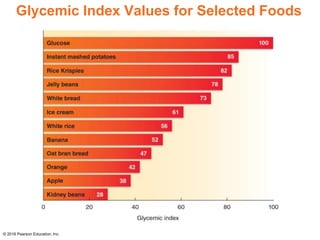
• The glycemic index is a food's mathematical
potential to raise blood glucose levels.
• Glycemic load = amount of carbs x glycemic
index
• Foods with a low glycemic load:
• Cause low or moderate changes in blood
glucose
• Are better for people with diabetes
• May reduce the risk of heart disease and
colon cancer
© 2016 Pearson Education, Inc.
Glycemic Index Values for Selected Foods
© 2016 Pearson Education, Inc.
How Much Carbohydrate Should We Eat?
• Recommended Dietary Allowance (RDA) is 130
grams/day just to supply adequate glucose to
the brain
• A total of 45–65% of daily caloric intake should
be in the form of carbohydrates.
• Focus on fiber-rich and unprocessed
carbohydrates
© 2016 Pearson Education, Inc.
Simple Sugars
• Diets high in simple sugars:
• Can cause dental problems such as tooth
decay and gum disease
• May contribute to unhealthy levels of blood
lipid levels (cholesterol, etc.)
• Have not been proven to cause hyperactivity
• May contribute to obesity and diabetes
© 2016 Pearson Education, Inc.
Simple Sugars
1. What can you do to avoid overconsumption of
sugar?
2. Why is added sugar unhealthy? What diseases can
occur due to consuming high amounts of added
sugar?
3. What are some of the replacement
(counterconditioning) tactics that can help cut back
on our "want" of added sugar?
© 2016 Pearson Education, Inc.
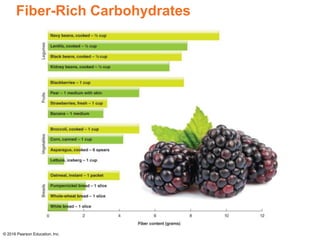
Fiber-Rich Carbohydrates
• The Adequate Intake (AI) of fiber is:
• 25 grams/day for women
• 38 grams/day for men
• Most Americans eat only half the recommended
amount of fiber.
• Whole-grain foods are a more healthful choice
than foods with added sugar.
© 2016 Pearson Education, Inc.
Fiber-Rich Carbohydrates
• Excessive fiber can cause:
• Intestinal gas and bloating
• Dehydration if water is not increased
• Reduced absorption of certain nutrients
• Malnutrition if feeling "full" precludes intake of
other nutrients
© 2016 Pearson Education, Inc.
Fiber-Rich Carbohydrates
© 2016 Pearson Education, Inc.
Click on the Diverticulosis
link separate from the power
point.
Fiber-Rich Carbohydrates
© 2016 Pearson Education, Inc.
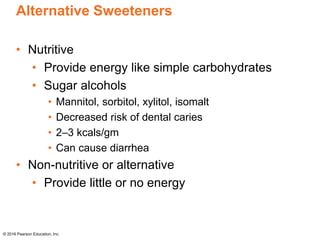
Alternative Sweeteners
• Nutritive
• Provide energy like simple carbohydrates
• Sugar alcohols
• Mannitol, sorbitol, xylitol, isomalt
• Decreased risk of dental caries
• 2–3 kcals/gm
• Can cause diarrhea
• Non-nutritive or alternative
• Provide little or no energy
© 2016 Pearson Education, Inc.
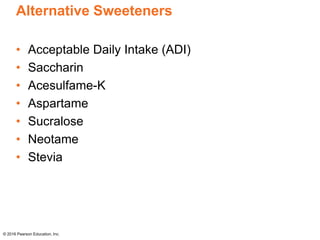
Alternative Sweeteners
• Acceptable Daily Intake (ADI)
• Saccharin
• Acesulfame-K
• Aspartame
• Sucralose
• Neotame
• Stevia
© 2016 Pearson Education, Inc.
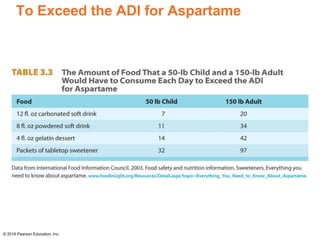
To Exceed the ADI for Aspartame
© 2016 Pearson Education, Inc.
Carbohydrates in our Diet
© 2016 Pearson Education, Inc.
Click on the Build a Meal link
separate from the power
point.
Carbohydrates in our Diet
© 2016 Pearson Education, Inc.
Click on the Build a sandwhich
link separate from the power
point.
What is Diabetes?
• Diabetes
• Inability to regulate blood glucose levels
• Three types:
• Type 1 diabetes
• Type 2 diabetes
• Gestational diabetes
• Untreated diabetes can cause nerve damage,
kidney damage, blindness, the need for
amputations, and death.
© 2016 Pearson Education, Inc.
What is Diabetes?
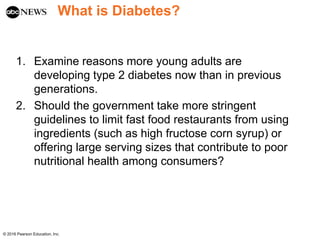
1. Examine reasons more young adults are
developing type 2 diabetes now than in previous
generations.
2. Should the government take more stringent
guidelines to limit fast food restaurants from using
ingredients (such as high fructose corn syrup) or
offering large serving sizes that contribute to poor
nutritional health among consumers?
© 2016 Pearson Education, Inc.
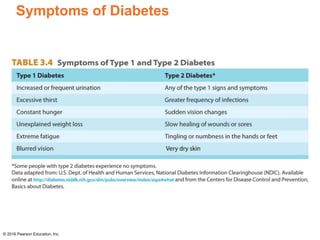
Symptoms of Diabetes
© 2016 Pearson Education, Inc.
Forms of Diabetes
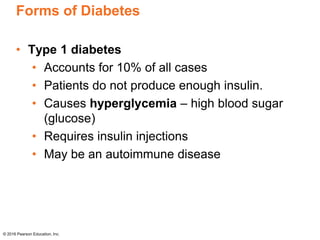
• Type 1 diabetes
• Accounts for 10% of all cases
• Patients do not produce enough insulin.
• Causes hyperglycemia – high blood sugar
(glucose)
• Requires insulin injections
• May be an autoimmune disease
© 2016 Pearson Education, Inc.
Forms of Diabetes
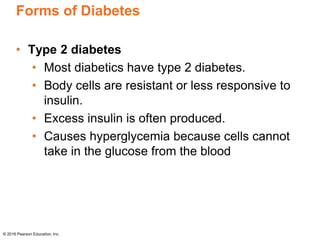
• Type 2 diabetes
• Most diabetics have type 2 diabetes.
• Body cells are resistant or less responsive to
insulin.
• Excess insulin is often produced.
• Causes hyperglycemia because cells cannot
take in the glucose from the blood
© 2016 Pearson Education, Inc.
Forms of Diabetes
• Pre-diabetes
• Impaired fasting glucose levels are higher
than normal but not high enough for a
diagnosis of type 2 diabetes
• Metabolic syndrome
• Waist circumference
• Blood pressure
• Blood lipids
• Blood glucose levels
© 2016 Pearson Education, Inc.
Forms of Diabetes
• Type 2 diabetes
• Cause is unclear, but genetics, obesity, and
physical inactivity play a role
• Treated with weight loss, diet, exercise, and
possibly oral medications and/or insulin
• Healthy lifestyle choices may prevent or delay
onset of type 2 diabetes.
© 2016 Pearson Education, Inc.

Chapter 3 Power Point

  • 1.
    Chapter 3 Lecture Chapter3: Carbohydrates Plant-Derived Energy Nutrients © 2016 Pearson Education, Inc.
  • 2.
    Learning Outcomes 1. Distinguishbetween simple and complex carbohydrates. 2. List four functions of carbohydrates in our body. 3. Explain how carbohydrates are digested and absorbed by our body. 4. Define the glycemic index and glycemic load. © 2016 Pearson Education, Inc.
  • 3.
    Learning Outcomes 5. Identifythe RDA and the AMDR for carbohydrates, and the AI for fiber. 6. Identify the most common dietary sources of added sugars and the potential health risks of a diet high in added sugars. 7. List five foods that are good sources of fiber- rich carbohydrates. © 2016 Pearson Education, Inc.
  • 4.
    Learning Outcomes 8. Compareand contrast a variety of alternative sweeteners. 9. Distinguish between type 1 diabetes, type 2 diabetes, and prediabetes. 10.Describe the lifestyle behaviors that can prevent or control diabetes. © 2016 Pearson Education, Inc.
  • 5.
    What Are Carbohydrates? •Carbohydrates • One of the three macronutrients • A primary energy source, especially for nerve cells • Molecules composed of carbon, hydrogen, and oxygen atoms • Most come from plant sources © 2016 Pearson Education, Inc.
  • 6.
    What Are Carbohydrates? •Glucose • The most abundant carbohydrate • Produced by plants through photosynthesis © 2016 Pearson Education, Inc.
  • 7.
  • 8.
    What Are Carbohydrates? •Simple carbohydrates are sugars • Contain one or two molecules • Monosaccharides contain only one molecule. • Glucose, fructose, galactose • Disaccharides contain two molecules. • Lactose, maltose, sucrose © 2016 Pearson Education, Inc.
  • 9.
    Constituent Parts ofSimple Carbohydrates © 2016 Pearson Education, Inc.
  • 10.
    What Are Carbohydrates? •Complex carbohydrates • Long chains of glucose molecules • Also called polysaccharides • Starch, glycogen, and fiber © 2016 Pearson Education, Inc.
  • 11.
    Complex Carbohydrates © 2016Pearson Education, Inc.
  • 12.
    Complex Carbohydrates • Starch •Plants store carbohydrates as starch. • Humans digest (break down) starch into glucose. • Grains, legumes, and tubers are good sources of starch in our diet. © 2016 Pearson Education, Inc.
  • 13.
    Complex Carbohydrates • Fiber •Fiber is the non-digestible part of plants. • Dietary Fiber occurs naturally in foods. • Found in whole grains, vegetables, seeds, legumes, fruits • Functional fiber is carbohydrate that is manufactured and added to food. • Cellulose, guar gum, pectin, psyllium • Total fiber = dietary + functional fiber © 2016 Pearson Education, Inc.
  • 14.
    Complex Carbohydrates • Solublefiber • Soluble in water and viscous (forms a gel when wet) • Found in citrus fruits, berries, oats and beans • May reduce risk of cardiovascular disease and Type 2 diabetes • Insoluble fiber • Insoluble in water • Found in whole grains and vegetables • Promote regular bowel movements © 2016 Pearson Education, Inc.
  • 15.
    Complex Carbohydrates 1. Ifyou had to give nutrition advice to the general public, what foods would you recommend for increasing fiber intake? 2. Average fiber intake for Americans is much lower than recommended levels. What are the reasons Americans consume lower than recommended amounts of fiber in their daily diet? 3. How might one's living environment, cultural practices, socioeconomic status, and education level limit their consumption of fiber rich foods? © 2016 Pearson Education, Inc.
  • 16.
    Complex Carbohydrates • Glycogen •Animals store carbohydrate as glycogen. • Stored in the liver and muscles • Broken down into glucose • Rarely found in food and therefore not a dietary source of carbohydrate © 2016 Pearson Education, Inc.
  • 17.
    Complex Carbohydrates • Whatmakes a whole grain whole? © 2016 Pearson Education, Inc.
  • 18.
    Whole Grains 1. Howcan we raise consumer awareness that there is a discrepancy between the marketing of grain products and the actual contents of grain products for consumption? 2. How can companies be held to a better standard to be more honest regarding the contents of products? 3. Provide an argument for the need for the FDA to define whole grains. © 2016 Pearson Education, Inc.
  • 19.
    Grains and CerealsDefined © 2016 Pearson Education, Inc.
  • 20.
    Why Do WeNeed to Eat Carbohydrates? • Energy • Each gram of carbohydrate = 4 kcal • Important source of energy for all cells • Critical energy source for brain cells and red blood cells • Glucose is especially important for energy during exercise. © 2016 Pearson Education, Inc.
  • 21.
    Why Do WeNeed to Eat Carbohydrates? • Energy • Insufficient carbohydrate intake causes the body to find an alternate source of glucose. • Often proteins are broken down and used for gluconeogenesis – the production of new glucose. © 2016 Pearson Education, Inc.
  • 22.
    Why Do WeNeed to Eat Carbohydrates? • Fiber-rich carbohydrates • May reduce the risk of colon cancer • May reduce the risk of heart disease • May enhance weight loss • May reduce risk of type 2 diabetes • Help prevent hemorrhoids, constipation, and diverticulosis © 2016 Pearson Education, Inc.
  • 23.
    Fiber-Rich Carbohydrates HaveHealth Benefits © 2016 Pearson Education, Inc.
  • 24.
    Fiber-Rich Carbohydrates HaveHealth Benefits © 2016 Pearson Education, Inc. Next slide to view video.
  • 25.
    Digestion of Carbohydrates ©2016 Pearson Education, Inc.
  • 26.
    What Happens tothe Carbohydrates We Eat? • Salivary amylase • Enzyme from saliva that begins carbohydrate digestion in the mouth • Breaks carbohydrates down into maltose • There is little digestion of carbohydrates in the stomach; most of this happens in the small intestine. © 2016 Pearson Education, Inc.
  • 27.
    What Happens tothe Carbohydrates We Eat? • Most chemical digestion of carbohydrates occurs in the small intestine • Pancreatic amylase • Enzyme produced in the pancreas and released into the small intestine • Converts carbohydrates into maltose © 2016 Pearson Education, Inc.
  • 28.
    What Happens tothe Carbohydrates We Eat? • Additional enzymes in the small intestine break down any remaining disaccharides into monosaccharides. • These enzymes include maltase, sucrase, and lactase. • Monosaccharides are absorbed into the cells lining the small intestine (enterocytes) and enter the bloodstream. © 2016 Pearson Education, Inc.
  • 29.
    Lactose Intolerance • Lactoseintolerance • Insufficient lactase production causes an inability to completely digest the lactose found in dairy products. • Symptoms include intestinal gas, bloating, nausea, cramping, diarrhea. • Lactose-intolerant people may need to find alternate sources of calcium. © 2016 Pearson Education, Inc.
  • 30.
    The Liver ConvertsAll Sugars into Glucose • Once absorbed into the bloodstream, all monosaccharides are converted to glucose by the liver. • Glucose circulating in the blood is our primary energy source. • Excess glucose is converted to glycogen by the liver. © 2016 Pearson Education, Inc.
  • 31.
    Absorption of Carbohydrates ©2016 Pearson Education, Inc. Click on the Carbohydrate Absorption link separate from the power point.
  • 32.
    Digestion of Carbohydrates •We do not have the enzymes necessary to digest fiber. • Bacteria in the large intestine can break down some fiber. • Most fiber remains undigested and is eliminated with feces. © 2016 Pearson Education, Inc.
  • 33.
    Storage of Glycogen ©2016 Pearson Education, Inc.
  • 34.
    Digestion of Carbohydrates ©2016 Pearson Education, Inc. Click on the Carbohydrate Digestion link separate from the power point.
  • 35.
    Regulation of BloodGlucose • The level of glucose in the blood must be closely regulated. • Two hormones, insulin and glucagon, control the level of glucose in the blood. © 2016 Pearson Education, Inc.
  • 36.
    Insulin • Insulin • Producedby beta cells of the pancreas • Helps cells take in glucose from the blood • Stimulates the liver to take up glucose and convert it to glycogen © 2016 Pearson Education, Inc.
  • 37.
    High Blood Glucose ©2016 Pearson Education, Inc.
  • 38.
    Glucagon • Glucagon • Producedby alpha cells of the pancreas • Stimulates the breakdown of glycogen to glucose to make glucose available to cells of the body • Stimulates gluconeogenesis – the production of new glucose from amino acids © 2016 Pearson Education, Inc.
  • 39.
    Low Blood Glucose ©2016 Pearson Education, Inc.
  • 40.
    Regulation of BloodGlucose © 2016 Pearson Education, Inc. Click on the Blood Glucose link separate from power point.
  • 41.
    Regulation of BloodGlucose • Hypoglycemia • Low blood-sugar (glucose) levels • One cause is excessive insulin production • Causes shakiness, sweating, anxiety, weakness, irregular heart beat © 2016 Pearson Education, Inc.
  • 42.
    Effect of FoodUpon Blood Glucose • The glycemic index is a food's mathematical potential to raise blood glucose levels. • Glycemic load = amount of carbs x glycemic index • Foods with a low glycemic load: • Cause low or moderate changes in blood glucose • Are better for people with diabetes • May reduce the risk of heart disease and colon cancer © 2016 Pearson Education, Inc.
  • 43.
    Glycemic Index Valuesfor Selected Foods © 2016 Pearson Education, Inc.
  • 44.
    How Much CarbohydrateShould We Eat? • Recommended Dietary Allowance (RDA) is 130 grams/day just to supply adequate glucose to the brain • A total of 45–65% of daily caloric intake should be in the form of carbohydrates. • Focus on fiber-rich and unprocessed carbohydrates © 2016 Pearson Education, Inc.
  • 45.
    Simple Sugars • Dietshigh in simple sugars: • Can cause dental problems such as tooth decay and gum disease • May contribute to unhealthy levels of blood lipid levels (cholesterol, etc.) • Have not been proven to cause hyperactivity • May contribute to obesity and diabetes © 2016 Pearson Education, Inc.
  • 46.
    Simple Sugars 1. Whatcan you do to avoid overconsumption of sugar? 2. Why is added sugar unhealthy? What diseases can occur due to consuming high amounts of added sugar? 3. What are some of the replacement (counterconditioning) tactics that can help cut back on our "want" of added sugar? © 2016 Pearson Education, Inc.
  • 47.
    Fiber-Rich Carbohydrates • TheAdequate Intake (AI) of fiber is: • 25 grams/day for women • 38 grams/day for men • Most Americans eat only half the recommended amount of fiber. • Whole-grain foods are a more healthful choice than foods with added sugar. © 2016 Pearson Education, Inc.
  • 48.
    Fiber-Rich Carbohydrates • Excessivefiber can cause: • Intestinal gas and bloating • Dehydration if water is not increased • Reduced absorption of certain nutrients • Malnutrition if feeling "full" precludes intake of other nutrients © 2016 Pearson Education, Inc.
  • 49.
    Fiber-Rich Carbohydrates © 2016Pearson Education, Inc. Click on the Diverticulosis link separate from the power point.
  • 50.
    Fiber-Rich Carbohydrates © 2016Pearson Education, Inc.
  • 51.
    Alternative Sweeteners • Nutritive •Provide energy like simple carbohydrates • Sugar alcohols • Mannitol, sorbitol, xylitol, isomalt • Decreased risk of dental caries • 2–3 kcals/gm • Can cause diarrhea • Non-nutritive or alternative • Provide little or no energy © 2016 Pearson Education, Inc.
  • 52.
    Alternative Sweeteners • AcceptableDaily Intake (ADI) • Saccharin • Acesulfame-K • Aspartame • Sucralose • Neotame • Stevia © 2016 Pearson Education, Inc.
  • 53.
    To Exceed theADI for Aspartame © 2016 Pearson Education, Inc.
  • 54.
    Carbohydrates in ourDiet © 2016 Pearson Education, Inc. Click on the Build a Meal link separate from the power point.
  • 55.
    Carbohydrates in ourDiet © 2016 Pearson Education, Inc. Click on the Build a sandwhich link separate from the power point.
  • 56.
    What is Diabetes? •Diabetes • Inability to regulate blood glucose levels • Three types: • Type 1 diabetes • Type 2 diabetes • Gestational diabetes • Untreated diabetes can cause nerve damage, kidney damage, blindness, the need for amputations, and death. © 2016 Pearson Education, Inc.
  • 57.
    What is Diabetes? 1.Examine reasons more young adults are developing type 2 diabetes now than in previous generations. 2. Should the government take more stringent guidelines to limit fast food restaurants from using ingredients (such as high fructose corn syrup) or offering large serving sizes that contribute to poor nutritional health among consumers? © 2016 Pearson Education, Inc.
  • 58.
    Symptoms of Diabetes ©2016 Pearson Education, Inc.
  • 59.
    Forms of Diabetes •Type 1 diabetes • Accounts for 10% of all cases • Patients do not produce enough insulin. • Causes hyperglycemia – high blood sugar (glucose) • Requires insulin injections • May be an autoimmune disease © 2016 Pearson Education, Inc.
  • 60.
    Forms of Diabetes •Type 2 diabetes • Most diabetics have type 2 diabetes. • Body cells are resistant or less responsive to insulin. • Excess insulin is often produced. • Causes hyperglycemia because cells cannot take in the glucose from the blood © 2016 Pearson Education, Inc.
  • 61.
    Forms of Diabetes •Pre-diabetes • Impaired fasting glucose levels are higher than normal but not high enough for a diagnosis of type 2 diabetes • Metabolic syndrome • Waist circumference • Blood pressure • Blood lipids • Blood glucose levels © 2016 Pearson Education, Inc.
  • 62.
    Forms of Diabetes •Type 2 diabetes • Cause is unclear, but genetics, obesity, and physical inactivity play a role • Treated with weight loss, diet, exercise, and possibly oral medications and/or insulin • Healthy lifestyle choices may prevent or delay onset of type 2 diabetes. © 2016 Pearson Education, Inc.