Submitted to: Submitted By
Seminarppt.com Seminarppt.com
Seminar
On
Nursing
Management
SeminarPpt.com
Table of Contents
1. Introduction to Nursing Management
2. Key Principles of Nursing Management
3. Nursing Management Practices
4. Quality Improvement in Nursing
5. Challenges and Solutions in Nursing Management
6. Technology in Nursing Management
7. Ethical Considerations in Nursing Management
8. Future Trends in Nursing Management
9. Conclusion
Introduction to Nursing
Management
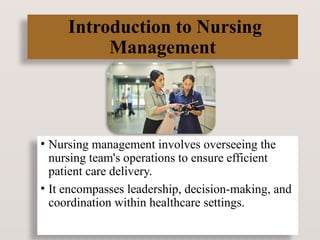
• Nursing management involves overseeing the
nursing team's operations to ensure efficient
patient care delivery.
• It encompasses leadership, decision-making, and
coordination within healthcare settings.
Key Principles of Nursing
Management
Leadership in Nursing:
Effective nursing management
requires strong leadership
skills to inspire and guide
nursing teams.
Key Principles of Nursing
Management
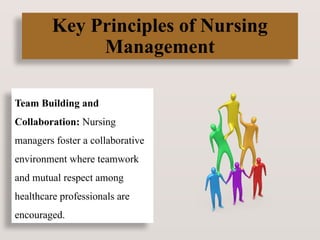
Team Building and
Collaboration: Nursing
managers foster a collaborative
environment where teamwork
and mutual respect among
healthcare professionals are
encouraged.
Nursing Management Practices
Staffing and Scheduling:
Nursing managers are
responsible for staffing levels
and scheduling shifts to ensure
adequate coverage and
workload balance.
Nursing Management Practices
Patient Care Coordination:
Effective nursing management
includes coordinating patient
care activities across
disciplines.
Quality Improvement in
Nursing
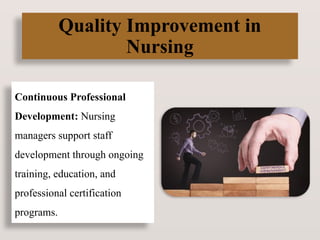
Continuous Professional
Development: Nursing
managers support staff
development through ongoing
training, education, and
professional certification
programs.
Quality Improvement in
Nursing
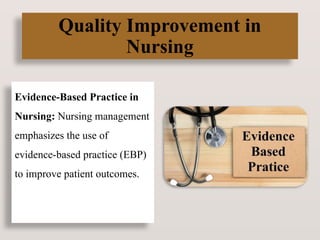
Evidence-Based Practice in
Nursing: Nursing management
emphasizes the use of
evidence-based practice (EBP)
to improve patient outcomes.
Challenges and Solutions in
Nursing Management
• Addressing Staffing Shortages: Nursing managers
strategize to address staffing shortages by implementing
recruitment and retention initiatives.
• Managing Patient Safety: Nursing managers prioritize
patient safety by implementing safety protocols,
conducting regular audits, and promoting a culture of
safety among staff.
Technology in Nursing
Management
• Role of Healthcare IT Systems: Nursing managers
leverage healthcare information technology (IT) systems
to enhance efficiency, communication, and patient care
quality.
• Benefits and Challenges of Technology Adoption:
While technology offers benefits such as streamlined
documentation and improved communication, nursing
managers must address challenges.
Ethical Considerations in
Nursing Management
• Ethical Decision-Making: Nursing managers navigate
ethical dilemmas by applying ethical principles such as
beneficence, autonomy, and justice.
• Ensuring Patient Confidentiality: Nursing managers
uphold patient confidentiality and privacy rights by
implementing secure information practices.
Future Trends in Nursing
Management
• Innovations in Healthcare Delivery: Nursing managers
anticipate and embrace innovations in healthcare
delivery, such as telemedicine, artificial intelligence (AI),
and remote patient monitoring.
• Impact of Global Health Trends: Nursing management
evolves in response to global health trends, including
pandemics, aging populations, and healthcare disparities.
Conclusion
Summarize the essential aspects covered in the
presentation, emphasizing the critical role of
nursing management in optimizing patient care
and healthcare outcomes.
References
• Wikipedia.org
• Google.com
• Seminarppt.com
• Studymafia.org
Thanks
To
SeminarPpt.Com

nursing-management for nursing semnar.pptx

  • 1.
    Submitted to: SubmittedBy Seminarppt.com Seminarppt.com Seminar On Nursing Management SeminarPpt.com
  • 2.
    Table of Contents 1.Introduction to Nursing Management 2. Key Principles of Nursing Management 3. Nursing Management Practices 4. Quality Improvement in Nursing 5. Challenges and Solutions in Nursing Management 6. Technology in Nursing Management 7. Ethical Considerations in Nursing Management 8. Future Trends in Nursing Management 9. Conclusion
  • 3.
    Introduction to Nursing Management •Nursing management involves overseeing the nursing team's operations to ensure efficient patient care delivery. • It encompasses leadership, decision-making, and coordination within healthcare settings.
  • 4.
    Key Principles ofNursing Management Leadership in Nursing: Effective nursing management requires strong leadership skills to inspire and guide nursing teams.
  • 5.
    Key Principles ofNursing Management Team Building and Collaboration: Nursing managers foster a collaborative environment where teamwork and mutual respect among healthcare professionals are encouraged.
  • 6.
    Nursing Management Practices Staffingand Scheduling: Nursing managers are responsible for staffing levels and scheduling shifts to ensure adequate coverage and workload balance.
  • 7.
    Nursing Management Practices PatientCare Coordination: Effective nursing management includes coordinating patient care activities across disciplines.
  • 8.
    Quality Improvement in Nursing ContinuousProfessional Development: Nursing managers support staff development through ongoing training, education, and professional certification programs.
  • 9.
    Quality Improvement in Nursing Evidence-BasedPractice in Nursing: Nursing management emphasizes the use of evidence-based practice (EBP) to improve patient outcomes.
  • 10.
    Challenges and Solutionsin Nursing Management • Addressing Staffing Shortages: Nursing managers strategize to address staffing shortages by implementing recruitment and retention initiatives. • Managing Patient Safety: Nursing managers prioritize patient safety by implementing safety protocols, conducting regular audits, and promoting a culture of safety among staff.
  • 11.
    Technology in Nursing Management •Role of Healthcare IT Systems: Nursing managers leverage healthcare information technology (IT) systems to enhance efficiency, communication, and patient care quality. • Benefits and Challenges of Technology Adoption: While technology offers benefits such as streamlined documentation and improved communication, nursing managers must address challenges.
  • 12.
    Ethical Considerations in NursingManagement • Ethical Decision-Making: Nursing managers navigate ethical dilemmas by applying ethical principles such as beneficence, autonomy, and justice. • Ensuring Patient Confidentiality: Nursing managers uphold patient confidentiality and privacy rights by implementing secure information practices.
  • 13.
    Future Trends inNursing Management • Innovations in Healthcare Delivery: Nursing managers anticipate and embrace innovations in healthcare delivery, such as telemedicine, artificial intelligence (AI), and remote patient monitoring. • Impact of Global Health Trends: Nursing management evolves in response to global health trends, including pandemics, aging populations, and healthcare disparities.
  • 14.
    Conclusion Summarize the essentialaspects covered in the presentation, emphasizing the critical role of nursing management in optimizing patient care and healthcare outcomes.
  • 15.
    References • Wikipedia.org • Google.com •Seminarppt.com • Studymafia.org
  • 16.