Neonatal resuscitation
• 90% newborns require little or no assistance
for transition from intrauterine to extrauterine
life.
• 10% need some assistance.
• 3% require PPV.
• 2% require intubation.
• 0.1% require chest compressions and
adrenaline
• Birth asphyxia is defined as the failure to
initiate and sustain btreathing at birth.
• It is a leading cause of mortality and morbidity
in newborns in india.
• Contributes to 1/5 th of all neonatal deaths.
• Neonatal resuscitation is a set of interventions
used to assist the airway, breathing and
circulation of a newborn following birth.
• NRP program is the most effective tool to reduce
perinatal asphyxia . Established in 1987.
• IAP and NNF are aiming at one NRP trained
personnel at all deliveries through IAP-NNF-NRP-
FGM program, launched in 2009.
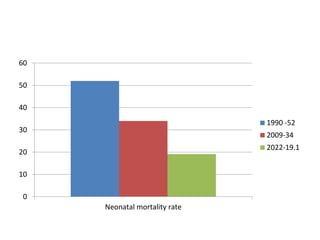
• The goal is to reduce NMR to 9 per 1000 live
births worldwide.
0
10
20
30
40
50
60
Neonatal mortality rate
1990 -52
2009-34
2022-19.1
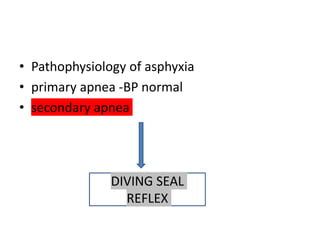
• Pathophysiology of asphyxia
• primary apnea -BP normal
• secondary apnea
DIVING SEAL
REFLEX
• prolonged asphyxia
• PROGRESSIVE ORGAN DAMAGE
nrp ppt.pptx

nrp ppt.pptx

  • 1.
  • 5.
    • 90% newbornsrequire little or no assistance for transition from intrauterine to extrauterine life. • 10% need some assistance. • 3% require PPV. • 2% require intubation. • 0.1% require chest compressions and adrenaline
  • 6.
    • Birth asphyxiais defined as the failure to initiate and sustain btreathing at birth. • It is a leading cause of mortality and morbidity in newborns in india. • Contributes to 1/5 th of all neonatal deaths.
  • 7.
    • Neonatal resuscitationis a set of interventions used to assist the airway, breathing and circulation of a newborn following birth. • NRP program is the most effective tool to reduce perinatal asphyxia . Established in 1987. • IAP and NNF are aiming at one NRP trained personnel at all deliveries through IAP-NNF-NRP- FGM program, launched in 2009. • The goal is to reduce NMR to 9 per 1000 live births worldwide.
  • 8.
  • 9.
    • Pathophysiology ofasphyxia • primary apnea -BP normal • secondary apnea DIVING SEAL REFLEX
  • 10.
    • prolonged asphyxia •PROGRESSIVE ORGAN DAMAGE