NONRENEWABLE
AND
RENEWABLE
RESOURCES
NONRENEWABLE RESOURCES
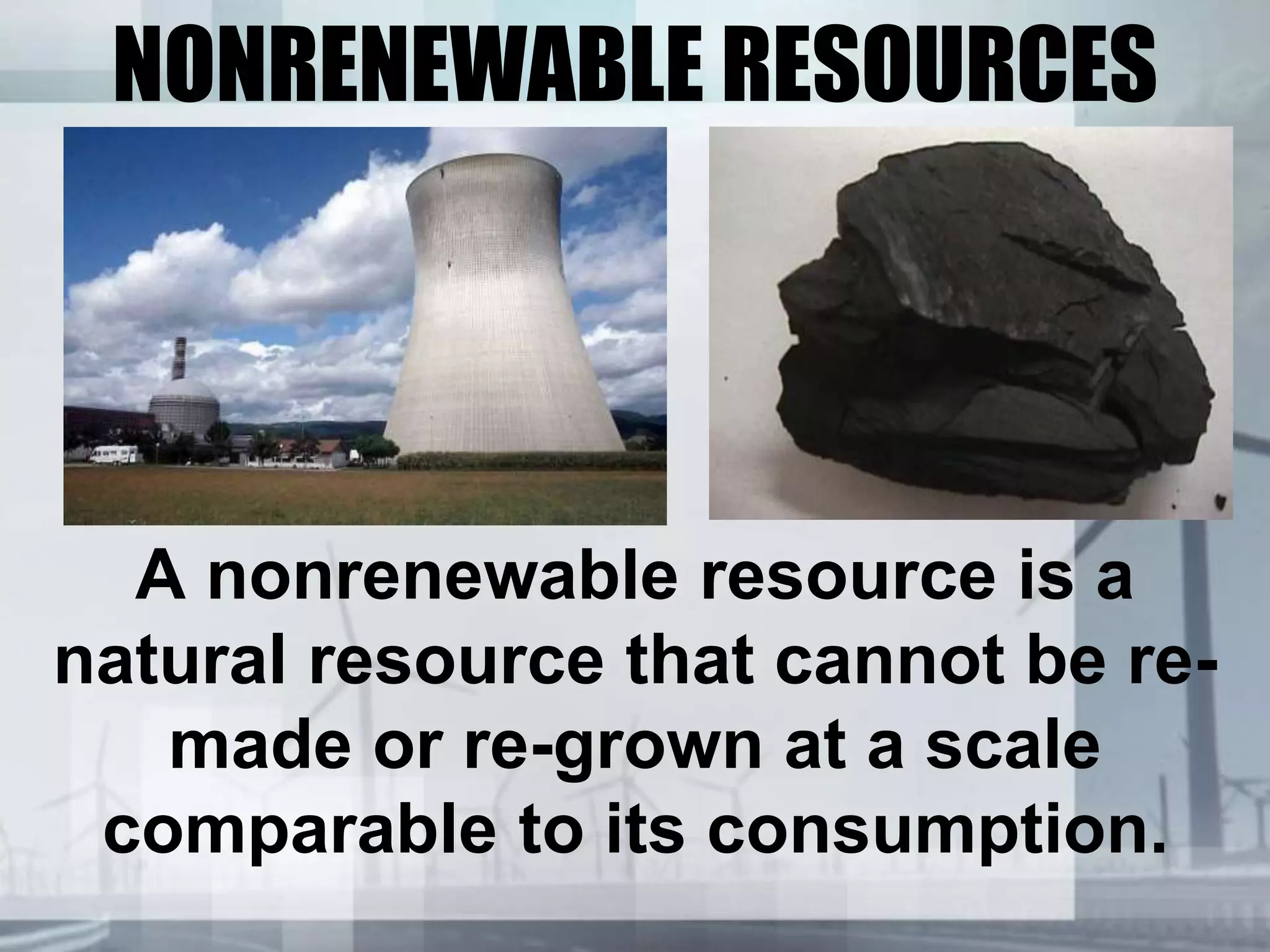
A nonrenewable resource is a
natural resource that cannot be re-
made or re-grown at a scale
comparable to its consumption.
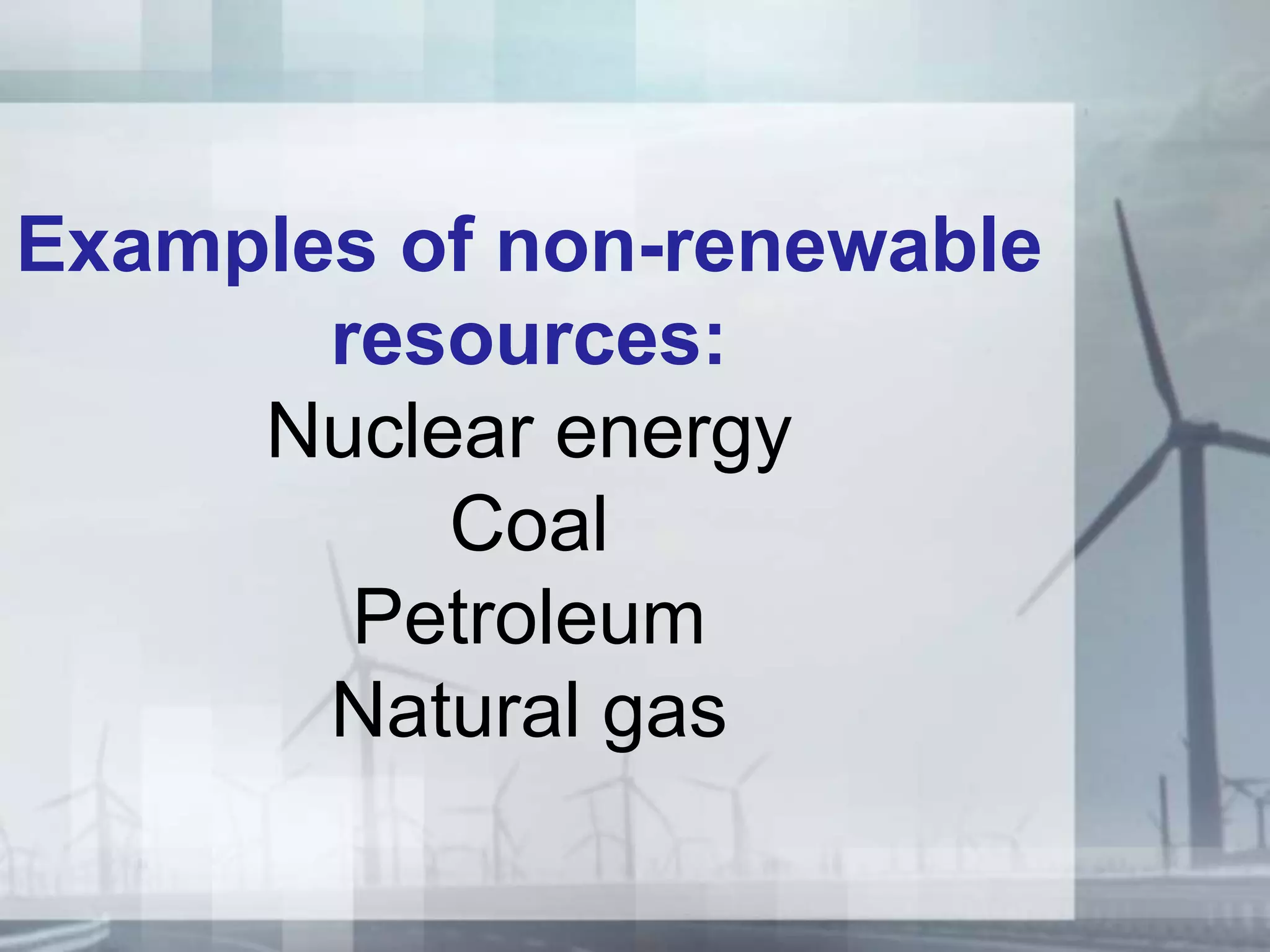
Examples of non-renewable
resources:
Nuclear energy
Coal
Petroleum
Natural gas
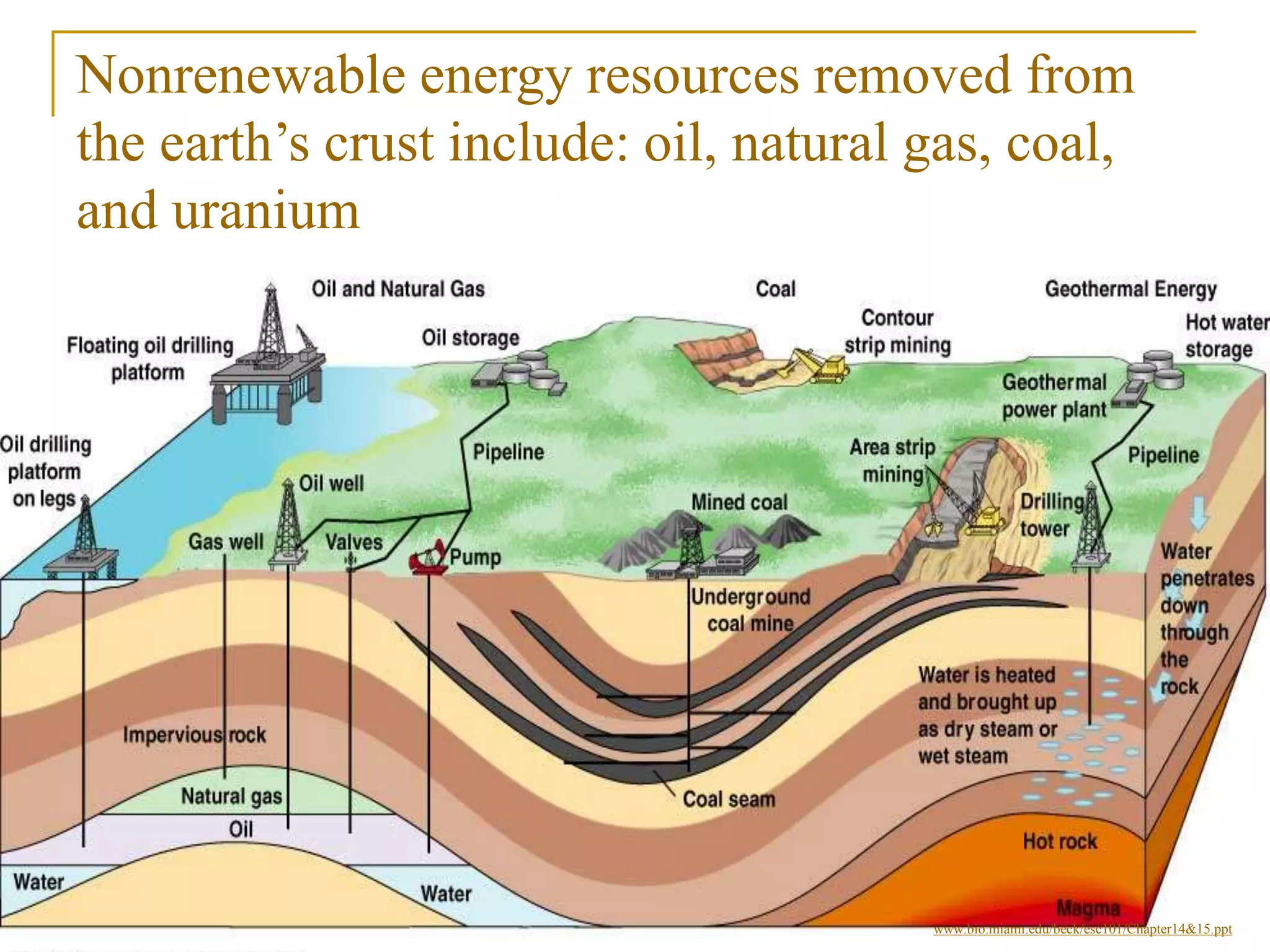
Nonrenewable energy resources removed from
the earth’s crust include: oil, natural gas, coal,
and uranium
www.bio.miami.edu/beck/esc101/Chapter14&15.ppt
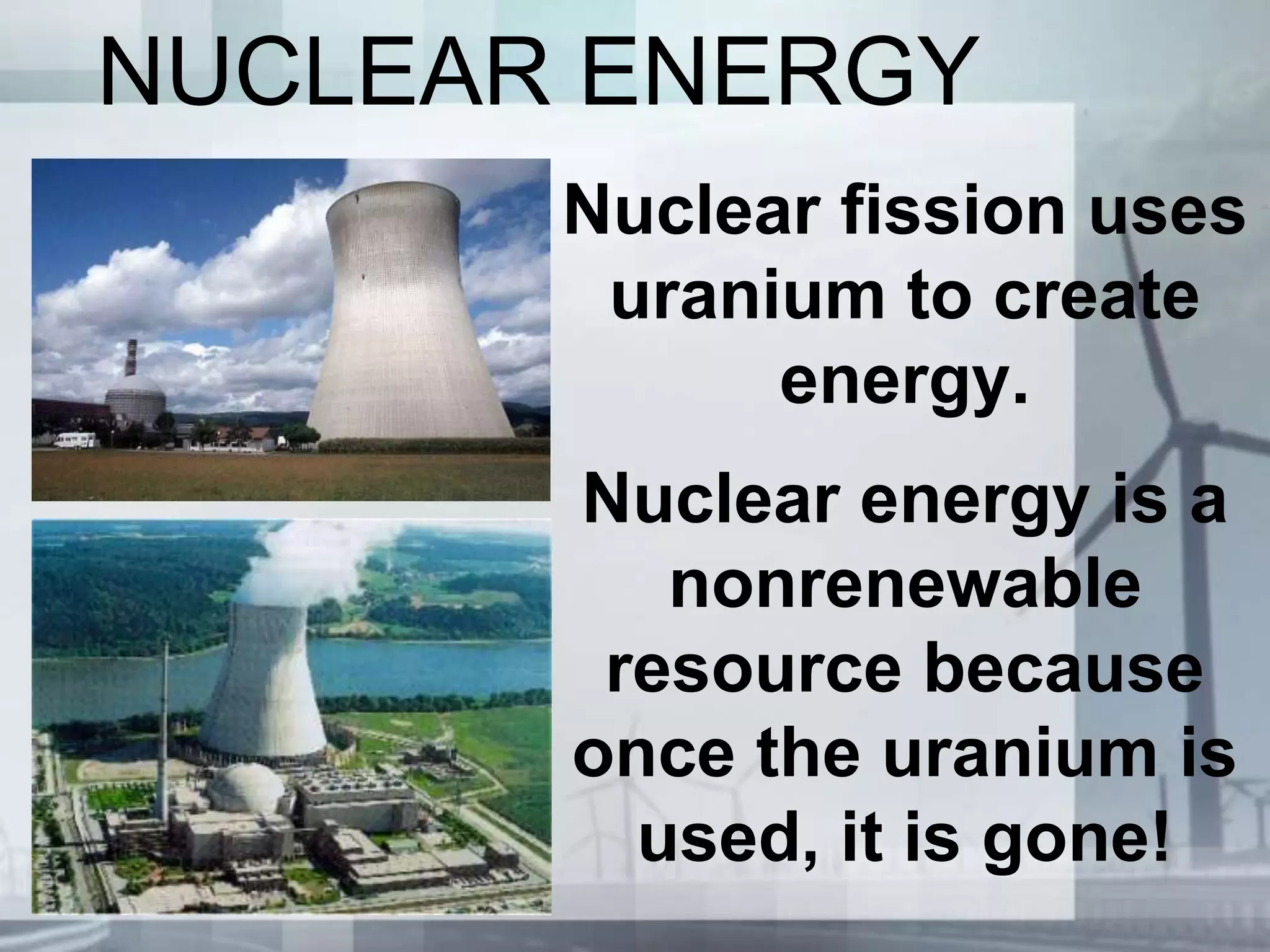
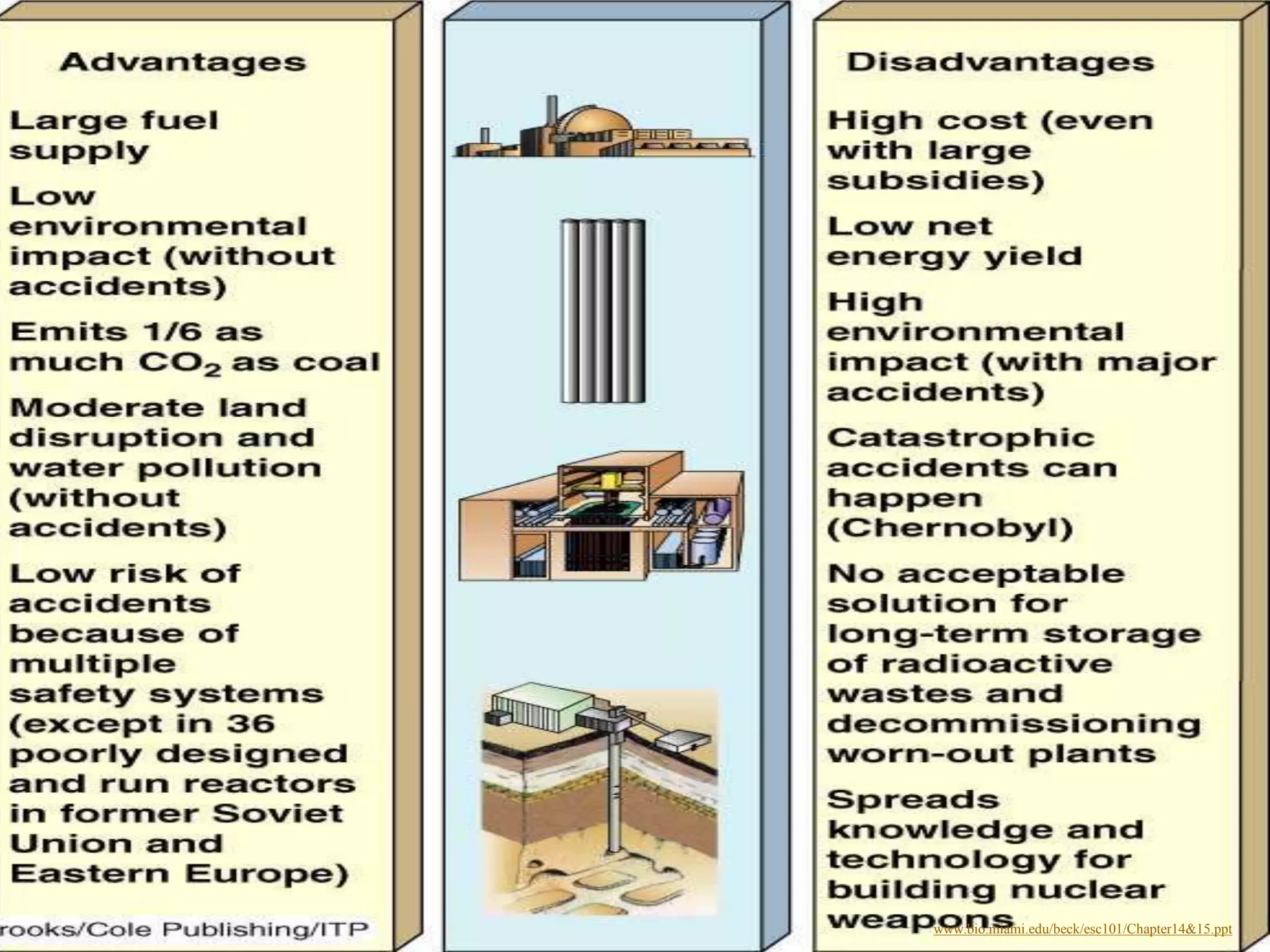
NUCLEAR ENERGY
Nuclear fission uses
uranium to create
energy.
Nuclear energy is a
nonrenewable
resource because
once the uranium is
used, it is gone!
www.bio.miami.edu/beck/esc101/Chapter14&15.ppt
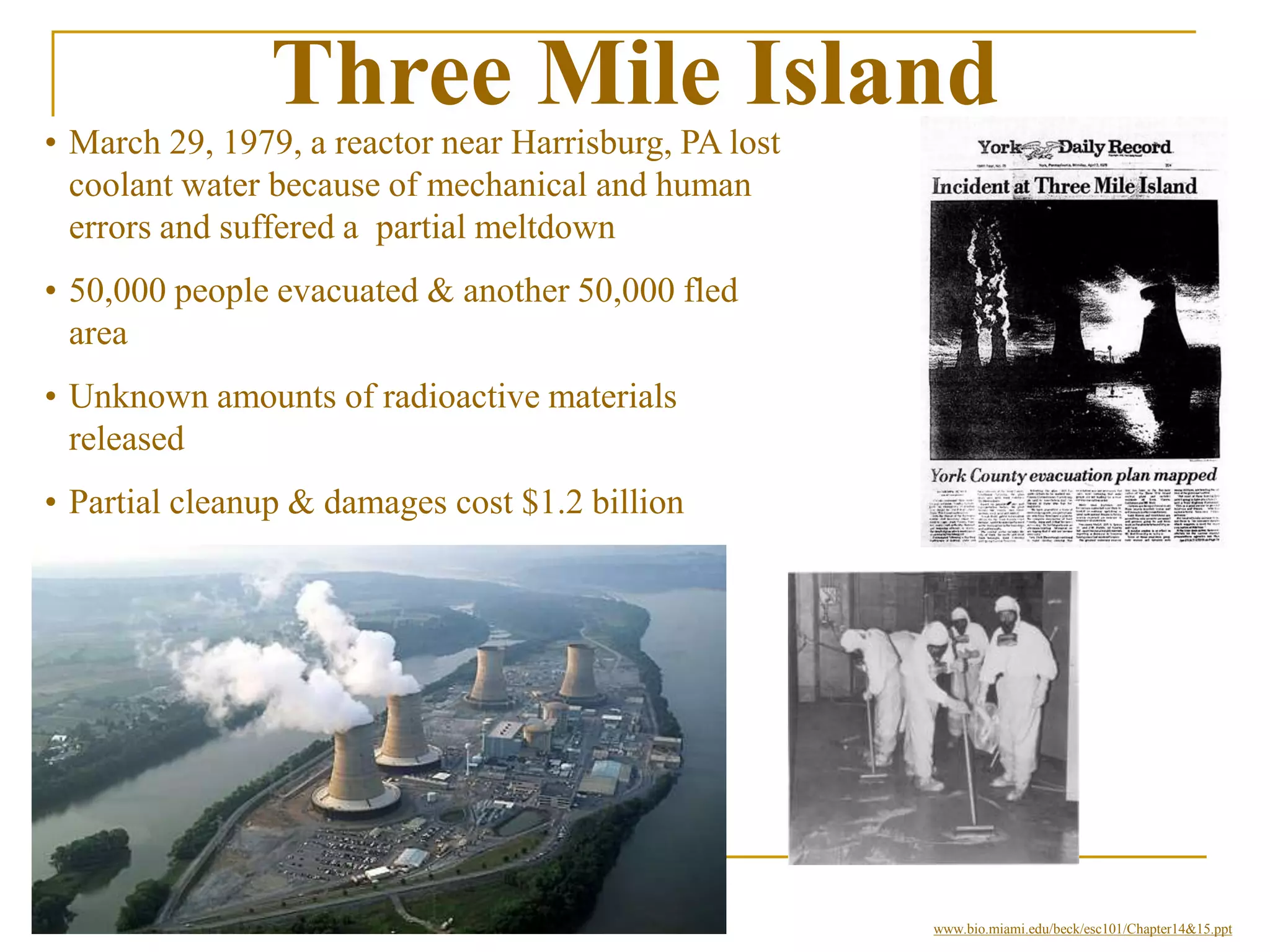
Three Mile Island
• March 29, 1979, a reactor near Harrisburg, PA lost
coolant water because of mechanical and human
errors and suffered a partial meltdown
• 50,000 people evacuated & another 50,000 fled
area
• Unknown amounts of radioactive materials
released
• Partial cleanup & damages cost $1.2 billion
• Released radiation increased cancer rates.
www.bio.miami.edu/beck/esc101/Chapter14&15.ppt
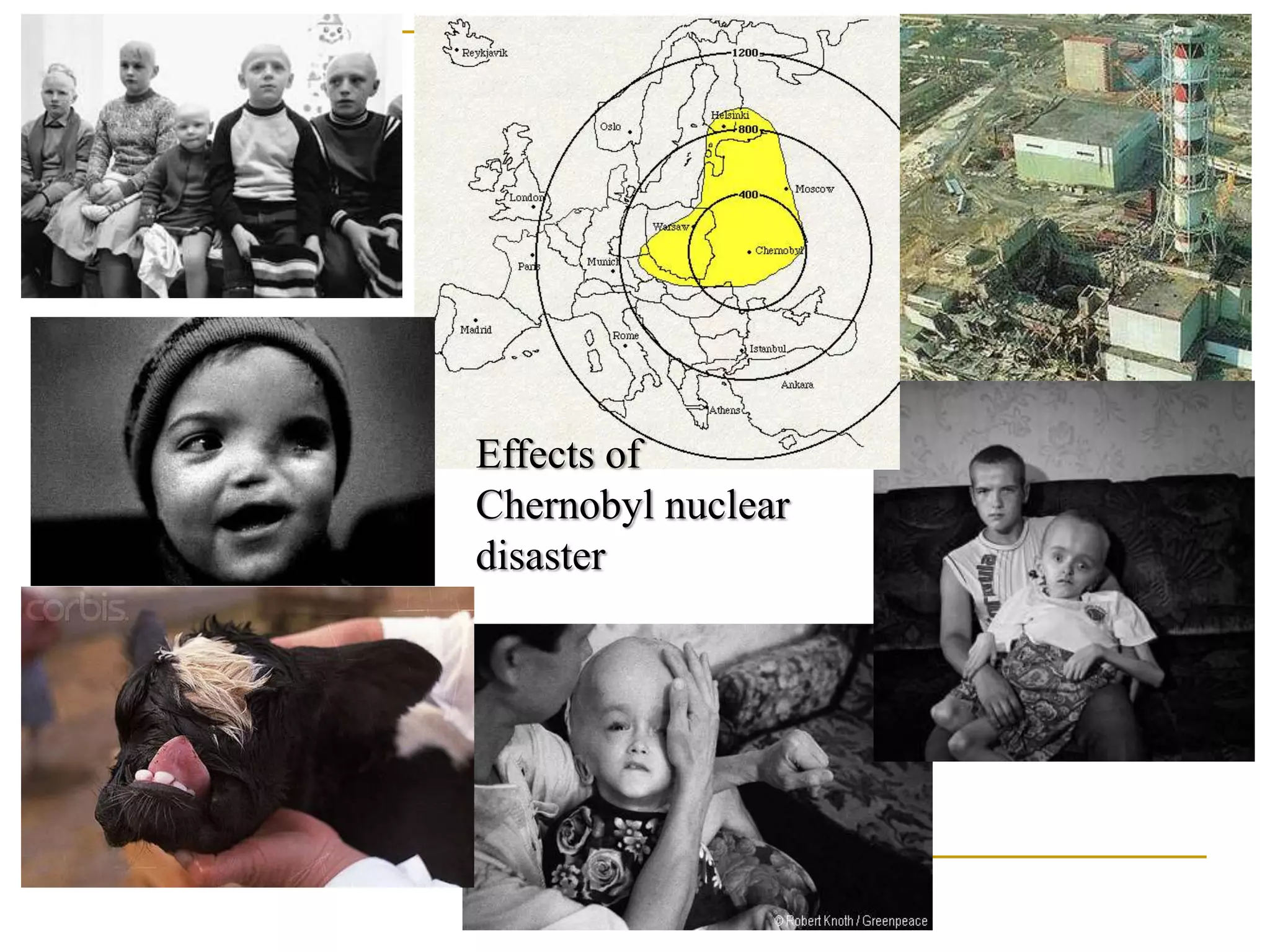
Chernobyl
•April 26, 1986, reactor explosion (Ukraine) flung
radioactive debris into atmosphere
•Health ministry reported 3,576 deaths
•Green Peace estimates32,000 deaths;
•About 400,000 people were forced to leave their
homes
•~160,000 sq km (62,00 sq mi) contaminated
•> Half million people exposed to dangerous levels of
radioactivity
•Cost of incident > $358 billion
www.bio.miami.edu/beck/esc101/Chapter14&15.ppt
Effects of
Chernobyl nuclear
disaster
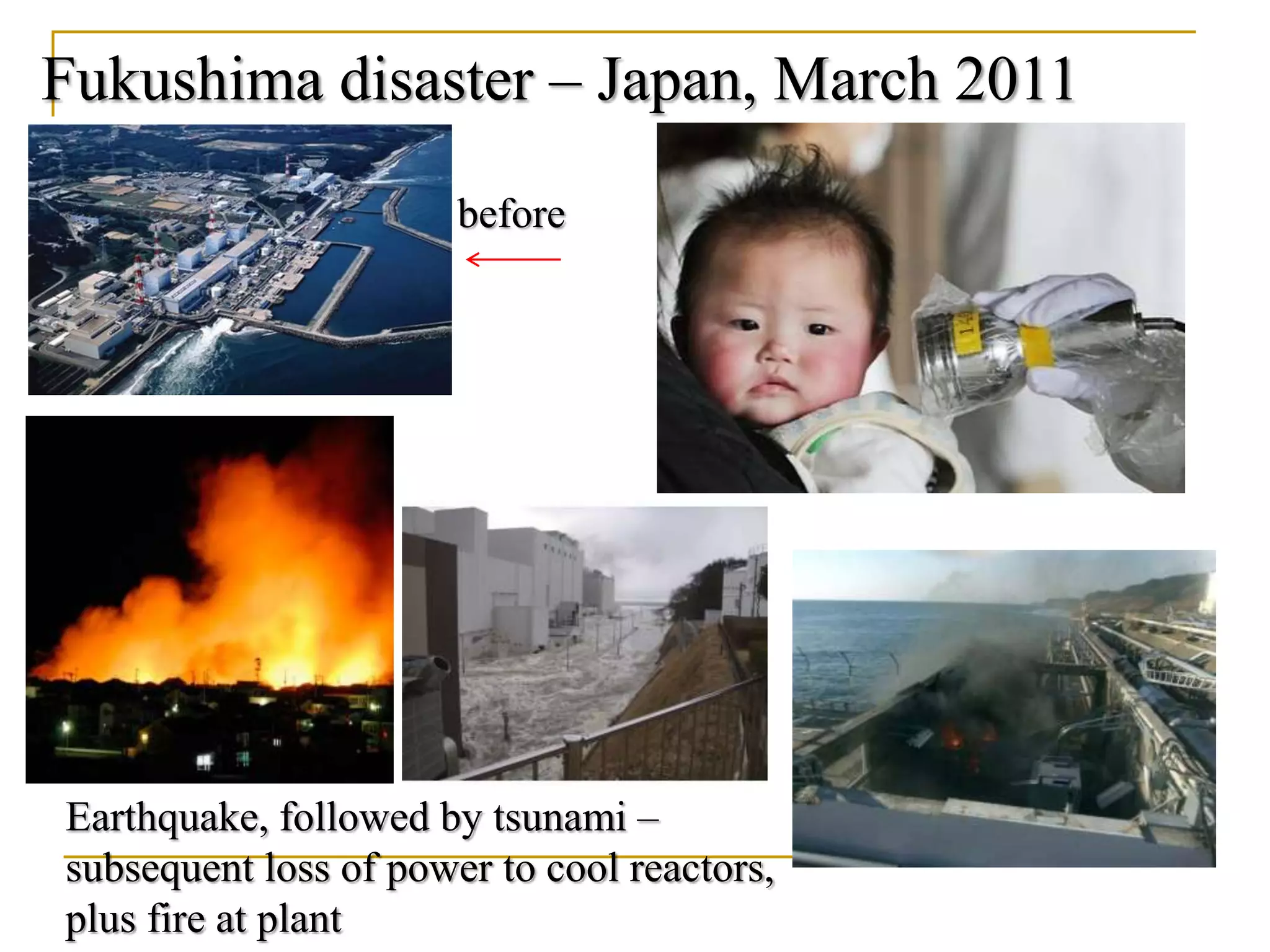
Fukushima disaster – Japan, March 2011
Earthquake, followed by tsunami –
subsequent loss of power to cool reactors,
plus fire at plant
before
COAL, PETROLEUM, AND GAS
Coal, petroleum, and natural
gas are considered
nonrenewable because they
can not be replenished in a
short period of time. These
are called fossil fuels. They
are made of hydrocarbons.
• Oil and natural gas can
provide three times as much
energy as an equal mass of
wood
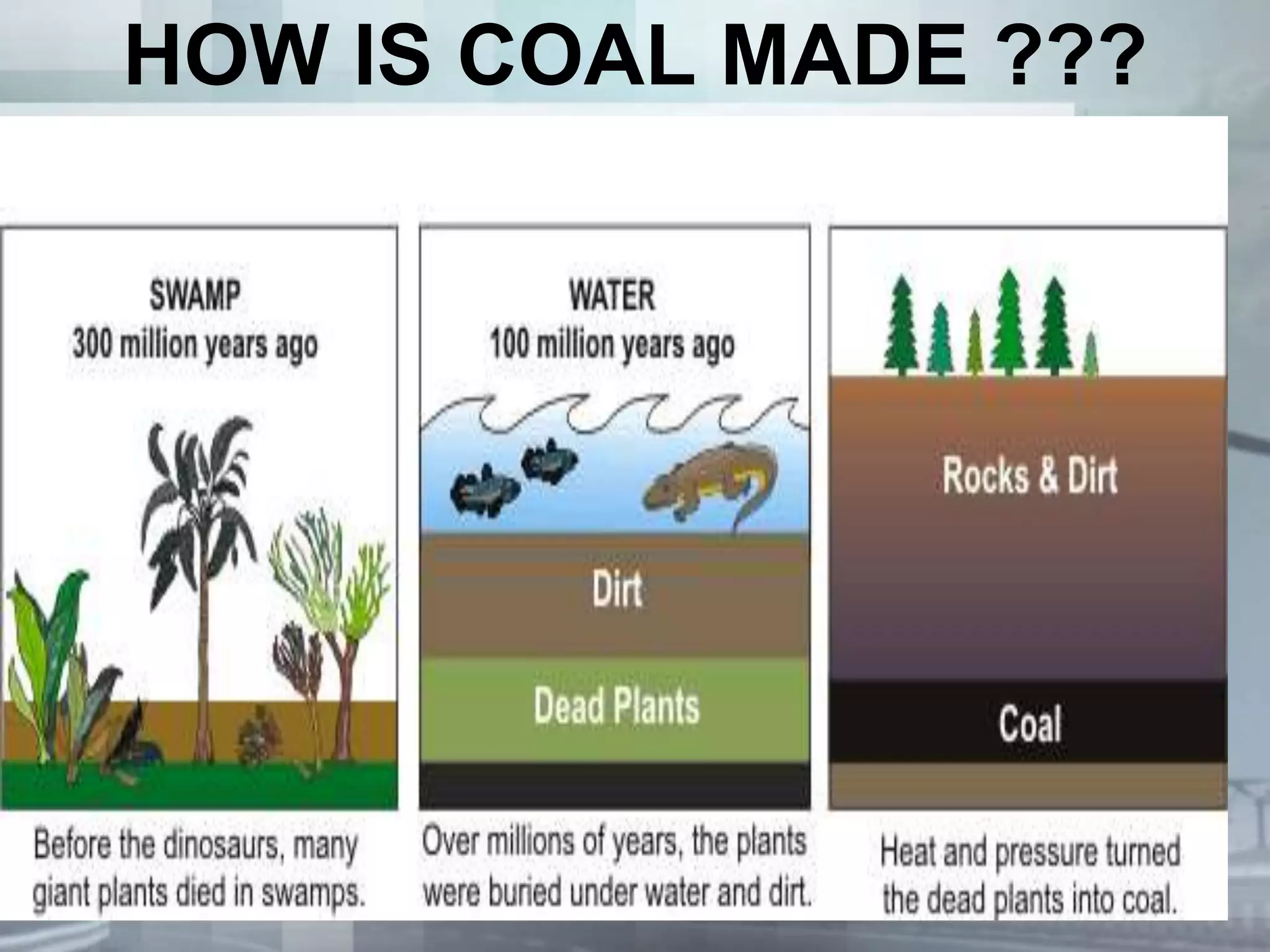
HOW IS COAL MADE ???
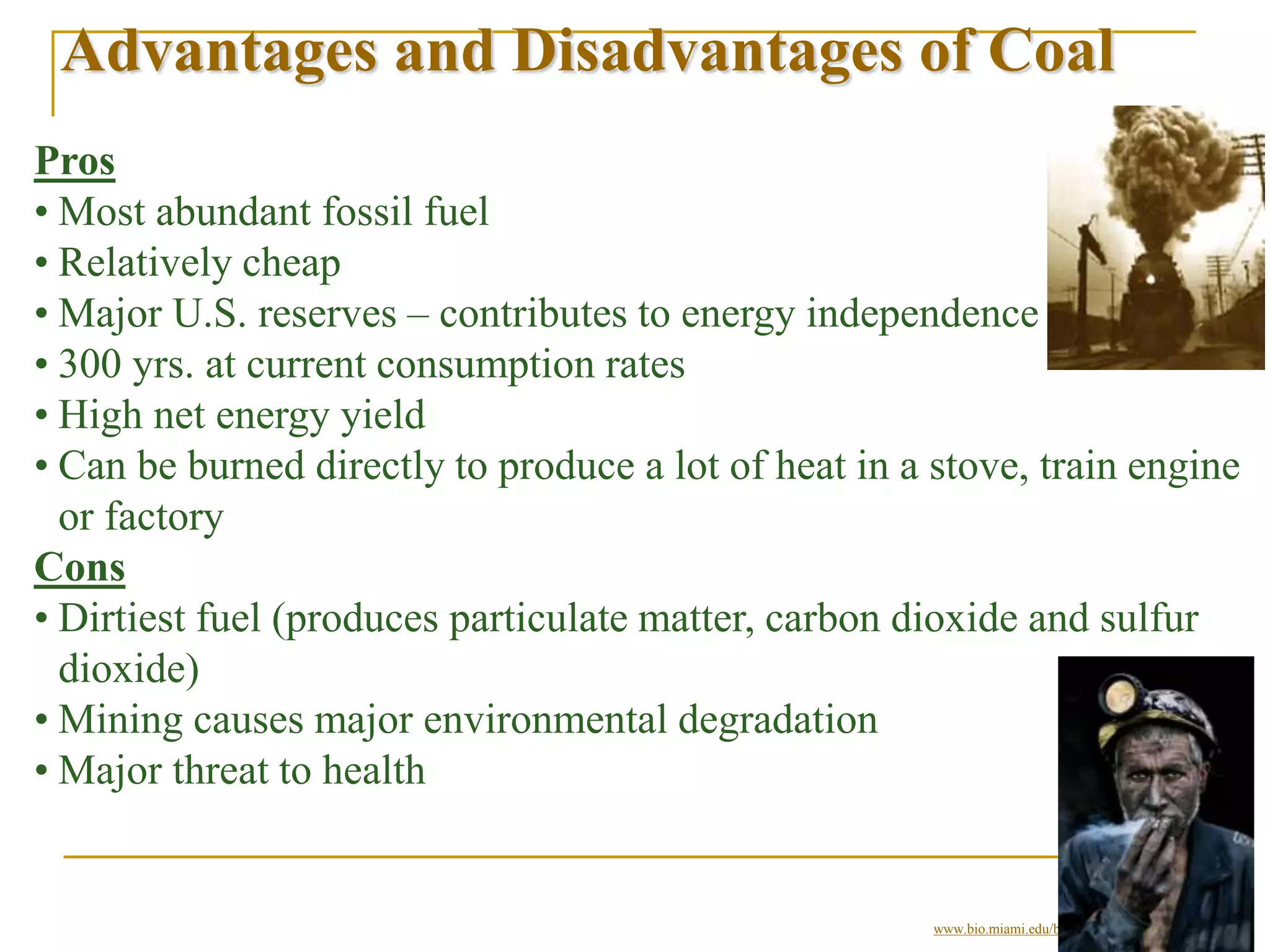
Advantages and Disadvantages of Coal
Pros
• Most abundant fossil fuel
• Relatively cheap
• Major U.S. reserves – contributes to energy independence
• 300 yrs. at current consumption rates
• High net energy yield
• Can be burned directly to produce a lot of heat in a stove, train engine
or factory
Cons
• Dirtiest fuel (produces particulate matter, carbon dioxide and sulfur
dioxide)
• Mining causes major environmental degradation
• Major threat to health
© Brooks/Cole Publishing Company / ITP
www.bio.miami.edu/beck/esc101/Chapter14&15.ppt
Natural gas
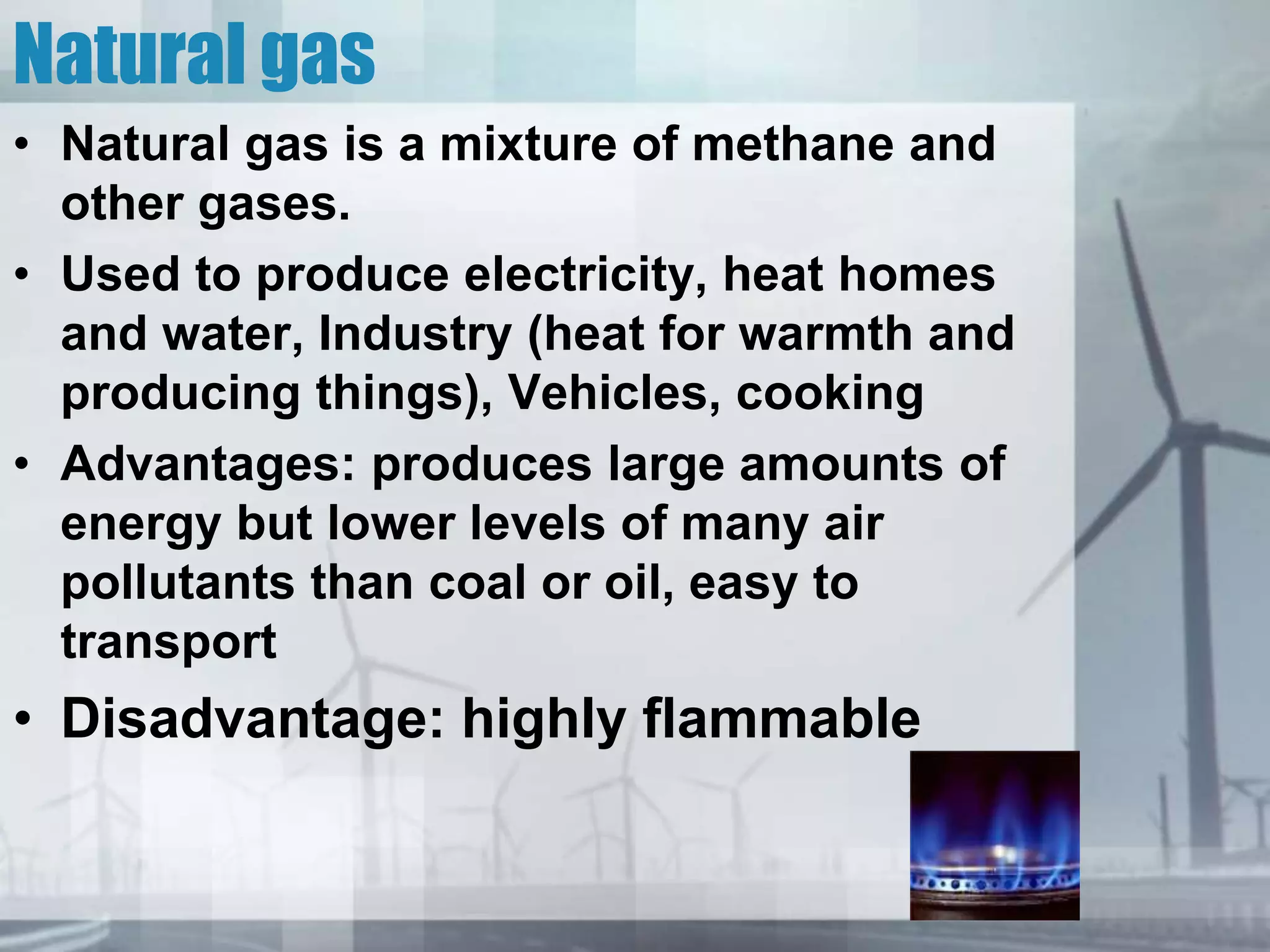
• Natural gas is a mixture of methane and
other gases.
• Used to produce electricity, heat homes
and water, Industry (heat for warmth and
producing things), Vehicles, cooking
• Advantages: produces large amounts of
energy but lower levels of many air
pollutants than coal or oil, easy to
transport
• Disadvantage: highly flammable
Oil/Petroleum
• Deposits of crude oil often are
trapped within the earth's crust and
can be extracted by drilling a well
• Used in industry to power machinery
and in transportation
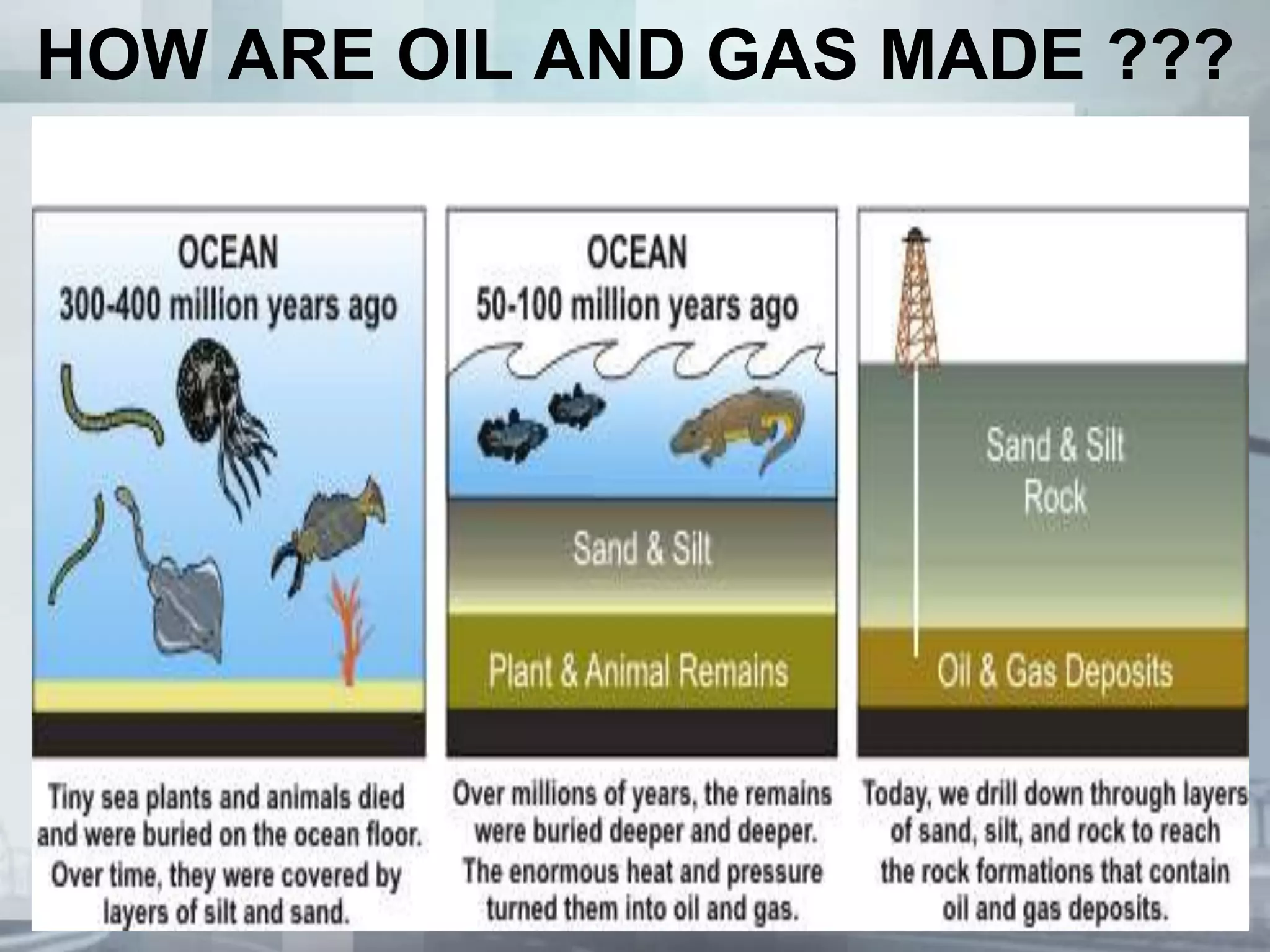
HOW ARE OIL AND GAS MADE ???
www.bio.miami.edu/beck/esc101/Chapter14&15.ppt
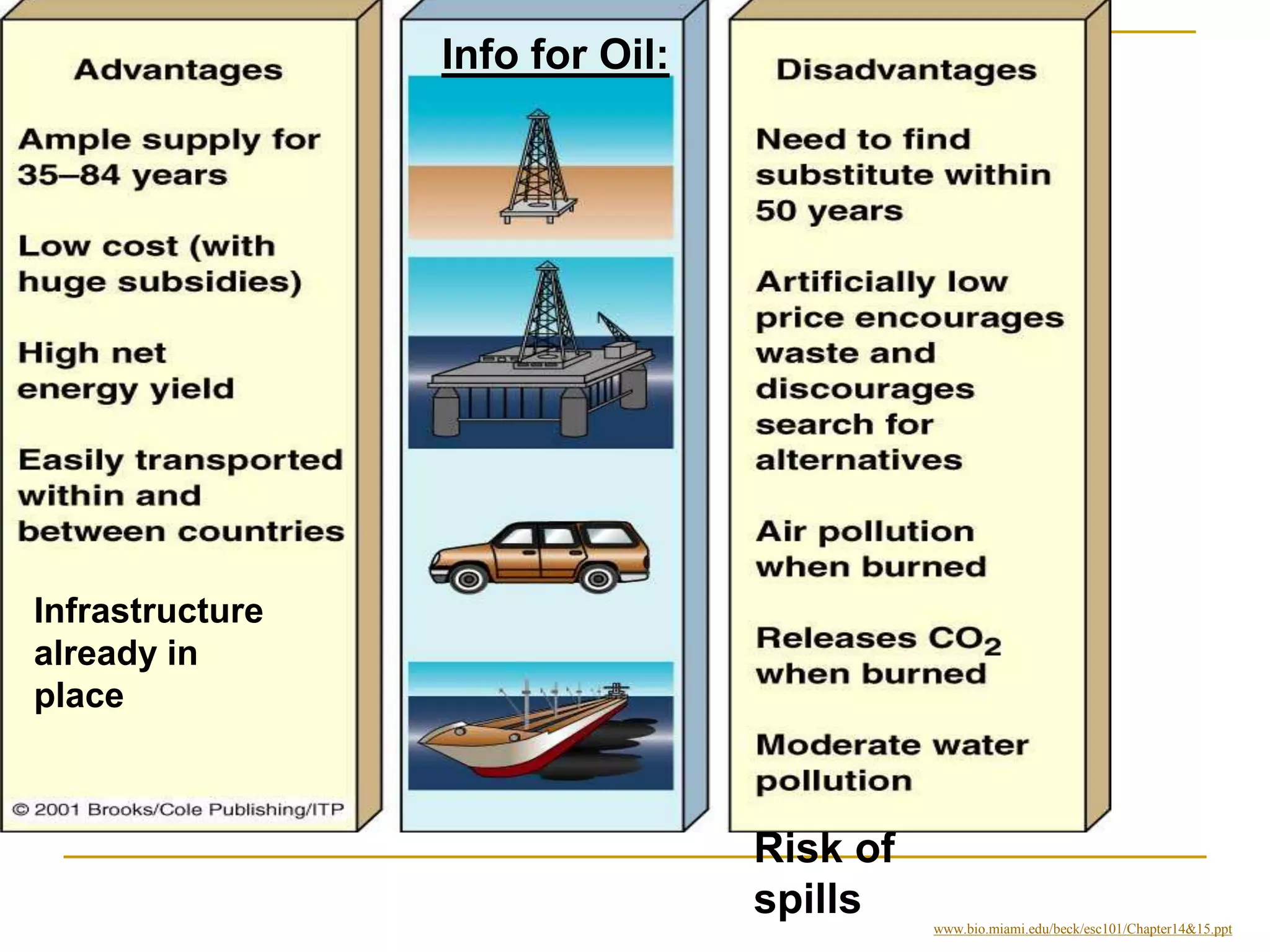
Info for Oil:
Risk of
spills
Infrastructure
already in
place
HMMMM....
If nonrenewable
resources are
resources that cannot
be re-made at a scale
comparable to its
consumption, what are
renewable resources?
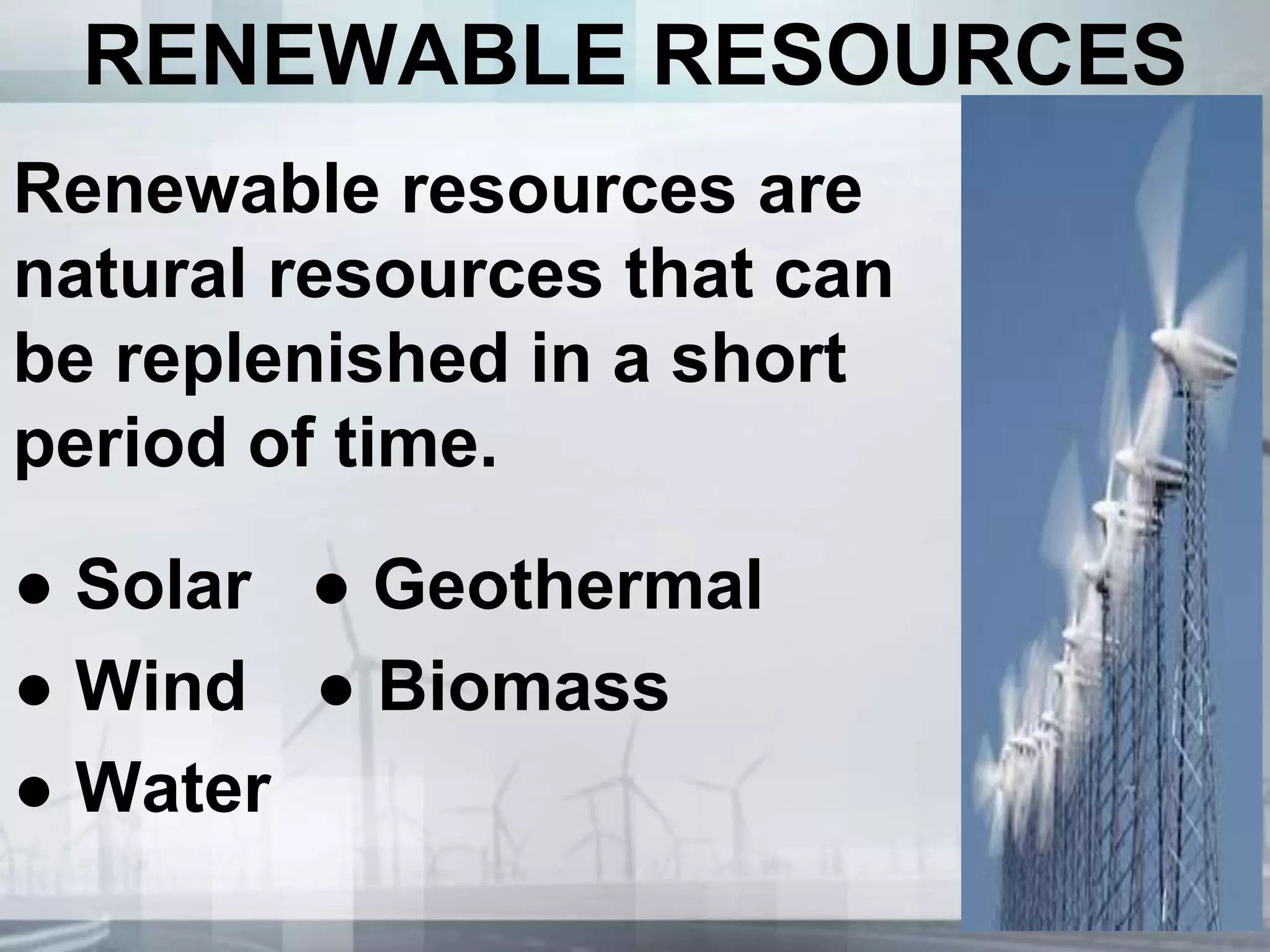
RENEWABLE RESOURCES
Renewable resources are
natural resources that can
be replenished in a short
period of time.
â—Ź Solar â—Ź Geothermal
â—Ź Wind â—Ź Biomass
â—Ź Water
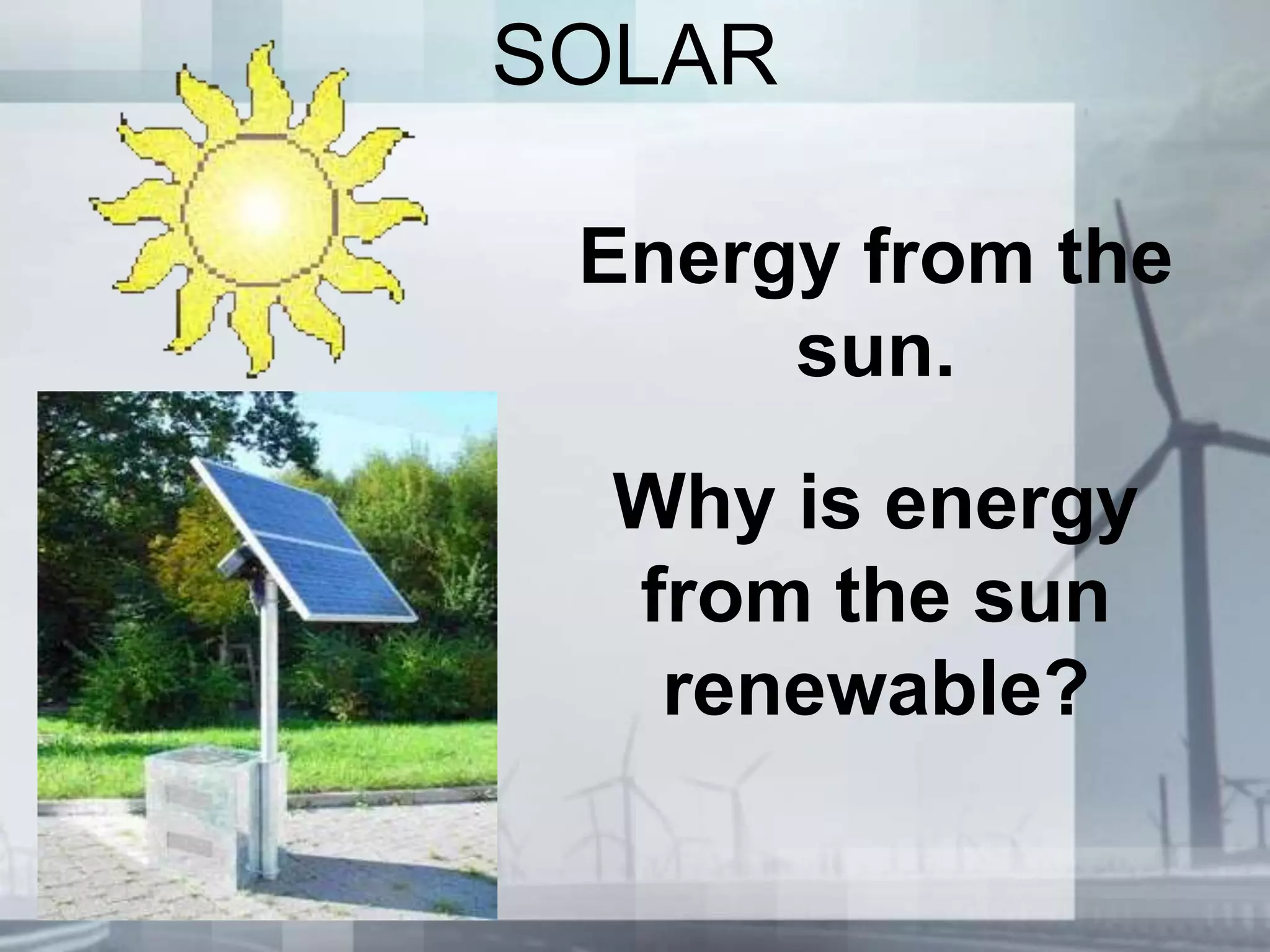
SOLAR
Energy from the
sun.
Why is energy
from the sun
renewable?
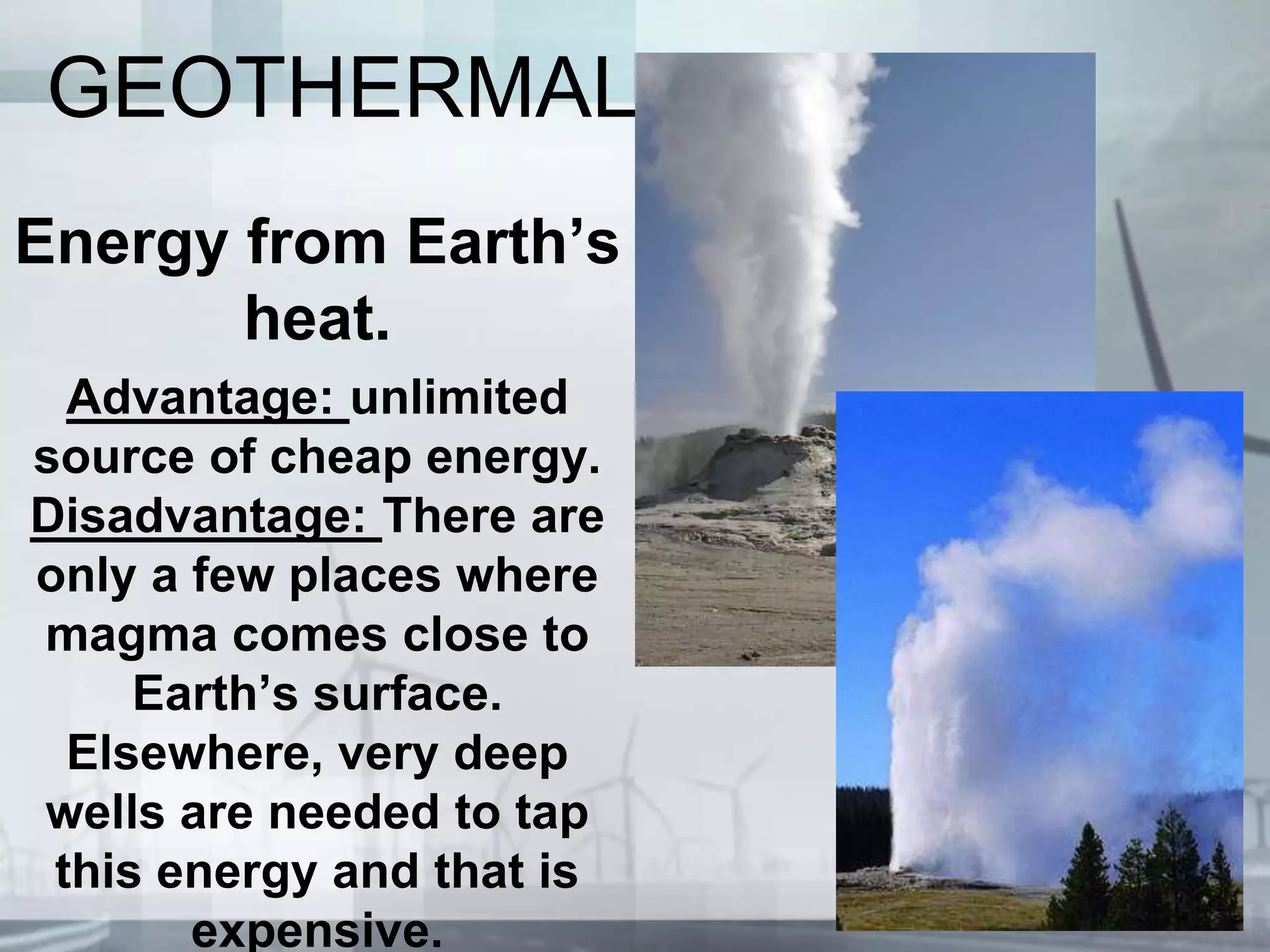
GEOTHERMAL
Energy from Earth’s
heat.
Advantage: unlimited
source of cheap energy.
Disadvantage: There are
only a few places where
magma comes close to
Earth’s surface.
Elsewhere, very deep
wells are needed to tap
this energy and that is
expensive.
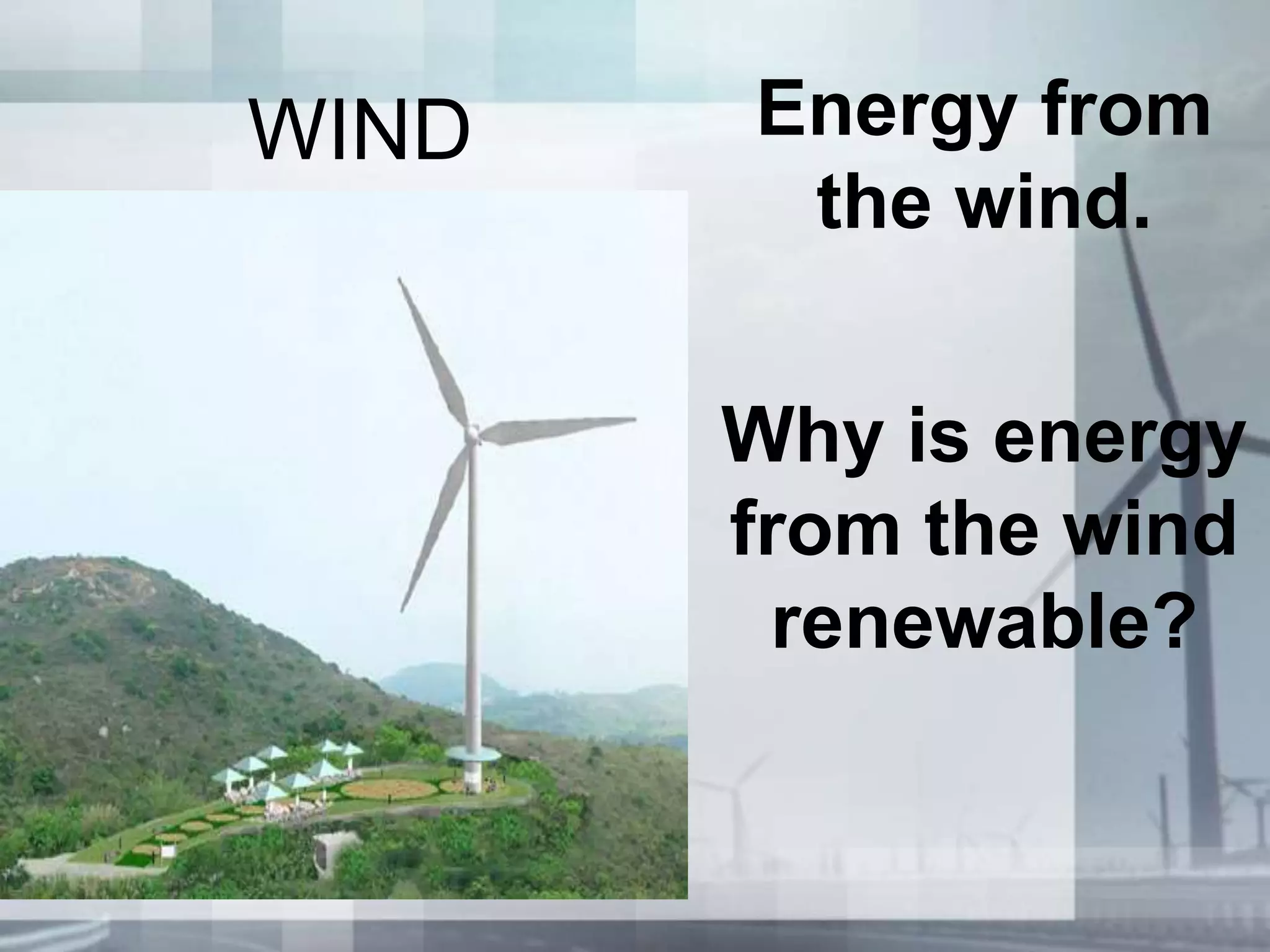
WIND Energy from
the wind.
Why is energy
from the wind
renewable?
BIOMASS
Energy from
burning organic
or living matter.
Examples include:
Wood, leaves, food
wastes, and manure.
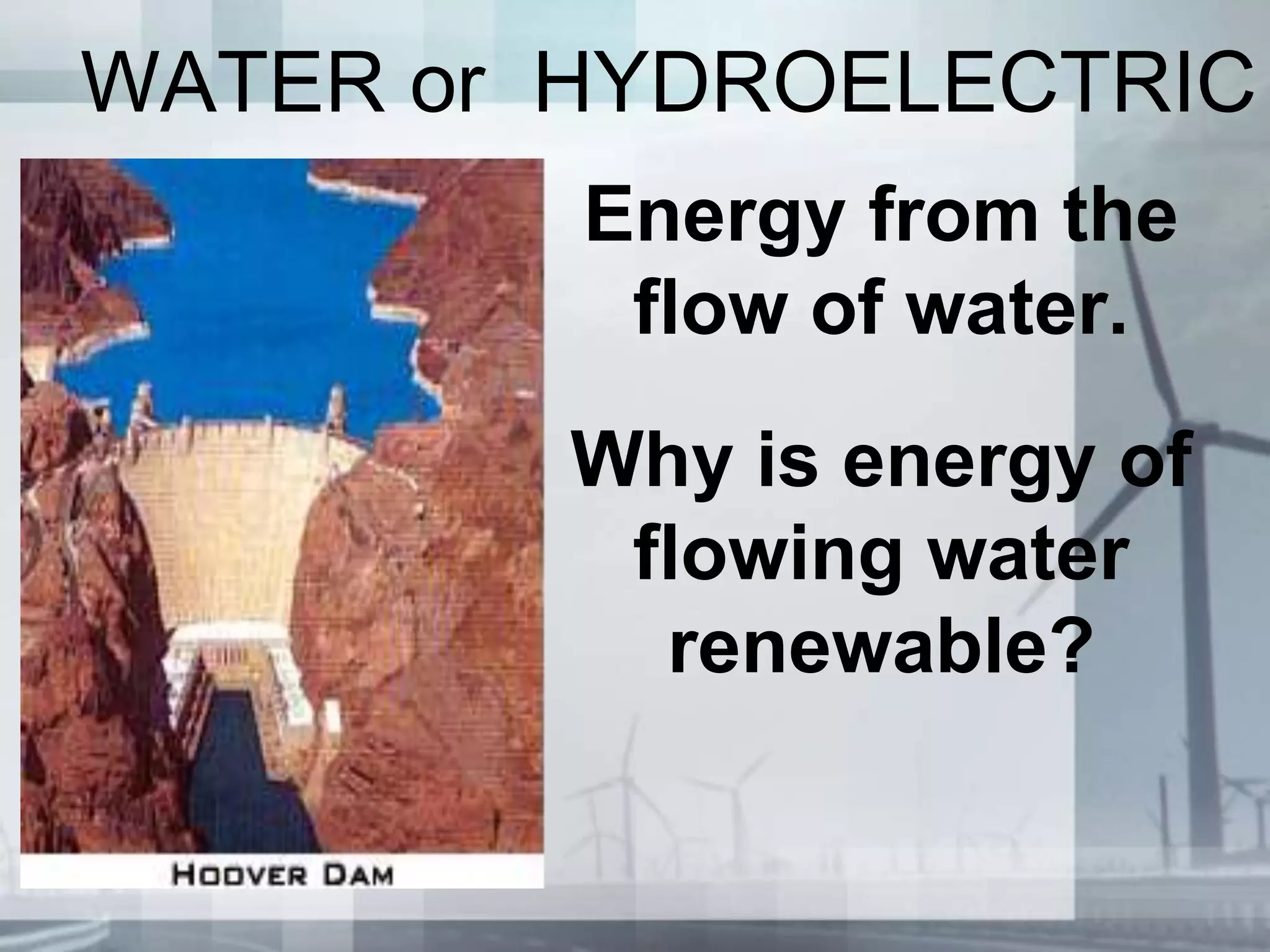
WATER or HYDROELECTRIC
Energy from the
flow of water.
Why is energy of
flowing water
renewable?
Energy Efficiency
Energy efficiency – the amount of useful energy
produced compared to the amount wasted as heat;
built into the device or system, unavoidable waste
Examples of levels of energy efficiency:
human body:
20-25%
incandescent lightbulb:
5%
internal combustion engine:
20-25%
steam turbine:
45%
Energy Conservation
Energy conservation –
making an effort to reduce
the amount of energy
used… some waste can be
avoided
Use of energy resources in the U.S.
U.S. has 4.6% of world population; uses 24% of the
world’s energy
SUMMARY
What are the
differences
between
nonrenewable
and renewable
resources?

Non_and_renwable_resources_ppt.ppt

  • 1.
  • 2.
    NONRENEWABLE RESOURCES A nonrenewableresource is a natural resource that cannot be re- made or re-grown at a scale comparable to its consumption.
  • 3.
    Examples of non-renewable resources: Nuclearenergy Coal Petroleum Natural gas
  • 4.
    Nonrenewable energy resourcesremoved from the earth’s crust include: oil, natural gas, coal, and uranium www.bio.miami.edu/beck/esc101/Chapter14&15.ppt
  • 5.
    NUCLEAR ENERGY Nuclear fissionuses uranium to create energy. Nuclear energy is a nonrenewable resource because once the uranium is used, it is gone!
  • 6.
  • 7.
    Three Mile Island •March 29, 1979, a reactor near Harrisburg, PA lost coolant water because of mechanical and human errors and suffered a partial meltdown • 50,000 people evacuated & another 50,000 fled area • Unknown amounts of radioactive materials released • Partial cleanup & damages cost $1.2 billion • Released radiation increased cancer rates. www.bio.miami.edu/beck/esc101/Chapter14&15.ppt
  • 8.
    Chernobyl •April 26, 1986,reactor explosion (Ukraine) flung radioactive debris into atmosphere •Health ministry reported 3,576 deaths •Green Peace estimates32,000 deaths; •About 400,000 people were forced to leave their homes •~160,000 sq km (62,00 sq mi) contaminated •> Half million people exposed to dangerous levels of radioactivity •Cost of incident > $358 billion www.bio.miami.edu/beck/esc101/Chapter14&15.ppt
  • 9.
  • 10.
    Fukushima disaster –Japan, March 2011 Earthquake, followed by tsunami – subsequent loss of power to cool reactors, plus fire at plant before
  • 11.
    COAL, PETROLEUM, ANDGAS Coal, petroleum, and natural gas are considered nonrenewable because they can not be replenished in a short period of time. These are called fossil fuels. They are made of hydrocarbons. • Oil and natural gas can provide three times as much energy as an equal mass of wood
  • 12.
    HOW IS COALMADE ???
  • 13.
    Advantages and Disadvantagesof Coal Pros • Most abundant fossil fuel • Relatively cheap • Major U.S. reserves – contributes to energy independence • 300 yrs. at current consumption rates • High net energy yield • Can be burned directly to produce a lot of heat in a stove, train engine or factory Cons • Dirtiest fuel (produces particulate matter, carbon dioxide and sulfur dioxide) • Mining causes major environmental degradation • Major threat to health © Brooks/Cole Publishing Company / ITP www.bio.miami.edu/beck/esc101/Chapter14&15.ppt
  • 14.
    Natural gas • Naturalgas is a mixture of methane and other gases. • Used to produce electricity, heat homes and water, Industry (heat for warmth and producing things), Vehicles, cooking • Advantages: produces large amounts of energy but lower levels of many air pollutants than coal or oil, easy to transport • Disadvantage: highly flammable
  • 15.
    Oil/Petroleum • Deposits ofcrude oil often are trapped within the earth's crust and can be extracted by drilling a well • Used in industry to power machinery and in transportation
  • 16.
    HOW ARE OILAND GAS MADE ???
  • 17.
  • 18.
    HMMMM.... If nonrenewable resources are resourcesthat cannot be re-made at a scale comparable to its consumption, what are renewable resources?
  • 19.
    RENEWABLE RESOURCES Renewable resourcesare natural resources that can be replenished in a short period of time. â—Ź Solar â—Ź Geothermal â—Ź Wind â—Ź Biomass â—Ź Water
  • 20.
    SOLAR Energy from the sun. Whyis energy from the sun renewable?
  • 21.
    GEOTHERMAL Energy from Earth’s heat. Advantage:unlimited source of cheap energy. Disadvantage: There are only a few places where magma comes close to Earth’s surface. Elsewhere, very deep wells are needed to tap this energy and that is expensive.
  • 22.
    WIND Energy from thewind. Why is energy from the wind renewable?
  • 23.
    BIOMASS Energy from burning organic orliving matter. Examples include: Wood, leaves, food wastes, and manure.
  • 24.
    WATER or HYDROELECTRIC Energyfrom the flow of water. Why is energy of flowing water renewable?
  • 25.
    Energy Efficiency Energy efficiency– the amount of useful energy produced compared to the amount wasted as heat; built into the device or system, unavoidable waste Examples of levels of energy efficiency: human body: 20-25% incandescent lightbulb: 5% internal combustion engine: 20-25% steam turbine: 45%
  • 26.
    Energy Conservation Energy conservation– making an effort to reduce the amount of energy used… some waste can be avoided
  • 27.
    Use of energyresources in the U.S. U.S. has 4.6% of world population; uses 24% of the world’s energy
  • 28.