Downloaded 63 times
![NON VERBAL COMMUNICATION
“nonverbal communication” involves those
nonverbal stimuli in a communication setting
that are generated by both, the source [speaker
and listener] with use of the environment and
that have potential message value for the
receiver [listener] (Samovar et al).
Basically it is sending and receiving messages in
a variety of ways without the use of verbal codes
(words). It is both intentional and unintentional.](https://image.slidesharecdn.com/nonverbalcomm-111118053214-phpapp02/75/Non-verbal-comm-2-2048.jpg)
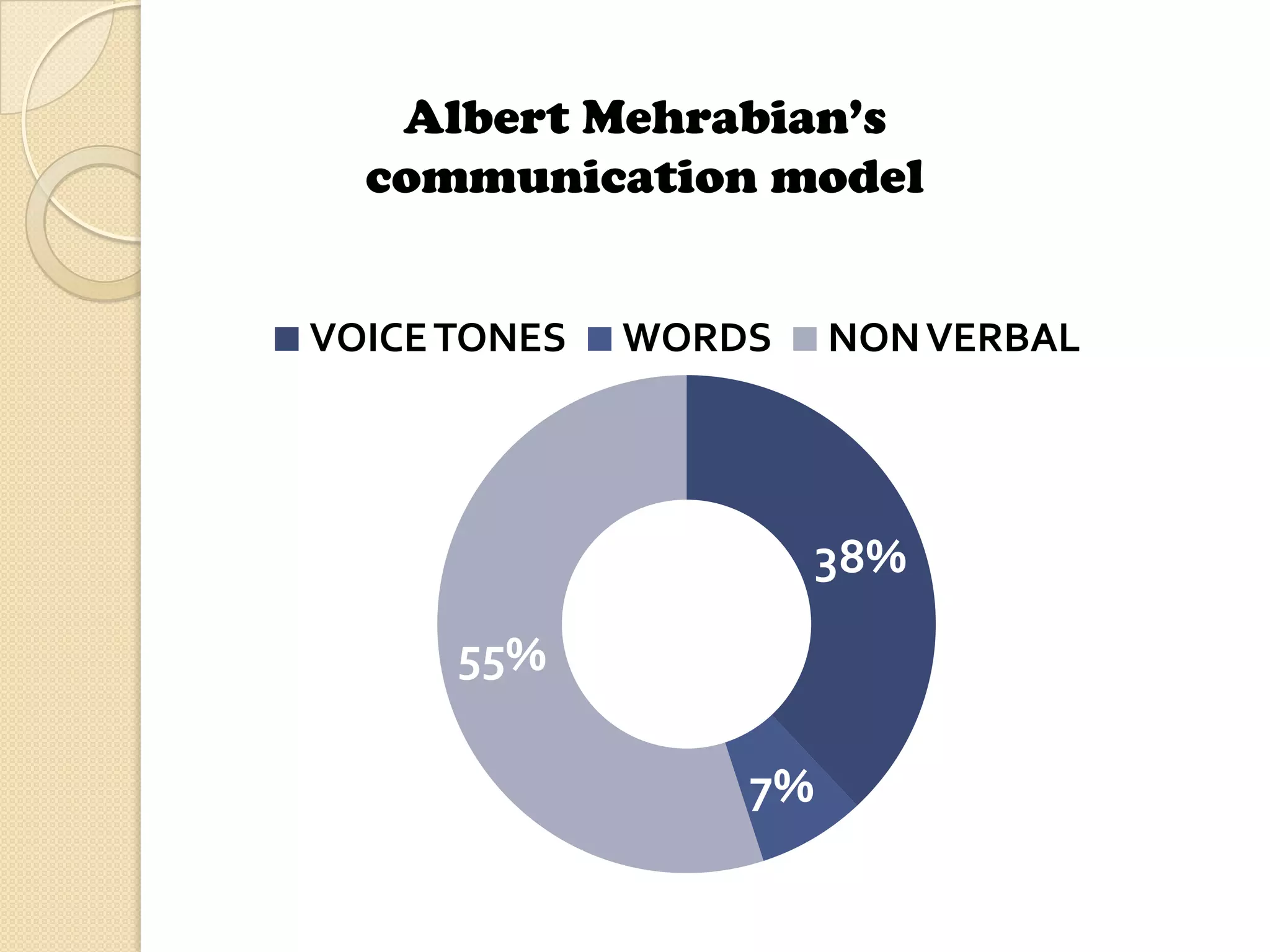
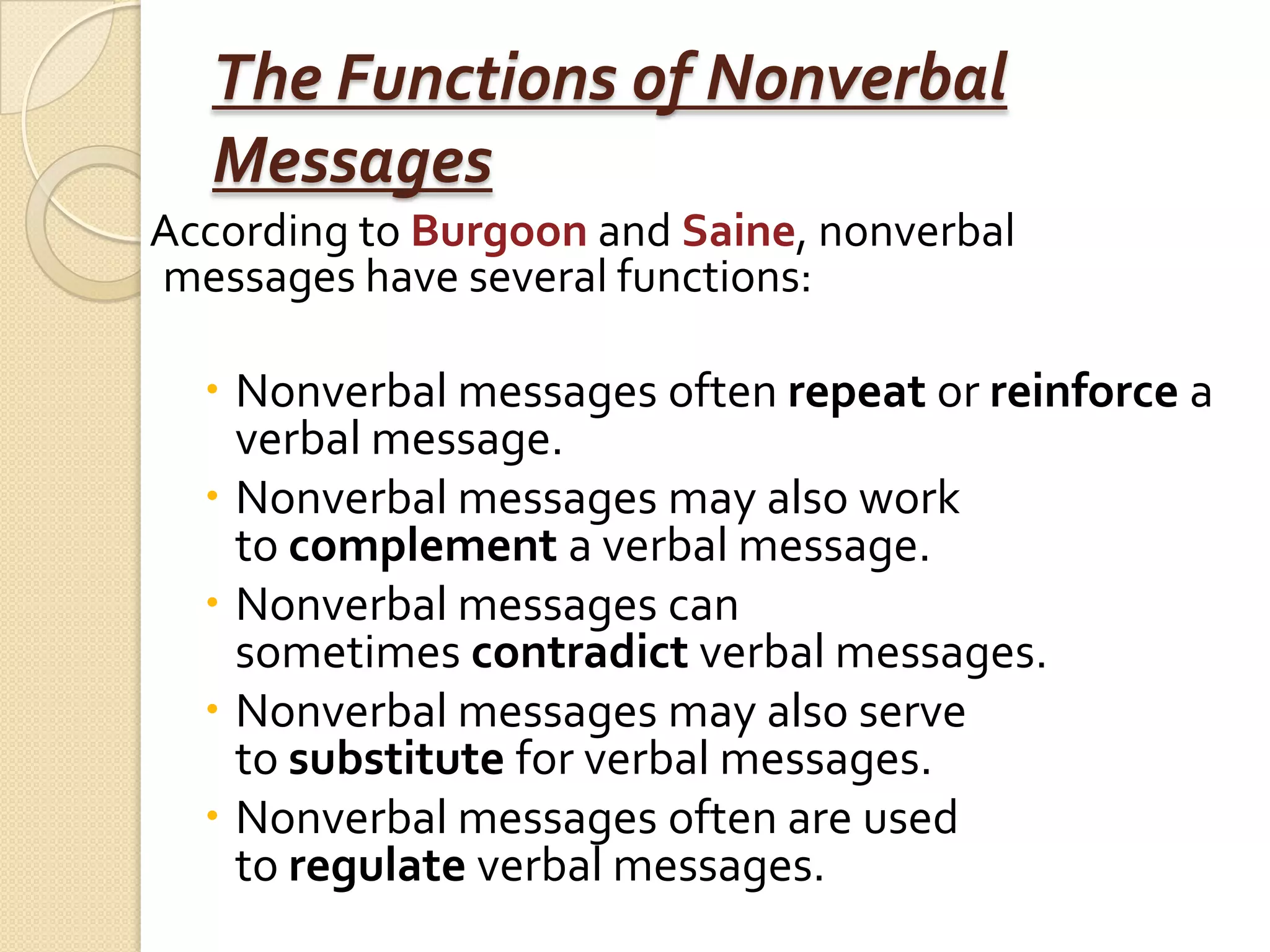
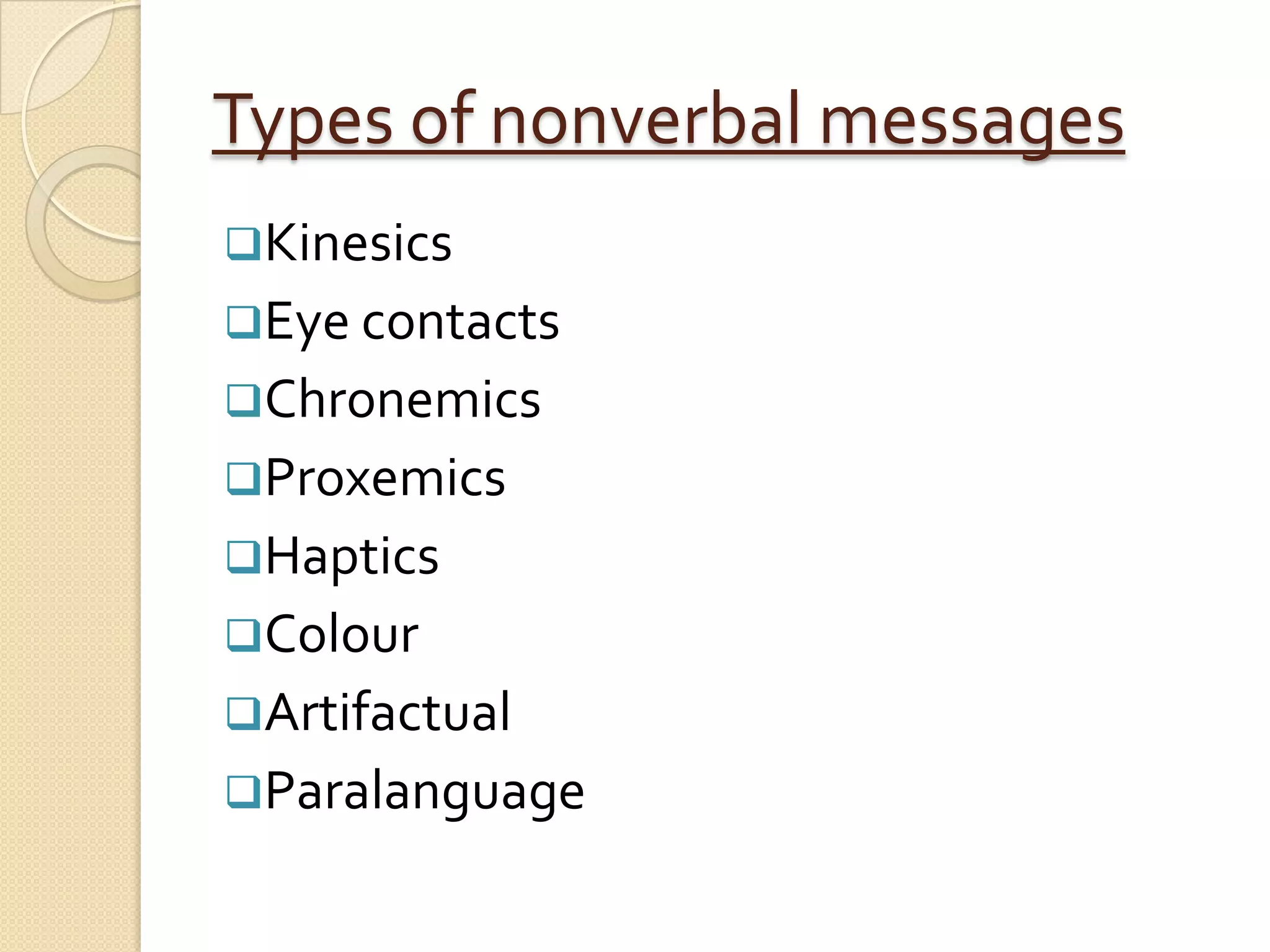
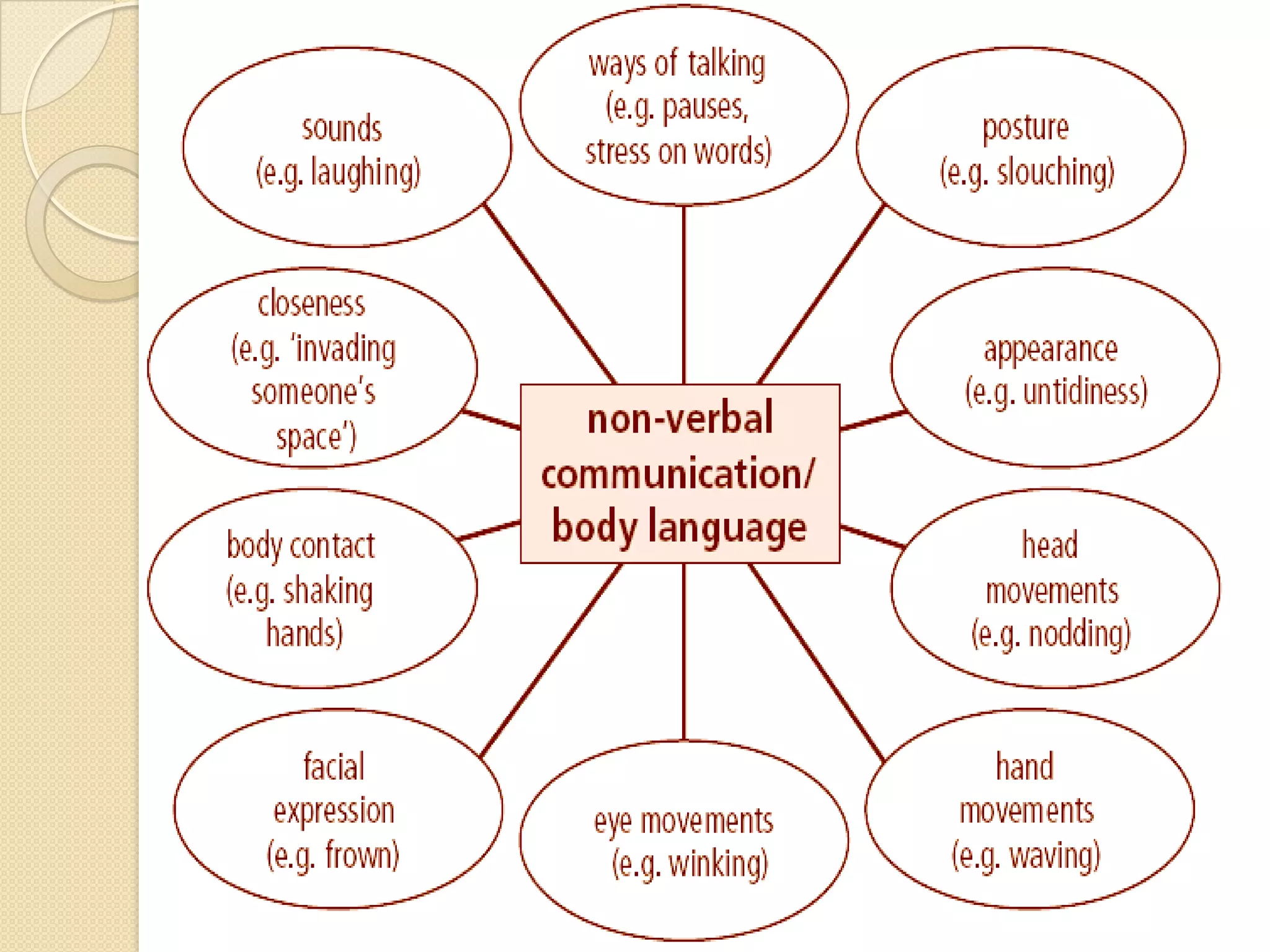
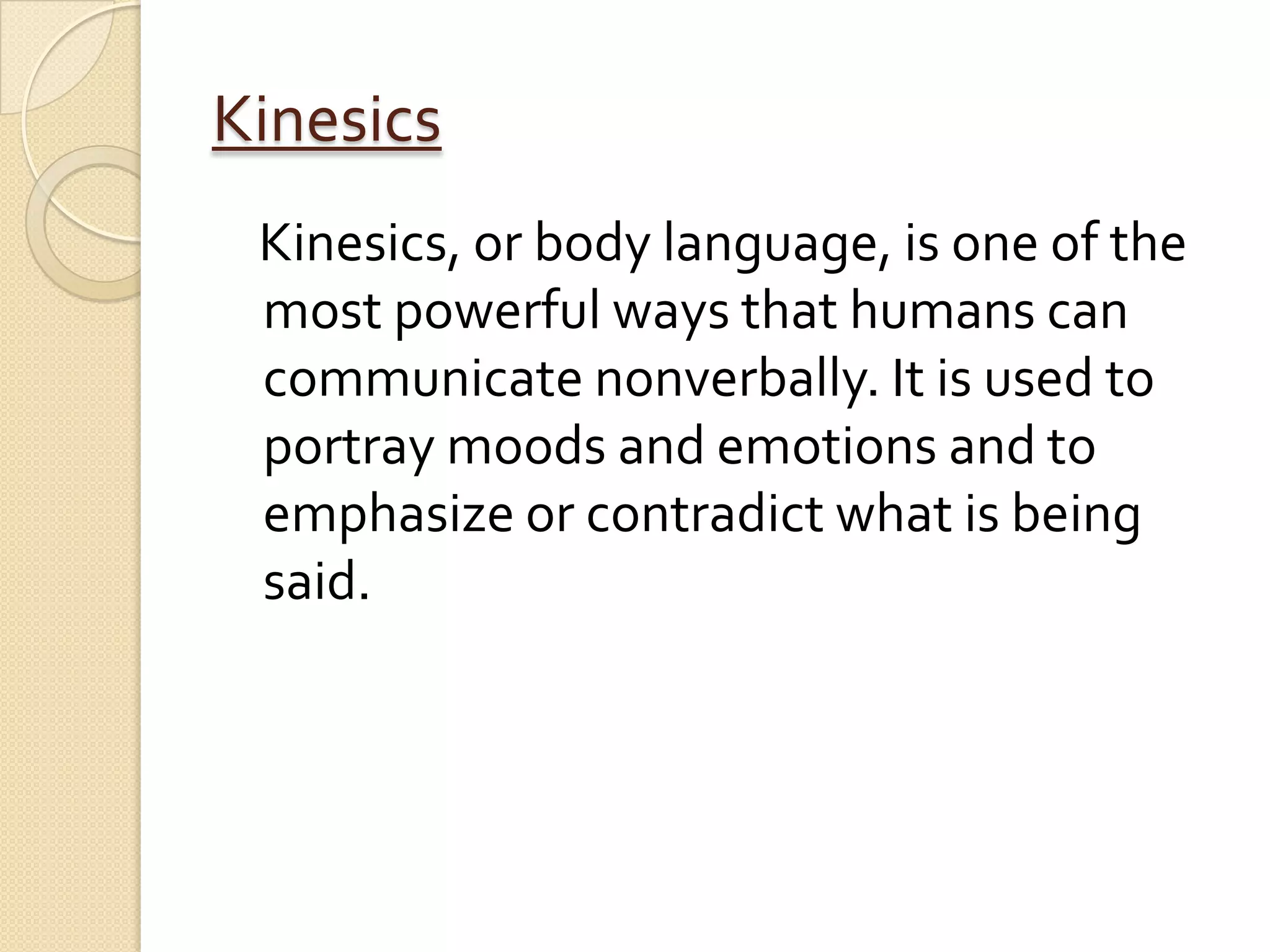
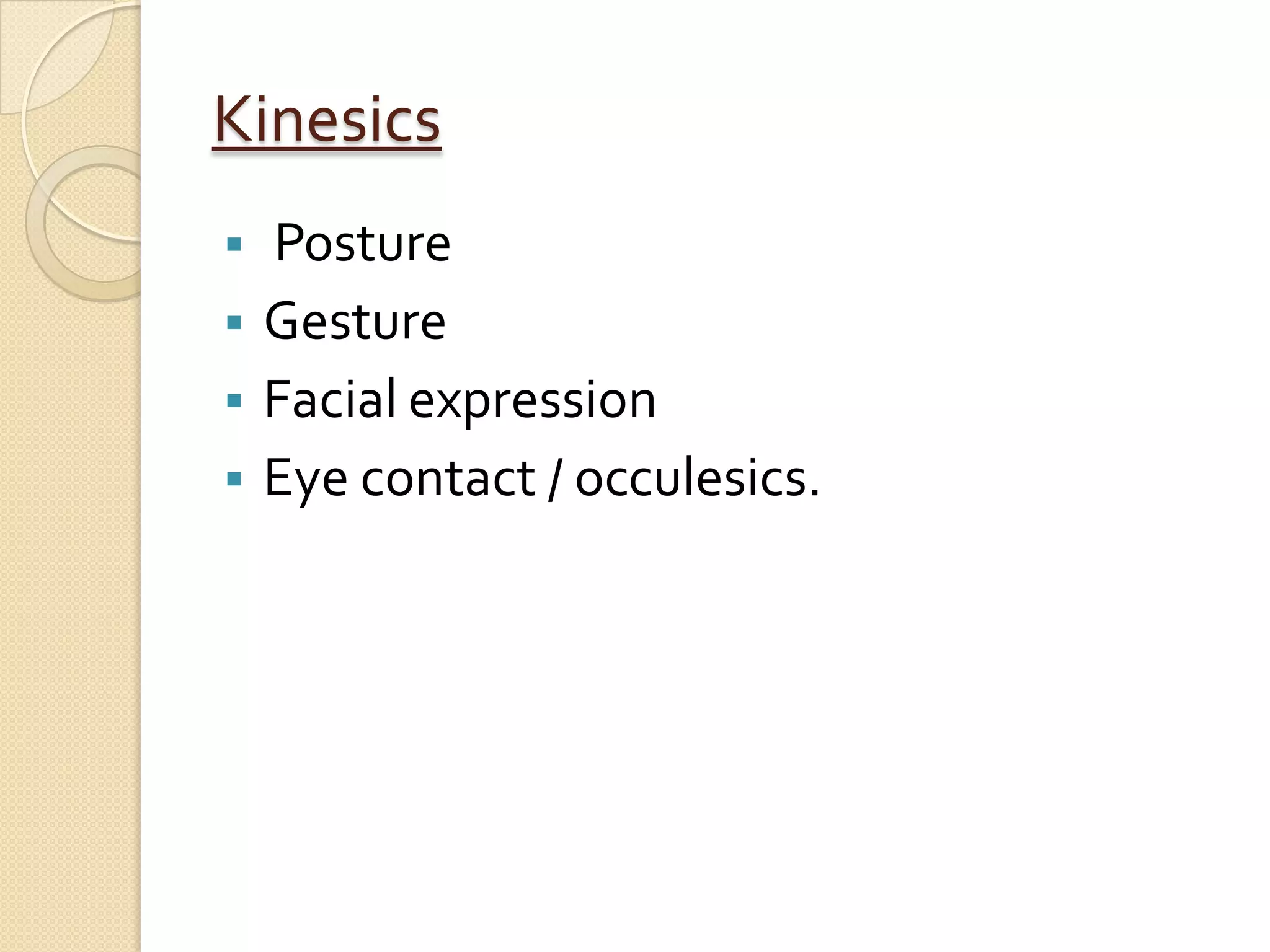
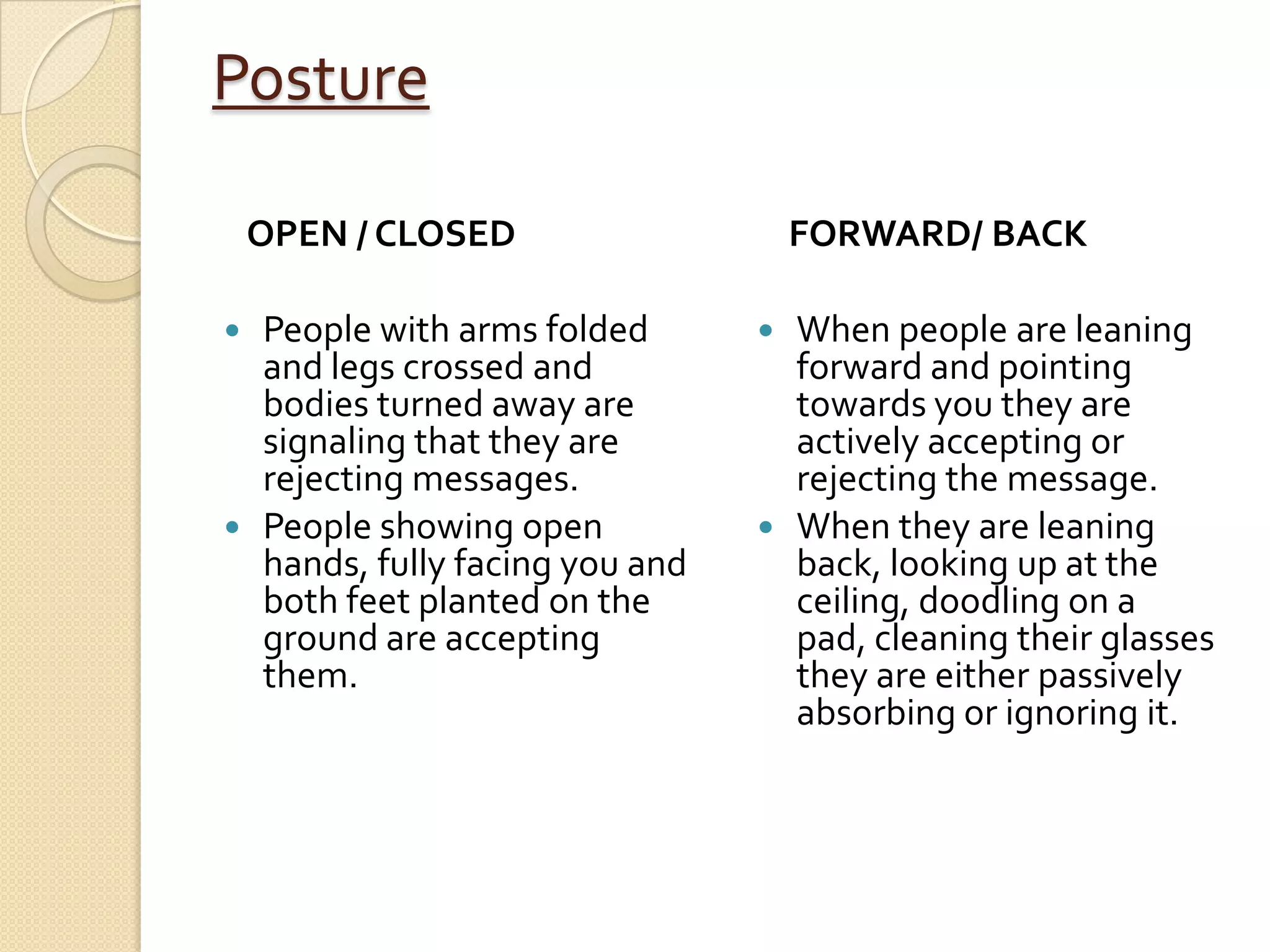
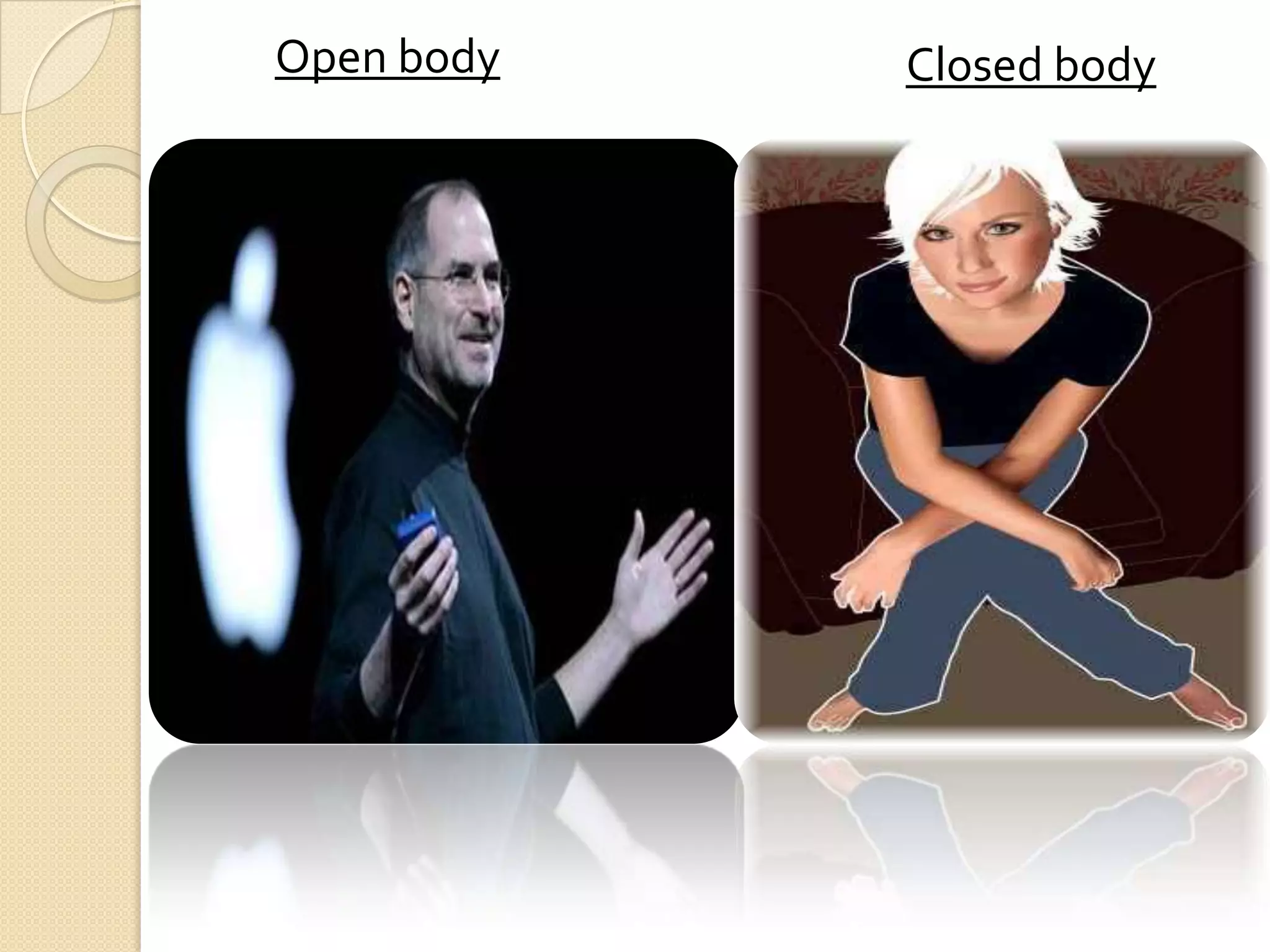

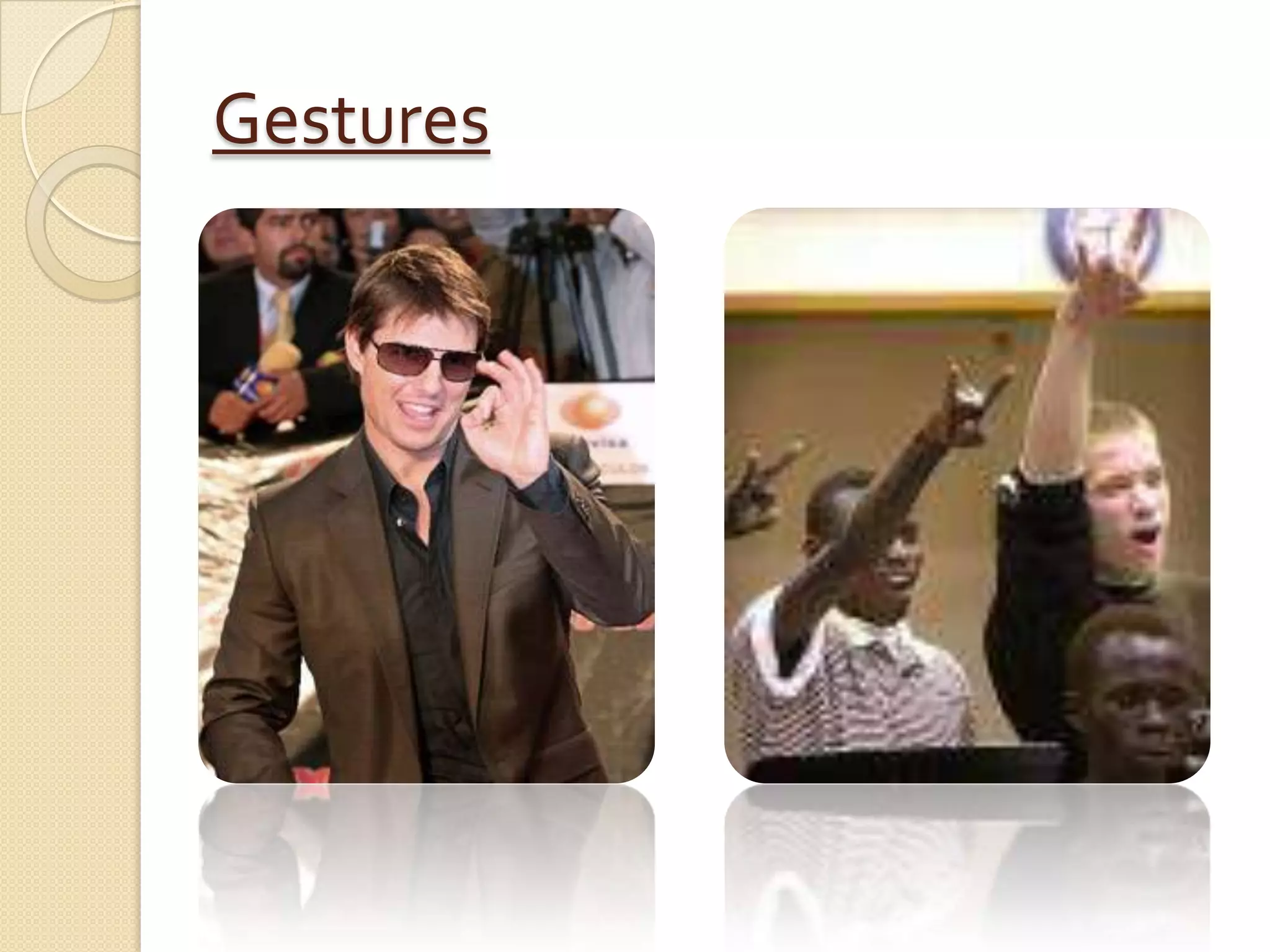
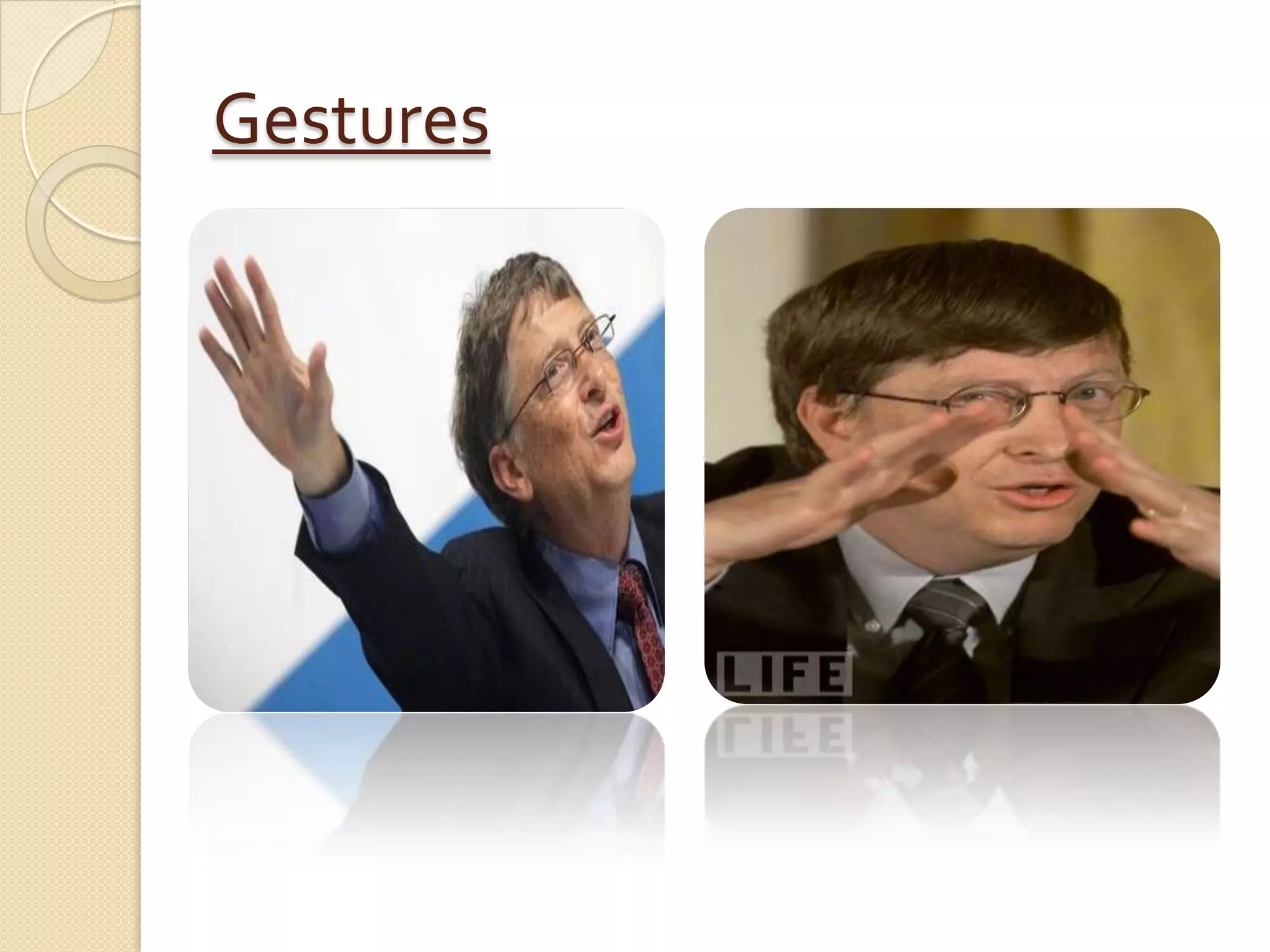
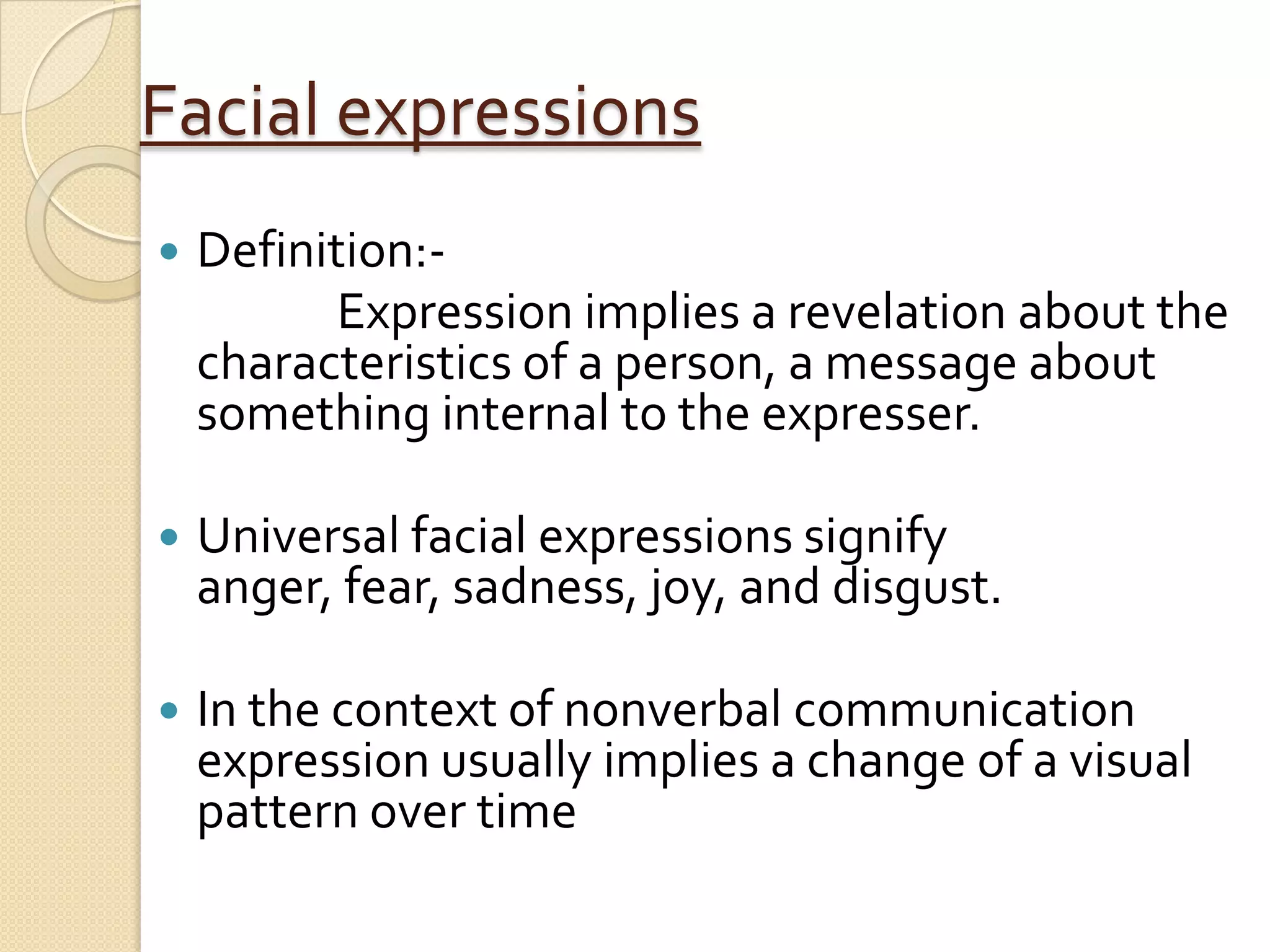
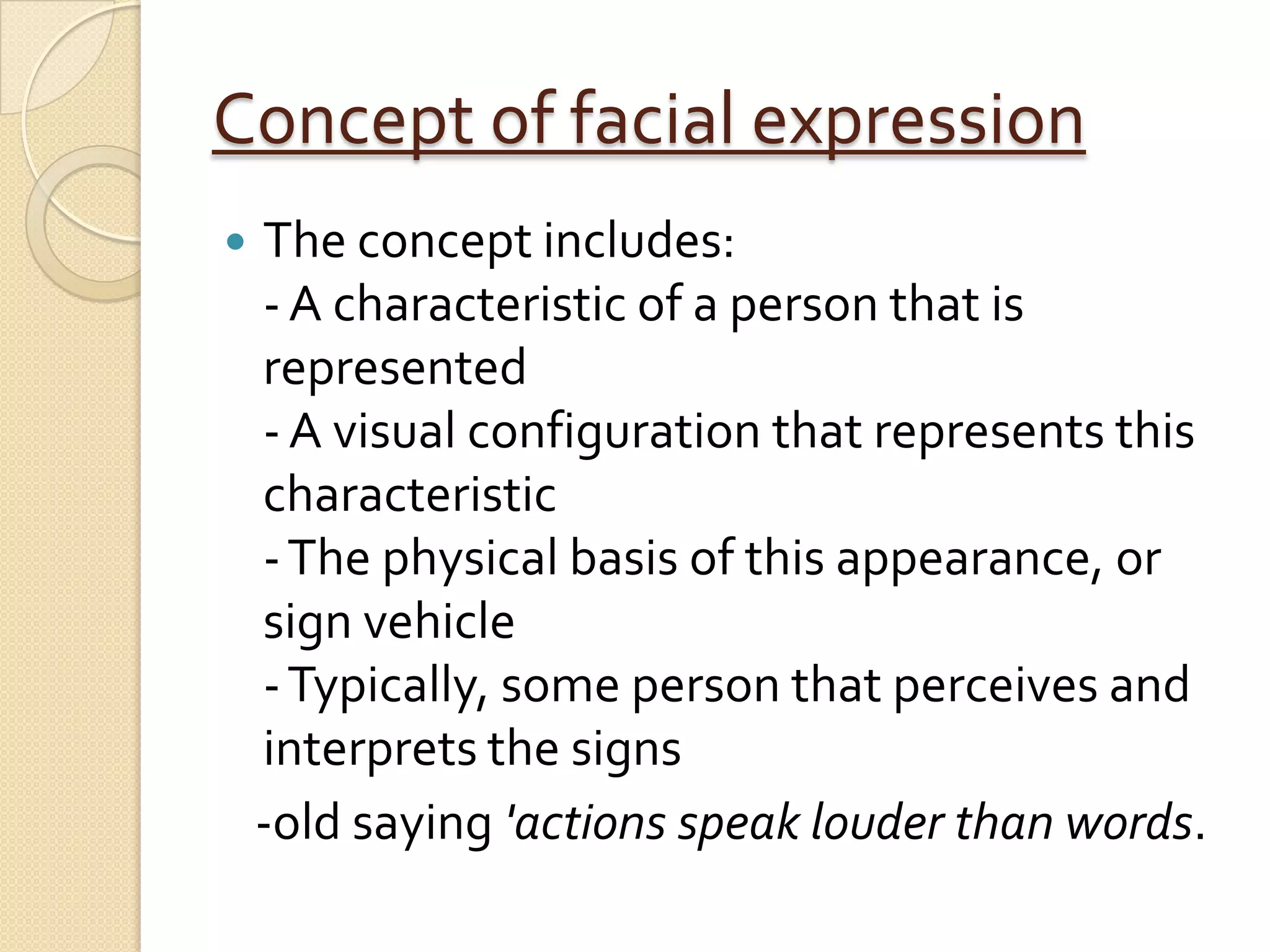
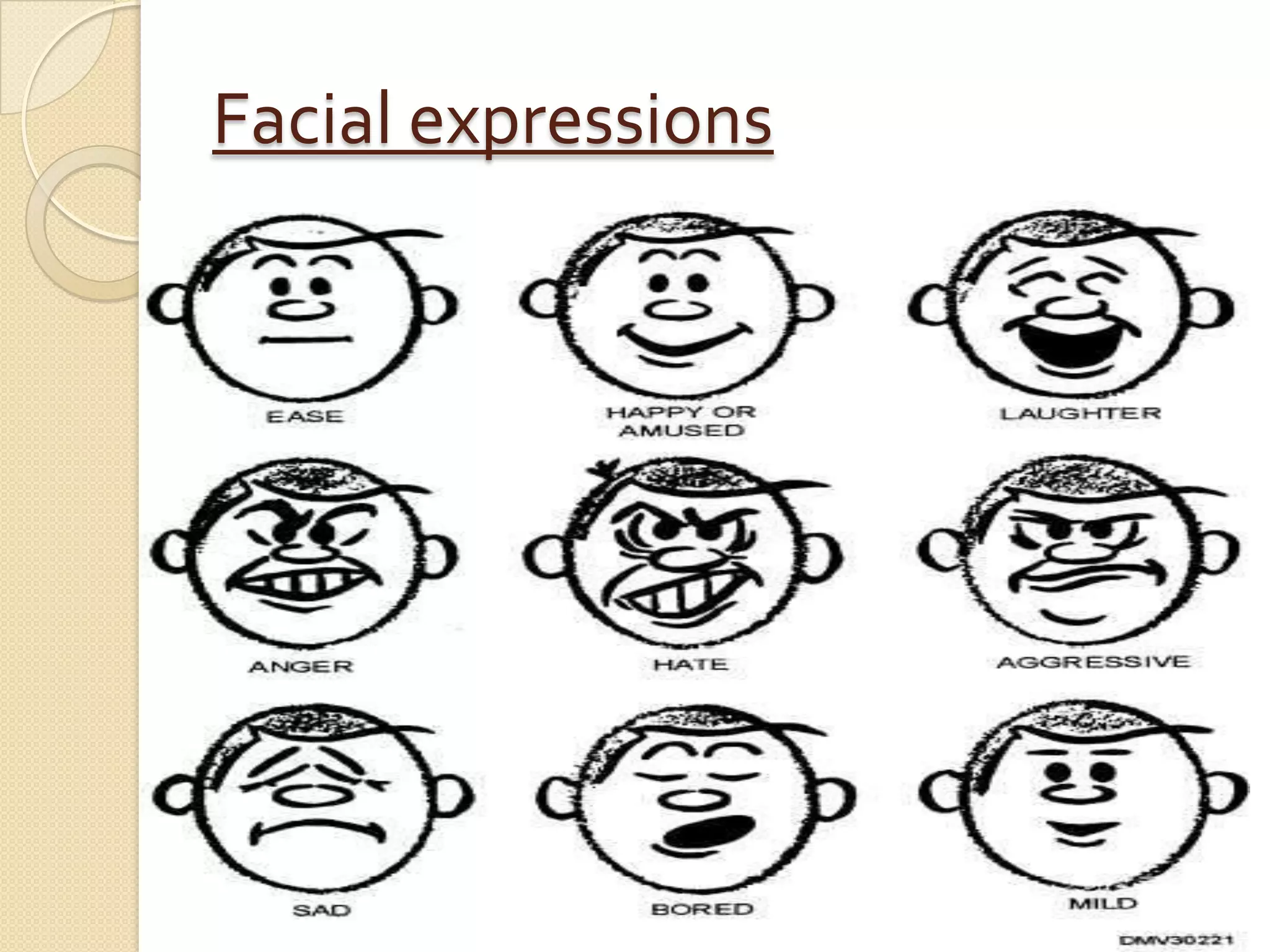



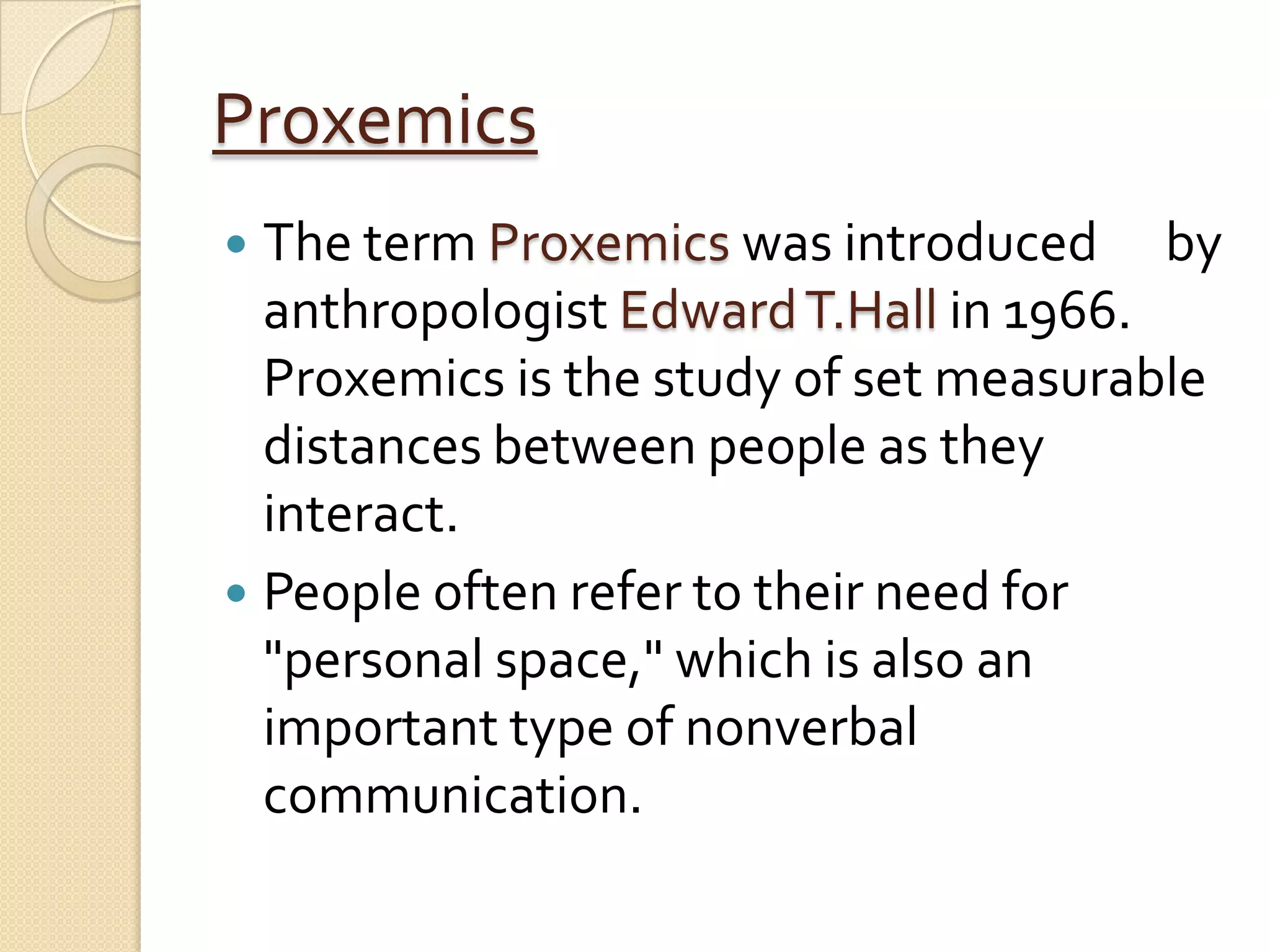
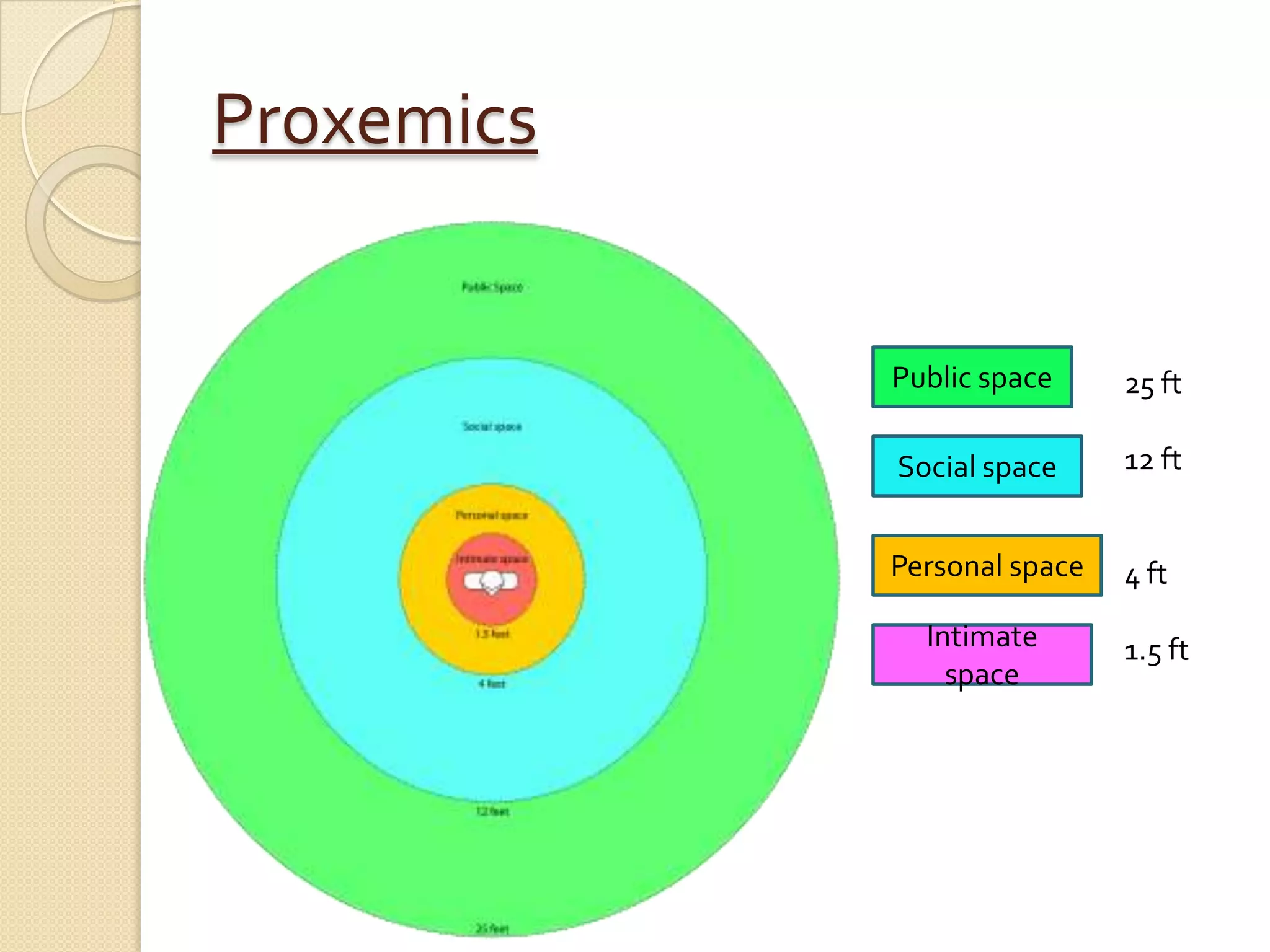
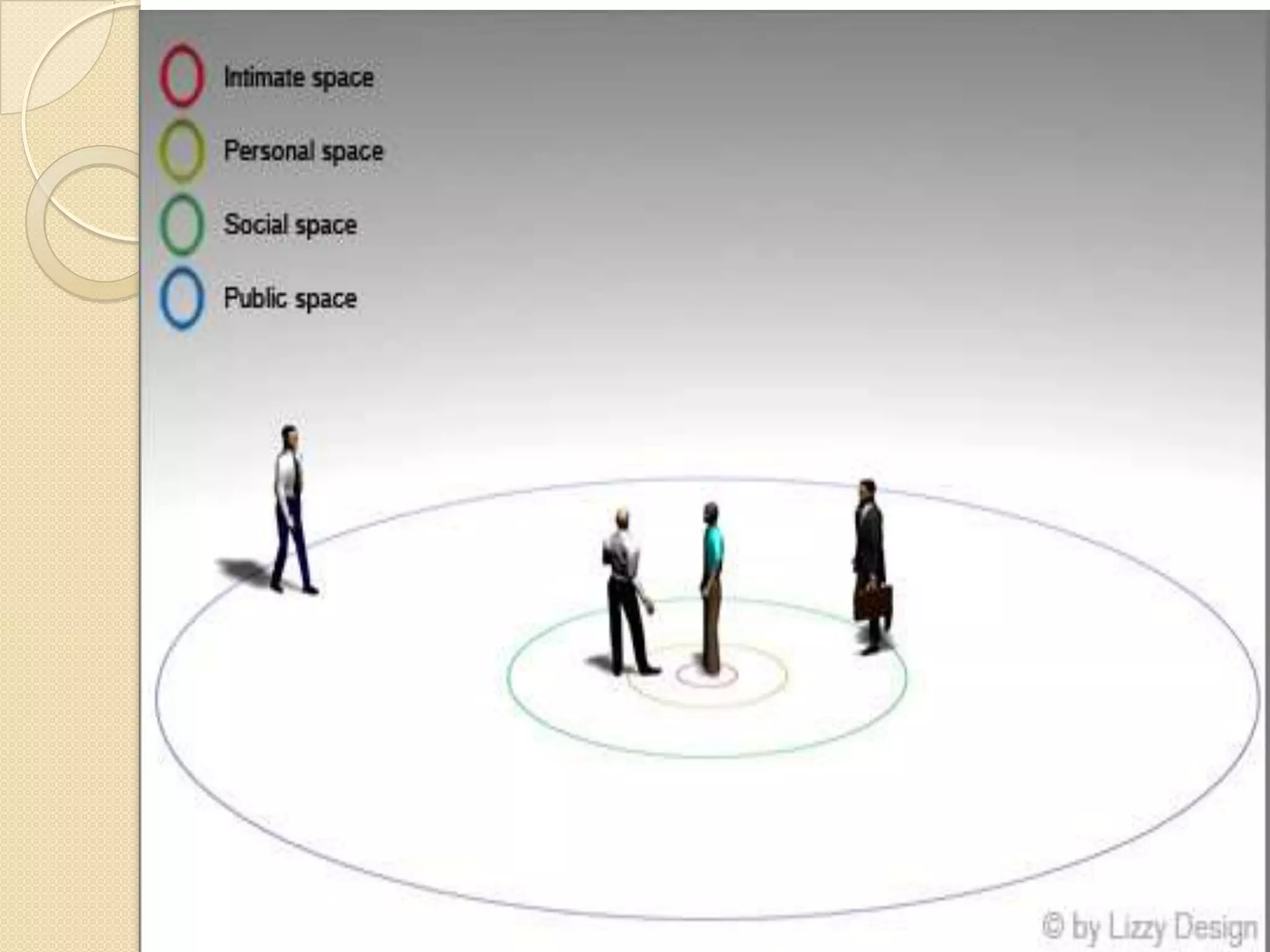





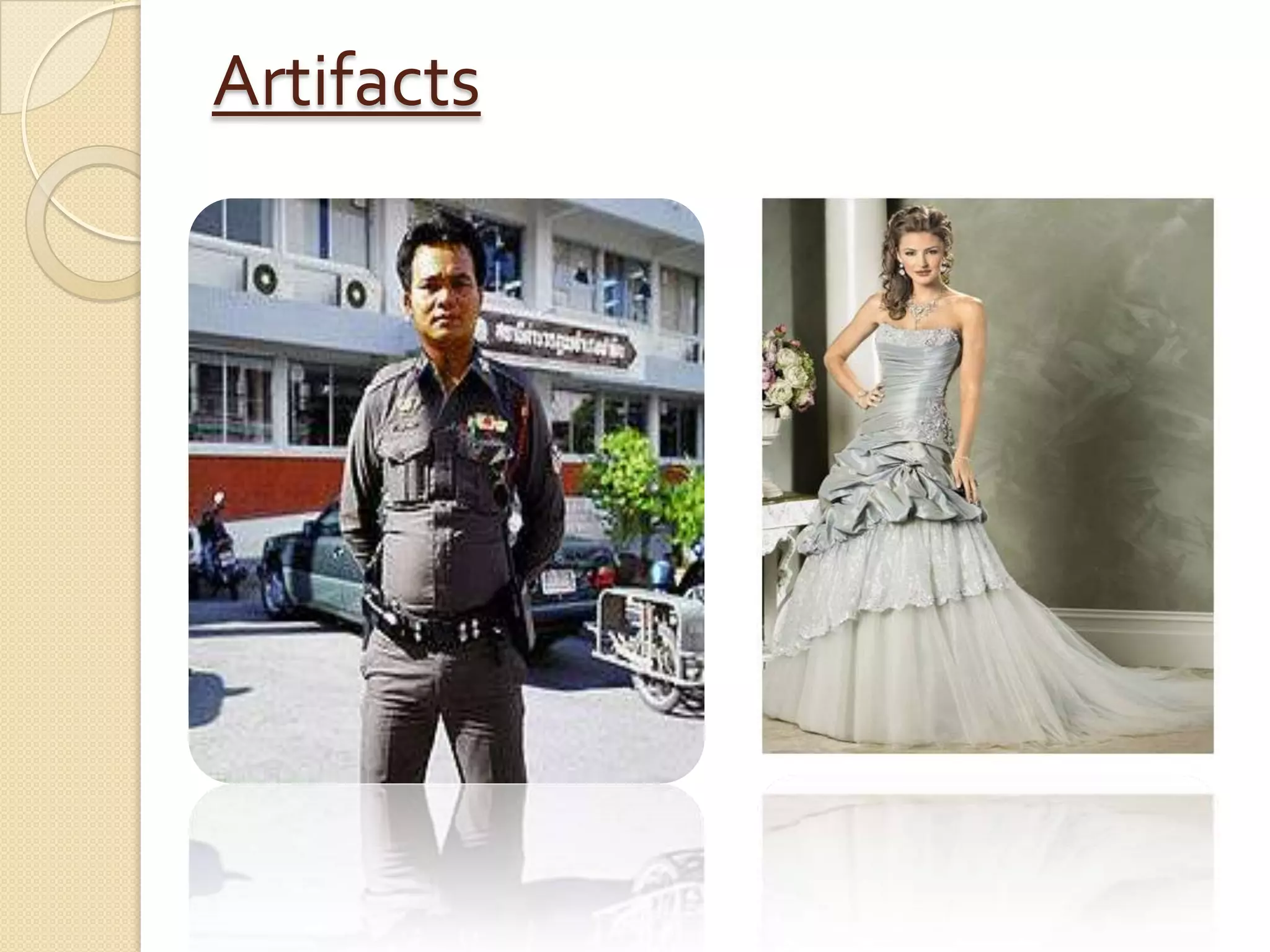


Nonverbal communication involves sending and receiving messages without words through body language, gestures, eye contact, use of space, touch, time, artifacts, and paralanguage. It accounts for over 50% of communication according to Mehrabian's model. Nonverbal cues can reinforce, complement, or contradict verbal messages and help regulate interactions. Examples of important nonverbal channels discussed are kinesics, proxemics, haptics, chronemics, and their cultural meanings and functions.


![Body language[1]](https://cdn.slidesharecdn.com/ss_thumbnails/bodylanguage1-121230052517-phpapp01-thumbnail.jpg?width=640&height=640&fit=bounds)


