What do the following convey?
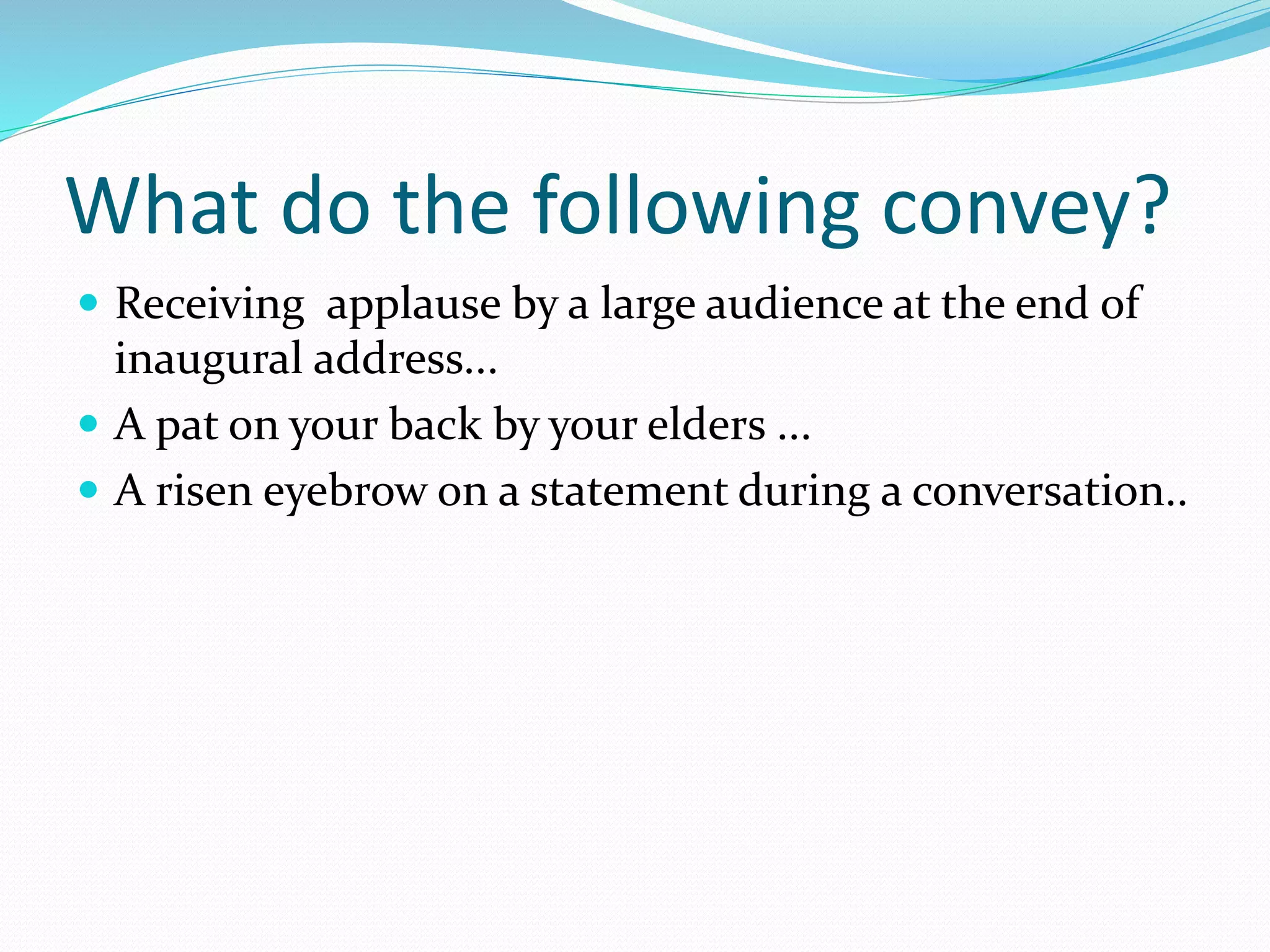
 Receiving applause by a large audience at the end of
inaugural address...
 A pat on your back by your elders ...
 A risen eyebrow on a statement during a conversation..
Meaning
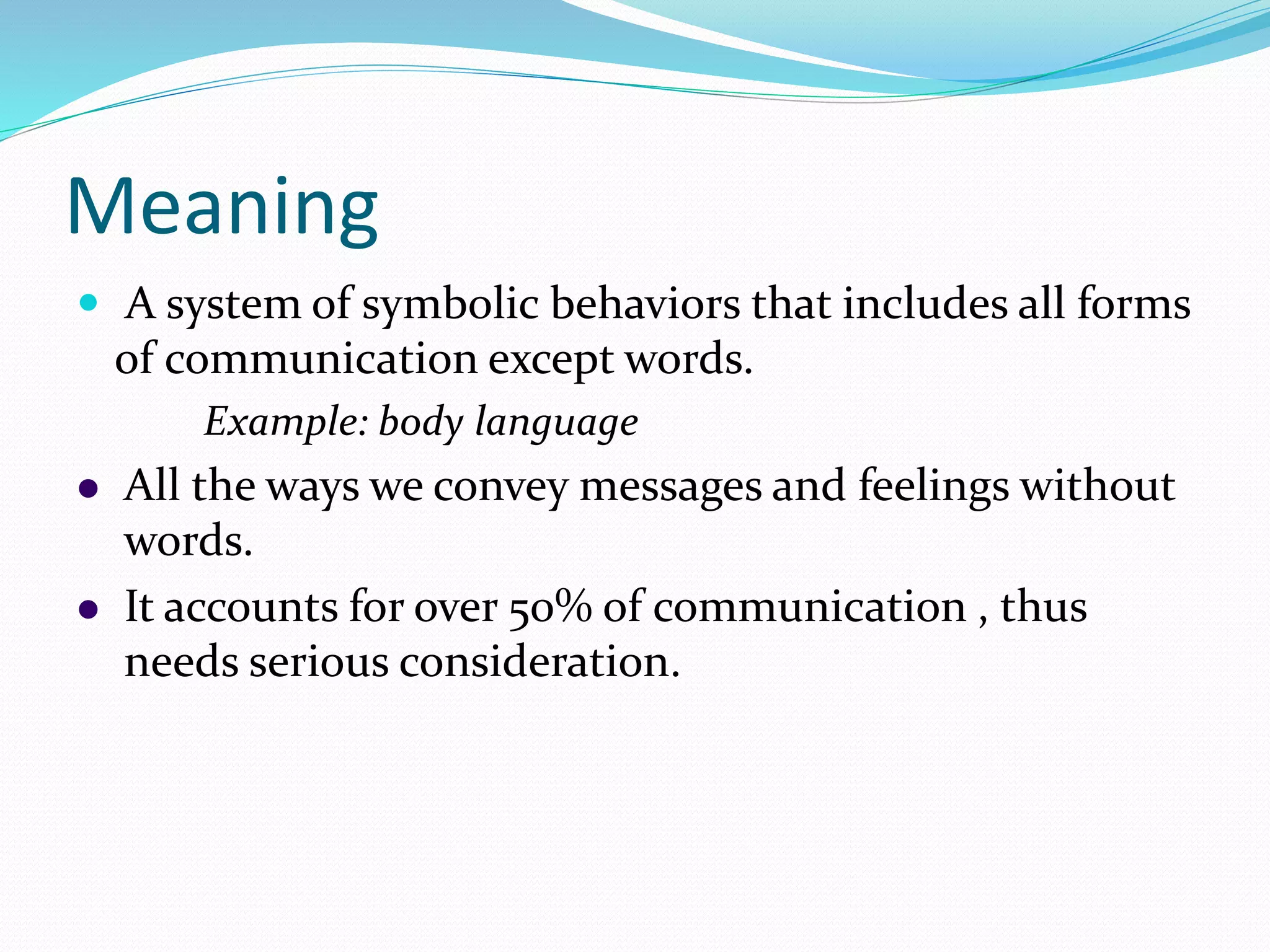
 A system of symbolic behaviors that includes all forms
of communication except words.
Example: body language
 All the ways we convey messages and feelings without
words.
 It accounts for over 50% of communication , thus
needs serious consideration.
Classification of non verbal
communication
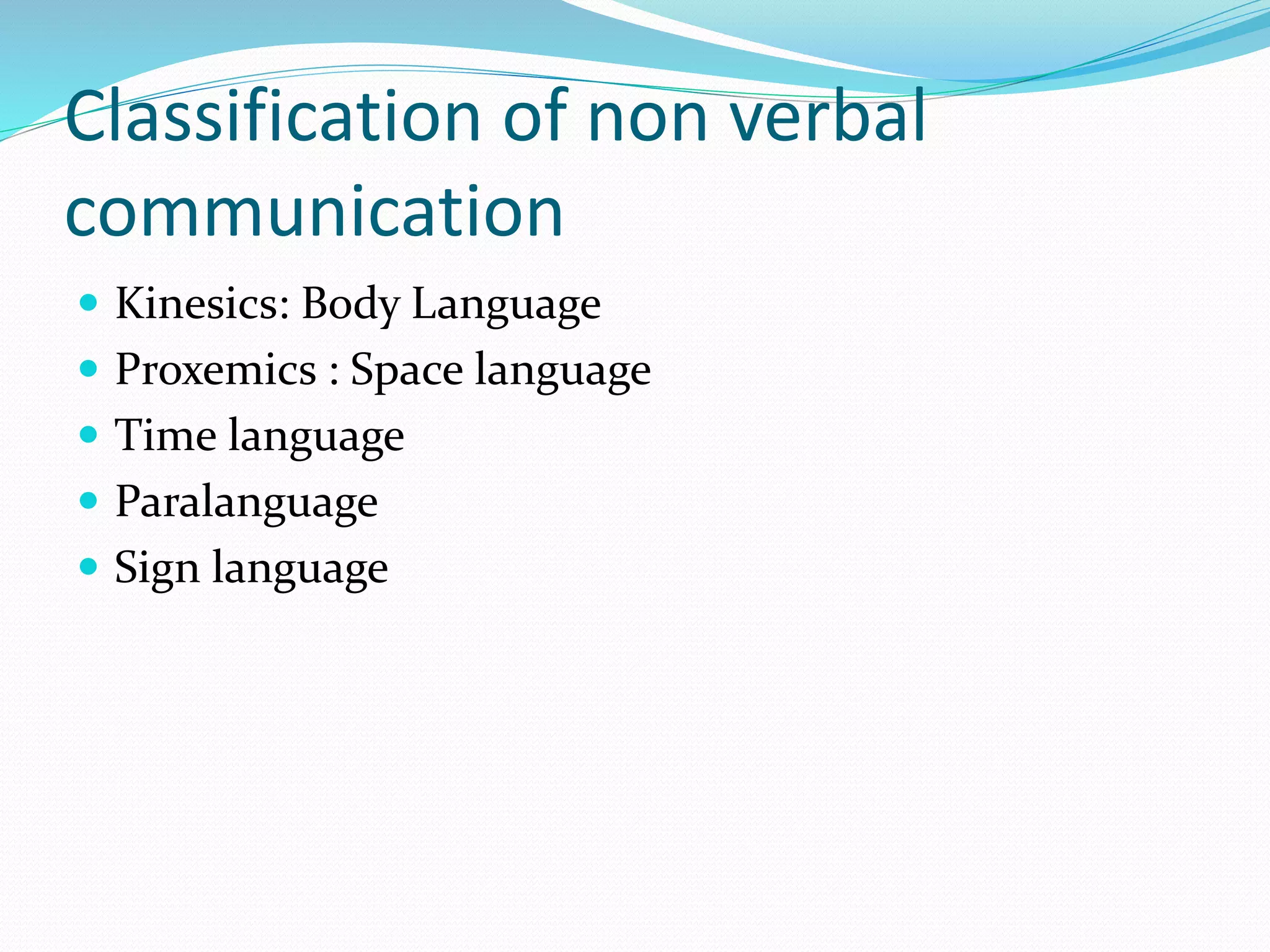
 Kinesics: Body Language
 Proxemics : Space language
 Time language
 Paralanguage
 Sign language
KINESICS
 Makes use of body movements
 Gestures, Hands, palm, handshakes, Finger
Movements and arm movements, postures
GESTURES
 May be classified as:
1. (R)Regulators
2. (E)Emblems
3. (A)Adaptors
4. (D)Displays
5. (I)Illustrators
Gestures
Emblems:
Direct translations of
verbal message
e.g. an ok sign or
thumb’s up
Regulators:
control oral
communication by
alerting sender
e.g. Nodding your
head to indicate
interest
Displays:
indicates emotional
States
e.g. Smiles and frowns
Illustrators :
Gestures that
accompany our speech
and accentuate what we
speak
e.g. holding three
fingers when pointing
to number 3
Adaptors:
Unconscious body
movements that
originate from
nervous state of
mind
.e.g clasping the hands
to the face in fear.
Facial expressions
 Face is the index of heart
 Facial expressions are linked with happiness, surprise,
fear, anger, sadness etc.
 Face expressions continuously change during an
interaction.
Eye contact
 Windows to the soul
 Eyes along with the eyebrows, eyelids and size of pupil
convey our innermost feelings
 Eyebrows and eyelids raised and combined with dilated
pupil: Surprise, scared
 Staring Eyes: superiority, lack of respect , threatening
attitude.
 Too little eye contact : dishonesty, shyness
 Withdrawal of eye contact: sign of submission
Handshakes
 CRUSHER hand shake: too dominating &
egoistic
 DEAD FISH hand shake: lacking enthusiasm,
passion, and confidence
 SKIPPING hand shake: not paying enough
attention & not serious about relationship or
refraining it
 HANDCUFF hand shake: gain or express sympathy
and fulfill personal interest.
Postures
 It means different ways of standing, sitting or lying.
 Posture or movements convey self confidence,
interest, status etc. e.g.
 Superiors usually take a more relaxed posture than
subordinates.
 Leaning forward depicts interest.
Finger Movement
 Pointing finger: associated with authority but in a
heated argument taken in a negative sense.
 The OK gesture: in this the thumb and finger join to
form a zero.
 In India, it means all OK
 In Japan , it means money.
 In France , it means zero.
PROXEMICS
 How we communicate using the space around us
Space language
 Four types of Personal Space Zones:
1. Intimate Zones(0-0.5 m)
2. Personal Zone(0.5-1.2m)
3. Social Zone( 1.2-3.0 m)
4. Public Zone (3.0 & above
Space use
 People enjoying higher status in the organisation have
better and more space allotted to them.
 Higher people are protected within their territories
which are often closed.
Surroundings
 Colour
 Layout or design
CHRONEMICS :TIME LANGUAGE
 Concept of time and its impact on people.
 Amount of time devoted to something
 Punctuality
SIGN LANGUAGE
 Visual signs
 Audio/ sound signals
PARALANGUAGE
 The way in which words are said.
 Includes
 volume
 pitch
 speaking rate/ pace
 pauses
 non fluencies
 Volume
 How loudly or softly you are speaking
 Loudness or softness alters the meaning considerably.
 Pitch
 How high or low the sounds of your voice are
 A high pitch may indicate nervousness, anxiety, anger
etc. and a low pitch may mean sadness, boredom or
affection
 Speaking Rate/ Pace
 How fast or slow you are speaking
 Increase in rate indicates urgency, anxiety or impatience
 Decrease in rate can indicate thoughtfulness or a
reflective attitude.
 Pauses
 Pauses have to be at the right moment
 Can be effective in gaining listener’s attention or in
emphasizing a point.
 Non- fluencies
 Pauses scattered at intervals inserted with sounds and
utterances like ‘ah’, ‘oh’, ‘uh’, ‘um’, ‘you know’ etc
 Gives the speaker some time to think.
 Too frequent non fluencies can irritate the listener.

4. non verbal communication

  • 2.
    What do thefollowing convey?  Receiving applause by a large audience at the end of inaugural address...  A pat on your back by your elders ...  A risen eyebrow on a statement during a conversation..
  • 3.
    Meaning  A systemof symbolic behaviors that includes all forms of communication except words. Example: body language  All the ways we convey messages and feelings without words.  It accounts for over 50% of communication , thus needs serious consideration.
  • 4.
    Classification of nonverbal communication  Kinesics: Body Language  Proxemics : Space language  Time language  Paralanguage  Sign language
  • 5.
    KINESICS  Makes useof body movements  Gestures, Hands, palm, handshakes, Finger Movements and arm movements, postures GESTURES  May be classified as: 1. (R)Regulators 2. (E)Emblems 3. (A)Adaptors 4. (D)Displays 5. (I)Illustrators
  • 6.
    Gestures Emblems: Direct translations of verbalmessage e.g. an ok sign or thumb’s up Regulators: control oral communication by alerting sender e.g. Nodding your head to indicate interest Displays: indicates emotional States e.g. Smiles and frowns Illustrators : Gestures that accompany our speech and accentuate what we speak e.g. holding three fingers when pointing to number 3 Adaptors: Unconscious body movements that originate from nervous state of mind .e.g clasping the hands to the face in fear.
  • 7.
    Facial expressions  Faceis the index of heart  Facial expressions are linked with happiness, surprise, fear, anger, sadness etc.  Face expressions continuously change during an interaction.
  • 8.
    Eye contact  Windowsto the soul  Eyes along with the eyebrows, eyelids and size of pupil convey our innermost feelings  Eyebrows and eyelids raised and combined with dilated pupil: Surprise, scared  Staring Eyes: superiority, lack of respect , threatening attitude.  Too little eye contact : dishonesty, shyness  Withdrawal of eye contact: sign of submission
  • 9.
    Handshakes  CRUSHER handshake: too dominating & egoistic  DEAD FISH hand shake: lacking enthusiasm, passion, and confidence  SKIPPING hand shake: not paying enough attention & not serious about relationship or refraining it
  • 10.
     HANDCUFF handshake: gain or express sympathy and fulfill personal interest.
  • 11.
    Postures  It meansdifferent ways of standing, sitting or lying.  Posture or movements convey self confidence, interest, status etc. e.g.  Superiors usually take a more relaxed posture than subordinates.  Leaning forward depicts interest.
  • 12.
    Finger Movement  Pointingfinger: associated with authority but in a heated argument taken in a negative sense.  The OK gesture: in this the thumb and finger join to form a zero.  In India, it means all OK  In Japan , it means money.  In France , it means zero.
  • 13.
    PROXEMICS  How wecommunicate using the space around us Space language  Four types of Personal Space Zones: 1. Intimate Zones(0-0.5 m) 2. Personal Zone(0.5-1.2m) 3. Social Zone( 1.2-3.0 m) 4. Public Zone (3.0 & above
  • 14.
    Space use  Peopleenjoying higher status in the organisation have better and more space allotted to them.  Higher people are protected within their territories which are often closed. Surroundings  Colour  Layout or design
  • 15.
    CHRONEMICS :TIME LANGUAGE Concept of time and its impact on people.  Amount of time devoted to something  Punctuality
  • 16.
    SIGN LANGUAGE  Visualsigns  Audio/ sound signals
  • 17.
    PARALANGUAGE  The wayin which words are said.  Includes  volume  pitch  speaking rate/ pace  pauses  non fluencies
  • 18.
     Volume  Howloudly or softly you are speaking  Loudness or softness alters the meaning considerably.  Pitch  How high or low the sounds of your voice are  A high pitch may indicate nervousness, anxiety, anger etc. and a low pitch may mean sadness, boredom or affection
  • 19.
     Speaking Rate/Pace  How fast or slow you are speaking  Increase in rate indicates urgency, anxiety or impatience  Decrease in rate can indicate thoughtfulness or a reflective attitude.
  • 20.
     Pauses  Pauseshave to be at the right moment  Can be effective in gaining listener’s attention or in emphasizing a point.  Non- fluencies  Pauses scattered at intervals inserted with sounds and utterances like ‘ah’, ‘oh’, ‘uh’, ‘um’, ‘you know’ etc  Gives the speaker some time to think.  Too frequent non fluencies can irritate the listener.