No jobs for humans
How to survive and thrive in the transition
to the all robot workforce
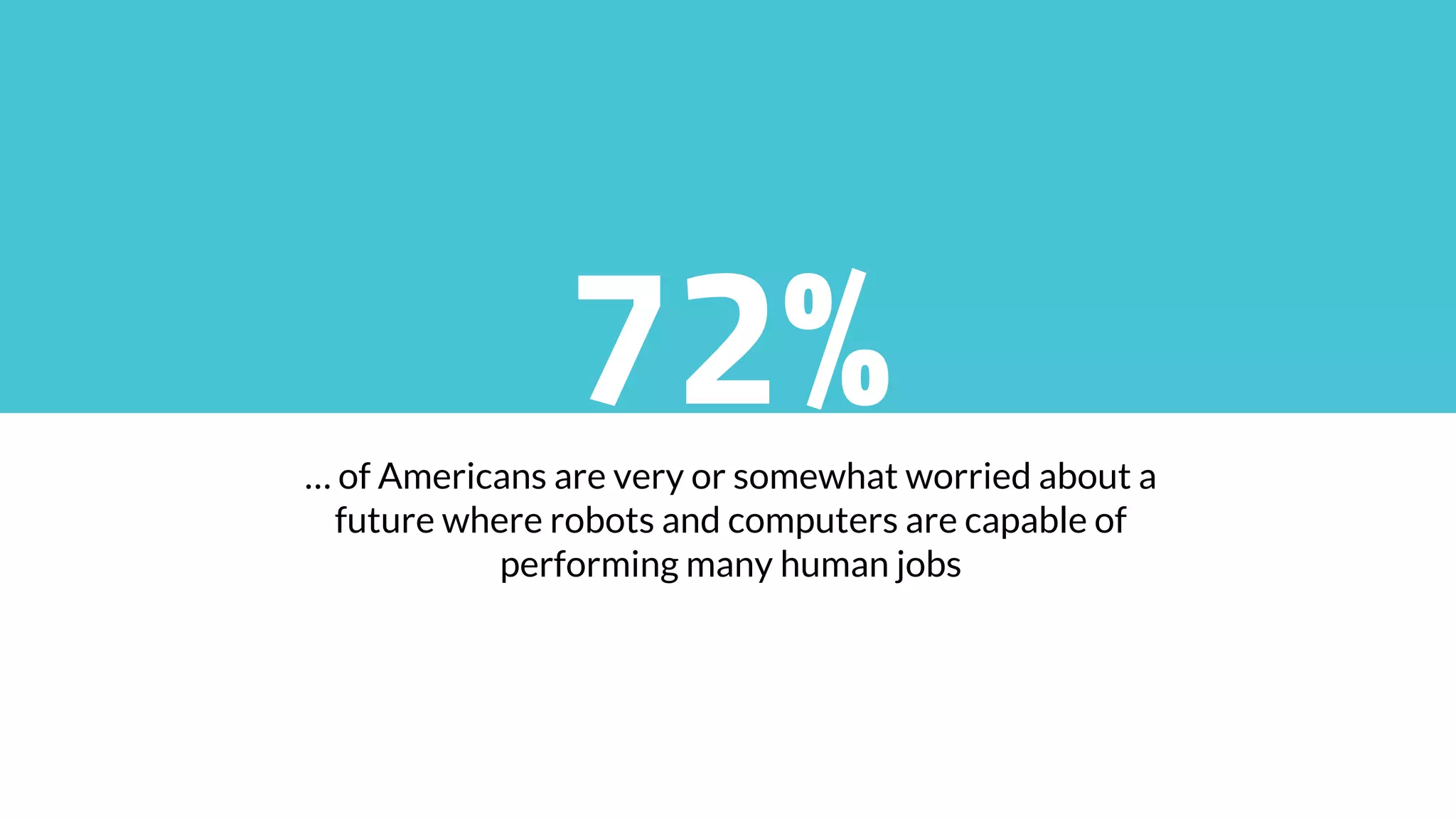
72%… of Americans are very or somewhat worried about a
future where robots and computers are capable of
performing many human jobs
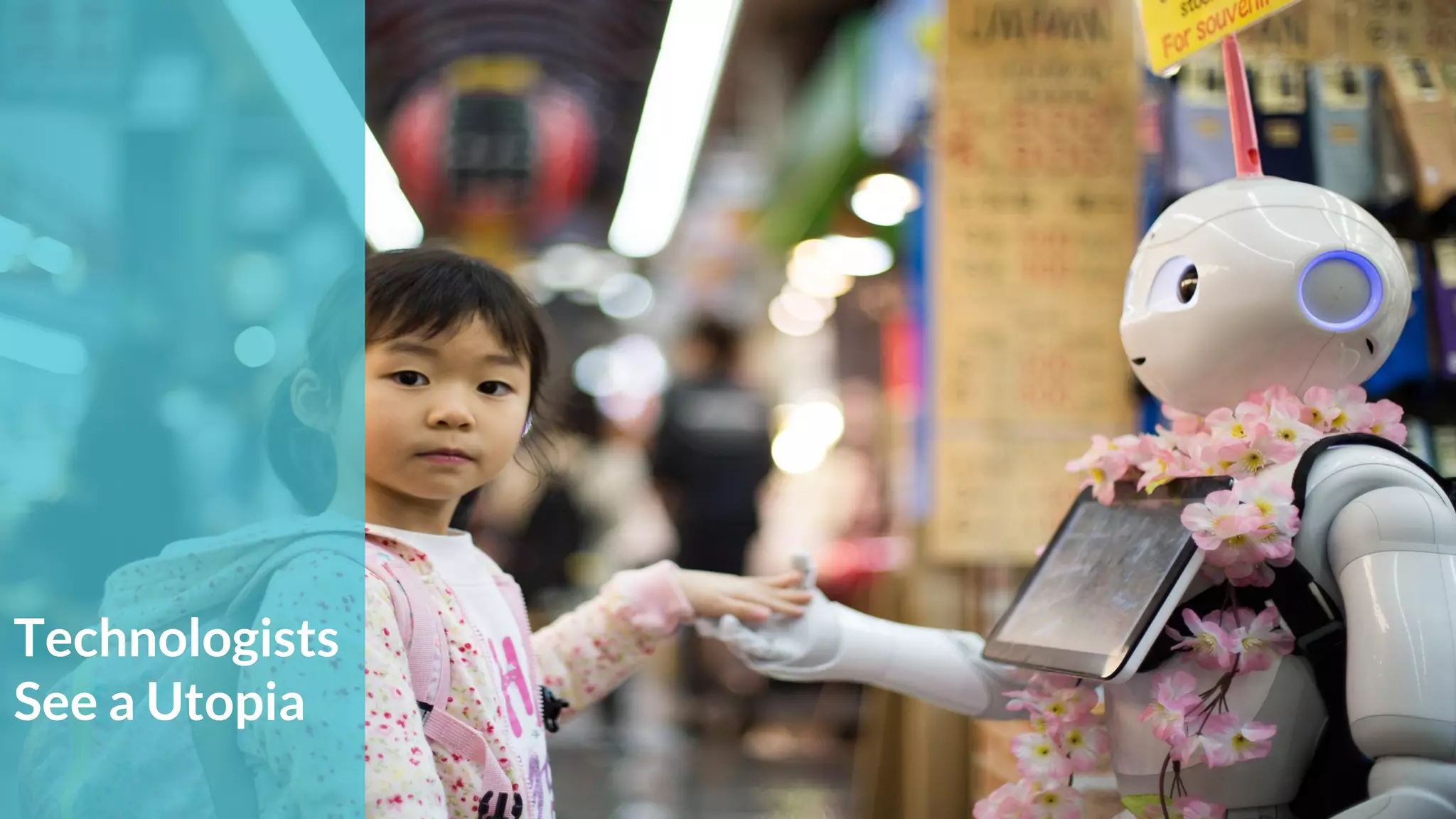
Technologists
See a Utopia
Most others
Imagine a
Dystopia
Hello!
I’m AJ Davis, and I sit at the
intersection of:
● Behavioral Economics
● Human computer interaction
● Building things
aj@metricrux.com | @AJDavis_ | AJ Davis on LinkedIn
PRESENT DAY
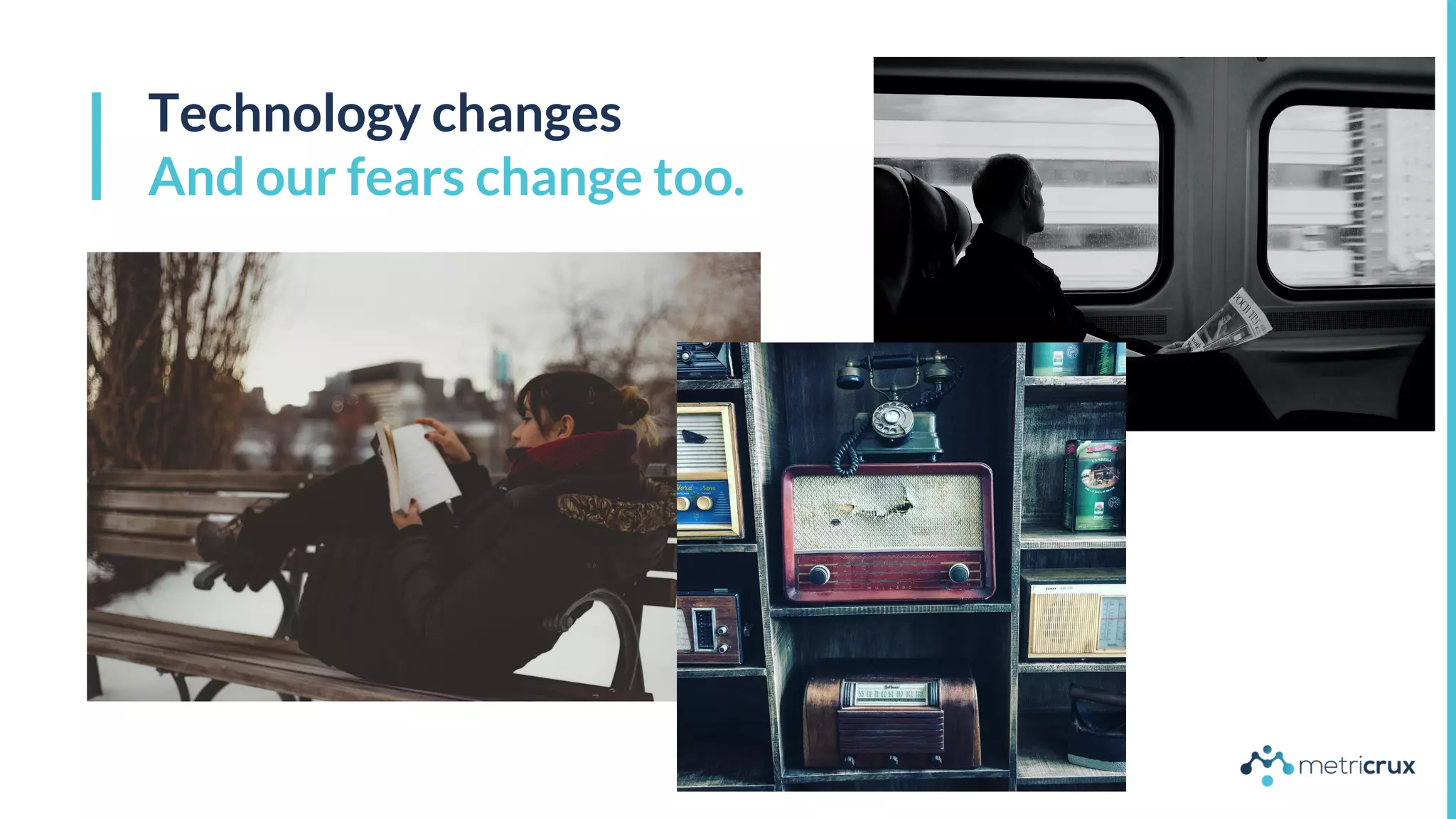
Technology changes
And our fears change too.
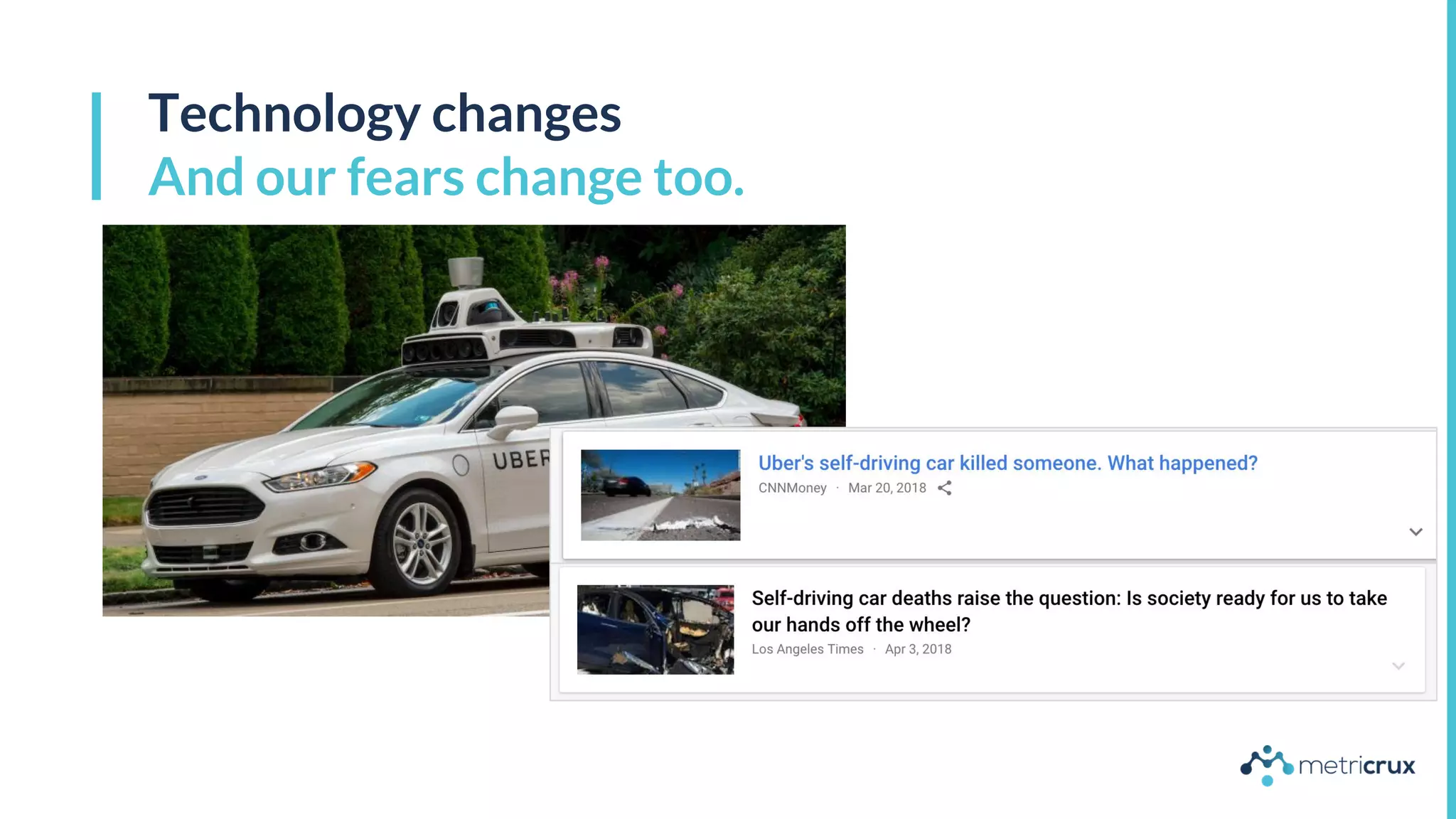
Technology changes
And our fears change too.
Human behavior.
Sunk cost fallacy.
“Everyone already knows how to drive,
why teach a machine to do it?”
Continuing a behavior or endeavor as a
result of previously invested resources (time,
money or effort)
Human behavior.
Endowment effect.
People will tend to pay more to retain
something they own than to obtain
something they do not own.
“I’d rather die by a human driver than a
machine (because I’m used to the risk)”
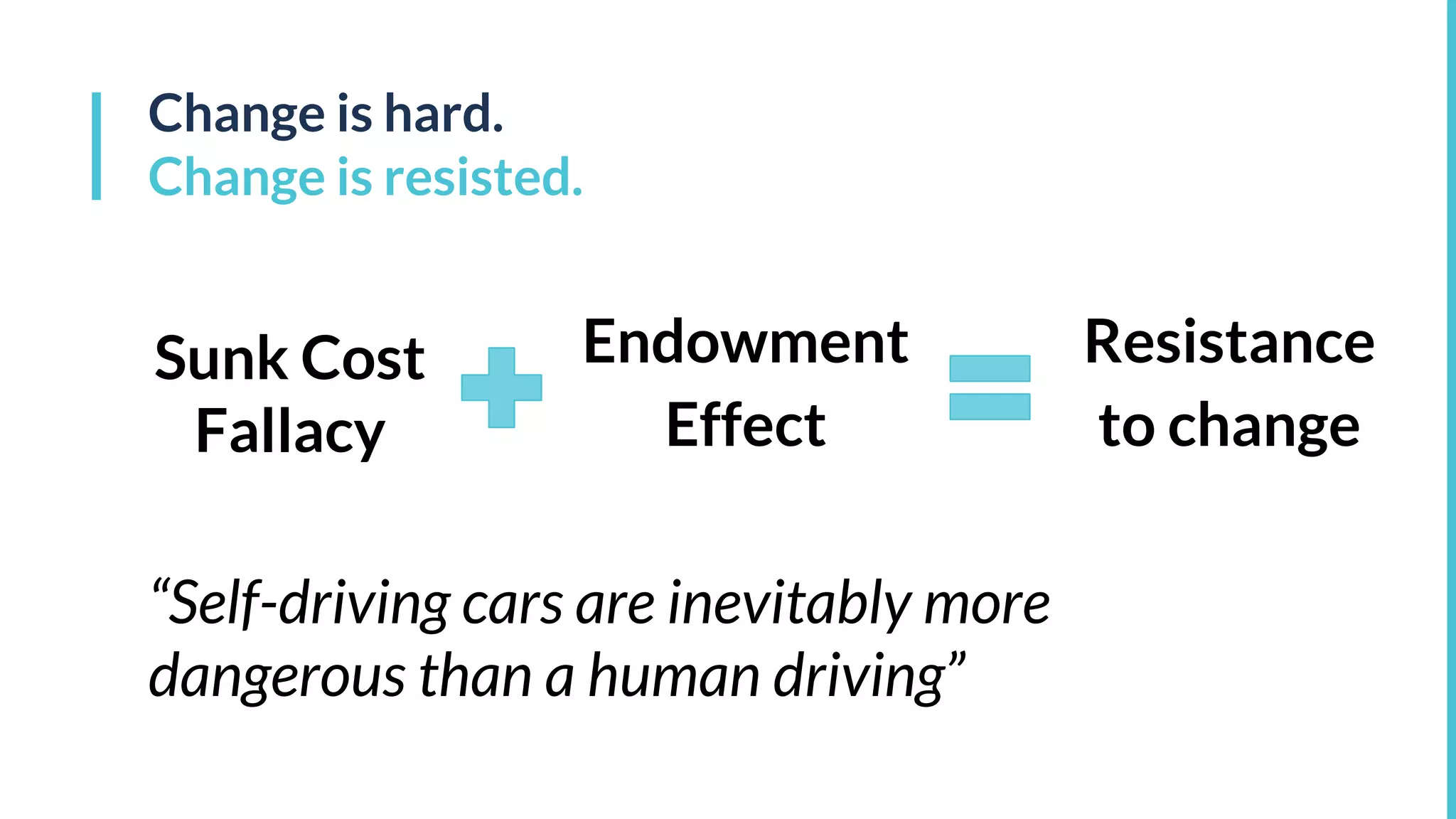
Change is hard.
Change is resisted.
Sunk Cost
Fallacy
Endowment
Effect
Resistance
to change
“Self-driving cars are inevitably more
dangerous than a human driving”
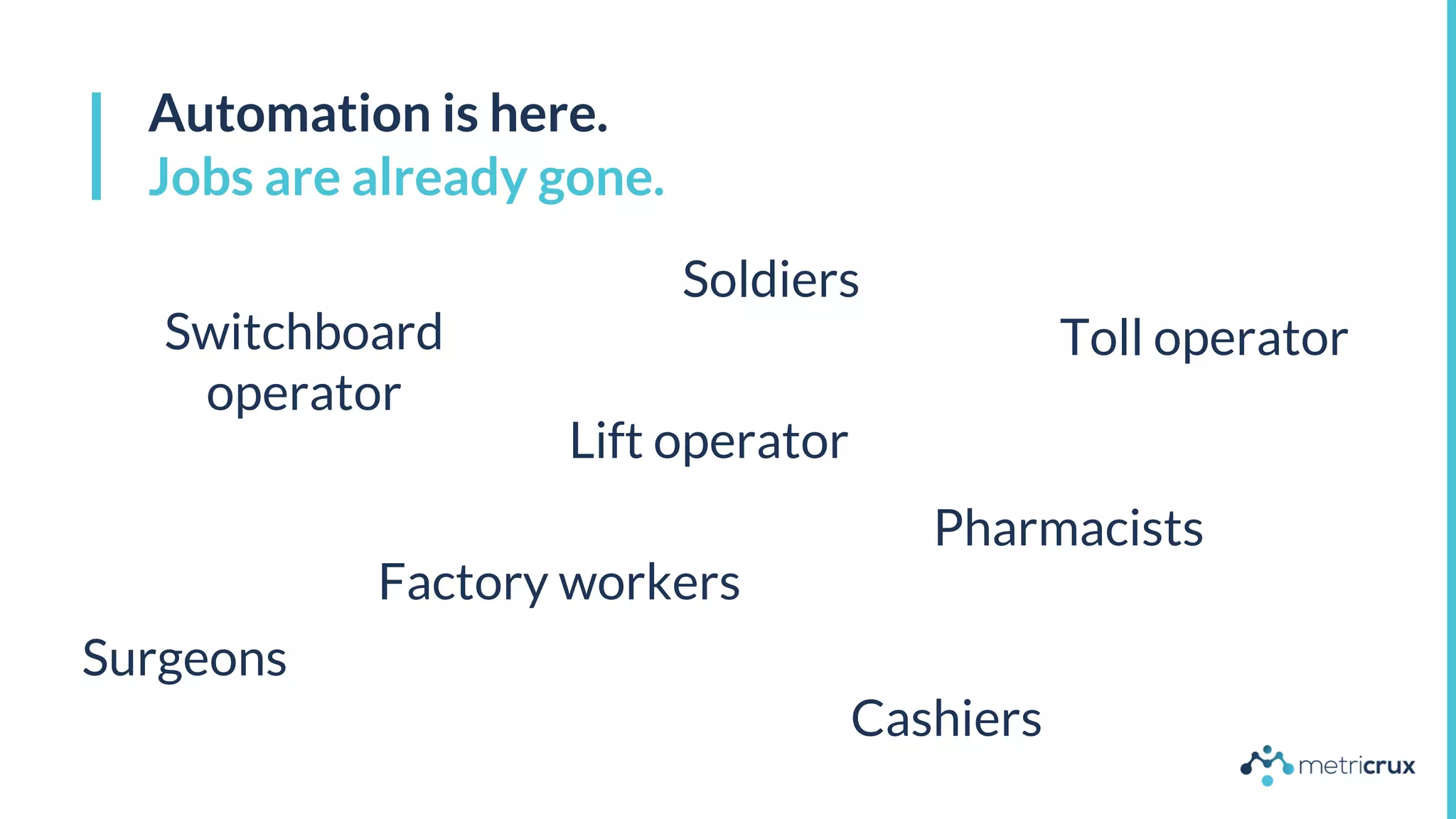
Automation is here.
Jobs are already gone.
Switchboard
operator
Lift operator
Toll operator
Cashiers
Factory workers
Surgeons
Pharmacists
Soldiers
FUTURE* STATE
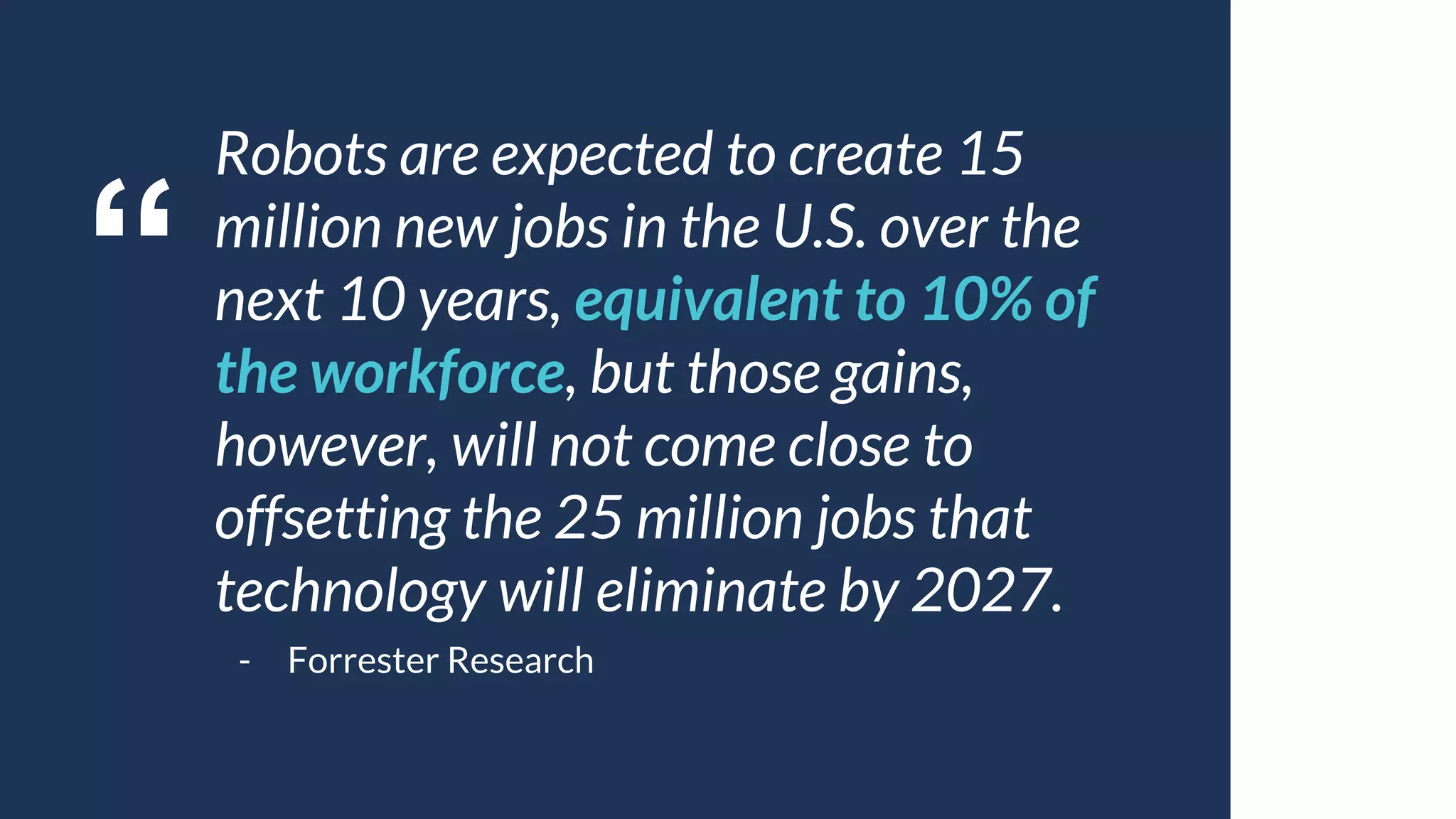
“
Robots are expected to create 15
million new jobs in the U.S. over the
next 10 years, equivalent to 10% of
the workforce, but those gains,
however, will not come close to
offsetting the 25 million jobs that
technology will eliminate by 2027.
- Forrester Research
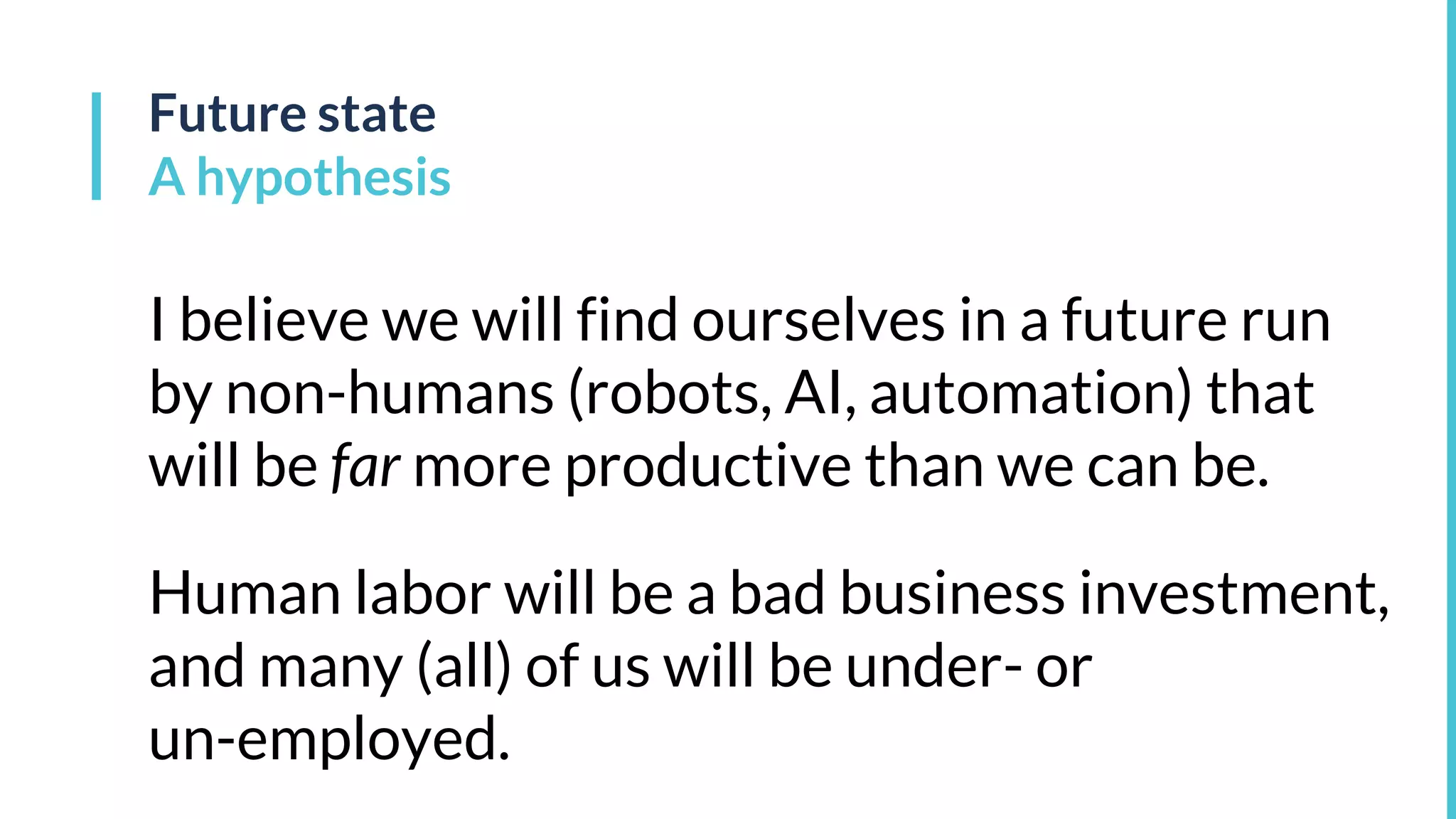
Future state
A hypothesis
I believe we will find ourselves in a future run
by non-humans (robots, AI, automation) that
will be far more productive than we can be.
Human labor will be a bad business investment,
and many (all) of us will be under- or
un-employed.
Future state
More hypotheses
“"It's probably hard to overstate how big of
an impact [automation] going to have on
society over the next twenty years,"”
- Jeff Bezos, Amazon
“The reality is that work has changed. Forty
percent of jobs are now contingent,
meaning they're part-time, independent
contractors, Uber drivers...”
- Chris Hughes, Facebook
“I’m fairly confident that at some point in the future, as
technology continues to eliminate traditional jobs and
massive new wealth gets created, we’re going to see some
version of [basic income] at a national scale.”
- Sam Altman, Y Combinator
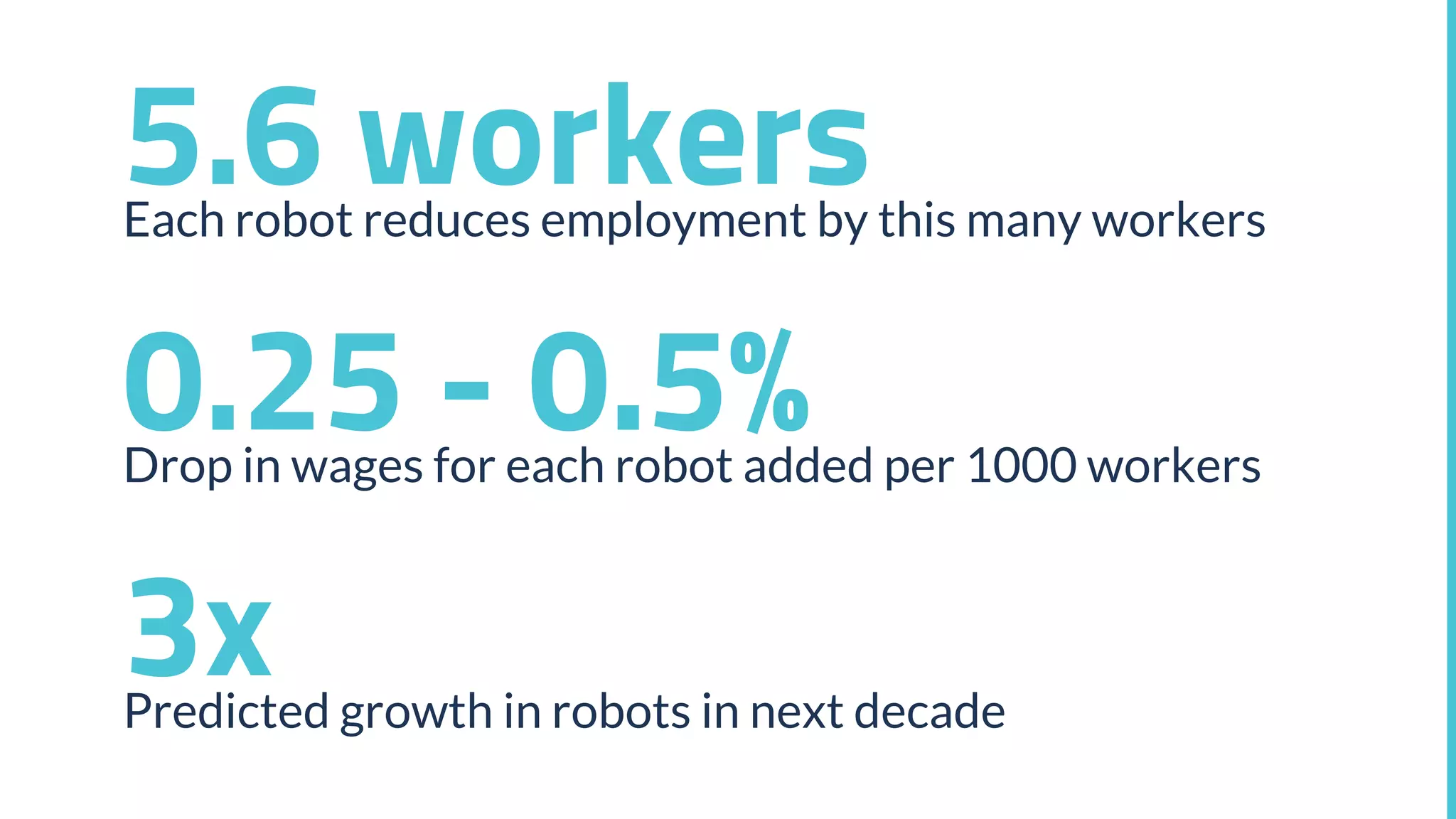
5.6 workersEach robot reduces employment by this many workers
3xPredicted growth in robots in next decade
0.25 - 0.5%Drop in wages for each robot added per 1000 workers
TRANSITION
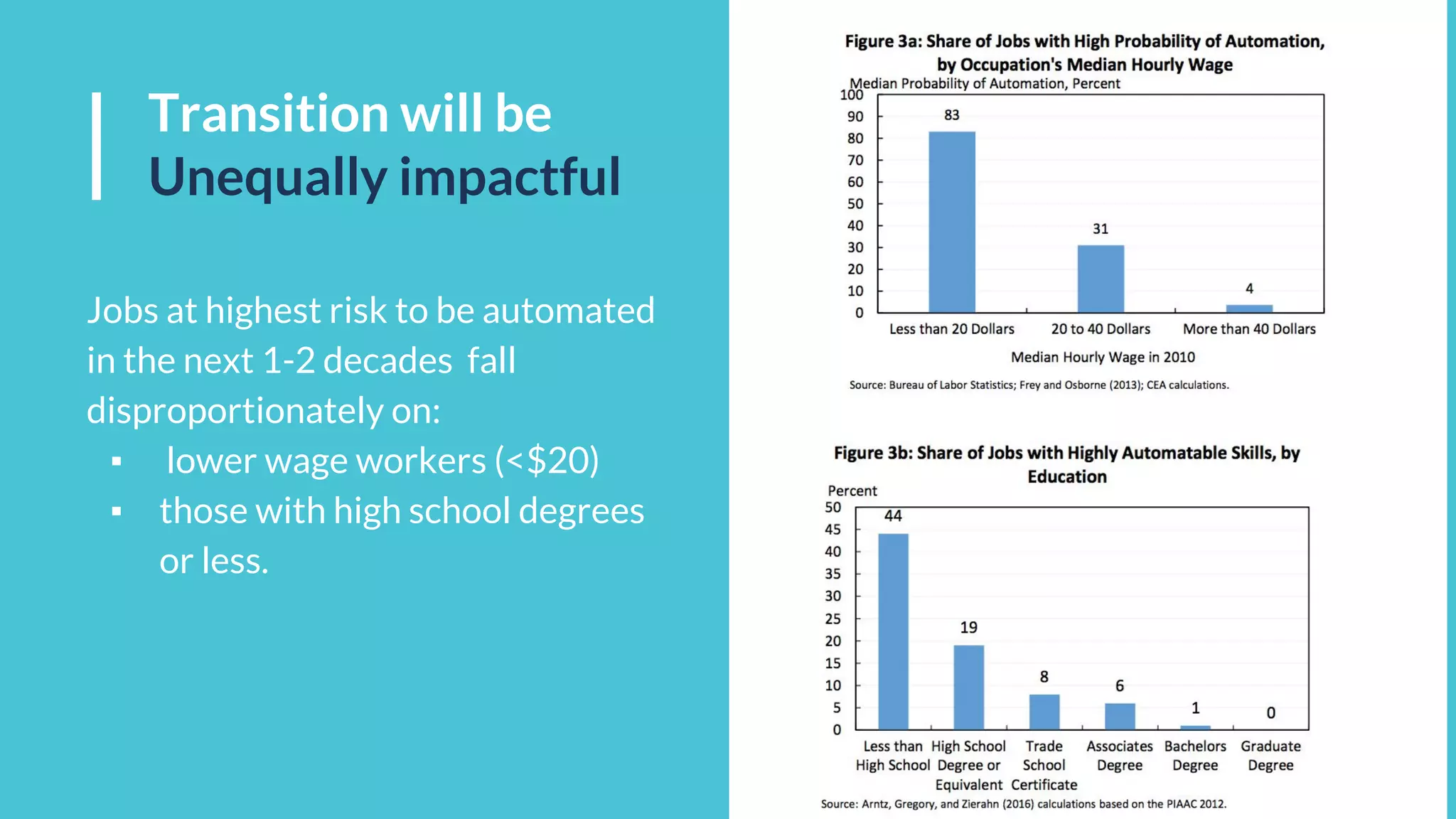
Jobs at highest risk to be automated
in the next 1-2 decades fall
disproportionately on:
▪ lower wage workers (<$20)
▪ those with high school degrees
or less.
Transition will be
Unequally impactful
“
But many economists argue that
automation bears much more blame
than globalization for the decline of
jobs in the region’s manufacturing
sector and the gutting of its middle
class.
- Tech Review
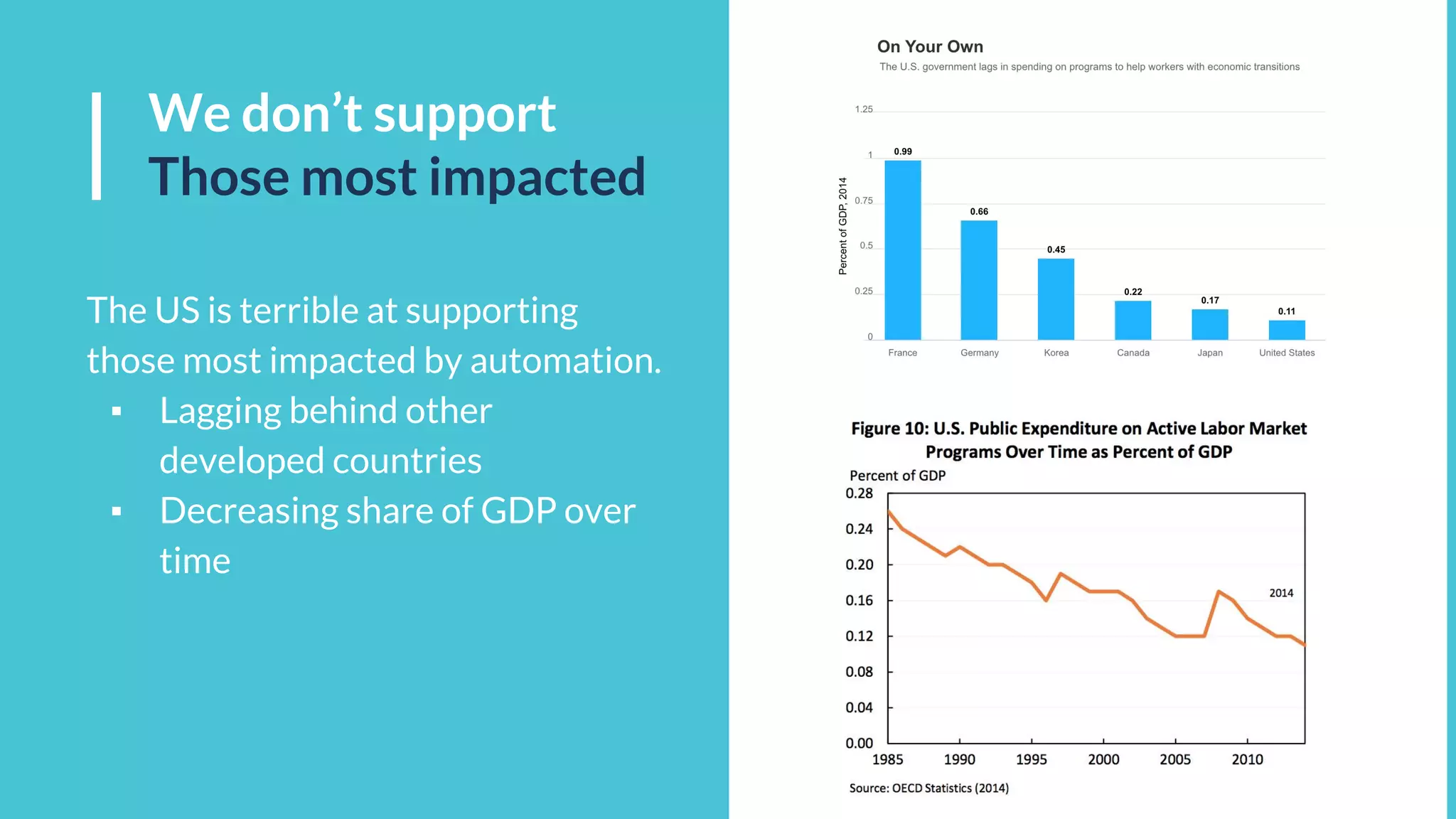
We don’t support
Those most impacted
The US is terrible at supporting
those most impacted by automation.
▪ Lagging behind other
developed countries
▪ Decreasing share of GDP over
time
RESPONSIBILITY
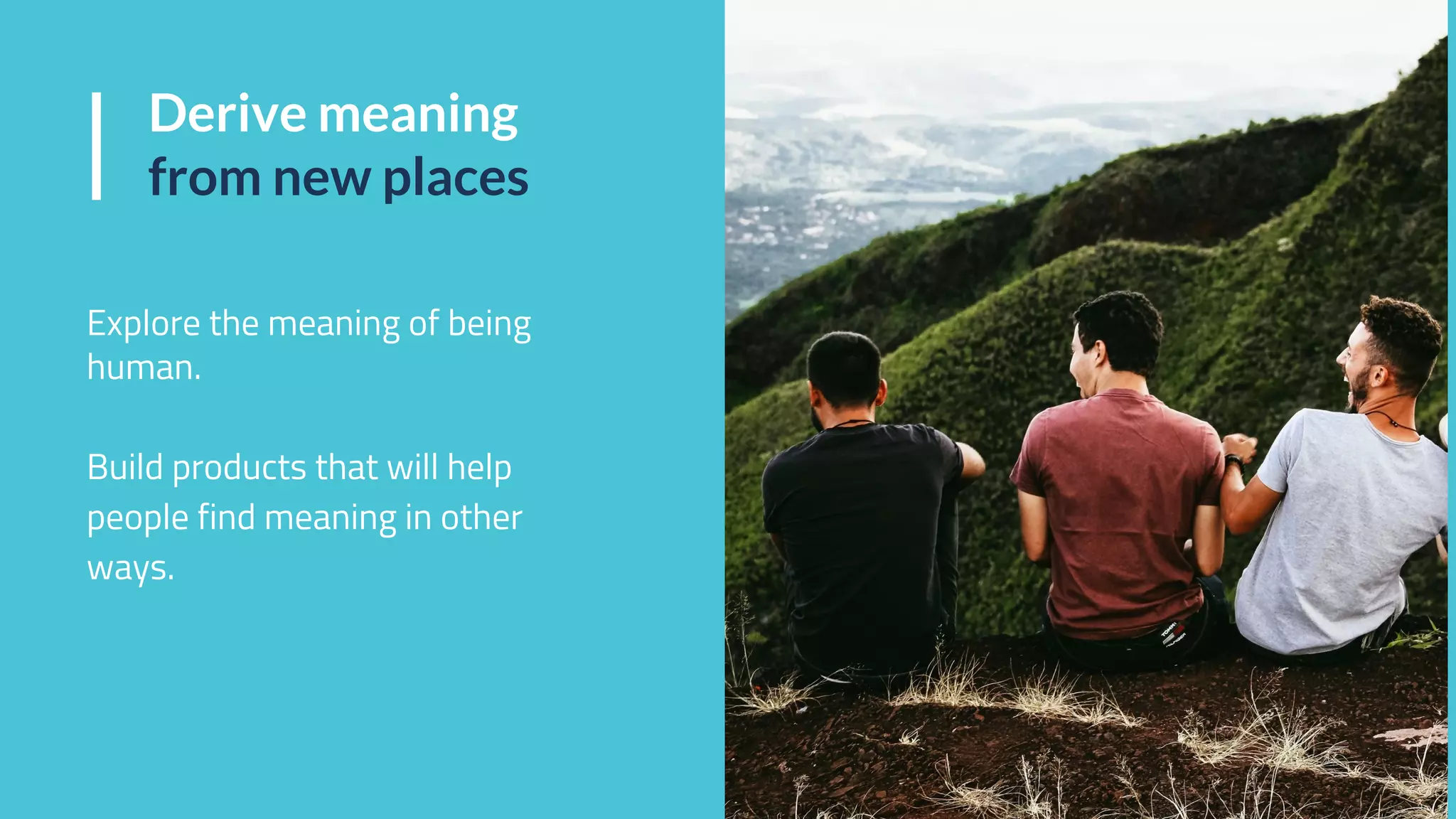
Derive meaning
from new places
Explore the meaning of being
human.
Build products that will help
people find meaning in other
ways.
“
The harder challenge is how do people
then have meaning, because a lot of
people derive their meaning from their
employment… if you are not needed, if
there is not a need for your labor,
what’s the meaning?
- Elon Musk, World Government Summit
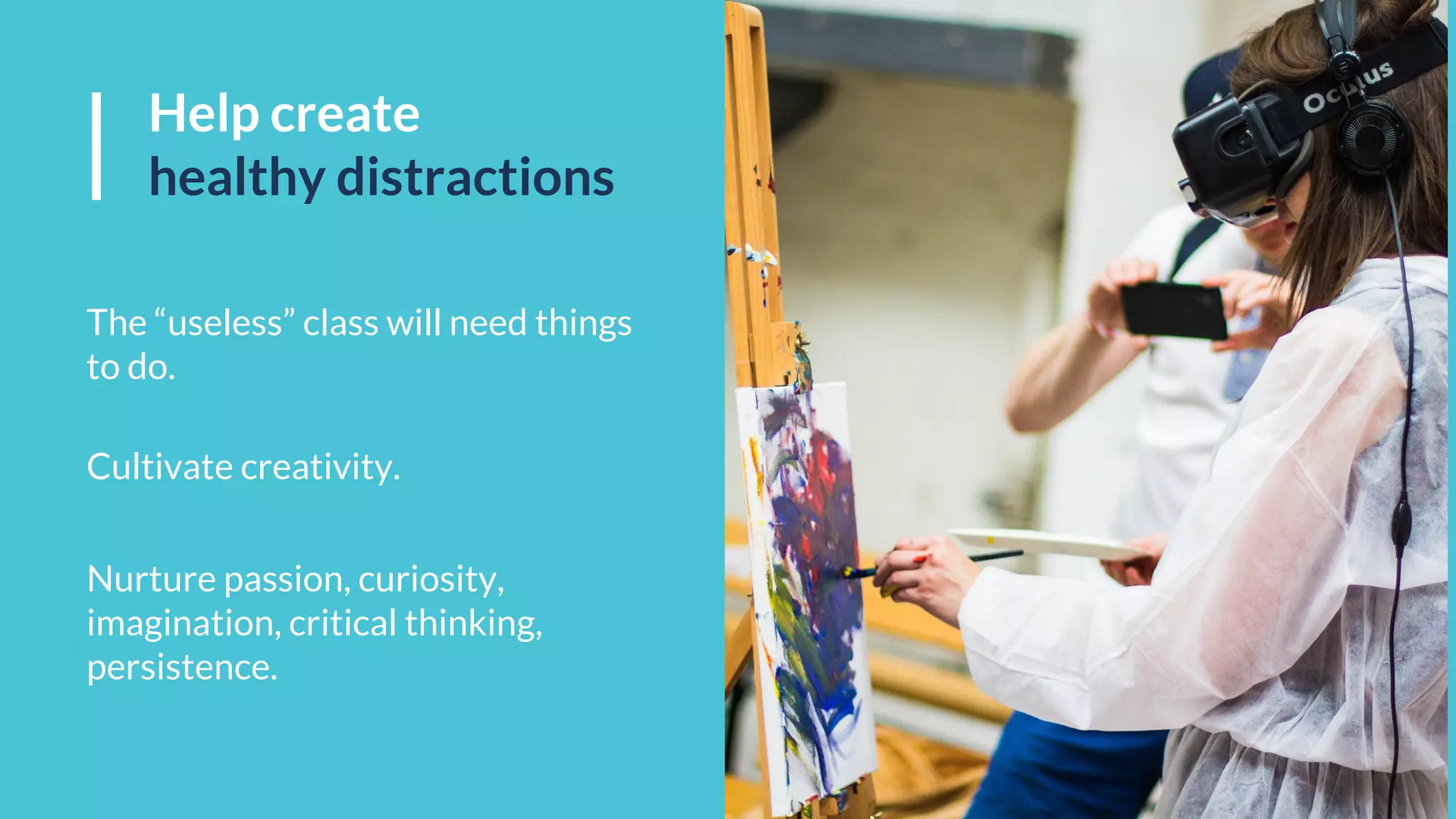
Help create
healthy distractions
The “useless” class will need things
to do.
Cultivate creativity.
Nurture passion, curiosity,
imagination, critical thinking,
persistence.
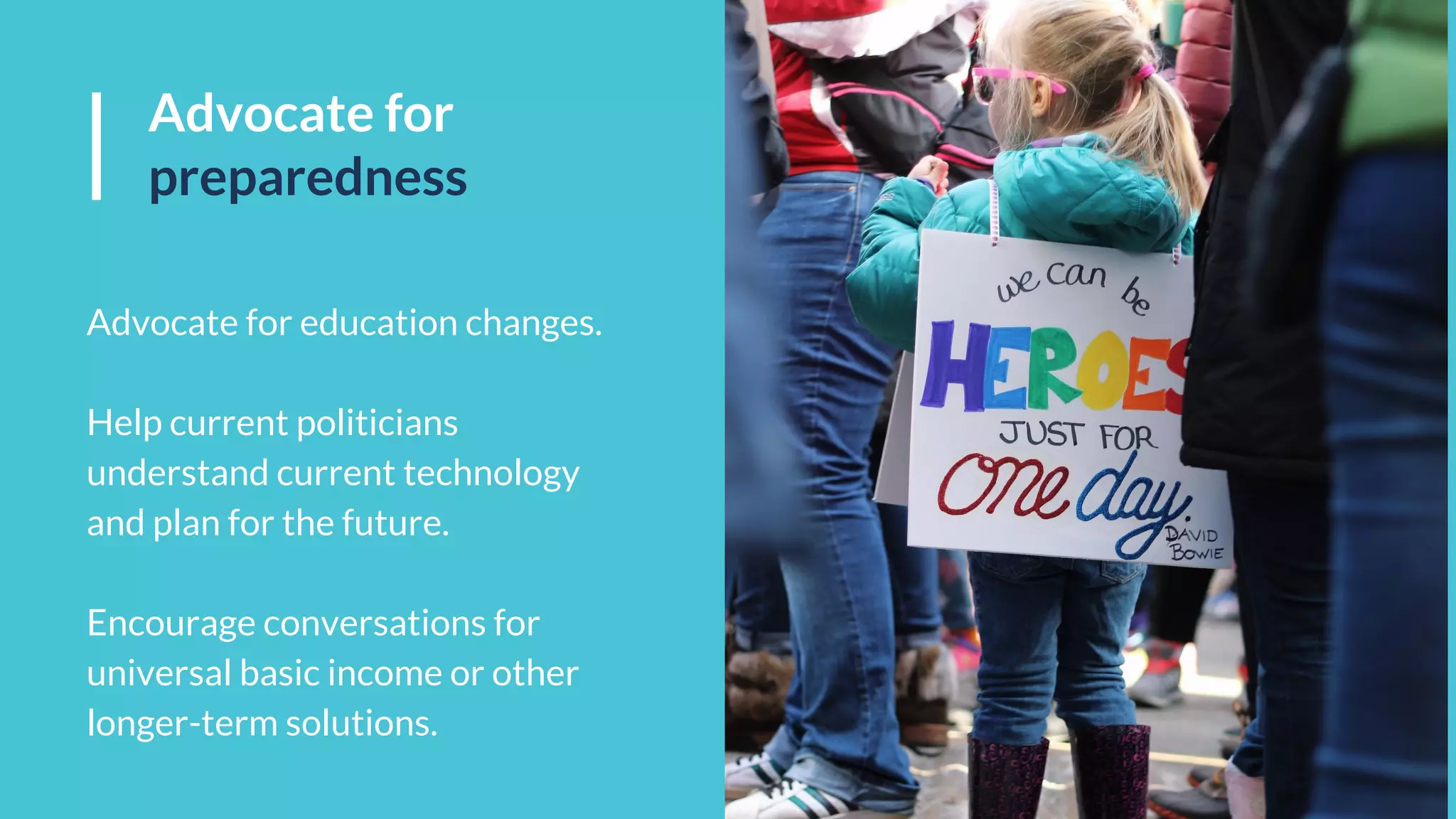
Advocate for education changes.
Help current politicians
understand current technology
and plan for the future.
Encourage conversations for
universal basic income or other
longer-term solutions.
Advocate for
preparedness
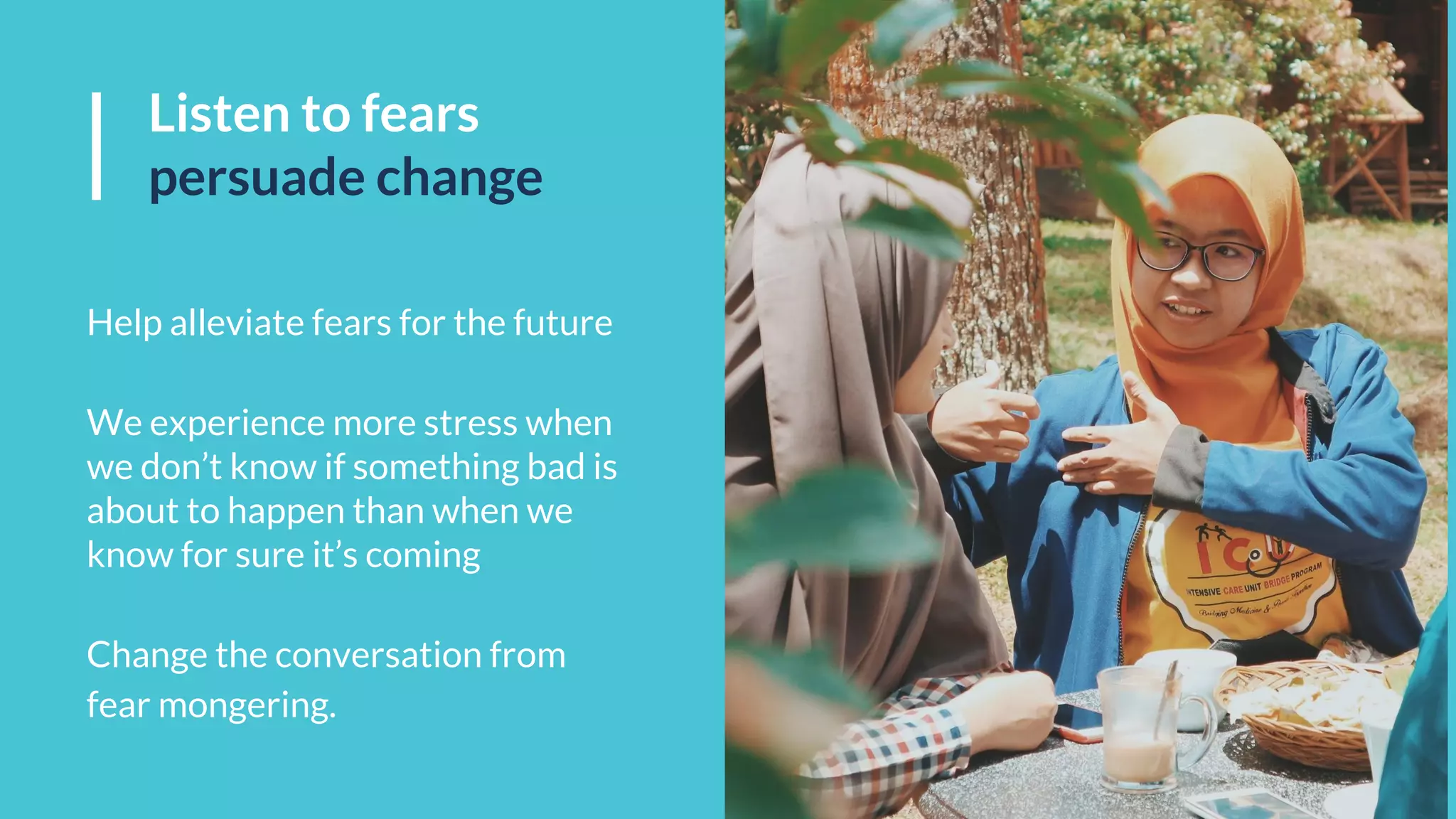
Listen to fears
persuade change
Help alleviate fears for the future
We experience more stress when
we don’t know if something bad is
about to happen than when we
know for sure it’s coming
Change the conversation from
fear mongering.
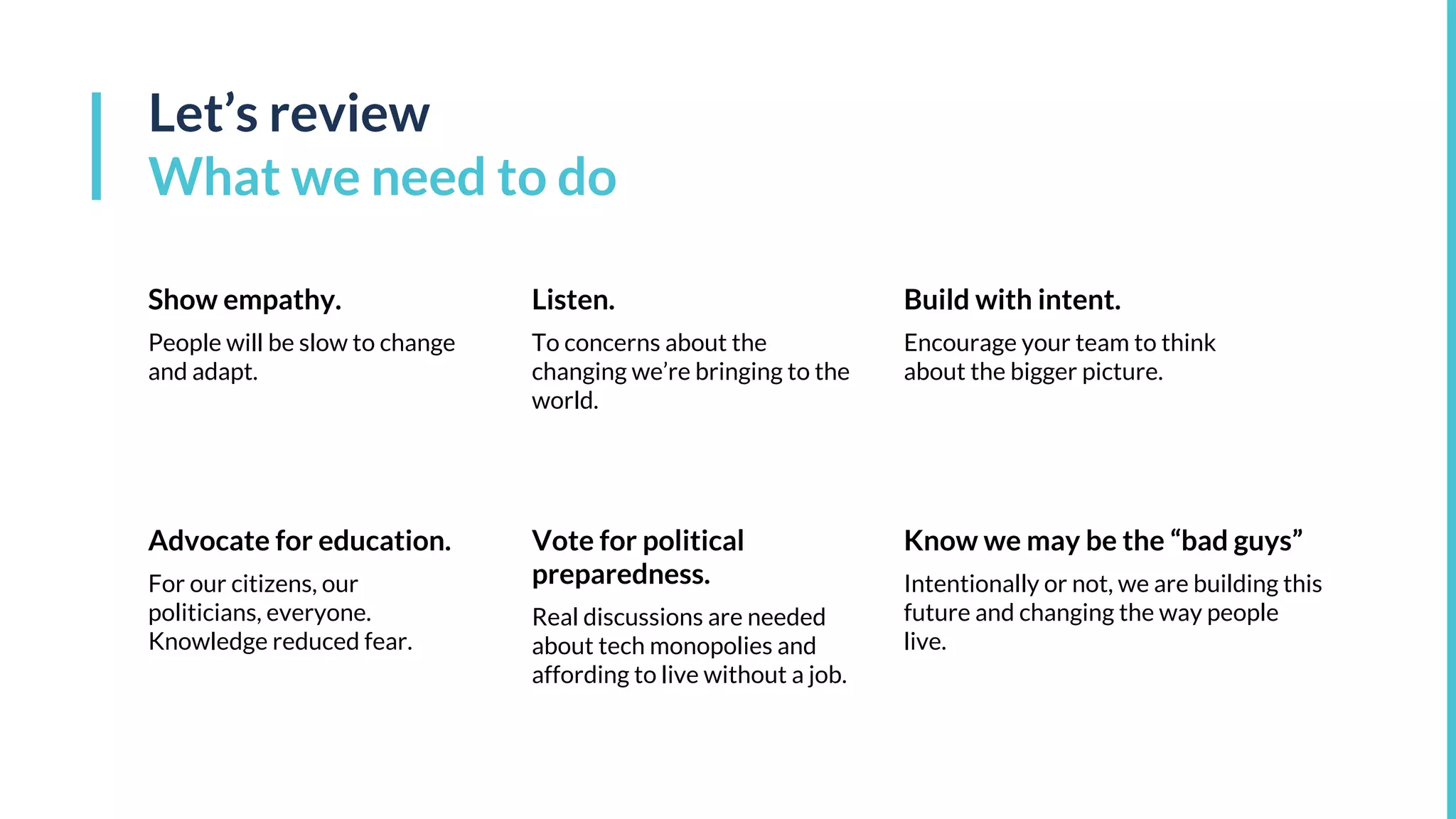
Vote for political
preparedness.
Real discussions are needed
about tech monopolies and
affording to live without a job.
Advocate for education.
For our citizens, our
politicians, everyone.
Knowledge reduced fear.
Show empathy.
People will be slow to change
and adapt.
Let’s review
What we need to do
Listen.
To concerns about the
changing we’re bringing to the
world.
Build with intent.
Encourage your team to think
about the bigger picture.
Know we may be the “bad guys”
Intentionally or not, we are building this
future and changing the way people
live.
Thank you!
aj@metricrux.com | @AJDavis_ | AJ Davis on LinkedIn

No jobs for humans: How to survive and thrive the transition to the all robot workforce.

  • 1.
    No jobs forhumans How to survive and thrive in the transition to the all robot workforce
  • 2.
    72%… of Americansare very or somewhat worried about a future where robots and computers are capable of performing many human jobs
  • 3.
  • 4.
  • 5.
    Hello! I’m AJ Davis,and I sit at the intersection of: ● Behavioral Economics ● Human computer interaction ● Building things aj@metricrux.com | @AJDavis_ | AJ Davis on LinkedIn
  • 6.
  • 7.
    Technology changes And ourfears change too.
  • 8.
    Technology changes And ourfears change too.
  • 9.
    Human behavior. Sunk costfallacy. “Everyone already knows how to drive, why teach a machine to do it?” Continuing a behavior or endeavor as a result of previously invested resources (time, money or effort)
  • 10.
    Human behavior. Endowment effect. Peoplewill tend to pay more to retain something they own than to obtain something they do not own. “I’d rather die by a human driver than a machine (because I’m used to the risk)”
  • 11.
    Change is hard. Changeis resisted. Sunk Cost Fallacy Endowment Effect Resistance to change “Self-driving cars are inevitably more dangerous than a human driving”
  • 12.
    Automation is here. Jobsare already gone. Switchboard operator Lift operator Toll operator Cashiers Factory workers Surgeons Pharmacists Soldiers
  • 13.
  • 14.
    “ Robots are expectedto create 15 million new jobs in the U.S. over the next 10 years, equivalent to 10% of the workforce, but those gains, however, will not come close to offsetting the 25 million jobs that technology will eliminate by 2027. - Forrester Research
  • 15.
    Future state A hypothesis Ibelieve we will find ourselves in a future run by non-humans (robots, AI, automation) that will be far more productive than we can be. Human labor will be a bad business investment, and many (all) of us will be under- or un-employed.
  • 16.
    Future state More hypotheses “"It'sprobably hard to overstate how big of an impact [automation] going to have on society over the next twenty years,"” - Jeff Bezos, Amazon “The reality is that work has changed. Forty percent of jobs are now contingent, meaning they're part-time, independent contractors, Uber drivers...” - Chris Hughes, Facebook “I’m fairly confident that at some point in the future, as technology continues to eliminate traditional jobs and massive new wealth gets created, we’re going to see some version of [basic income] at a national scale.” - Sam Altman, Y Combinator
  • 17.
    5.6 workersEach robotreduces employment by this many workers 3xPredicted growth in robots in next decade 0.25 - 0.5%Drop in wages for each robot added per 1000 workers
  • 18.
  • 19.
    Jobs at highestrisk to be automated in the next 1-2 decades fall disproportionately on: ▪ lower wage workers (<$20) ▪ those with high school degrees or less. Transition will be Unequally impactful
  • 20.
    “ But many economistsargue that automation bears much more blame than globalization for the decline of jobs in the region’s manufacturing sector and the gutting of its middle class. - Tech Review
  • 21.
    We don’t support Thosemost impacted The US is terrible at supporting those most impacted by automation. ▪ Lagging behind other developed countries ▪ Decreasing share of GDP over time
  • 22.
  • 23.
    Derive meaning from newplaces Explore the meaning of being human. Build products that will help people find meaning in other ways.
  • 24.
    “ The harder challengeis how do people then have meaning, because a lot of people derive their meaning from their employment… if you are not needed, if there is not a need for your labor, what’s the meaning? - Elon Musk, World Government Summit
  • 25.
    Help create healthy distractions The“useless” class will need things to do. Cultivate creativity. Nurture passion, curiosity, imagination, critical thinking, persistence.
  • 26.
    Advocate for educationchanges. Help current politicians understand current technology and plan for the future. Encourage conversations for universal basic income or other longer-term solutions. Advocate for preparedness
  • 27.
    Listen to fears persuadechange Help alleviate fears for the future We experience more stress when we don’t know if something bad is about to happen than when we know for sure it’s coming Change the conversation from fear mongering.
  • 28.
    Vote for political preparedness. Realdiscussions are needed about tech monopolies and affording to live without a job. Advocate for education. For our citizens, our politicians, everyone. Knowledge reduced fear. Show empathy. People will be slow to change and adapt. Let’s review What we need to do Listen. To concerns about the changing we’re bringing to the world. Build with intent. Encourage your team to think about the bigger picture. Know we may be the “bad guys” Intentionally or not, we are building this future and changing the way people live.
  • 29.
    Thank you! aj@metricrux.com |@AJDavis_ | AJ Davis on LinkedIn