Next Generation Library
Management Systems: Acquisitions
& eResource Functionality -- WMS
Rene J. Erlandson
ALA Annual 2013– ALCTS Acquisitions Managers and Vendors Interest Group
Sunday, June 30, 2013
1:00-2:30
MCP-E351
What is WMS?
•Staff side of the OCLC cloud based
discovery platform
WMS / WCL / License Manager
•August 2012, "Live" March 1, 2013
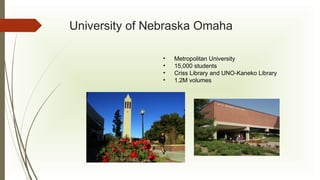
University of Nebraska Omaha
•
•
•
•

Metropolitan University
15,000 students
Criss Library and UNO-Kaneko Library
1.2M volumes
Looking for?


Staff side


Streamline processes



Increase efficiencies



Improve e-resource control



Flexible/Open system



Partnership



Buffet vs. Al a Carte

 Patrons first
 ILS/metasearch
 Other libraries
 Improve integration of e-resources
 User friendly
 No more “where do I go”
 Easy to navigate

 Access to global community
 Access to librarians within the system
Results?
Workflow & Organizational Changes
 Previous ILS reflected paper ACQ processes of 20 years ago
 Hard look at "why"
 This system is a global system
 Cataloging is done at the point of order
 Acquisitions/Cataloging 7 to 3
 Implemented DDA/PDA at the same time.
 Seamless
 Highly successful
Acquisitions
 No historical order data migrates
 Add Vendors *
 Add fund codes
 Add Budgets
 Determine order naming and numbering conventions*
e-Resource Data
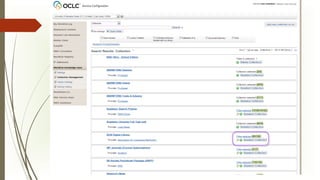
 Managed in the KnowledgeBase (KB) & License Manager
 Gather vendor-supplied admin user names and passwords
 Multiple avenues for populating the Knowledgebase:
 PubGet <pubget.com>
 Manually add collections
 Use KBART to upload multiple collections
WMS/WCL
ACQ & eResource Advantages
 Fully integrated search results for patrons
 Global shared database
 Maximize efficiency
 Partnerships with publishers and vendors.
 General info updated
 eResource data updated globally
 eBook loads done weekly/biweekly
Rene Erlandson
University of Nebraska Omaha

rerlandson@unomaha.edu
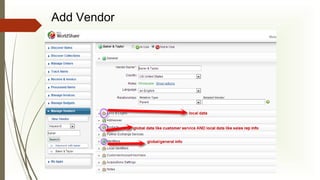
Add Vendor
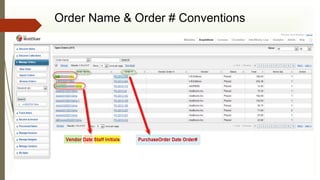
Order Name & Order # Conventions
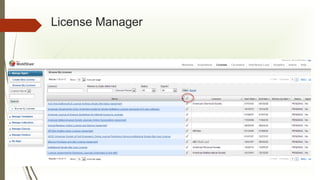
License Manager
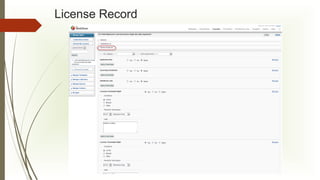
License Record

Next Generation Library Management Systems: Acquisitions & eResource Functionality--WMS

  • 1.
    Next Generation Library ManagementSystems: Acquisitions & eResource Functionality -- WMS Rene J. Erlandson ALA Annual 2013– ALCTS Acquisitions Managers and Vendors Interest Group Sunday, June 30, 2013 1:00-2:30 MCP-E351
  • 2.
    What is WMS? •Staffside of the OCLC cloud based discovery platform WMS / WCL / License Manager •August 2012, "Live" March 1, 2013
  • 3.
    University of NebraskaOmaha • • • • Metropolitan University 15,000 students Criss Library and UNO-Kaneko Library 1.2M volumes
  • 4.
    Looking for?  Staff side  Streamlineprocesses  Increase efficiencies  Improve e-resource control  Flexible/Open system  Partnership  Buffet vs. Al a Carte  Patrons first  ILS/metasearch  Other libraries  Improve integration of e-resources  User friendly  No more “where do I go”  Easy to navigate  Access to global community  Access to librarians within the system
  • 5.
    Results? Workflow & OrganizationalChanges  Previous ILS reflected paper ACQ processes of 20 years ago  Hard look at "why"  This system is a global system  Cataloging is done at the point of order  Acquisitions/Cataloging 7 to 3  Implemented DDA/PDA at the same time.  Seamless  Highly successful
  • 6.
    Acquisitions  No historicalorder data migrates  Add Vendors *  Add fund codes  Add Budgets  Determine order naming and numbering conventions*
  • 7.
    e-Resource Data  Managedin the KnowledgeBase (KB) & License Manager  Gather vendor-supplied admin user names and passwords  Multiple avenues for populating the Knowledgebase:  PubGet <pubget.com>  Manually add collections  Use KBART to upload multiple collections
  • 9.
    WMS/WCL ACQ & eResourceAdvantages  Fully integrated search results for patrons  Global shared database  Maximize efficiency  Partnerships with publishers and vendors.  General info updated  eResource data updated globally  eBook loads done weekly/biweekly
  • 10.
    Rene Erlandson University ofNebraska Omaha rerlandson@unomaha.edu
  • 11.
  • 12.
    Order Name &Order # Conventions
  • 13.
  • 14.

Editor's Notes

  • #5 Patrons first: Breakdown the barriers between materials found in traditional ILSs and metasearch systems *systems that combine results from multiple databases into a single interface See what other libraries own at-a-glance User friendly – patrons no longer have to know where to go to look for something (the ILS, A-Z list, federated search) Access to global community – via WorldCat. Users may access pre-existing Worldcat account within the WorldCat Local interface. Users may email/txt local reference librarians from within the interface. Staff side: Acquisitions indirectly played a significant role in our desire, because we were looking for a system that would allow us to totally restructure processing. Streamline processes Improve e-resource control Flexible system with an open API which would allow us develop components/apps locally We wanted a system where we felt we were more of a partner with the “vendor” We wanted a system where we paid for one fee upfront and all future improvements/development would be included in the “one fee”.
  • #6 Workflow and Organizational Changes: Previous ILS reflected paper ACQ processes of 20 years ago This system is a global system Bib records, vendor records, license records exist within a global database some of which have locally customizable fields. Cataloging is done at the point of order A record has to exist to place an order
  • #10 WMS allows you to capitalize on the global shared database to maximize efficiency. General information does not need to be entered by every library. eResources coverage data is loaded automatically by OCLC – no longer any need to run coverage loads in to the system. Partnerships with publishers and vendors means OCLC does a lot of the work we used to do locally—general info is updated, coverage updated, ebook loads happen directly etc
  • #12 *Add vendors It is important to remember that WMS is a shared database. General information is global. However, you can add local information that can only be seen by YOUR library. You search for vendors in the global interface, use the global record and then customize it for your institution. **By using a global database of vendors that includes general information it reduces the time it takes to set up vendor records.
  • #13 Order Naming Conventions Vendor-date-staff member initials dha= ACQ staff member 1 Dms= ACQ staff member 2 PO=Purchase Order