Smart Cities Council 
Partner Meeting 
June 18, 2014, Dallas 
The State of the 
Japanese Smart City 
Market 
Potential for growth and 
partnerships 
Michinaga Kohno 
President and Chief Executive Officer 
Michi Creative City Designers Inc. 
michi@michi-city.com 
http://www.michi-city.com
2 
Timeline 
Next-Generation Energy and Social Systems Demonstration Areas 
Ministry of Economy, Trade and Industry (METI) 
2009 
2010 
2011 
2012 
2013 
2014 
2015 
2016 
2017 
2018 
2019 
2020 
Yokohama City, Toyota City, Kyoto Prefecture (Kansai Science City), Kitakyushu City 
“Future City” Initiative 
Environment, Aging Society, 
New Human-Centric Value 
Cabinet Office of Japan 
Shimokawa Town, Kashiwa City, Yokohama City, Toyama City, Kitakyushu City, 
Kesen Union of Cities, Kamaishi, Iwanuma, Higashi-Matsushima, Minami-Soma 
https://www.kantei.go.jp/jp/singi/tiiki/kankyo/en/index.html 
Private Sector 
 Mitsui Fudosan (Mitsui Real Estate) 
 Kashiwa-no-ha Smart City 
 Nihonbashi 
 Mitsubishi Estate 
 Dai-Maru-Yu (Otemachi, Marunouchi, Yurakucho) 
March 11 
Tokyo Olympic & Paralympics Games
3 
Governmental Approaches 
Prime Minister 
Cabinet Office 
National Resilience Headquarters 
(Est. December, 2013) 
Ministries 
Office for Promotion of Regional 
Revitalization “Future City” Initiative 
Ministry of Economy, Trade and 
Industry (METI) 
Ministerial Conference for 
Promotion of Infrastructure 
Export 
New Energy and Industrial Technology 
Development Organization (NEDO) 
Ministry of Land, Infrastructure, 
Transport and Tourism (MLIT) 
Japan Smart Community 
Alliance (JSCA) 
Japan Conference on Overseas Development of Eco-Cities (JCODE) 
Japan-Russia Council on Urban and Environmental Problems
Central 
Tokyo 
Yokohama 
Kashiwa-no-ha 
Narita AP 
Chiba City 
Saitama City 
Kamakura 
Examples 
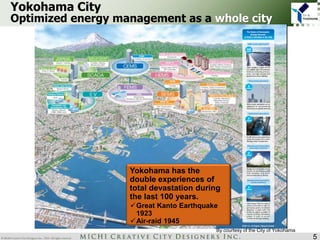
Yokohama City 
 One of the earliest demonstration projects on smart grids 
with the governmental subsidy 
 Granted both “Next-Generation Energy” and “Future 
City” 
Kashiwa-no-ha Smart City 
 Private project led by a real 
estate developer 
 “Smart Center”: Integrated 
platform for management 
of energy, transportation 
and healthcare 
 Self-sufficient power supply 
and “Smart Center” to act 
as an emergency operation 
center in case of disaster 
4
Yokohama City 
Optimized energy management as a whole city 
Yokohama has the 
double experiences of 
total devastation during 
the last 100 years. 
Great Kanto Earthquake 
1923 
Air-raid 1945 
By courtesy of the City of Yokohama 
5
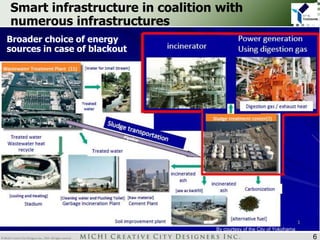
Smart infrastructure in coalition with 
numerous infrastructures 
Broader choice of energy 
sources in case of blackout 
By courtesy of the City of Yokohama 
6
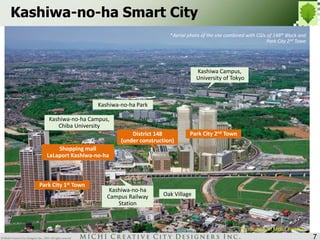
Kashiwa-no-ha Smart City 
Kashiwa-no-ha Park 
Kashiwa-no-ha Campus, 
Chiba University 
Shopping mall 
LaLaport Kashiwa-no-ha 
District 148 Park City 2nd Town 
(under construction) 
Kashiwa Campus, 
University of Tokyo 
Park City 1st Town 
Kashiwa-no-ha 
Campus Railway 
Station 
*Aerial photo of the site combined with CGIs of 148th Block and 
Park City 2nd Town 
Oak Village 
By courtesy of Mitsui Fudosan 
7
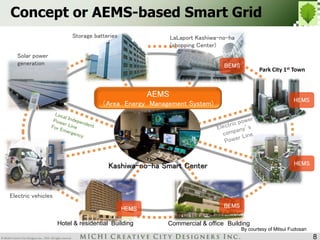
Concept or AEMS-based Smart Grid 
Storage batteries LaLaport Kashiwa-no-ha 
BEMS 
(shopping Center) 
HEMS BEMS 
HEMS 
HEMS 
AEMS 
(Area Energy Management System) 
Solar power 
generation 
Electric vehicles 
Hotel & residential Building Commercial & office Building 
Park City 1st Town 
Kashiwa-no-ha Smart Center 
By courtesy of Mitsui Fudosan 
8
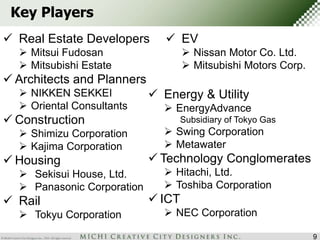
Key Players 
 Real Estate Developers 
 Mitsui Fudosan 
 Mitsubishi Estate 
 Architects and Planners 
 NIKKEN SEKKEI 
 Oriental Consultants 
 Construction 
 Shimizu Corporation 
 Kajima Corporation 
 Housing 
 Sekisui House, Ltd. 
 Panasonic Corporation 
 Rail 
 Tokyu Corporation 
9 
 EV 
 Nissan Motor Co. Ltd. 
 Mitsubishi Motors Corp. 
 Energy & Utility 
 EnergyAdvance 
Subsidiary of Tokyo Gas 
 Swing Corporation 
 Metawater 
 Technology Conglomerates 
 Hitachi, Ltd. 
 Toshiba Corporation 
 ICT 
 NEC Corporation
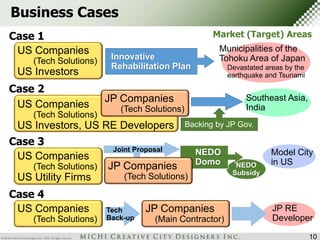
Business Cases 
US Companies 
(Tech Solutions) 
US Investors 
Municipalities of the 
Tohoku Area of Japan 
Case 1 
10 
Case 2 
Case 3 
Case 4 
Devastated areas by the 
earthquake and Tsunami 
Innovative 
Rehabilitation Plan 
Market (Target) Areas 
US Companies 
(Tech Solutions) 
JP Companies 
(Tech Solutions) 
US Investors, US RE Developers 
Southeast Asia, 
India 
Backing by JP Gov. 
US Companies 
(Tech Solutions) 
US Utility Firms 
JP Companies 
(Tech Solutions) 
NEDO 
Domo 
Model City 
NEDO in US 
Subsidy 
Joint Proposal 
JP Companies 
(Main Contractor) 
US Companies 
(Tech Solutions) 
JP RE 
Developer 
Tech 
Back-up
Summary 
Smart City Market in Japan 
 First-generation “Smart Cites” being completed 
 Kind of cool down and a bit of disappointment among 
mayors and municipalities after four years’ enthusiasm 
 “WHAT’S NEXT?” feeling after energy-centric demos 
11 
Business Strategies of Japan’s Smart City 
Industry 
 Deployment of solutions developed for demos and first-gen 
projects, rather than exploring new types of markets 
 Japan and Southeast Asian countries as main markets 
Opportunities for US Smart City Industry 
 Combinations of (1) Technology + Finance [Asia], (2) City 
+ Industry [Japan] 
 Exposure of US industry at major events 
 “Smart City Week” (October, Yokohama) 
 NIKKEI Smart City Symposium (Four times a year, road shows)
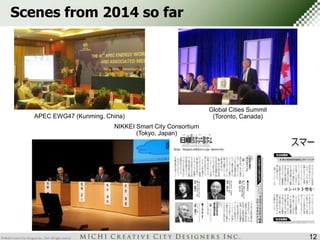
Scenes from 2014 so far 
12 
APEC EWG47 (Kunming, China) 
Global Cities Summit 
(Toronto, Canada) 
NIKKEI Smart City Consortium 
(Tokyo, Japan)
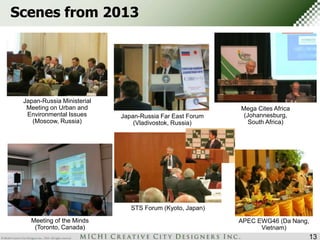
Scenes from 2013 
APEC EWG46 (Da Nang, 
13 
Vietnam) 
STS Forum (Kyoto, Japan) 
Meeting of the Minds 
(Toronto, Canada) 
Mega Cites Africa 
(Johannesburg, 
South Africa) 
Japan-Russia Far East Forum 
(Vladivostok, Russia) 
Japan-Russia Ministerial 
Meeting on Urban and 
Environmental Issues 
(Moscow, Russia)

News 07 (en)

  • 1.
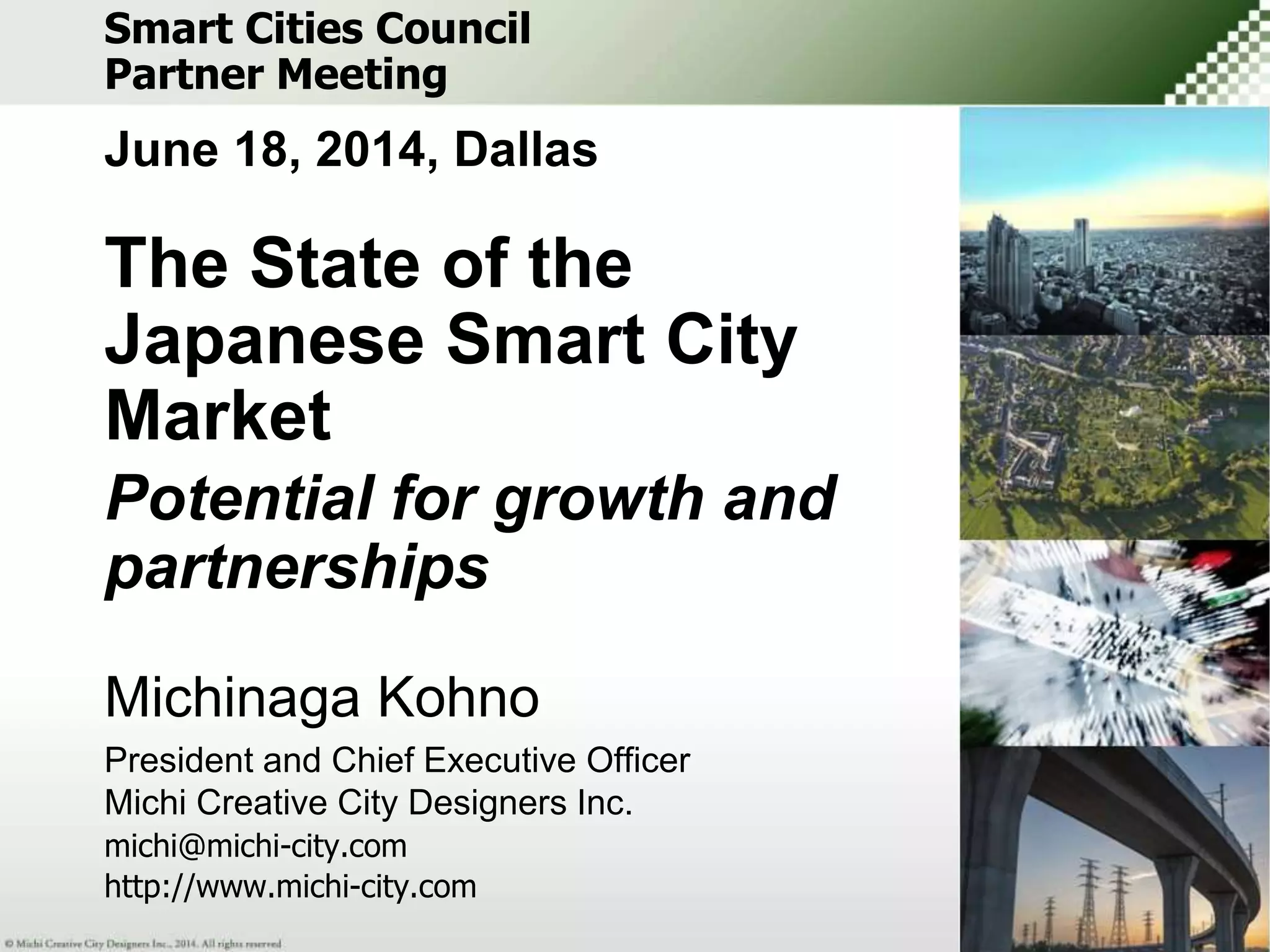
    Smart Cities Council Partner Meeting June 18, 2014, Dallas The State of the Japanese Smart City Market Potential for growth and partnerships Michinaga Kohno President and Chief Executive Officer Michi Creative City Designers Inc. michi@michi-city.com http://www.michi-city.com
  • 2.
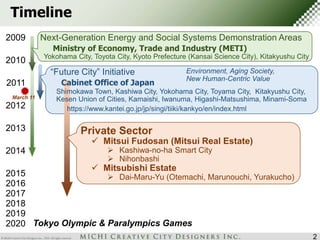
    2 Timeline Next-GenerationEnergy and Social Systems Demonstration Areas Ministry of Economy, Trade and Industry (METI) 2009 2010 2011 2012 2013 2014 2015 2016 2017 2018 2019 2020 Yokohama City, Toyota City, Kyoto Prefecture (Kansai Science City), Kitakyushu City “Future City” Initiative Environment, Aging Society, New Human-Centric Value Cabinet Office of Japan Shimokawa Town, Kashiwa City, Yokohama City, Toyama City, Kitakyushu City, Kesen Union of Cities, Kamaishi, Iwanuma, Higashi-Matsushima, Minami-Soma https://www.kantei.go.jp/jp/singi/tiiki/kankyo/en/index.html Private Sector  Mitsui Fudosan (Mitsui Real Estate)  Kashiwa-no-ha Smart City  Nihonbashi  Mitsubishi Estate  Dai-Maru-Yu (Otemachi, Marunouchi, Yurakucho) March 11 Tokyo Olympic & Paralympics Games
  • 3.
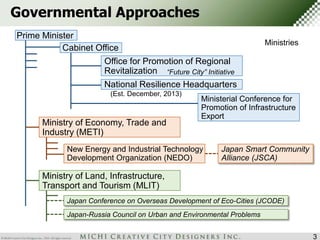
    3 Governmental Approaches Prime Minister Cabinet Office National Resilience Headquarters (Est. December, 2013) Ministries Office for Promotion of Regional Revitalization “Future City” Initiative Ministry of Economy, Trade and Industry (METI) Ministerial Conference for Promotion of Infrastructure Export New Energy and Industrial Technology Development Organization (NEDO) Ministry of Land, Infrastructure, Transport and Tourism (MLIT) Japan Smart Community Alliance (JSCA) Japan Conference on Overseas Development of Eco-Cities (JCODE) Japan-Russia Council on Urban and Environmental Problems
  • 4.
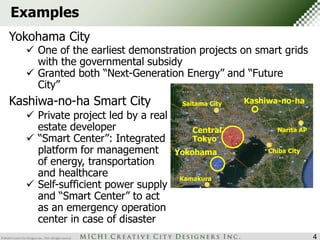
    Central Tokyo Yokohama Kashiwa-no-ha Narita AP Chiba City Saitama City Kamakura Examples Yokohama City  One of the earliest demonstration projects on smart grids with the governmental subsidy  Granted both “Next-Generation Energy” and “Future City” Kashiwa-no-ha Smart City  Private project led by a real estate developer  “Smart Center”: Integrated platform for management of energy, transportation and healthcare  Self-sufficient power supply and “Smart Center” to act as an emergency operation center in case of disaster 4
  • 5.
    Yokohama City Optimizedenergy management as a whole city Yokohama has the double experiences of total devastation during the last 100 years. Great Kanto Earthquake 1923 Air-raid 1945 By courtesy of the City of Yokohama 5
  • 6.
    Smart infrastructure incoalition with numerous infrastructures Broader choice of energy sources in case of blackout By courtesy of the City of Yokohama 6
  • 7.
    Kashiwa-no-ha Smart City Kashiwa-no-ha Park Kashiwa-no-ha Campus, Chiba University Shopping mall LaLaport Kashiwa-no-ha District 148 Park City 2nd Town (under construction) Kashiwa Campus, University of Tokyo Park City 1st Town Kashiwa-no-ha Campus Railway Station *Aerial photo of the site combined with CGIs of 148th Block and Park City 2nd Town Oak Village By courtesy of Mitsui Fudosan 7
  • 8.
    Concept or AEMS-basedSmart Grid Storage batteries LaLaport Kashiwa-no-ha BEMS (shopping Center) HEMS BEMS HEMS HEMS AEMS (Area Energy Management System) Solar power generation Electric vehicles Hotel & residential Building Commercial & office Building Park City 1st Town Kashiwa-no-ha Smart Center By courtesy of Mitsui Fudosan 8
  • 9.
    Key Players Real Estate Developers  Mitsui Fudosan  Mitsubishi Estate  Architects and Planners  NIKKEN SEKKEI  Oriental Consultants  Construction  Shimizu Corporation  Kajima Corporation  Housing  Sekisui House, Ltd.  Panasonic Corporation  Rail  Tokyu Corporation 9  EV  Nissan Motor Co. Ltd.  Mitsubishi Motors Corp.  Energy & Utility  EnergyAdvance Subsidiary of Tokyo Gas  Swing Corporation  Metawater  Technology Conglomerates  Hitachi, Ltd.  Toshiba Corporation  ICT  NEC Corporation
  • 10.
    Business Cases USCompanies (Tech Solutions) US Investors Municipalities of the Tohoku Area of Japan Case 1 10 Case 2 Case 3 Case 4 Devastated areas by the earthquake and Tsunami Innovative Rehabilitation Plan Market (Target) Areas US Companies (Tech Solutions) JP Companies (Tech Solutions) US Investors, US RE Developers Southeast Asia, India Backing by JP Gov. US Companies (Tech Solutions) US Utility Firms JP Companies (Tech Solutions) NEDO Domo Model City NEDO in US Subsidy Joint Proposal JP Companies (Main Contractor) US Companies (Tech Solutions) JP RE Developer Tech Back-up
  • 11.
    Summary Smart CityMarket in Japan  First-generation “Smart Cites” being completed  Kind of cool down and a bit of disappointment among mayors and municipalities after four years’ enthusiasm  “WHAT’S NEXT?” feeling after energy-centric demos 11 Business Strategies of Japan’s Smart City Industry  Deployment of solutions developed for demos and first-gen projects, rather than exploring new types of markets  Japan and Southeast Asian countries as main markets Opportunities for US Smart City Industry  Combinations of (1) Technology + Finance [Asia], (2) City + Industry [Japan]  Exposure of US industry at major events  “Smart City Week” (October, Yokohama)  NIKKEI Smart City Symposium (Four times a year, road shows)
  • 12.
    Scenes from 2014so far 12 APEC EWG47 (Kunming, China) Global Cities Summit (Toronto, Canada) NIKKEI Smart City Consortium (Tokyo, Japan)
  • 13.
    Scenes from 2013 APEC EWG46 (Da Nang, 13 Vietnam) STS Forum (Kyoto, Japan) Meeting of the Minds (Toronto, Canada) Mega Cites Africa (Johannesburg, South Africa) Japan-Russia Far East Forum (Vladivostok, Russia) Japan-Russia Ministerial Meeting on Urban and Environmental Issues (Moscow, Russia)

Editor's Notes

  • #3 これからの都市開発の世界的な方向性をこの2つに纏めることができます。 1つ目が、「人が集まり活気のある都市づくり」という方向性です。その1つの方策が、交通機関と都市活動とが集積した複合機能都市の建設です。オフィスや商業施設を集約させることで都市活動を活性化させ、更に他都市や郊外からの中・遠距離高速鉄道と、地下鉄などの都市交通をシームレスに結合することにより、より活気のある都市とすることができます。またそれを実現するには、地下を含めた都市空間の立体的利用が不可欠です。 2つ目が、「持続的発展が可能な都市づくり」という方向性です。都市が持続的に発展する為には、都市活動を支える全ての機能・装置が地球環境に配慮したものとする「環境の持続性」と、居住者にとって住みやすく快適な都市づくりを進める「住民の持続性」の両面が不可欠です。
  • #4 これからの都市開発の世界的な方向性をこの2つに纏めることができます。 1つ目が、「人が集まり活気のある都市づくり」という方向性です。その1つの方策が、交通機関と都市活動とが集積した複合機能都市の建設です。オフィスや商業施設を集約させることで都市活動を活性化させ、更に他都市や郊外からの中・遠距離高速鉄道と、地下鉄などの都市交通をシームレスに結合することにより、より活気のある都市とすることができます。またそれを実現するには、地下を含めた都市空間の立体的利用が不可欠です。 2つ目が、「持続的発展が可能な都市づくり」という方向性です。都市が持続的に発展する為には、都市活動を支える全ての機能・装置が地球環境に配慮したものとする「環境の持続性」と、居住者にとって住みやすく快適な都市づくりを進める「住民の持続性」の両面が不可欠です。
  • #5 これからの都市開発の世界的な方向性をこの2つに纏めることができます。 1つ目が、「人が集まり活気のある都市づくり」という方向性です。その1つの方策が、交通機関と都市活動とが集積した複合機能都市の建設です。オフィスや商業施設を集約させることで都市活動を活性化させ、更に他都市や郊外からの中・遠距離高速鉄道と、地下鉄などの都市交通をシームレスに結合することにより、より活気のある都市とすることができます。またそれを実現するには、地下を含めた都市空間の立体的利用が不可欠です。 2つ目が、「持続的発展が可能な都市づくり」という方向性です。都市が持続的に発展する為には、都市活動を支える全ての機能・装置が地球環境に配慮したものとする「環境の持続性」と、居住者にとって住みやすく快適な都市づくりを進める「住民の持続性」の両面が不可欠です。
  • #6 これからの都市開発の世界的な方向性をこの2つに纏めることができます。 1つ目が、「人が集まり活気のある都市づくり」という方向性です。その1つの方策が、交通機関と都市活動とが集積した複合機能都市の建設です。オフィスや商業施設を集約させることで都市活動を活性化させ、更に他都市や郊外からの中・遠距離高速鉄道と、地下鉄などの都市交通をシームレスに結合することにより、より活気のある都市とすることができます。またそれを実現するには、地下を含めた都市空間の立体的利用が不可欠です。 2つ目が、「持続的発展が可能な都市づくり」という方向性です。都市が持続的に発展する為には、都市活動を支える全ての機能・装置が地球環境に配慮したものとする「環境の持続性」と、居住者にとって住みやすく快適な都市づくりを進める「住民の持続性」の両面が不可欠です。
  • #7 これからの都市開発の世界的な方向性をこの2つに纏めることができます。 1つ目が、「人が集まり活気のある都市づくり」という方向性です。その1つの方策が、交通機関と都市活動とが集積した複合機能都市の建設です。オフィスや商業施設を集約させることで都市活動を活性化させ、更に他都市や郊外からの中・遠距離高速鉄道と、地下鉄などの都市交通をシームレスに結合することにより、より活気のある都市とすることができます。またそれを実現するには、地下を含めた都市空間の立体的利用が不可欠です。 2つ目が、「持続的発展が可能な都市づくり」という方向性です。都市が持続的に発展する為には、都市活動を支える全ての機能・装置が地球環境に配慮したものとする「環境の持続性」と、居住者にとって住みやすく快適な都市づくりを進める「住民の持続性」の両面が不可欠です。
  • #8 これからの都市開発の世界的な方向性をこの2つに纏めることができます。 1つ目が、「人が集まり活気のある都市づくり」という方向性です。その1つの方策が、交通機関と都市活動とが集積した複合機能都市の建設です。オフィスや商業施設を集約させることで都市活動を活性化させ、更に他都市や郊外からの中・遠距離高速鉄道と、地下鉄などの都市交通をシームレスに結合することにより、より活気のある都市とすることができます。またそれを実現するには、地下を含めた都市空間の立体的利用が不可欠です。 2つ目が、「持続的発展が可能な都市づくり」という方向性です。都市が持続的に発展する為には、都市活動を支える全ての機能・装置が地球環境に配慮したものとする「環境の持続性」と、居住者にとって住みやすく快適な都市づくりを進める「住民の持続性」の両面が不可欠です。
  • #9 これからの都市開発の世界的な方向性をこの2つに纏めることができます。 1つ目が、「人が集まり活気のある都市づくり」という方向性です。その1つの方策が、交通機関と都市活動とが集積した複合機能都市の建設です。オフィスや商業施設を集約させることで都市活動を活性化させ、更に他都市や郊外からの中・遠距離高速鉄道と、地下鉄などの都市交通をシームレスに結合することにより、より活気のある都市とすることができます。またそれを実現するには、地下を含めた都市空間の立体的利用が不可欠です。 2つ目が、「持続的発展が可能な都市づくり」という方向性です。都市が持続的に発展する為には、都市活動を支える全ての機能・装置が地球環境に配慮したものとする「環境の持続性」と、居住者にとって住みやすく快適な都市づくりを進める「住民の持続性」の両面が不可欠です。
  • #10 これからの都市開発の世界的な方向性をこの2つに纏めることができます。 1つ目が、「人が集まり活気のある都市づくり」という方向性です。その1つの方策が、交通機関と都市活動とが集積した複合機能都市の建設です。オフィスや商業施設を集約させることで都市活動を活性化させ、更に他都市や郊外からの中・遠距離高速鉄道と、地下鉄などの都市交通をシームレスに結合することにより、より活気のある都市とすることができます。またそれを実現するには、地下を含めた都市空間の立体的利用が不可欠です。 2つ目が、「持続的発展が可能な都市づくり」という方向性です。都市が持続的に発展する為には、都市活動を支える全ての機能・装置が地球環境に配慮したものとする「環境の持続性」と、居住者にとって住みやすく快適な都市づくりを進める「住民の持続性」の両面が不可欠です。
  • #11 これからの都市開発の世界的な方向性をこの2つに纏めることができます。 1つ目が、「人が集まり活気のある都市づくり」という方向性です。その1つの方策が、交通機関と都市活動とが集積した複合機能都市の建設です。オフィスや商業施設を集約させることで都市活動を活性化させ、更に他都市や郊外からの中・遠距離高速鉄道と、地下鉄などの都市交通をシームレスに結合することにより、より活気のある都市とすることができます。またそれを実現するには、地下を含めた都市空間の立体的利用が不可欠です。 2つ目が、「持続的発展が可能な都市づくり」という方向性です。都市が持続的に発展する為には、都市活動を支える全ての機能・装置が地球環境に配慮したものとする「環境の持続性」と、居住者にとって住みやすく快適な都市づくりを進める「住民の持続性」の両面が不可欠です。
  • #12 これからの都市開発の世界的な方向性をこの2つに纏めることができます。 1つ目が、「人が集まり活気のある都市づくり」という方向性です。その1つの方策が、交通機関と都市活動とが集積した複合機能都市の建設です。オフィスや商業施設を集約させることで都市活動を活性化させ、更に他都市や郊外からの中・遠距離高速鉄道と、地下鉄などの都市交通をシームレスに結合することにより、より活気のある都市とすることができます。またそれを実現するには、地下を含めた都市空間の立体的利用が不可欠です。 2つ目が、「持続的発展が可能な都市づくり」という方向性です。都市が持続的に発展する為には、都市活動を支える全ての機能・装置が地球環境に配慮したものとする「環境の持続性」と、居住者にとって住みやすく快適な都市づくりを進める「住民の持続性」の両面が不可欠です。
  • #13 これからの都市開発の世界的な方向性をこの2つに纏めることができます。 1つ目が、「人が集まり活気のある都市づくり」という方向性です。その1つの方策が、交通機関と都市活動とが集積した複合機能都市の建設です。オフィスや商業施設を集約させることで都市活動を活性化させ、更に他都市や郊外からの中・遠距離高速鉄道と、地下鉄などの都市交通をシームレスに結合することにより、より活気のある都市とすることができます。またそれを実現するには、地下を含めた都市空間の立体的利用が不可欠です。 2つ目が、「持続的発展が可能な都市づくり」という方向性です。都市が持続的に発展する為には、都市活動を支える全ての機能・装置が地球環境に配慮したものとする「環境の持続性」と、居住者にとって住みやすく快適な都市づくりを進める「住民の持続性」の両面が不可欠です。
  • #14 これからの都市開発の世界的な方向性をこの2つに纏めることができます。 1つ目が、「人が集まり活気のある都市づくり」という方向性です。その1つの方策が、交通機関と都市活動とが集積した複合機能都市の建設です。オフィスや商業施設を集約させることで都市活動を活性化させ、更に他都市や郊外からの中・遠距離高速鉄道と、地下鉄などの都市交通をシームレスに結合することにより、より活気のある都市とすることができます。またそれを実現するには、地下を含めた都市空間の立体的利用が不可欠です。 2つ目が、「持続的発展が可能な都市づくり」という方向性です。都市が持続的に発展する為には、都市活動を支える全ての機能・装置が地球環境に配慮したものとする「環境の持続性」と、居住者にとって住みやすく快適な都市づくりを進める「住民の持続性」の両面が不可欠です。