A Complete Guide to: Layer 2+, Layer 3
Network Switches | Phone: 099992
84312
Network switches play a crucial role in facilitating seamless
communication and data transfer within a network. When it comes to
network infrastructure, understanding the differences between Layer
2+ and Layer 3 network switches is essential for optimizing
network performance. This comprehensive guide will delve into the
intricacies of network switches, shedding light on the functionalities
and benefits of Layer 2+ and Layer 3 network switches.
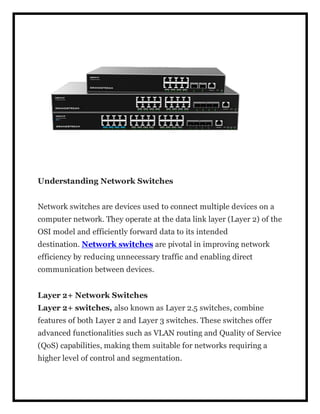
Understanding Network Switches
Network switches are devices used to connect multiple devices on a
computer network. They operate at the data link layer (Layer 2) of the
OSI model and efficiently forward data to its intended
destination. Network switches are pivotal in improving network
efficiency by reducing unnecessary traffic and enabling direct
communication between devices.
Layer 2+ Network Switches
Layer 2+ switches, also known as Layer 2.5 switches, combine
features of both Layer 2 and Layer 3 switches. These switches offer
advanced functionalities such as VLAN routing and Quality of Service
(QoS) capabilities, making them suitable for networks requiring a
higher level of control and segmentation.
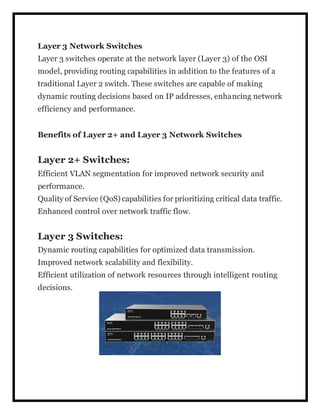
Layer 3 Network Switches
Layer 3 switches operate at the network layer (Layer 3) of the OSI
model, providing routing capabilities in addition to the features of a
traditional Layer 2 switch. These switches are capable of making
dynamic routing decisions based on IP addresses, enhancing network
efficiency and performance.
Benefits of Layer 2+ and Layer 3 Network Switches
Layer 2+ Switches:
Efficient VLAN segmentation for improved network security and
performance.
Quality of Service (QoS) capabilities for prioritizing critical data traffic.
Enhanced control over network traffic flow.
Layer 3 Switches:
Dynamic routing capabilities for optimized data transmission.
Improved network scalability and flexibility.
Efficient utilization of network resources through intelligent routing
decisions.
Conclusion
The choice between Layer 2+ and Layer 3 network
switches depends on the specific requirements of a network. While
Layer 2+ switches offer advanced control and segmentation features,
Layer 3 switches provide dynamic routing capabilities essential for
larger networks.Understandingthe unique functionalitiesand benefits
of each type of switch is crucial for making informed decisions when
designing or upgrading a network infrastructure.
Read More……..

Network Switches , Layer 2+ Network Switches , Layer 3 Network Switches

  • 1.
    A Complete Guideto: Layer 2+, Layer 3 Network Switches | Phone: 099992 84312 Network switches play a crucial role in facilitating seamless communication and data transfer within a network. When it comes to network infrastructure, understanding the differences between Layer 2+ and Layer 3 network switches is essential for optimizing network performance. This comprehensive guide will delve into the intricacies of network switches, shedding light on the functionalities and benefits of Layer 2+ and Layer 3 network switches.
  • 2.
    Understanding Network Switches Networkswitches are devices used to connect multiple devices on a computer network. They operate at the data link layer (Layer 2) of the OSI model and efficiently forward data to its intended destination. Network switches are pivotal in improving network efficiency by reducing unnecessary traffic and enabling direct communication between devices. Layer 2+ Network Switches Layer 2+ switches, also known as Layer 2.5 switches, combine features of both Layer 2 and Layer 3 switches. These switches offer advanced functionalities such as VLAN routing and Quality of Service (QoS) capabilities, making them suitable for networks requiring a higher level of control and segmentation.
  • 3.
    Layer 3 NetworkSwitches Layer 3 switches operate at the network layer (Layer 3) of the OSI model, providing routing capabilities in addition to the features of a traditional Layer 2 switch. These switches are capable of making dynamic routing decisions based on IP addresses, enhancing network efficiency and performance. Benefits of Layer 2+ and Layer 3 Network Switches Layer 2+ Switches: Efficient VLAN segmentation for improved network security and performance. Quality of Service (QoS) capabilities for prioritizing critical data traffic. Enhanced control over network traffic flow. Layer 3 Switches: Dynamic routing capabilities for optimized data transmission. Improved network scalability and flexibility. Efficient utilization of network resources through intelligent routing decisions.
  • 4.
    Conclusion The choice betweenLayer 2+ and Layer 3 network switches depends on the specific requirements of a network. While Layer 2+ switches offer advanced control and segmentation features, Layer 3 switches provide dynamic routing capabilities essential for larger networks.Understandingthe unique functionalitiesand benefits of each type of switch is crucial for making informed decisions when designing or upgrading a network infrastructure. Read More……..