Inam Ul Haq
MS Computer Science (Sweden)
Inam.bth@gmail.com, mr.inam.ulhaq@ieee.org
Discussion forum: questions.computingcage.com
Member of IEEE, ACM, Movement Disorder Society, PDF, BossMedia,
Michealjfox, Association for Information Systems and Internet Society.
Network Security
1 Network Security, University of Okara
Lecture 2: Terminologies
Table of Contents
Network Security, University of Okara2
 Terminologies
 White Hacking
 Exercise
Terminologies
Network Security, University of Okara3
 Threats
 Attacks
 Risk Analysis
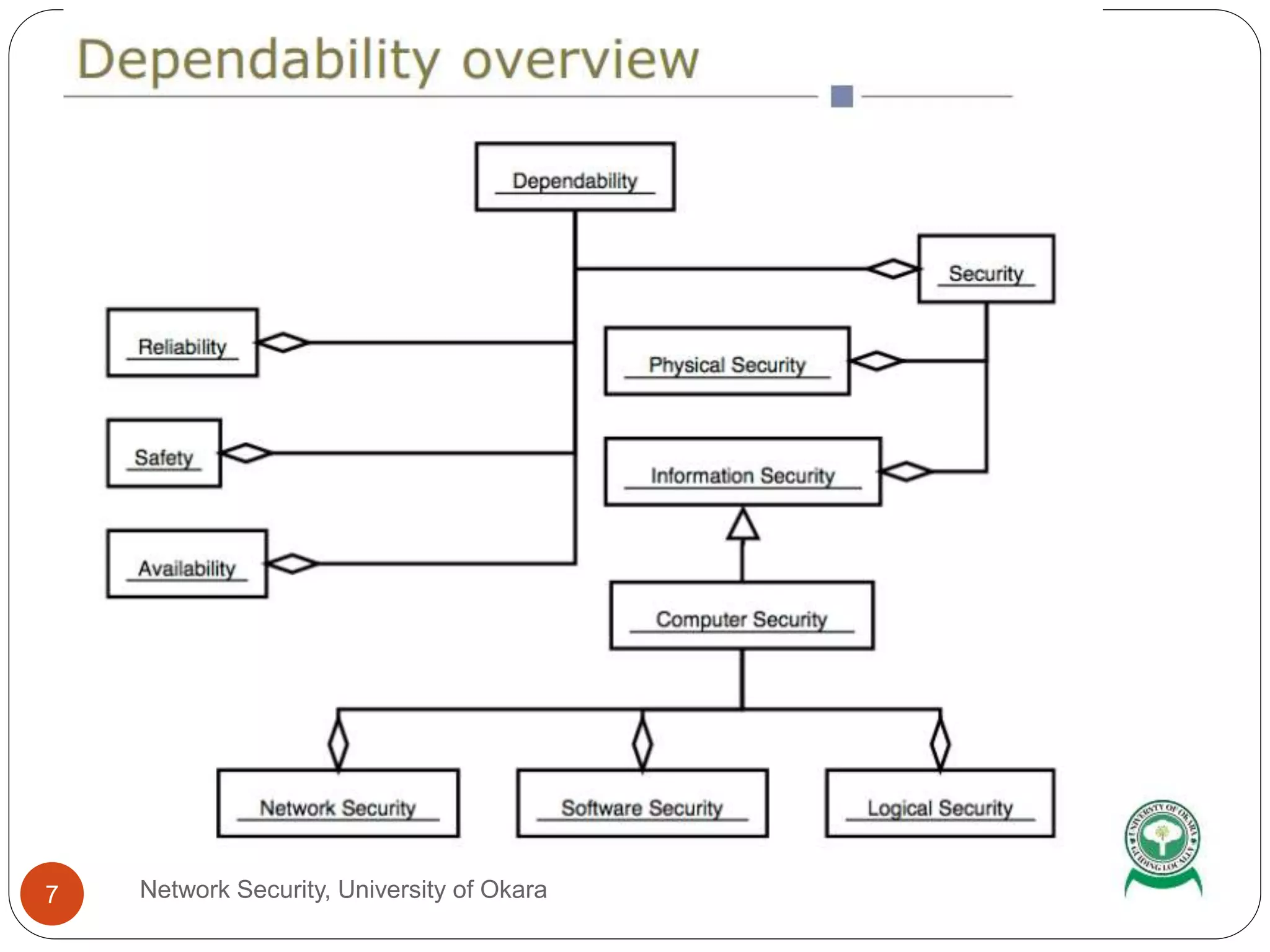
 Dependability Overview
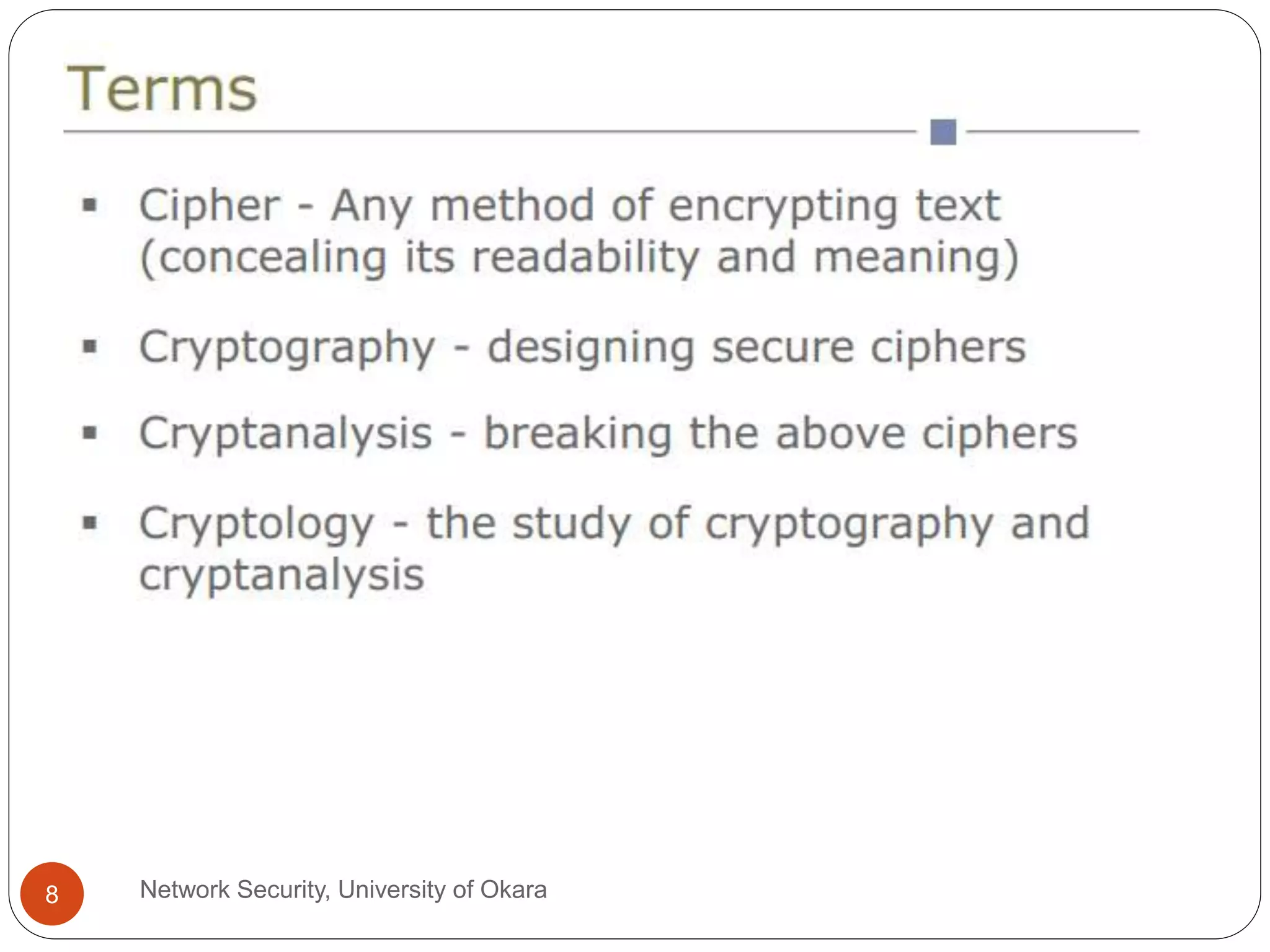
 Terms: Cipher, Cryptology, Cryptanalysis,
Cryptography
 Exercise
Threat
Network Security, University of Okara4
 A risk of attack, or, chance of getting attacked.
 Attack: when a risk/treat is implemented.
 Omini-Present Security: more or less all
systems have security aspects that need to be
discussed. So Security Engineering deals with
ALL aspects of security.
 Example: ATM (placing metal to fool customers)
4 Common Threats
Network Security, University of Okara5
 Common threats in a computer setting include:
 Spoofing: the attacker pretends to be somebody
else
 Tampering with data: e.g. security settings are
changed to
give an attacker more privileges
 Repudiation: a user denies having performed an
action like
mounting an attack
 Denial-of-Service: DoS attacks can make for
instance web
sites temporarily unavailable
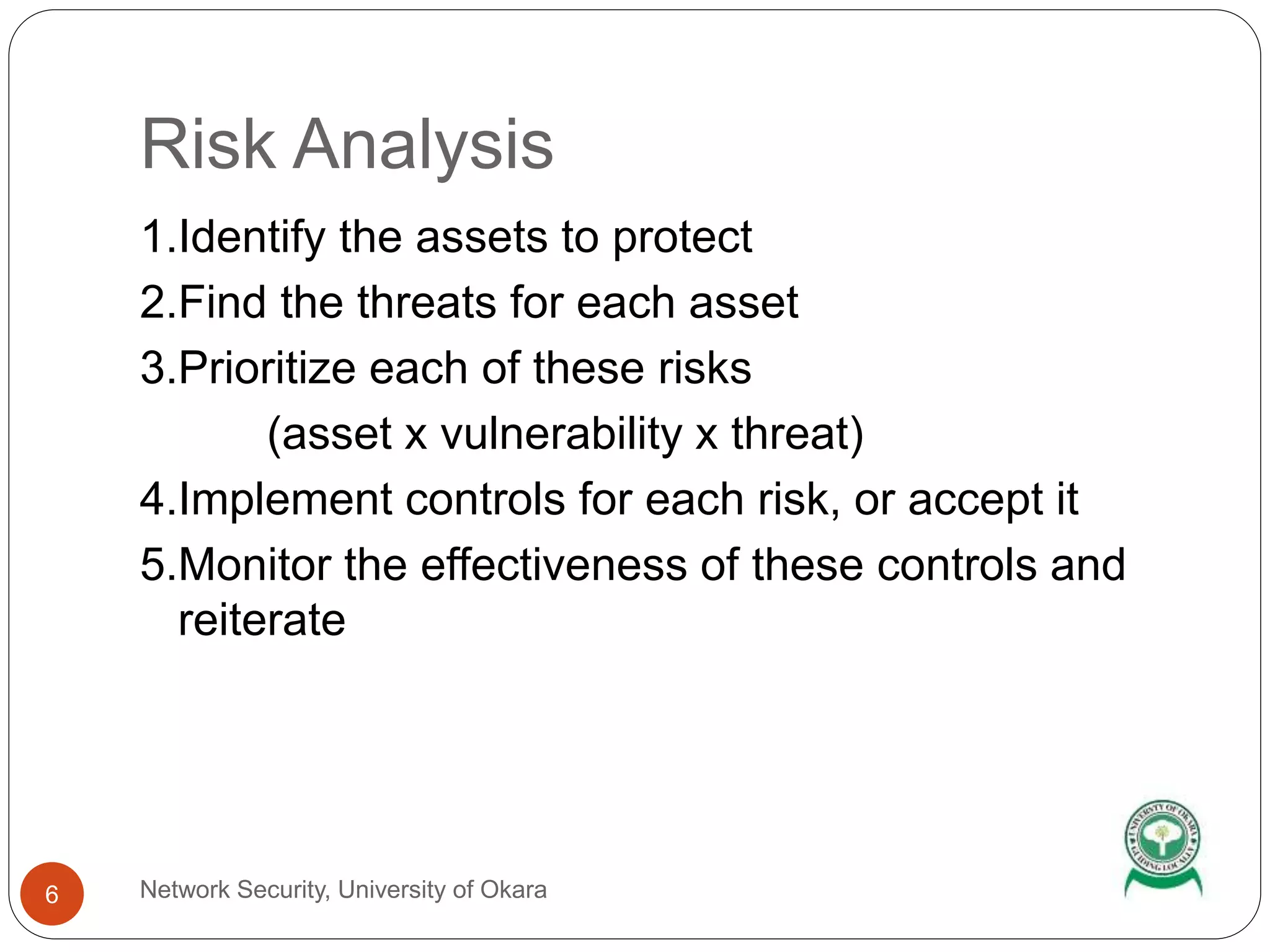
Risk Analysis
Network Security, University of Okara6
1.Identify the assets to protect
2.Find the threats for each asset
3.Prioritize each of these risks
(asset x vulnerability x threat)
4.Implement controls for each risk, or accept it
5.Monitor the effectiveness of these controls and
reiterate
Network Security, University of Okara7
Network Security, University of Okara8
Exercise
Network Security, University of Okara9
 How to find a vulnerability?
 How to remove a vulnerability?
 Windows XP (in 2002) = 35M LOC
 How to develop and exploit?
 How to prevent against exploits?

Network Security Terminologies

  • 1.
    Inam Ul Haq MSComputer Science (Sweden) Inam.bth@gmail.com, mr.inam.ulhaq@ieee.org Discussion forum: questions.computingcage.com Member of IEEE, ACM, Movement Disorder Society, PDF, BossMedia, Michealjfox, Association for Information Systems and Internet Society. Network Security 1 Network Security, University of Okara Lecture 2: Terminologies
  • 2.
    Table of Contents NetworkSecurity, University of Okara2  Terminologies  White Hacking  Exercise
  • 3.
    Terminologies Network Security, Universityof Okara3  Threats  Attacks  Risk Analysis  Dependability Overview  Terms: Cipher, Cryptology, Cryptanalysis, Cryptography  Exercise
  • 4.
    Threat Network Security, Universityof Okara4  A risk of attack, or, chance of getting attacked.  Attack: when a risk/treat is implemented.  Omini-Present Security: more or less all systems have security aspects that need to be discussed. So Security Engineering deals with ALL aspects of security.  Example: ATM (placing metal to fool customers)
  • 5.
    4 Common Threats NetworkSecurity, University of Okara5  Common threats in a computer setting include:  Spoofing: the attacker pretends to be somebody else  Tampering with data: e.g. security settings are changed to give an attacker more privileges  Repudiation: a user denies having performed an action like mounting an attack  Denial-of-Service: DoS attacks can make for instance web sites temporarily unavailable
  • 6.
    Risk Analysis Network Security,University of Okara6 1.Identify the assets to protect 2.Find the threats for each asset 3.Prioritize each of these risks (asset x vulnerability x threat) 4.Implement controls for each risk, or accept it 5.Monitor the effectiveness of these controls and reiterate
  • 7.
  • 8.
  • 9.
    Exercise Network Security, Universityof Okara9  How to find a vulnerability?  How to remove a vulnerability?  Windows XP (in 2002) = 35M LOC  How to develop and exploit?  How to prevent against exploits?