Man In-The Middle
Attack
MITM
What is MITM ?
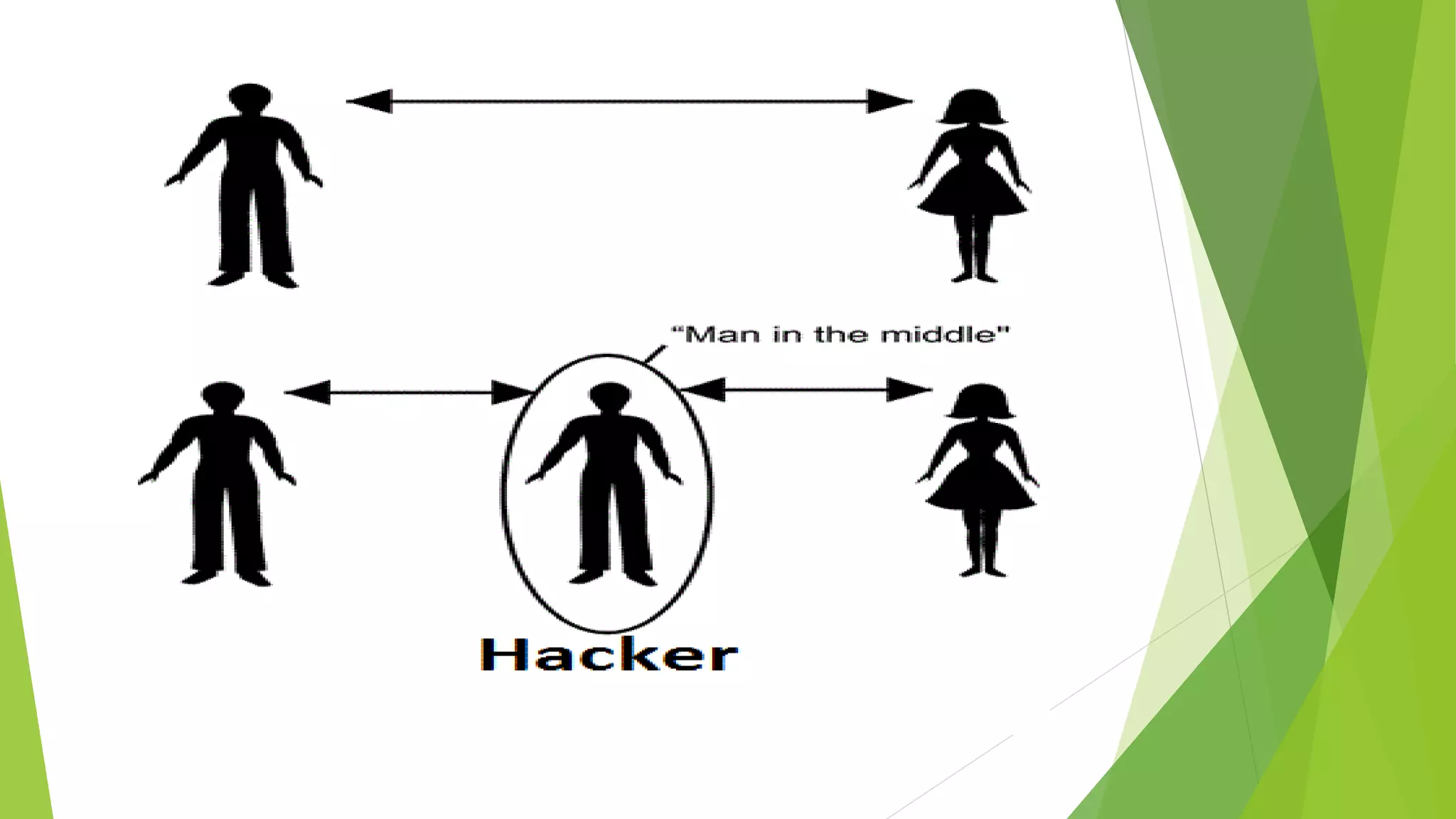
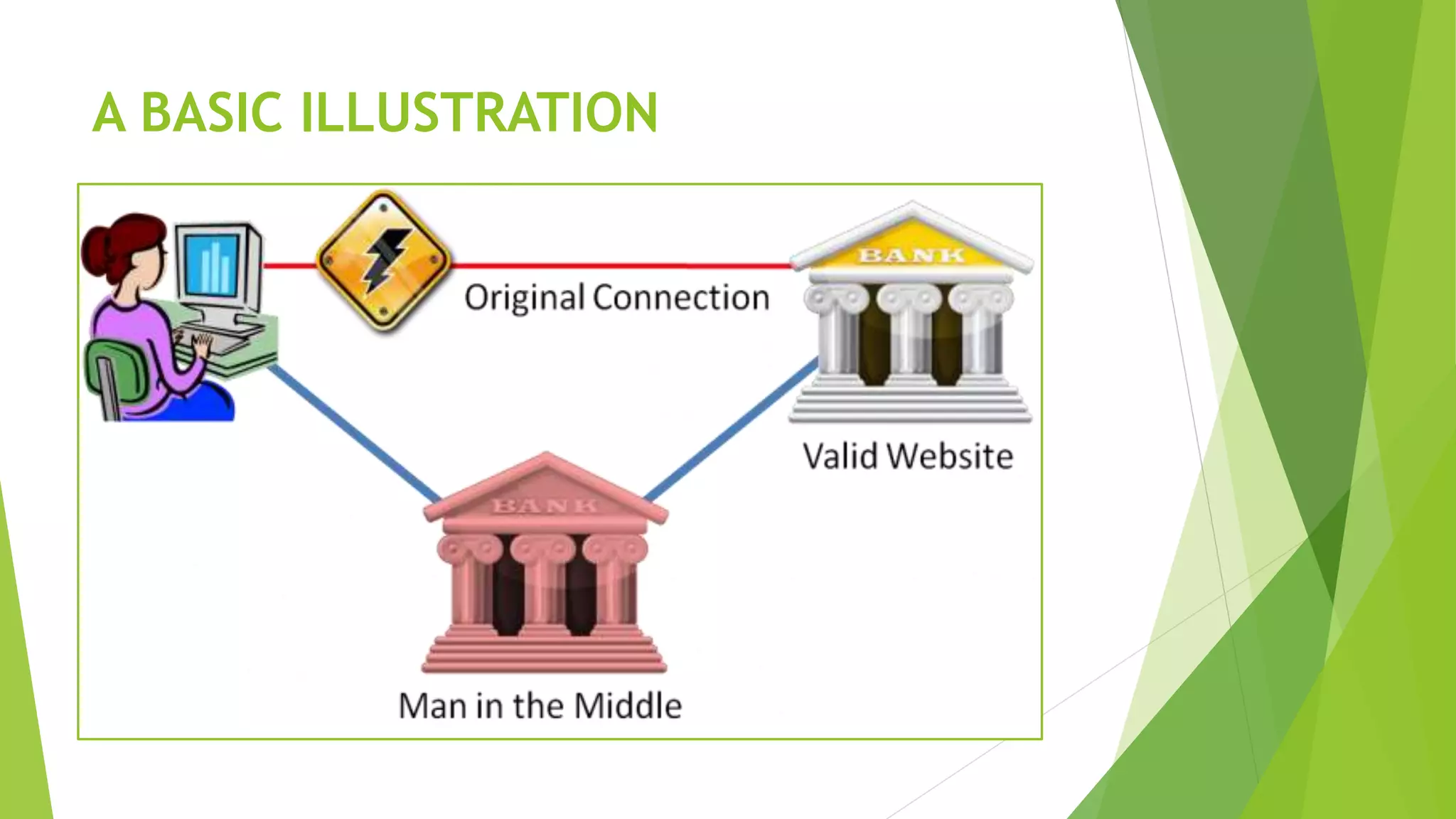
 A man-in-the-middle (MITM) attack is a form of
eavesdropping where communication between two users is
monitored and modified by an unauthorized party.
Generally, the attacker actively eavesdrops by
intercepting a public key message exchange and
retransmits the message while replacing the requested
key with his own.
MITM attack is also known as:
 Bucket-brigade attack
 Fire brigade attack
 Monkey-in-the-middle attack
 Session hijacking
 TCP hijacking
 TCP session hijacking
Name Origin:
 The name "Man-in-the-Middle" is derived from the
basketball scenario where two players intend to pass a
ball to each other while one player between them tries to
seize it. MITM attacks are sometimes referred to as
"bucket brigade attacks" or "fire brigade attacks." Those
names are derived from the fire brigade operation of
dousing off the fire by passing buckets from one person to
another between the water source and the fire.
How Does It Work?
 Man in the middle is known most to others as "session
hijacking" and to general public as "hijacking". These
hackers are primarily targeting specific data about the
transactions on computers. This can be anything from an
email to a bank transaction that said the hackers begin
their investigation of the party of interest.
A BASIC ILLUSTRATION
What is wireless
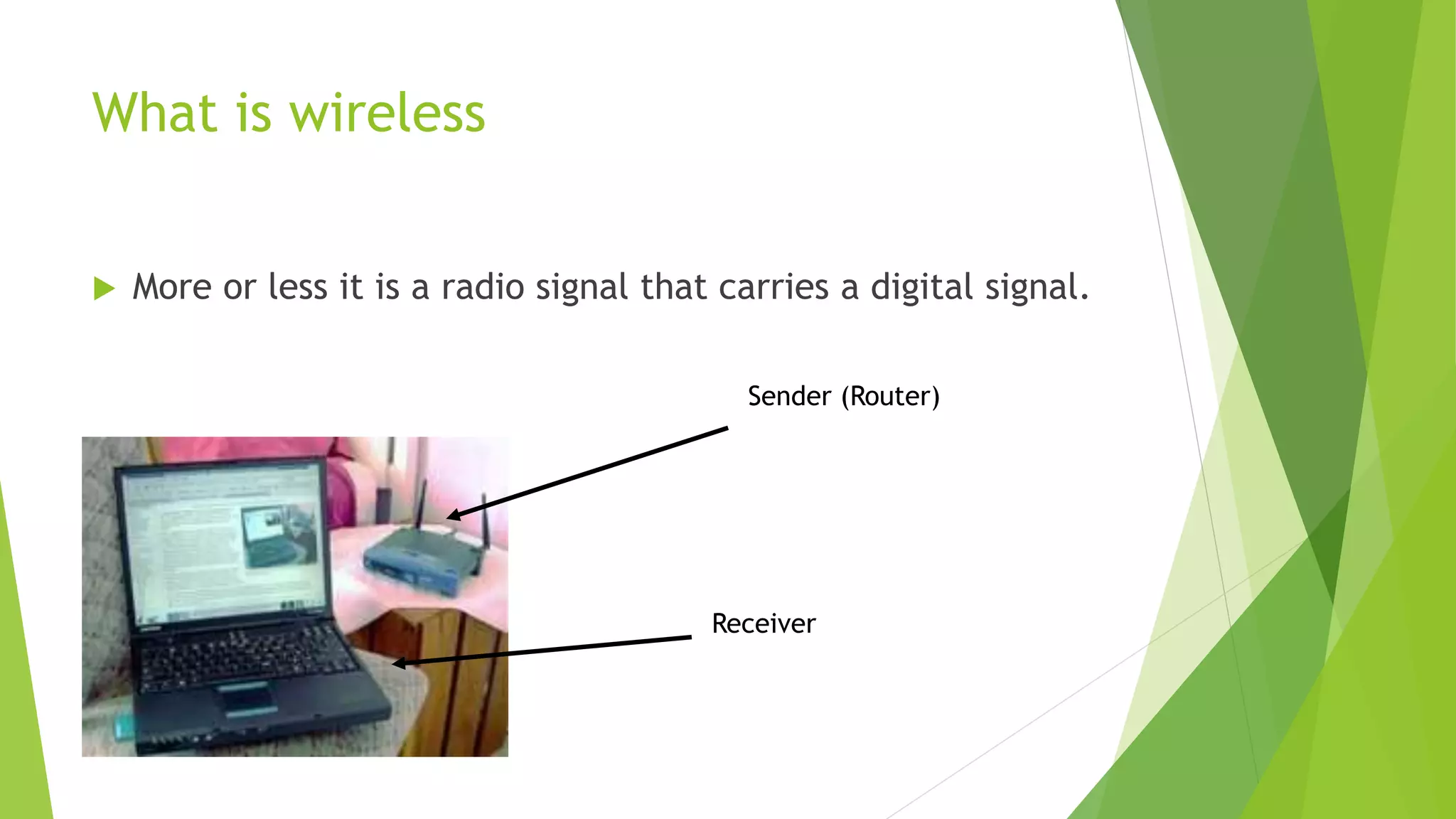
 More or less it is a radio signal that carries a digital signal.
Sender (Router)
Receiver
Project Description
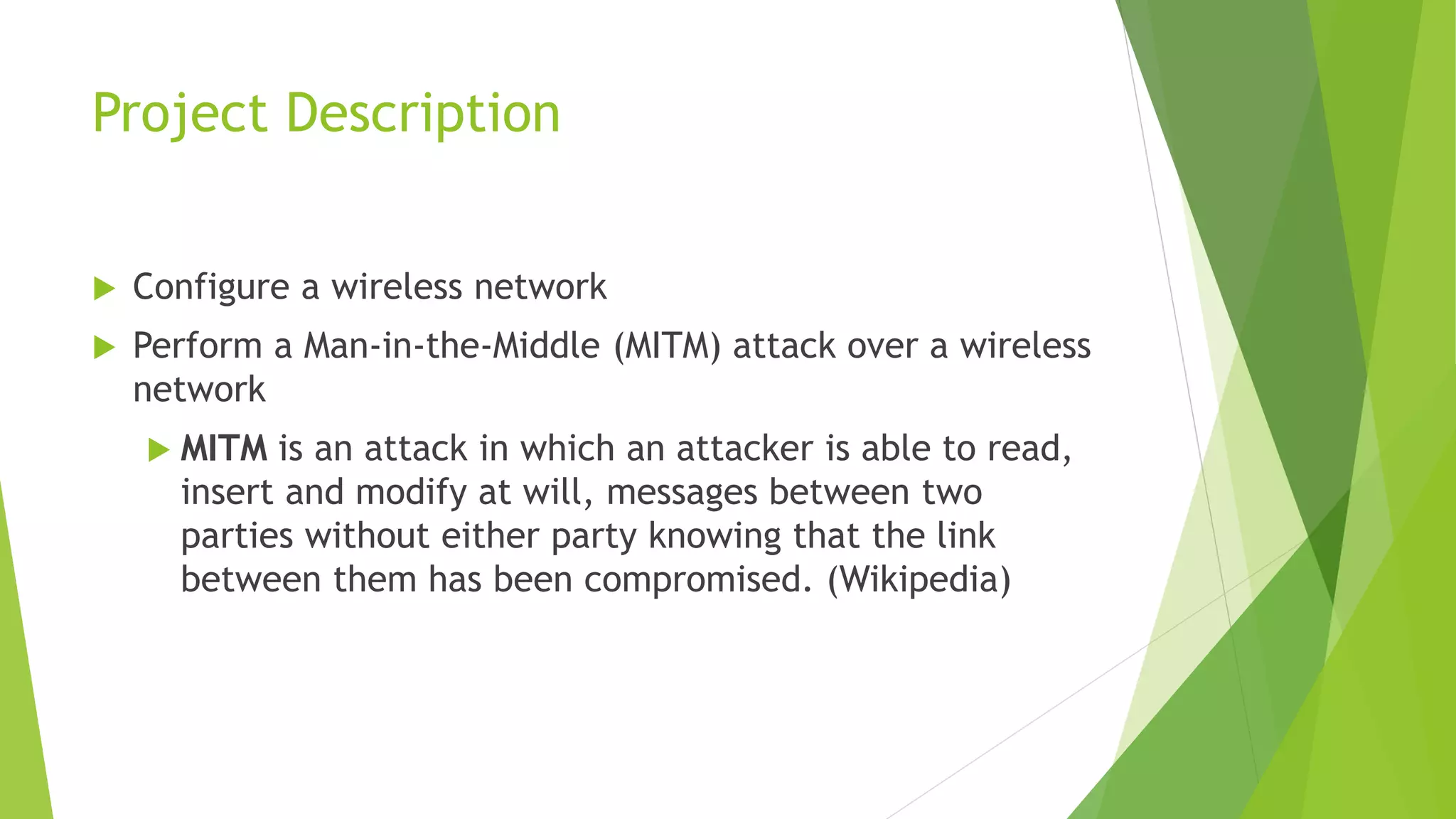
 Configure a wireless network
 Perform a Man-in-the-Middle (MITM) attack over a wireless
network
 MITM is an attack in which an attacker is able to read,
insert and modify at will, messages between two
parties without either party knowing that the link
between them has been compromised. (Wikipedia)
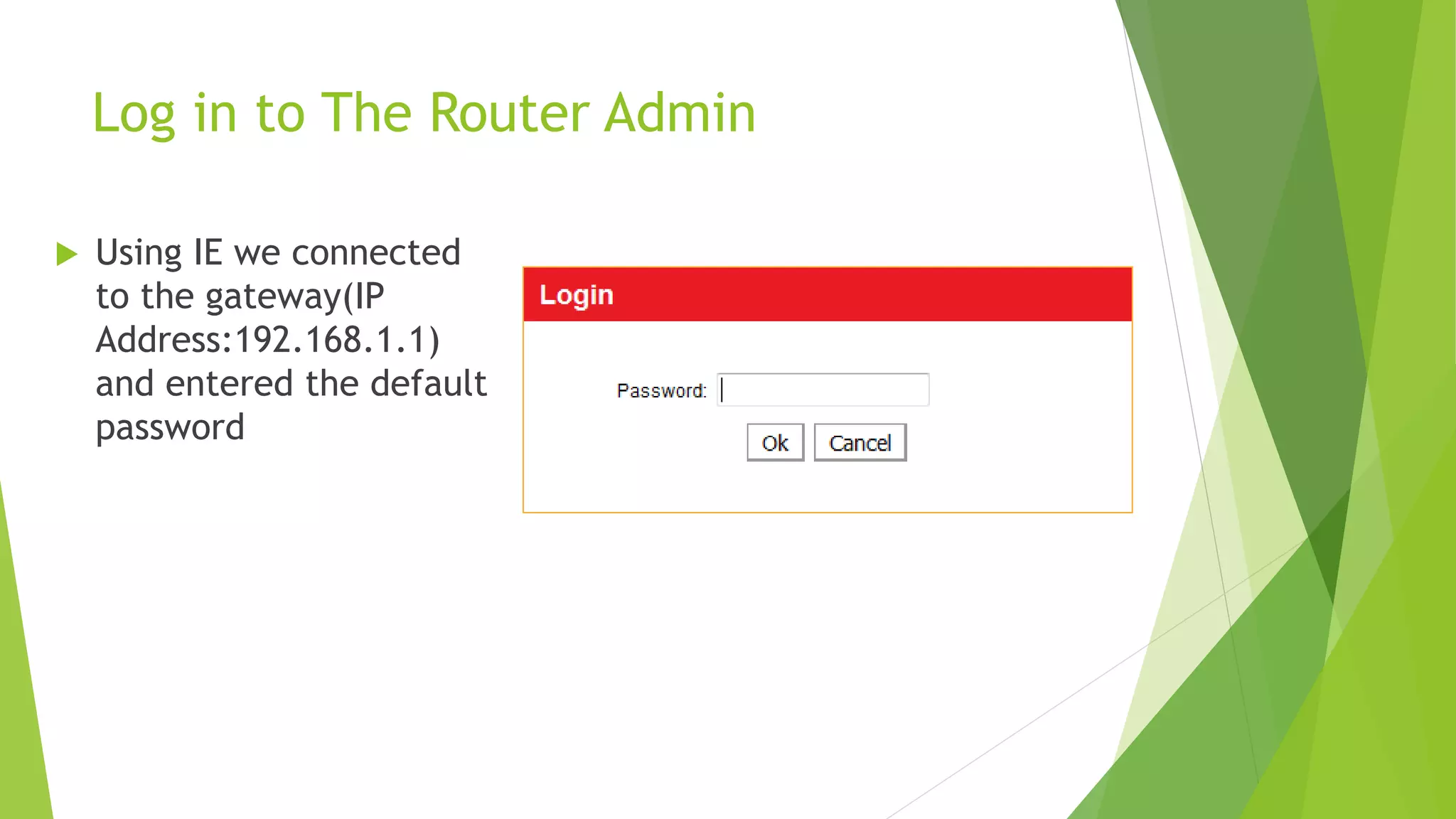
Log in to The Router Admin
 Using IE we connected
to the gateway(IP
Address:192.168.1.1)
and entered the default
password
WEP Configuration
 Changed SSID, changed default username and password to
log in and enabled WEP with one key.
 Chanel 6 was used instead of 11 because the router was
firmware routed to number 6 only.
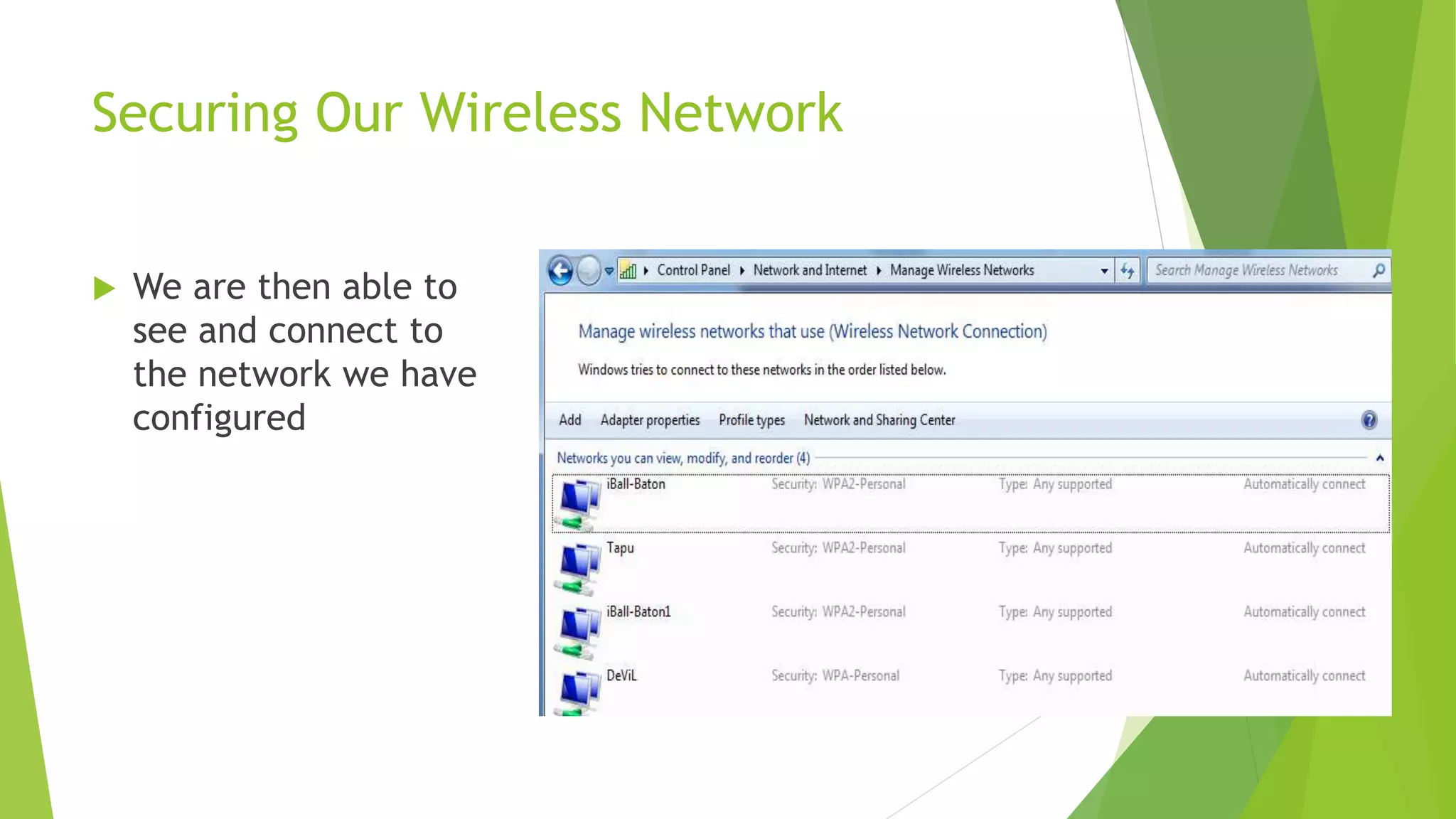
Securing Our Wireless Network
 We are then able to
see and connect to
the network we have
configured
MAC Filtering
Turned on MAC filtering and cloned the
known computer and only allowed it
MAN IN THE MIDDLE
How It Works?
 The MitM poisons the ARP cache of the victim and the
server/gateway/switch
 So the victim computer then thinks the hacker's ARP
address is the gateway’s.
 The gateway thinks the hacker’s ARP address is the victim
computer’s.
 All data is redirected through the listening system.
MAN IN THE MIDDLE
Basic Attacks
 Read all clear text information passed between the hosts
(i.e., browser requests, username/passwords)
 Log/trap all data packets
 Packet injection
(all these attacks can be performed through traffic dumps
and setting your NIC to promiscuous mode)
MAN IN THE MIDDLE
Advanced Attacks
 Traffic Blocking
 Web page denied – 404 error even though the page
works fine
 Filters
 Listen for any signature and change it
 Break Encryption
 Crypto rollbacks and de-authorization
Similar Attacks
 HostAP can be used to create a rogue access point that
clients will authenticate with, much like ARP poisoning,
but it's more obvious to admin's.
 Other MITM attacks can use HostAP to deauthenticate a
client and force it to re-authenticate with themselves on
a different channel.
Protections
 SSL connections *may* prevent you from connecting
through the MITM.
 Read certificates carefully (https pass through) before
connecting.
 File-Encrypt (Other encrypted files) any file you don't
want intercepted.
 WEP won't work at all because the hacker can tumble your
data and find the Key. With the key, all traffic can be
decrypted on-the-fly, as if it's clear text.
Sniffing
 It is the easiest attack to launch since all the packets
transit through the attacker.
 All the “plain text” protocols are compromised (the
attacker can sniff user and password of many widely used
protocol such as telnet, ftp, http)
Hijacking
 Easy to launch
 It isn’t blind (the attacker knows t blind (the attacker
knows exactly the sequence numbers of the exactly the
sequence numbers of the TCP connection)
Injecting
 Possibility to add packets to an already established
connection (only possible in full-duplex connection (only
possible in full-duplex mitm).
 The attacker can modify the sequence numbers and keep
the connection synchronized while injecting keep packets.
 If the mitm attack is a “proxy attack proxy attack” it is
even it easier to inject (there are two distinct
connections).
Filtering
 The attacker can modify the payload of the packets by
recalculating the checksum.
 He/she can create filters on the fly.
 The length of the payload can also be changed but only in
full-duplex (in this case the seq has to be adjusted).
DNS spoofing
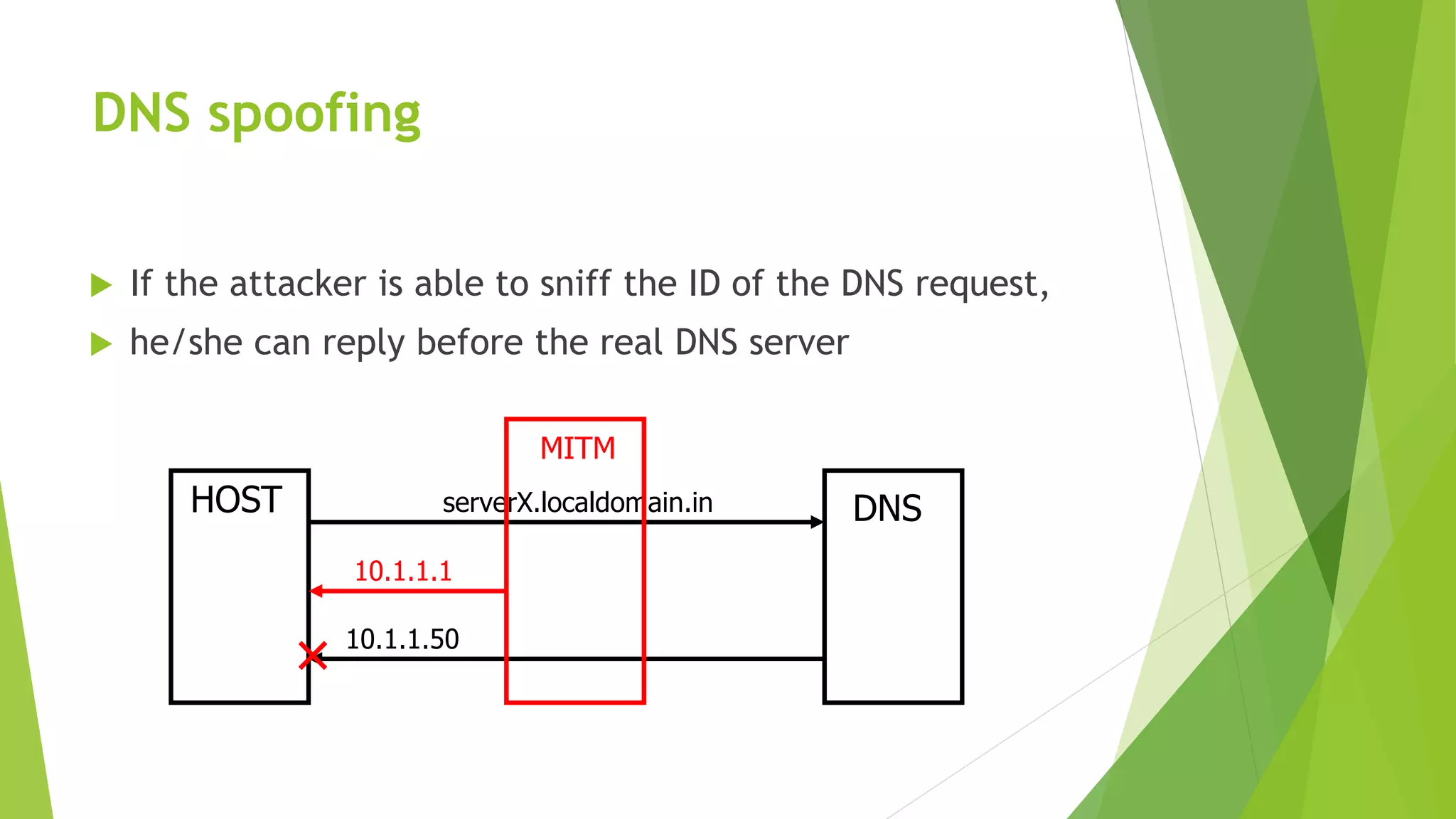
 If the attacker is able to sniff the ID of the DNS request,
 he/she can reply before the real DNS server
HOST DNSserverX.localdomain.in
10.1.1.50
MITM
10.1.1.1
Man in The Middle Attack

Man in The Middle Attack

  • 1.
  • 3.
    What is MITM?  A man-in-the-middle (MITM) attack is a form of eavesdropping where communication between two users is monitored and modified by an unauthorized party. Generally, the attacker actively eavesdrops by intercepting a public key message exchange and retransmits the message while replacing the requested key with his own.
  • 4.
    MITM attack isalso known as:  Bucket-brigade attack  Fire brigade attack  Monkey-in-the-middle attack  Session hijacking  TCP hijacking  TCP session hijacking
  • 5.
    Name Origin:  Thename "Man-in-the-Middle" is derived from the basketball scenario where two players intend to pass a ball to each other while one player between them tries to seize it. MITM attacks are sometimes referred to as "bucket brigade attacks" or "fire brigade attacks." Those names are derived from the fire brigade operation of dousing off the fire by passing buckets from one person to another between the water source and the fire.
  • 6.
    How Does ItWork?  Man in the middle is known most to others as "session hijacking" and to general public as "hijacking". These hackers are primarily targeting specific data about the transactions on computers. This can be anything from an email to a bank transaction that said the hackers begin their investigation of the party of interest.
  • 7.
  • 8.
    What is wireless More or less it is a radio signal that carries a digital signal. Sender (Router) Receiver
  • 9.
    Project Description  Configurea wireless network  Perform a Man-in-the-Middle (MITM) attack over a wireless network  MITM is an attack in which an attacker is able to read, insert and modify at will, messages between two parties without either party knowing that the link between them has been compromised. (Wikipedia)
  • 10.
    Log in toThe Router Admin  Using IE we connected to the gateway(IP Address:192.168.1.1) and entered the default password
  • 11.
    WEP Configuration  ChangedSSID, changed default username and password to log in and enabled WEP with one key.  Chanel 6 was used instead of 11 because the router was firmware routed to number 6 only.
  • 12.
    Securing Our WirelessNetwork  We are then able to see and connect to the network we have configured
  • 13.
    MAC Filtering Turned onMAC filtering and cloned the known computer and only allowed it
  • 14.
    MAN IN THEMIDDLE How It Works?  The MitM poisons the ARP cache of the victim and the server/gateway/switch  So the victim computer then thinks the hacker's ARP address is the gateway’s.  The gateway thinks the hacker’s ARP address is the victim computer’s.  All data is redirected through the listening system.
  • 15.
    MAN IN THEMIDDLE Basic Attacks  Read all clear text information passed between the hosts (i.e., browser requests, username/passwords)  Log/trap all data packets  Packet injection (all these attacks can be performed through traffic dumps and setting your NIC to promiscuous mode)
  • 16.
    MAN IN THEMIDDLE Advanced Attacks  Traffic Blocking  Web page denied – 404 error even though the page works fine  Filters  Listen for any signature and change it  Break Encryption  Crypto rollbacks and de-authorization
  • 17.
    Similar Attacks  HostAPcan be used to create a rogue access point that clients will authenticate with, much like ARP poisoning, but it's more obvious to admin's.  Other MITM attacks can use HostAP to deauthenticate a client and force it to re-authenticate with themselves on a different channel.
  • 18.
    Protections  SSL connections*may* prevent you from connecting through the MITM.  Read certificates carefully (https pass through) before connecting.  File-Encrypt (Other encrypted files) any file you don't want intercepted.  WEP won't work at all because the hacker can tumble your data and find the Key. With the key, all traffic can be decrypted on-the-fly, as if it's clear text.
  • 19.
    Sniffing  It isthe easiest attack to launch since all the packets transit through the attacker.  All the “plain text” protocols are compromised (the attacker can sniff user and password of many widely used protocol such as telnet, ftp, http)
  • 20.
    Hijacking  Easy tolaunch  It isn’t blind (the attacker knows t blind (the attacker knows exactly the sequence numbers of the exactly the sequence numbers of the TCP connection)
  • 21.
    Injecting  Possibility toadd packets to an already established connection (only possible in full-duplex connection (only possible in full-duplex mitm).  The attacker can modify the sequence numbers and keep the connection synchronized while injecting keep packets.  If the mitm attack is a “proxy attack proxy attack” it is even it easier to inject (there are two distinct connections).
  • 22.
    Filtering  The attackercan modify the payload of the packets by recalculating the checksum.  He/she can create filters on the fly.  The length of the payload can also be changed but only in full-duplex (in this case the seq has to be adjusted).
  • 23.
    DNS spoofing  Ifthe attacker is able to sniff the ID of the DNS request,  he/she can reply before the real DNS server HOST DNSserverX.localdomain.in 10.1.1.50 MITM 10.1.1.1