Network Capacity
Issues to address as we move to 1:1 student devices
*Minimum standard: 1 megabit per second per student (Mbps),
equivalent to the most basic cable plan –
normal family of four requires much more than this.
https://www.reviews.org/internet-service/what-are-mbps/
*It is the long-term
goal set by the Federal
Communications
Commission (FCC) and
originally established
by the State Education
Technology Directors
Association (SETDA) as
the 2017 goal for
Internet capacity.
https://thejournal.co
m/articles/2015/06/1
1/network-capacity-
growth-plan-for-
exponential-
increases.aspx
5,000 student school district
1 Mbps - $250,000 per month
Expect growth of 60% per year.
So, capacity needs double
every 18 months.
https://thejournal.com/articles/2015/06/11/network-
capacity-growth-plan-for-exponential-increases.aspx
Slowdown not on the horizon
The tools and resources for digital
learning are immature.
No matter how much bandwidth
Students use it.
As teachers and students get used to 1:1,
expectations of reliability go up.
They depend on it for daily work.
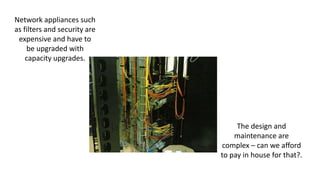
Network appliances such
as filters and security are
expensive and have to
be upgraded with
capacity upgrades.
The design and
maintenance are
complex – can we afford
to pay in house for that?.
All Is Not Lost
Think of how we are using it –
Costs can be mitigated
Save $ from
textbook
elimination
IT jobs change
or are
eliminated
https://thejournal.com/Articles/2015/07/09/How-Do-We-Make-School-Network-
Infrastructure-Affordable.aspx?Page=3
Costs are on a
downward
curve
States, large districts, combinations of
small districts can reduce costs with
the purchasing power they wield
https://thejournal.com/Articles/2015/07/09/How-Do-We-Make-School-Network-
Infrastructure-Affordable.aspx?Page=3
E-Rate Federal Funding can be a Game Changer
“The FCC's E-Rate program
makes telecommunications and
information services more
affordable for schools and
libraries. With funding from the
Universal Service Fund
(fcc.gov/encyclopedia/universal-
service-fund), E-Rate provides
discounts for
telecommunications, Internet
access, and internal connections
to eligible schools and libraries.”
-E-Rate: Universal Service
Program for Schools and Libraries
- FCC
$4.15 Billion was
available for schools
and libraries in 2019.
References
Images courtesy of Creative Commons.org, Stephen Teague, and https://snmpcenter.com/the-importance-of-sdn-for-wireless-transmission/.
https://www.nytimes.com/2017/05/13/technology/google-education-chromebooks-schools.html
https://www.educationsuperhighway.org/blog/broadband-budget-planning/
https://www.asumag.com/construction/technology-communications/article/20853196/broadband-capacity-is-the-
top-priority-for-it-in-k12-schools-survey-finds
https://www.reviews.org/internet-service/what-are-mbps/
https://thejournal.com/articles/2015/06/11/network-capacity-growth-plan-for-exponential-increases.aspx
https://thejournal.com/Articles/2015/07/09/How-Do-We-Make-School-Network-Infrastructure-Affordable.aspx?Page=3
https://www.fcc.gov/consumers/guides/universal-service-program-schools-and-libraries-e-rate
Content for this presentation was taken from the following resources:

Network presentation

  • 1.
    Network Capacity Issues toaddress as we move to 1:1 student devices
  • 2.
    *Minimum standard: 1megabit per second per student (Mbps), equivalent to the most basic cable plan – normal family of four requires much more than this. https://www.reviews.org/internet-service/what-are-mbps/ *It is the long-term goal set by the Federal Communications Commission (FCC) and originally established by the State Education Technology Directors Association (SETDA) as the 2017 goal for Internet capacity. https://thejournal.co m/articles/2015/06/1 1/network-capacity- growth-plan-for- exponential- increases.aspx
  • 3.
    5,000 student schooldistrict 1 Mbps - $250,000 per month
  • 4.
    Expect growth of60% per year. So, capacity needs double every 18 months. https://thejournal.com/articles/2015/06/11/network- capacity-growth-plan-for-exponential-increases.aspx
  • 5.
    Slowdown not onthe horizon The tools and resources for digital learning are immature. No matter how much bandwidth Students use it.
  • 6.
    As teachers andstudents get used to 1:1, expectations of reliability go up. They depend on it for daily work.
  • 7.
    Network appliances such asfilters and security are expensive and have to be upgraded with capacity upgrades. The design and maintenance are complex – can we afford to pay in house for that?.
  • 8.
  • 9.
    Think of howwe are using it – Costs can be mitigated Save $ from textbook elimination IT jobs change or are eliminated https://thejournal.com/Articles/2015/07/09/How-Do-We-Make-School-Network- Infrastructure-Affordable.aspx?Page=3
  • 10.
    Costs are ona downward curve States, large districts, combinations of small districts can reduce costs with the purchasing power they wield https://thejournal.com/Articles/2015/07/09/How-Do-We-Make-School-Network- Infrastructure-Affordable.aspx?Page=3
  • 11.
    E-Rate Federal Fundingcan be a Game Changer “The FCC's E-Rate program makes telecommunications and information services more affordable for schools and libraries. With funding from the Universal Service Fund (fcc.gov/encyclopedia/universal- service-fund), E-Rate provides discounts for telecommunications, Internet access, and internal connections to eligible schools and libraries.” -E-Rate: Universal Service Program for Schools and Libraries - FCC $4.15 Billion was available for schools and libraries in 2019.
  • 12.
    References Images courtesy ofCreative Commons.org, Stephen Teague, and https://snmpcenter.com/the-importance-of-sdn-for-wireless-transmission/. https://www.nytimes.com/2017/05/13/technology/google-education-chromebooks-schools.html https://www.educationsuperhighway.org/blog/broadband-budget-planning/ https://www.asumag.com/construction/technology-communications/article/20853196/broadband-capacity-is-the- top-priority-for-it-in-k12-schools-survey-finds https://www.reviews.org/internet-service/what-are-mbps/ https://thejournal.com/articles/2015/06/11/network-capacity-growth-plan-for-exponential-increases.aspx https://thejournal.com/Articles/2015/07/09/How-Do-We-Make-School-Network-Infrastructure-Affordable.aspx?Page=3 https://www.fcc.gov/consumers/guides/universal-service-program-schools-and-libraries-e-rate Content for this presentation was taken from the following resources: