共享 x 安全 = NetworkPolicy ?
施嘉峻 (ccshih)
iiiccshih@gmail.com
Presented at iThome Kubernetes Day, Sep 20, 2017
About Me
@ ccshih
# Kubernetes
# OpenShift
+ Red Hat Certificate of Expertise in
Platform-as-a-Service (OpenShift Admin)
2
Agenda
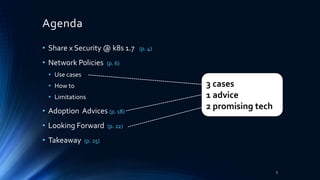
• Share x Security @ k8s 1.7 (p. 4)
• Network Policies (p. 6)
• Use cases
• How to
• Limitations
• Adoption Advices (p. 18)
• Looking Forward (p. 22)
• Takeaway (p. 25)
3
3 cases
1 advice
2 promising tech
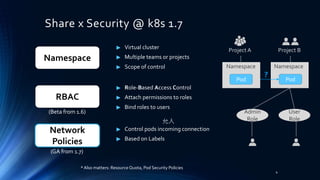
Share x Security @ k8s 1.7
Network
Policies
(Beta from 1.6)
RBAC
Namespace
(GA from 1.7)
Virtual cluster
Multiple teams or projects
Scope of control
Role-Based Access Control
Attach permissions to roles
Bind roles to users
Control pods incoming connection
Based on Labels
Project A Project B
Namespace Namespace
Pod Pod
Admin
Role
User
Role
?
4
*Also matters: Resource Quota, Pod Security Policies
允入
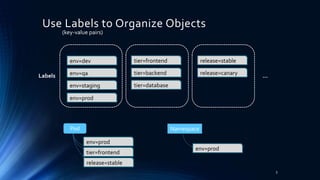
Use Labels to Organize Objects
5
tier=frontend
(key-value pairs)
tier=backend
tier=database
env=dev
env=qa
env=staging
env=prod
release=stable
release=canary
Pod
Labels …
env=prod
tier=frontend
release=stable
env=prod
Namespace
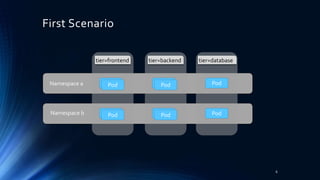
First Scenario
6
Pod
Pod Pod
Pod Pod
Pod
tier=frontend tier=backend tier=database
Namespace b
PodPod
PodPod
Namespace a
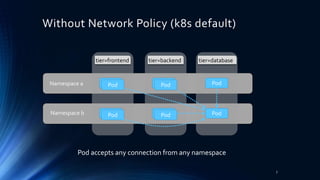
Without Network Policy (k8s default)
7
Pod
Pod Pod
Pod Pod
Pod
tier=frontend tier=backend tier=database
Namespace b
PodPod
PodPod
Namespace a
Pod accepts any connection from any namespace
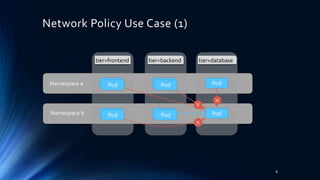
Network Policy Use Case (1)
8
Pod
Pod Pod
Pod Pod
Pod
tier=frontend tier=backend tier=database
Namespace b
PodPod
PodPod
Namespace a
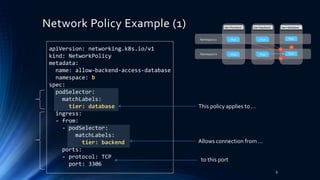
apiVersion: networking.k8s.io/v1
kind: NetworkPolicy
metadata:
name: allow-backend-access-database
namespace: b
spec:
podSelector:
matchLabels:
tier: database
ingress:
- from:
- podSelector:
matchLabels:
tier: backend
ports:
- protocol: TCP
port: 3306
Network Policy Example (1)
9
This policy applies to …
Allows connection from …
to this port
Pod
Pod Pod
Pod Pod
Pod
tier=frontend tier=backend tier=database
Namespace b
PodPod
PodPod
Namespace a
Policy:
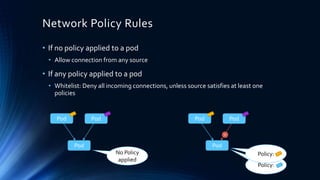
Network Policy Rules
• If no policy applied to a pod
• Allow connection from any source
• If any policy applied to a pod
• Whitelist: Deny all incoming connections, unless source satisfies at least one
policies
10
PodPod
Pod
PodPod
Pod
No Policy
applied
Policy:
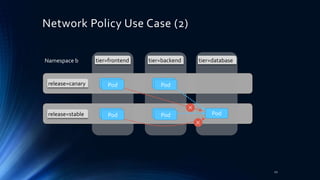
Network Policy Use Case (2)
11
Pod
Pod Pod
Pod
Pod
tier=frontend tier=backend tier=database
PodPod
PodPod
release=canary
release=stable
Namespace b
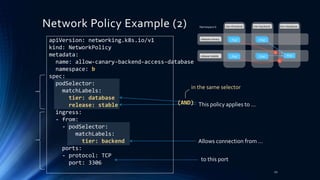
Network Policy Example (2)
apiVersion: networking.k8s.io/v1
kind: NetworkPolicy
metadata:
name: allow-canary-backend-access-database
namespace: b
spec:
podSelector:
matchLabels:
tier: database
release: stable
ingress:
- from:
- podSelector:
matchLabels:
tier: backend
ports:
- protocol: TCP
port: 3306
12
This policy applies to …
Allows connection from …
to this port
Pod
Pod Pod
Pod
Pod
tier=frontend tier=backend tier=database
PodPod
PodPod
release=canary
release=stable
Namespace b
(AND)
in the same selector
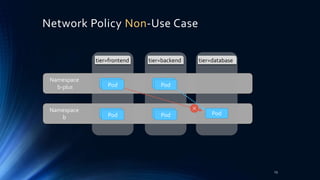
Network Policy Non-Use Case
13
Pod
Pod Pod
Pod
Pod
tier=frontend tier=backend tier=database
PodPod
PodPod
Namespace
b-plus
Namespace
b
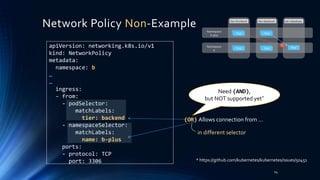
Network Policy Non-Example
apiVersion: networking.k8s.io/v1
kind: NetworkPolicy
metadata:
namespace: b
…
…
ingress:
- from:
- podSelector:
matchLabels:
tier: backend
- namespaceSelector:
matchLabels:
name: b-plus
ports:
- protocol: TCP
port: 3306
14
Allows connection from …(OR)
Pod
Pod Pod
Pod
Pod
tier=frontend tier=backend tier=database
PodPod
PodPod
Namespace
b-plus
Namespace
b
Need (AND),
but NOT supported yet*
* https://github.com/kubernetes/kubernetes/issues/50451
in different selector
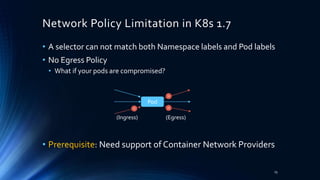
Network Policy Limitation in K8s 1.7
• A selector can not match both Namespace labels and Pod labels
• No Egress Policy
• What if your pods are compromised?
• Prerequisite: Need support of Container Network Providers
15
Pod
(Ingress) (Egress)
Network Providers who Support Network Policy
16
Calico cilium ROMANA WeaveNet
&
Note:
• Not standard k8s Network Policy
• Run with calicoctl, instead of kubectl
• Calico also supports Egress policy (not
shown here)
Calico’s Policy Definition
17
Pod
Pod Pod
Pod
Pod
tier=frontend tier=backend tier=database
PodPod
PodPod
Namespace
b-plus
Namespace
bapiVersion: v1
kind: policy
metadata:
name: allow-b-plus-backend-access-b-database
spec:
selector: >
calico/k8s_ns == 'b' &&
tier == 'database'
ingress:
- action: allow
source:
selector: >
calico/k8s_ns == 'b-plus' &&
tier == 'backend'
protocol: tcp
destination:
ports: [3306]
# calicoctl apply -f <FILENAME>
Adoption Advices
18
Adoption Advices
• (skipped) Use special labels for network policy
• Rethink IP-based packet filter
19
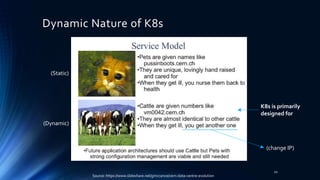
Dynamic Nature of K8s
20
Source: https://www.slideshare.net/gmccance/cern-data-centre-evolution
K8s is primarily
designed for
(Static)
(Dynamic)
(change IP)
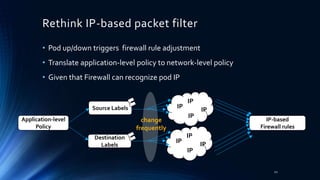
Rethink IP-based packet filter
• Pod up/down triggers firewall rule adjustment
• Translate application-level policy to network-level policy
• Given that Firewall can recognize pod IP
21
IP
Source Labels
Destination
Labels
IP IP
IP
IP
IP IP
IP
IP-based
Firewall rules
Application-level
Policy
change
frequently
Looking Forward
22
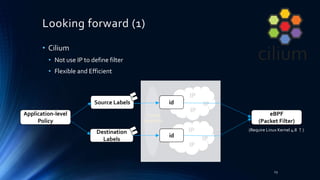
Looking forward (1)
• Cilium
• Not use IP to define filter
• Flexible and Efficient
23
IP
Source Labels
Destination
Labels
IP IP
IP
IP
IP IP
IP
eBPF
(Packet Filter)
Application-level
Policy
change
frequently
(Require Linux Kernel 4.8 ↑)
id
id
Looking forward (2)
24
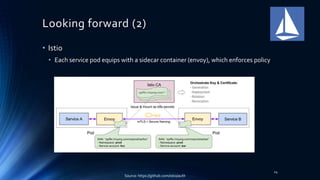
• Istio
• Each service pod equips with a sidecar container (envoy), which enforces policy
Source: https://github.com/istio/auth
Takeaway
25
Takeaway
• By default, pod can talk to each other at network level
• Network Policy
• whitelists pod incoming connection
• needs container network provider’s support
• can not apply to some cross-namespace scenario
• Adoption
• security needs as agile as containers
• Looking forward
• Flavored policy enforcement
26
Contact
• iiiccshih@gmail.com
27
References
• Network Policy
• Official document
• Recipes by ahmetb
• Calico
• Getting started with k8s
28

Network policy @ k8s day

  • 1.
    共享 x 安全= NetworkPolicy ? 施嘉峻 (ccshih) iiiccshih@gmail.com Presented at iThome Kubernetes Day, Sep 20, 2017
  • 2.
    About Me @ ccshih #Kubernetes # OpenShift + Red Hat Certificate of Expertise in Platform-as-a-Service (OpenShift Admin) 2
  • 3.
    Agenda • Share xSecurity @ k8s 1.7 (p. 4) • Network Policies (p. 6) • Use cases • How to • Limitations • Adoption Advices (p. 18) • Looking Forward (p. 22) • Takeaway (p. 25) 3 3 cases 1 advice 2 promising tech
  • 4.
    Share x Security@ k8s 1.7 Network Policies (Beta from 1.6) RBAC Namespace (GA from 1.7) Virtual cluster Multiple teams or projects Scope of control Role-Based Access Control Attach permissions to roles Bind roles to users Control pods incoming connection Based on Labels Project A Project B Namespace Namespace Pod Pod Admin Role User Role ? 4 *Also matters: Resource Quota, Pod Security Policies 允入
  • 5.
    Use Labels toOrganize Objects 5 tier=frontend (key-value pairs) tier=backend tier=database env=dev env=qa env=staging env=prod release=stable release=canary Pod Labels … env=prod tier=frontend release=stable env=prod Namespace
  • 6.
    First Scenario 6 Pod Pod Pod PodPod Pod tier=frontend tier=backend tier=database Namespace b PodPod PodPod Namespace a
  • 7.
    Without Network Policy(k8s default) 7 Pod Pod Pod Pod Pod Pod tier=frontend tier=backend tier=database Namespace b PodPod PodPod Namespace a Pod accepts any connection from any namespace
  • 8.
    Network Policy UseCase (1) 8 Pod Pod Pod Pod Pod Pod tier=frontend tier=backend tier=database Namespace b PodPod PodPod Namespace a
  • 9.
    apiVersion: networking.k8s.io/v1 kind: NetworkPolicy metadata: name:allow-backend-access-database namespace: b spec: podSelector: matchLabels: tier: database ingress: - from: - podSelector: matchLabels: tier: backend ports: - protocol: TCP port: 3306 Network Policy Example (1) 9 This policy applies to … Allows connection from … to this port Pod Pod Pod Pod Pod Pod tier=frontend tier=backend tier=database Namespace b PodPod PodPod Namespace a
  • 10.
    Policy: Network Policy Rules •If no policy applied to a pod • Allow connection from any source • If any policy applied to a pod • Whitelist: Deny all incoming connections, unless source satisfies at least one policies 10 PodPod Pod PodPod Pod No Policy applied Policy:
  • 11.
    Network Policy UseCase (2) 11 Pod Pod Pod Pod Pod tier=frontend tier=backend tier=database PodPod PodPod release=canary release=stable Namespace b
  • 12.
    Network Policy Example(2) apiVersion: networking.k8s.io/v1 kind: NetworkPolicy metadata: name: allow-canary-backend-access-database namespace: b spec: podSelector: matchLabels: tier: database release: stable ingress: - from: - podSelector: matchLabels: tier: backend ports: - protocol: TCP port: 3306 12 This policy applies to … Allows connection from … to this port Pod Pod Pod Pod Pod tier=frontend tier=backend tier=database PodPod PodPod release=canary release=stable Namespace b (AND) in the same selector
  • 13.
    Network Policy Non-UseCase 13 Pod Pod Pod Pod Pod tier=frontend tier=backend tier=database PodPod PodPod Namespace b-plus Namespace b
  • 14.
    Network Policy Non-Example apiVersion:networking.k8s.io/v1 kind: NetworkPolicy metadata: namespace: b … … ingress: - from: - podSelector: matchLabels: tier: backend - namespaceSelector: matchLabels: name: b-plus ports: - protocol: TCP port: 3306 14 Allows connection from …(OR) Pod Pod Pod Pod Pod tier=frontend tier=backend tier=database PodPod PodPod Namespace b-plus Namespace b Need (AND), but NOT supported yet* * https://github.com/kubernetes/kubernetes/issues/50451 in different selector
  • 15.
    Network Policy Limitationin K8s 1.7 • A selector can not match both Namespace labels and Pod labels • No Egress Policy • What if your pods are compromised? • Prerequisite: Need support of Container Network Providers 15 Pod (Ingress) (Egress)
  • 16.
    Network Providers whoSupport Network Policy 16 Calico cilium ROMANA WeaveNet &
  • 17.
    Note: • Not standardk8s Network Policy • Run with calicoctl, instead of kubectl • Calico also supports Egress policy (not shown here) Calico’s Policy Definition 17 Pod Pod Pod Pod Pod tier=frontend tier=backend tier=database PodPod PodPod Namespace b-plus Namespace bapiVersion: v1 kind: policy metadata: name: allow-b-plus-backend-access-b-database spec: selector: > calico/k8s_ns == 'b' && tier == 'database' ingress: - action: allow source: selector: > calico/k8s_ns == 'b-plus' && tier == 'backend' protocol: tcp destination: ports: [3306] # calicoctl apply -f <FILENAME>
  • 18.
  • 19.
    Adoption Advices • (skipped)Use special labels for network policy • Rethink IP-based packet filter 19
  • 20.
    Dynamic Nature ofK8s 20 Source: https://www.slideshare.net/gmccance/cern-data-centre-evolution K8s is primarily designed for (Static) (Dynamic) (change IP)
  • 21.
    Rethink IP-based packetfilter • Pod up/down triggers firewall rule adjustment • Translate application-level policy to network-level policy • Given that Firewall can recognize pod IP 21 IP Source Labels Destination Labels IP IP IP IP IP IP IP IP-based Firewall rules Application-level Policy change frequently
  • 22.
  • 23.
    Looking forward (1) •Cilium • Not use IP to define filter • Flexible and Efficient 23 IP Source Labels Destination Labels IP IP IP IP IP IP IP eBPF (Packet Filter) Application-level Policy change frequently (Require Linux Kernel 4.8 ↑) id id
  • 24.
    Looking forward (2) 24 •Istio • Each service pod equips with a sidecar container (envoy), which enforces policy Source: https://github.com/istio/auth
  • 25.
  • 26.
    Takeaway • By default,pod can talk to each other at network level • Network Policy • whitelists pod incoming connection • needs container network provider’s support • can not apply to some cross-namespace scenario • Adoption • security needs as agile as containers • Looking forward • Flavored policy enforcement 26
  • 27.
  • 28.
    References • Network Policy •Official document • Recipes by ahmetb • Calico • Getting started with k8s 28

Editor's Notes

  • #10 檔入口
  • #13 檔入口
  • #15 檔入口
  • #21 乖乖, Cattle, 抓交替, 消耗品, 動態, 變化的 IP