Neil Moss BVSc PhD Dip Vet Clin Stud
                           SBScibus
              www.sbscibus.com.au
   To introduce you to our pasture program at
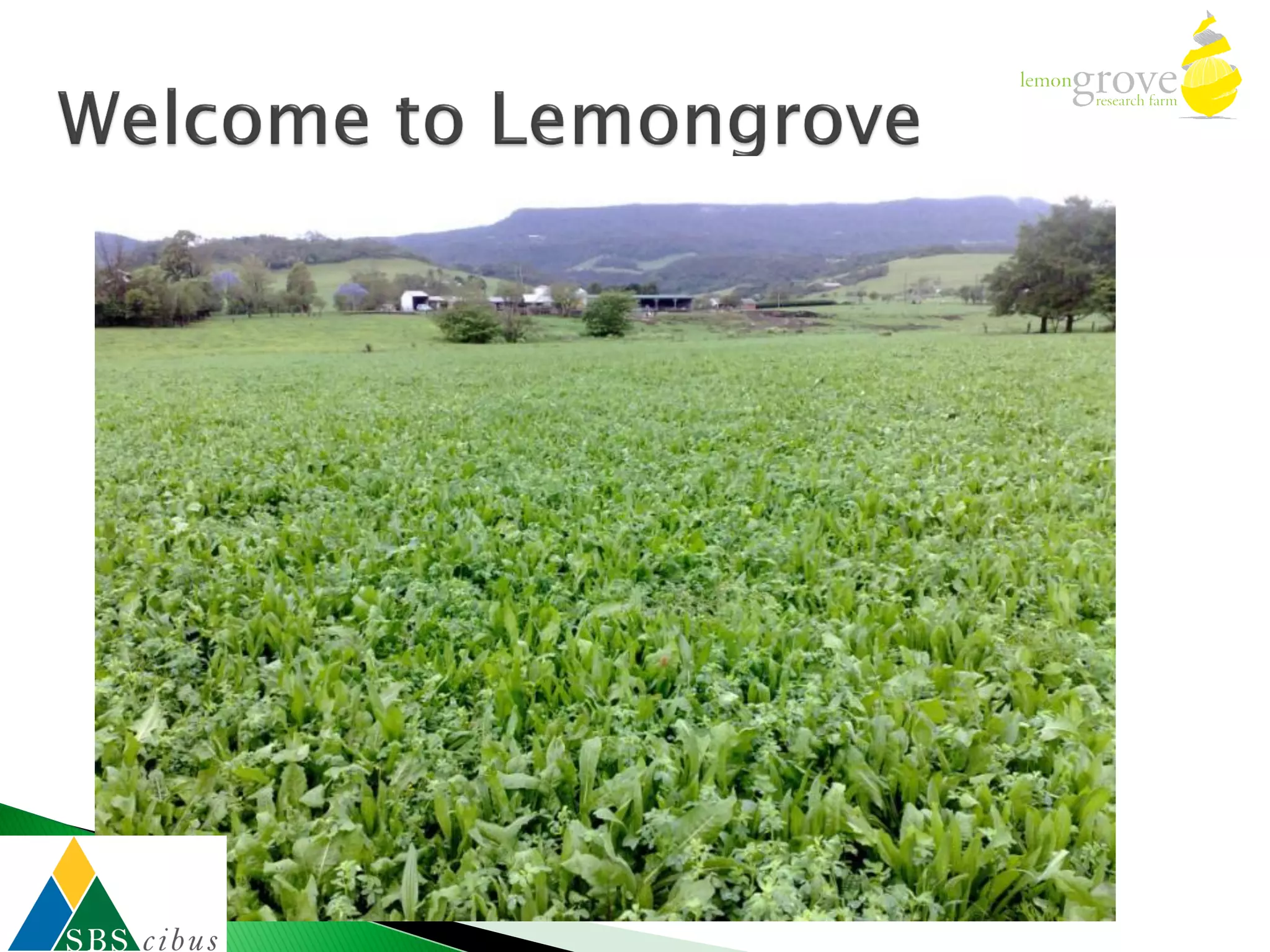
    Lemongrove
   To show you around a little
   To discuss what we are trying to achieve and
    how we are going about it
   To present some data and to discuss some of
    our early findings
   Background- most coastal dairy pastures in
    kikuyu-ryegrass rotation
    ◦   Produces forage for most months of year
    ◦   High but variable yielding system
    ◦   Retains drought and weed resilliance of kikuyu base
    ◦   Resistant to wet weather and pugging
   But!
    ◦   Needs resowing every year
    ◦   Highly dependent on nitrogen
    ◦   Shallow rooted
    ◦   Moderate summer feed quality
   Background
    ◦ Attempts made 10-15 years ago to replace kikuyu
      with perennial rye based pastures
        Poor persistence
        Grass weed invasion
        Poor summer productivity
        Endophyte issues
        Poor growth in dry periods


   Maybe we have been looking at the wrong
    perennial pasture options?
   Could work well if we can establish and
    maintain them
   Much lower requirement for nitrogen
   Could have a different growth curve to grass
    based pastures
   Many are tap-rooted
    ◦ Deeper moisture and nutrient extraction
   Could have excellent pasture quality in
    warmer months
   May form part of a pasture portfolio-risk
    management benefits
   But!
    ◦   May have problems with broad leaf weeds
    ◦   Risks with water-logging
    ◦   Would need enough area for a constant rotation
    ◦   May not produce enough feed
    ◦   May need cultivation to establish effectively
    ◦   May not produce enough feed in winter
    ◦   Persistence issues?

There is a need to know more!!
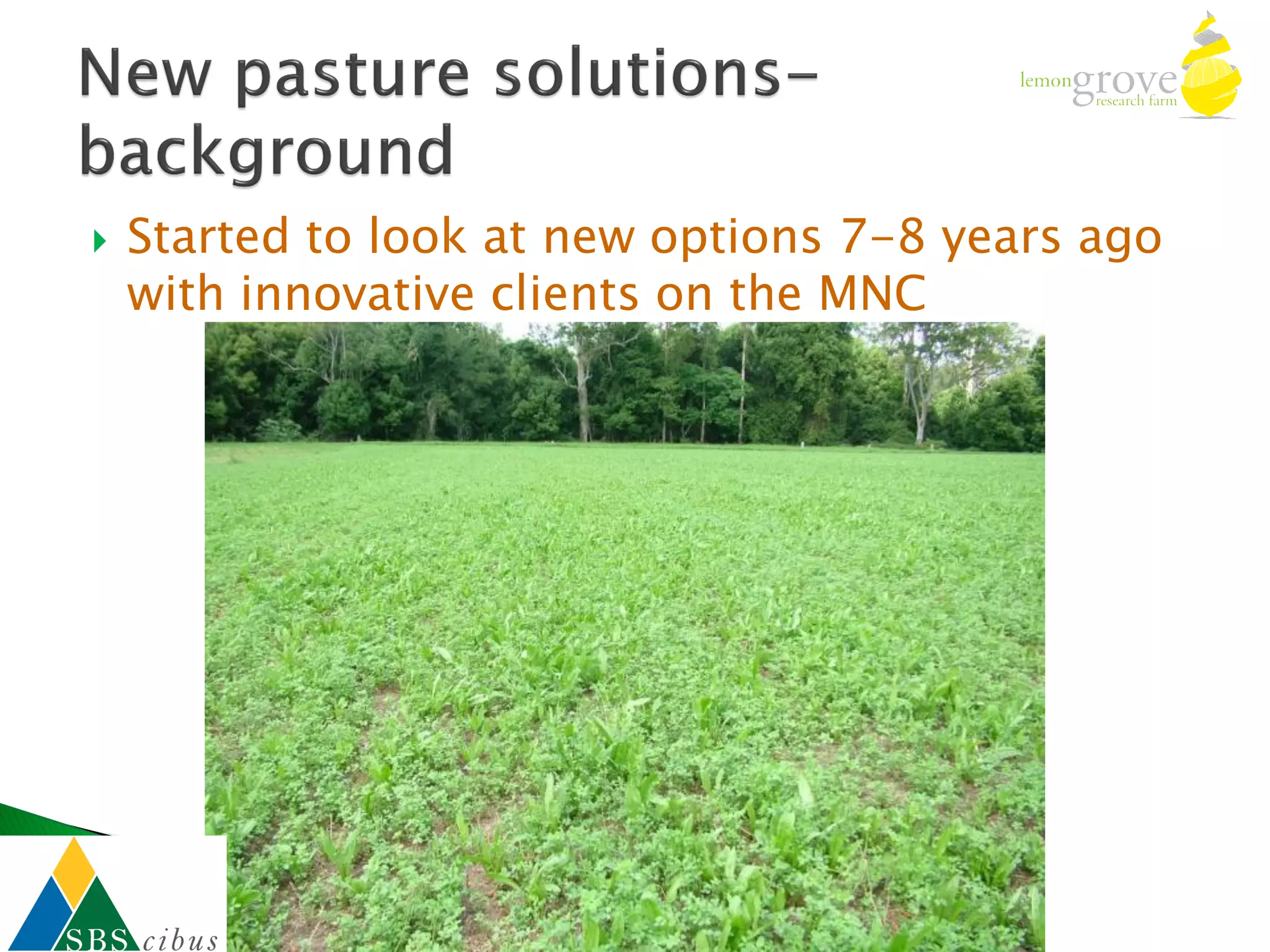
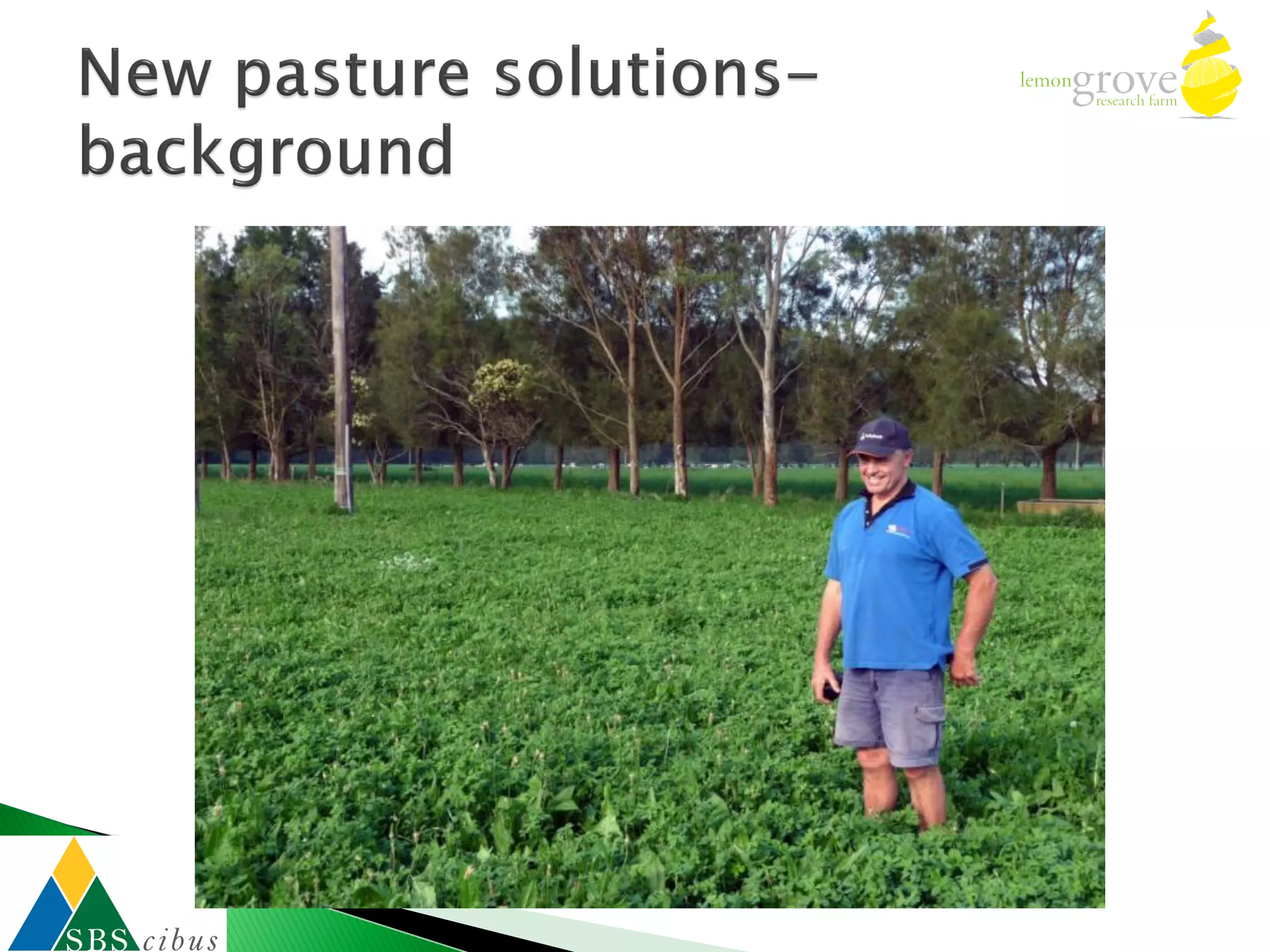
   Started to look at new options 7-8 years ago
    with innovative clients on the MNC
   Apparent success needed to be backed with
    data
   Lemongrove Research Farm applied
    successfully through Caring for Country grant
    to allow a quantitative field study into these
    pastures
   Project commenced beginning 2011
   We new that timing was important
   We had stabilised a preparation strategy and
    sowing method
   We had a good indication of the shape of the
    pasture curve and had looked at ways to
    address is deficiencies
   We were achieving some fantastic feed quality
    with responses in the vat
   We were using substantially less fertiliser
   Treatment and control paddocks selected
    ◦ Treatment – oats followed by legume/herb pasture
    ◦ Control- traditional kikuyu rye pastures
   Soil tested
   Preparation and sowing program defined
   Get started!
   Pasture growth
   Nutrients applied
   Changes in soil chemistry
   Feed quality
   Milk production (anecdotal)
   Chemical use
   Soil moisture
   Knockdown herbicides in summer prior to
    crop- prefer 2 sprays
   Remove trash if necessary
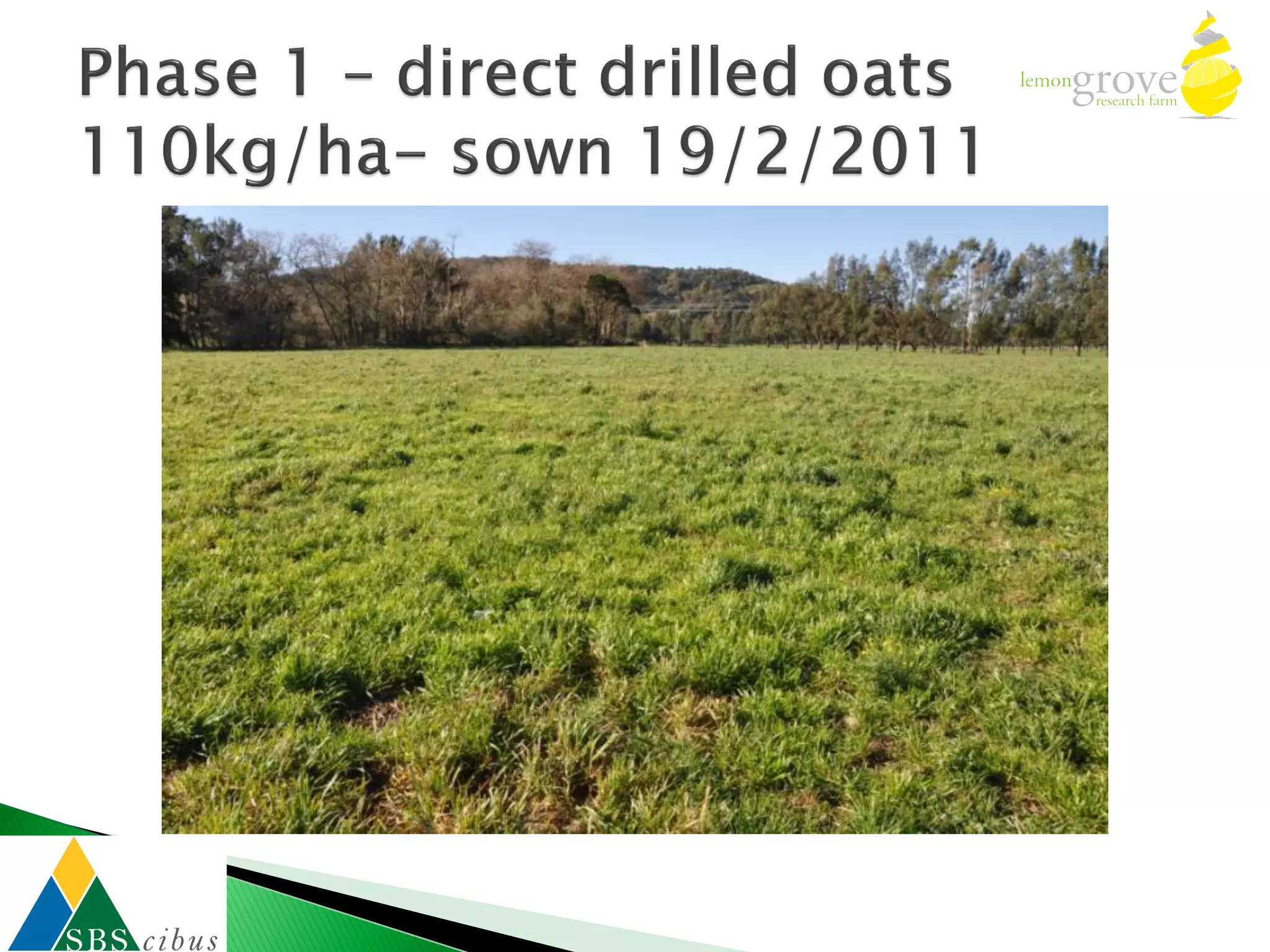
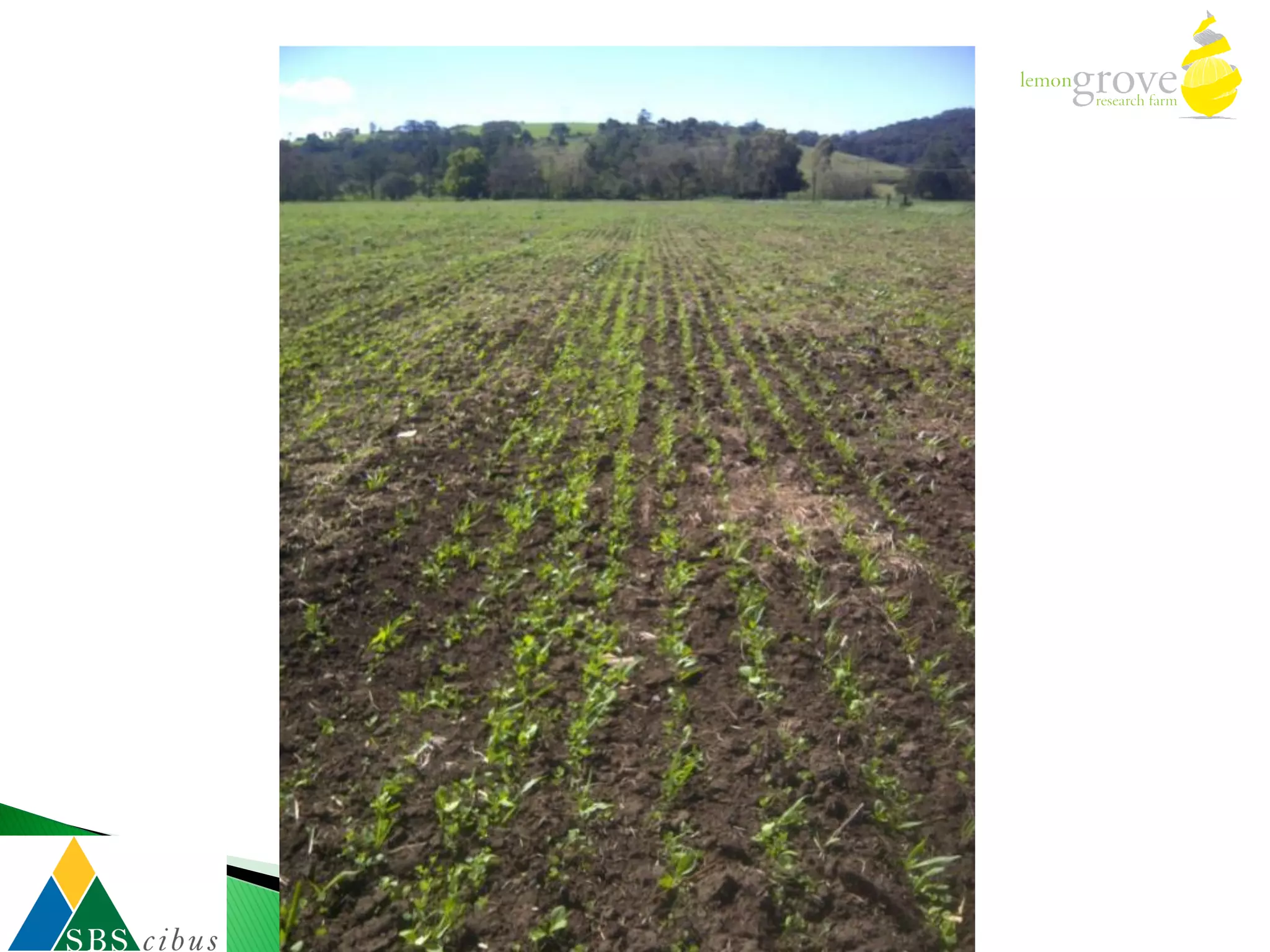
   Direct drill forage oats in late February
   Control broadleaf weeds, graze, fertilise
    ◦ Targeted >3 grazings before spraying out again in
      late winter
   Spray out late winter
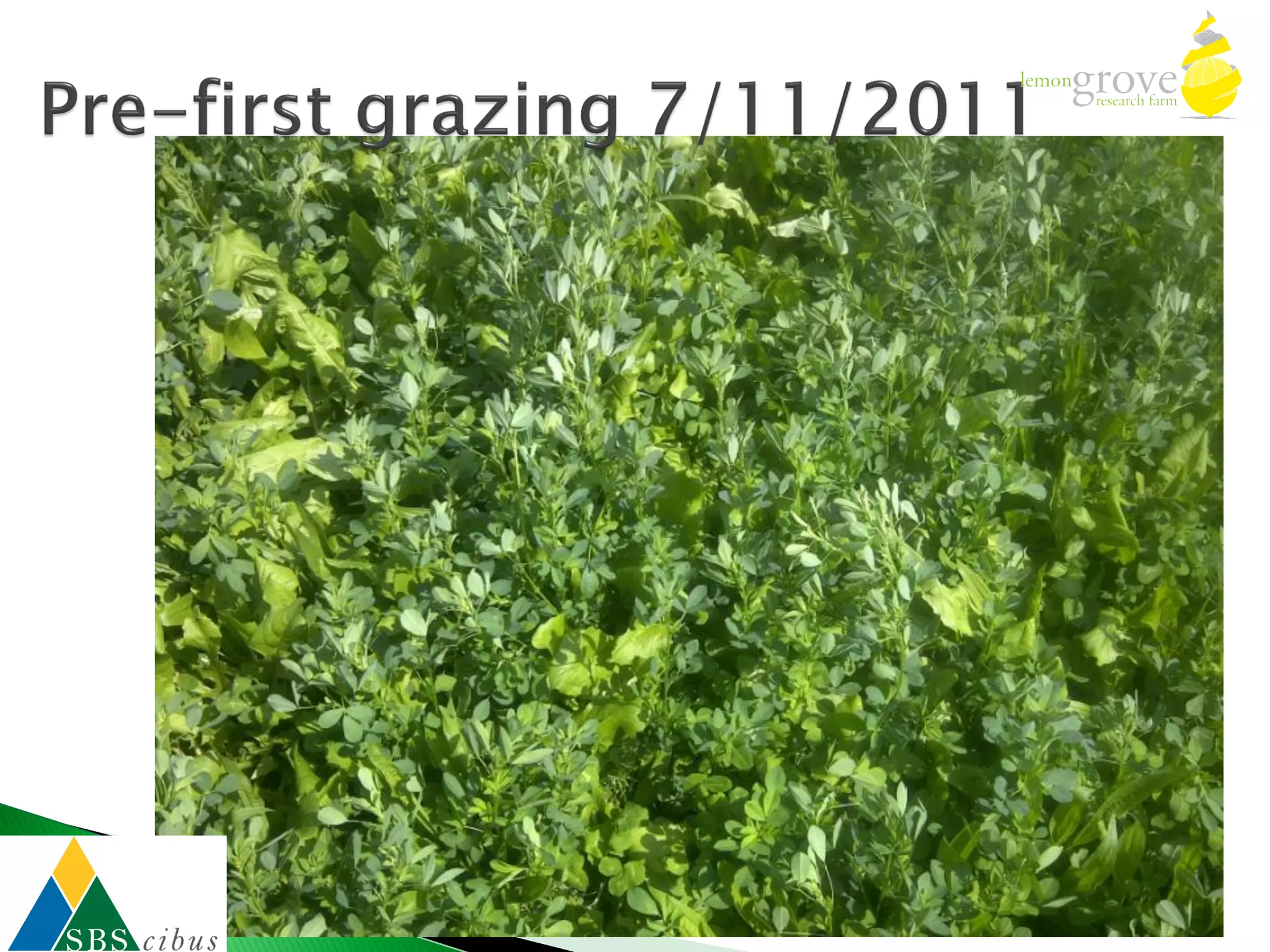
   Sow pasture mix in Late July/August
   Direct drill with disc seeder in early August
   Mix
    ◦   8.5kg/ha Stamina GT6 Lucerne
    ◦   4kg/ha Bulldog red clover
    ◦   1.5kg/ha Kopu II white clover
    ◦   1.5kg/ha Will ladino white clover
    ◦   2kg/ha Tonic Plantain
    ◦   2,5kg/ha Puna Chicory
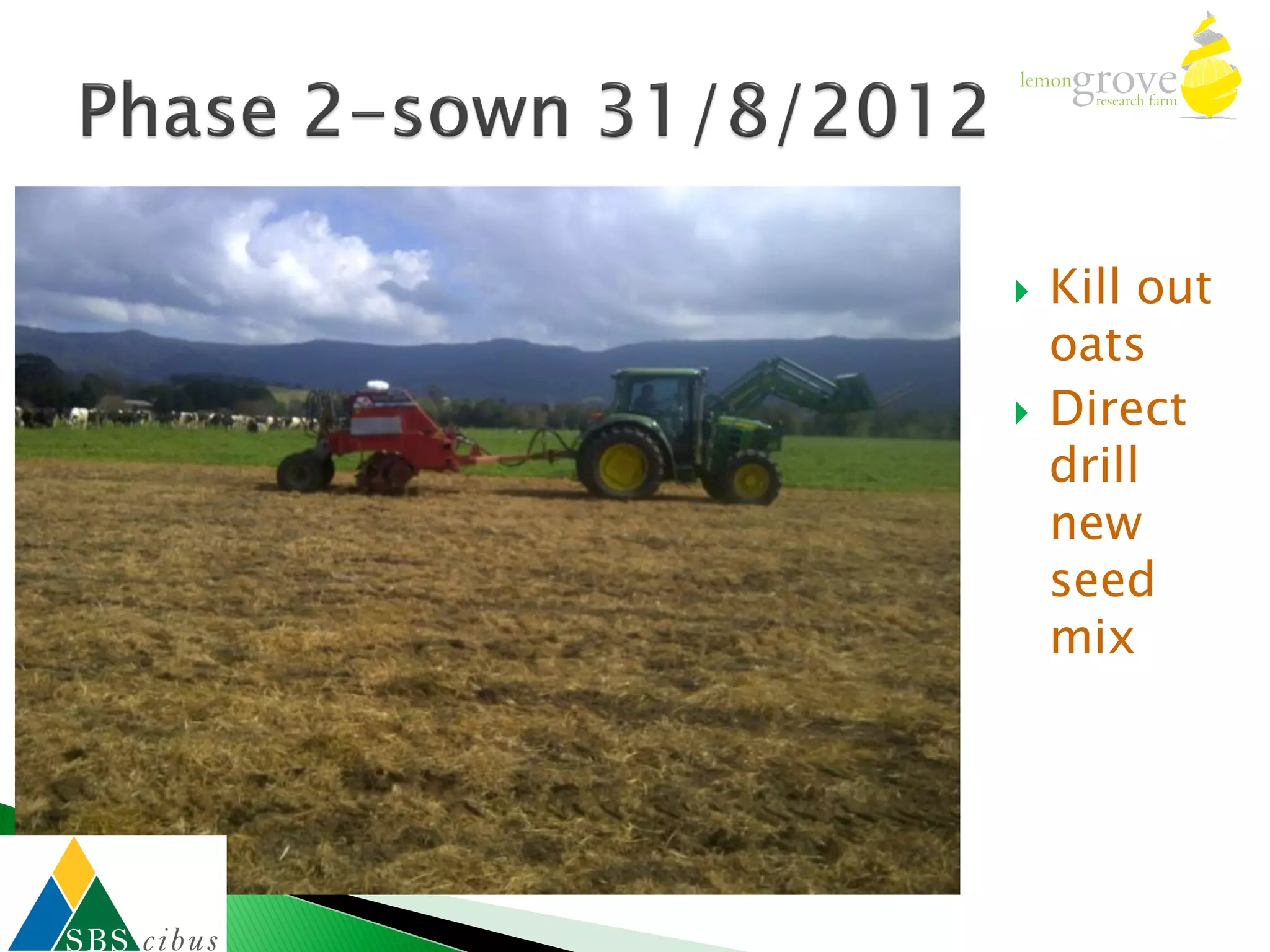
   Kill out
    oats
   Direct
    drill
    new
    seed
    mix
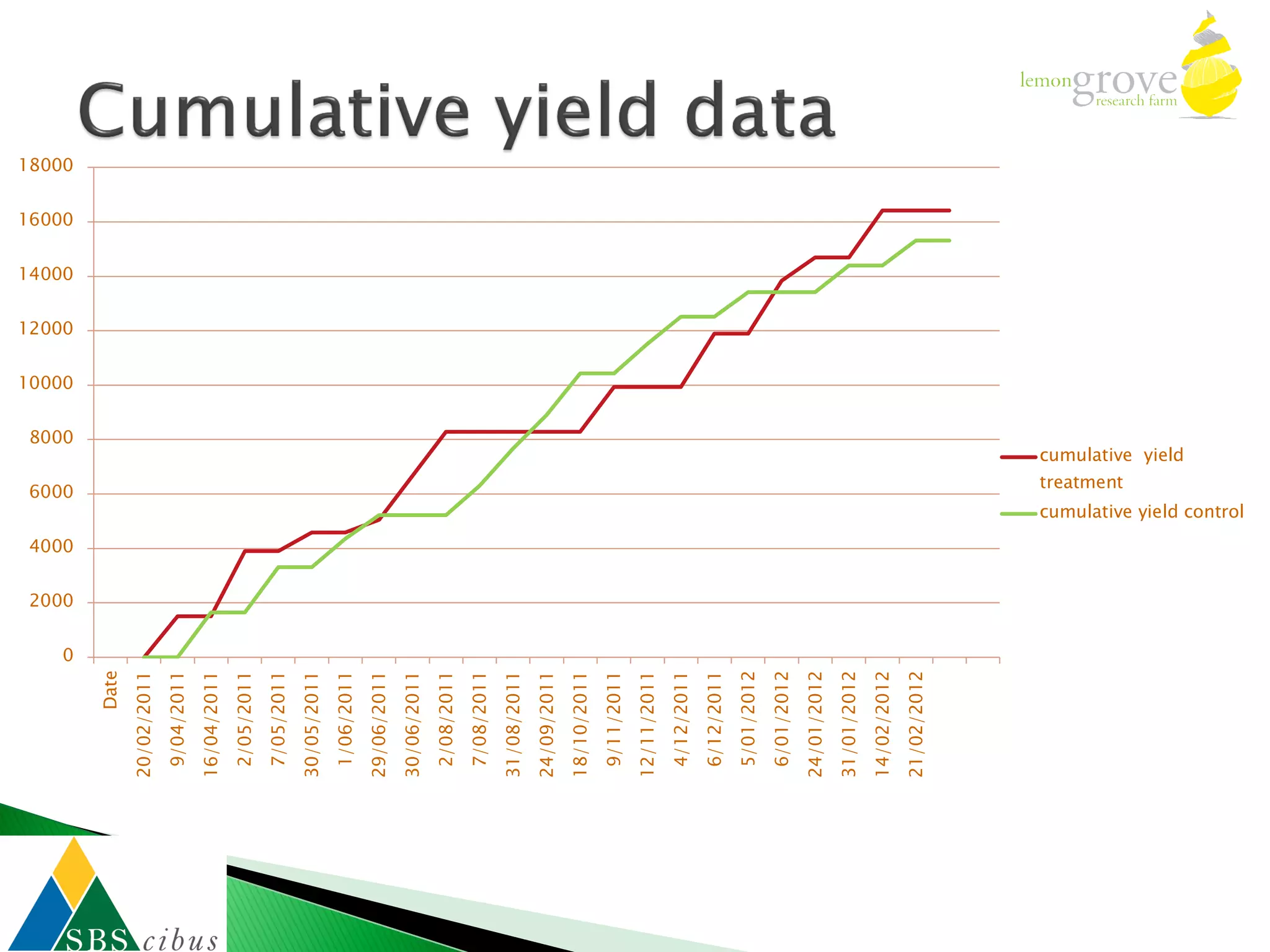
10000
                                                                                                 12000
                                                                                                         14000
                                                                                                                 16000
                                                                                                                         18000


                 2000
                                                   6000
                                                                                  8000


                        4000


             0
      Date
20/02/2011
 9/04/2011
16/04/2011
 2/05/2011
 7/05/2011
30/05/2011
 1/06/2011
29/06/2011
30/06/2011
 2/08/2011
 7/08/2011
31/08/2011
24/09/2011
18/10/2011
 9/11/2011
12/11/2011
 4/12/2011
 6/12/2011
 5/01/2012
 6/01/2012
24/01/2012
31/01/2012
14/02/2012
21/02/2012
                                                          treatment
                                                                      cumulative yield


                               cumulative yield control
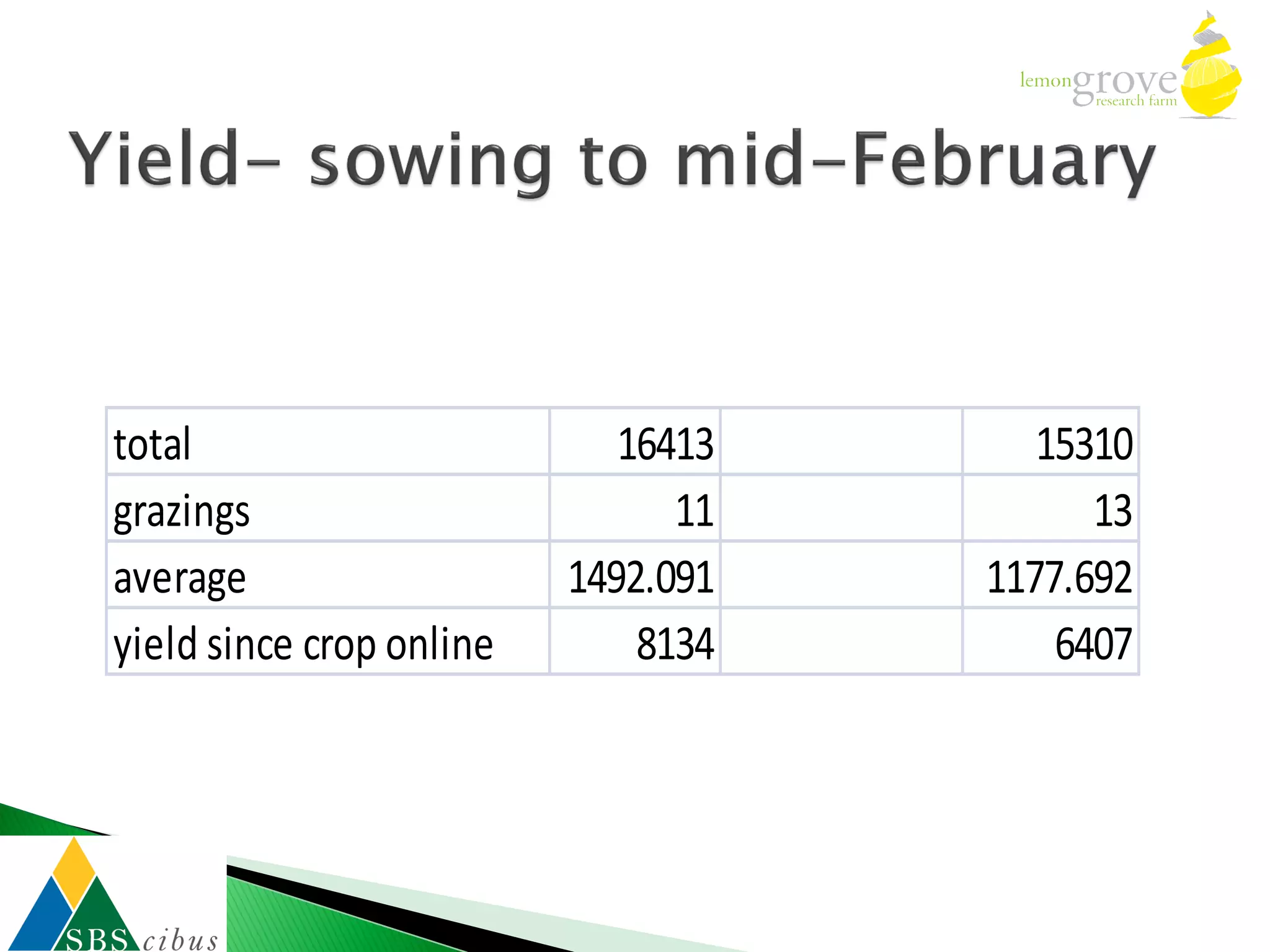
total                        16413      15310
grazings                        11         13
average                   1492.091   1177.692
yield since crop online       8134       6407
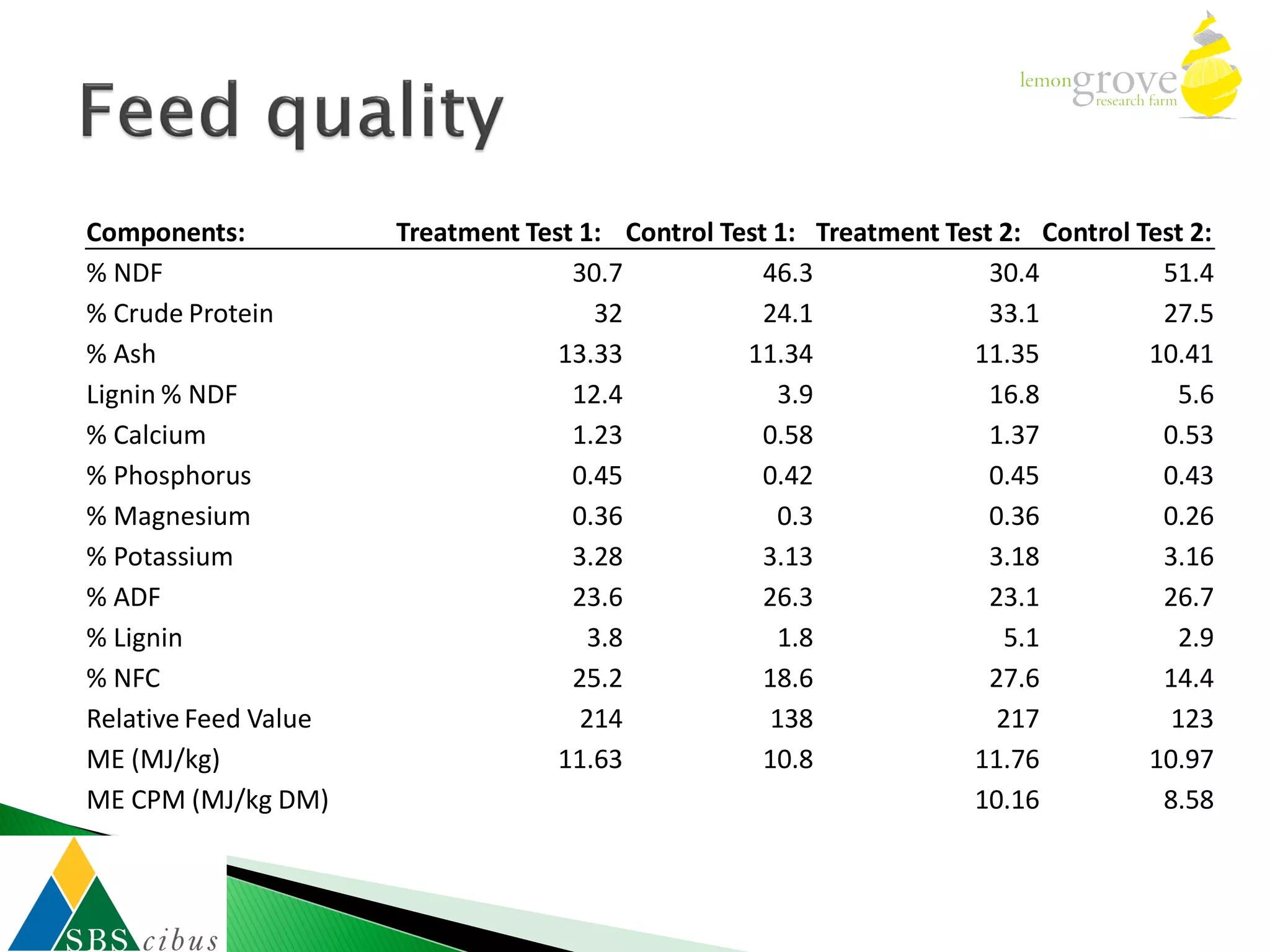
Components:           Treatment Test 1: Control Test 1: Treatment Test 2: Control Test 2:
% NDF                               30.7            46.3              30.4          51.4
% Crude Protein                       32            24.1              33.1          27.5
% Ash                              13.33          11.34             11.35          10.41
Lignin % NDF                        12.4             3.9              16.8           5.6
% Calcium                           1.23            0.58              1.37          0.53
% Phosphorus                        0.45            0.42              0.45          0.43
% Magnesium                         0.36             0.3              0.36          0.26
% Potassium                         3.28            3.13              3.18          3.16
% ADF                               23.6            26.3              23.1          26.7
% Lignin                              3.8            1.8               5.1           2.9
% NFC                               25.2            18.6              27.6          14.4
Relative Feed Value                  214             138               217           123
ME (MJ/kg)                         11.63            10.8            11.76          10.97
ME CPM (MJ/kg DM)                                                   10.16           8.58
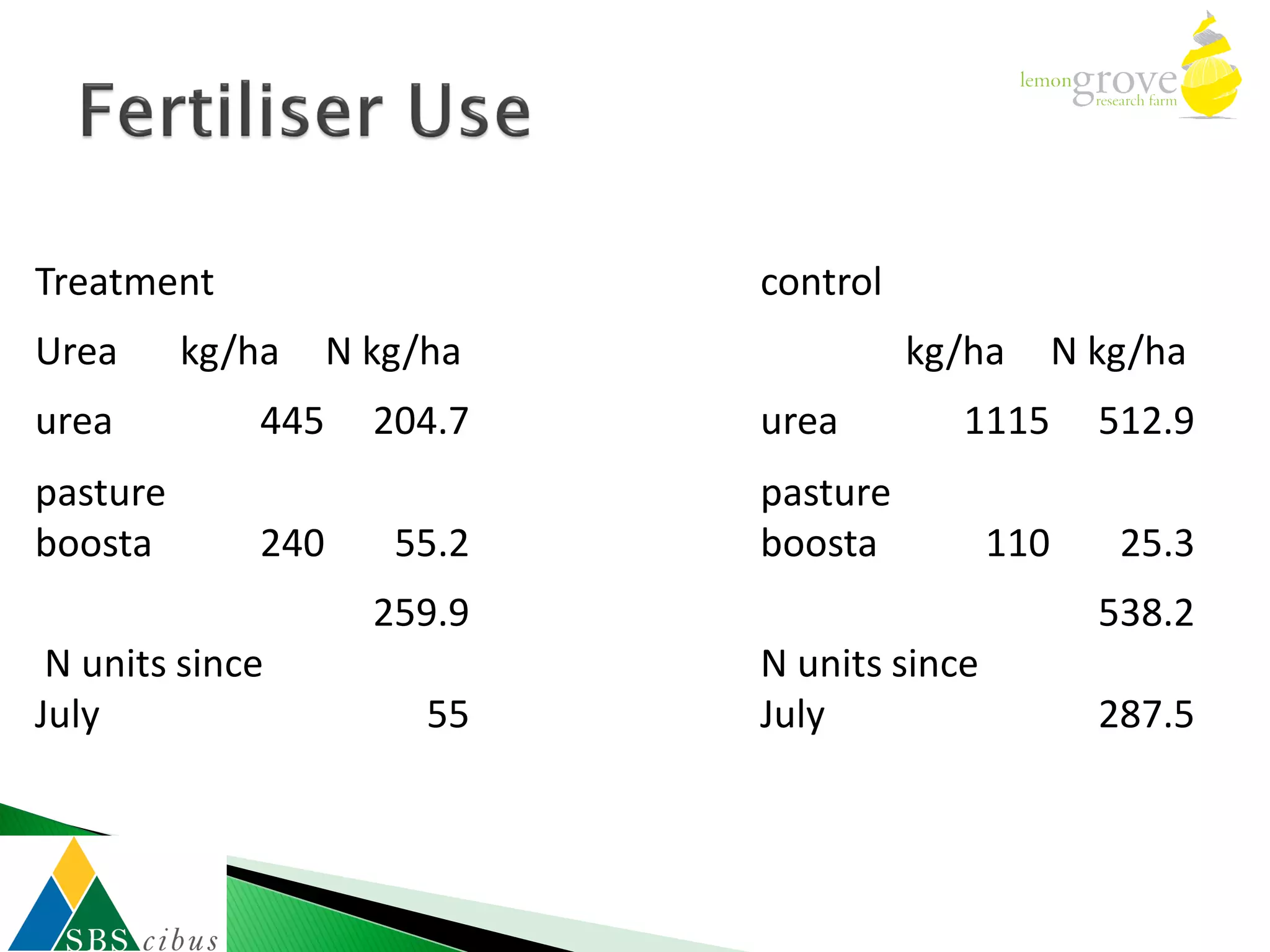
Treatment                     control
Urea      kg/ha     N kg/ha             kg/ha       N kg/ha
urea          445     204.7   urea        1115        512.9
pasture                       pasture
boosta        240      55.2   boosta          110      25.3
                      259.9                           538.2
 N units since                N units since
July                     55   July                    287.5
   Retain legume/herb stand for next 12
    months
   Continue summer grass control (Chem) and
    broad leaf (machinery)
   Oversow with PRG in Autumn 2013- aim for 2
    years from this
   Need to control broad leaf weeds in oats in Y1
   Need to be careful being too aggressive with
    annuals oversowing- lost plants in winter 1 with
    this
   Need to control grass weeds better in summer 1
    and 2- need to be prepared to take annual rye out
    in late November
   Need to be careful with N use and grazing
    management of ryegrasses when oversown
    ◦ Shading and competition risk
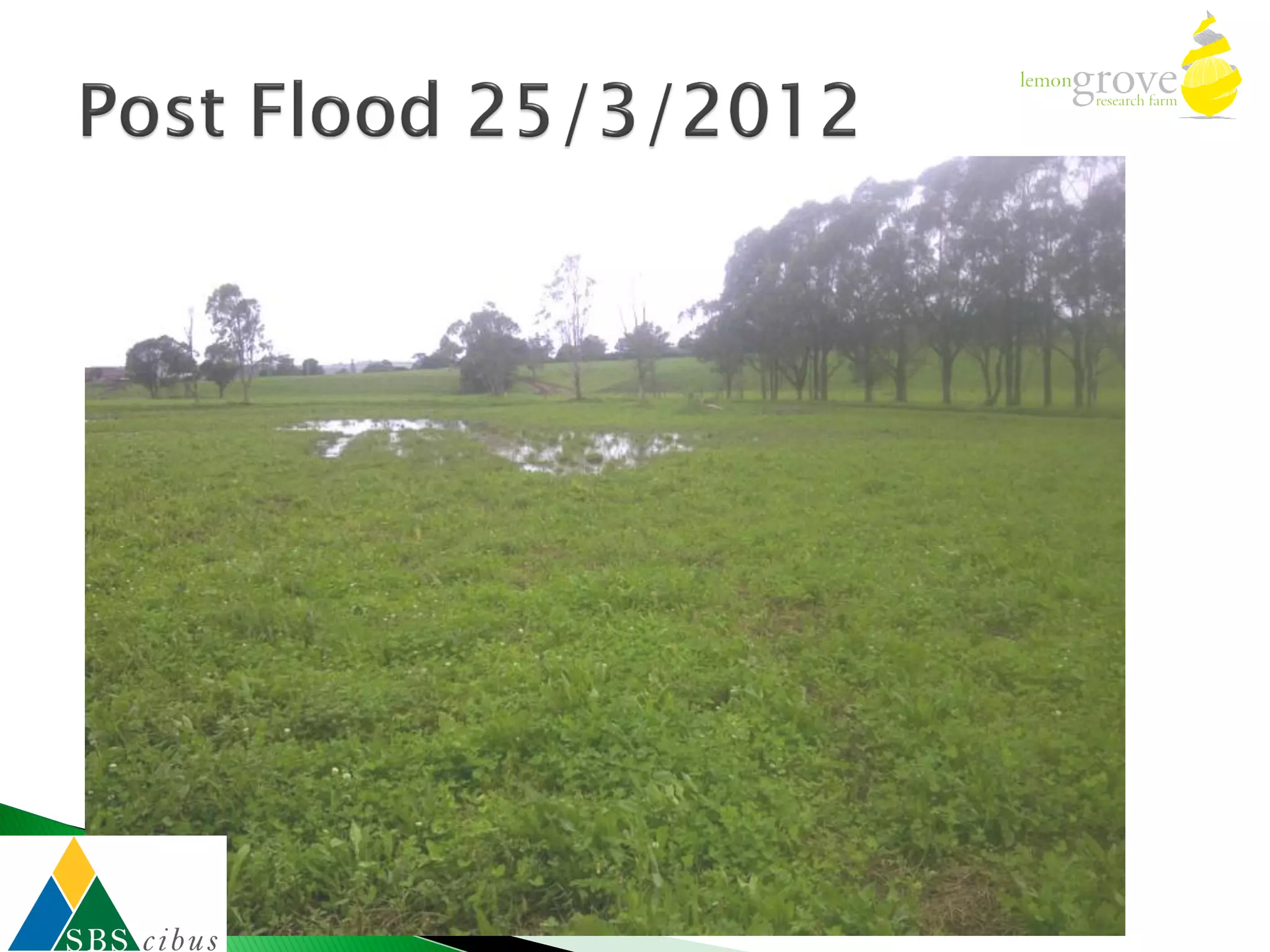
   Water-logging is major risk- drainage critical
   Need to improve effluent application
Pasture solutions that are good for cows, business and the environment

Pasture solutions that are good for cows, business and the environment

  • 1.
    Neil Moss BVScPhD Dip Vet Clin Stud SBScibus www.sbscibus.com.au
  • 3.
    To introduce you to our pasture program at Lemongrove  To show you around a little  To discuss what we are trying to achieve and how we are going about it  To present some data and to discuss some of our early findings
  • 4.
    Background- most coastal dairy pastures in kikuyu-ryegrass rotation ◦ Produces forage for most months of year ◦ High but variable yielding system ◦ Retains drought and weed resilliance of kikuyu base ◦ Resistant to wet weather and pugging  But! ◦ Needs resowing every year ◦ Highly dependent on nitrogen ◦ Shallow rooted ◦ Moderate summer feed quality
  • 5.
    Background ◦ Attempts made 10-15 years ago to replace kikuyu with perennial rye based pastures  Poor persistence  Grass weed invasion  Poor summer productivity  Endophyte issues  Poor growth in dry periods  Maybe we have been looking at the wrong perennial pasture options?
  • 6.
    Could work well if we can establish and maintain them  Much lower requirement for nitrogen  Could have a different growth curve to grass based pastures  Many are tap-rooted ◦ Deeper moisture and nutrient extraction  Could have excellent pasture quality in warmer months  May form part of a pasture portfolio-risk management benefits
  • 7.
    But! ◦ May have problems with broad leaf weeds ◦ Risks with water-logging ◦ Would need enough area for a constant rotation ◦ May not produce enough feed ◦ May need cultivation to establish effectively ◦ May not produce enough feed in winter ◦ Persistence issues? There is a need to know more!!
  • 8.
    Started to look at new options 7-8 years ago with innovative clients on the MNC
  • 10.
    Apparent success needed to be backed with data  Lemongrove Research Farm applied successfully through Caring for Country grant to allow a quantitative field study into these pastures  Project commenced beginning 2011
  • 11.
    We new that timing was important  We had stabilised a preparation strategy and sowing method  We had a good indication of the shape of the pasture curve and had looked at ways to address is deficiencies  We were achieving some fantastic feed quality with responses in the vat  We were using substantially less fertiliser
  • 12.
    Treatment and control paddocks selected ◦ Treatment – oats followed by legume/herb pasture ◦ Control- traditional kikuyu rye pastures  Soil tested  Preparation and sowing program defined  Get started!
  • 13.
    Pasture growth  Nutrients applied  Changes in soil chemistry  Feed quality  Milk production (anecdotal)  Chemical use  Soil moisture
  • 14.
    Knockdown herbicides in summer prior to crop- prefer 2 sprays  Remove trash if necessary  Direct drill forage oats in late February  Control broadleaf weeds, graze, fertilise ◦ Targeted >3 grazings before spraying out again in late winter  Spray out late winter  Sow pasture mix in Late July/August
  • 15.
    Direct drill with disc seeder in early August  Mix ◦ 8.5kg/ha Stamina GT6 Lucerne ◦ 4kg/ha Bulldog red clover ◦ 1.5kg/ha Kopu II white clover ◦ 1.5kg/ha Will ladino white clover ◦ 2kg/ha Tonic Plantain ◦ 2,5kg/ha Puna Chicory
  • 17.
    Kill out oats  Direct drill new seed mix
  • 26.
    10000 12000 14000 16000 18000 2000 6000 8000 4000 0 Date 20/02/2011 9/04/2011 16/04/2011 2/05/2011 7/05/2011 30/05/2011 1/06/2011 29/06/2011 30/06/2011 2/08/2011 7/08/2011 31/08/2011 24/09/2011 18/10/2011 9/11/2011 12/11/2011 4/12/2011 6/12/2011 5/01/2012 6/01/2012 24/01/2012 31/01/2012 14/02/2012 21/02/2012 treatment cumulative yield cumulative yield control
  • 27.
    total 16413 15310 grazings 11 13 average 1492.091 1177.692 yield since crop online 8134 6407
  • 28.
    Components: Treatment Test 1: Control Test 1: Treatment Test 2: Control Test 2: % NDF 30.7 46.3 30.4 51.4 % Crude Protein 32 24.1 33.1 27.5 % Ash 13.33 11.34 11.35 10.41 Lignin % NDF 12.4 3.9 16.8 5.6 % Calcium 1.23 0.58 1.37 0.53 % Phosphorus 0.45 0.42 0.45 0.43 % Magnesium 0.36 0.3 0.36 0.26 % Potassium 3.28 3.13 3.18 3.16 % ADF 23.6 26.3 23.1 26.7 % Lignin 3.8 1.8 5.1 2.9 % NFC 25.2 18.6 27.6 14.4 Relative Feed Value 214 138 217 123 ME (MJ/kg) 11.63 10.8 11.76 10.97 ME CPM (MJ/kg DM) 10.16 8.58
  • 29.
    Treatment control Urea kg/ha N kg/ha kg/ha N kg/ha urea 445 204.7 urea 1115 512.9 pasture pasture boosta 240 55.2 boosta 110 25.3 259.9 538.2 N units since N units since July 55 July 287.5
  • 30.
    Retain legume/herb stand for next 12 months  Continue summer grass control (Chem) and broad leaf (machinery)  Oversow with PRG in Autumn 2013- aim for 2 years from this
  • 31.
    Need to control broad leaf weeds in oats in Y1  Need to be careful being too aggressive with annuals oversowing- lost plants in winter 1 with this  Need to control grass weeds better in summer 1 and 2- need to be prepared to take annual rye out in late November  Need to be careful with N use and grazing management of ryegrasses when oversown ◦ Shading and competition risk  Water-logging is major risk- drainage critical  Need to improve effluent application