Narrative Nonfiction As a Door To 
Scaffolding Learning For Students 
from Diverse Backgrounds 
Alyson Beecher, Chair 
Cynthia Alaniz, Lisa Morris-Wilkey 
National Council of Teachers of English 
November 22, 2014
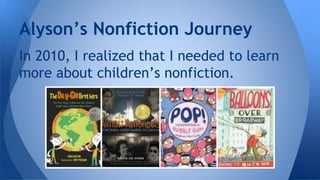
Alyson’s Nonfiction Journey 
In 2010, I realized that I needed to learn 
more about children’s nonfiction.
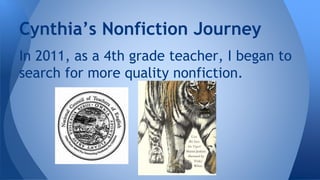
Cynthia’s Nonfiction Journey 
In 2011, as a 4th grade teacher, I began to 
search for more quality nonfiction.
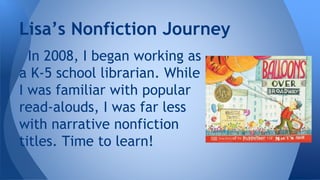
Lisa’s Nonfiction Journey 
In 2008, I began working as 
a K-5 school librarian. While 
I was familiar with popular 
read-alouds, I was far less 
with narrative nonfiction 
titles. Time to learn!
NCTE Orbis Pictus Award for 
Excellence in Nonfiction in Grades K-8 
Accuracy of Information 
- both text and illustrative material 
- appropriate documentation 
-avoidance of anthropomorphism 
-distinction between fact and theory 
-balanced treatment
Orbis Pictus Criteria 
Organization of Content 
- Contribute to clarity & accessibility? 
Potential to Enrichment K-8 Curriculum 
Style of Writing 
-engaging 
-distinctive in its use of language
Orbis Pictus Criteria 
Style of Illustration 
-engaging, informative & complements 
the text 
Book Design 
-appropriate based on the topic/subject 
-with respect to different age groups 
for which topic maybe be appropriate
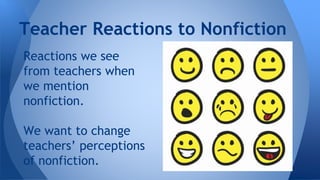
Teacher Reactions to Nonfiction 
Reactions we see 
from teachers when 
we mention 
nonfiction. 
We want to change 
teachers’ perceptions 
of nonfiction.
Narrative Nonfiction as a Gateway 
Can narrative nonfiction 
help us crossover to the 
world of nonfiction?
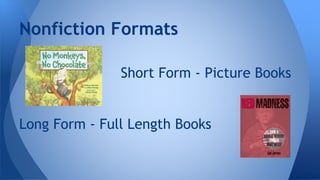
Nonfiction Formats 
Short Form - Picture Books 
Long Form - Full Length Books
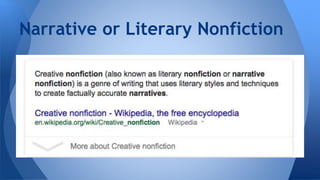
Narrative or Literary Nonfiction
Defining Nonfiction 
● accurate and factual 
● based on real people, places, events 
● includes biographies, essays, opinions, 
articles, memoirs 
● concept books, procedural texts, 
reference materials 
● addresses history, science, the arts
Importance of Nonfiction 
Nonfiction helps develop background 
knowledge (Marzano, 2000) 
Has the potential to motivate more reading 
as students can read about their interests 
(Caswell & Duke, 1998).
Importance of Nonfiction 
The final argument, and perhaps the most important 
one, is that the addition of informational text to 
classrooms adds to the possibilities of young children 
learning about the world around them - building 
content knowledge that can influence their future 
sense-making of texts and also build their knowledge 
of world. (Maloch and Bomer, 2013)
Turn and talk: 
“So here is my modest proposition--that 
narrative is the deep structure of all good 
writing. All good writing.” - Thomas 
Newkirk, 2012. 
Agree or disagree? Why or why not?
Understanding Nonfiction Writing 
Styles 
Narrative 
Expository 
Persuasive
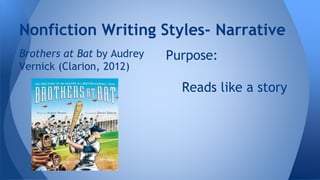
Nonfiction Writing Styles- Narrative 
Brothers at Bat by Audrey 
Vernick (Clarion, 2012) 
Purpose: 
Reads like a story
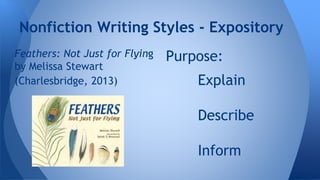
Nonfiction Writing Styles - Expository 
Feathers: Not Just for Flying 
by Melissa Stewart 
(Charlesbridge, 2013) 
Purpose: 
Explain 
Describe 
Inform
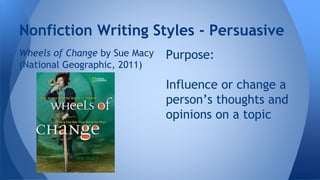
Nonfiction Writing Styles - Persuasive 
Wheels of Change by Sue Macy 
(National Geographic, 2011) 
Purpose: 
Influence or change a 
person’s thoughts and 
opinions on a topic
Nonfiction Writing Structures 
Cause & Effect 
Problem and Solution 
Question and Answer 
Compare and Contrast 
Description 
Sequence or Time Order 
Using Examples (Exemplification) 
Combination of the Above
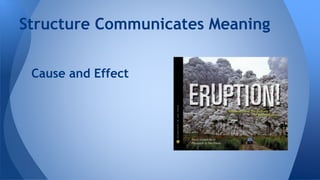
Structure Communicates Meaning 
Cause and Effect
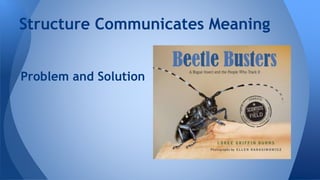
Structure Communicates Meaning 
Problem and Solution
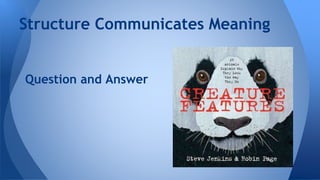
Structure Communicates Meaning 
Question and Answer
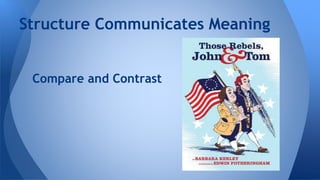
Structure Communicates Meaning 
Compare and Contrast
Structure Communicates Meaning 
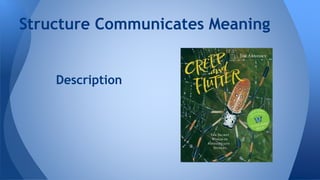
Description
Structure Communicates Meaning 
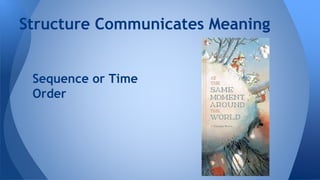
Sequence or Time 
Order
Structure Communicates Meaning 
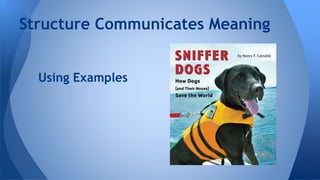
Using Examples
Use of Nonfiction Writing Styles & 
Structure in the Classroom 
● Interactive Read Alouds with Nonfiction 
● Using Nonfiction as Mentor Text for Writing 
● Nonfiction for Building Vocabulary for ELLs 
● Teaching Research Skills - Primary & Secondary 
Sources
Classroom Application 
● conferring with readers 
● book discussion groups 
● projects based on interests: 
example: Genius Hour 
● scavenger hunts
Using Nonfiction Across the Curriculum 
history 
math 
science 
art 
music 
social 
studies
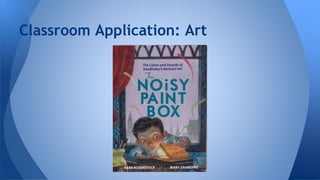
Classroom Application: Art
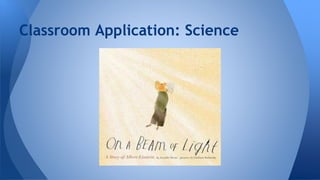
Classroom Application: Science
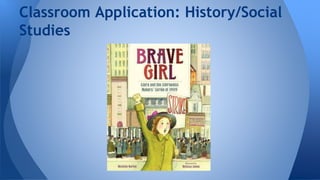
Classroom Application: History/Social 
Studies
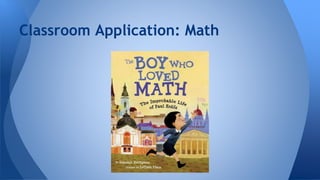
Classroom Application: Math
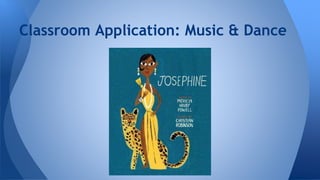
Classroom Application: Music & Dance
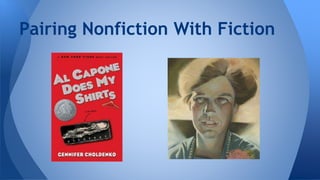
Pairing Nonfiction With Fiction
School librarians Supporting Classroom 
Teachers 
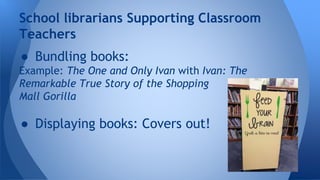
● Bundling books: 
Example: The One and Only Ivan with Ivan: The 
Remarkable True Story of the Shopping 
Mall Gorilla 
● Displaying books: Covers out!
Librarians supporting teachers 
● Offering alternatives to favorites 
● Creating “Resource Lists” or pathfinders 
● Promoting books via newsletter (Smore) 
● Book Talking at faculty meetings
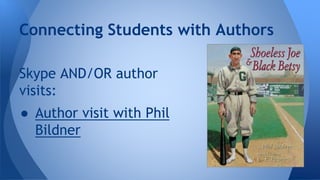
Connecting Students with Authors 
Skype AND/OR author 
visits: 
● Author visit with Phil 
Bildner
Book Gap Challenge: Nonfiction 
Is this one of your book gaps? 
Have you seen the new nonfiction that is 
available? (more engaging and dynamic) 
Where do you start?
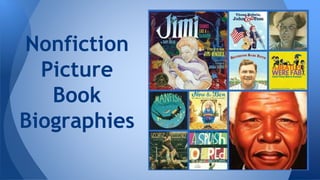
Nonfiction 
Picture 
Book 
Biographies
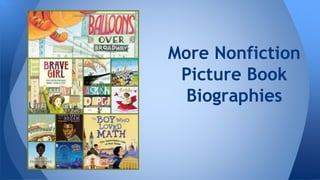
More Nonfiction 
Picture Book 
Biographies
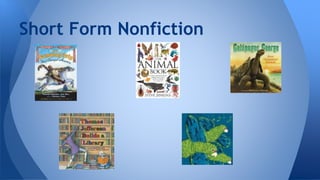
Short Form Nonfiction
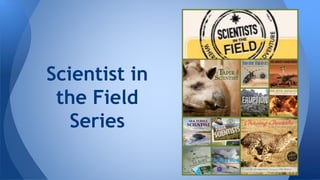
Scientist in 
the Field 
Series
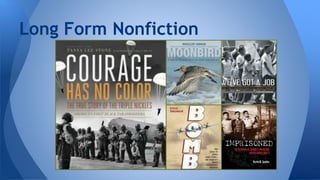
Long Form Nonfiction
Websites & Blogs 
Celebrate Science (Melissa Stewart) - http://celebratescience.blogspot.com/ 
The Nonfiction Detectives - http://www.nonfictiondetectives.com/ 
The Uncommon Corps - http://nonfictionandthecommoncore.blogspot.com/ 
The Classroom Bookshelf - http://www.classroombookshelf.blogspot.com/ 
Kid Lit Frenzy/Nonfiction Picture Book Challenge - 
http://www.kidlitfrenzy.com/ 
Scientists in the Field - http://www.sciencemeetsadventure.com/ 
There’s a Book For That Blog - http://thereisabookforthat.com/
Award Lists for Nonfiction 
AAAS/Subaru Prizes for Excellence in Science Books 
http://www.sbfonline.com/Subaru/Pages/2014Finalists.aspx 
ALA Robert F. Sibert Informational Book Award 
http://www.ala.org/alsc/awardsgrants/bookmedia/sibertmedal/sibertpast/s 
ibertmedalpast 
CRA Eureka! Nonfiction Children’s Book Award 
http://www.californiareads.org/display.asp?p=awards_eureka
Award Lists for Nonfiction 
Cook Prize for STEM Picture Book 
http://bankstreet.edu/center-childrens-literature/cook-prize/ 
Cooperative Children’s Book Center Choices List 
http://ccbc.education.wisc.edu/books/choices.asp 
Cybils Nonfiction for Young Adult 
http://www.cybils.com/2013/12/2013-finalists-young-adult-non-fiction.html 
Cybils Nonfiction: Elementary & Middle Grade 
http://www.cybils.com/2013/12/2013-finalists-middle-grade-non-fiction.html
Award Lists for Nonfiction 
NCTE Orbis Pictus Award for Outstanding Nonfiction for Children 
http://www.ncte.org/awards/orbispictus 
NCSS - Notable Social Studies Trade Books for Young People 
http://www.socialstudies.org/notable 
NSTA-CBC Outstanding Science Trade Books for Students K-12 
http://www.nsta.org/publications/ostb/ 
YALSA Award for Excellence in Nonfiction for Young Adults 
http://www.ala.org/yalsa/nonfiction
Questions & Answers
Presentation Online 
http://slidesha.re/1zM0NFg
References 
Caswell, N.J. and Duke, N.K. (1998) Nonfiction as a catalyst for literacy development. Language 
Arts, 75 (108-117). 
Goodwin, B. and Miller, K. (2013) Research Says/Nonfiction Promotes Student Success. Educational 
Leadership, 70 (80-82) 
Maloch, B. and Bomer, R. (2013) Informational Texts and the Common Core State Standards: What 
are we talking about, anyway? Language Arts, 90 (205-213). 
Moehlman, J. (2013). Helping students navigate nonfiction text: Paving the way toward 
understanding. Science Scope, 36(5). 
Newkirk, T. (2012). How we really comprehend nonfiction. Educational Leadership, 69(6), 28-32. 
Retrieved Nov. 17, 2014 from http://www.ncte.org/standards/ncte-ira 
Robb, L. *2002) Multiple texts: multiple opportunities for teaching and learning. Voices from the 
Middle. 9(4), 68-73.
Contact Us 
Cynthia Alaniz, Elementary Teacher-Librarian, Coppell Independent 
School District, TX 
email: cynalaniz@gmail.com Twitter: @utalaniz 
Alyson Beecher, Literacy Specialist, Pasadena Unified School District, 
CA 
email: beecher.alyson@gmail.com Twitter: @alybee930 
Lisa Morris-Wilkey, Librarian, Casa Grande Union High School, AZ 
email: lisamorriswilkey@gmail.com Twitter: @LMWArizona

Ncte14 nf narrativepresentation

  • 1.
    Narrative Nonfiction Asa Door To Scaffolding Learning For Students from Diverse Backgrounds Alyson Beecher, Chair Cynthia Alaniz, Lisa Morris-Wilkey National Council of Teachers of English November 22, 2014
  • 2.
    Alyson’s Nonfiction Journey In 2010, I realized that I needed to learn more about children’s nonfiction.
  • 3.
    Cynthia’s Nonfiction Journey In 2011, as a 4th grade teacher, I began to search for more quality nonfiction.
  • 4.
    Lisa’s Nonfiction Journey In 2008, I began working as a K-5 school librarian. While I was familiar with popular read-alouds, I was far less with narrative nonfiction titles. Time to learn!
  • 5.
    NCTE Orbis PictusAward for Excellence in Nonfiction in Grades K-8 Accuracy of Information - both text and illustrative material - appropriate documentation -avoidance of anthropomorphism -distinction between fact and theory -balanced treatment
  • 6.
    Orbis Pictus Criteria Organization of Content - Contribute to clarity & accessibility? Potential to Enrichment K-8 Curriculum Style of Writing -engaging -distinctive in its use of language
  • 7.
    Orbis Pictus Criteria Style of Illustration -engaging, informative & complements the text Book Design -appropriate based on the topic/subject -with respect to different age groups for which topic maybe be appropriate
  • 8.
    Teacher Reactions toNonfiction Reactions we see from teachers when we mention nonfiction. We want to change teachers’ perceptions of nonfiction.
  • 9.
    Narrative Nonfiction asa Gateway Can narrative nonfiction help us crossover to the world of nonfiction?
  • 10.
    Nonfiction Formats ShortForm - Picture Books Long Form - Full Length Books
  • 11.
  • 12.
    Defining Nonfiction ●accurate and factual ● based on real people, places, events ● includes biographies, essays, opinions, articles, memoirs ● concept books, procedural texts, reference materials ● addresses history, science, the arts
  • 13.
    Importance of Nonfiction Nonfiction helps develop background knowledge (Marzano, 2000) Has the potential to motivate more reading as students can read about their interests (Caswell & Duke, 1998).
  • 14.
    Importance of Nonfiction The final argument, and perhaps the most important one, is that the addition of informational text to classrooms adds to the possibilities of young children learning about the world around them - building content knowledge that can influence their future sense-making of texts and also build their knowledge of world. (Maloch and Bomer, 2013)
  • 15.
    Turn and talk: “So here is my modest proposition--that narrative is the deep structure of all good writing. All good writing.” - Thomas Newkirk, 2012. Agree or disagree? Why or why not?
  • 16.
    Understanding Nonfiction Writing Styles Narrative Expository Persuasive
  • 17.
    Nonfiction Writing Styles-Narrative Brothers at Bat by Audrey Vernick (Clarion, 2012) Purpose: Reads like a story
  • 18.
    Nonfiction Writing Styles- Expository Feathers: Not Just for Flying by Melissa Stewart (Charlesbridge, 2013) Purpose: Explain Describe Inform
  • 19.
    Nonfiction Writing Styles- Persuasive Wheels of Change by Sue Macy (National Geographic, 2011) Purpose: Influence or change a person’s thoughts and opinions on a topic
  • 20.
    Nonfiction Writing Structures Cause & Effect Problem and Solution Question and Answer Compare and Contrast Description Sequence or Time Order Using Examples (Exemplification) Combination of the Above
  • 21.
  • 22.
    Structure Communicates Meaning Problem and Solution
  • 23.
    Structure Communicates Meaning Question and Answer
  • 24.
    Structure Communicates Meaning Compare and Contrast
  • 25.
  • 26.
    Structure Communicates Meaning Sequence or Time Order
  • 27.
  • 28.
    Use of NonfictionWriting Styles & Structure in the Classroom ● Interactive Read Alouds with Nonfiction ● Using Nonfiction as Mentor Text for Writing ● Nonfiction for Building Vocabulary for ELLs ● Teaching Research Skills - Primary & Secondary Sources
  • 29.
    Classroom Application ●conferring with readers ● book discussion groups ● projects based on interests: example: Genius Hour ● scavenger hunts
  • 30.
    Using Nonfiction Acrossthe Curriculum history math science art music social studies
  • 31.
  • 32.
  • 33.
  • 34.
  • 35.
  • 36.
  • 37.
    School librarians SupportingClassroom Teachers ● Bundling books: Example: The One and Only Ivan with Ivan: The Remarkable True Story of the Shopping Mall Gorilla ● Displaying books: Covers out!
  • 38.
    Librarians supporting teachers ● Offering alternatives to favorites ● Creating “Resource Lists” or pathfinders ● Promoting books via newsletter (Smore) ● Book Talking at faculty meetings
  • 39.
    Connecting Students withAuthors Skype AND/OR author visits: ● Author visit with Phil Bildner
  • 40.
    Book Gap Challenge:Nonfiction Is this one of your book gaps? Have you seen the new nonfiction that is available? (more engaging and dynamic) Where do you start?
  • 41.
  • 42.
    More Nonfiction PictureBook Biographies
  • 43.
  • 44.
    Scientist in theField Series
  • 45.
  • 46.
    Websites & Blogs Celebrate Science (Melissa Stewart) - http://celebratescience.blogspot.com/ The Nonfiction Detectives - http://www.nonfictiondetectives.com/ The Uncommon Corps - http://nonfictionandthecommoncore.blogspot.com/ The Classroom Bookshelf - http://www.classroombookshelf.blogspot.com/ Kid Lit Frenzy/Nonfiction Picture Book Challenge - http://www.kidlitfrenzy.com/ Scientists in the Field - http://www.sciencemeetsadventure.com/ There’s a Book For That Blog - http://thereisabookforthat.com/
  • 47.
    Award Lists forNonfiction AAAS/Subaru Prizes for Excellence in Science Books http://www.sbfonline.com/Subaru/Pages/2014Finalists.aspx ALA Robert F. Sibert Informational Book Award http://www.ala.org/alsc/awardsgrants/bookmedia/sibertmedal/sibertpast/s ibertmedalpast CRA Eureka! Nonfiction Children’s Book Award http://www.californiareads.org/display.asp?p=awards_eureka
  • 48.
    Award Lists forNonfiction Cook Prize for STEM Picture Book http://bankstreet.edu/center-childrens-literature/cook-prize/ Cooperative Children’s Book Center Choices List http://ccbc.education.wisc.edu/books/choices.asp Cybils Nonfiction for Young Adult http://www.cybils.com/2013/12/2013-finalists-young-adult-non-fiction.html Cybils Nonfiction: Elementary & Middle Grade http://www.cybils.com/2013/12/2013-finalists-middle-grade-non-fiction.html
  • 49.
    Award Lists forNonfiction NCTE Orbis Pictus Award for Outstanding Nonfiction for Children http://www.ncte.org/awards/orbispictus NCSS - Notable Social Studies Trade Books for Young People http://www.socialstudies.org/notable NSTA-CBC Outstanding Science Trade Books for Students K-12 http://www.nsta.org/publications/ostb/ YALSA Award for Excellence in Nonfiction for Young Adults http://www.ala.org/yalsa/nonfiction
  • 50.
  • 51.
  • 52.
    References Caswell, N.J.and Duke, N.K. (1998) Nonfiction as a catalyst for literacy development. Language Arts, 75 (108-117). Goodwin, B. and Miller, K. (2013) Research Says/Nonfiction Promotes Student Success. Educational Leadership, 70 (80-82) Maloch, B. and Bomer, R. (2013) Informational Texts and the Common Core State Standards: What are we talking about, anyway? Language Arts, 90 (205-213). Moehlman, J. (2013). Helping students navigate nonfiction text: Paving the way toward understanding. Science Scope, 36(5). Newkirk, T. (2012). How we really comprehend nonfiction. Educational Leadership, 69(6), 28-32. Retrieved Nov. 17, 2014 from http://www.ncte.org/standards/ncte-ira Robb, L. *2002) Multiple texts: multiple opportunities for teaching and learning. Voices from the Middle. 9(4), 68-73.
  • 53.
    Contact Us CynthiaAlaniz, Elementary Teacher-Librarian, Coppell Independent School District, TX email: cynalaniz@gmail.com Twitter: @utalaniz Alyson Beecher, Literacy Specialist, Pasadena Unified School District, CA email: beecher.alyson@gmail.com Twitter: @alybee930 Lisa Morris-Wilkey, Librarian, Casa Grande Union High School, AZ email: lisamorriswilkey@gmail.com Twitter: @LMWArizona

Editor's Notes

  • #2 Alyson: Introduction to each presenter. Each of us are passionate readers. We read picture books to young adult, fiction and nonfiction and in all formats. However each of
  • #3 Alyson: I am thinking about something where we each talk about what led us to show more interest in children’s nonfiction. - My story started in 2010 and then really took off with the 2012 NF Picture Book Challenge.
  • #4 Reaction as I read from Can We Save the Tiger was incredible! Cynthia
  • #5 Lisa
  • #6 LISA Do we want to add a slide and talk about Nonfiction vs. Historical Fiction or checking for errors? Lisa: We can. We can also talk about why it’s important to look at the “best of” lists and award winners … they do the fact-checking for you.
  • #7 LISA
  • #8 LISA
  • #9 LISA
  • #10 For most Language Arts teachers,it seems that the world of fiction is where we feel most at home. Fiction is typically perceived as being easier to use for Read Alouds. CYNTHIA
  • #11 CYNTHIA
  • #12 CYNTHIA
  • #13 LISA
  • #14 CYNTHIA
  • #15 LISA
  • #16 Turn & Talk - Cynthia
  • #17 I have toyed around with descriptive and poetry but have come down to really these 3 styles - poetry can go under narrative and descriptive - well narrative and expository if well written are descriptive LISA
  • #18 LISA
  • #19 CYNTHIA
  • #20 CYNTHIA
  • #21 This online presentation had some information to consider - These text structures come from CCSS - sorry Cynthia but if you want to change them we can. :-) No, that is fine! But what online presentation are you talking about? - Cynthia - It was a link that I added to our google doc here: http://www.syracusecityschools.com/tfiles/folder717/NonfictionHandbookTextStructure.pdf and I remember seeing it in something more official but can’t find it right now - AB
  • #22 AB
  • #23 A Boy and A Jaguar AB
  • #24 AB
  • #25 Those Rebels John & Tom AB
  • #26 AB
  • #27 Thomas Payne or Family Romanov or Just Seconds AB
  • #28 AB
  • #29 Just starting a list of ways to use it - then we can flesh it out AB
  • #30 Cynthia
  • #31 Cynthia
  • #32 Cynthia
  • #33 Lisa
  • #35 AB
  • #36 AB
  • #37 ALYSON: Talk about Perfect Pairs; Pairing nonfiction picture books to fiction novels, Nonfiction in ELA - how does NF work to complement Fiction
  • #38 CYNTHIA/LISA
  • #39 CYNTHIA/LISA
  • #40 Authors discuss journey of research and influences on their writing Cynthia
  • #41 Aly
  • #44 Book Talking Titles
  • #46 Book Talking Titles - I can do more titles and images. - Lisa let me know if you want other books or things swapped out.
  • #47 Are there other blogs or websites that are super for nonfiction and post regularly? AB
  • #48 LISA
  • #49 Lisa
  • #50 Add NCSS Notable Social Studies Trade Books for Young People www.socialstudies.org/notable?