N A V I G A T I N G T H E
C Y B E R R O O T R I S K A D V I S O R Y
D A T A
P R I V A C Y
L A N D S C A P E
In an era where data is a valuable asset, safeguarding
individuals’ and organizations’ personal information
has become a paramount concern.
This article presents a comprehensive guide to
understanding data privacy, its significance, best
practices, and the legal landscape that shapes its
framework.
Data privacy pertains to the protection of personal and
sensitive information from unauthorized access, use, or
disclosure. It encompasses the principles and practices
that ensure individuals have control over their data and
how it is collected and used.
01 U N D E R S T A N D I N G D A T A
P R I V A C Y :
a. Individual Rights:
02 T H E S I G N I F I C A N C E O F D A T A
P R I V A C Y :
Data privacy upholds individuals’ rights to control their personal information, fostering
trust between consumers and organizations.
b. Trust and Reputation:
Maintaining data privacy enhances an organization’s reputation, fostering customer trust
and loyalty.
c. Legal Compliance:
Adhering to data privacy laws prevents legal consequences and potential fines.
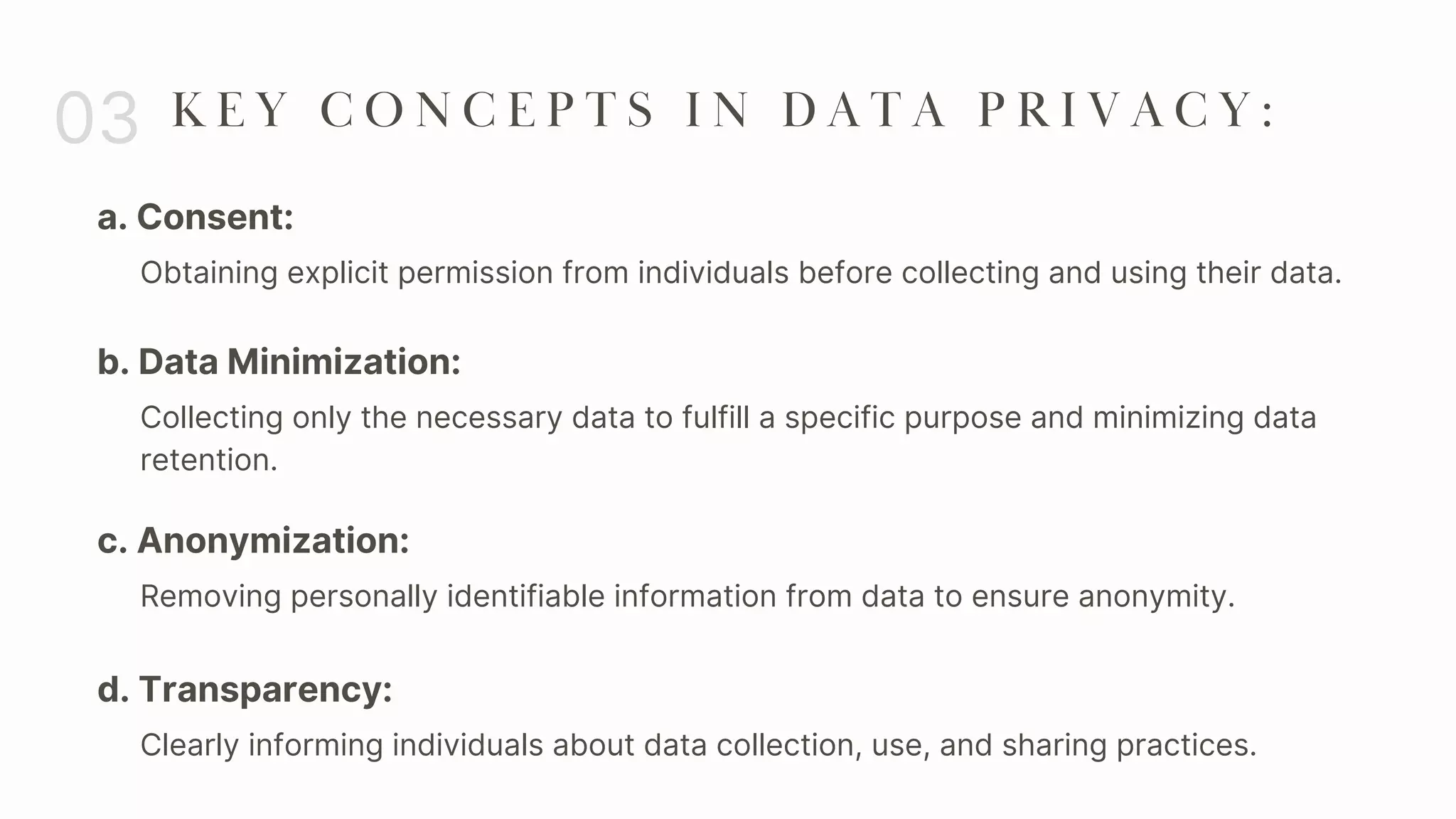
a. Consent:
03 K E Y C O N C E P T S I N D A T A P R I V A C Y :
Obtaining explicit permission from individuals before collecting and using their data.
b. Data Minimization:
Collecting only the necessary data to fulfill a specific purpose and minimizing data
retention.
c. Anonymization:
Removing personally identifiable information from data to ensure anonymity.
d. Transparency:
Clearly informing individuals about data collection, use, and sharing practices.
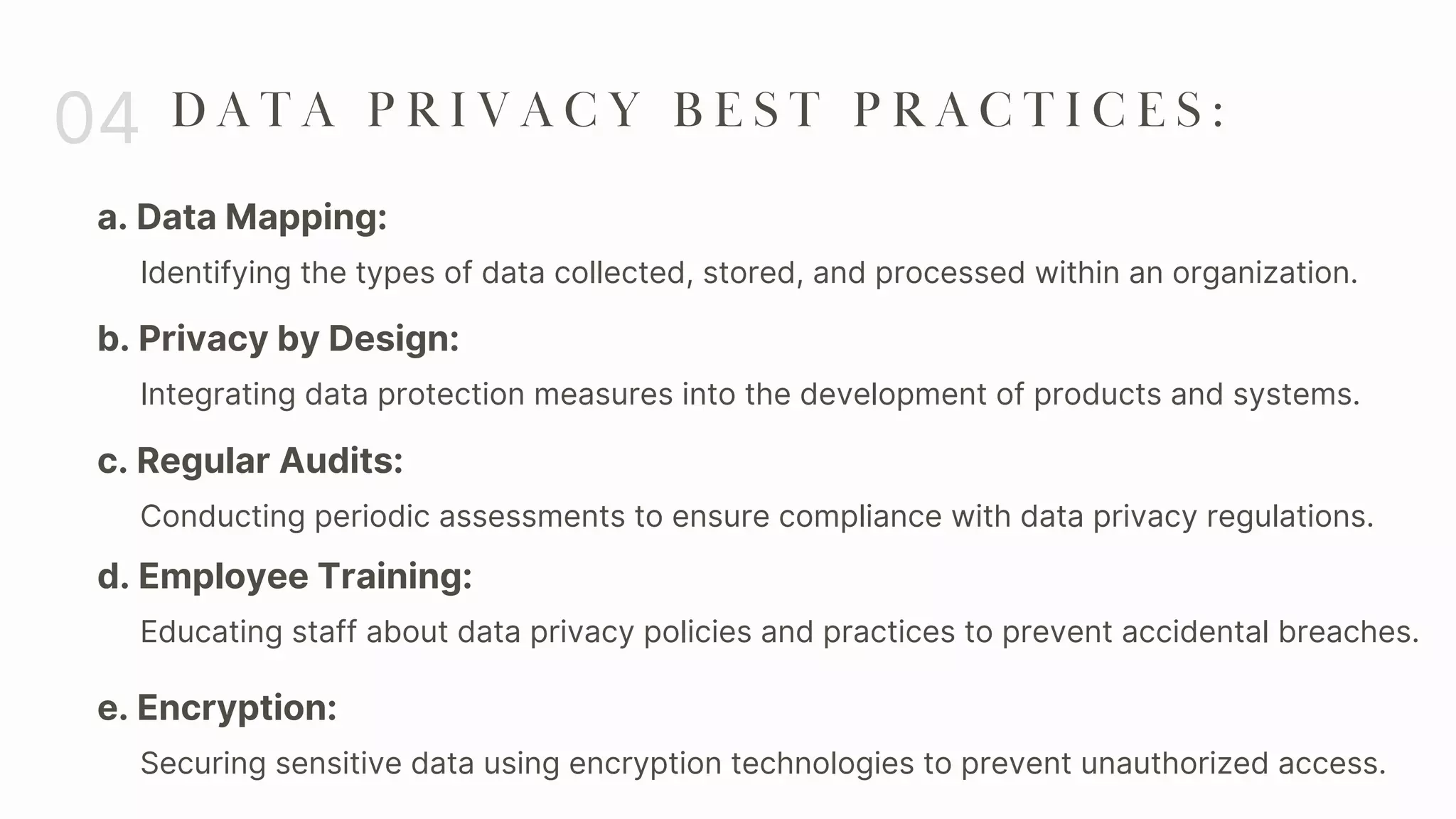
a. Data Mapping:
04 D A T A P R I V A C Y B E S T P R A C T I C E S :
Identifying the types of data collected, stored, and processed within an organization.
b. Privacy by Design:
Integrating data protection measures into the development of products and systems.
c. Regular Audits:
Conducting periodic assessments to ensure compliance with data privacy regulations.
d. Employee Training:
Educating staff about data privacy policies and practices to prevent accidental breaches.
e. Encryption:
Securing sensitive data using encryption technologies to prevent unauthorized access.
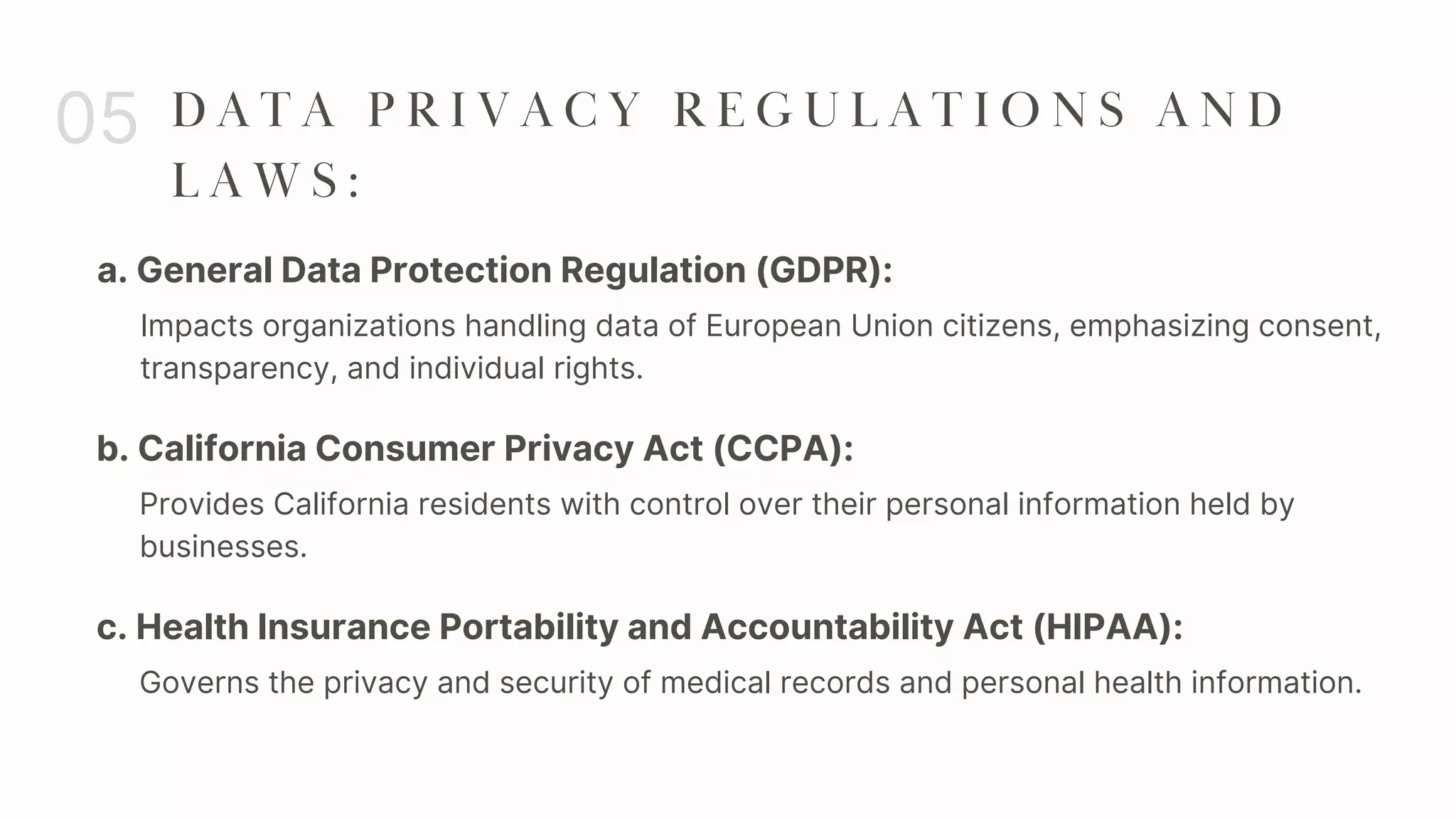
a. General Data Protection Regulation (GDPR):
05 D A T A P R I V A C Y R E G U L A T I O N S A N D
L A W S :
Impacts organizations handling data of European Union citizens, emphasizing consent,
transparency, and individual rights.
b. California Consumer Privacy Act (CCPA):
Provides California residents with control over their personal information held by
businesses.
c. Health Insurance Portability and Accountability Act (HIPAA):
Governs the privacy and security of medical records and personal health information.
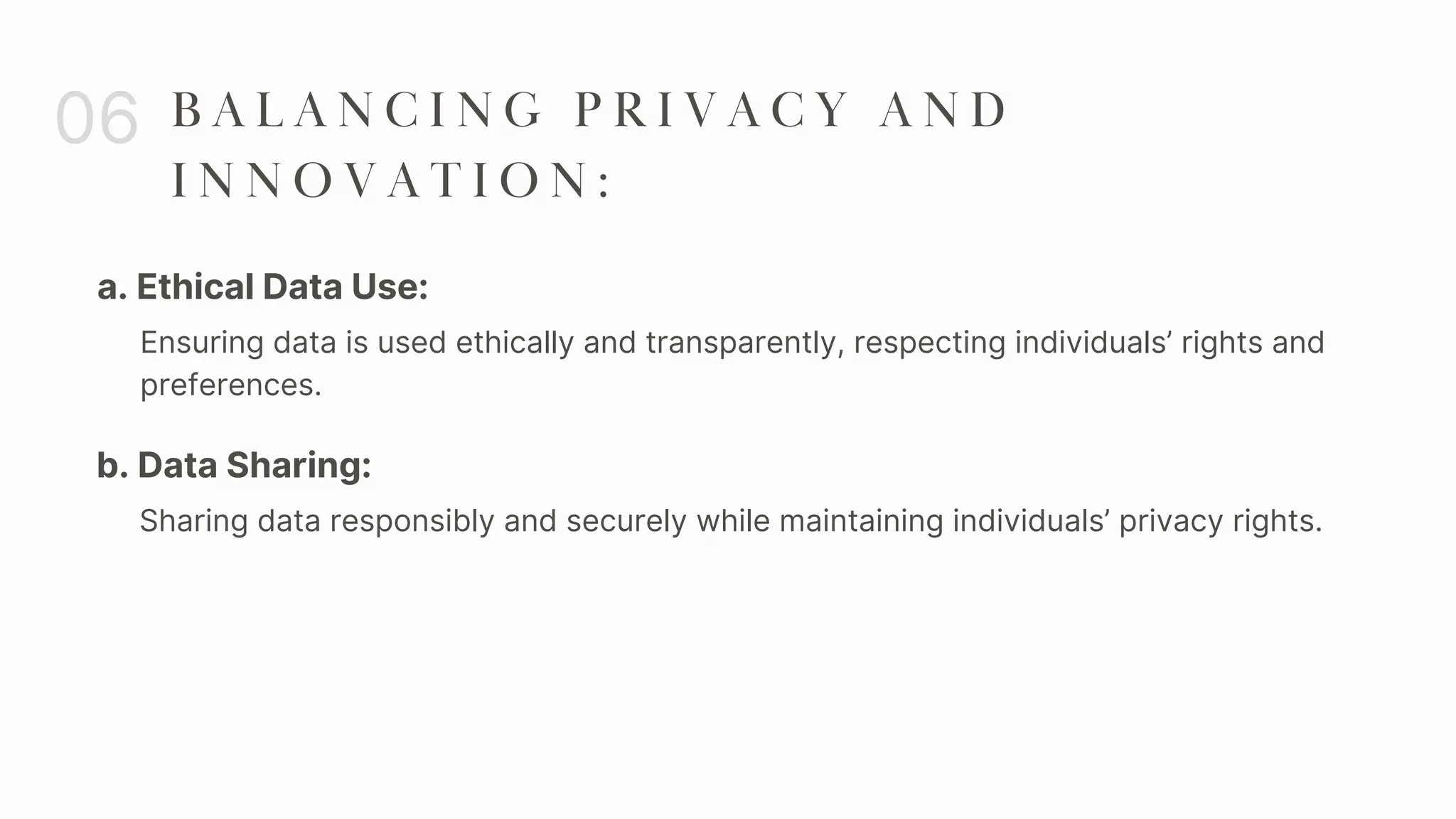
a. Ethical Data Use:
06 B A L A N C I N G P R I V A C Y A N D
I N N O V A T I O N :
Ensuring data is used ethically and transparently, respecting individuals’ rights and
preferences.
b. Data Sharing:
Sharing data responsibly and securely while maintaining individuals’ privacy rights.
a. Prevention:
07 D A T A B R E A C H E S A N D I N C I D E N T
R E S P O N S E :
Implementing robust security measures to prevent data breaches.
b. Response Plan:
Having a well-defined incident response plan to address breaches promptly and mitigate
their impact.
a. Emerging Technologies:
08 T H E F U T U R E O F D A T A P R I V A C Y :
Incorporating privacy measures in the development of new technologies, such as
artificial intelligence and the Internet of Things.
b. Global Regulations:
Anticipating more comprehensive and globally harmonized data privacy regulations.

Navigating the Data Privacy Landscape — Cyberroot Risk Advisory

  • 1.
    N A VI G A T I N G T H E C Y B E R R O O T R I S K A D V I S O R Y D A T A P R I V A C Y L A N D S C A P E
  • 2.
    In an erawhere data is a valuable asset, safeguarding individuals’ and organizations’ personal information has become a paramount concern. This article presents a comprehensive guide to understanding data privacy, its significance, best practices, and the legal landscape that shapes its framework.
  • 3.
    Data privacy pertainsto the protection of personal and sensitive information from unauthorized access, use, or disclosure. It encompasses the principles and practices that ensure individuals have control over their data and how it is collected and used. 01 U N D E R S T A N D I N G D A T A P R I V A C Y :
  • 4.
    a. Individual Rights: 02T H E S I G N I F I C A N C E O F D A T A P R I V A C Y : Data privacy upholds individuals’ rights to control their personal information, fostering trust between consumers and organizations. b. Trust and Reputation: Maintaining data privacy enhances an organization’s reputation, fostering customer trust and loyalty. c. Legal Compliance: Adhering to data privacy laws prevents legal consequences and potential fines.
  • 5.
    a. Consent: 03 KE Y C O N C E P T S I N D A T A P R I V A C Y : Obtaining explicit permission from individuals before collecting and using their data. b. Data Minimization: Collecting only the necessary data to fulfill a specific purpose and minimizing data retention. c. Anonymization: Removing personally identifiable information from data to ensure anonymity. d. Transparency: Clearly informing individuals about data collection, use, and sharing practices.
  • 6.
    a. Data Mapping: 04D A T A P R I V A C Y B E S T P R A C T I C E S : Identifying the types of data collected, stored, and processed within an organization. b. Privacy by Design: Integrating data protection measures into the development of products and systems. c. Regular Audits: Conducting periodic assessments to ensure compliance with data privacy regulations. d. Employee Training: Educating staff about data privacy policies and practices to prevent accidental breaches. e. Encryption: Securing sensitive data using encryption technologies to prevent unauthorized access.
  • 7.
    a. General DataProtection Regulation (GDPR): 05 D A T A P R I V A C Y R E G U L A T I O N S A N D L A W S : Impacts organizations handling data of European Union citizens, emphasizing consent, transparency, and individual rights. b. California Consumer Privacy Act (CCPA): Provides California residents with control over their personal information held by businesses. c. Health Insurance Portability and Accountability Act (HIPAA): Governs the privacy and security of medical records and personal health information.
  • 8.
    a. Ethical DataUse: 06 B A L A N C I N G P R I V A C Y A N D I N N O V A T I O N : Ensuring data is used ethically and transparently, respecting individuals’ rights and preferences. b. Data Sharing: Sharing data responsibly and securely while maintaining individuals’ privacy rights.
  • 9.
    a. Prevention: 07 DA T A B R E A C H E S A N D I N C I D E N T R E S P O N S E : Implementing robust security measures to prevent data breaches. b. Response Plan: Having a well-defined incident response plan to address breaches promptly and mitigate their impact.
  • 10.
    a. Emerging Technologies: 08T H E F U T U R E O F D A T A P R I V A C Y : Incorporating privacy measures in the development of new technologies, such as artificial intelligence and the Internet of Things. b. Global Regulations: Anticipating more comprehensive and globally harmonized data privacy regulations.