Naturopathy - Alternative
medicine
Dr.M.Jothimuniyandi
Assistant Professor
Naturopathy
 Naturopathy is a holistic approach to health and
wellness that emphasizes the body’s innate ability to
heal itself.
 It draws from a variety of natural therapies, combining
modern science with traditional healing practices.
 As an alternative medicine, naturopathy focuses on
promoting health and preventing disease by
addressing the root causes of illness, rather than just
treating symptoms.
Principles of Naturopathy
 Healing Power of Nature: Naturopathy
believes that the body has an inherent ability
to maintain and restore health. Practitioners
aim to support this healing process by
removing obstacles to recovery.
 Identify and Treat the Cause : Instead of
merely suppressing symptoms, naturopaths
seek to find and treat the underlying causes of
disease.
Principles of Naturopathy
 First, Do No Harm : Treatments are
designed to be non-invasive and avoid
harmful side effects. Naturopaths prioritize
safe, gentle methods to support the body’s
healing mechanisms.
 Doctor as Teacher: Naturopaths empower
patients by educating them about their health
and encouraging them to take responsibility
for their well-being.
Principles of Naturopathy
 Treat the Whole Person: Naturopathy
considers the individual’s physical, mental,
emotional, and spiritual health. It recognizes
that imbalances in any area can affect overall
health.
 Prevention is the Best Cure: Naturopathy
emphasizes preventive care, promoting a
healthy lifestyle to prevent disease before it
occurs.
Common Treatments in Naturopathy
Herbal Medicine: Using plants and
natural extracts for therapeutic purposes.
Nutritional Therapy: A focus on diet and
nutritional supplements to support health.
Hydrotherapy: The use of water (in
various forms like steam, hot or cold
baths) to stimulate healing.
Common Treatments in Naturopathy
 Homeopathy: A system of alternative medicine based
on the principle of “like cures like,” where substances
that cause symptoms in healthy people are used in
diluted forms to treat similar symptoms in sick people.
 Physical Therapy: Techniques such as massage,
exercise, and acupuncture to improve health and well-
being.
 Lifestyle Counseling: Educating patients on healthy
habits, stress management, and mental well-being.
Benefits of Naturopathy
 Holistic Care: Naturopathy considers all aspects
of a person’s health, offering a more
comprehensive approach.
 Personalized Treatment: Each treatment plan is
customized to the individual’s unique needs and
conditions.
 Focus on Prevention: By promoting long-term
lifestyle changes, naturopathy helps to prevent
future health issues.
Types of Naturopathic Therapies
Botanical Medicine (Herbalism):
 Uses plant-based remedies to treat various conditions.
Herbs can be administered as teas, tinctures, capsules, or
oils.
 Example: Echinacea is often used to boost the immune
system and fight off infections.
Acupuncture:
 A traditional Chinese medicine technique where fine
needles are inserted into specific points on the body to
promote healing and balance the body's energy, or "Qi."
 It's commonly used for pain management, stress relief, and
digestive issues.
Types of Naturopathic Therapies
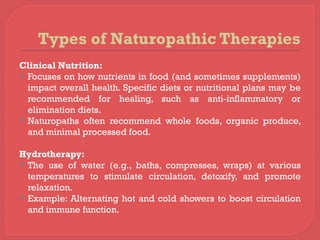
Clinical Nutrition:
 Focuses on how nutrients in food (and sometimes supplements)
impact overall health. Specific diets or nutritional plans may be
recommended for healing, such as anti-inflammatory or
elimination diets.
 Naturopaths often recommend whole foods, organic produce,
and minimal processed food.
Hydrotherapy:
 The use of water (e.g., baths, compresses, wraps) at various
temperatures to stimulate circulation, detoxify, and promote
relaxation.
 Example: Alternating hot and cold showers to boost circulation
and immune function.
Types of Naturopathic Therapies
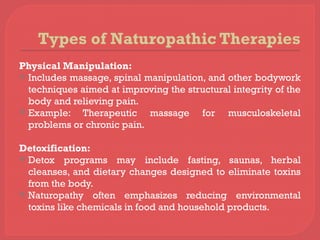
Physical Manipulation:
 Includes massage, spinal manipulation, and other bodywork
techniques aimed at improving the structural integrity of the
body and relieving pain.
 Example: Therapeutic massage for musculoskeletal
problems or chronic pain.
Detoxification:
 Detox programs may include fasting, saunas, herbal
cleanses, and dietary changes designed to eliminate toxins
from the body.
 Naturopathy often emphasizes reducing environmental
toxins like chemicals in food and household products.
Types of Naturopathic Therapies
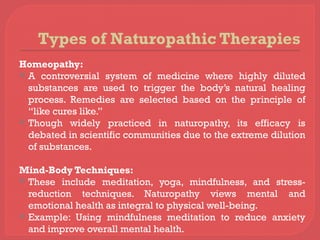
Homeopathy:
 A controversial system of medicine where highly diluted
substances are used to trigger the body’s natural healing
process. Remedies are selected based on the principle of
“like cures like.”
 Though widely practiced in naturopathy, its efficacy is
debated in scientific communities due to the extreme dilution
of substances.
Mind-Body Techniques:
 These include meditation, yoga, mindfulness, and stress-
reduction techniques. Naturopathy views mental and
emotional health as integral to physical well-being.
 Example: Using mindfulness meditation to reduce anxiety
and improve overall mental health.
Conditions Commonly Treated with
Naturopathy
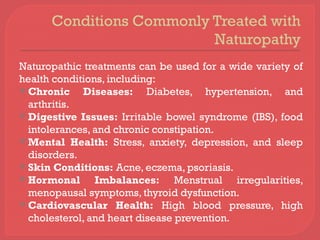
Naturopathic treatments can be used for a wide variety of
health conditions, including:
 Chronic Diseases: Diabetes, hypertension, and
arthritis.
 Digestive Issues: Irritable bowel syndrome (IBS), food
intolerances, and chronic constipation.
 Mental Health: Stress, anxiety, depression, and sleep
disorders.
 Skin Conditions: Acne, eczema, psoriasis.
 Hormonal Imbalances: Menstrual irregularities,
menopausal symptoms, thyroid dysfunction.
 Cardiovascular Health: High blood pressure, high
cholesterol, and heart disease prevention.
Naturopathy in Chronic Disease
Management
 Naturopaths often work alongside conventional
healthcare providers, especially for chronic
conditions. For example, they may:
 Suggest lifestyle changes, stress management
techniques, and dietary modifications for
managing type 2 diabetes.
 Work on stress reduction and natural supplements
to complement conventional treatments for
hypertension or cardiovascular issues.
Scientific Evidence & Research
Clinical Nutrition and Herbal Medicine have
substantial evidence supporting their use. For example:
 Omega-3 fatty acids from fish oil are well-documented
for reducing inflammation and supporting heart health.
 Curcumin (from turmeric) has demonstrated anti-
inflammatory and antioxidant properties in numerous
studies.
Acupuncture has been recognized by the World Health
Organization (WHO) as effective for certain conditions,
such as chronic pain and migraines.
Scientific Evidence & Research
 Homeopathy, despite its widespread use, is one of the more
controversial aspects of naturopathy. Several clinical trials
have found no significant evidence supporting its
effectiveness beyond a placebo effect.
 Mind-Body Medicine: Techniques such as meditation and
mindfulness have robust evidence for improving mental
health, reducing stress, and enhancing overall well-being
 Detoxification programs in naturopathy are less supported
by mainstream scientific research. The body naturally
detoxifies itself through organs like the liver and kidneys,
and many claims made about detox programs have been
criticized for lacking rigorous scientific backing.
Integration with Conventional Medicine
In recent years, there has been growing acceptance
of naturopathy as a complementary approach to
conventional medicine, especially in integrative care
settings where both naturopathic and conventional
medical practitioners collaborate for patient care.
 Complementary Care: Many people use
naturopathy to complement standard treatments for
chronic illnesses, such as combining herbal
remedies with conventional medications to manage
symptoms.
Integration with Conventional Medicine
 Preventive Care: Naturopathy focuses heavily on
prevention, which can reduce the likelihood of
chronic diseases through early lifestyle
interventions.
However, naturopaths are trained to recognize when
conventional medicine is needed, such as when a
patient requires surgery, antibiotics for an infection,
or other emergency interventions. They should
always advise patients to seek medical attention if
natural treatments alone are not sufficient.
Limitations and Risks
 Delayed Diagnosis/Treatment: Relying solely on
naturopathy for serious medical conditions, like cancer or
heart disease, can delay effective conventional treatment.
 Lack of Regulation: In some countries, the practice of
naturopathy is not well-regulated, which can lead to
variability in the quality of care provided by different
practitioners.
 Interactions with Medications: Some herbal supplements
can interact with prescription medications, leading to
unintended side effects. For instance, St. John's Wort can
interfere with antidepressants and birth control pills.
Summary
 Naturopathy offers a holistic and patient-centered
approach to health, focusing on natural healing,
prevention, and lifestyle changes.
 It can be an effective alternative or complementary
option for managing chronic conditions, boosting
overall wellness, and preventing disease.
 However, it is essential to balance it with conventional
medical practices, especially for serious health issues,
and to consult qualified professionals for safe and
effective care.
THANKYOU

Naturopathy - Alternative medicine.pptx

  • 1.
  • 2.
    Naturopathy  Naturopathy isa holistic approach to health and wellness that emphasizes the body’s innate ability to heal itself.  It draws from a variety of natural therapies, combining modern science with traditional healing practices.  As an alternative medicine, naturopathy focuses on promoting health and preventing disease by addressing the root causes of illness, rather than just treating symptoms.
  • 3.
    Principles of Naturopathy Healing Power of Nature: Naturopathy believes that the body has an inherent ability to maintain and restore health. Practitioners aim to support this healing process by removing obstacles to recovery.  Identify and Treat the Cause : Instead of merely suppressing symptoms, naturopaths seek to find and treat the underlying causes of disease.
  • 4.
    Principles of Naturopathy First, Do No Harm : Treatments are designed to be non-invasive and avoid harmful side effects. Naturopaths prioritize safe, gentle methods to support the body’s healing mechanisms.  Doctor as Teacher: Naturopaths empower patients by educating them about their health and encouraging them to take responsibility for their well-being.
  • 5.
    Principles of Naturopathy Treat the Whole Person: Naturopathy considers the individual’s physical, mental, emotional, and spiritual health. It recognizes that imbalances in any area can affect overall health.  Prevention is the Best Cure: Naturopathy emphasizes preventive care, promoting a healthy lifestyle to prevent disease before it occurs.
  • 6.
    Common Treatments inNaturopathy Herbal Medicine: Using plants and natural extracts for therapeutic purposes. Nutritional Therapy: A focus on diet and nutritional supplements to support health. Hydrotherapy: The use of water (in various forms like steam, hot or cold baths) to stimulate healing.
  • 7.
    Common Treatments inNaturopathy  Homeopathy: A system of alternative medicine based on the principle of “like cures like,” where substances that cause symptoms in healthy people are used in diluted forms to treat similar symptoms in sick people.  Physical Therapy: Techniques such as massage, exercise, and acupuncture to improve health and well- being.  Lifestyle Counseling: Educating patients on healthy habits, stress management, and mental well-being.
  • 8.
    Benefits of Naturopathy Holistic Care: Naturopathy considers all aspects of a person’s health, offering a more comprehensive approach.  Personalized Treatment: Each treatment plan is customized to the individual’s unique needs and conditions.  Focus on Prevention: By promoting long-term lifestyle changes, naturopathy helps to prevent future health issues.
  • 9.
    Types of NaturopathicTherapies Botanical Medicine (Herbalism):  Uses plant-based remedies to treat various conditions. Herbs can be administered as teas, tinctures, capsules, or oils.  Example: Echinacea is often used to boost the immune system and fight off infections. Acupuncture:  A traditional Chinese medicine technique where fine needles are inserted into specific points on the body to promote healing and balance the body's energy, or "Qi."  It's commonly used for pain management, stress relief, and digestive issues.
  • 10.
    Types of NaturopathicTherapies Clinical Nutrition:  Focuses on how nutrients in food (and sometimes supplements) impact overall health. Specific diets or nutritional plans may be recommended for healing, such as anti-inflammatory or elimination diets.  Naturopaths often recommend whole foods, organic produce, and minimal processed food. Hydrotherapy:  The use of water (e.g., baths, compresses, wraps) at various temperatures to stimulate circulation, detoxify, and promote relaxation.  Example: Alternating hot and cold showers to boost circulation and immune function.
  • 11.
    Types of NaturopathicTherapies Physical Manipulation:  Includes massage, spinal manipulation, and other bodywork techniques aimed at improving the structural integrity of the body and relieving pain.  Example: Therapeutic massage for musculoskeletal problems or chronic pain. Detoxification:  Detox programs may include fasting, saunas, herbal cleanses, and dietary changes designed to eliminate toxins from the body.  Naturopathy often emphasizes reducing environmental toxins like chemicals in food and household products.
  • 12.
    Types of NaturopathicTherapies Homeopathy:  A controversial system of medicine where highly diluted substances are used to trigger the body’s natural healing process. Remedies are selected based on the principle of “like cures like.”  Though widely practiced in naturopathy, its efficacy is debated in scientific communities due to the extreme dilution of substances. Mind-Body Techniques:  These include meditation, yoga, mindfulness, and stress- reduction techniques. Naturopathy views mental and emotional health as integral to physical well-being.  Example: Using mindfulness meditation to reduce anxiety and improve overall mental health.
  • 13.
    Conditions Commonly Treatedwith Naturopathy Naturopathic treatments can be used for a wide variety of health conditions, including:  Chronic Diseases: Diabetes, hypertension, and arthritis.  Digestive Issues: Irritable bowel syndrome (IBS), food intolerances, and chronic constipation.  Mental Health: Stress, anxiety, depression, and sleep disorders.  Skin Conditions: Acne, eczema, psoriasis.  Hormonal Imbalances: Menstrual irregularities, menopausal symptoms, thyroid dysfunction.  Cardiovascular Health: High blood pressure, high cholesterol, and heart disease prevention.
  • 14.
    Naturopathy in ChronicDisease Management  Naturopaths often work alongside conventional healthcare providers, especially for chronic conditions. For example, they may:  Suggest lifestyle changes, stress management techniques, and dietary modifications for managing type 2 diabetes.  Work on stress reduction and natural supplements to complement conventional treatments for hypertension or cardiovascular issues.
  • 15.
    Scientific Evidence &Research Clinical Nutrition and Herbal Medicine have substantial evidence supporting their use. For example:  Omega-3 fatty acids from fish oil are well-documented for reducing inflammation and supporting heart health.  Curcumin (from turmeric) has demonstrated anti- inflammatory and antioxidant properties in numerous studies. Acupuncture has been recognized by the World Health Organization (WHO) as effective for certain conditions, such as chronic pain and migraines.
  • 16.
    Scientific Evidence &Research  Homeopathy, despite its widespread use, is one of the more controversial aspects of naturopathy. Several clinical trials have found no significant evidence supporting its effectiveness beyond a placebo effect.  Mind-Body Medicine: Techniques such as meditation and mindfulness have robust evidence for improving mental health, reducing stress, and enhancing overall well-being  Detoxification programs in naturopathy are less supported by mainstream scientific research. The body naturally detoxifies itself through organs like the liver and kidneys, and many claims made about detox programs have been criticized for lacking rigorous scientific backing.
  • 17.
    Integration with ConventionalMedicine In recent years, there has been growing acceptance of naturopathy as a complementary approach to conventional medicine, especially in integrative care settings where both naturopathic and conventional medical practitioners collaborate for patient care.  Complementary Care: Many people use naturopathy to complement standard treatments for chronic illnesses, such as combining herbal remedies with conventional medications to manage symptoms.
  • 18.
    Integration with ConventionalMedicine  Preventive Care: Naturopathy focuses heavily on prevention, which can reduce the likelihood of chronic diseases through early lifestyle interventions. However, naturopaths are trained to recognize when conventional medicine is needed, such as when a patient requires surgery, antibiotics for an infection, or other emergency interventions. They should always advise patients to seek medical attention if natural treatments alone are not sufficient.
  • 19.
    Limitations and Risks Delayed Diagnosis/Treatment: Relying solely on naturopathy for serious medical conditions, like cancer or heart disease, can delay effective conventional treatment.  Lack of Regulation: In some countries, the practice of naturopathy is not well-regulated, which can lead to variability in the quality of care provided by different practitioners.  Interactions with Medications: Some herbal supplements can interact with prescription medications, leading to unintended side effects. For instance, St. John's Wort can interfere with antidepressants and birth control pills.
  • 20.
    Summary  Naturopathy offersa holistic and patient-centered approach to health, focusing on natural healing, prevention, and lifestyle changes.  It can be an effective alternative or complementary option for managing chronic conditions, boosting overall wellness, and preventing disease.  However, it is essential to balance it with conventional medical practices, especially for serious health issues, and to consult qualified professionals for safe and effective care.
  • 21.