JAMAICA Nations Report Sarah Williamson
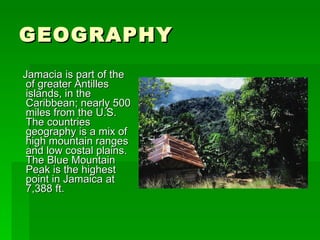
GEOGRAPHY Jamacia is part of the of greater Antilles islands, in the Caribbean; nearly 500 miles from the U.S. The countries geography is a mix of high mountain ranges and low costal plains. The Blue Mountain Peak is the highest point in Jamaica at 7,388 ft.
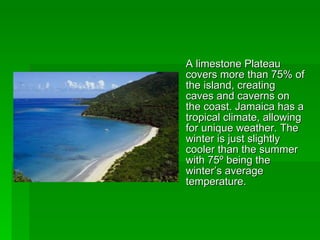
A limestone Plateau covers more than 75% of the island, creating caves and caverns on the coast. Jamaica has a tropical climate, allowing for unique weather. The winter is just slightly cooler than the summer with 75 º being the winter’s average temperature.
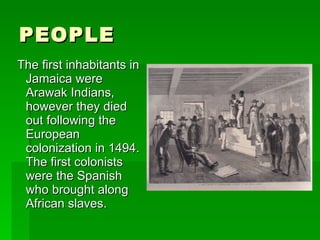
PEOPLE The first inhabitants in Jamaica were Arawak Indians, however they died out following the European colonization in 1494. The first colonists were the Spanish who brought along African slaves.
Today Jamaica has a population of over 2,600,000 people, 90% of whom are of African or African mixed ancestry. The African culture inspired Jamaica's art dance and music genre and the Spanish brought over many new foods and farming techniques.
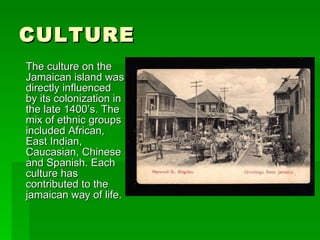
CULTURE The culture on the Jamaican island was directly influenced by its colonization in the late 1400’s. The mix of ethnic groups included African, East Indian, Caucasian, Chinese and Spanish. Each culture has contributed to the jamaican way of life.
The official language of the island is English, although in many rural areas a Creole dialect is spoken. Jamaican’s live simple lives, many people work in farming or the tourist industry to support their families. Poverty is wide spread and overpopulation is a growing problem.
HISTORY Christopher Columbus landed in Jamaica in 1494, followed by Spanish settlers in the early 1500’s. Native people were put to work as slaves and soon died out from exposure to diseases and cruel treatment. This then lead to the importation of thousands of African slaves. Later, once slavery was abolished, most found the farming industry as the most lucrative job.
Jamaica is a parlimentary democracy and a part of the British Monarchy.
SOURCES

Nations Report

  • 1.
    JAMAICA Nations ReportSarah Williamson
  • 2.
    GEOGRAPHY Jamacia ispart of the of greater Antilles islands, in the Caribbean; nearly 500 miles from the U.S. The countries geography is a mix of high mountain ranges and low costal plains. The Blue Mountain Peak is the highest point in Jamaica at 7,388 ft.
  • 3.
    A limestone Plateaucovers more than 75% of the island, creating caves and caverns on the coast. Jamaica has a tropical climate, allowing for unique weather. The winter is just slightly cooler than the summer with 75 º being the winter’s average temperature.
  • 4.
    PEOPLE The firstinhabitants in Jamaica were Arawak Indians, however they died out following the European colonization in 1494. The first colonists were the Spanish who brought along African slaves.
  • 5.
    Today Jamaica hasa population of over 2,600,000 people, 90% of whom are of African or African mixed ancestry. The African culture inspired Jamaica's art dance and music genre and the Spanish brought over many new foods and farming techniques.
  • 6.
    CULTURE The cultureon the Jamaican island was directly influenced by its colonization in the late 1400’s. The mix of ethnic groups included African, East Indian, Caucasian, Chinese and Spanish. Each culture has contributed to the jamaican way of life.
  • 7.
    The official languageof the island is English, although in many rural areas a Creole dialect is spoken. Jamaican’s live simple lives, many people work in farming or the tourist industry to support their families. Poverty is wide spread and overpopulation is a growing problem.
  • 8.
    HISTORY Christopher Columbuslanded in Jamaica in 1494, followed by Spanish settlers in the early 1500’s. Native people were put to work as slaves and soon died out from exposure to diseases and cruel treatment. This then lead to the importation of thousands of African slaves. Later, once slavery was abolished, most found the farming industry as the most lucrative job.
  • 9.
    Jamaica is aparlimentary democracy and a part of the British Monarchy.
  • 10.