Solar Electricity Systems
Since 1981 Experience and Expertise

Naps Systems Oy / Pakkalankuja 7 / FI-01510 Vantaa / Finland
www.napssystems.com / +358 20 7545 666 / +358 20 7545 660
Naps Systems Ltd.

Naps Systems is a solar electricity systems
company
We provide complete solutions
We operate on 4 continents and we have supplied
systems for over 120 countries
We have more than 25 years track record in the
industry
Core competences

Expertise in sizing, designing and specifying
systems
Extensive expertise in batteries
Extensive expertise in module production
Our telecommunications applications
Extremely reliable
Operate in all weather conditions
Little human intervention as possible
Equipped with an alarm signal and studied in order to
sustain the station’s operation for a period long enough for
maintenance personnel to arrive
Fuel cost and
replenishment visits are
saved annually
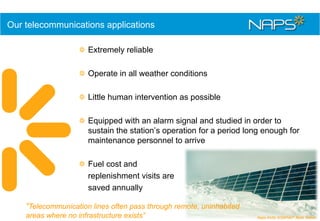
“Telecommunication lines often pass through remote, uninhabited
areas where no infrastructure exists”

Naps Arctic GSM/NMT Base Station
System management
An intelligent controller increases system life
All of our larger system controllers are:
Individually tailored to specific project requirements
Ideal for places where large power, extensive data logging, and
flexible system control is required
Optimizing the battery life time by controlling its charging and by
preventing excessive discharging
Deciding when the back-up generator (if in the system) needs to
be connected or disconnected
Providing the essential user interface for the system, showing
status of charging / discharging, data display, data logging, alarm
signaling and remote communication
Solar electricity vs grid connected
General Differences

Solar electricity
+ mobile system
+ decentralised energy
production
+ no transmission losses
+ low investment costs
+ fast and easy
installation
- limited power supply
- requires special low
voltage devices

Grid connection
+ even power supply
+ matches with sudden
large power demands
-

high initial investment
extensions expensive
transmission losses
Solar electricity vs diesel generators
General Differences
Solar electricity
+ Easy installation
+ Almost maintenance free
+ Unattended operation
+ Long life expectancy
+ High reliability
+ No fuel, no emissions
+ No excess heat
+ Low overall lifetime cost
-

High initial costs
Fairly large battery capacity
needed

Diesel
+ Easy installation
+ Low initial costs
+ Can be portable
-

Fuel supplies expensive
High maintenance costs
Typical service interval 250 hrs
(every 10 days)
Frequent site visits
Separate equipment room
Short life expectancy
Low efficiency & reliability
Noise and emissions
Excess heat
High overall lifetime cost
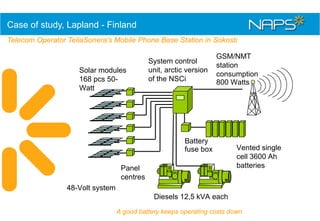
Case of study, Lapland - Finland
Telecom Operator TeliaSonera's Mobile Phone Base Station in Sokosti

Solar modules
168 pcs 50Watt

System control
unit, arctic version
of the NSCi

GSM/NMT
station
consumption
800 Watts

Battery
fuse box
Panel
centres

Vented single
cell 3600 Ah
batteries

48-Volt system
Diesels 12,5 kVA each
A good battery keeps operating costs down
Case of study, Lapland - Finland
Telecom Operator TeliaSonera's Mobile Phone Base Station in Sokosti

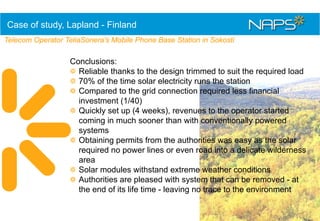
Conclusions:
Reliable thanks to the design trimmed to suit the required load
70% of the time solar electricity runs the station
Compared to the grid connection required less financial
investment (1/40)
Quickly set up (4 weeks), revenues to the operator started
coming in much sooner than with conventionally powered
systems
Obtaining permits from the authorities was easy as the solar
required no power lines or even road into a delicate wilderness
area
Solar modules withstand extreme weather conditions
Authorities are pleased with system that can be removed - at
the end of its life time - leaving no trace to the environment
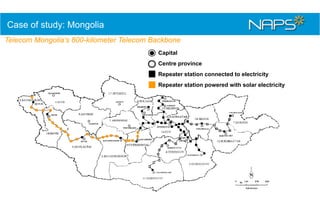
Case of study: Mongolia
Telecom Mongolia's 800-kilometer Telecom Backbone
Capital
Centre province
Repeater station connected to electricity
Repeater station powered with solar electricity
Case of study: Mongolia
Telecom Mongolia's 800-kilometer Telecom Backbone

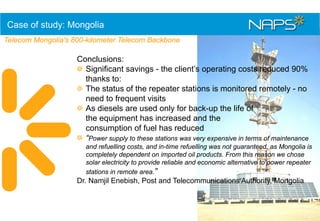
Conclusions:
Significant savings - the client’s operating costs reduced 90%
thanks to:
The status of the repeater stations is monitored remotely - no
need to frequent visits
As diesels are used only for back-up the life of
the equipment has increased and the
consumption of fuel has reduced
“Power supply to these stations was very expensive in terms of maintenance
and refuelling costs, and in-time refuelling was not guaranteed, as Mongolia is
completely dependent on imported oil products. From this reason we chose
solar electricity to provide reliable and economic alternative to power repeater
stations in remote area.”

Dr. Namjil Enebish, Post and Telecommunications Authority, Mongolia
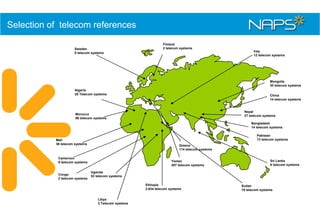
Selection of telecom references
Sweden
5 telecom systems

Finland
2 telecom systems
Iraq
12 telecom systems

Mongolia
30 telecom systems
Algeria
20 Telecom systems

China
14 telecom systems

Nepal
27 telecom systems

Morocco
86 telecom systems

Bangladesh
14 telecom systems
Pakistan
13 telecom systems

Mali
36 telecom systems

Greece
114 telecom systems

Cameroon
9 telecom systems

Congo
2 telecom systems

Yemen
307 telecom systems

Sri Lanka
6 telecom systems

Uganda
53 telecom systems
Ethiopia
2.634 telecom systems
Libya
3 Telecom systems

Sudan
19 telecom systems
Naps Systems Ltd
Pakkalankuja 7, FI-01510 Vantaa, Finland
group@napssystems.com
Tel. +358 20 7545 666, Fax +358 20 7545 660
www.napssystems.com

Naps UK
Tel. +44 1235 529749, Fax +44 1235 553450
uk@napssystems.com

Naps telecom references

  • 1.
    Solar Electricity Systems Since1981 Experience and Expertise Naps Systems Oy / Pakkalankuja 7 / FI-01510 Vantaa / Finland www.napssystems.com / +358 20 7545 666 / +358 20 7545 660
  • 2.
    Naps Systems Ltd. NapsSystems is a solar electricity systems company We provide complete solutions We operate on 4 continents and we have supplied systems for over 120 countries We have more than 25 years track record in the industry
  • 3.
    Core competences Expertise insizing, designing and specifying systems Extensive expertise in batteries Extensive expertise in module production
  • 4.
    Our telecommunications applications Extremelyreliable Operate in all weather conditions Little human intervention as possible Equipped with an alarm signal and studied in order to sustain the station’s operation for a period long enough for maintenance personnel to arrive Fuel cost and replenishment visits are saved annually “Telecommunication lines often pass through remote, uninhabited areas where no infrastructure exists” Naps Arctic GSM/NMT Base Station
  • 5.
    System management An intelligentcontroller increases system life All of our larger system controllers are: Individually tailored to specific project requirements Ideal for places where large power, extensive data logging, and flexible system control is required Optimizing the battery life time by controlling its charging and by preventing excessive discharging Deciding when the back-up generator (if in the system) needs to be connected or disconnected Providing the essential user interface for the system, showing status of charging / discharging, data display, data logging, alarm signaling and remote communication
  • 6.
    Solar electricity vsgrid connected General Differences Solar electricity + mobile system + decentralised energy production + no transmission losses + low investment costs + fast and easy installation - limited power supply - requires special low voltage devices Grid connection + even power supply + matches with sudden large power demands - high initial investment extensions expensive transmission losses
  • 7.
    Solar electricity vsdiesel generators General Differences Solar electricity + Easy installation + Almost maintenance free + Unattended operation + Long life expectancy + High reliability + No fuel, no emissions + No excess heat + Low overall lifetime cost - High initial costs Fairly large battery capacity needed Diesel + Easy installation + Low initial costs + Can be portable - Fuel supplies expensive High maintenance costs Typical service interval 250 hrs (every 10 days) Frequent site visits Separate equipment room Short life expectancy Low efficiency & reliability Noise and emissions Excess heat High overall lifetime cost
  • 8.
    Case of study,Lapland - Finland Telecom Operator TeliaSonera's Mobile Phone Base Station in Sokosti Solar modules 168 pcs 50Watt System control unit, arctic version of the NSCi GSM/NMT station consumption 800 Watts Battery fuse box Panel centres Vented single cell 3600 Ah batteries 48-Volt system Diesels 12,5 kVA each A good battery keeps operating costs down
  • 9.
    Case of study,Lapland - Finland Telecom Operator TeliaSonera's Mobile Phone Base Station in Sokosti Conclusions: Reliable thanks to the design trimmed to suit the required load 70% of the time solar electricity runs the station Compared to the grid connection required less financial investment (1/40) Quickly set up (4 weeks), revenues to the operator started coming in much sooner than with conventionally powered systems Obtaining permits from the authorities was easy as the solar required no power lines or even road into a delicate wilderness area Solar modules withstand extreme weather conditions Authorities are pleased with system that can be removed - at the end of its life time - leaving no trace to the environment
  • 10.
    Case of study:Mongolia Telecom Mongolia's 800-kilometer Telecom Backbone Capital Centre province Repeater station connected to electricity Repeater station powered with solar electricity
  • 11.
    Case of study:Mongolia Telecom Mongolia's 800-kilometer Telecom Backbone Conclusions: Significant savings - the client’s operating costs reduced 90% thanks to: The status of the repeater stations is monitored remotely - no need to frequent visits As diesels are used only for back-up the life of the equipment has increased and the consumption of fuel has reduced “Power supply to these stations was very expensive in terms of maintenance and refuelling costs, and in-time refuelling was not guaranteed, as Mongolia is completely dependent on imported oil products. From this reason we chose solar electricity to provide reliable and economic alternative to power repeater stations in remote area.” Dr. Namjil Enebish, Post and Telecommunications Authority, Mongolia
  • 12.
    Selection of telecomreferences Sweden 5 telecom systems Finland 2 telecom systems Iraq 12 telecom systems Mongolia 30 telecom systems Algeria 20 Telecom systems China 14 telecom systems Nepal 27 telecom systems Morocco 86 telecom systems Bangladesh 14 telecom systems Pakistan 13 telecom systems Mali 36 telecom systems Greece 114 telecom systems Cameroon 9 telecom systems Congo 2 telecom systems Yemen 307 telecom systems Sri Lanka 6 telecom systems Uganda 53 telecom systems Ethiopia 2.634 telecom systems Libya 3 Telecom systems Sudan 19 telecom systems
  • 13.
    Naps Systems Ltd Pakkalankuja7, FI-01510 Vantaa, Finland group@napssystems.com Tel. +358 20 7545 666, Fax +358 20 7545 660 www.napssystems.com Naps UK Tel. +44 1235 529749, Fax +44 1235 553450 uk@napssystems.com