Mystery GenreBy: Miss Kerby
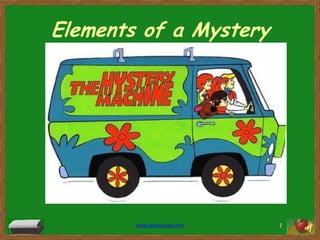
Elements of a Mysterywww.stoneyroad.com2
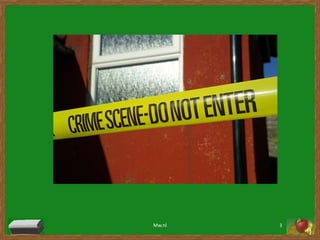
Mw.nl 3
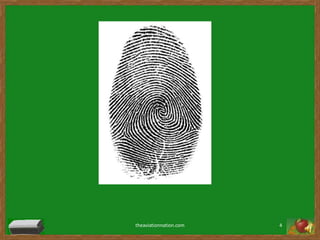
theaviationnation.com4
People-clipart.com 5
nassaulibrary.org6
educa.madrid.org7
costaricapages.com8
Lawyercox.com 9
Fusedfilm.com10
Coptalklive.com11
highered.nysed.gov12
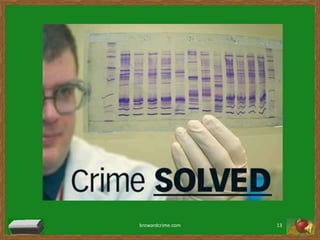
browardcrime.com13
Clker.com 14
Thesmokedmeatblog.blogspot.com 15
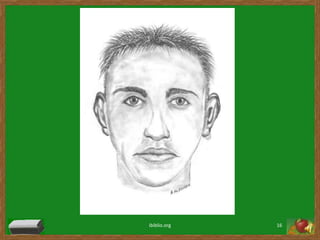
ibiblio.org16
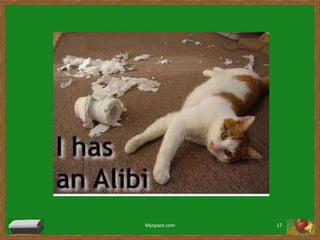
Myspace.com17
themagiccarpetandthecementwall.com18
925silvercharms.co.uk19
manausa.com20

Editor's Notes

  • #2 We are going to study the mystery genre. Mysteries are my favorite genre to read! Over the next week we are going to read various mysteries together and t the end of November you will turn in a book report project on a mystery you have read. We are going to learn what makes up a mystery and common mystery vocabulary words.
  • #3 Mysteries like any other genre have unique elements that make them a mystery. You are probably familiar with elements that make up a mystery and you don’t even realize it. How many of you have watched Scooby Doo? Just by watching Scooby Doo you have become familiar with what a mystery entails.
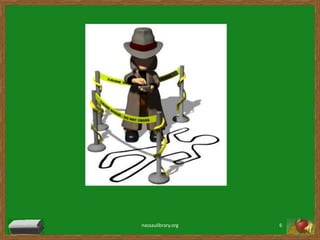
  • #4 The first element of a mystery is a crime or an unexplained event. In order to have a mystery you need to have something to solve. Without having this element a mystery could not be a mystery because there wouldn’t be anything mysterious about it. An example of this element would be if someone robbed a bank. Someone robbing a bank would be a crime and would fulfill the first element of the mystery genre.
  • #5 The second element of the mystery genre are clues or evidence of what really happened. A mystery needs to have this element so you are able to solve the mystery. Without this element there would be no way you could solve the mystery no matter how smart you are. An example of this would be fingerprints left at the bank that was robbed.
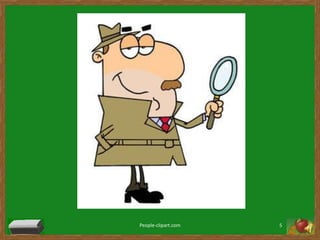
  • #6 The third element of a mystery is a detective or detectives trying to solve the mystery. You need a detective because without one who would solve the mystery. Sometimes in the mystery genre the detective is you! You are trying to solve the mystery as you are reading so that makes you a detective!
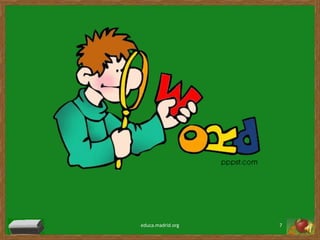
  • #7 The fourth and last element of the mystery genre is detective work. Detective work is finding evidence, questioning witnesses and suspects. By doing detective work it is possible to solve the crime. You are able to put together all of the pieces to solve the mystery. An example of detective work would be interviewing people that saw the bank being robbed.
  • #8 Now that you know the elements of a mystery you are going to learn common vocabulary words that appear in mysteries. Some of the vocabulary terms you might be familiar with and some you might not be familiar with and that’s okay. You will know them all by the end of our mystery unit.
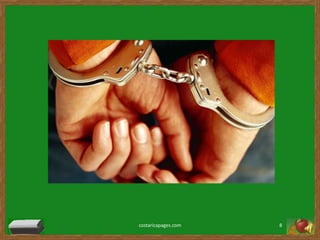
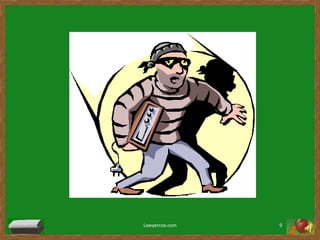
  • #9 Our first mystery vocabulary term is criminal. A criminal is a person who has committed a crime. The word criminal is a noun. It is very important to have a criminal in a mystery because you need someone who has committed a crime. An example of a criminal would be a person who robbed a bank.
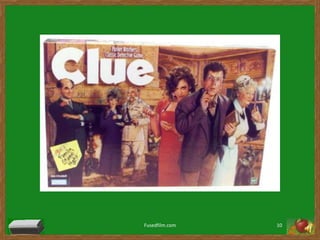
  • #10 Another mystery vocabulary term is case. A case is something that is being investigated. The word case is a noun. An example of a case would be a bank being robbed. A lot of mysteries have the word case in the title. An example of this is The Case of the Missing Ring which some of you will be reading this week.
  • #11 Clue is one of our mystery vocabulary words. A clue is something that helps to solve a mystery. The word clue is a noun. We talked about clues when we were talking about elements of a mystery. The example I used for a clue is if the bank robber left a fingerprint at the bank.
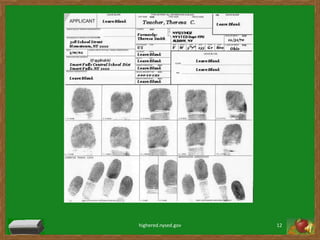
  • #12 Another mystery vocabulary term is detective. A detective is a person who tries to solve a crime. The word detective is a noun. I talked about a detective when I talked about the different elements of the mystery genre. You can be a detective when you are reading mystery because you are trying to solve the crime.
  • #13 Evidence is one of our mystery vocabulary terms. Evidence are facts or signs that show the truth or that help someone make a conclusion. Evidence is a noun. Evidence can be clues because evidence can be something that helps to solve a mystery. An example of evidence would be the fingerprint of the bank robber matching the fingerprint that was found at the bank.
  • #14 Our sixth mystery term is solution. A solution is the answer to a mystery. The word solution is a noun. When you are reading mystery you want to figure out the solution to the mystery. In our bank robber mystery the solution would be when the bank robber is finally caught.
  • #15 Another mystery word is witness. A witness is a person who sees or hears something. The word witness is a noun. We talked about questioning witnesses when we talked about detective work. An example of a witness would be someone who saw the bank robbery happening.
  • #16 Suspense is on of our new vocabulary terms. Suspense is uncertainty about what will happen. Suspense is a noun like all of our other words so far. Suspense is very important to have in a mystery. When a story is suspenseful it makes us want to read on to find out what will happen.
  • #17 Our second to last mystery word is suspect. A suspect is a person thought to be guilty of a crime. Suspect is a noun. There is a difference between a suspect and a criminal. A criminal is someone who HAS committed a crime and a suspect is someone who is THOUGHT to be guilty of a crime. It has not been proven if they have committed a crime yet.
  • #18 Our last mystery vocabulary term is alibi. Alibi is one of my favorite words. An alibi is an excuse that a suspect uses to show that he or she was somewhere other than at the scene of the crime when the crime was committed. An example of an alibi would be that you were in class at the time of the bank robbery. Alibi is a noun. All of our mystery vocabulary terms were nouns.
  • #19 During our mystery unit each reading group will be reading a different mystery. The Corsairs will be reading The Mystery of the Noises in the Attic. You will be reading about a brother and a sister who are trying to figure out what is causing the noises in the attic. Could it be a ghost?!
  • #20 The Buccaneers will be reading The Case of the Missing Key. A girl and her nephew are needed at the local candy shop. The candy shop owner has lost the key to her pantry which has an order of goodies in there for a fiesta. They need to find the key quickly because the goodies are going to be picked up any minute!
  • #21 The Adventurers will be reading Mystery at the Zoo. A class takes a field trip to a zoo to see the marvelous golden eagle but when they get there the golden eagle is missing. All that is left of the eagle is a few feathers. Will they be able to solve the mystery with the clues they find around the zoo and save the golden eagle?!