MUSIC
7
QUARTER 1 –MODULE 1:
MUSIC OF LOWLANDS OF
LUZON
FOLK SONGS FROM THE
LOWLANDS
Before we explore the music of the Luzon Lowlands, let us
first recall the different musical elements that you have learned
in your previous music lessons.
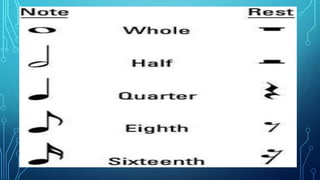
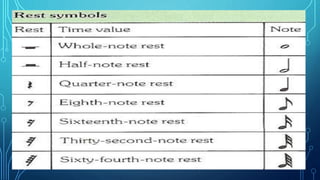
The first element is Rhythm. Rhythm is the regular
repeated pattern of sounds. It serves as the pulse of the musical
composition. This element has three components: beat, tempo
and meter. Do you think you can identify these components in a
certain music while listening to it? Have you experienced
nodding your head or tapping your foot every time you hear
music? If so, you are actually feeling the beat of the music. In
singing your favorite videoke tune, you are actually singing the
rhythm because of the different note durations of the lyrics of
Tempo is the speed of the beat. Every music has its own
speed which depends on the mood of the whole music.
Most happy tunes are fast while sad music is relatively
slow.
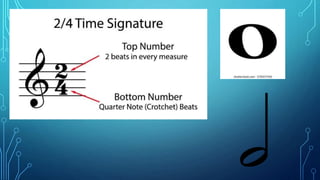
The meter, which composes of time signature is the
combination of strong beats (accent) and weak beats.
For example 44 (four four) time signature is like counting 1, 2,
3, 4, 1, 2, 3, 4, 1, 2, 3, 4, and so on. This type of meter is
commonly used in pop songs. In 34 time signature, you just
count 1, 2, 3, 1, 2, 3, 1, 2, 3 and so on. This meter is commonly
used in waltz music. For the time signature 24 (two four), you
The second element is about the softness and loudness of the
music - the Dynamics. This can be gradual (crescendo and
decrescendo) or sudden / abrupt. Dynamics in music suggests
the emotional aspect of the composition. Soft music suggests
themes such as love while loud or strong music suggests bravery
or war.
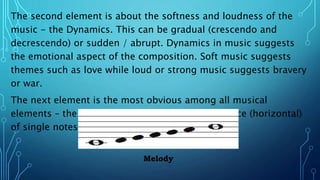
The next element is the most obvious among all musical
elements – the Melody. It is the organized sequence (horizontal)
of single notes.
Melody
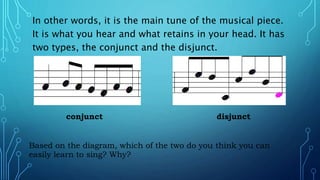
In other words, it is the main tune of the musical piece.
It is what you hear and what retains in your head. It has
two types, the conjunct and the disjunct.
conjunct disjunct
Based on the diagram, which of the two do you think you can
easily learn to sing? Why?
The more singable or playable type is the conjunct. The
melody is easy to sing because the notes have no skips or leaps.
Try to sing a Filipino folk song and try to analyze the movement
of the melody. Does the tune tend to move far from the other or
are the notes just next to one another?
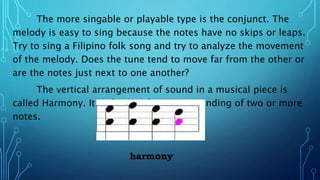
The vertical arrangement of sound in a musical piece is
called Harmony. It is the simultaneous sounding of two or more
notes.
harmony
This element can refer to the chords produced,
the accompaniment styles, and the countermelodies.
Harmony has two types, the consonance and the
dissonance. Consonant intervals in music are more
pleasant and seems like “everything is ok”. Dissonant
intervals on the other hand produce a more “creepy”
sound. It shows tension and needs to be resolved.
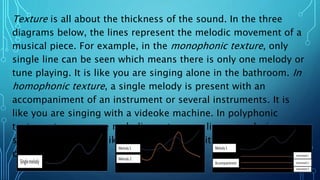
Texture is all about the thickness of the sound. In the three
diagrams below, the lines represent the melodic movement of a
musical piece. For example, in the monophonic texture, only
single line can be seen which means there is only one melody or
tune playing. It is like you are singing alone in the bathroom. In
homophonic texture, a single melody is present with an
accompaniment of an instrument or several instruments. It is
like you are singing with a videoke machine. In polyphonic
texture , two or more melodic contours or lines are playing
simultaneously. It is like you are singing with others in a choir
contest.
The timbre is the quality of sound heard. If you and your friend
sing “Bahay Kubo” in unison, you can easily distinguish each
other’s voice based on the quality of the sound of your voices.
Now that you have reconstructed your previous knowledge
about the different musical elements, you are now ready to
explore one of our cultural identities, the Luzon Lowland
Folksongs.
Can you recall what song your parents used to sing to you when
you were just a child? Or your grandparents‟ type of music
which you used to hear? What can you say about its tune? Is it
easy to remember? How about the tempo, is it hard to follow?
Luzon’s lowland music is made up of simple vocal and
instrumental music, primarily a product of daily experiences
from folks like farmers, fishermen, artisans, vendors, and other
common people. Family or community members learned this
music orally which they sang in their native tongue. Mostly, the
persons who originally made this music were unknown.

music 7 Q1 lesson.pptx

  • 10.
    MUSIC 7 QUARTER 1 –MODULE1: MUSIC OF LOWLANDS OF LUZON FOLK SONGS FROM THE LOWLANDS
  • 11.
    Before we explorethe music of the Luzon Lowlands, let us first recall the different musical elements that you have learned in your previous music lessons. The first element is Rhythm. Rhythm is the regular repeated pattern of sounds. It serves as the pulse of the musical composition. This element has three components: beat, tempo and meter. Do you think you can identify these components in a certain music while listening to it? Have you experienced nodding your head or tapping your foot every time you hear music? If so, you are actually feeling the beat of the music. In singing your favorite videoke tune, you are actually singing the rhythm because of the different note durations of the lyrics of
  • 12.
    Tempo is thespeed of the beat. Every music has its own speed which depends on the mood of the whole music. Most happy tunes are fast while sad music is relatively slow. The meter, which composes of time signature is the combination of strong beats (accent) and weak beats. For example 44 (four four) time signature is like counting 1, 2, 3, 4, 1, 2, 3, 4, 1, 2, 3, 4, and so on. This type of meter is commonly used in pop songs. In 34 time signature, you just count 1, 2, 3, 1, 2, 3, 1, 2, 3 and so on. This meter is commonly used in waltz music. For the time signature 24 (two four), you
  • 13.
    The second elementis about the softness and loudness of the music - the Dynamics. This can be gradual (crescendo and decrescendo) or sudden / abrupt. Dynamics in music suggests the emotional aspect of the composition. Soft music suggests themes such as love while loud or strong music suggests bravery or war. The next element is the most obvious among all musical elements – the Melody. It is the organized sequence (horizontal) of single notes. Melody
  • 14.
    In other words,it is the main tune of the musical piece. It is what you hear and what retains in your head. It has two types, the conjunct and the disjunct. conjunct disjunct Based on the diagram, which of the two do you think you can easily learn to sing? Why?
  • 15.
    The more singableor playable type is the conjunct. The melody is easy to sing because the notes have no skips or leaps. Try to sing a Filipino folk song and try to analyze the movement of the melody. Does the tune tend to move far from the other or are the notes just next to one another? The vertical arrangement of sound in a musical piece is called Harmony. It is the simultaneous sounding of two or more notes. harmony
  • 16.
    This element canrefer to the chords produced, the accompaniment styles, and the countermelodies. Harmony has two types, the consonance and the dissonance. Consonant intervals in music are more pleasant and seems like “everything is ok”. Dissonant intervals on the other hand produce a more “creepy” sound. It shows tension and needs to be resolved.
  • 17.
    Texture is allabout the thickness of the sound. In the three diagrams below, the lines represent the melodic movement of a musical piece. For example, in the monophonic texture, only single line can be seen which means there is only one melody or tune playing. It is like you are singing alone in the bathroom. In homophonic texture, a single melody is present with an accompaniment of an instrument or several instruments. It is like you are singing with a videoke machine. In polyphonic texture , two or more melodic contours or lines are playing simultaneously. It is like you are singing with others in a choir contest.
  • 18.
    The timbre isthe quality of sound heard. If you and your friend sing “Bahay Kubo” in unison, you can easily distinguish each other’s voice based on the quality of the sound of your voices. Now that you have reconstructed your previous knowledge about the different musical elements, you are now ready to explore one of our cultural identities, the Luzon Lowland Folksongs. Can you recall what song your parents used to sing to you when you were just a child? Or your grandparents‟ type of music which you used to hear? What can you say about its tune? Is it easy to remember? How about the tempo, is it hard to follow?
  • 19.
    Luzon’s lowland musicis made up of simple vocal and instrumental music, primarily a product of daily experiences from folks like farmers, fishermen, artisans, vendors, and other common people. Family or community members learned this music orally which they sang in their native tongue. Mostly, the persons who originally made this music were unknown.