Cultural intelligence
Uncovering our
toxic environment:
the cultural shifts which drive
our urge to eat
Cultural intelligence
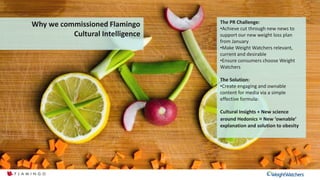
Why we commissioned Flamingo
Cultural Intelligence
The PR Challenge:
•Achieve cut through new news to
support our new weight loss plan
from January
•Make Weight Watchers relevant,
current and desirable
•Ensure consumers choose Weight
Watchers
The Solution:
•Create engaging and ownable
content for media via a simple
effective formula:
Cultural Insights + New science
around Hedonics = New ‘ownable’
explanation and solution to obesity
Cultural intelligence
WHAT ARE THE KEY CHANGES IN OUR WORLD WHICH AFFECT OUR URGE TO EAT?
FROM PEOPLE TO ENVIRONMENT
FROM GUILT TO EMPOWERMENT
Cultural intelligenceCultural Intelligence Lens
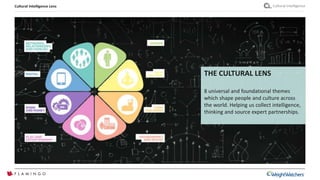
THE CULTURAL LENS
8 universal and foundational themes
which shape people and culture across
the world. Helping us collect intelligence,
thinking and source expert partnerships.
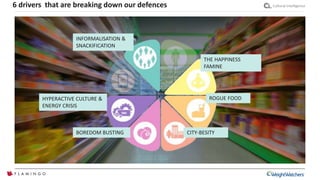
Cultural intelligence6 drivers that are breaking down our defences
INFORMALISATION &
SNACKIFICATION
THE HAPPINESS
FAMINE
ROGUE FOOD
CITY-BESITYBOREDOM BUSTING
HYPERACTIVE CULTURE &
ENERGY CRISIS
Cultural intelligenceCultural Intelligence came up with 6 drivers that are breaking down our defences and stimulating over-eating….
ROGUE FOOD
Cultural intelligence
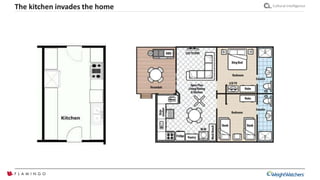
The kitchen invades the home
Cultural intelligence
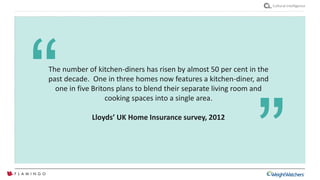
The number of kitchen-diners has risen by almost 50 per cent in the
past decade. One in three homes now features a kitchen-diner, and
one in five Britons plans to blend their separate living room and
cooking spaces into a single area.
Lloyds’ UK Home Insurance survey, 2012
“
”
Cultural intelligenceThe kitchen invades the office
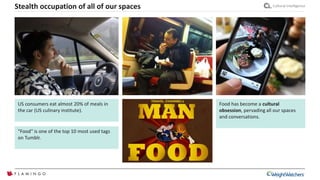
Cultural intelligenceStealth occupation of all of our spaces
US consumers eat almost 20% of meals in
the car (US culinary institute).
"Food" is one of the top 10 most used tags
on Tumblr.
Food has become a cultural
obsession, pervading all our spaces
and conversations.
Cultural intelligenceCultural Intelligence came up with 6 drivers that are breaking down our defences and stimulating over-eating….
HYPERACTIVE
CULTURE
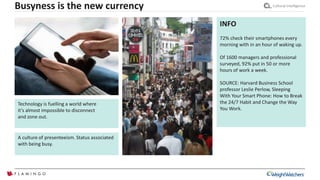
Cultural intelligenceBusyness is the new currency
Technology is fuelling a world where
it’s almost impossible to disconnect
and zone out.
A culture of presenteeism. Status associated
with being busy.
INFO
72% check their smartphones every
morning with in an hour of waking up.
Of 1600 managers and professional
surveyed, 92% put in 50 or more
hours of work a week.
SOURCE: Harvard Business School
professor Leslie Perlow, Sleeping
With Your Smart Phone: How to Break
the 24/7 Habit and Change the Way
You Work.
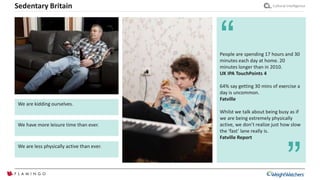
Cultural intelligenceSedentary Britain
We are kidding ourselves.
We have more leisure time than ever.
People are spending 17 hours and 30
minutes each day at home. 20
minutes longer than in 2010.
UK IPA TouchPoints 4
64% say getting 30 mins of exercise a
day is uncommon.
Fatville
Whilst we talk about being busy as if
we are being extremely physically
active, we don’t realize just how slow
the ‘fast’ lane really is.
Fatville Report
We are less physically active than ever.
“
”
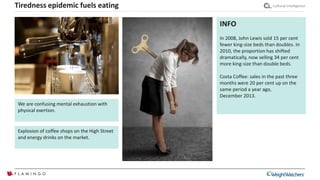
Cultural intelligenceTiredness epidemic fuels eating
We are confusing mental exhaustion with
physical exertion.
Explosion of coffee shops on the High Street
and energy drinks on the market.
INFO
In 2008, John Lewis sold 15 per cent
fewer king-size beds than doubles. In
2010, the proportion has shifted
dramatically, now selling 34 per cent
more king-size than double beds.
Costa Coffee: sales in the past three
months were 20 per cent up on the
same period a year ago,
December 2013.
Cultural intelligence
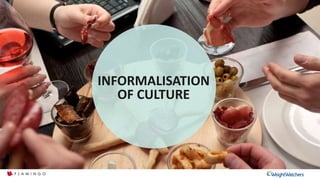
INFORMALISATION
OF CULTURE
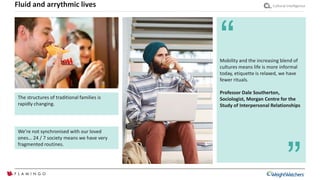
Cultural intelligenceFluid and arrythmic lives
The structures of traditional families is
rapidly changing.
Mobility and the increasing blend of
cultures means life is more informal
today, etiquette is relaxed, we have
fewer rituals.
Professor Dale Southerton,
Sociologist, Morgan Centre for the
Study of Interpersonal Relationships
We’re not synchronised with our loved
ones… 24 / 7 society means we have very
fragmented routines.
“
”
Cultural intelligence
When the family does eat together, 40% start eating before
others arrive, 38% use mobile phones and 10% think it’s OK to
wear headphones.
Survey by Bisto 2011
“
”
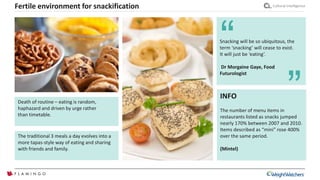
Cultural intelligenceFertile environment for snackification
Death of routine – eating is random,
haphazard and driven by urge rather
than timetable.
The traditional 3 meals a day evolves into a
more tapas-style way of eating and sharing
with friends and family.
Snacking will be so ubiquitous, the
term ‘snacking’ will cease to exist.
It will just be ‘eating’.
Dr Morgaine Gaye, Food
Futurologist
“
”INFO
The number of menu items in
restaurants listed as snacks jumped
nearly 170% between 2007 and 2010.
Items described as “mini” rose 400%
over the same period.
(Mintel)
Cultural intelligence
All of these trends shape our increasingly toxic environment
They break down our defences and make it harder to
make healthy choices.
Here’s how Weight Watchers harnessed this understanding…….
Cultural intelligence
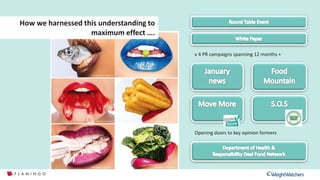
How we harnessed this understanding to
maximum effect ….
Opening doors to key opinion formers
x 4 PR campaigns spanning 12 months +
Cultural intelligence
We’re living in a challenging environment today. One in which we
need to survive. We need to give people skills to do this.
We need to get the message out that your environment is
stacked against you.
Professor David Stensel
“
”
Cultural intelligence
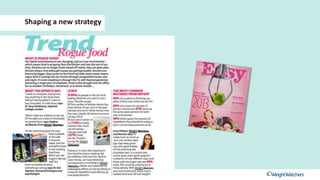
Shaping a new strategy
Cultural intelligence
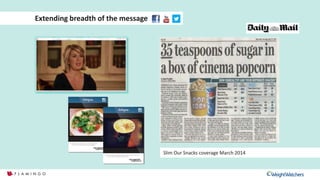
Extending breadth of the message
Slim Our Snacks coverage March 2014
Cultural intelligence
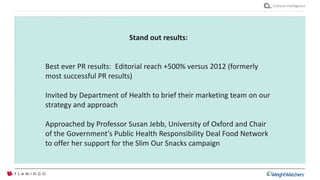
Stand out results:
Best ever PR results: Editorial reach +500% versus 2012 (formerly
most successful PR results)
Invited by Department of Health to brief their marketing team on our
strategy and approach
Approached by Professor Susan Jebb, University of Oxford and Chair
of the Government’s Public Health Responsibility Deal Food Network
to offer her support for the Slim Our Snacks campaign
Cultural intelligence

Mrs presentation 17mar14final

  • 1.
    Cultural intelligence Uncovering our toxicenvironment: the cultural shifts which drive our urge to eat
  • 2.
    Cultural intelligence Why wecommissioned Flamingo Cultural Intelligence The PR Challenge: •Achieve cut through new news to support our new weight loss plan from January •Make Weight Watchers relevant, current and desirable •Ensure consumers choose Weight Watchers The Solution: •Create engaging and ownable content for media via a simple effective formula: Cultural Insights + New science around Hedonics = New ‘ownable’ explanation and solution to obesity
  • 3.
    Cultural intelligence WHAT ARETHE KEY CHANGES IN OUR WORLD WHICH AFFECT OUR URGE TO EAT? FROM PEOPLE TO ENVIRONMENT FROM GUILT TO EMPOWERMENT
  • 4.
    Cultural intelligenceCultural IntelligenceLens THE CULTURAL LENS 8 universal and foundational themes which shape people and culture across the world. Helping us collect intelligence, thinking and source expert partnerships.
  • 5.
    Cultural intelligence6 driversthat are breaking down our defences INFORMALISATION & SNACKIFICATION THE HAPPINESS FAMINE ROGUE FOOD CITY-BESITYBOREDOM BUSTING HYPERACTIVE CULTURE & ENERGY CRISIS
  • 6.
    Cultural intelligenceCultural Intelligencecame up with 6 drivers that are breaking down our defences and stimulating over-eating…. ROGUE FOOD
  • 7.
  • 8.
    Cultural intelligence The numberof kitchen-diners has risen by almost 50 per cent in the past decade. One in three homes now features a kitchen-diner, and one in five Britons plans to blend their separate living room and cooking spaces into a single area. Lloyds’ UK Home Insurance survey, 2012 “ ”
  • 9.
  • 10.
    Cultural intelligenceStealth occupationof all of our spaces US consumers eat almost 20% of meals in the car (US culinary institute). "Food" is one of the top 10 most used tags on Tumblr. Food has become a cultural obsession, pervading all our spaces and conversations.
  • 11.
    Cultural intelligenceCultural Intelligencecame up with 6 drivers that are breaking down our defences and stimulating over-eating…. HYPERACTIVE CULTURE
  • 12.
    Cultural intelligenceBusyness isthe new currency Technology is fuelling a world where it’s almost impossible to disconnect and zone out. A culture of presenteeism. Status associated with being busy. INFO 72% check their smartphones every morning with in an hour of waking up. Of 1600 managers and professional surveyed, 92% put in 50 or more hours of work a week. SOURCE: Harvard Business School professor Leslie Perlow, Sleeping With Your Smart Phone: How to Break the 24/7 Habit and Change the Way You Work.
  • 13.
    Cultural intelligenceSedentary Britain Weare kidding ourselves. We have more leisure time than ever. People are spending 17 hours and 30 minutes each day at home. 20 minutes longer than in 2010. UK IPA TouchPoints 4 64% say getting 30 mins of exercise a day is uncommon. Fatville Whilst we talk about being busy as if we are being extremely physically active, we don’t realize just how slow the ‘fast’ lane really is. Fatville Report We are less physically active than ever. “ ”
  • 14.
    Cultural intelligenceTiredness epidemicfuels eating We are confusing mental exhaustion with physical exertion. Explosion of coffee shops on the High Street and energy drinks on the market. INFO In 2008, John Lewis sold 15 per cent fewer king-size beds than doubles. In 2010, the proportion has shifted dramatically, now selling 34 per cent more king-size than double beds. Costa Coffee: sales in the past three months were 20 per cent up on the same period a year ago, December 2013.
  • 15.
  • 16.
    Cultural intelligenceFluid andarrythmic lives The structures of traditional families is rapidly changing. Mobility and the increasing blend of cultures means life is more informal today, etiquette is relaxed, we have fewer rituals. Professor Dale Southerton, Sociologist, Morgan Centre for the Study of Interpersonal Relationships We’re not synchronised with our loved ones… 24 / 7 society means we have very fragmented routines. “ ”
  • 17.
    Cultural intelligence When thefamily does eat together, 40% start eating before others arrive, 38% use mobile phones and 10% think it’s OK to wear headphones. Survey by Bisto 2011 “ ”
  • 18.
    Cultural intelligenceFertile environmentfor snackification Death of routine – eating is random, haphazard and driven by urge rather than timetable. The traditional 3 meals a day evolves into a more tapas-style way of eating and sharing with friends and family. Snacking will be so ubiquitous, the term ‘snacking’ will cease to exist. It will just be ‘eating’. Dr Morgaine Gaye, Food Futurologist “ ”INFO The number of menu items in restaurants listed as snacks jumped nearly 170% between 2007 and 2010. Items described as “mini” rose 400% over the same period. (Mintel)
  • 19.
    Cultural intelligence All ofthese trends shape our increasingly toxic environment They break down our defences and make it harder to make healthy choices. Here’s how Weight Watchers harnessed this understanding…….
  • 20.
    Cultural intelligence How weharnessed this understanding to maximum effect …. Opening doors to key opinion formers x 4 PR campaigns spanning 12 months +
  • 21.
    Cultural intelligence We’re livingin a challenging environment today. One in which we need to survive. We need to give people skills to do this. We need to get the message out that your environment is stacked against you. Professor David Stensel “ ”
  • 22.
  • 23.
  • 24.
    Cultural intelligence Extending breadthof the message Slim Our Snacks coverage March 2014
  • 25.
  • 26.
    Cultural intelligence Stand outresults: Best ever PR results: Editorial reach +500% versus 2012 (formerly most successful PR results) Invited by Department of Health to brief their marketing team on our strategy and approach Approached by Professor Susan Jebb, University of Oxford and Chair of the Government’s Public Health Responsibility Deal Food Network to offer her support for the Slim Our Snacks campaign
  • 27.

Editor's Notes

  • #4 Weight Watchers partnered with Flamingo, to map the way we live in this toxic environment, explore the key changes in our world and crucially how it affects our urge to eat. Fully explored were the internal drivers of over-eating Less explored were the societal and environmental factors which make it harder for us to make healthy choices .
  • #5 Out Approach Our cultural lens…….the foundational themes which shape people and culture across the world…. No primary consumer research…….we were trying to understand how environmental, social and cultural stuctures and changes are shaping behaviour. This was not an investigation of attiudes, perceptions, intentions from an internal consumer motivation perspective….
  • #6 Powerful drivers of over eating. Today we will focus on Rogue Food Hyper Active Culture Informalisation
  • #7 The spaces we live and work in are undergoing dramatic change and food has gone rogue within them.
  • #8 The cellular structure of the house is disintegrating. Technology allows for every room to be a media room, work room, game room or reading room The kitchen has become the emotional centre of the home, especially as it is being defined as a place where people can show their love for others It means food is never far from our grasp
  • #10 As a counter-point to the lack of time spent together, and the fact we work longer hours, kitchens are in vogue with architects designing the future office spaces Positive social influence however can also drive snacking behaviours
  • #11 Liminal spaces, TV entertainment , food porn: Food as cultural obsession pervading all our spaces and conversations.
  • #13 Economic squeeze is putting the pressure on us to ‘do’ more than ever to feel secure in our jobs and family life.
  • #17  British society has been undergoing a process of gradual informalisation in recent decades and is set to continue due to prevailing social and cultural trends.
  • #19 The resultant breakdown of routines and rituals has provided a fertile environment for a snacking mentality and set of occasions (‘snackification’) which hold this lifestyle together.