Axtell Campus
Master Plan Project

            Axtell, Nebraska
 Professors Ron Sakal and Sallie Hood
       University of Notre Dame
    Center for Building Communities
             September 2012
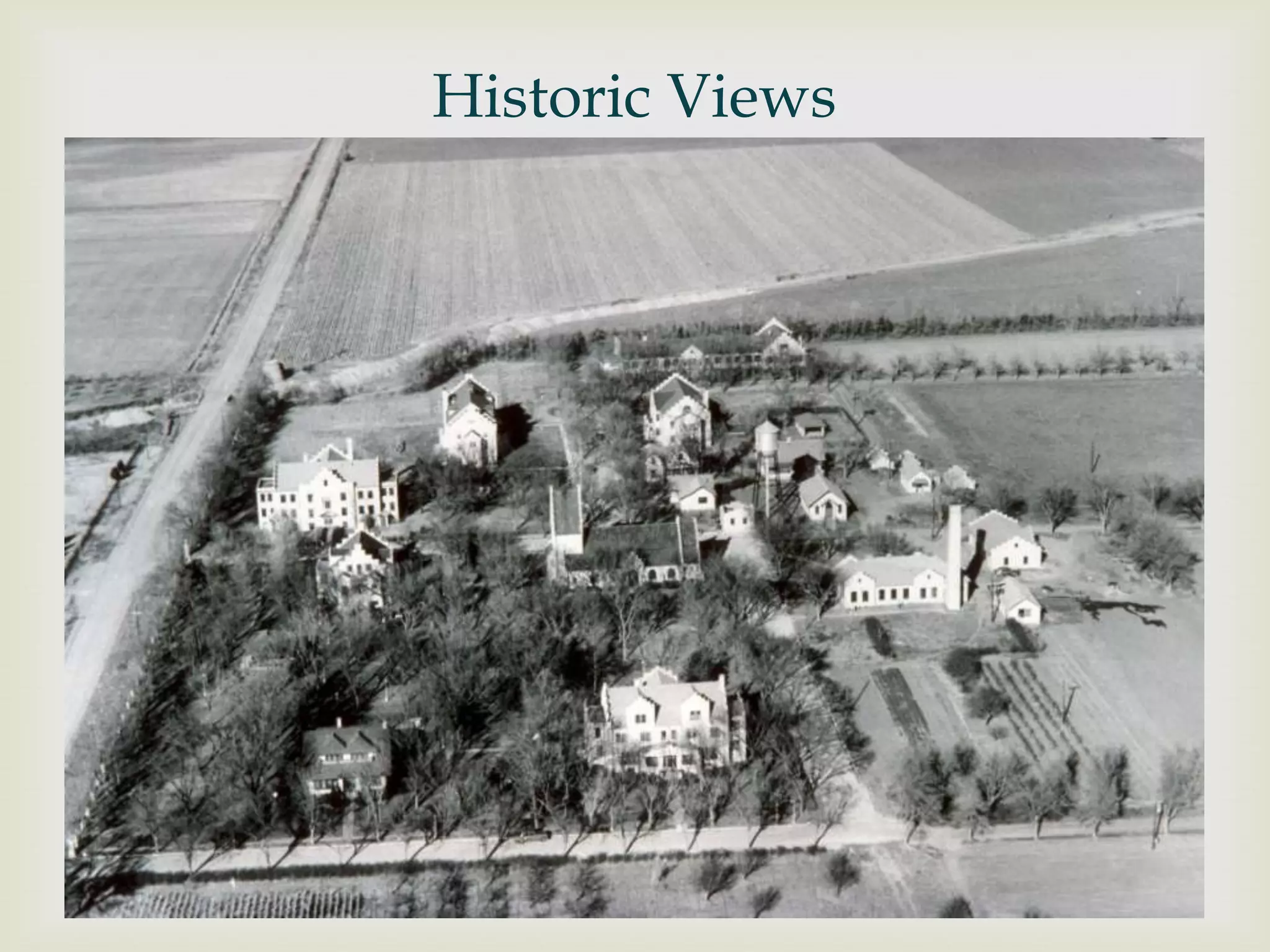
Historic Views
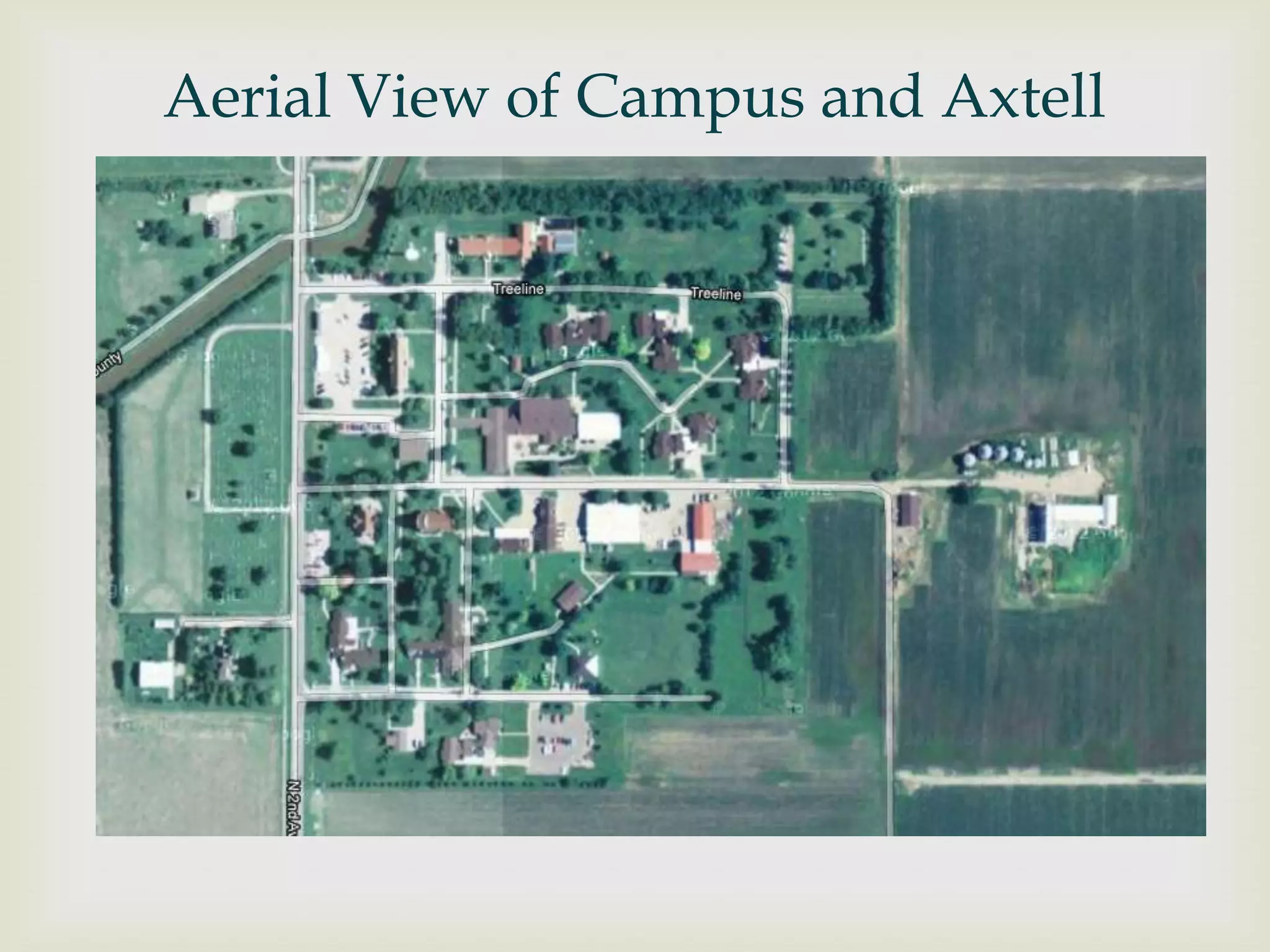
Aerial View of Campus and Axtell
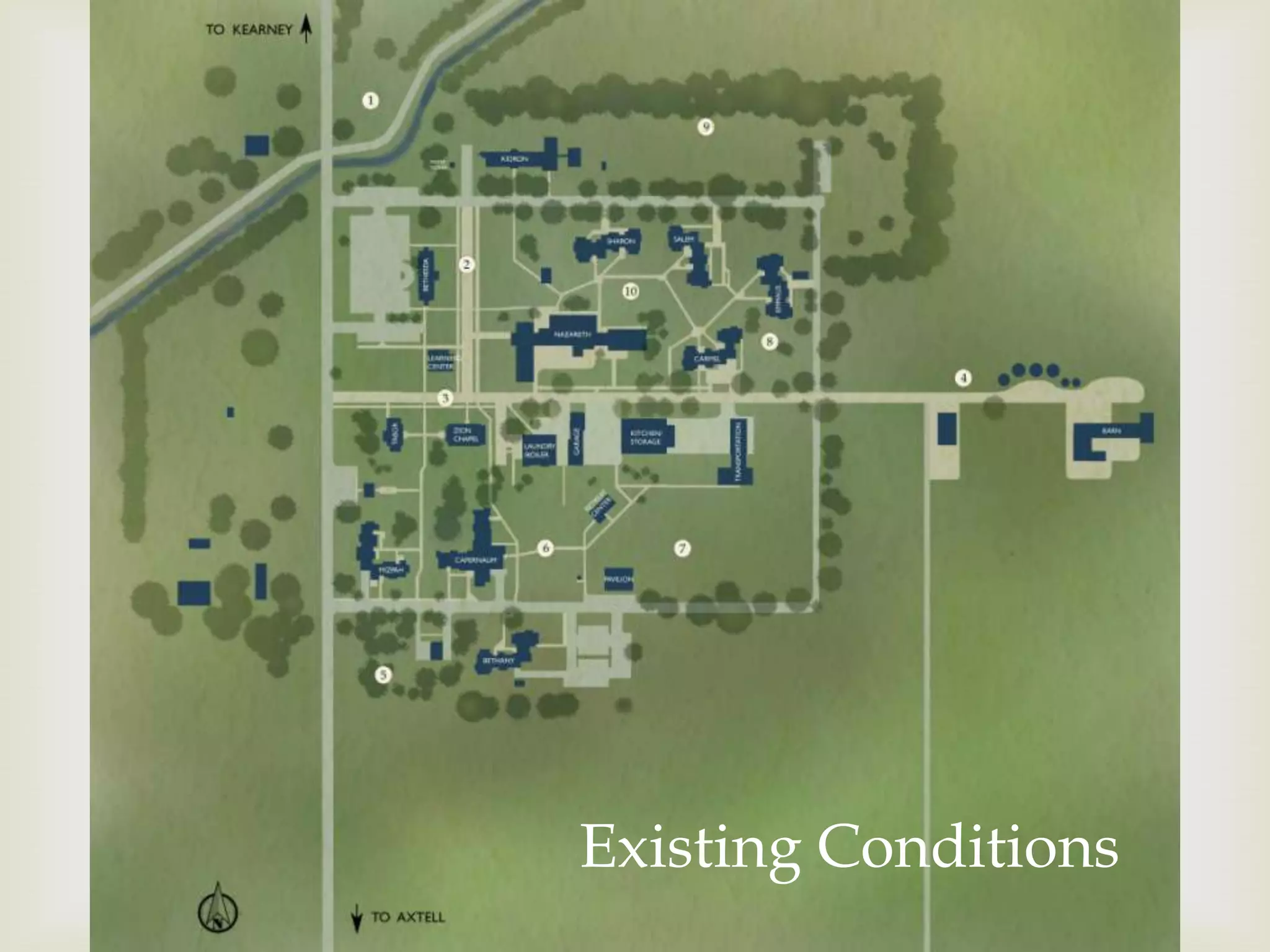
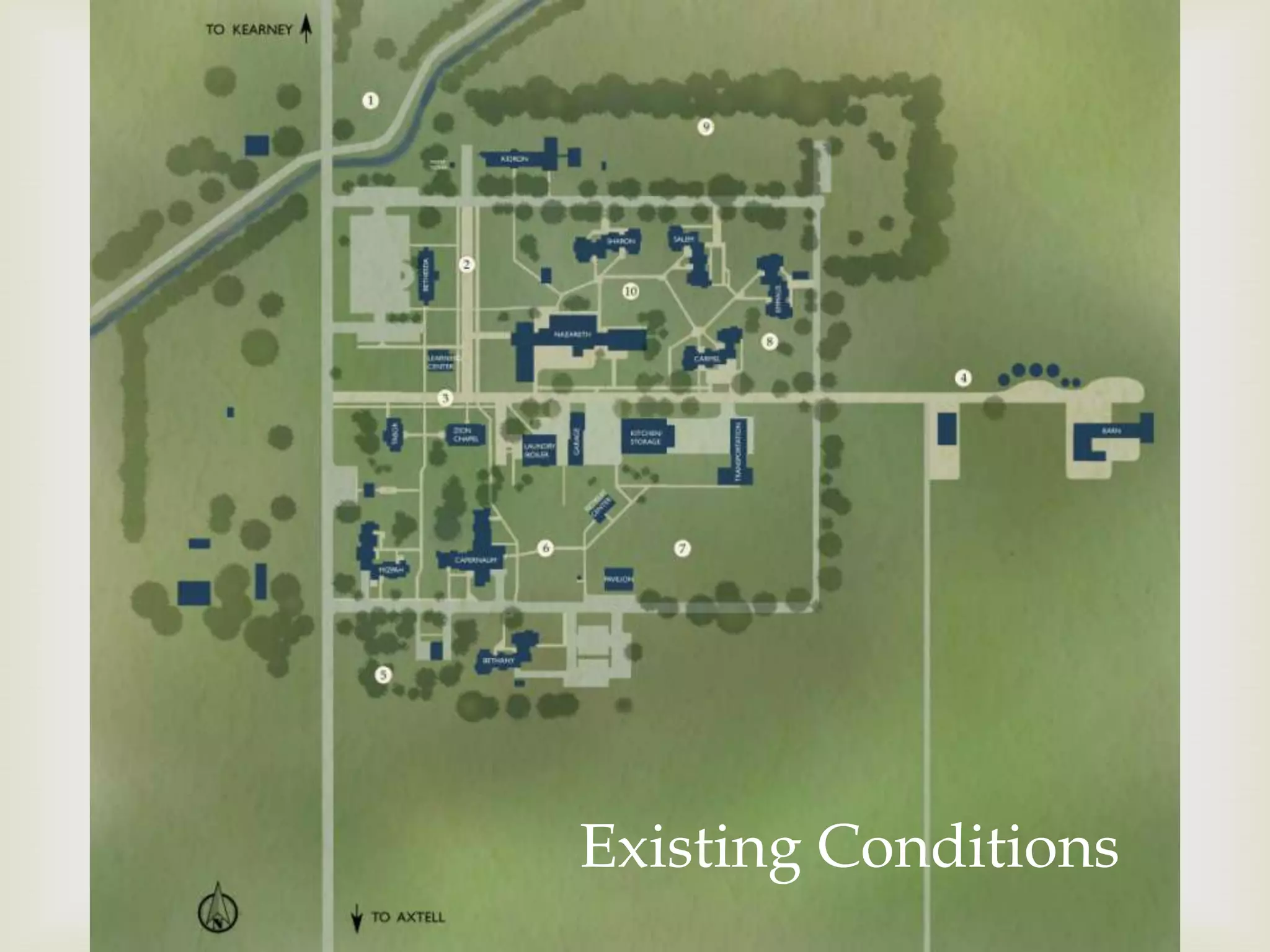
Existing Conditions
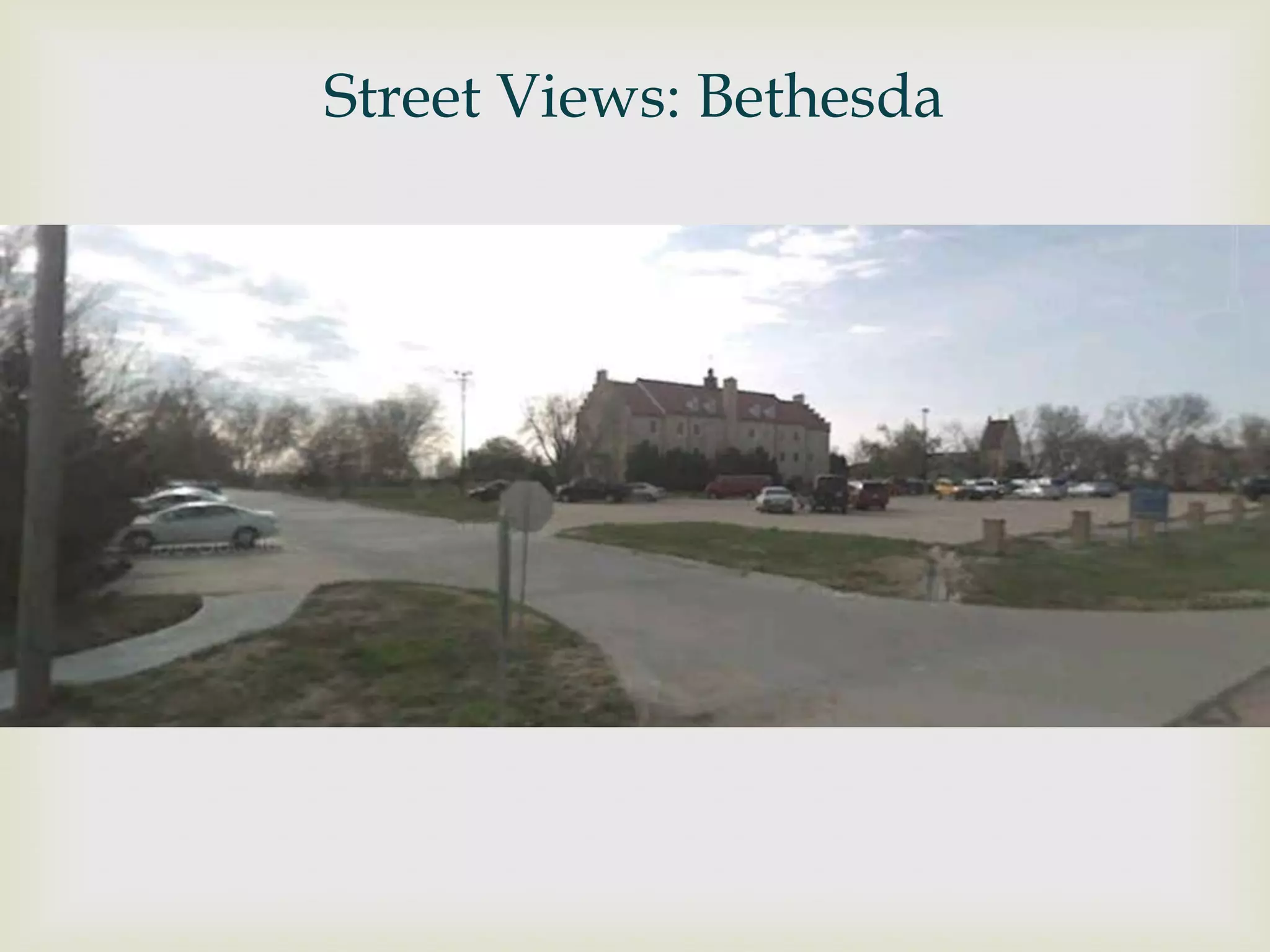
Street Views: Bethesda
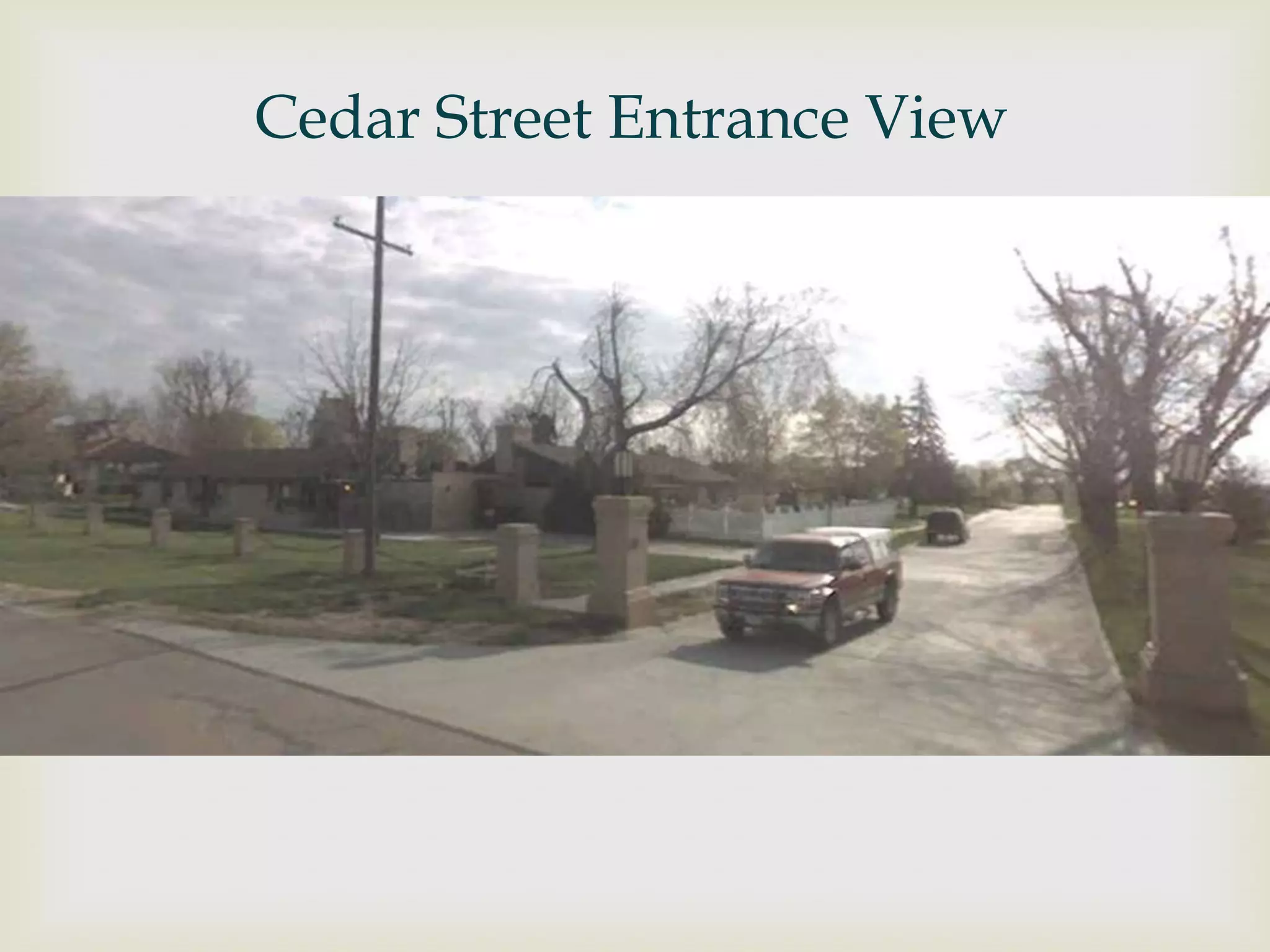
Cedar Street Entrance View
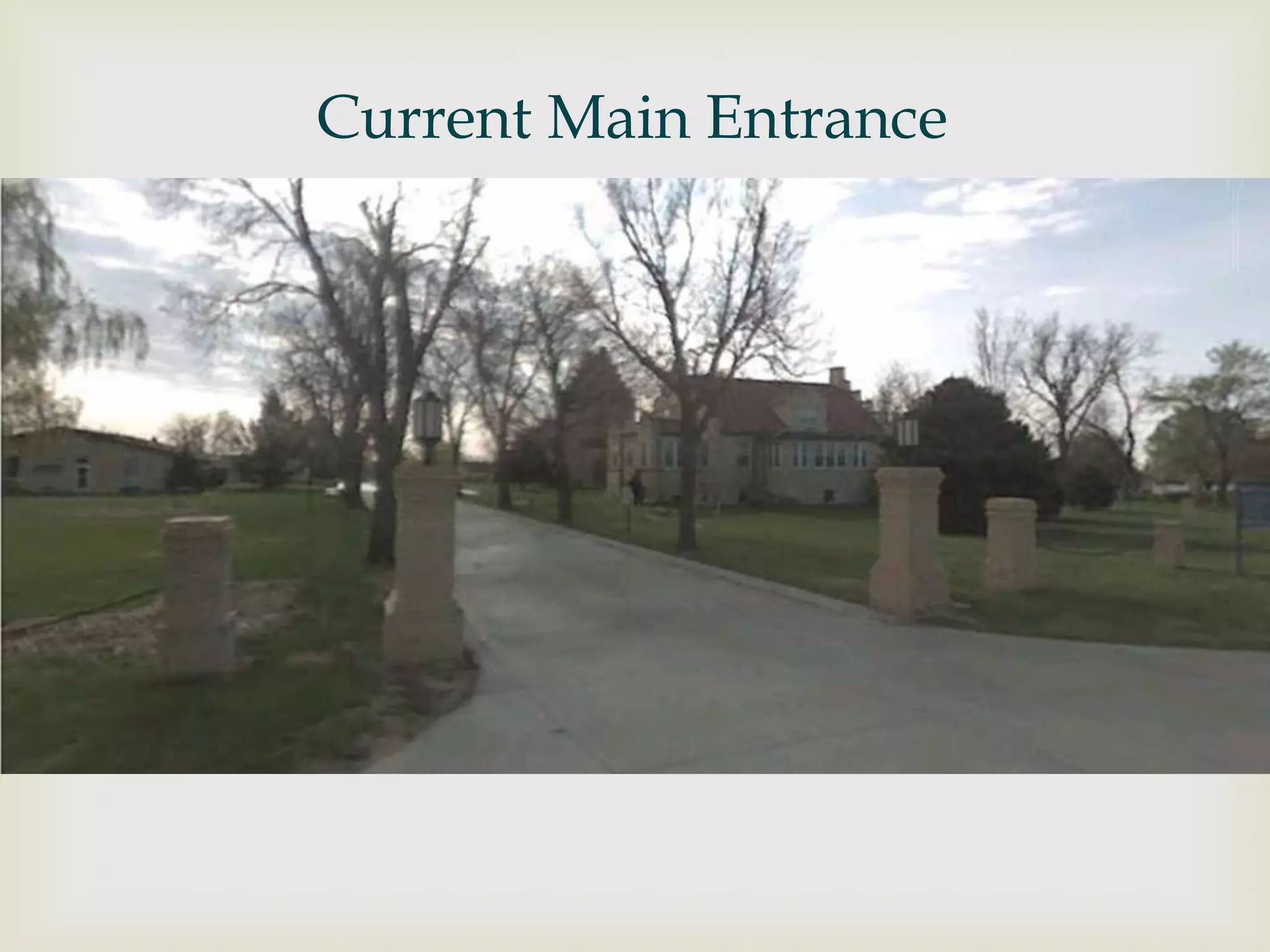
Current Main Entrance
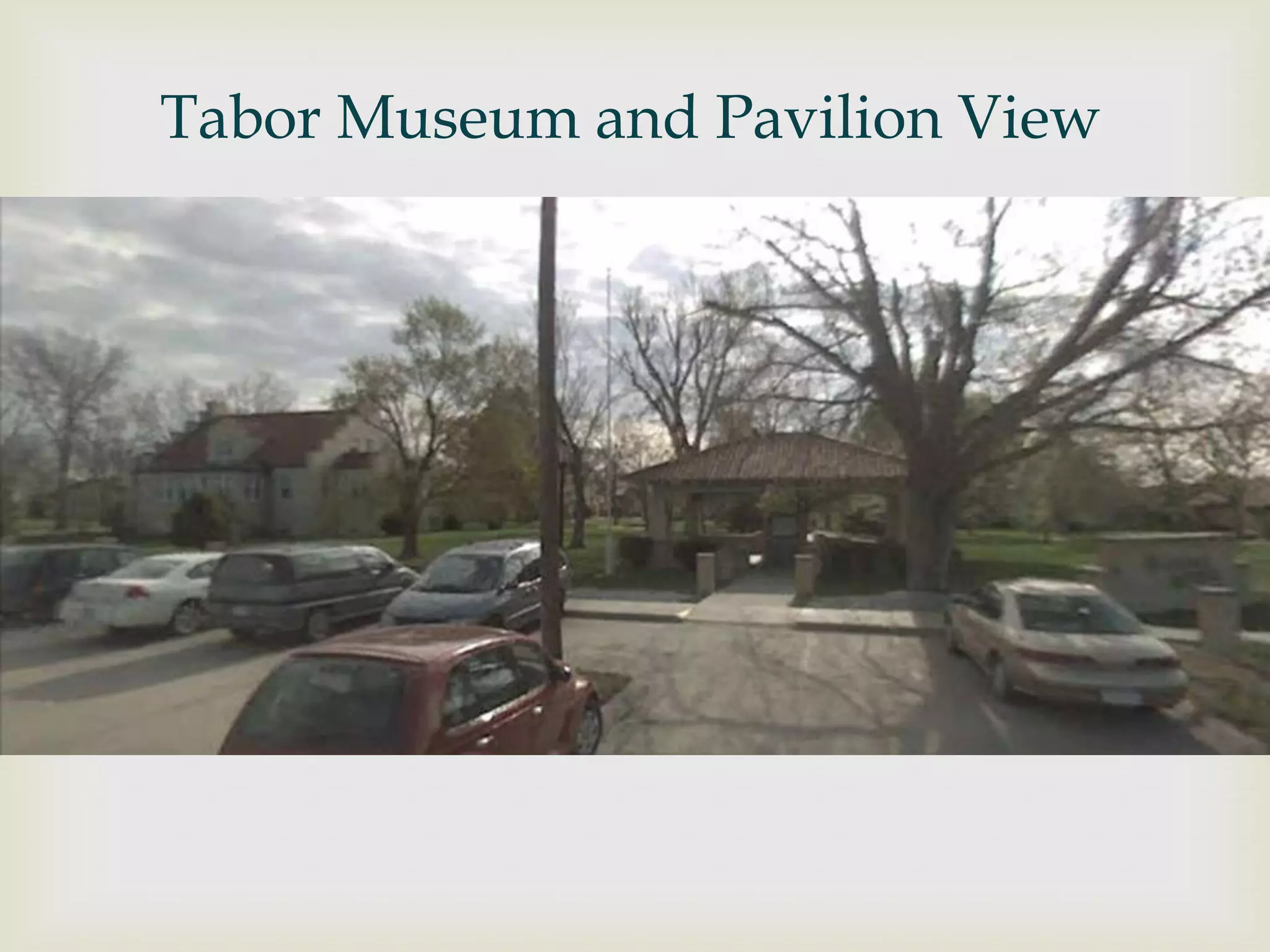
Tabor Museum and Pavilion View
1                  Areas of opportunity
                       7


            2


3

                                            4

    5
                   6


                Existing Conditions
The MOSAIC Vision

 Create a place that encourages family and residential
  activity.
 Create a place that encourages community
  activities and possibly bring in revenue.
 Create an environment that can further aid residents in
  pursuit of their goals.
 Create a connection between the MOSAIC campus and
  Axtell.
 Introduce new landscaping techniques to define
  spaces and pedestrian movement
1           Areas of opportunity


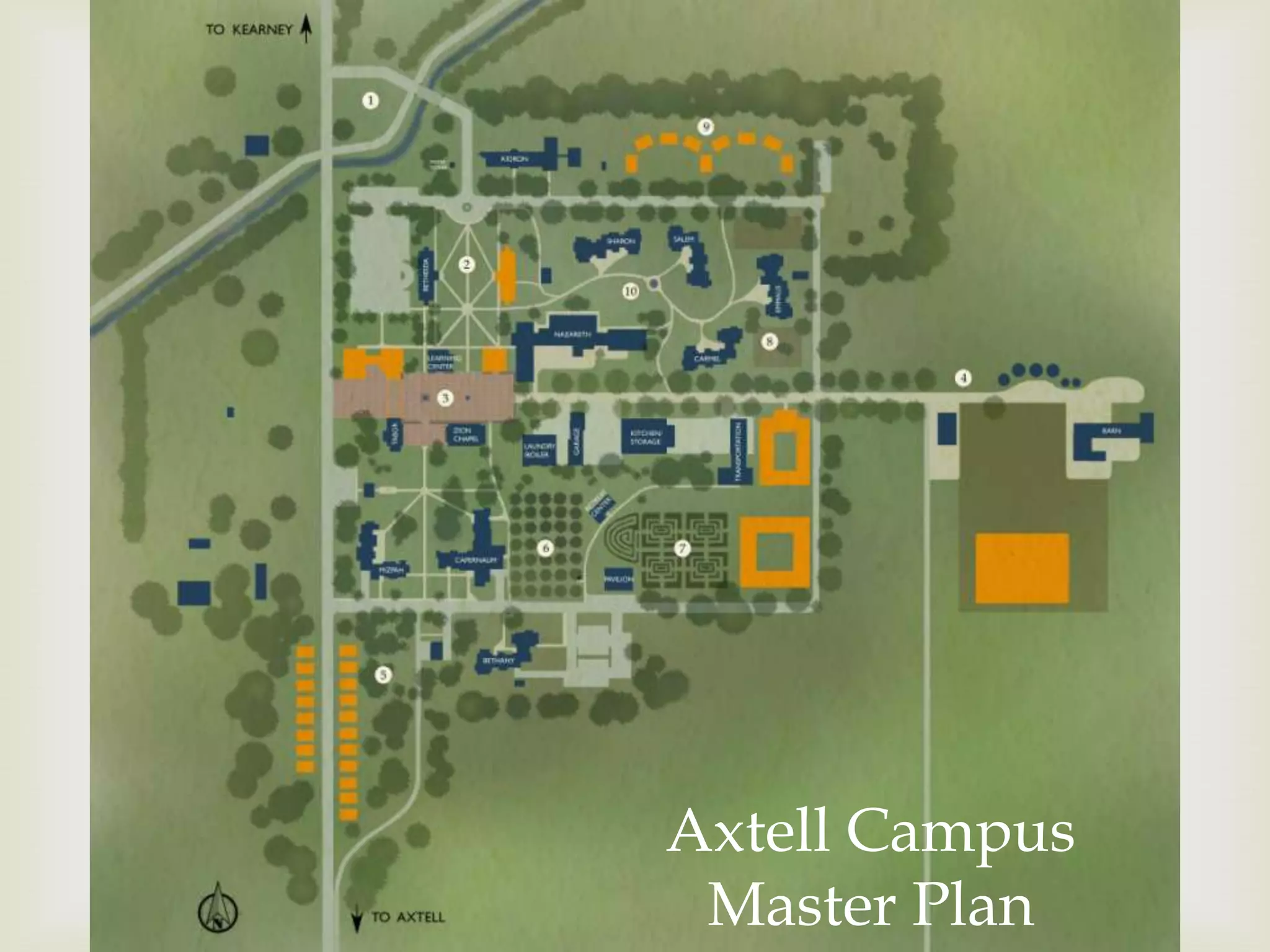
       Axtell Campus
    Existing Conditions
         Master Plan
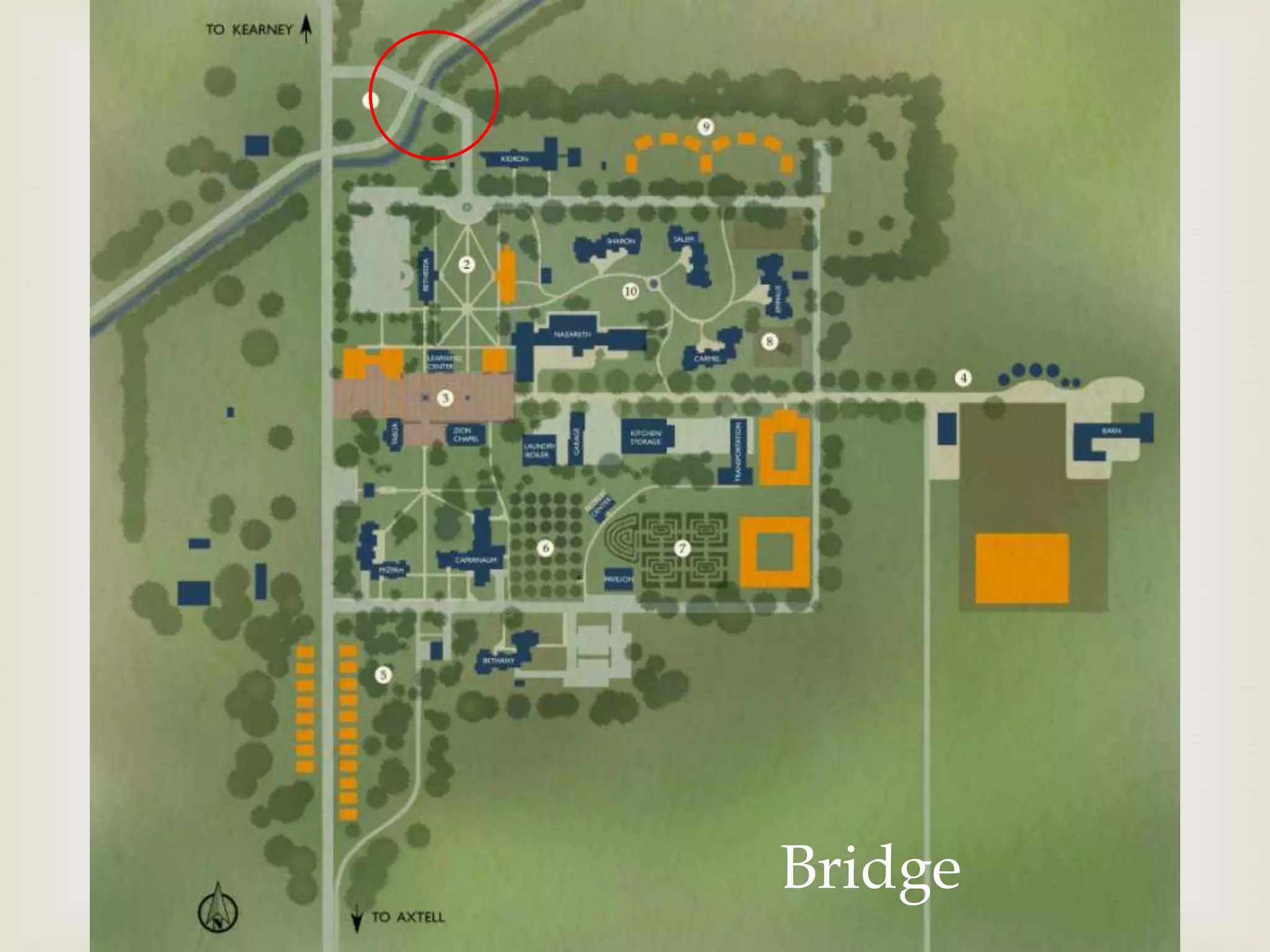
Bridge
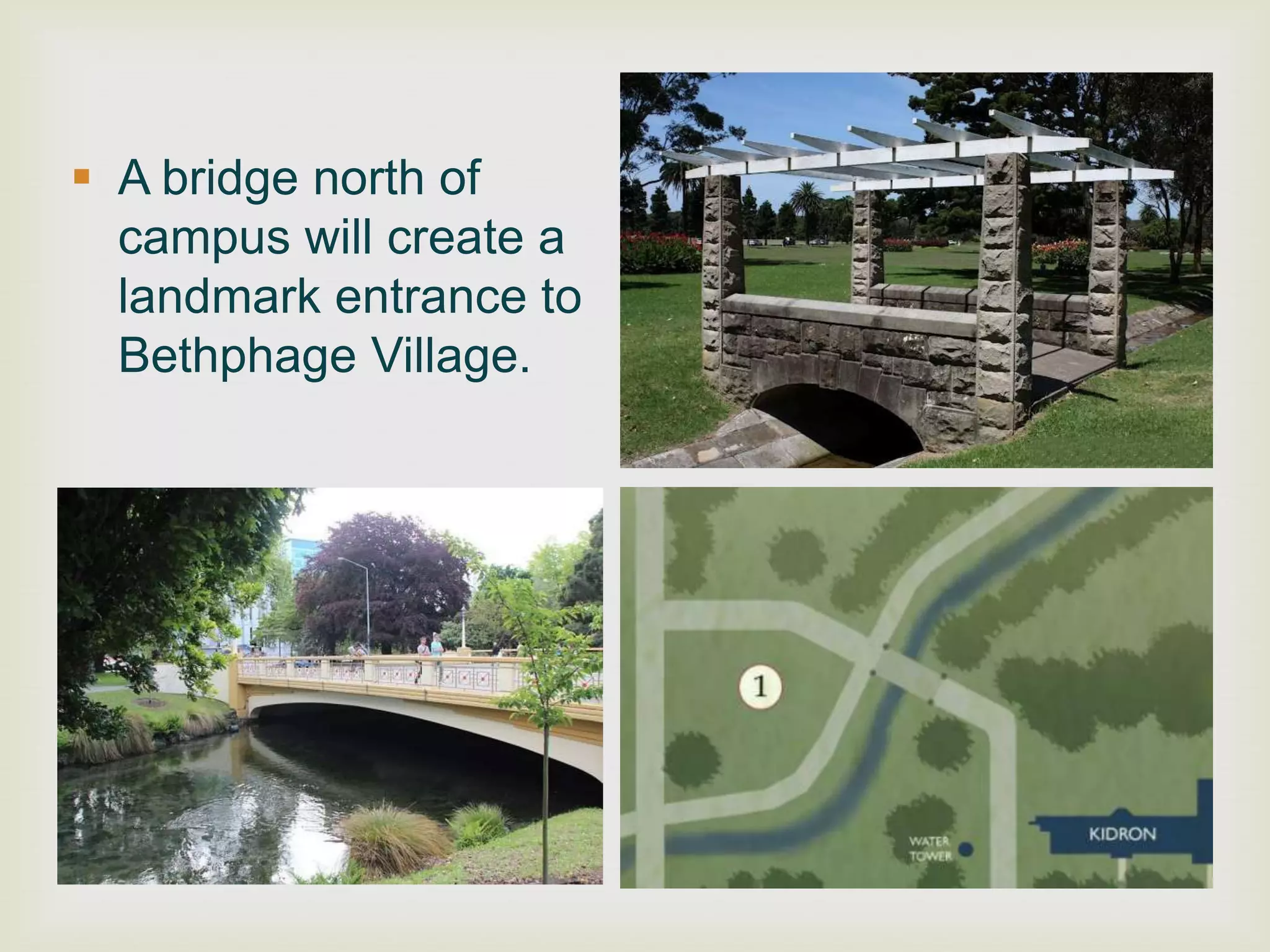
 A bridge north of
  campus will create a
  landmark entrance to
  Bethphage Village.
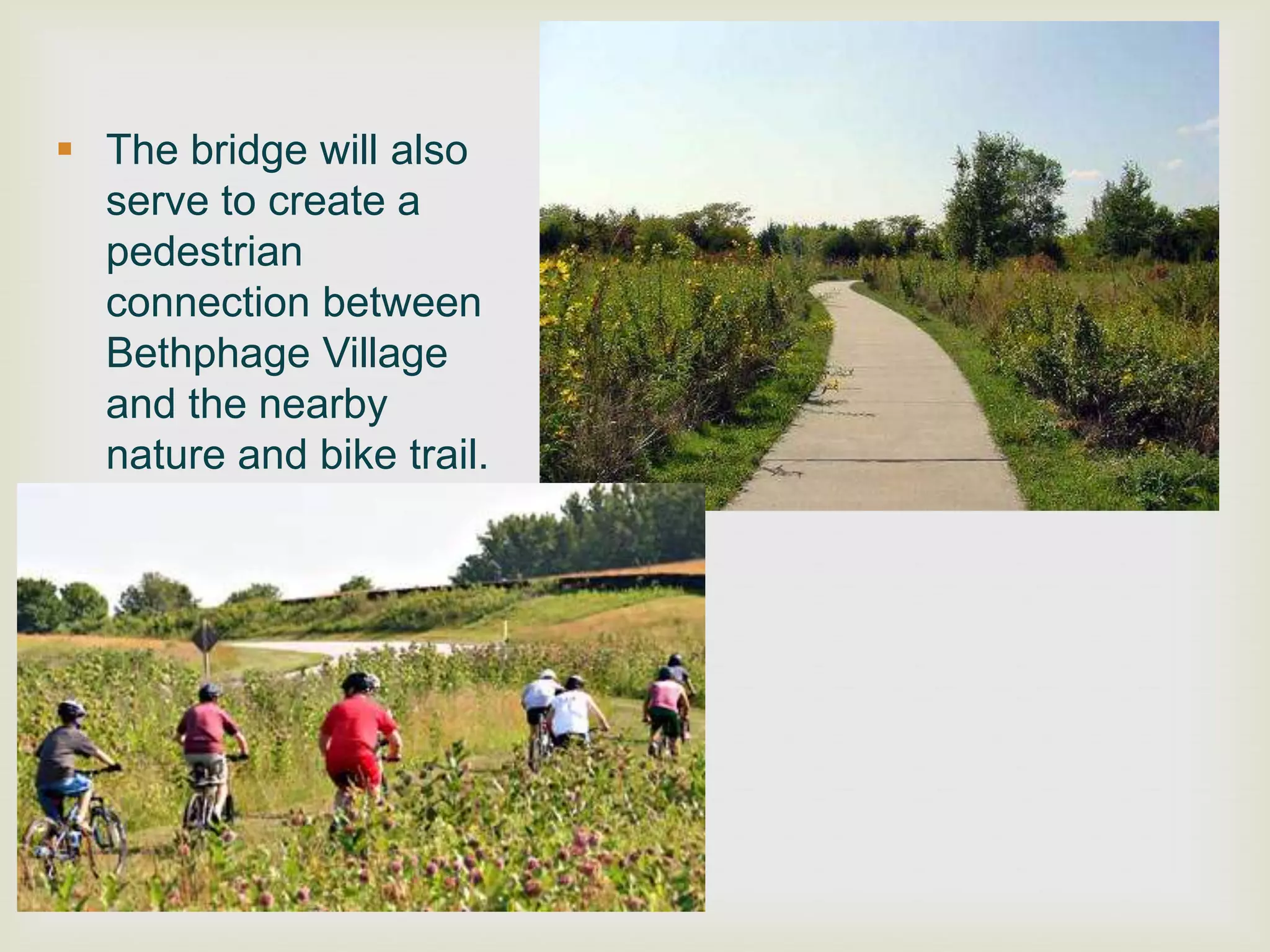
 The bridge will also
  serve to create a
  pedestrian
  connection between
  Bethphage Village
  and the nearby
  nature and bike trail.
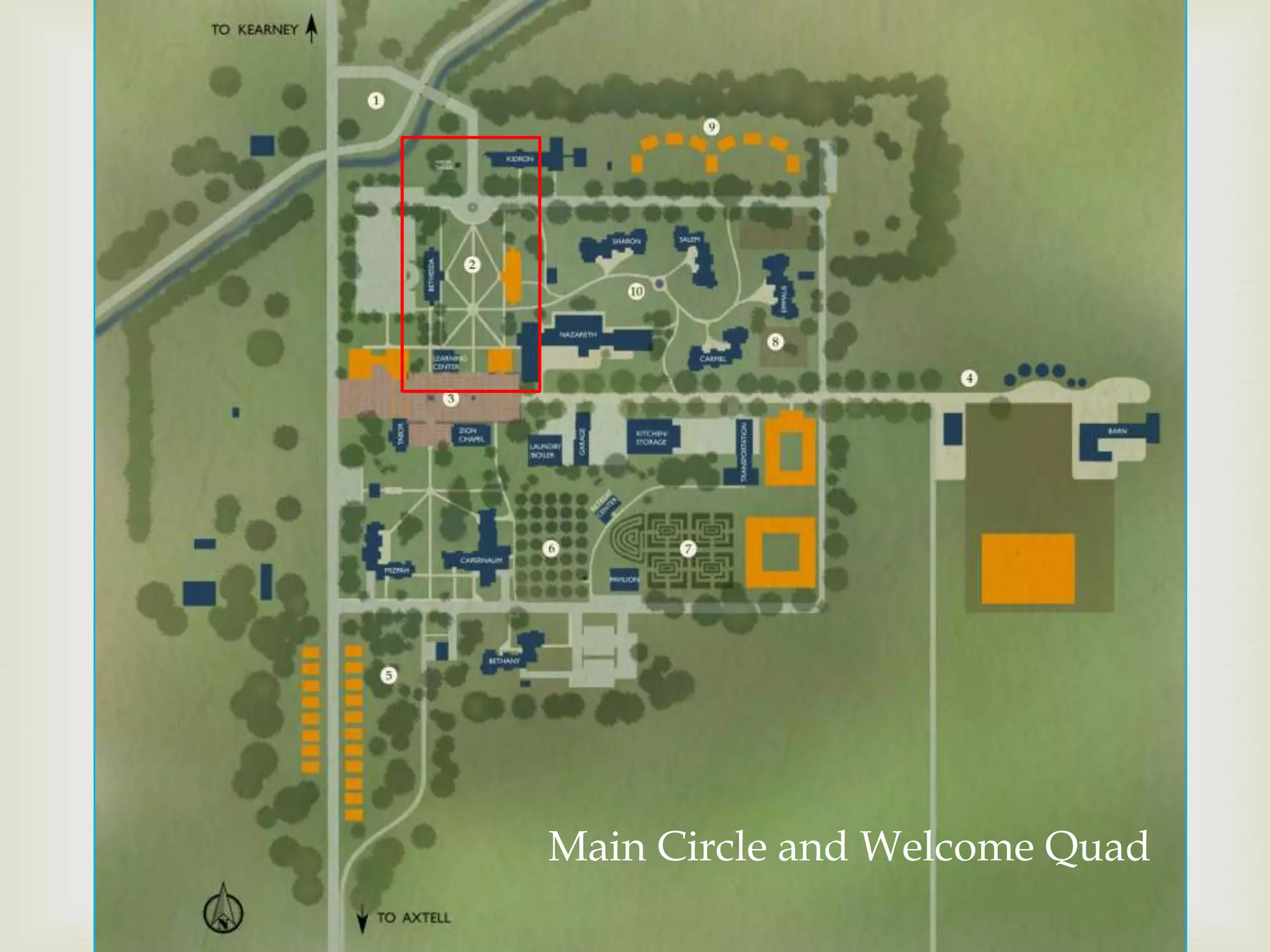
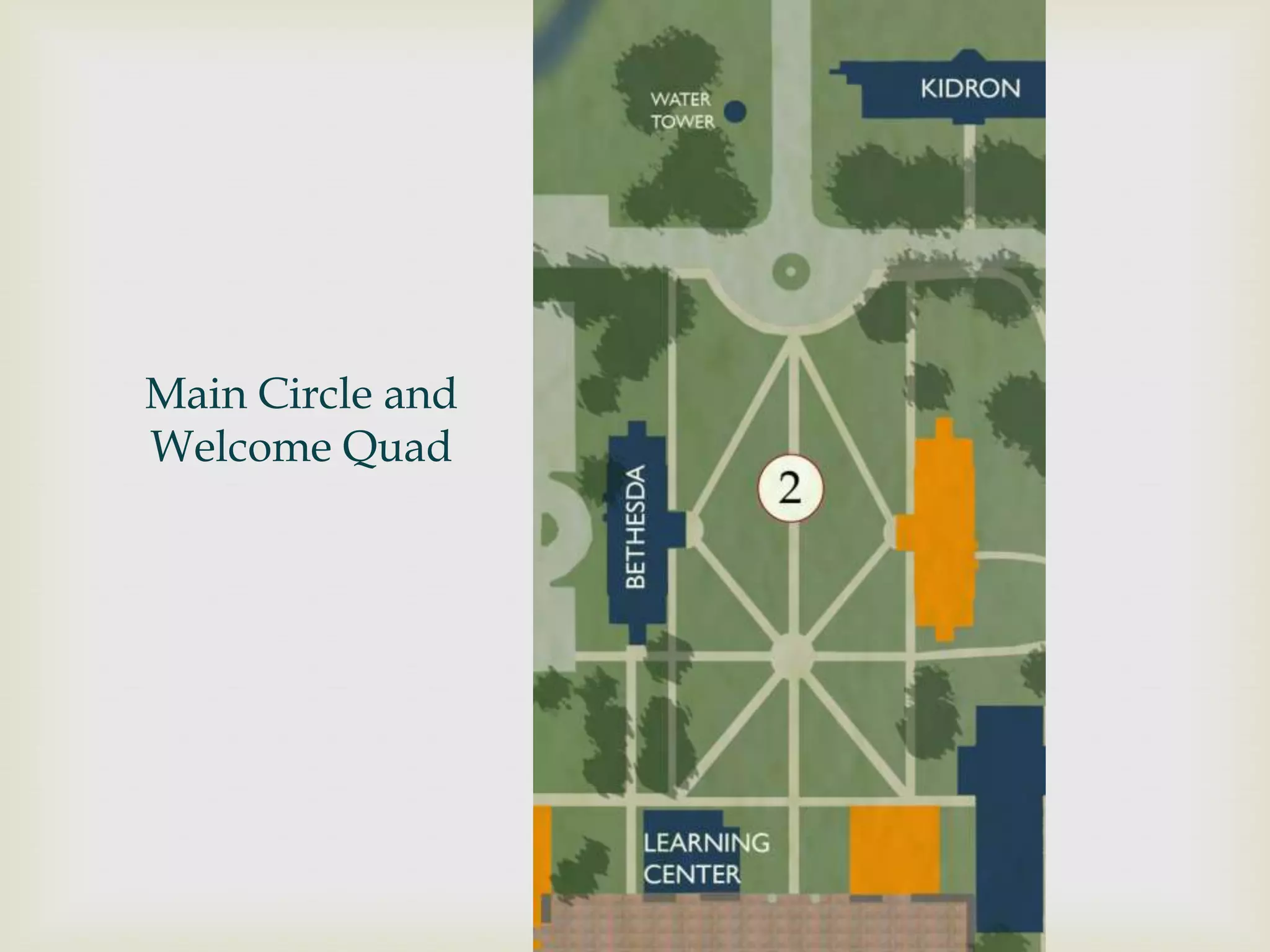
Main Circle and Welcome Quad
Main Circle and
Welcome Quad
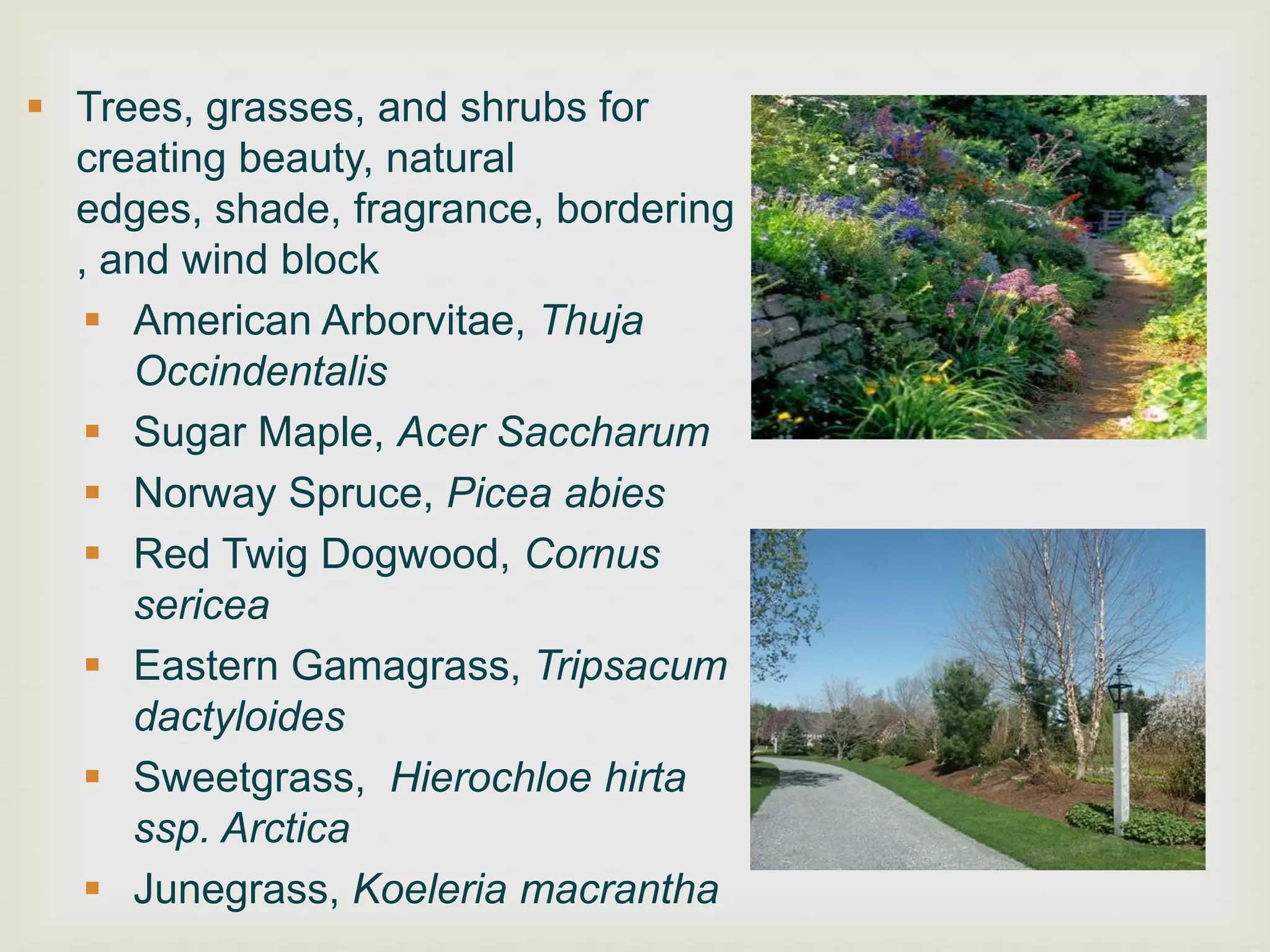
 Trees, grasses, and shrubs for
  creating beauty, natural
  edges, shade, fragrance, bordering
  , and wind block
    American Arborvitae, Thuja
     Occindentalis
    Sugar Maple, Acer Saccharum
    Norway Spruce, Picea abies
    Red Twig Dogwood, Cornus
     sericea
    Eastern Gamagrass, Tripsacum
     dactyloides
    Sweetgrass, Hierochloe hirta
     ssp. Arctica
    Junegrass, Koeleria macrantha
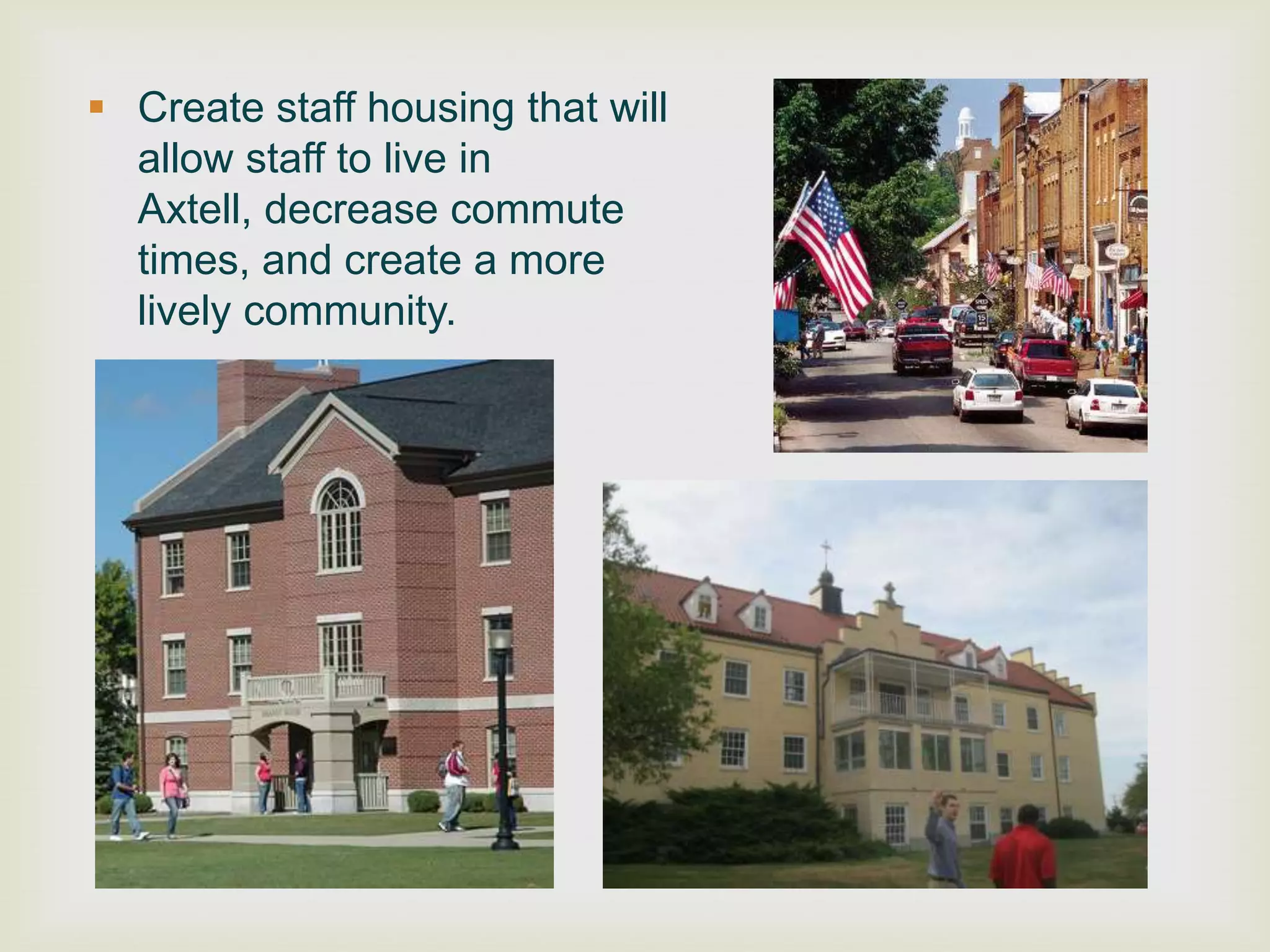
 Create staff housing that will
  allow staff to live in
  Axtell, decrease commute
  times, and create a more
  lively community.


                                   Bathesda pic
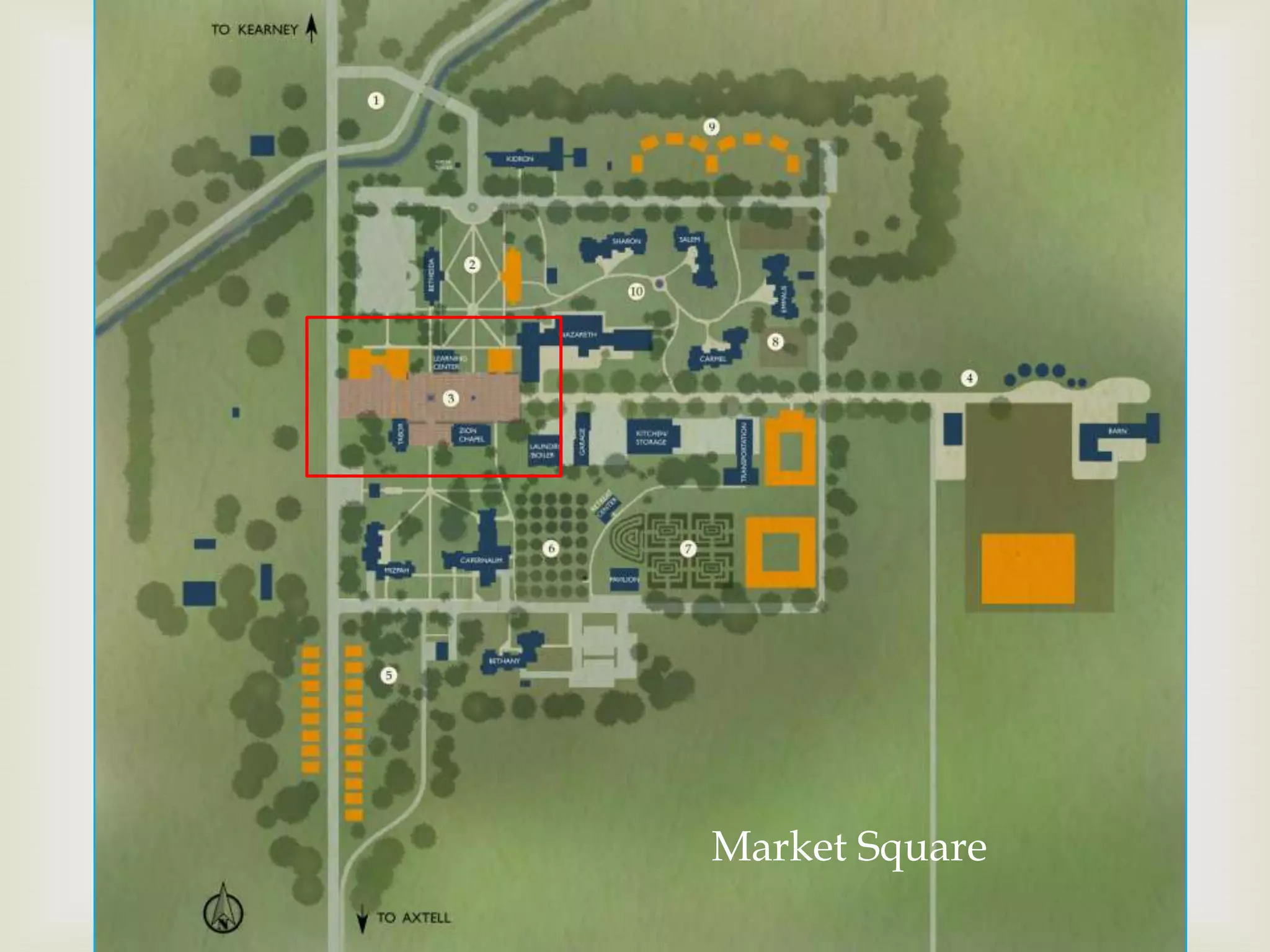
Market Square
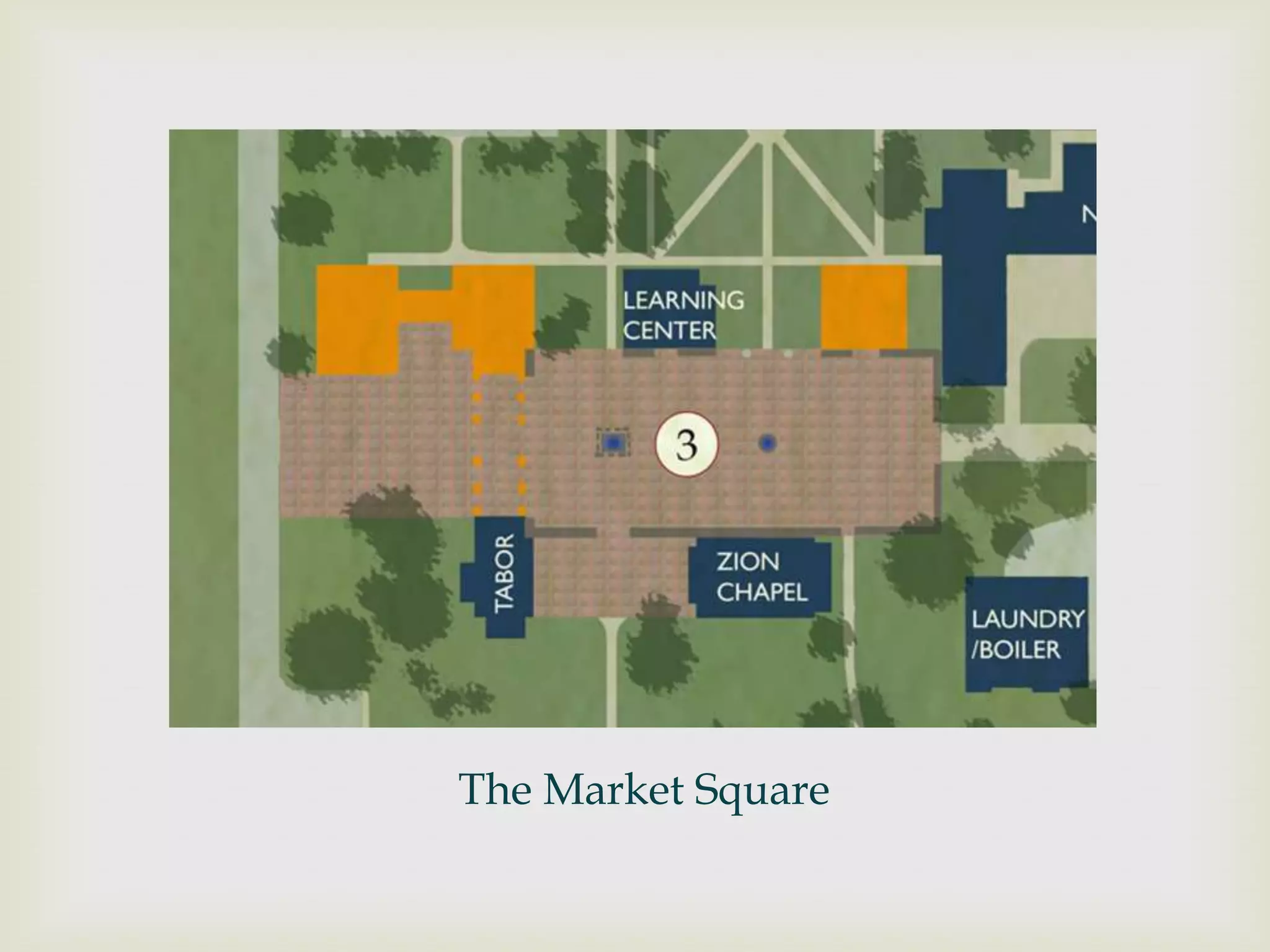
The Market Square
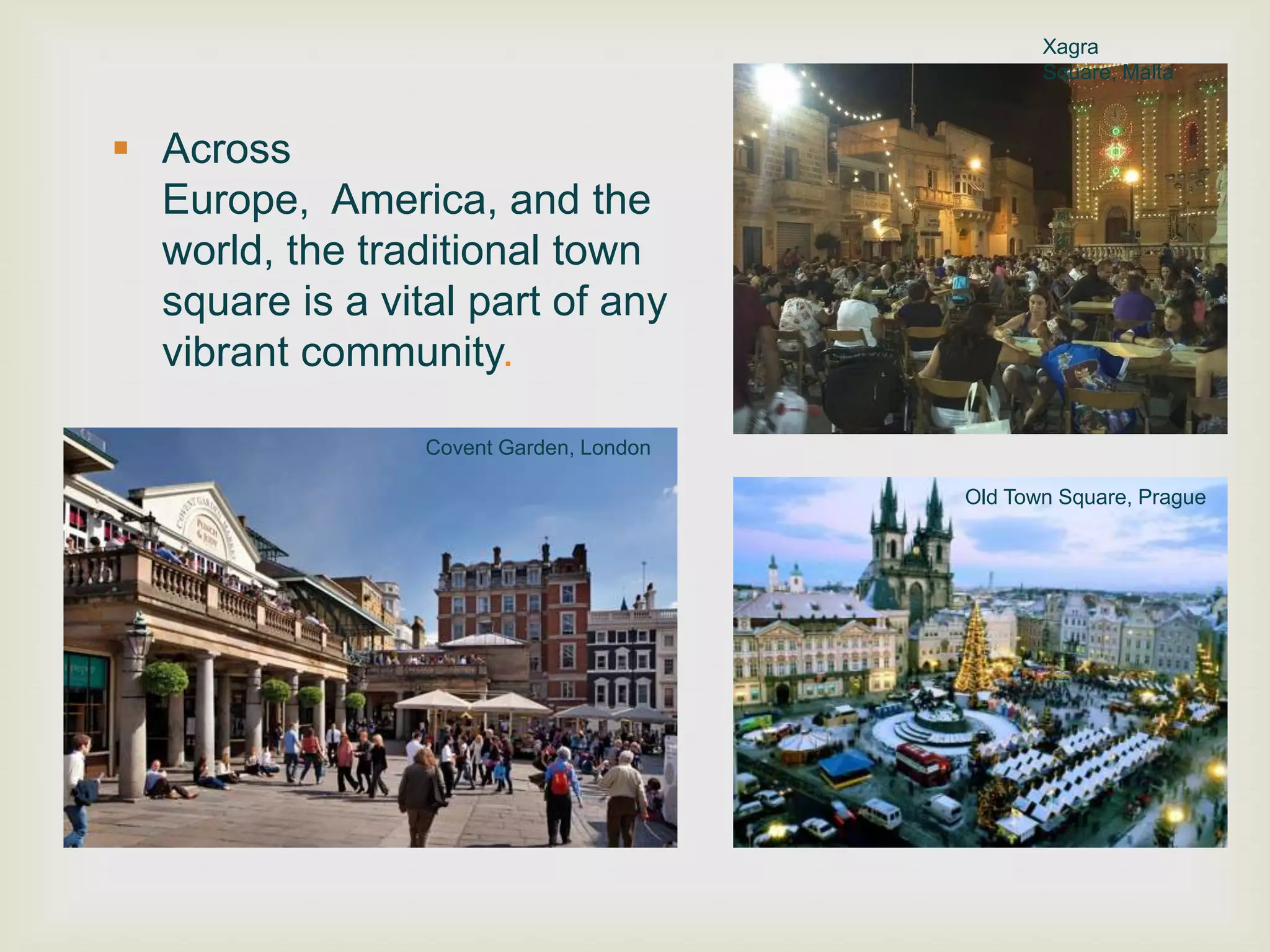
Xagra
                                                Square, Malta


 Across
  Europe, America, and the
  world, the traditional town
  square is a vital part of any
  vibrant community.

                 Covent Garden, London

                                         Old Town Square, Prague
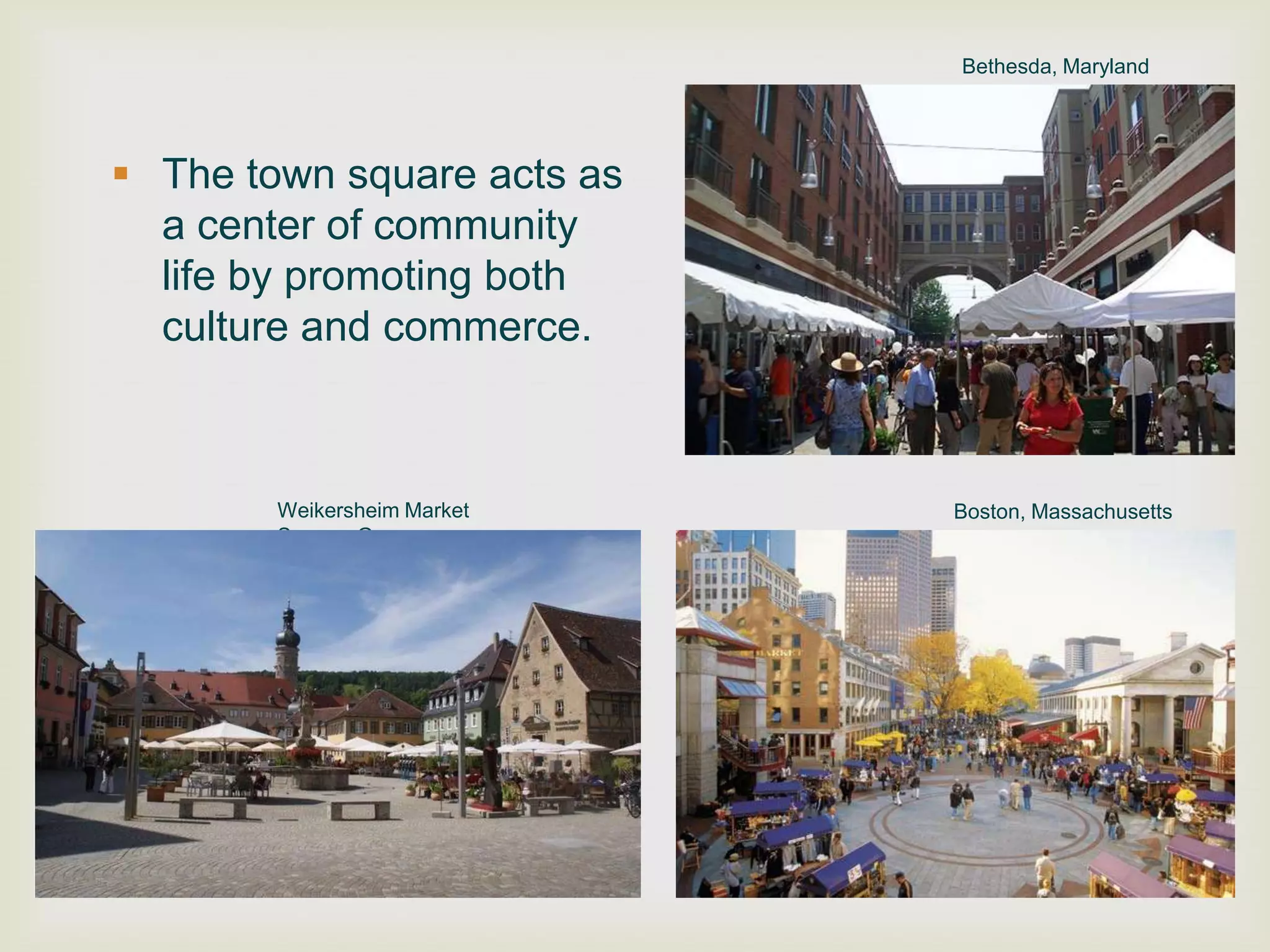
Bethesda, Maryland


 The town square acts as
  a center of community
  life by promoting both
  culture and commerce.


        Weikersheim Market   Boston, Massachusetts
        Square, Germany
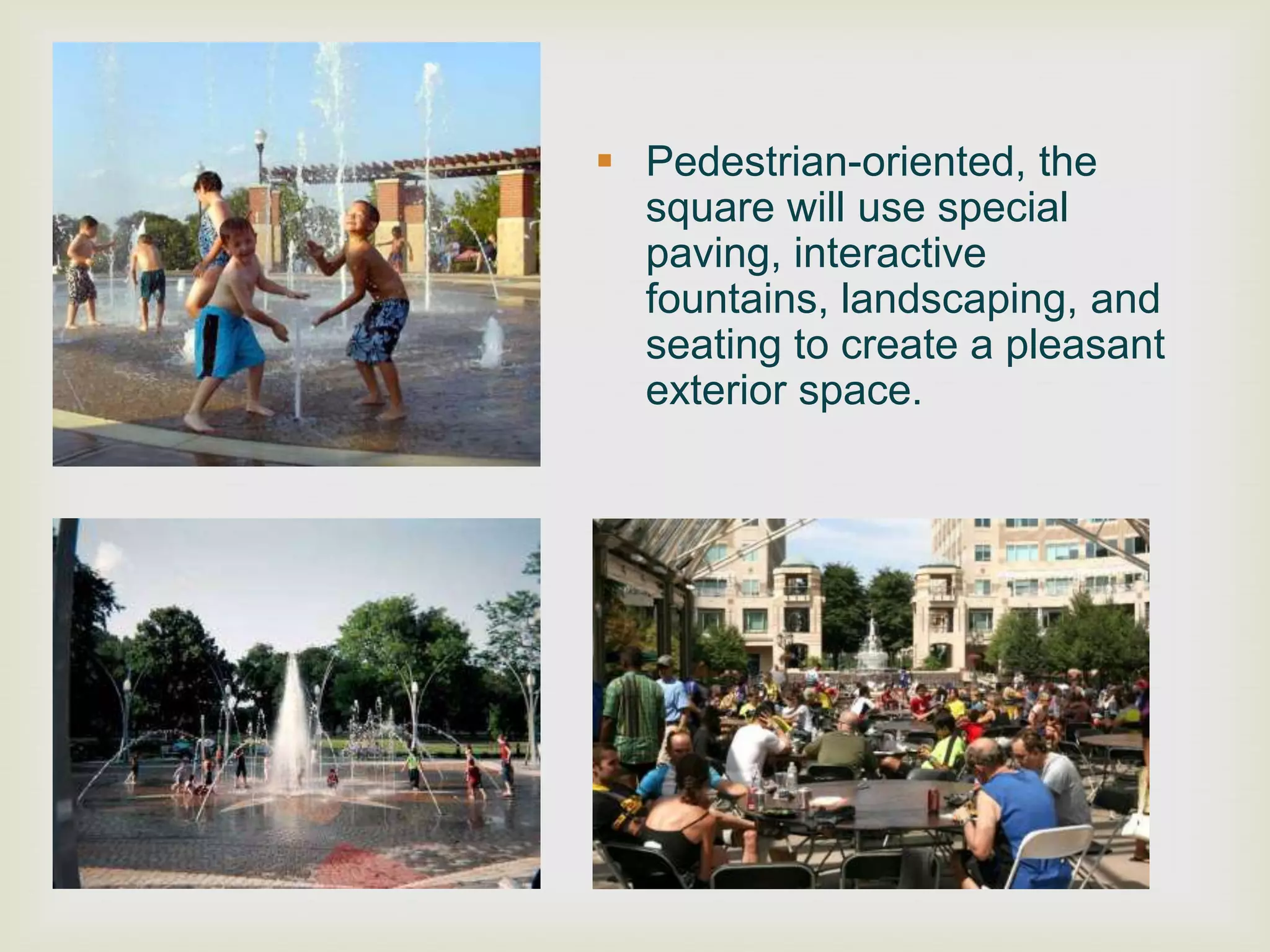
 Pedestrian-oriented, the
  square will use special
  paving, interactive
  fountains, landscaping, and
  seating to create a pleasant
  exterior space.
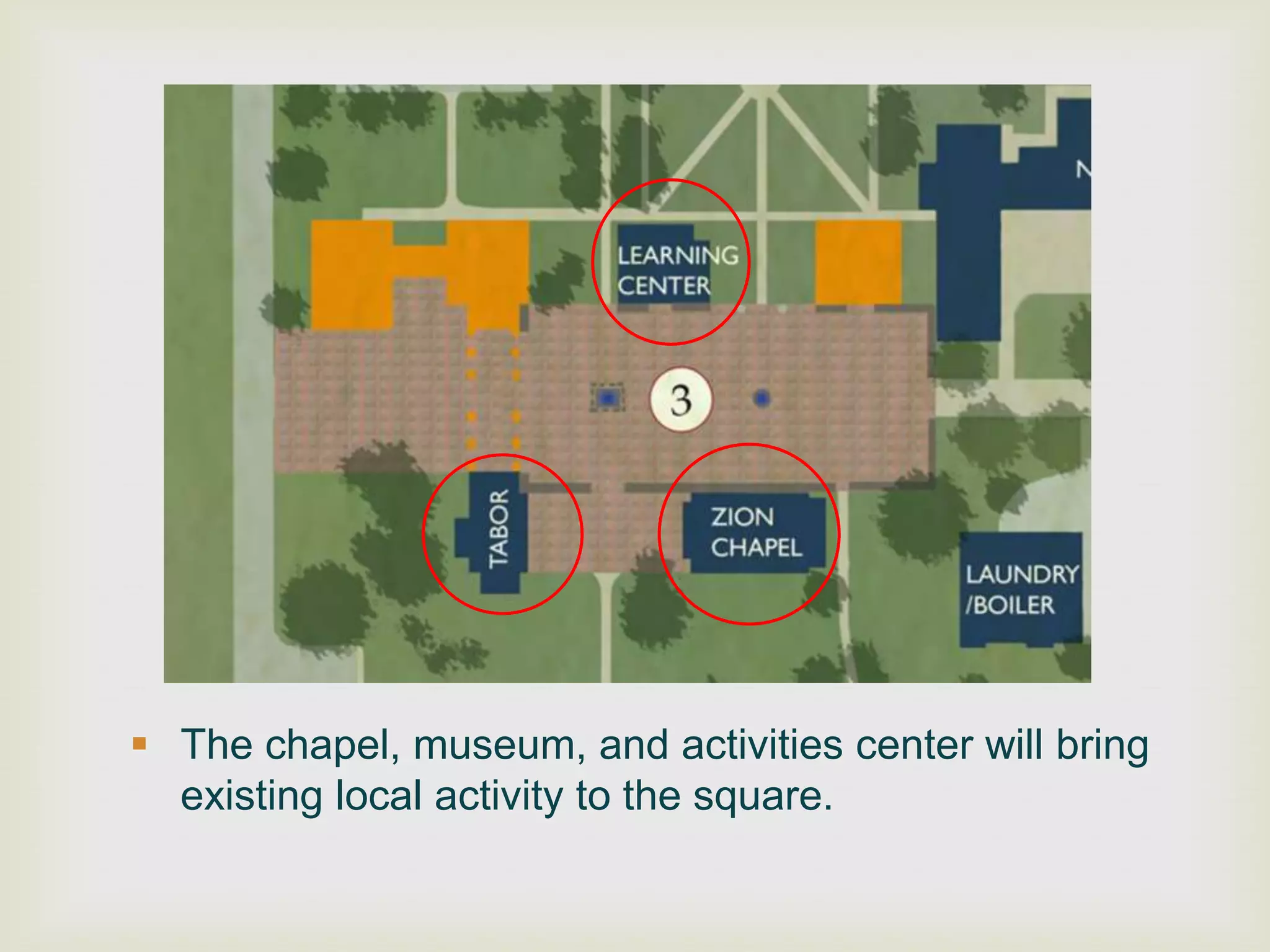
 The chapel, museum, and activities center will bring
  existing local activity to the square.
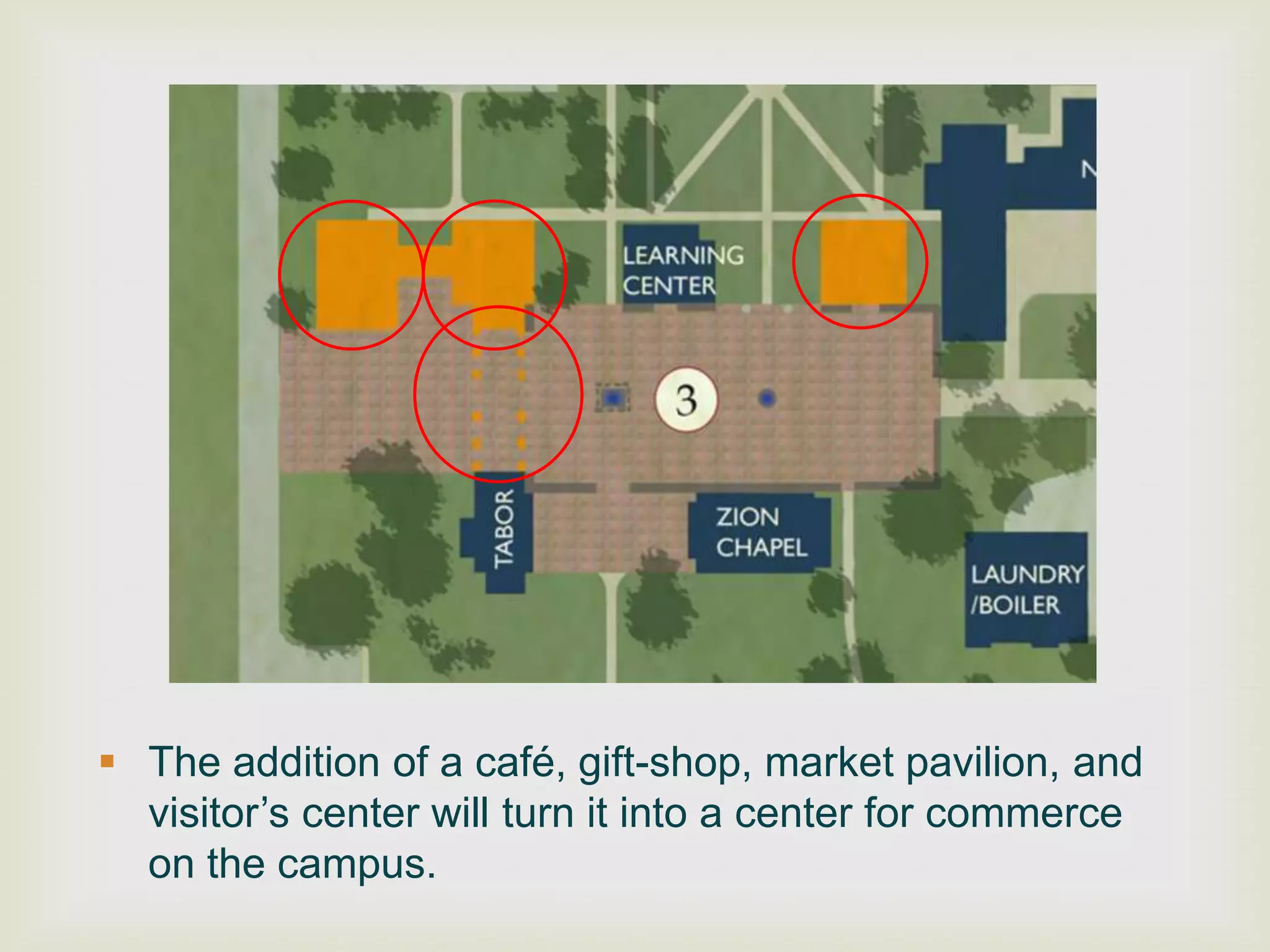
 The addition of a café, gift-shop, market pavilion, and
  visitor‟s center will turn it into a center for commerce
  on the campus.
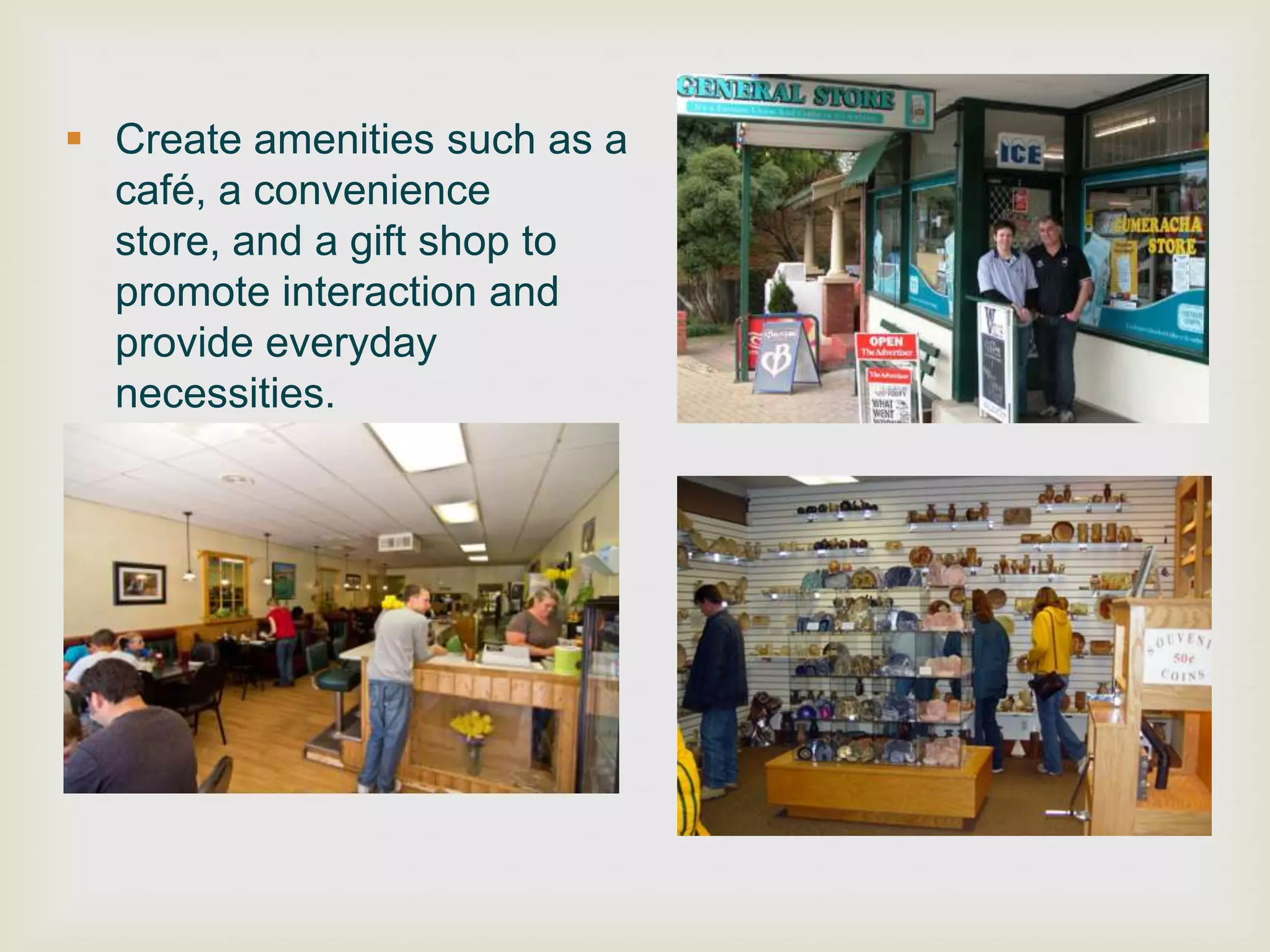
 Create amenities such as a
  café, a convenience
  store, and a gift shop to
  promote interaction and
  provide everyday
  necessities.
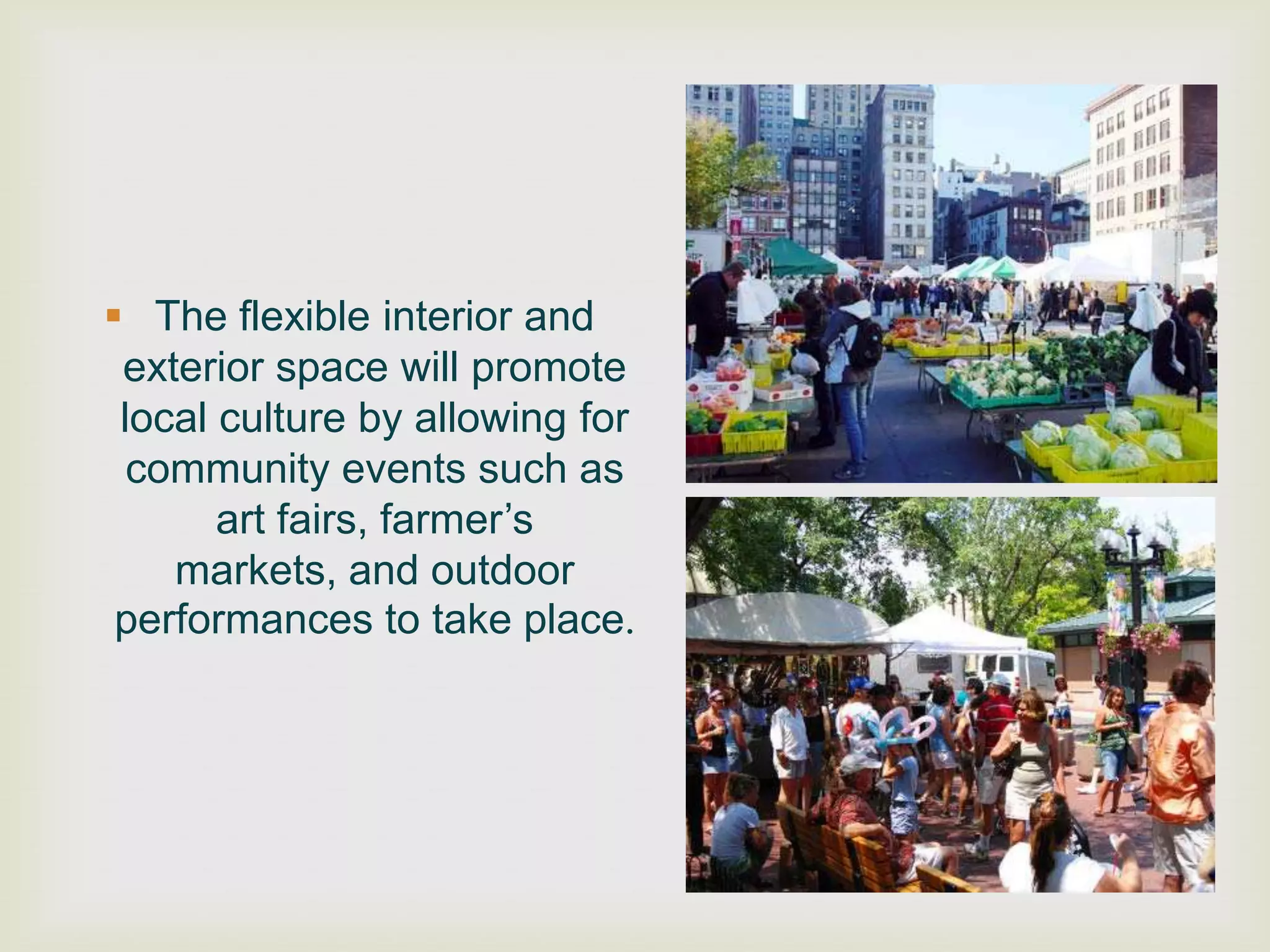
 The flexible interior and
 exterior space will promote
 local culture by allowing for
  community events such as
       art fairs, farmer‟s
    markets, and outdoor
 performances to take place.
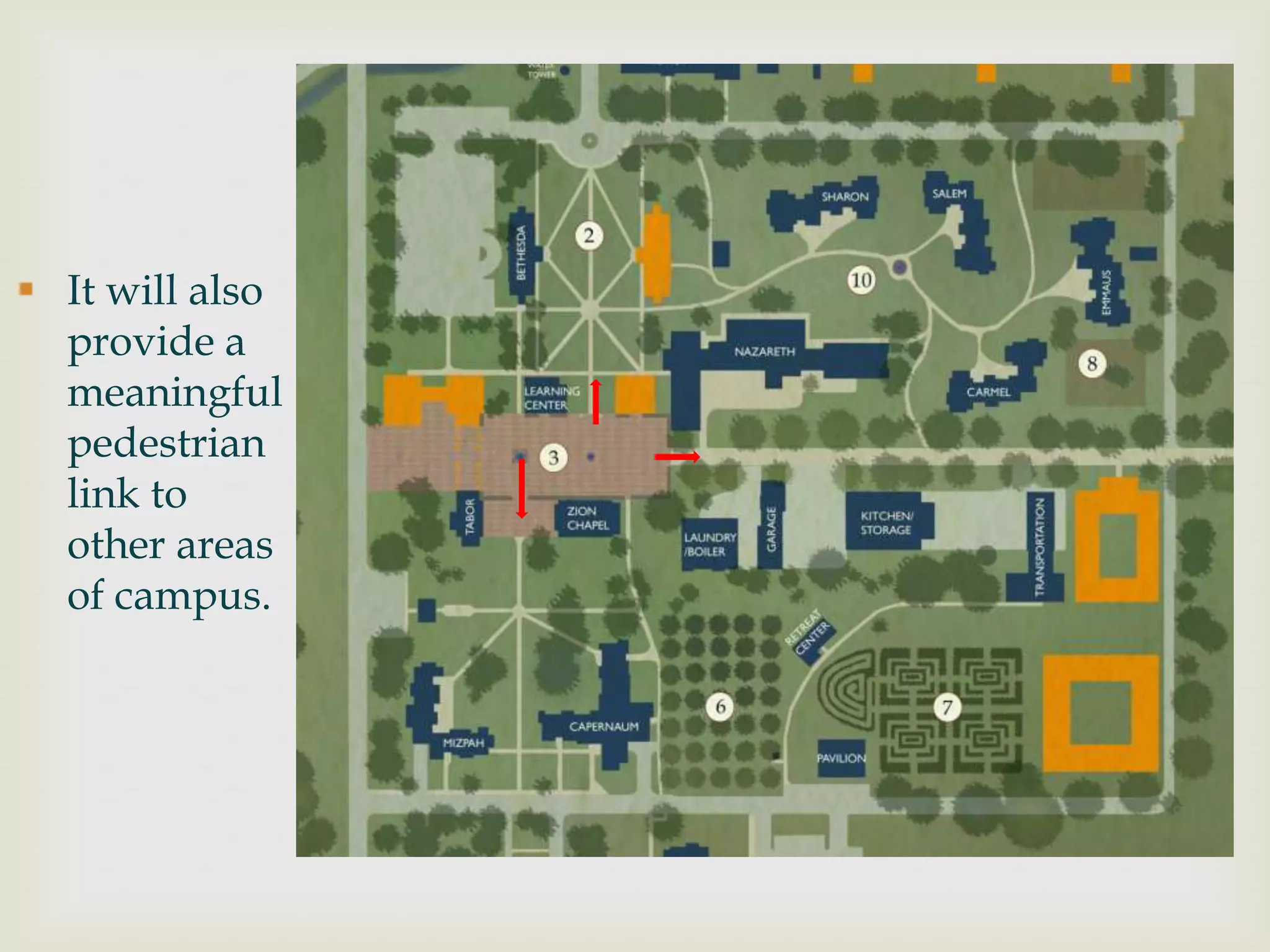
 It will also
  provide a
  meaningful
  pedestrian
  link to
  other areas
  of campus.
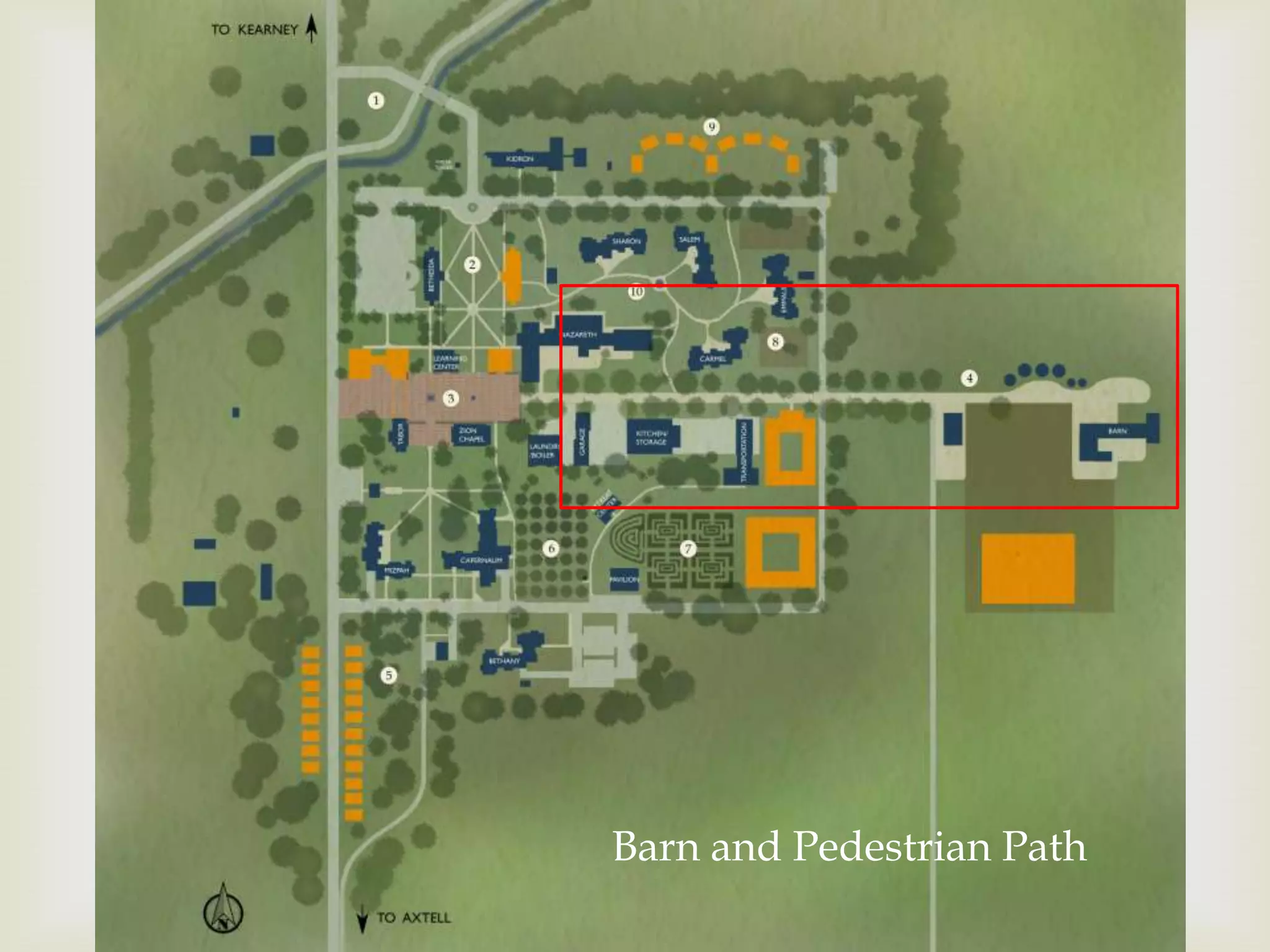
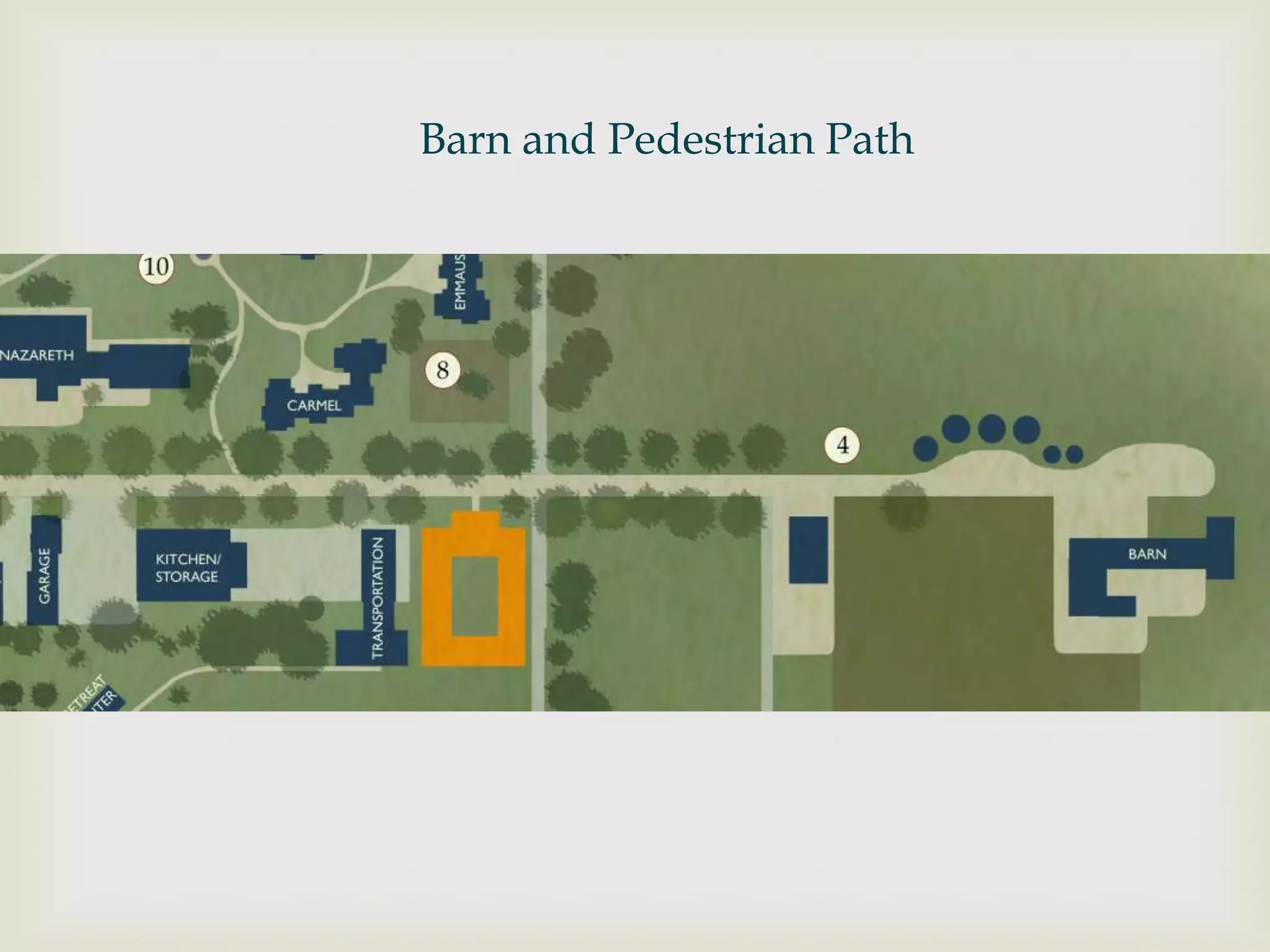
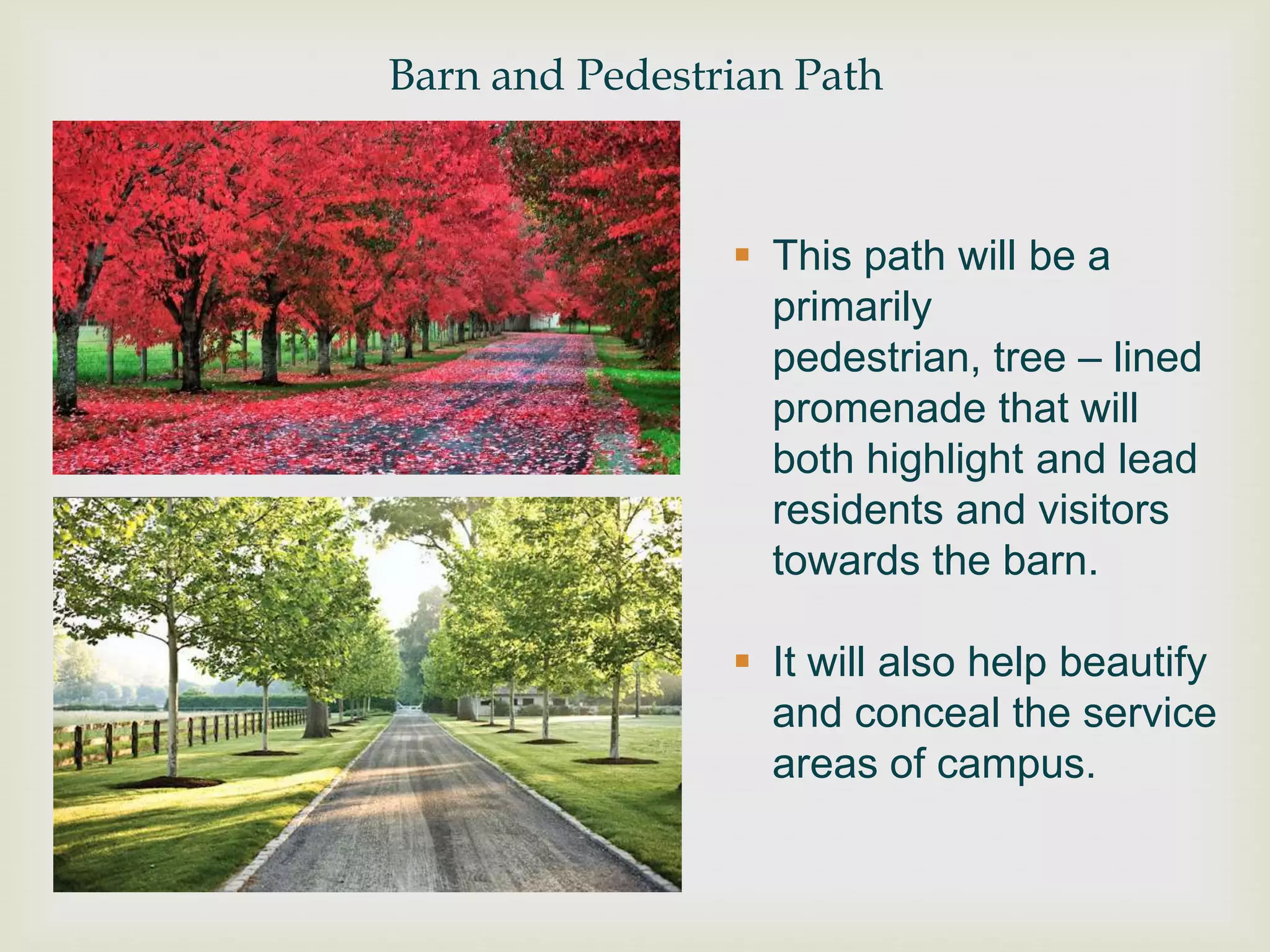
Barn and Pedestrian Path


                 This path will be a
                  primarily
                  pedestrian, tree – lined
                  promenade that will
                  both highlight and lead
                  residents and visitors
                  towards the barn.

                 It will also help beautify
                  and conceal the service
                  areas of campus.
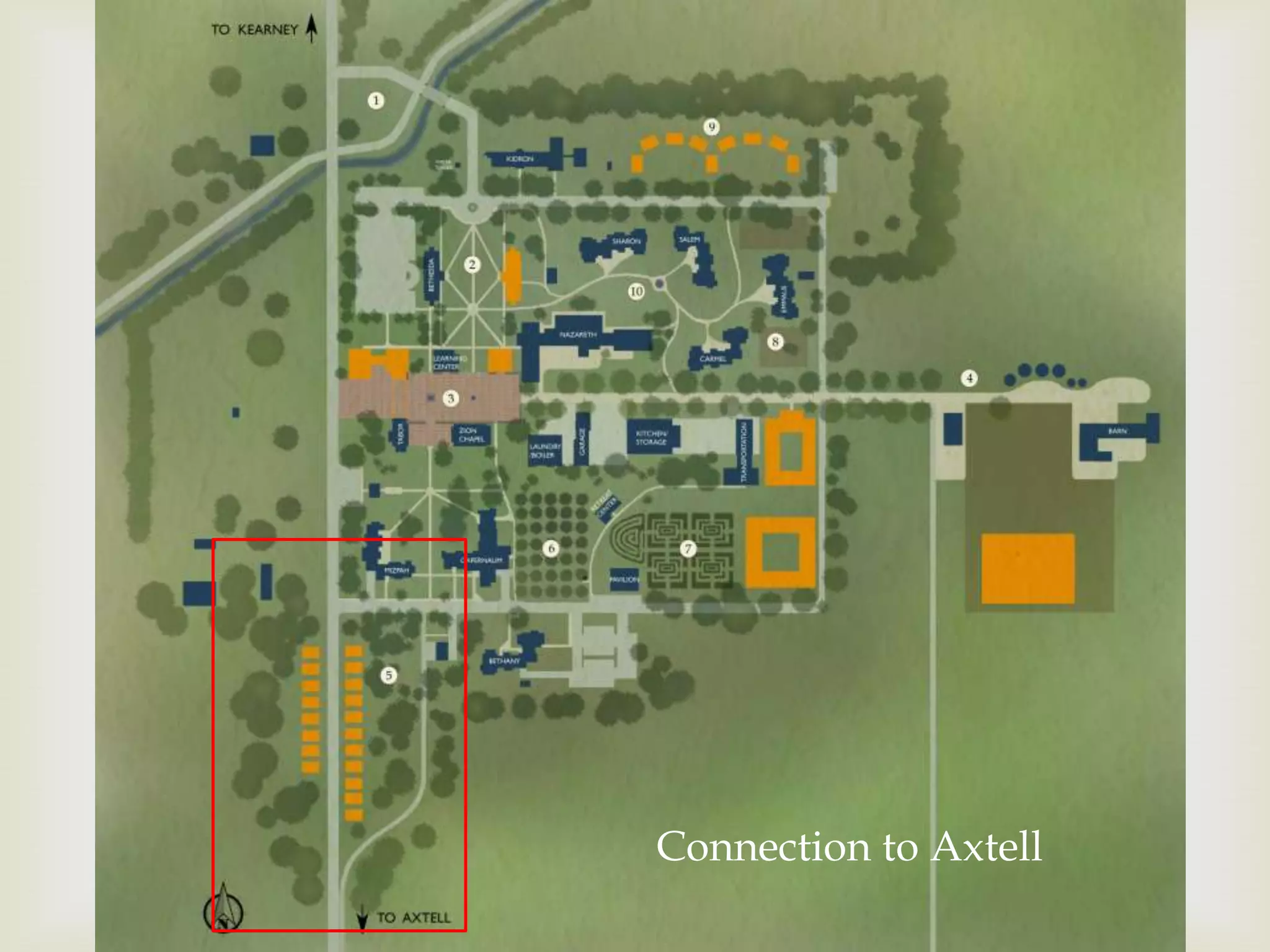
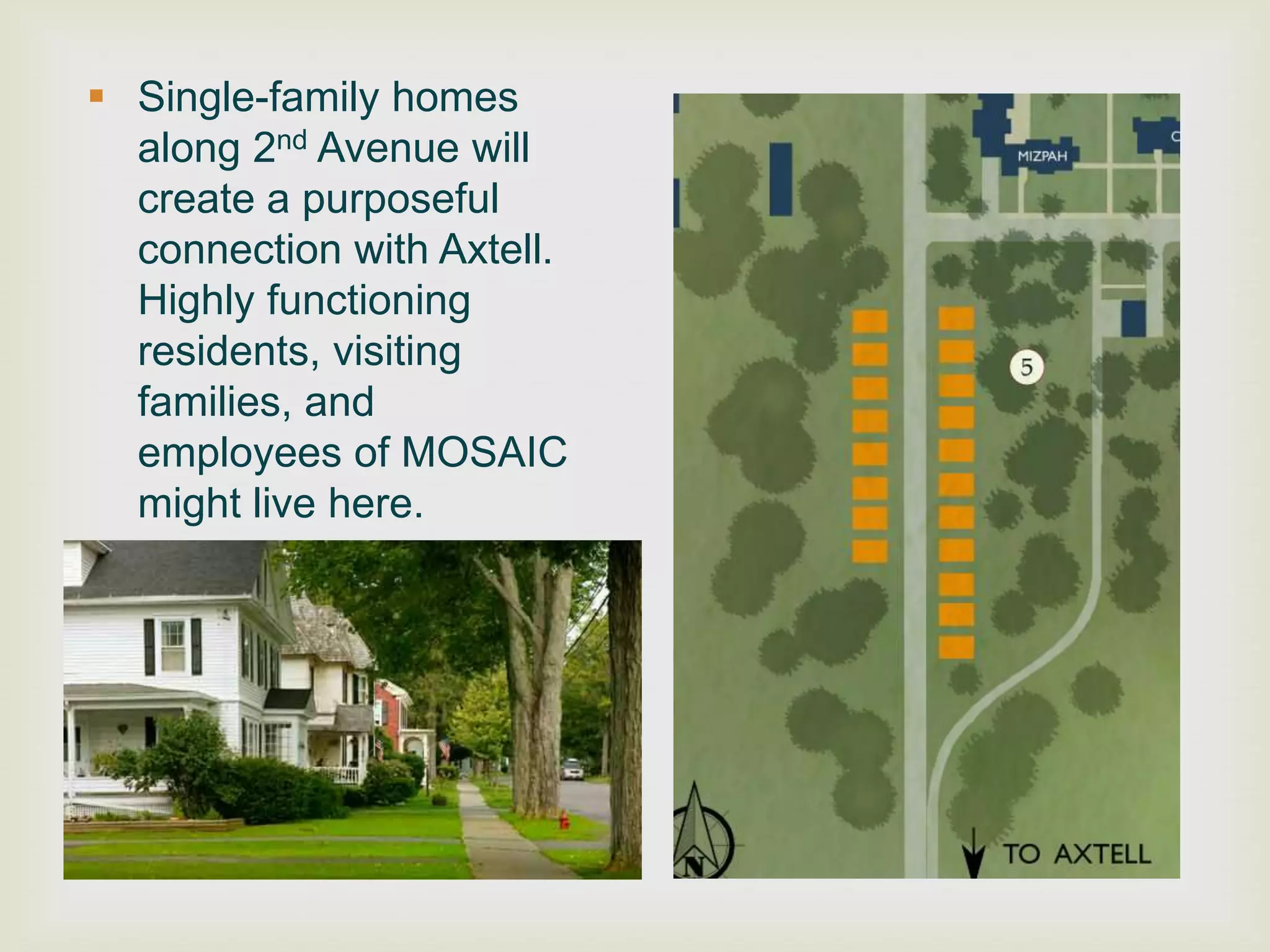
Connection to Axtell
 Single-family homes
  along 2nd Avenue will
  create a purposeful
  connection with Axtell.
  Highly functioning
  residents, visiting
  families, and
  employees of MOSAIC
  might live here.
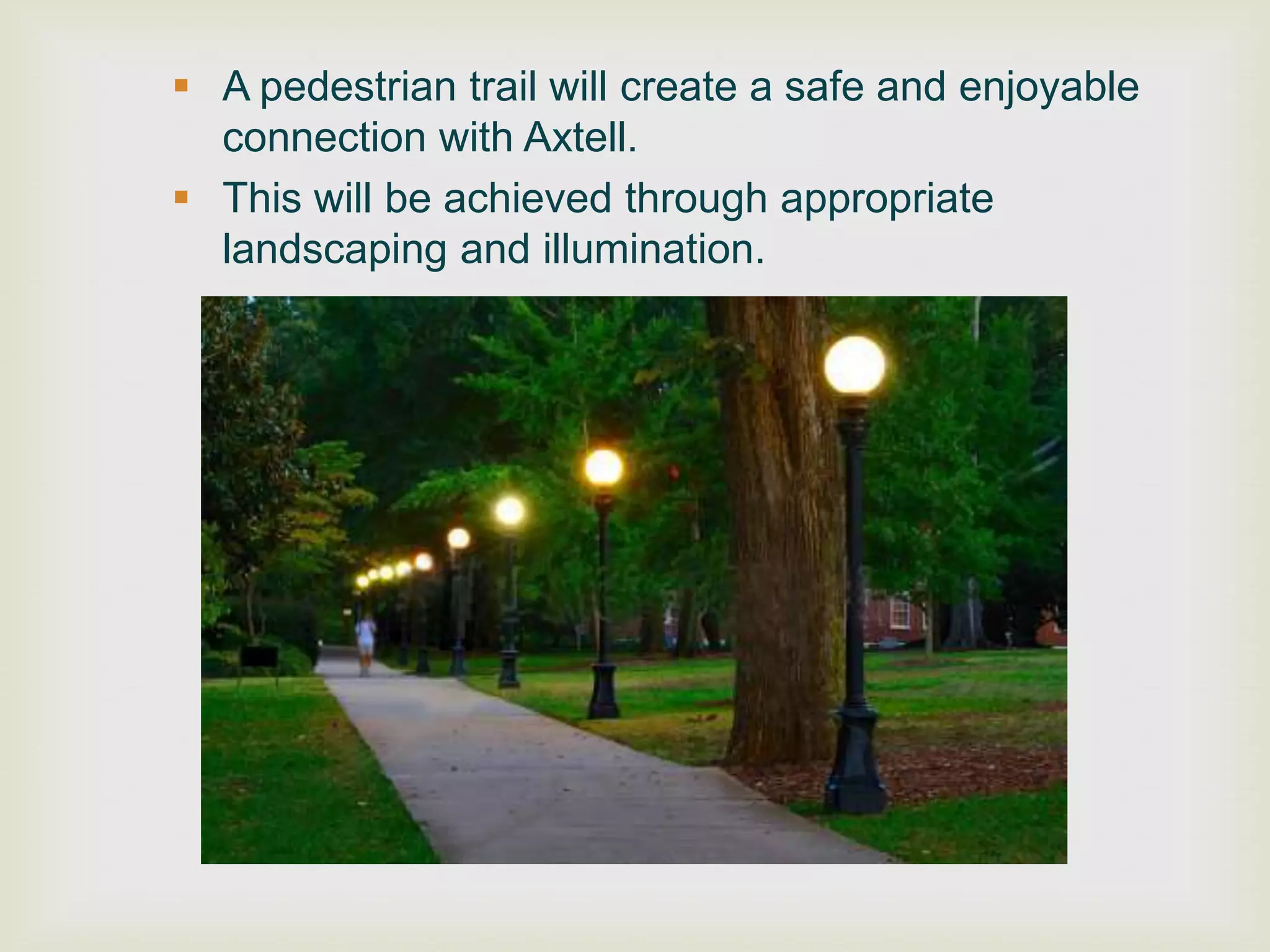
 A pedestrian trail will create a safe and enjoyable
  connection with Axtell.
 This will be achieved through appropriate
  landscaping and illumination.
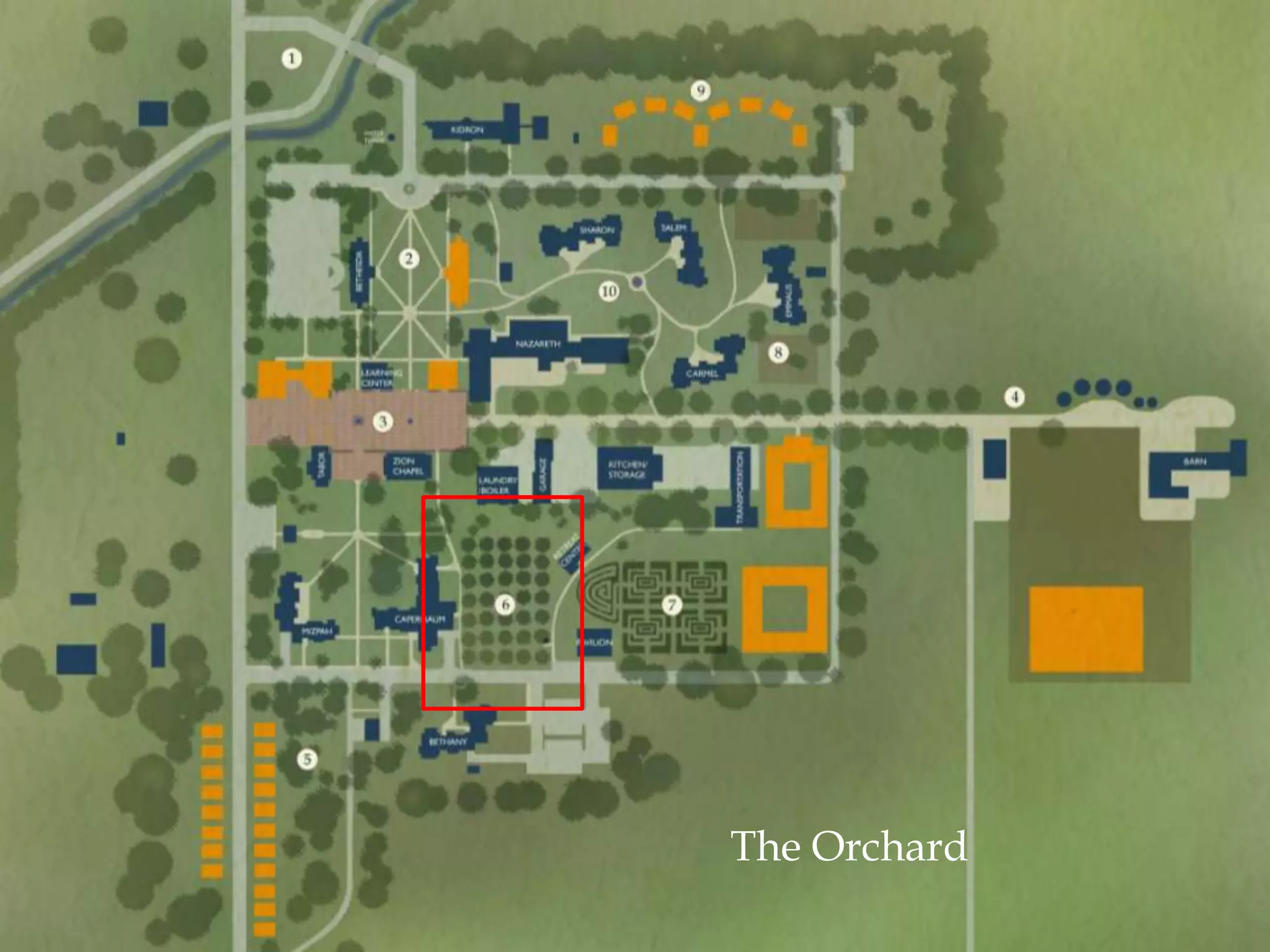
The Orchard
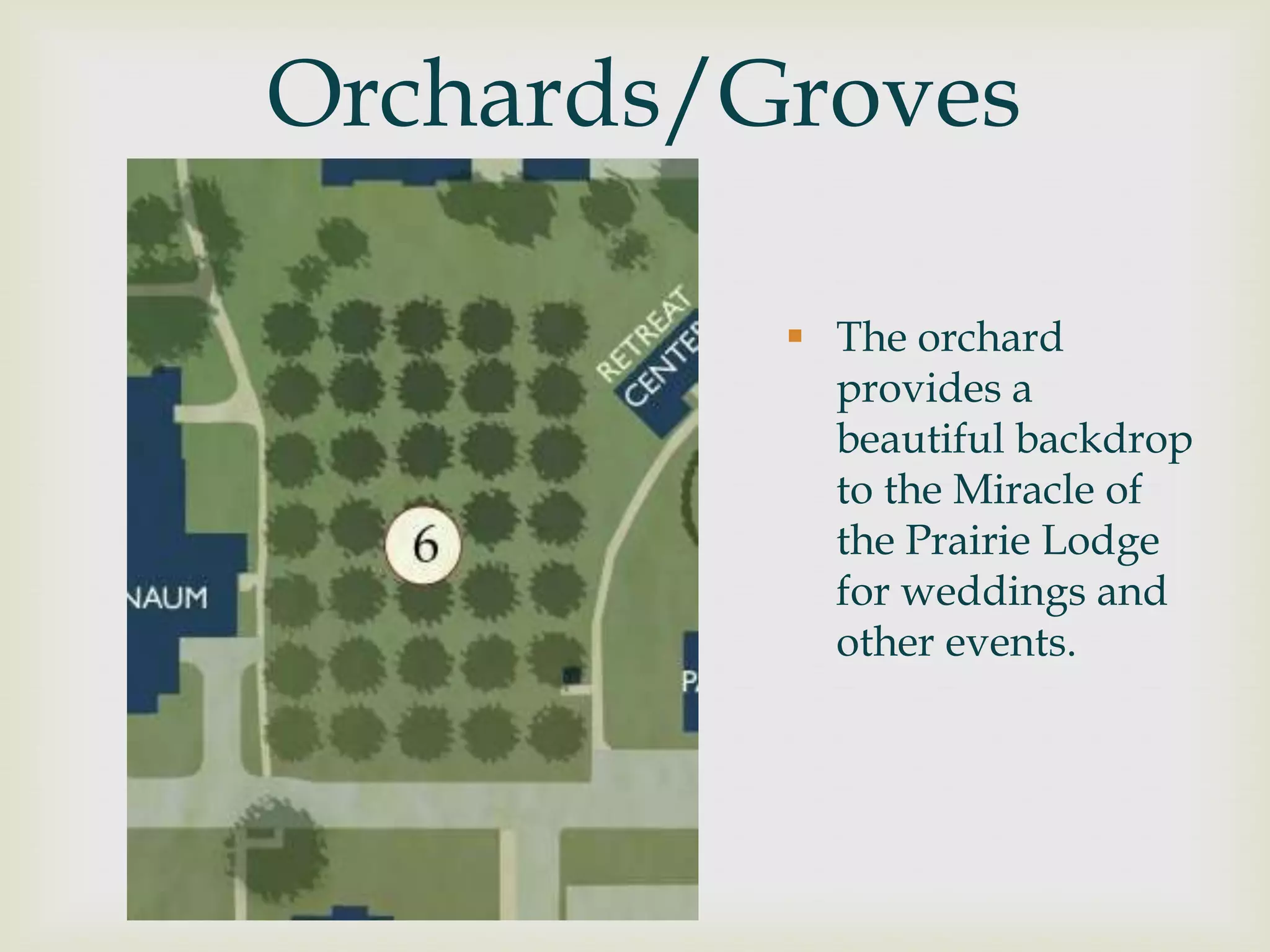
Orchards/Groves

           The orchard
            provides a
            beautiful backdrop
            to the Miracle of
            the Prairie Lodge
            for weddings and
            other events.
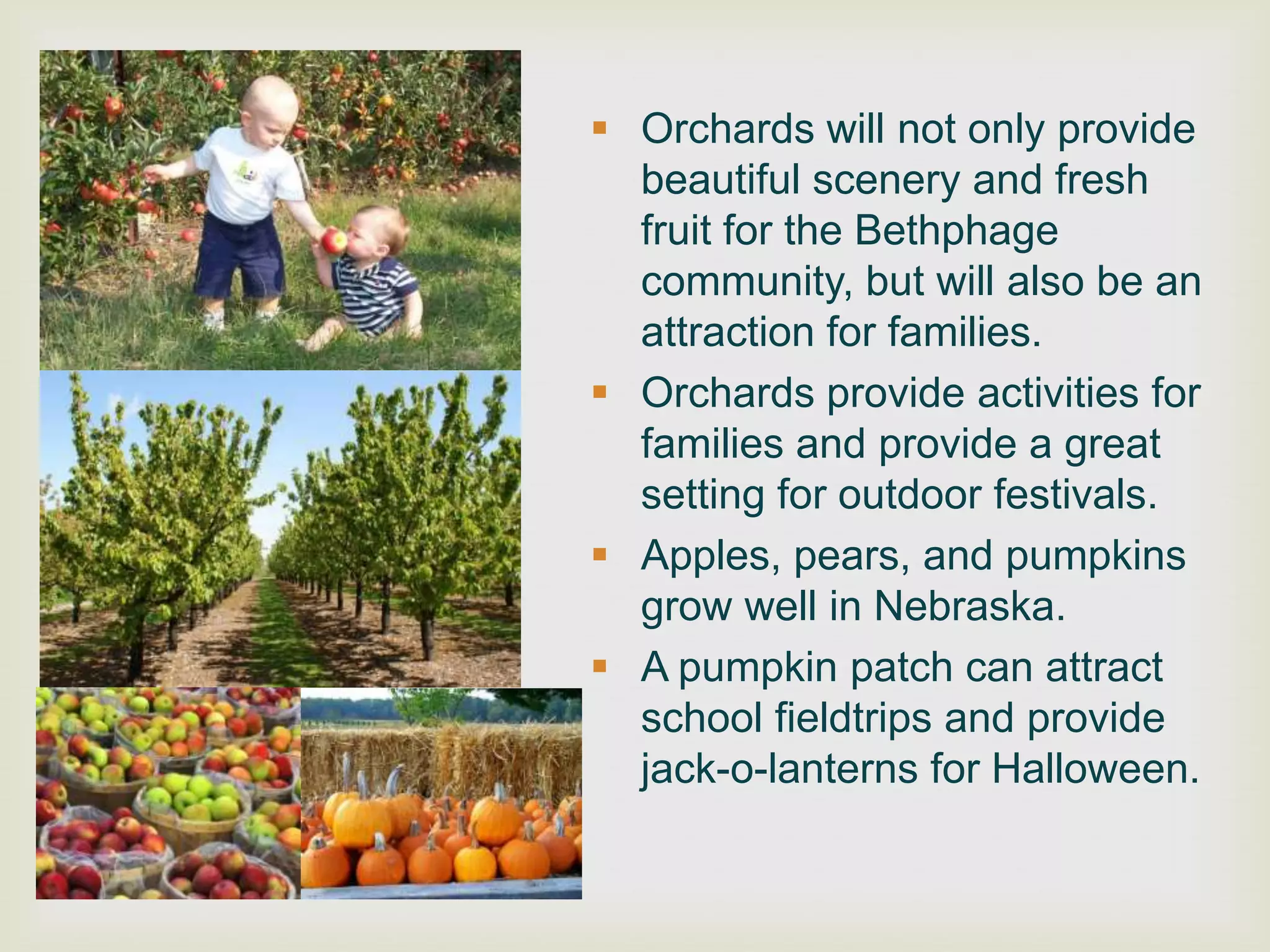
 Orchards will not only provide
  beautiful scenery and fresh
  fruit for the Bethphage
  community, but will also be an
  attraction for families.
 Orchards provide activities for
  families and provide a great
  setting for outdoor festivals.
 Apples, pears, and pumpkins
  grow well in Nebraska.
 A pumpkin patch can attract
  school fieldtrips and provide
  jack-o-lanterns for Halloween.
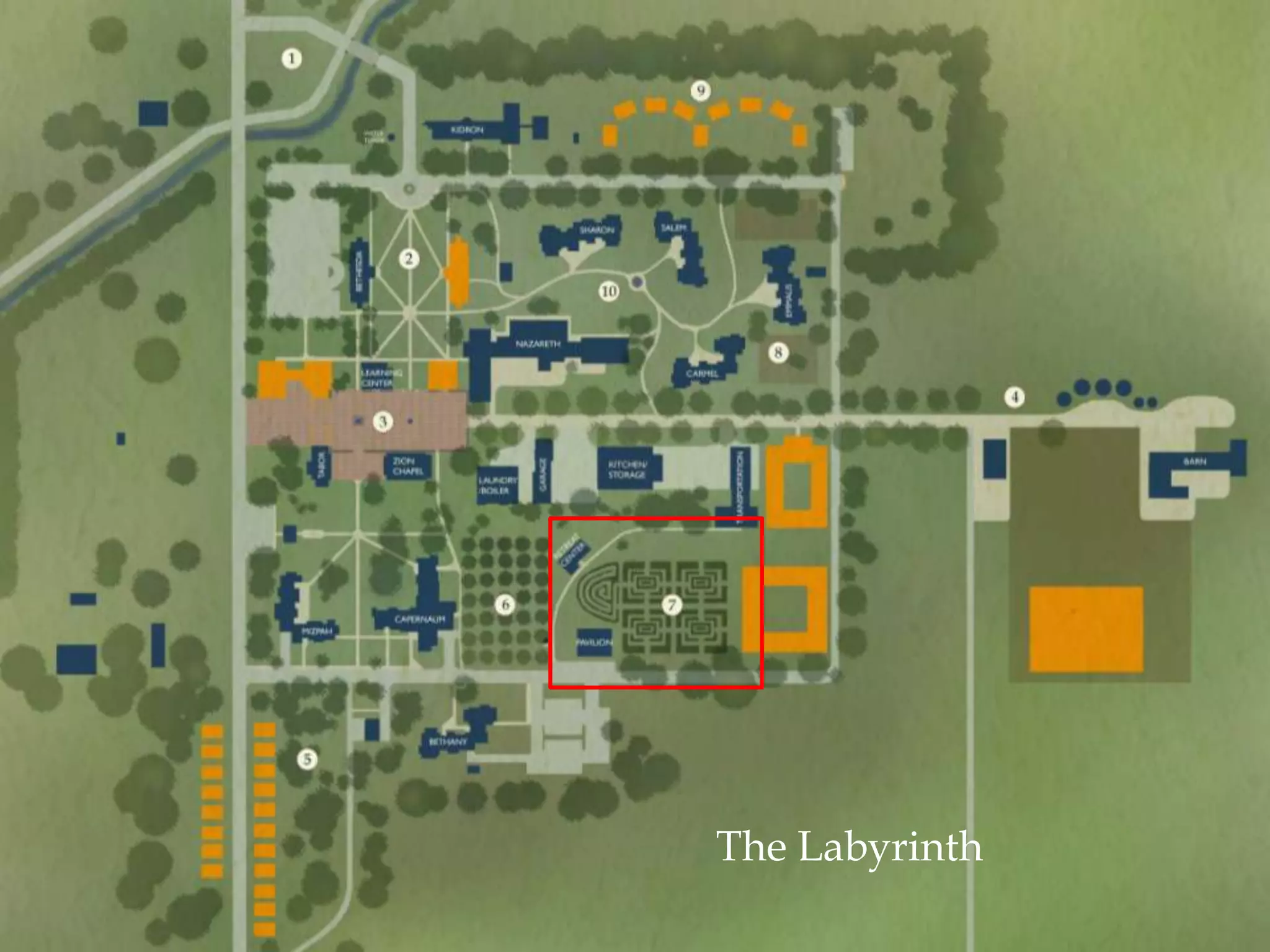
The Labyrinth
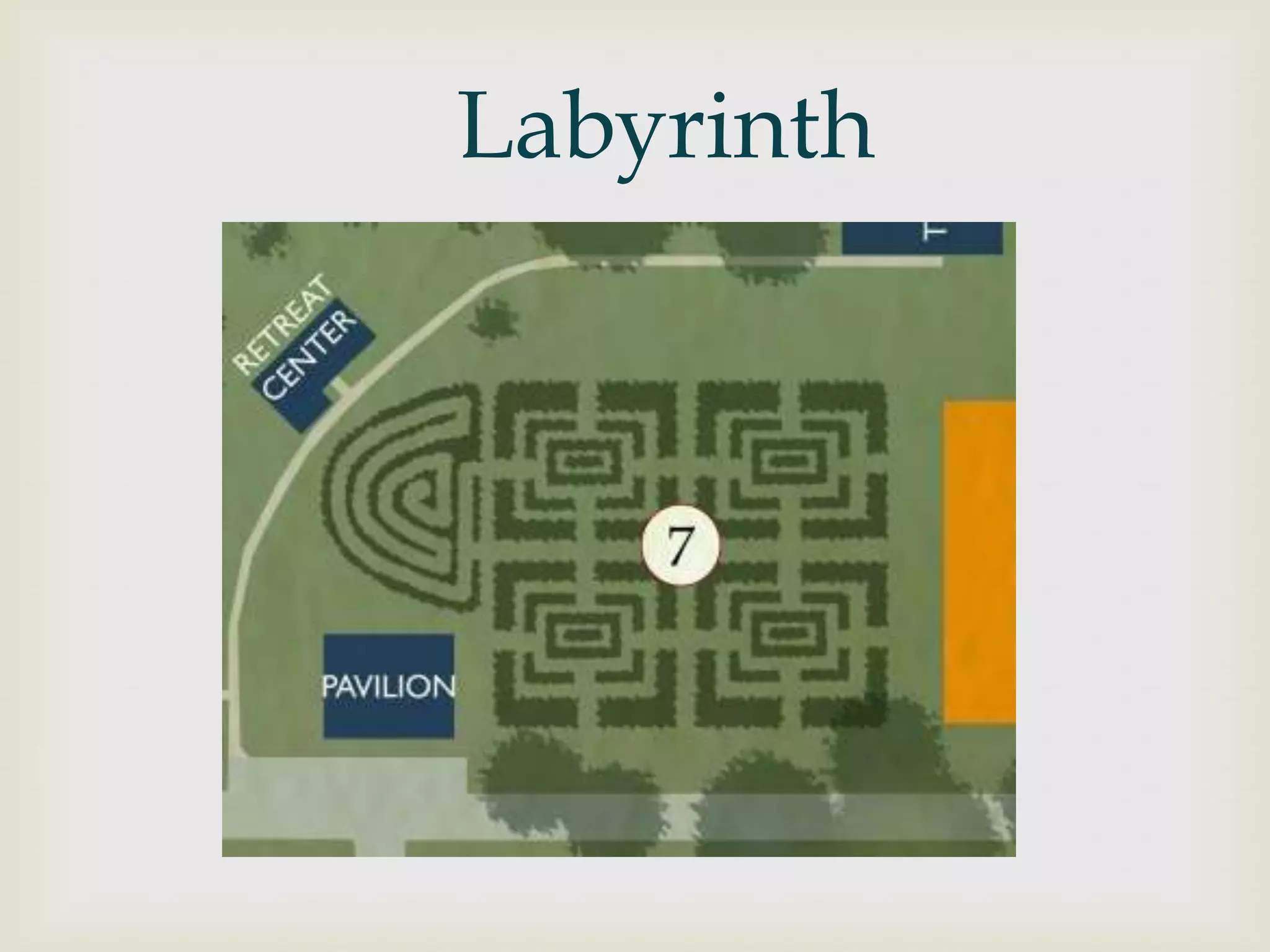
Labyrinth
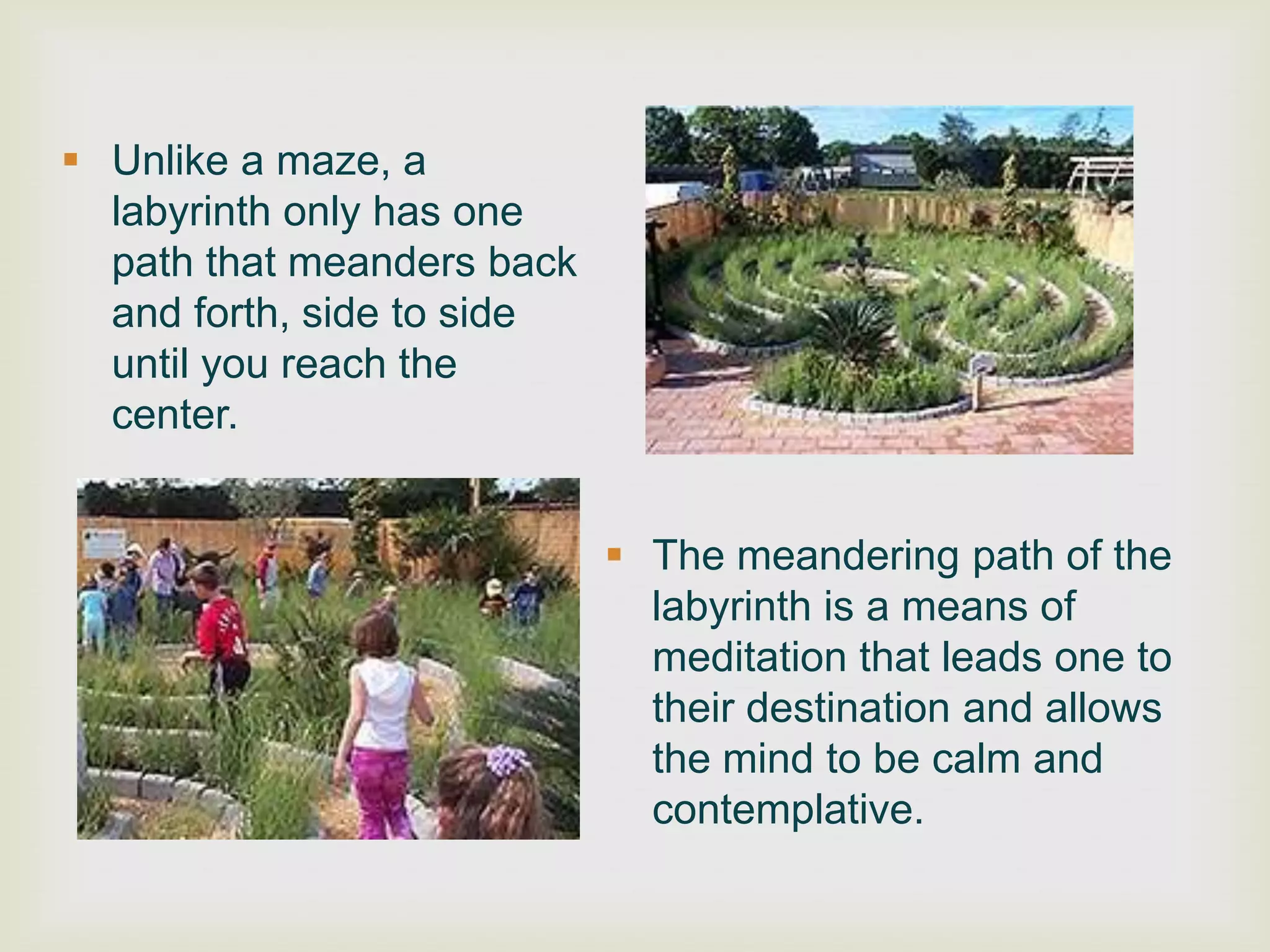
 Unlike a maze, a
  labyrinth only has one
  path that meanders back
  and forth, side to side
  until you reach the
  center.


                             The meandering path of the
                              labyrinth is a means of
                              meditation that leads one to
                              their destination and allows
                              the mind to be calm and
                              contemplative.
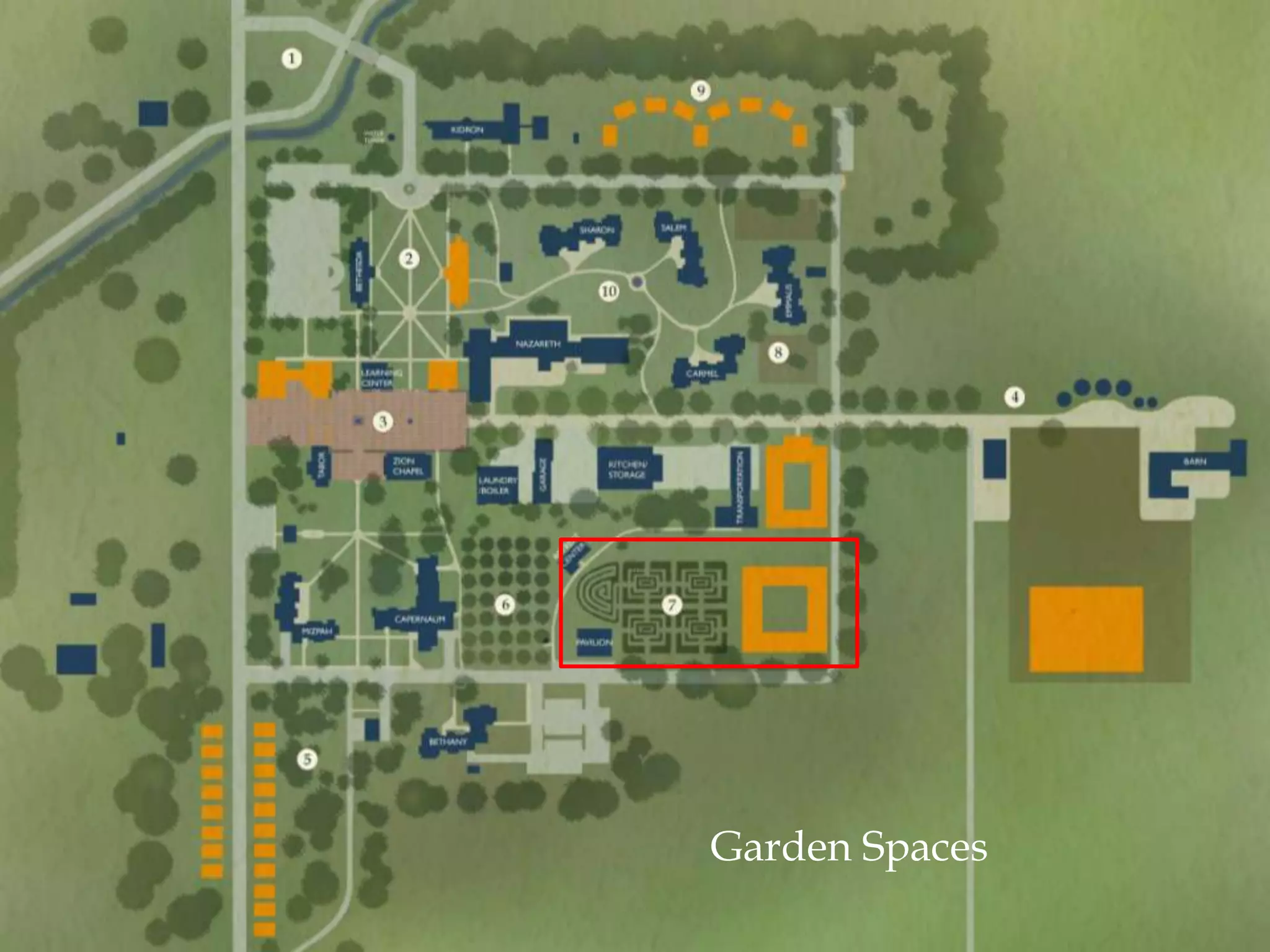
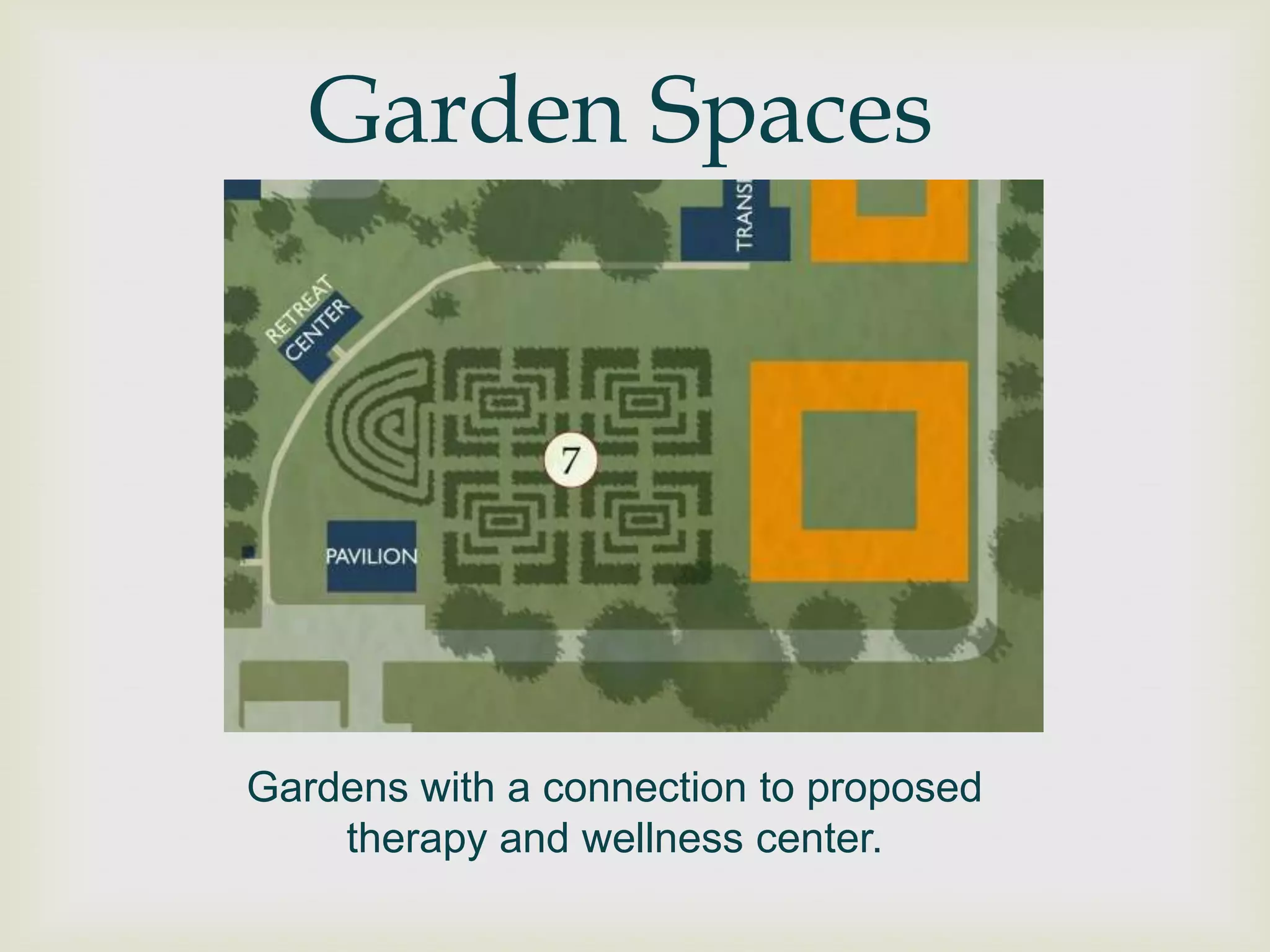
Garden Spaces
Garden Spaces


Gardens with a connection to proposed
    therapy and wellness center.
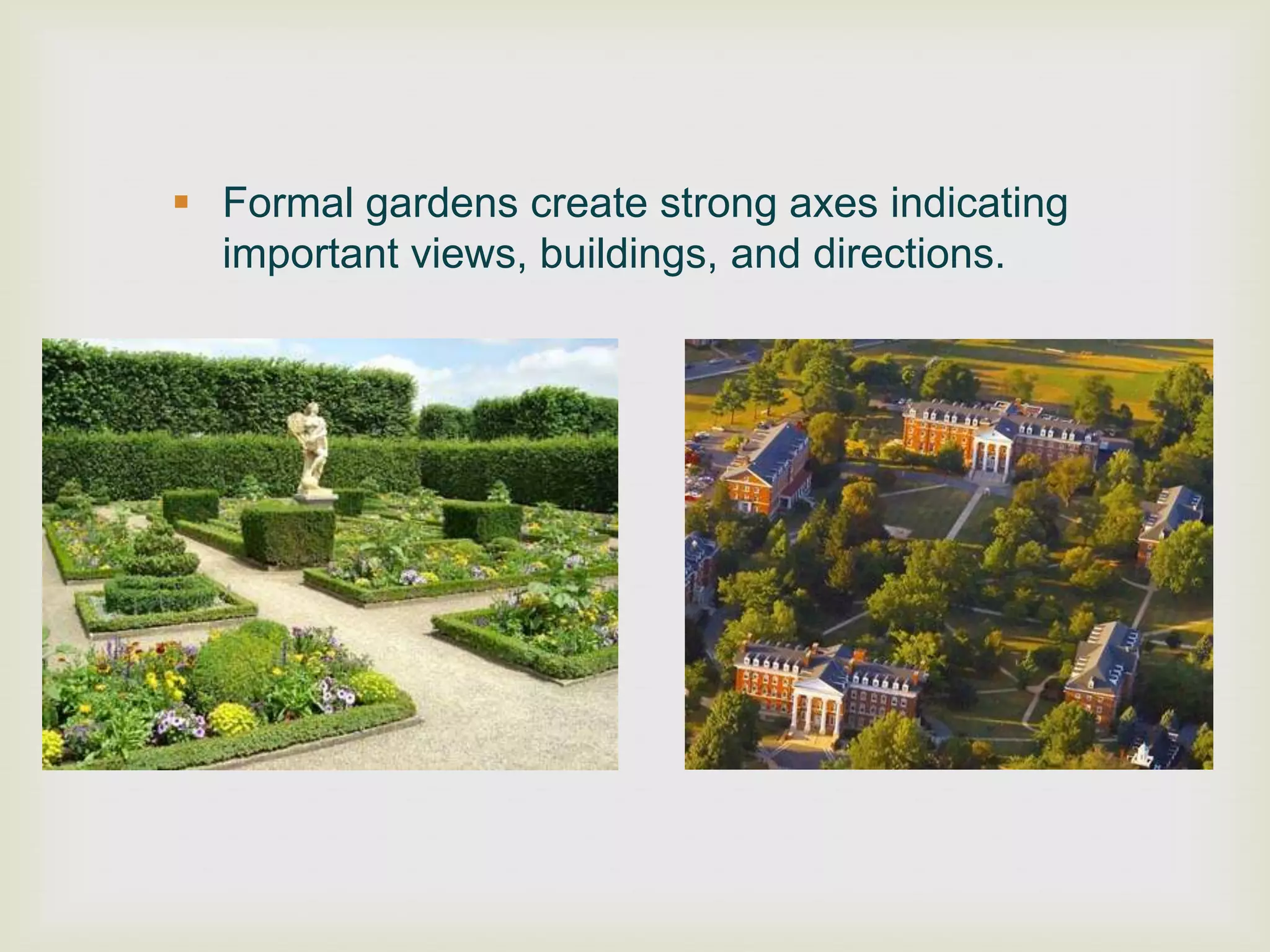
 Formal gardens create strong axes indicating
  important views, buildings, and directions.
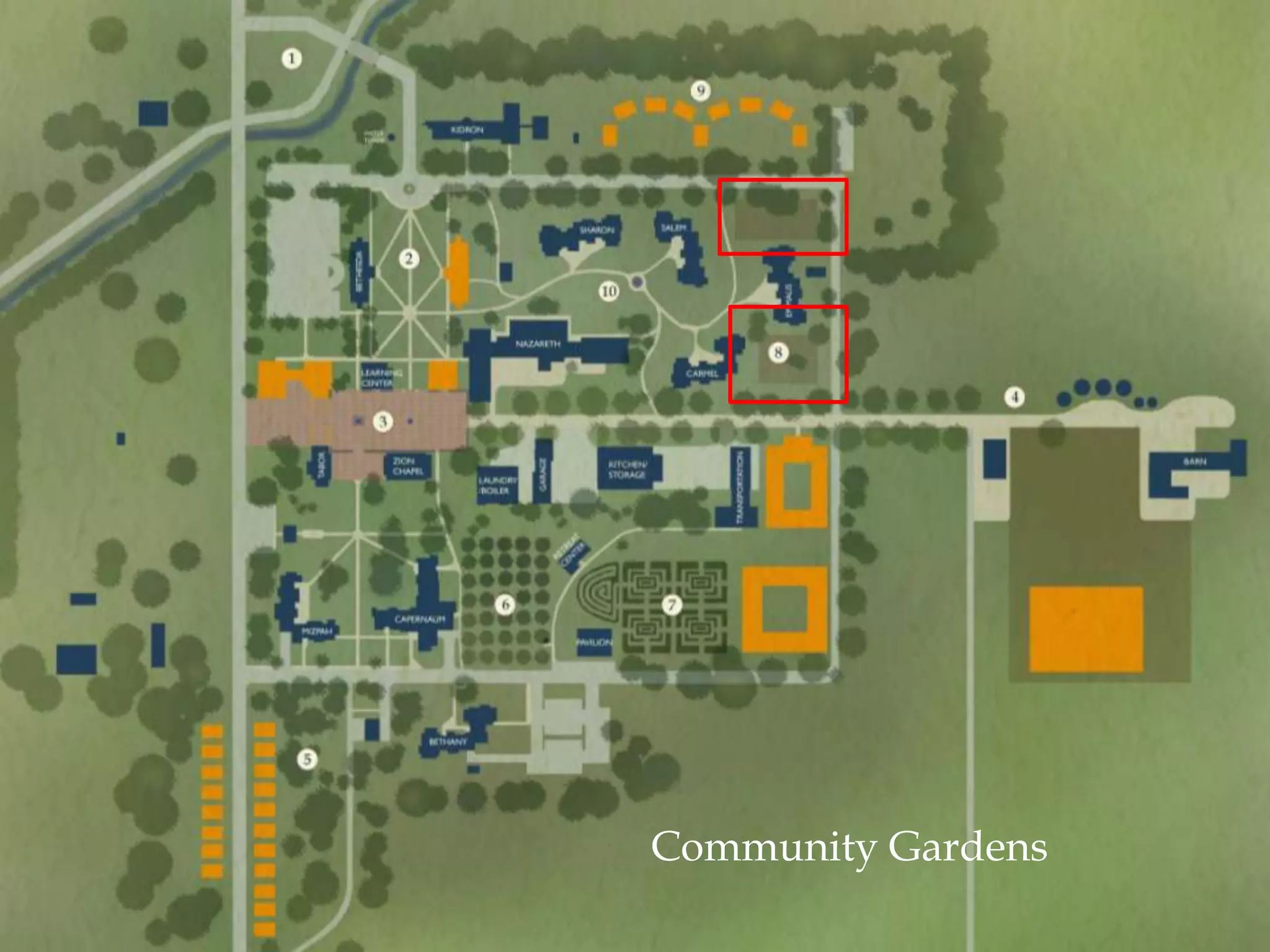
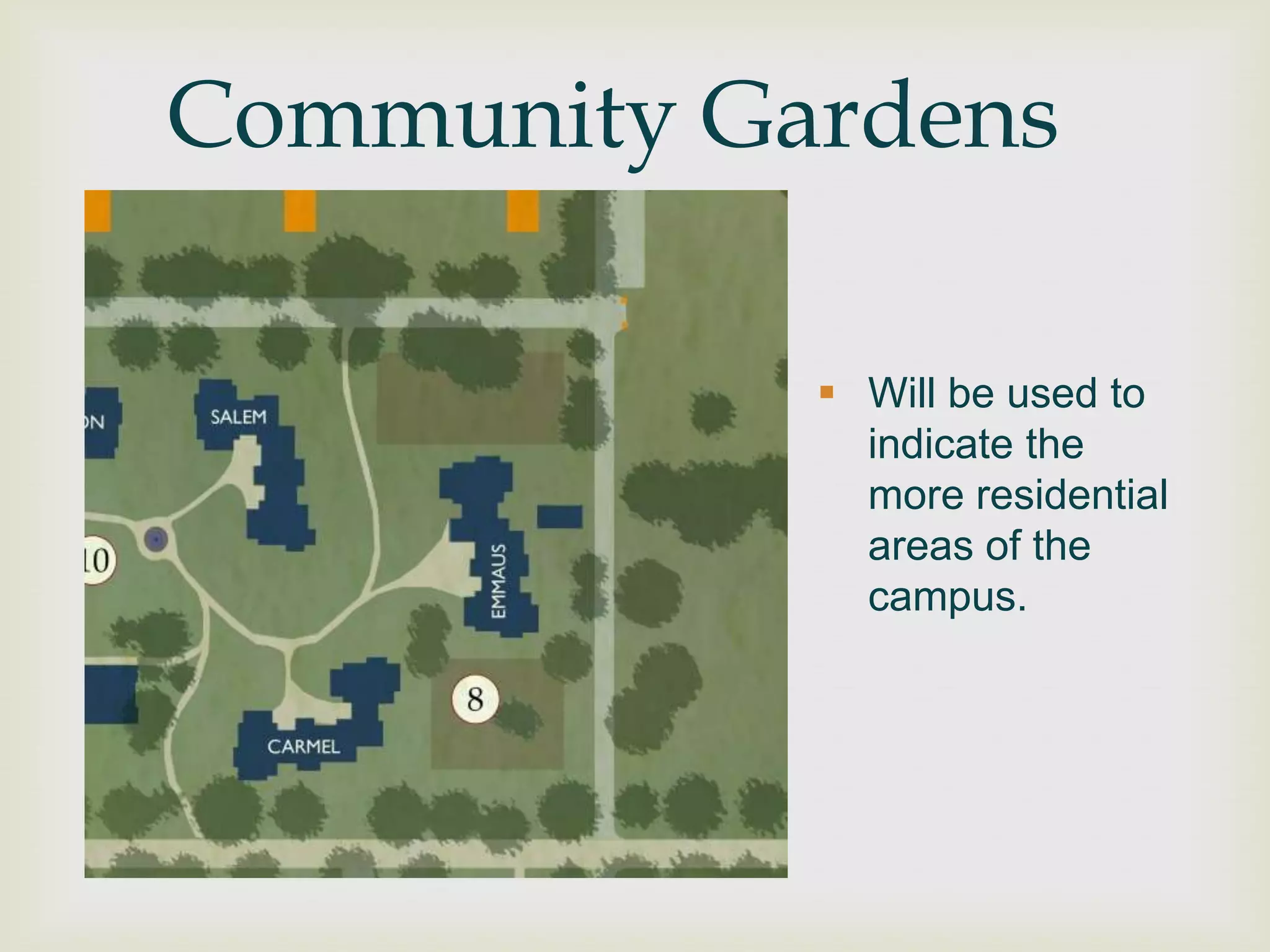
Community Gardens
Community Gardens

             Will be used to
              indicate the
              more residential
              areas of the
              campus.
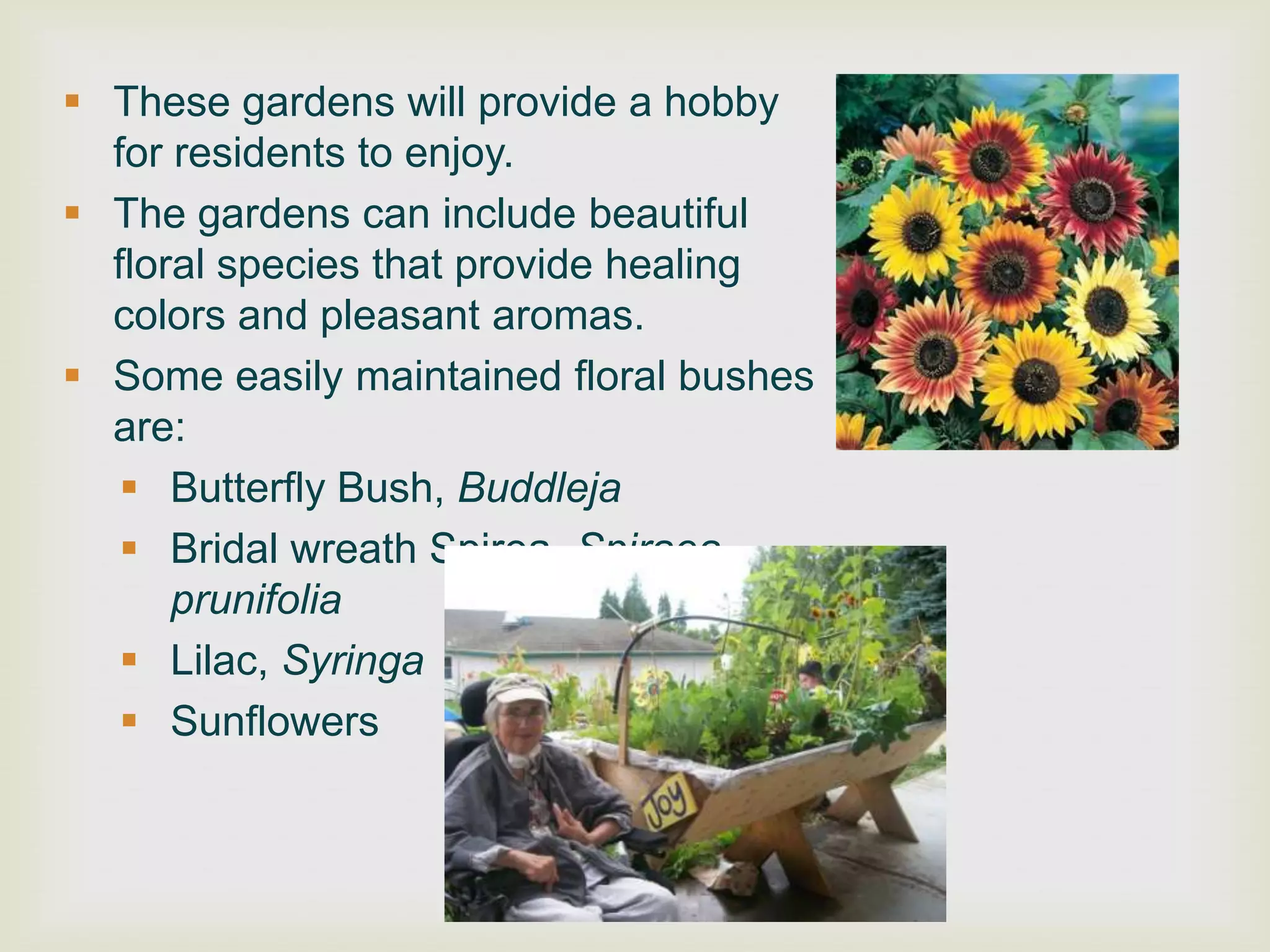
 These gardens will provide a hobby
  for residents to enjoy.
 The gardens can include beautiful
  floral species that provide healing
  colors and pleasant aromas.
 Some easily maintained floral bushes
  are:
    Butterfly Bush, Buddleja
    Bridal wreath Spirea, Spiraea
      prunifolia
    Lilac, Syringa
    Sunflowers
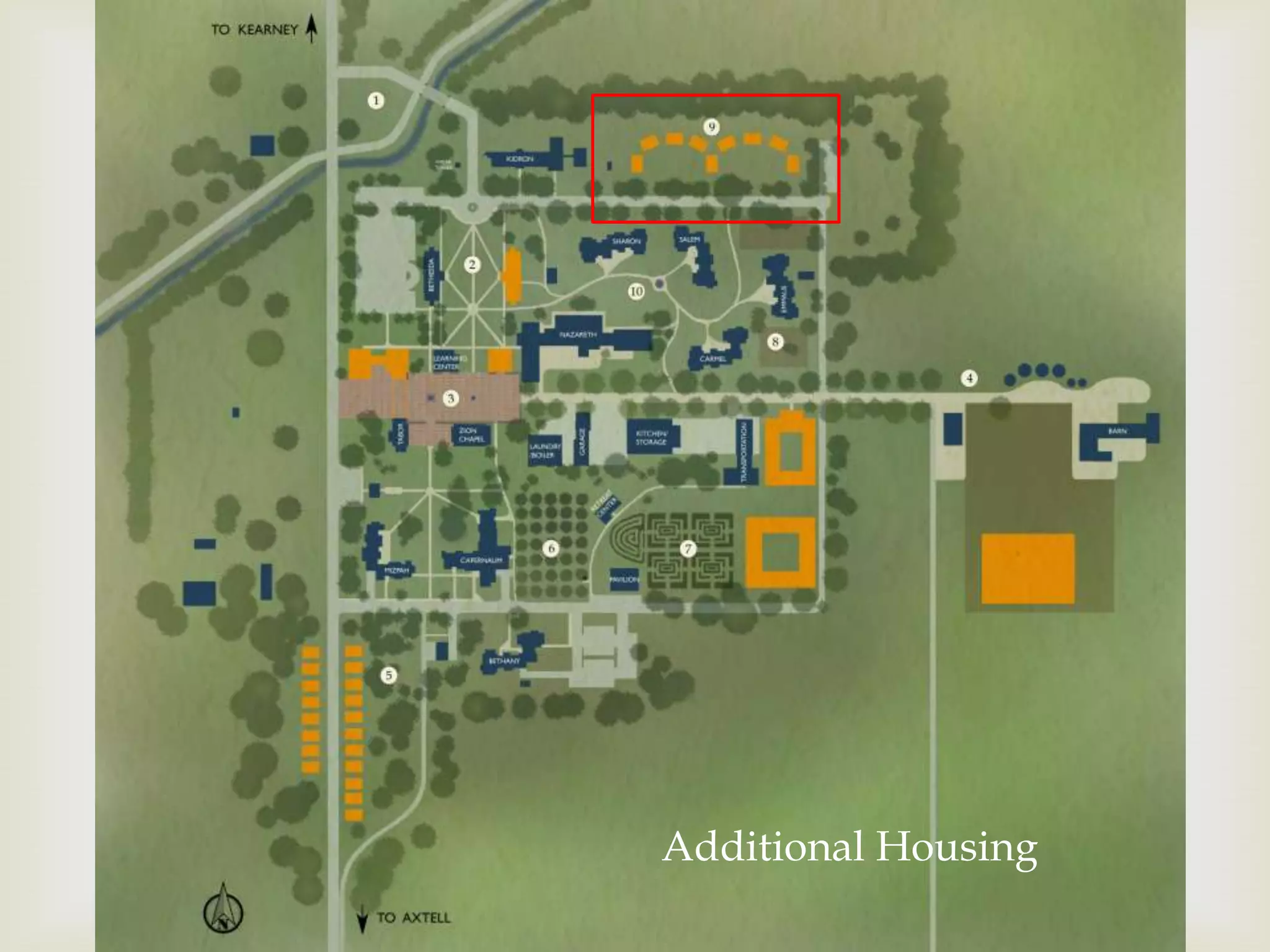
Additional Housing
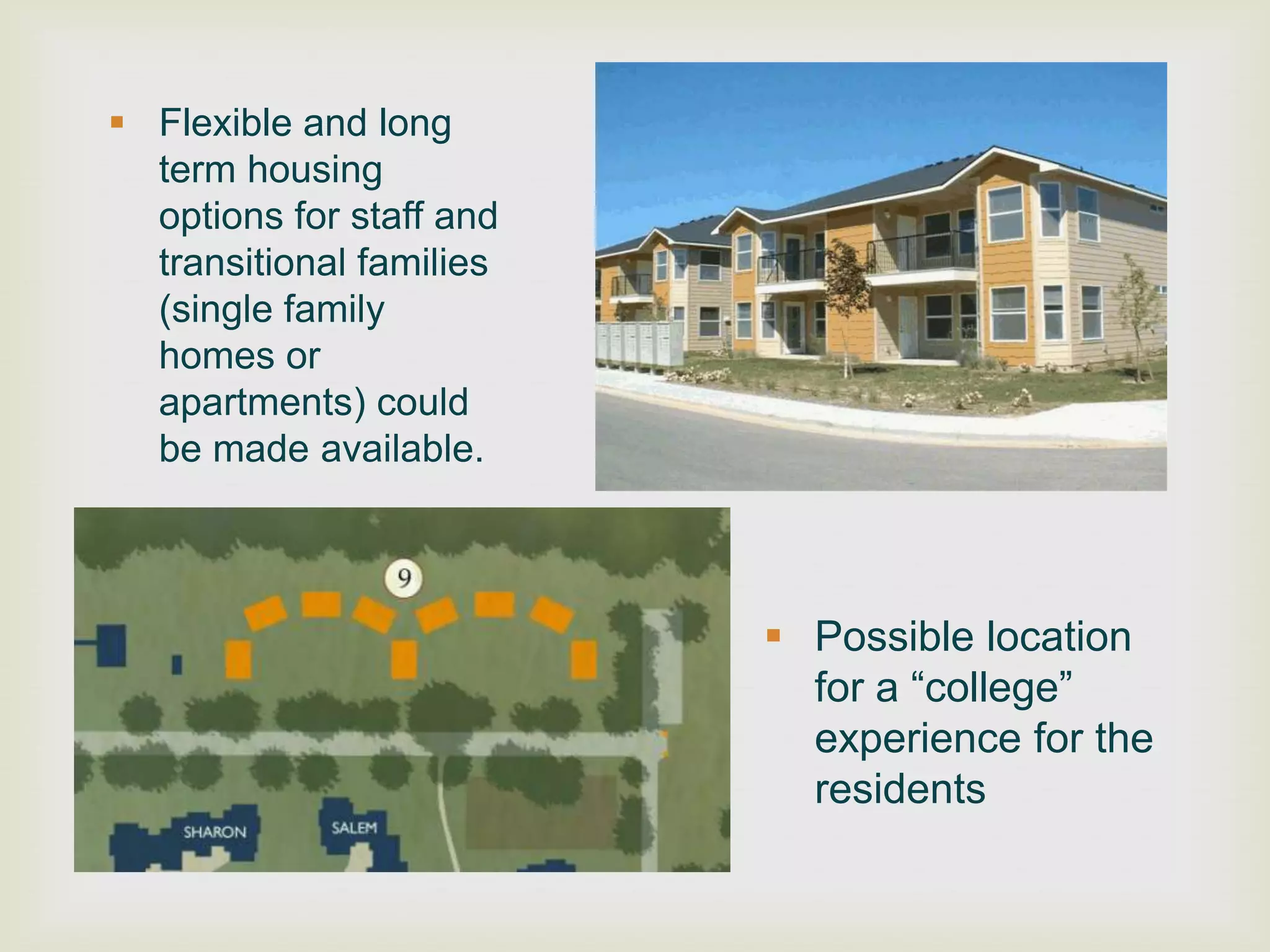
 Flexible and long
  term housing
  options for staff and
  transitional families
  (single family
  homes or
  apartments) could
  be made available.


                           Possible location
                            for a “college”
                            experience for the
                            residents
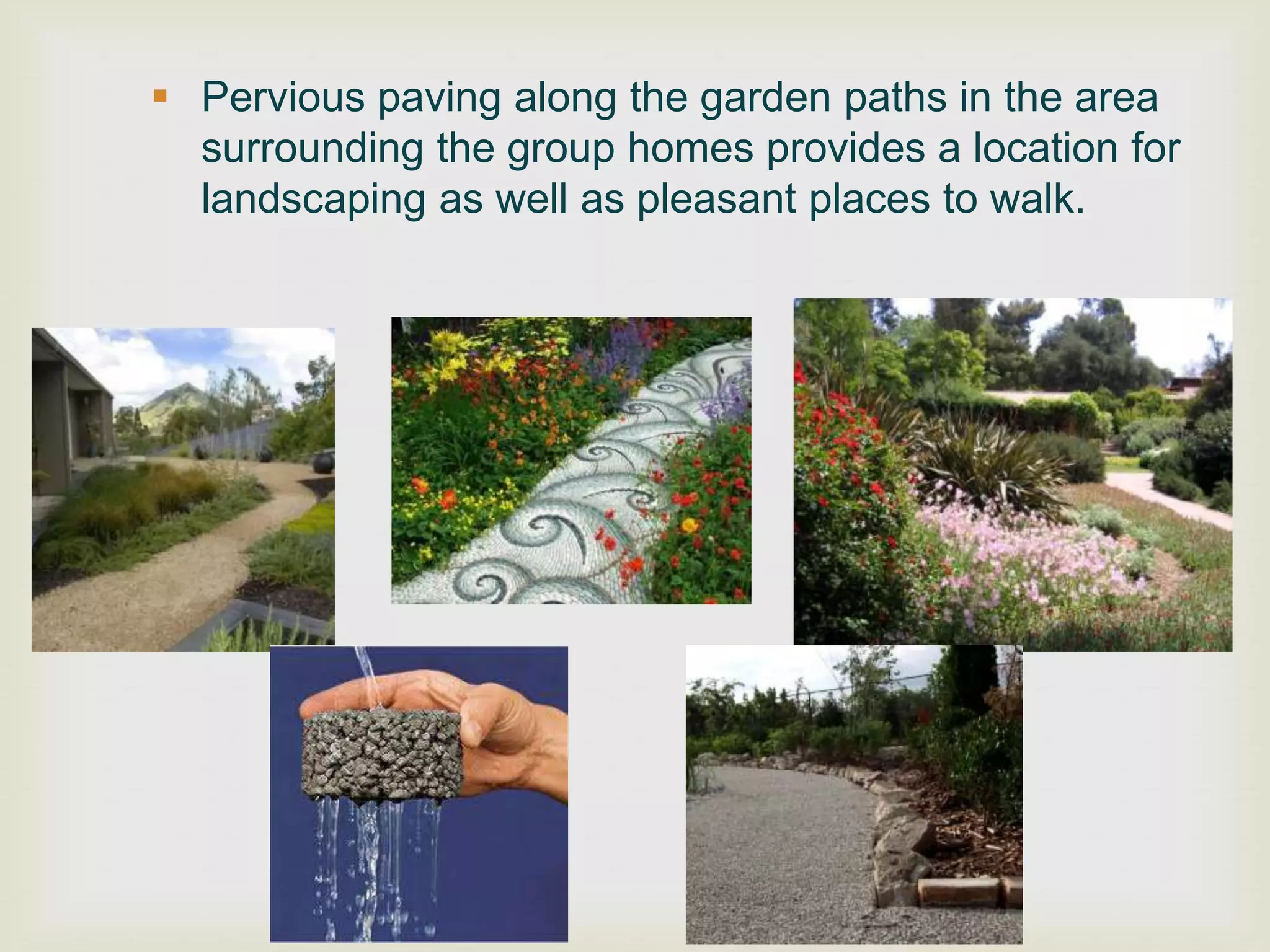
 Pervious paving along the garden paths in the area
  surrounding the group homes provides a location for
  landscaping as well as pleasant places to walk.
Proposed Plants
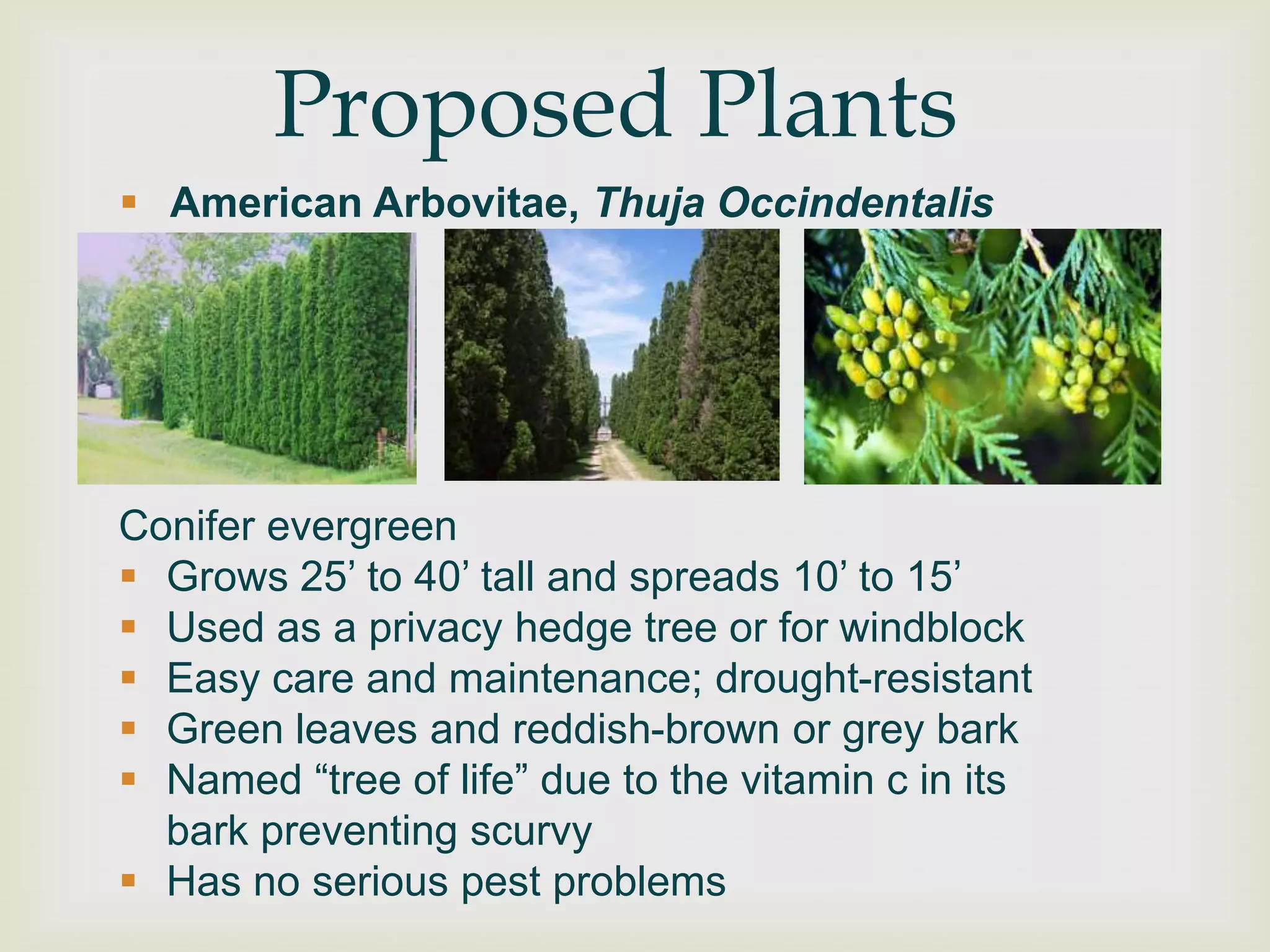
 American Arbovitae, Thuja Occindentalis


Conifer evergreen
 Grows 25‟ to 40‟ tall and spreads 10‟ to 15‟
 Used as a privacy hedge tree or for windblock
 Easy care and maintenance; drought-resistant
 Green leaves and reddish-brown or grey bark
 Named “tree of life” due to the vitamin c in its
  bark preventing scurvy
 Has no serious pest problems
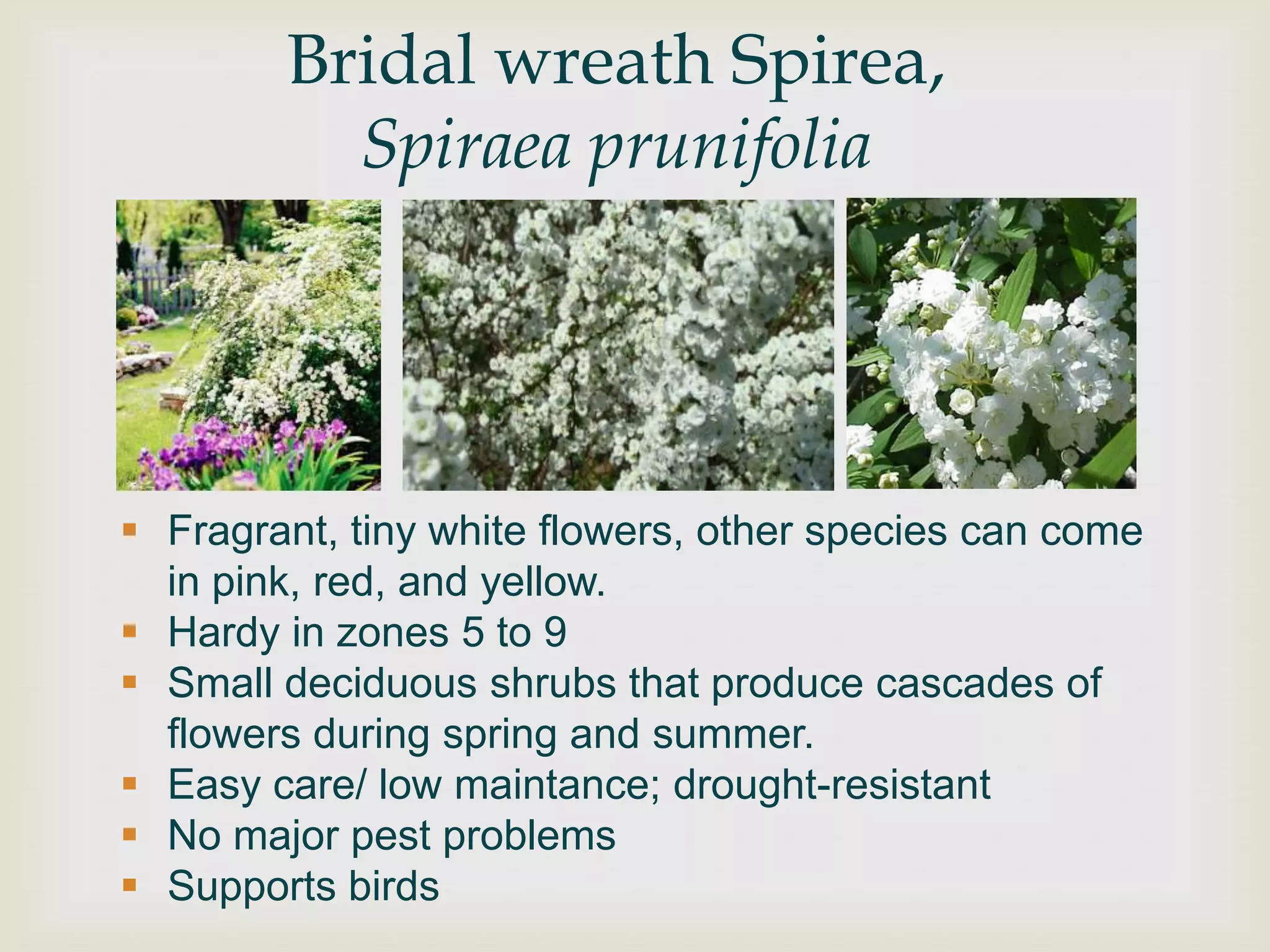
Bridal wreath Spirea,
          Spiraea prunifolia


 Fragrant, tiny white flowers, other species can come
  in pink, red, and yellow.
 Hardy in zones 5 to 9
 Small deciduous shrubs that produce cascades of
  flowers during spring and summer.
 Easy care/ low maintance; drought-resistant
 No major pest problems
 Supports birds
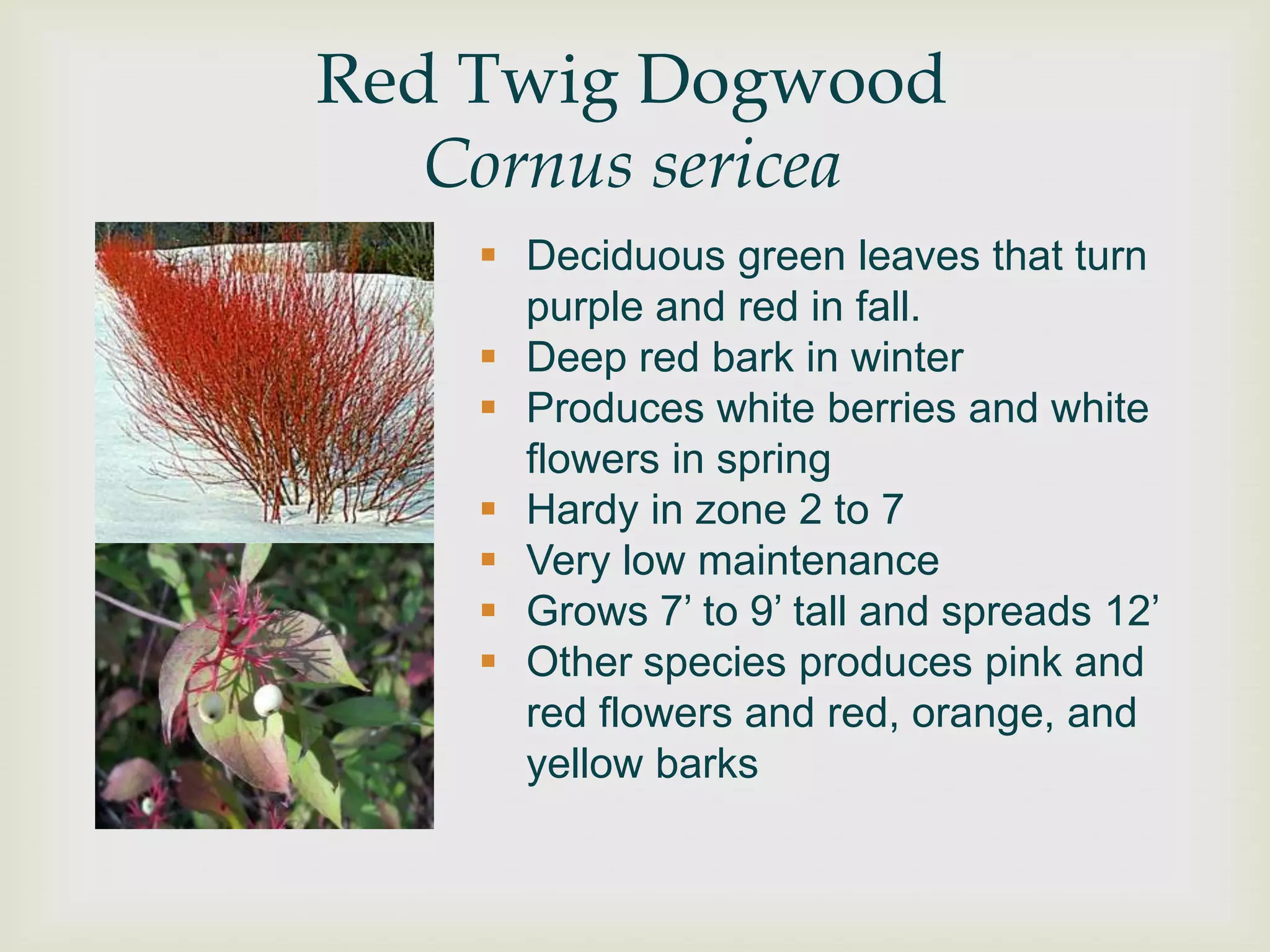
Red Twig Dogwood
   Cornus sericea
     Deciduous green leaves that turn
      purple and red in fall.
     Deep red bark in winter
     Produces white berries and white
      flowers in spring
     Hardy in zone 2 to 7
     Very low maintenance
     Grows 7‟ to 9‟ tall and spreads 12‟
     Other species produces pink and
      red flowers and red, orange, and
      yellow barks
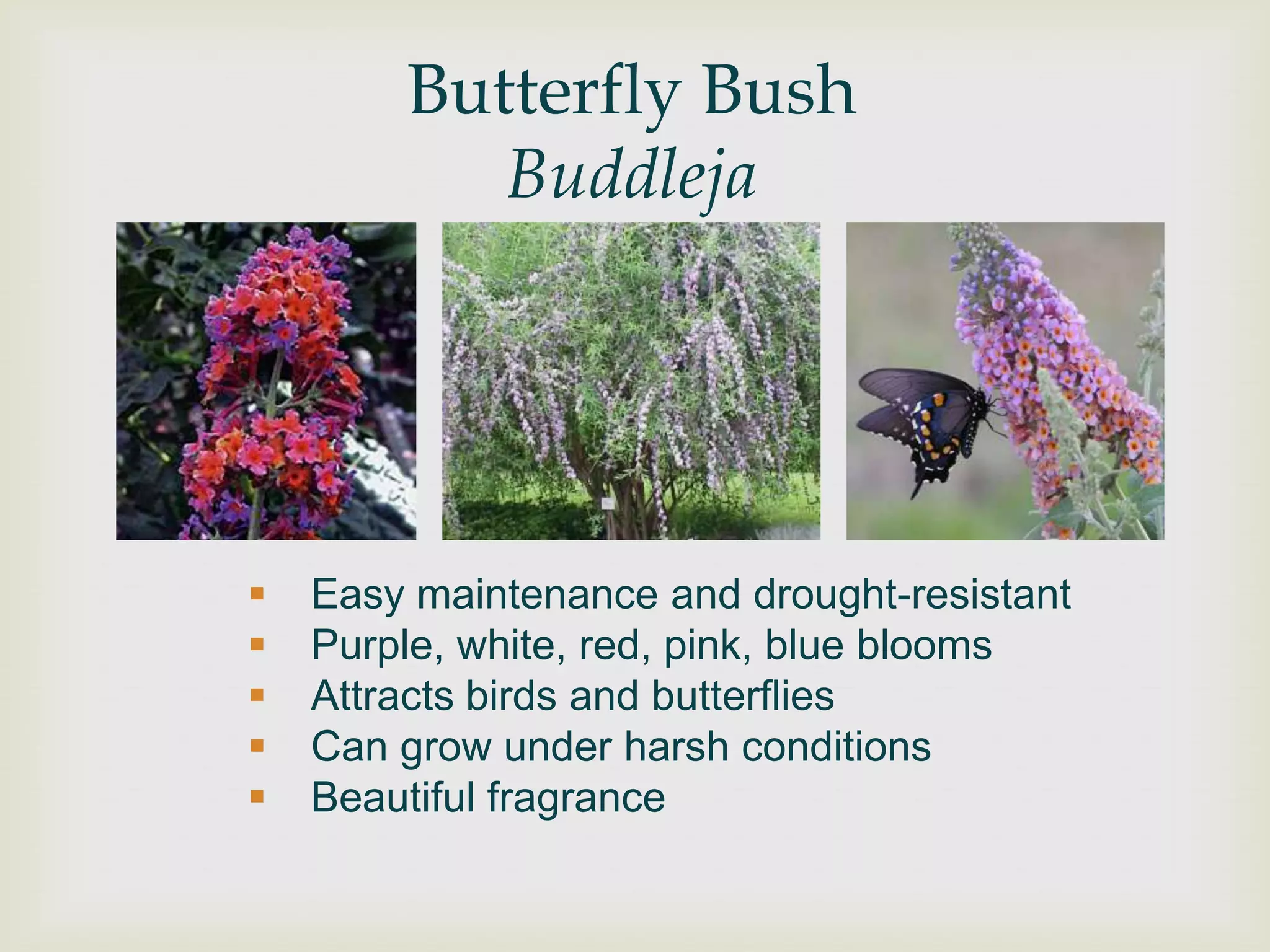
Butterfly Bush
           Buddleja


   Easy maintenance and drought-resistant
   Purple, white, red, pink, blue blooms
   Attracts birds and butterflies
   Can grow under harsh conditions
   Beautiful fragrance
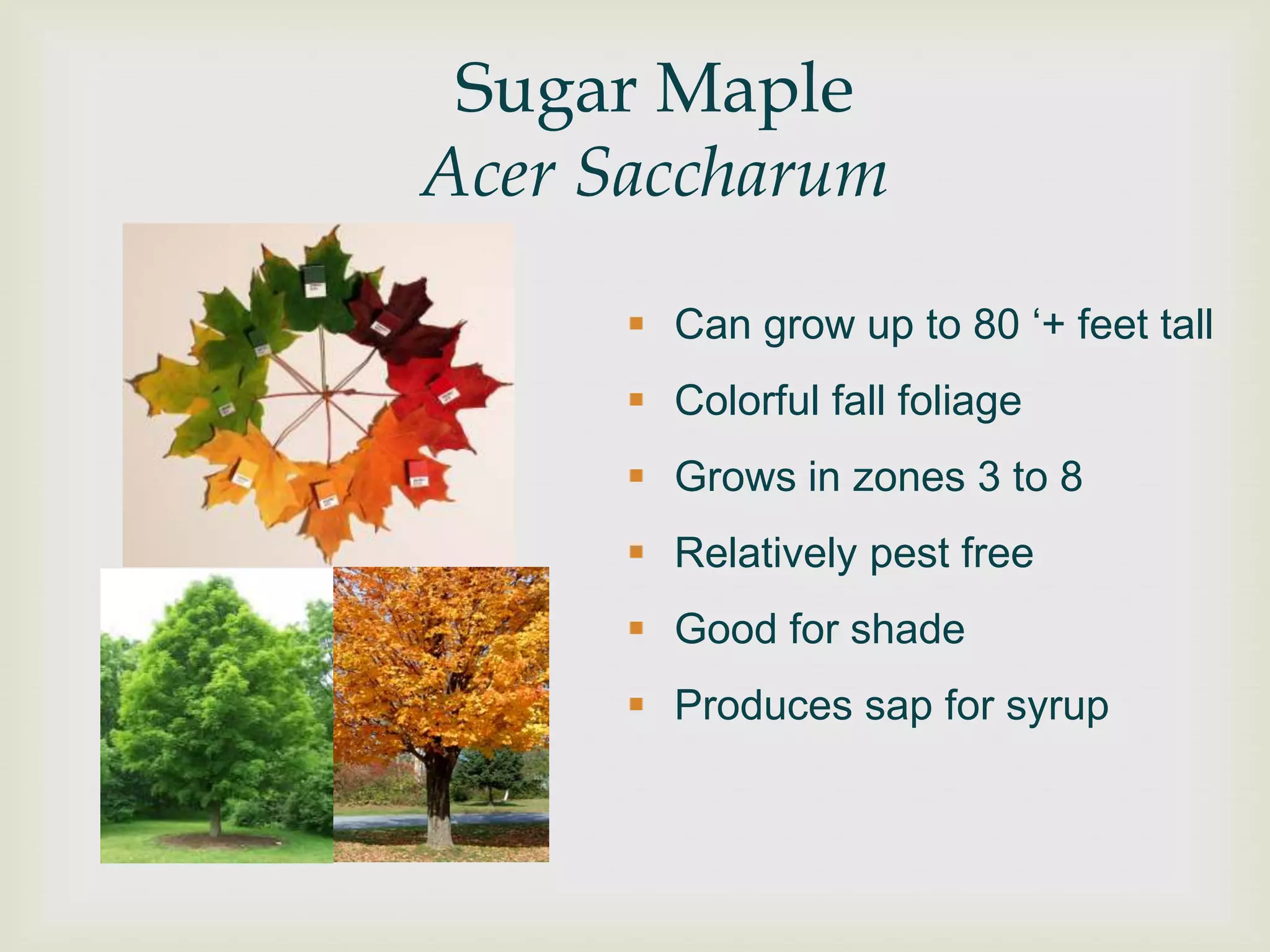
Sugar Maple
Acer Saccharum

       Can grow up to 80 „+ feet tall
       Colorful fall foliage
       Grows in zones 3 to 8
       Relatively pest free
       Good for shade
       Produces sap for syrup
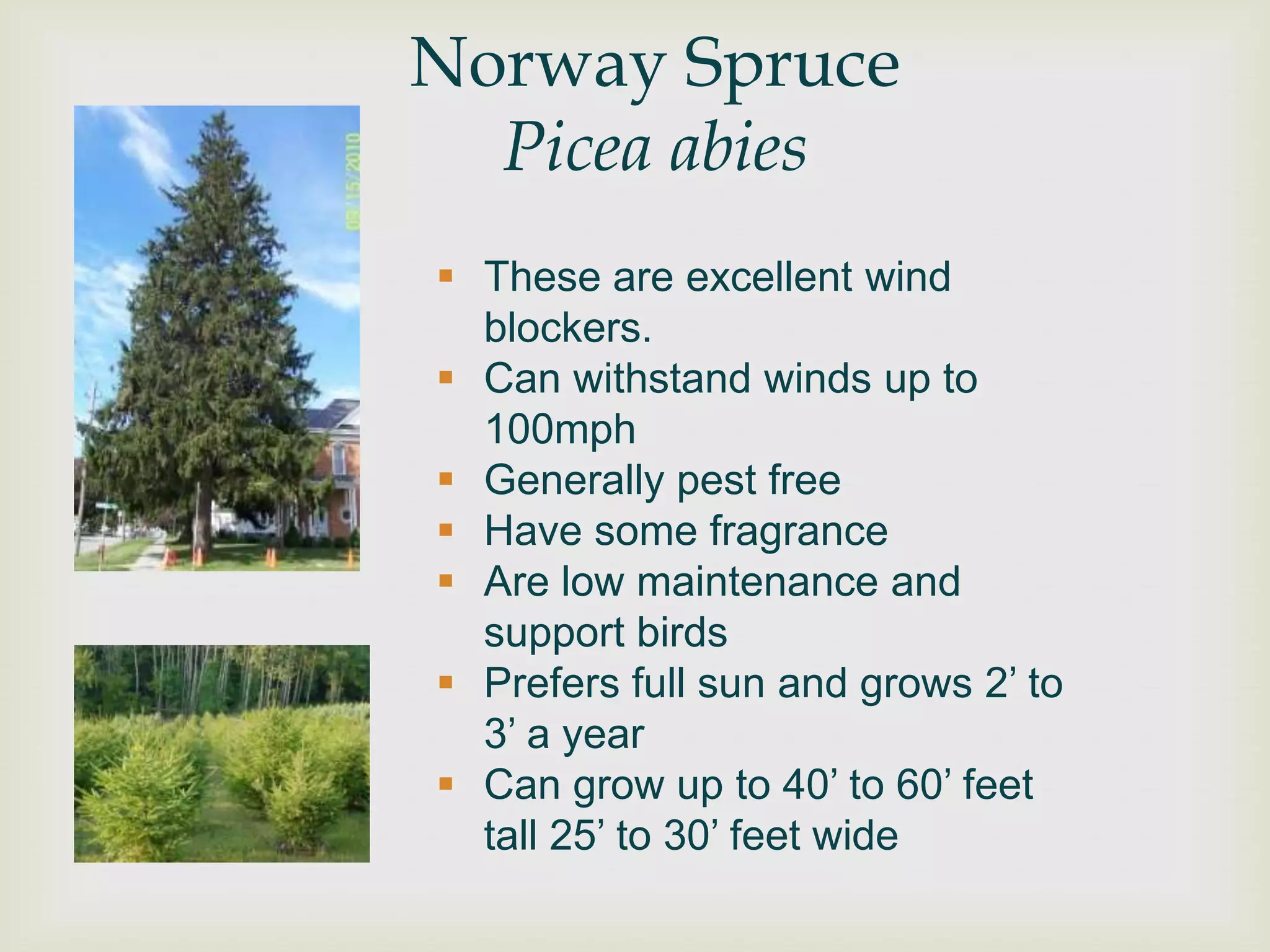
Norway Spruce
  Picea abies
 These are excellent wind
  blockers.
 Can withstand winds up to
  100mph
 Generally pest free
 Have some fragrance
 Are low maintenance and
  support birds
 Prefers full sun and grows 2‟ to
  3‟ a year
 Can grow up to 40‟ to 60‟ feet
  tall 25‟ to 30‟ feet wide
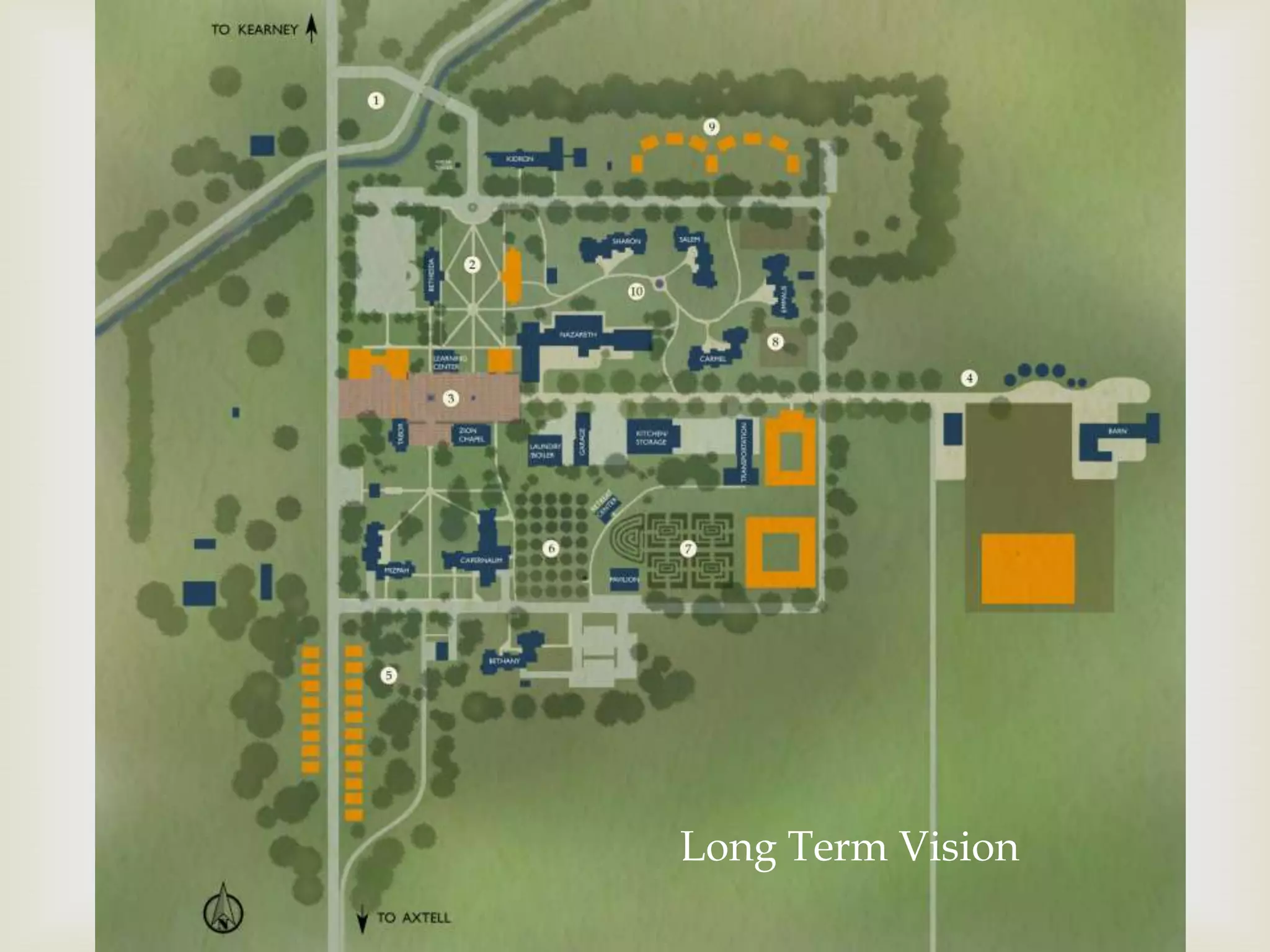
Long Term Vision
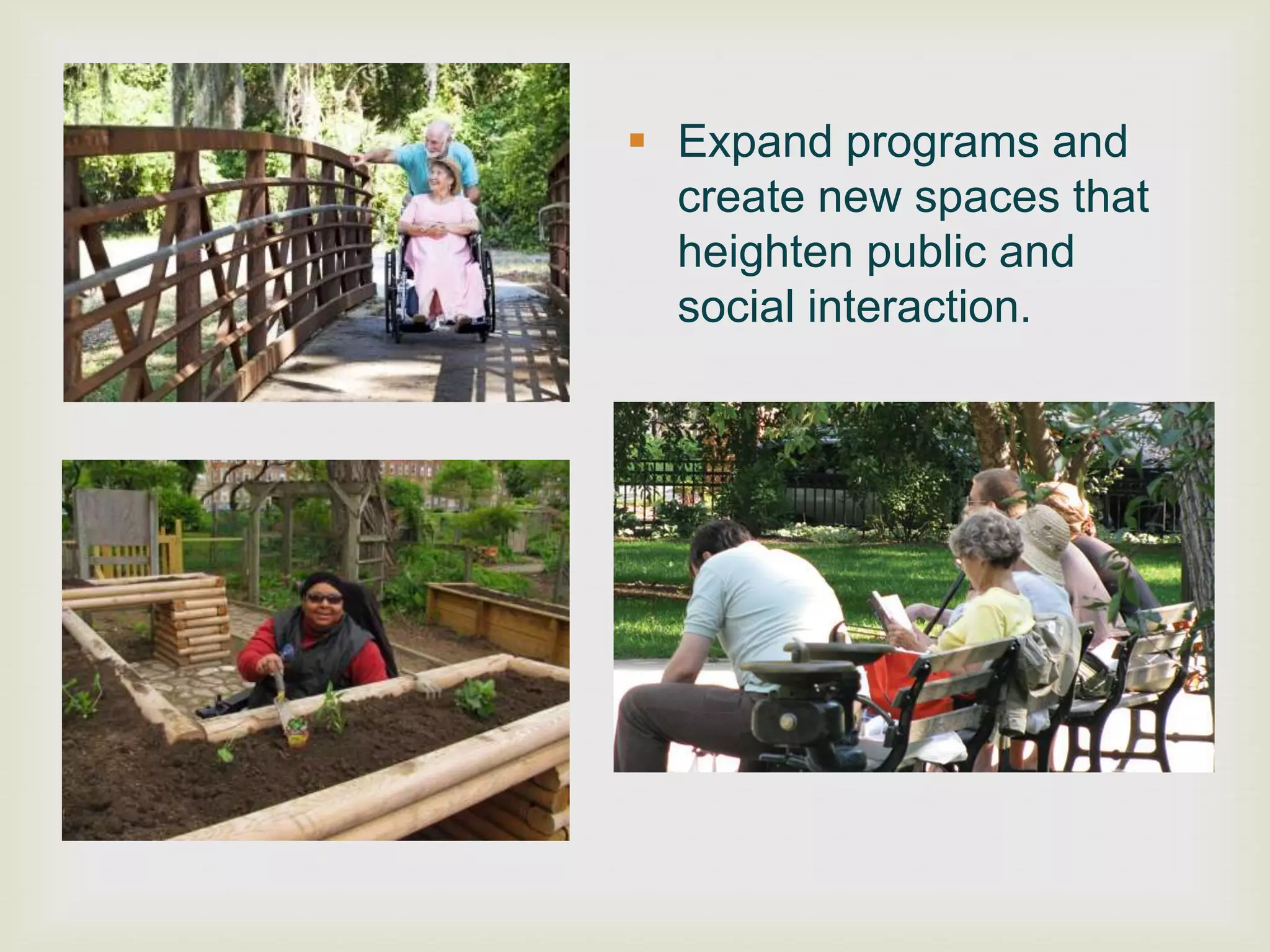
 Expand programs and
  create new spaces that
  heighten public and
  social interaction.
Equine Therapy
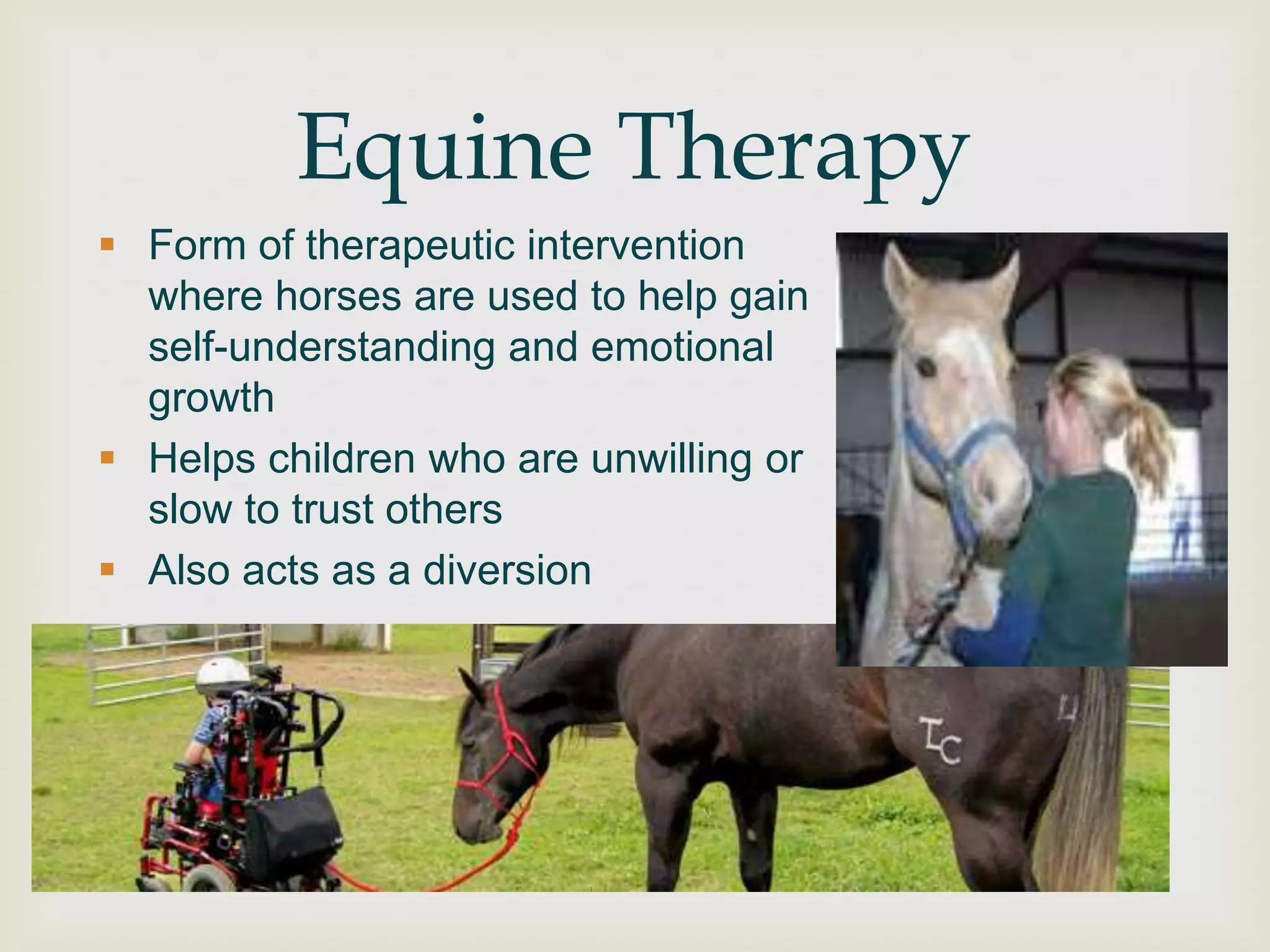
 Form of therapeutic intervention
  where horses are used to help gain
  self-understanding and emotional
  growth
 Helps children who are unwilling or
  slow to trust others
 Also acts as a diversion
Equine Therapy
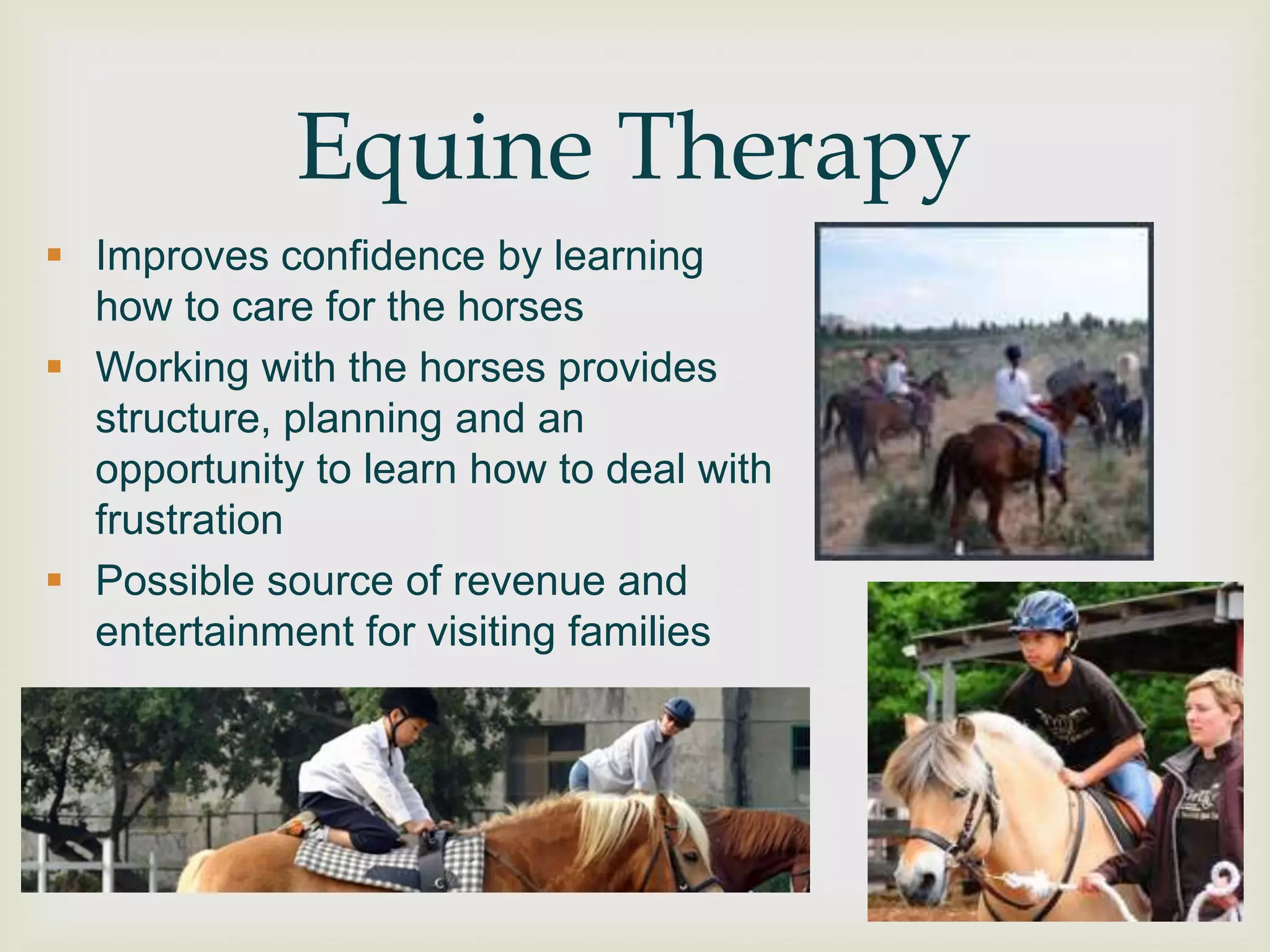
 Improves confidence by learning
  how to care for the horses
 Working with the horses provides
  structure, planning and an
  opportunity to learn how to deal with
  frustration
 Possible source of revenue and
  entertainment for visiting families
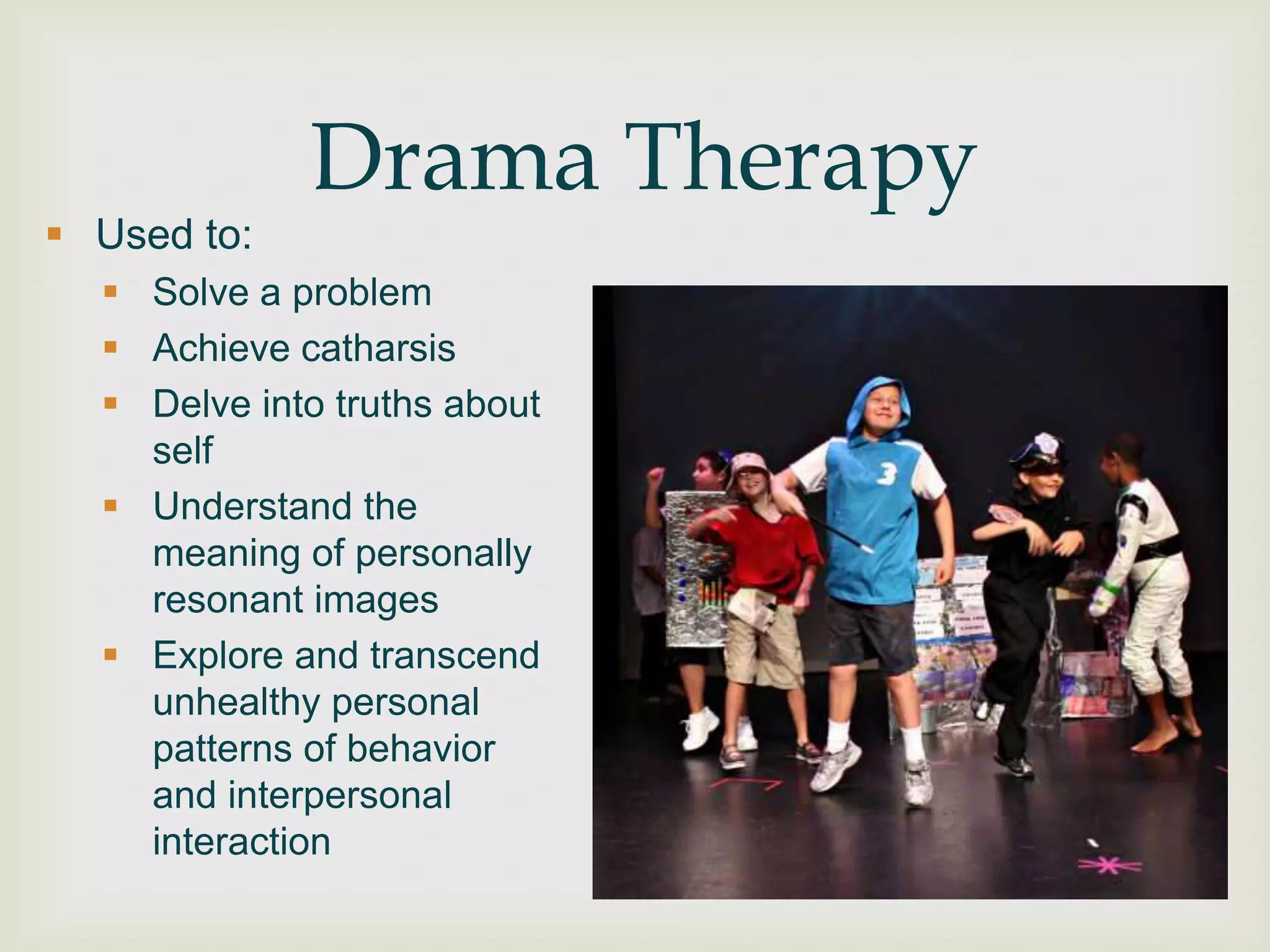
Drama Therapy
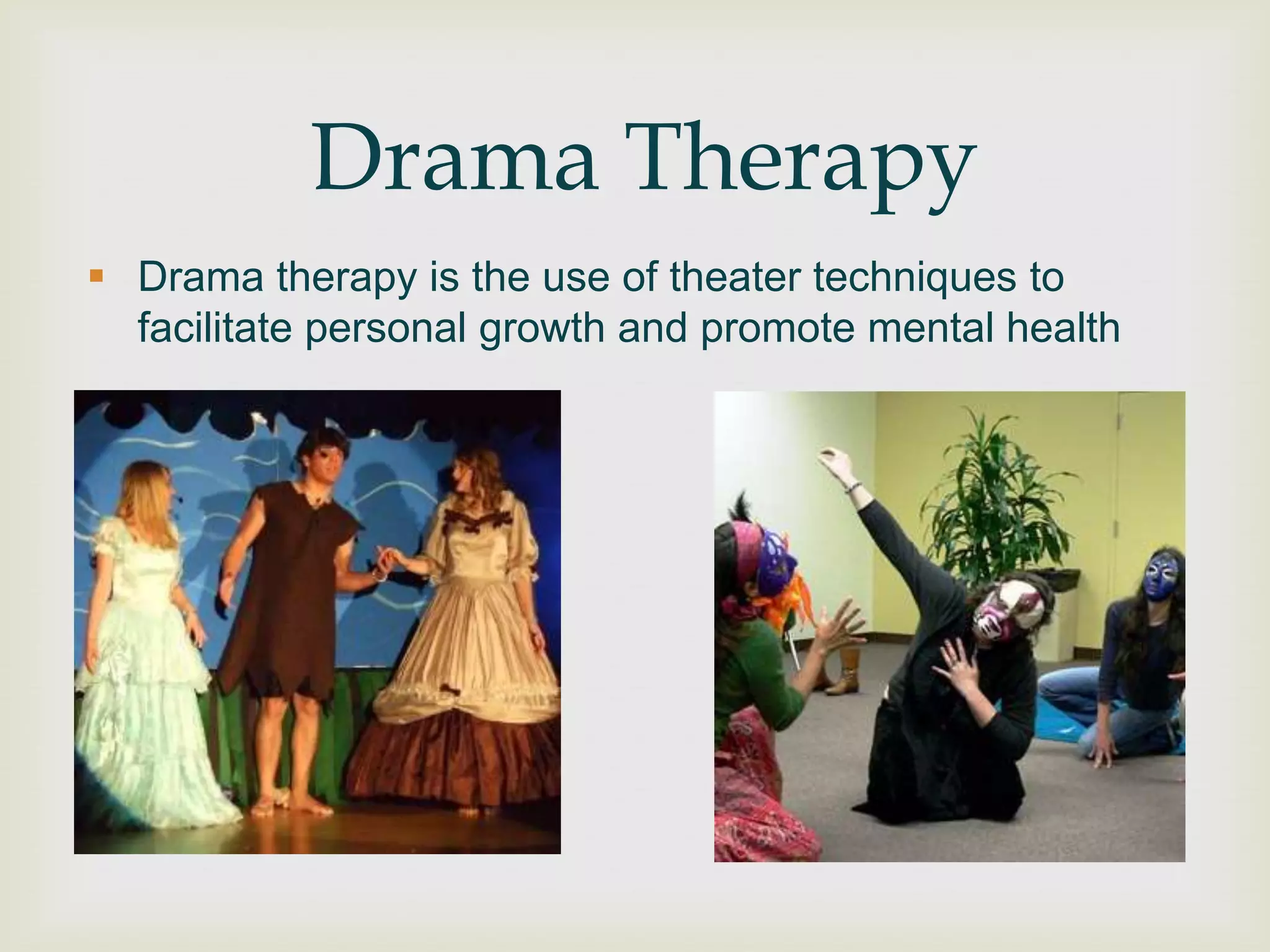
 Drama therapy is the use of theater techniques to
  facilitate personal growth and promote mental health
Drama Therapy
 Used to:
   Solve a problem
   Achieve catharsis
   Delve into truths about
    self
   Understand the
    meaning of personally
    resonant images
   Explore and transcend
    unhealthy personal
    patterns of behavior
    and interpersonal
    interaction
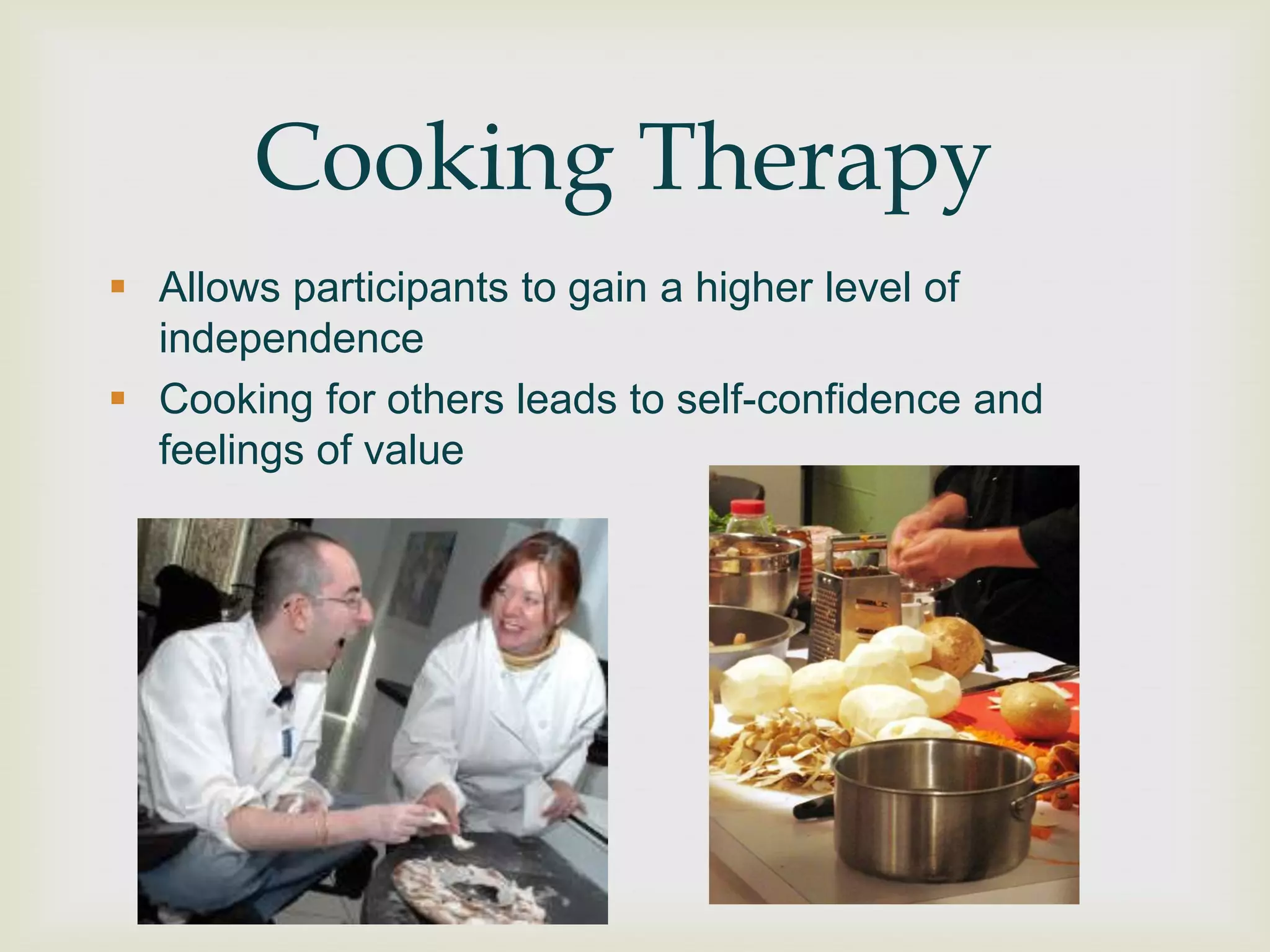
Cooking Therapy
 Allows participants to gain a higher level of
  independence
 Cooking for others leads to self-confidence and
  feelings of value
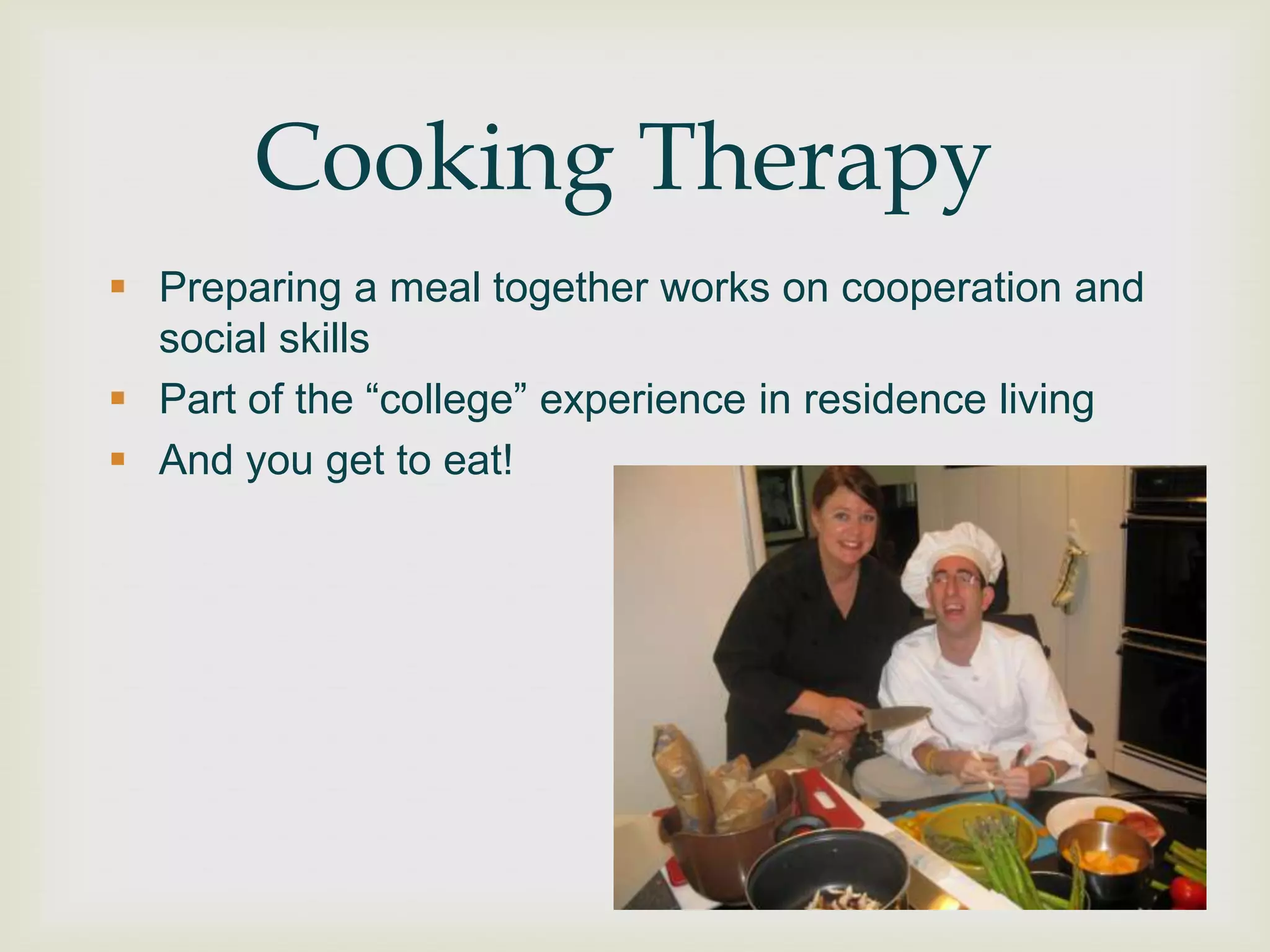
Cooking Therapy
 Preparing a meal together works on cooperation and
  social skills
 Part of the “college” experience in residence living
 And you get to eat!
Art Therapy
 Mainly used for healing
 Can use any type of medium, whatever best speaks
  to the person
Art Therapy
 In contrast to other forms of therapy, because it does
  not rely on communication using words or language
 About focusing your feelings, perceptions, and
  imagination
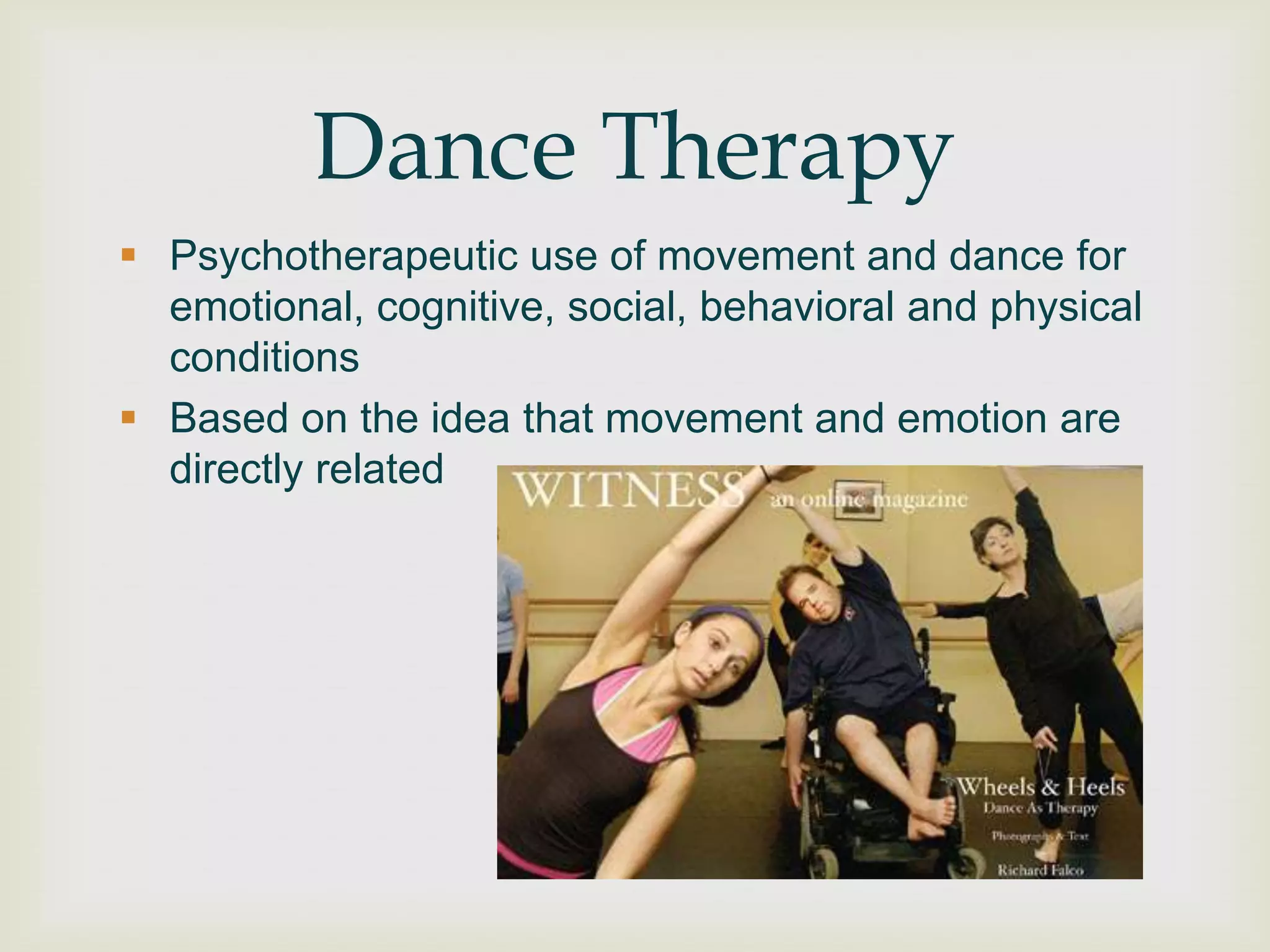
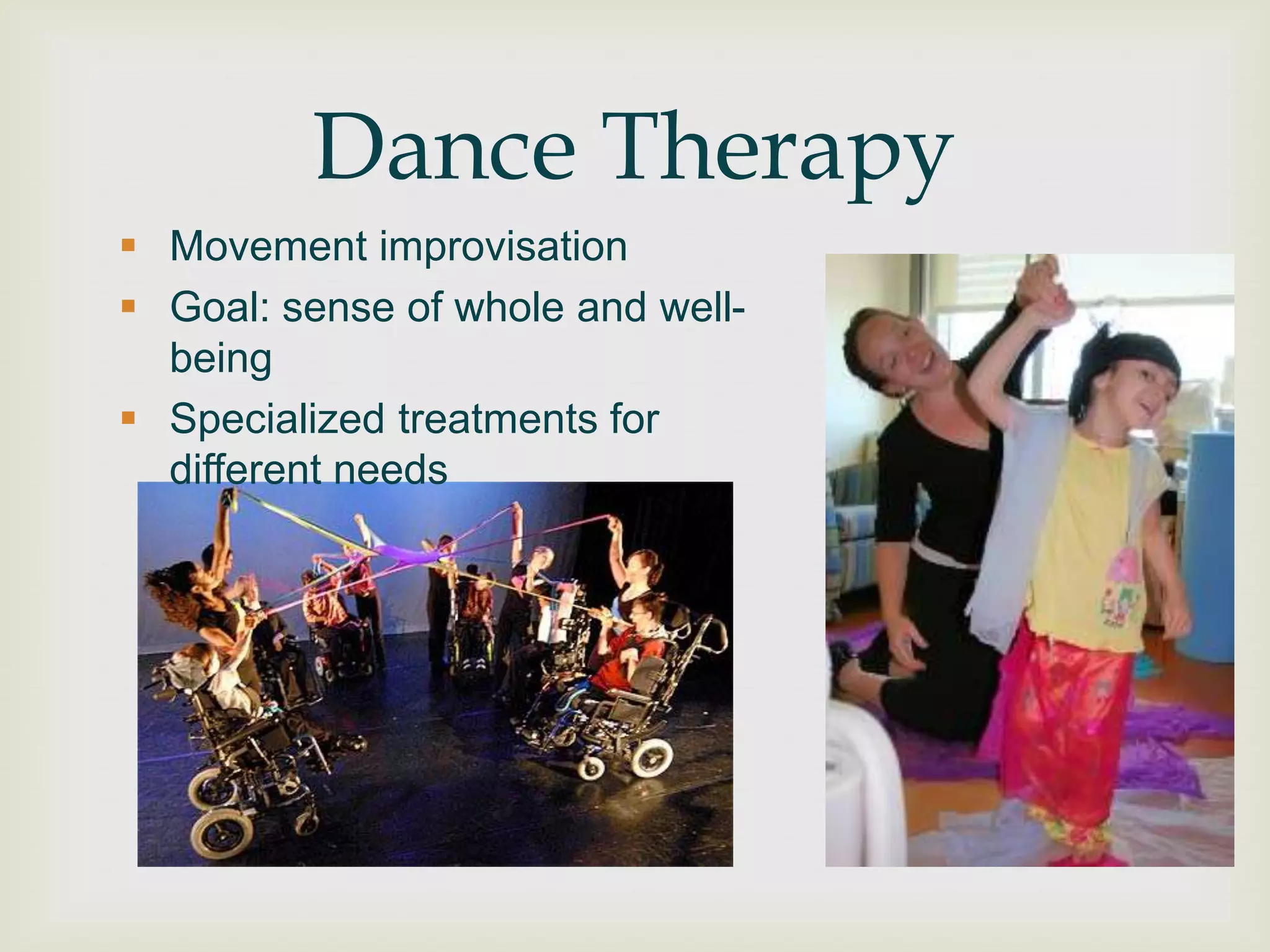
Dance Therapy
 Psychotherapeutic use of movement and dance for
  emotional, cognitive, social, behavioral and physical
  conditions
 Based on the idea that movement and emotion are
  directly related
Dance Therapy
 Movement improvisation
 Goal: sense of whole and well-
  being
 Specialized treatments for
  different needs
MOSAIC
                      Vision
                           
 Create a place that encourages family and residential
  activity.

 Create a place that encourages community activities and
  possibly bring in revenue.

 Create an environment that can further aid residents in
  pursuit of their goals.

 Create a connection between the MOSAIC campus and
  Axtell.

 Introduce new landscaping techniques to define spaces
  and pedestrian movement.
Thank you!
THE END

Mosaic campus narrative

  • 1.
    Axtell Campus Master PlanProject Axtell, Nebraska Professors Ron Sakal and Sallie Hood University of Notre Dame Center for Building Communities September 2012
  • 2.
  • 3.
    Aerial View ofCampus and Axtell
  • 4.
  • 5.
  • 6.
  • 7.
  • 8.
    Tabor Museum andPavilion View
  • 9.
    1 Areas of opportunity 7 2 3 4 5 6 Existing Conditions
  • 10.
    The MOSAIC Vision Create a place that encourages family and residential activity.  Create a place that encourages community activities and possibly bring in revenue.  Create an environment that can further aid residents in pursuit of their goals.  Create a connection between the MOSAIC campus and Axtell.  Introduce new landscaping techniques to define spaces and pedestrian movement
  • 11.
    1 Areas of opportunity Axtell Campus Existing Conditions Master Plan
  • 12.
  • 13.
     A bridgenorth of campus will create a landmark entrance to Bethphage Village.
  • 14.
     The bridgewill also serve to create a pedestrian connection between Bethphage Village and the nearby nature and bike trail.
  • 15.
    Main Circle andWelcome Quad
  • 16.
  • 17.
     Trees, grasses,and shrubs for creating beauty, natural edges, shade, fragrance, bordering , and wind block  American Arborvitae, Thuja Occindentalis  Sugar Maple, Acer Saccharum  Norway Spruce, Picea abies  Red Twig Dogwood, Cornus sericea  Eastern Gamagrass, Tripsacum dactyloides  Sweetgrass, Hierochloe hirta ssp. Arctica  Junegrass, Koeleria macrantha
  • 18.
     Create staffhousing that will allow staff to live in Axtell, decrease commute times, and create a more lively community. Bathesda pic
  • 19.
  • 20.
  • 21.
    Xagra Square, Malta  Across Europe, America, and the world, the traditional town square is a vital part of any vibrant community. Covent Garden, London Old Town Square, Prague
  • 22.
    Bethesda, Maryland  Thetown square acts as a center of community life by promoting both culture and commerce. Weikersheim Market Boston, Massachusetts Square, Germany
  • 23.
     Pedestrian-oriented, the square will use special paving, interactive fountains, landscaping, and seating to create a pleasant exterior space.
  • 24.
     The chapel,museum, and activities center will bring existing local activity to the square.
  • 25.
     The additionof a café, gift-shop, market pavilion, and visitor‟s center will turn it into a center for commerce on the campus.
  • 26.
     Create amenitiessuch as a café, a convenience store, and a gift shop to promote interaction and provide everyday necessities.
  • 27.
     The flexibleinterior and exterior space will promote local culture by allowing for community events such as art fairs, farmer‟s markets, and outdoor performances to take place.
  • 28.
     It willalso provide a meaningful pedestrian link to other areas of campus.
  • 29.
  • 30.
  • 31.
    Barn and PedestrianPath  This path will be a primarily pedestrian, tree – lined promenade that will both highlight and lead residents and visitors towards the barn.  It will also help beautify and conceal the service areas of campus.
  • 32.
  • 33.
     Single-family homes along 2nd Avenue will create a purposeful connection with Axtell. Highly functioning residents, visiting families, and employees of MOSAIC might live here.
  • 34.
     A pedestriantrail will create a safe and enjoyable connection with Axtell.  This will be achieved through appropriate landscaping and illumination.
  • 35.
  • 36.
    Orchards/Groves  The orchard provides a beautiful backdrop to the Miracle of the Prairie Lodge for weddings and other events.
  • 37.
     Orchards willnot only provide beautiful scenery and fresh fruit for the Bethphage community, but will also be an attraction for families.  Orchards provide activities for families and provide a great setting for outdoor festivals.  Apples, pears, and pumpkins grow well in Nebraska.  A pumpkin patch can attract school fieldtrips and provide jack-o-lanterns for Halloween.
  • 38.
  • 39.
  • 40.
     Unlike amaze, a labyrinth only has one path that meanders back and forth, side to side until you reach the center.  The meandering path of the labyrinth is a means of meditation that leads one to their destination and allows the mind to be calm and contemplative.
  • 41.
  • 42.
    Garden Spaces Gardens witha connection to proposed therapy and wellness center.
  • 43.
     Formal gardenscreate strong axes indicating important views, buildings, and directions.
  • 44.
  • 45.
    Community Gardens  Will be used to indicate the more residential areas of the campus.
  • 46.
     These gardenswill provide a hobby for residents to enjoy.  The gardens can include beautiful floral species that provide healing colors and pleasant aromas.  Some easily maintained floral bushes are:  Butterfly Bush, Buddleja  Bridal wreath Spirea, Spiraea prunifolia  Lilac, Syringa  Sunflowers
  • 47.
  • 48.
     Flexible andlong term housing options for staff and transitional families (single family homes or apartments) could be made available.  Possible location for a “college” experience for the residents
  • 49.
     Pervious pavingalong the garden paths in the area surrounding the group homes provides a location for landscaping as well as pleasant places to walk.
  • 50.
    Proposed Plants  AmericanArbovitae, Thuja Occindentalis Conifer evergreen  Grows 25‟ to 40‟ tall and spreads 10‟ to 15‟  Used as a privacy hedge tree or for windblock  Easy care and maintenance; drought-resistant  Green leaves and reddish-brown or grey bark  Named “tree of life” due to the vitamin c in its bark preventing scurvy  Has no serious pest problems
  • 51.
    Bridal wreath Spirea, Spiraea prunifolia  Fragrant, tiny white flowers, other species can come in pink, red, and yellow.  Hardy in zones 5 to 9  Small deciduous shrubs that produce cascades of flowers during spring and summer.  Easy care/ low maintance; drought-resistant  No major pest problems  Supports birds
  • 52.
    Red Twig Dogwood Cornus sericea  Deciduous green leaves that turn purple and red in fall.  Deep red bark in winter  Produces white berries and white flowers in spring  Hardy in zone 2 to 7  Very low maintenance  Grows 7‟ to 9‟ tall and spreads 12‟  Other species produces pink and red flowers and red, orange, and yellow barks
  • 53.
    Butterfly Bush Buddleja  Easy maintenance and drought-resistant  Purple, white, red, pink, blue blooms  Attracts birds and butterflies  Can grow under harsh conditions  Beautiful fragrance
  • 54.
    Sugar Maple Acer Saccharum  Can grow up to 80 „+ feet tall  Colorful fall foliage  Grows in zones 3 to 8  Relatively pest free  Good for shade  Produces sap for syrup
  • 55.
    Norway Spruce Picea abies  These are excellent wind blockers.  Can withstand winds up to 100mph  Generally pest free  Have some fragrance  Are low maintenance and support birds  Prefers full sun and grows 2‟ to 3‟ a year  Can grow up to 40‟ to 60‟ feet tall 25‟ to 30‟ feet wide
  • 56.
  • 57.
     Expand programsand create new spaces that heighten public and social interaction.
  • 58.
    Equine Therapy  Formof therapeutic intervention where horses are used to help gain self-understanding and emotional growth  Helps children who are unwilling or slow to trust others  Also acts as a diversion
  • 59.
    Equine Therapy  Improvesconfidence by learning how to care for the horses  Working with the horses provides structure, planning and an opportunity to learn how to deal with frustration  Possible source of revenue and entertainment for visiting families
  • 60.
    Drama Therapy  Dramatherapy is the use of theater techniques to facilitate personal growth and promote mental health
  • 61.
    Drama Therapy  Usedto:  Solve a problem  Achieve catharsis  Delve into truths about self  Understand the meaning of personally resonant images  Explore and transcend unhealthy personal patterns of behavior and interpersonal interaction
  • 62.
    Cooking Therapy  Allowsparticipants to gain a higher level of independence  Cooking for others leads to self-confidence and feelings of value
  • 63.
    Cooking Therapy  Preparinga meal together works on cooperation and social skills  Part of the “college” experience in residence living  And you get to eat!
  • 64.
    Art Therapy  Mainlyused for healing  Can use any type of medium, whatever best speaks to the person
  • 65.
    Art Therapy  Incontrast to other forms of therapy, because it does not rely on communication using words or language  About focusing your feelings, perceptions, and imagination
  • 66.
    Dance Therapy  Psychotherapeuticuse of movement and dance for emotional, cognitive, social, behavioral and physical conditions  Based on the idea that movement and emotion are directly related
  • 67.
    Dance Therapy  Movementimprovisation  Goal: sense of whole and well- being  Specialized treatments for different needs
  • 68.
    MOSAIC Vision   Create a place that encourages family and residential activity.  Create a place that encourages community activities and possibly bring in revenue.  Create an environment that can further aid residents in pursuit of their goals.  Create a connection between the MOSAIC campus and Axtell.  Introduce new landscaping techniques to define spaces and pedestrian movement.
  • 69.
  • 70.