Introduction
Exploring the significance of our research topic, and presenting our
research objectives.
by Elims Principal
Research Design
Methodology
Explanation of the chosen
research design (e.g.,
experimental, survey, case
study).
Justification
Why this research design is the
most suitable and efficient
option for this study.
Alignment
Discussion of the research
design's alignment with our
research questions.
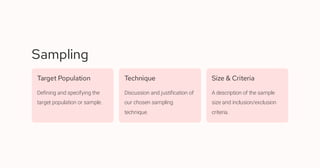
Sampling
Target Population
Defining and specifying the
target population or sample.
Technique
Discussion and justification of
our chosen sampling
technique.
Size & Criteria
A description of the sample
size and inclusion/exclusion
criteria.
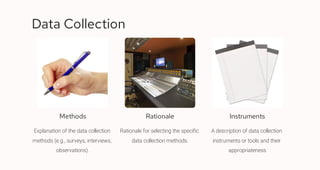
Data Collection
Methods
Explanation of the data collection
methods (e.g., surveys, interviews,
observations).
Rationale
Rationale for selecting the specific
data collection methods.
Instruments
A description of data collection
instruments or tools and their
appropriateness
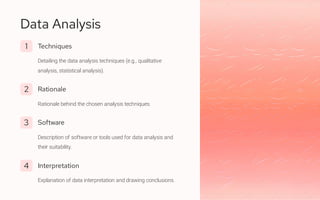
Data Analysis
1 Techniques
Detailing the data analysis techniques (e.g., qualitative
analysis, statistical analysis).
2 Rationale
Rationale behind the chosen analysis techniques.
3 Software
Description of software or tools used for data analysis and
their suitability.
4 Interpretation
Explanation of data interpretation and drawing conclusions.
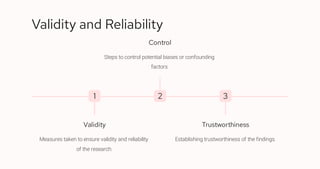
Validity and Reliability
1
Validity
Measures taken to ensure validity and reliability
of the research.
2
Control
Steps to control potential biases or confounding
factors.
3
Trustworthiness
Establishing trustworthiness of the findings.
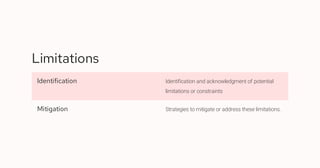
Limitations
Identification Identification and acknowledgment of potential
limitations or constraints
Mitigation Strategies to mitigate or address these limitations.
Timeline
Data Collection
Estimated timeframes for data
collection.
Data Analysis
Estimated timeframes for data
analysis.
Report Writing
Estimated timeframes for report
writing.
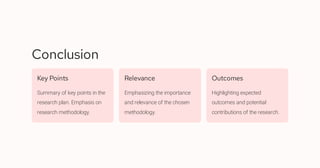
Conclusion
Key Points
Summary of key points in the
research plan. Emphasis on
research methodology.
Relevance
Emphasizing the importance
and relevance of the chosen
methodology.
Outcomes
Highlighting expected
outcomes and potential
contributions of the research.

MODULE II RESEARCH PLAN.pdf

  • 1.
    Introduction Exploring the significanceof our research topic, and presenting our research objectives. by Elims Principal
  • 2.
    Research Design Methodology Explanation ofthe chosen research design (e.g., experimental, survey, case study). Justification Why this research design is the most suitable and efficient option for this study. Alignment Discussion of the research design's alignment with our research questions.
  • 3.
    Sampling Target Population Defining andspecifying the target population or sample. Technique Discussion and justification of our chosen sampling technique. Size & Criteria A description of the sample size and inclusion/exclusion criteria.
  • 4.
    Data Collection Methods Explanation ofthe data collection methods (e.g., surveys, interviews, observations). Rationale Rationale for selecting the specific data collection methods. Instruments A description of data collection instruments or tools and their appropriateness
  • 5.
    Data Analysis 1 Techniques Detailingthe data analysis techniques (e.g., qualitative analysis, statistical analysis). 2 Rationale Rationale behind the chosen analysis techniques. 3 Software Description of software or tools used for data analysis and their suitability. 4 Interpretation Explanation of data interpretation and drawing conclusions.
  • 6.
    Validity and Reliability 1 Validity Measurestaken to ensure validity and reliability of the research. 2 Control Steps to control potential biases or confounding factors. 3 Trustworthiness Establishing trustworthiness of the findings.
  • 7.
    Limitations Identification Identification andacknowledgment of potential limitations or constraints Mitigation Strategies to mitigate or address these limitations.
  • 8.
    Timeline Data Collection Estimated timeframesfor data collection. Data Analysis Estimated timeframes for data analysis. Report Writing Estimated timeframes for report writing.
  • 9.
    Conclusion Key Points Summary ofkey points in the research plan. Emphasis on research methodology. Relevance Emphasizing the importance and relevance of the chosen methodology. Outcomes Highlighting expected outcomes and potential contributions of the research.