Modern Security
Infrastructure
Development
With the rise of technology, modernizing your security infrastructure
is essential. In this presentation, we will explore the challenges of
existing security infrastructure and the benefits of modernization.
AS by Anu Siya
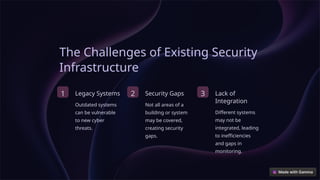
The Challenges of Existing Security
Infrastructure
1 Legacy Systems
Outdated systems
can be vulnerable
to new cyber
threats.
2 Security Gaps
Not all areas of a
building or system
may be covered,
creating security
gaps.
3 Lack of
Integration
Different systems
may not be
integrated, leading
to inefficiencies
and gaps in
monitoring.
Emerging Trends in Security
Infrastructure Development
Smart Cameras
Cameras with
facial recognition
and behavioral
analytics make it
easier to identify
potential threats.
Cloud Security
Cloud computing
ensures data is
backed up and
easily recoverable
in the event of a
breach.
Access Control
Systems
Devices like
keycards,
biometric
scanners, and
facial recognition
help keep
unauthorized
individuals out of
Firewall
Protection
Firewalls help
keep threats from
entering a
network.
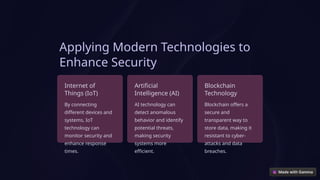
Applying Modern Technologies to
Enhance Security
Internet of
Things (IoT)
By connecting
different devices and
systems, IoT
technology can
monitor security and
enhance response
times.
Artificial
Intelligence (AI)
AI technology can
detect anomalous
behavior and identify
potential threats,
making security
systems more
efficient.
Blockchain
Technology
Blockchain offers a
secure and
transparent way to
store data, making it
resistant to cyber-
attacks and data
breaches.
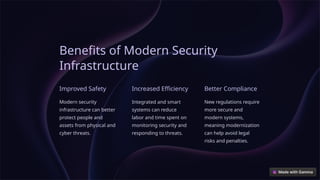
Benefits of Modern Security
Infrastructure
Improved Safety
Modern security
infrastructure can better
protect people and
assets from physical and
cyber threats.
Increased Efficiency
Integrated and smart
systems can reduce
labor and time spent on
monitoring security and
responding to threats.
Better Compliance
New regulations require
more secure and
modern systems,
meaning modernization
can help avoid legal
risks and penalties.
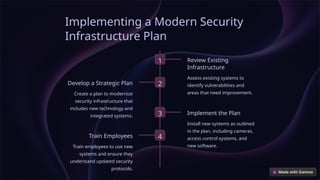
Implementing a Modern Security
Infrastructure Plan
1 Review Existing
Infrastructure
Assess existing systems to
identify vulnerabilities and
areas that need improvement.
2
Develop a Strategic Plan
Create a plan to modernize
security infrastructure that
includes new technology and
integrated systems. 3 Implement the Plan
Install new systems as outlined
in the plan, including cameras,
access control systems, and
new software.
4
Train Employees
Train employees to use new
systems and ensure they
understand updated security
protocols.
Conclusion
Modern security infrastructure development is key to protecting people and assets from
physical and cyber threats. By applying new technologies and adhering to best
practices, organizations can improve safety, increase efficiency, and stay ahead of the
competition.

Modern-Security-Infrastructure-Development.pptx

  • 1.
    Modern Security Infrastructure Development With therise of technology, modernizing your security infrastructure is essential. In this presentation, we will explore the challenges of existing security infrastructure and the benefits of modernization. AS by Anu Siya
  • 2.
    The Challenges ofExisting Security Infrastructure 1 Legacy Systems Outdated systems can be vulnerable to new cyber threats. 2 Security Gaps Not all areas of a building or system may be covered, creating security gaps. 3 Lack of Integration Different systems may not be integrated, leading to inefficiencies and gaps in monitoring.
  • 3.
    Emerging Trends inSecurity Infrastructure Development Smart Cameras Cameras with facial recognition and behavioral analytics make it easier to identify potential threats. Cloud Security Cloud computing ensures data is backed up and easily recoverable in the event of a breach. Access Control Systems Devices like keycards, biometric scanners, and facial recognition help keep unauthorized individuals out of Firewall Protection Firewalls help keep threats from entering a network.
  • 4.
    Applying Modern Technologiesto Enhance Security Internet of Things (IoT) By connecting different devices and systems, IoT technology can monitor security and enhance response times. Artificial Intelligence (AI) AI technology can detect anomalous behavior and identify potential threats, making security systems more efficient. Blockchain Technology Blockchain offers a secure and transparent way to store data, making it resistant to cyber- attacks and data breaches.
  • 5.
    Benefits of ModernSecurity Infrastructure Improved Safety Modern security infrastructure can better protect people and assets from physical and cyber threats. Increased Efficiency Integrated and smart systems can reduce labor and time spent on monitoring security and responding to threats. Better Compliance New regulations require more secure and modern systems, meaning modernization can help avoid legal risks and penalties.
  • 6.
    Implementing a ModernSecurity Infrastructure Plan 1 Review Existing Infrastructure Assess existing systems to identify vulnerabilities and areas that need improvement. 2 Develop a Strategic Plan Create a plan to modernize security infrastructure that includes new technology and integrated systems. 3 Implement the Plan Install new systems as outlined in the plan, including cameras, access control systems, and new software. 4 Train Employees Train employees to use new systems and ensure they understand updated security protocols.
  • 7.
    Conclusion Modern security infrastructuredevelopment is key to protecting people and assets from physical and cyber threats. By applying new technologies and adhering to best practices, organizations can improve safety, increase efficiency, and stay ahead of the competition.