MODELLING WITH OBJECTS
Reference: PRACTICAL OBJECT-
ORIENTED DESIGN WITH UML, Mark
Priestley
• Objects
• Links
• Messages
• Classes
• Static diagrams
• Dynamic diagrams
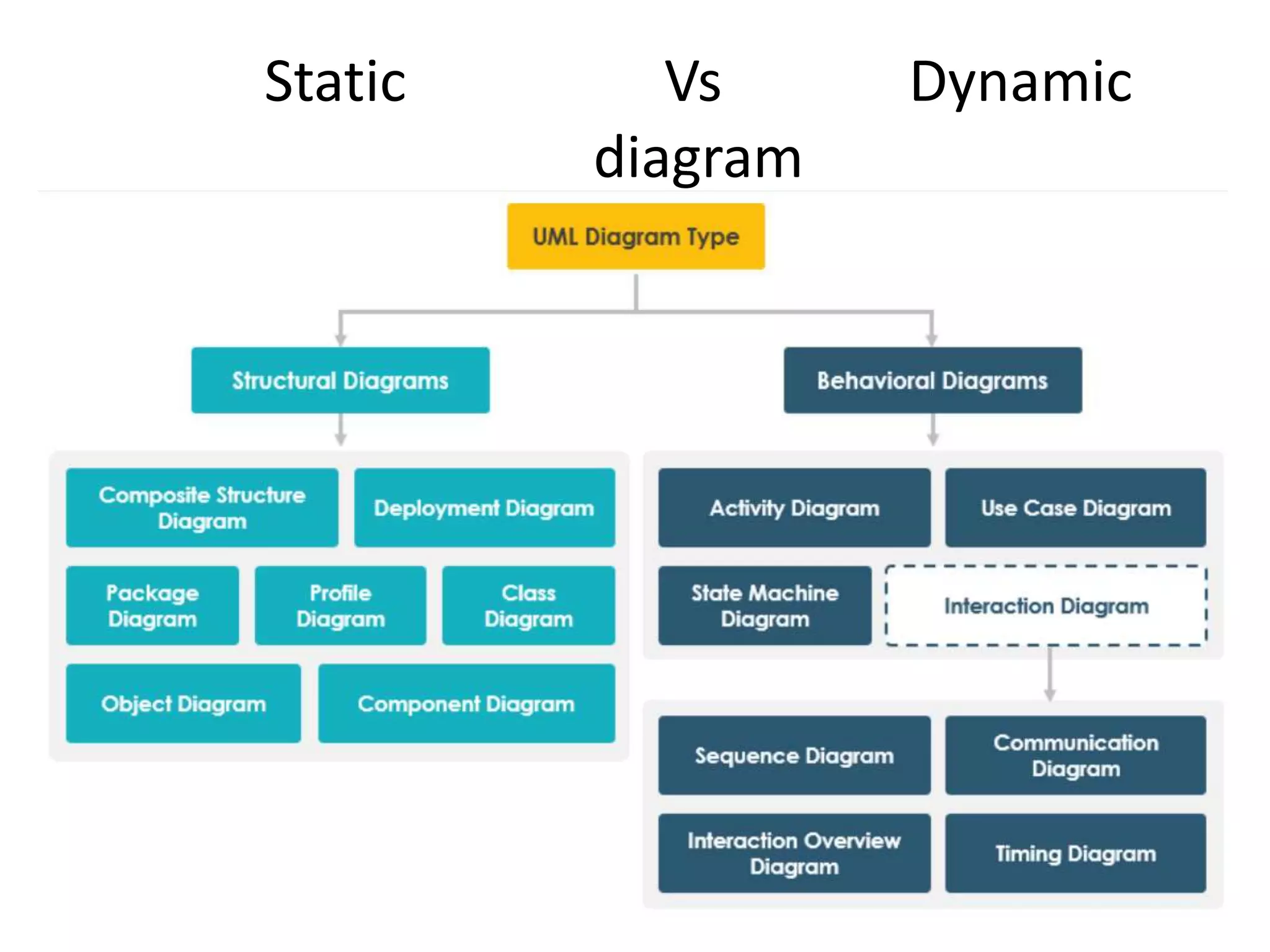
Static Vs Dynamic
diagram
A stock control example
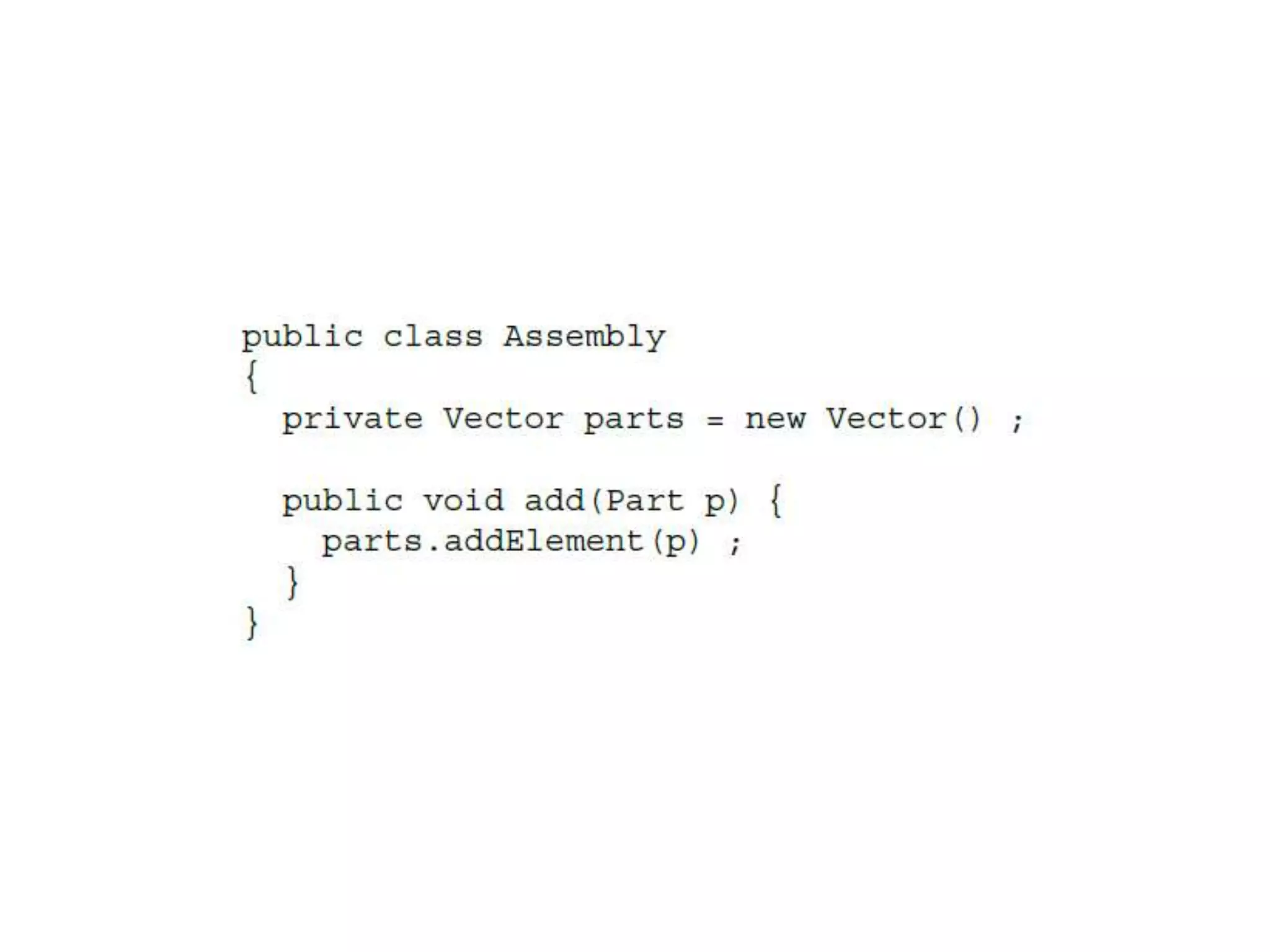
• Parts
– Its catalogue reference number (an integer).
– Its name (a string).
– The cost of an individual part (a floating point value).
• Assemblies
– parts
– Subassemblies
• query function that will find out the cost of the
materials in an assembly by adding up the costs
of all the parts it contains
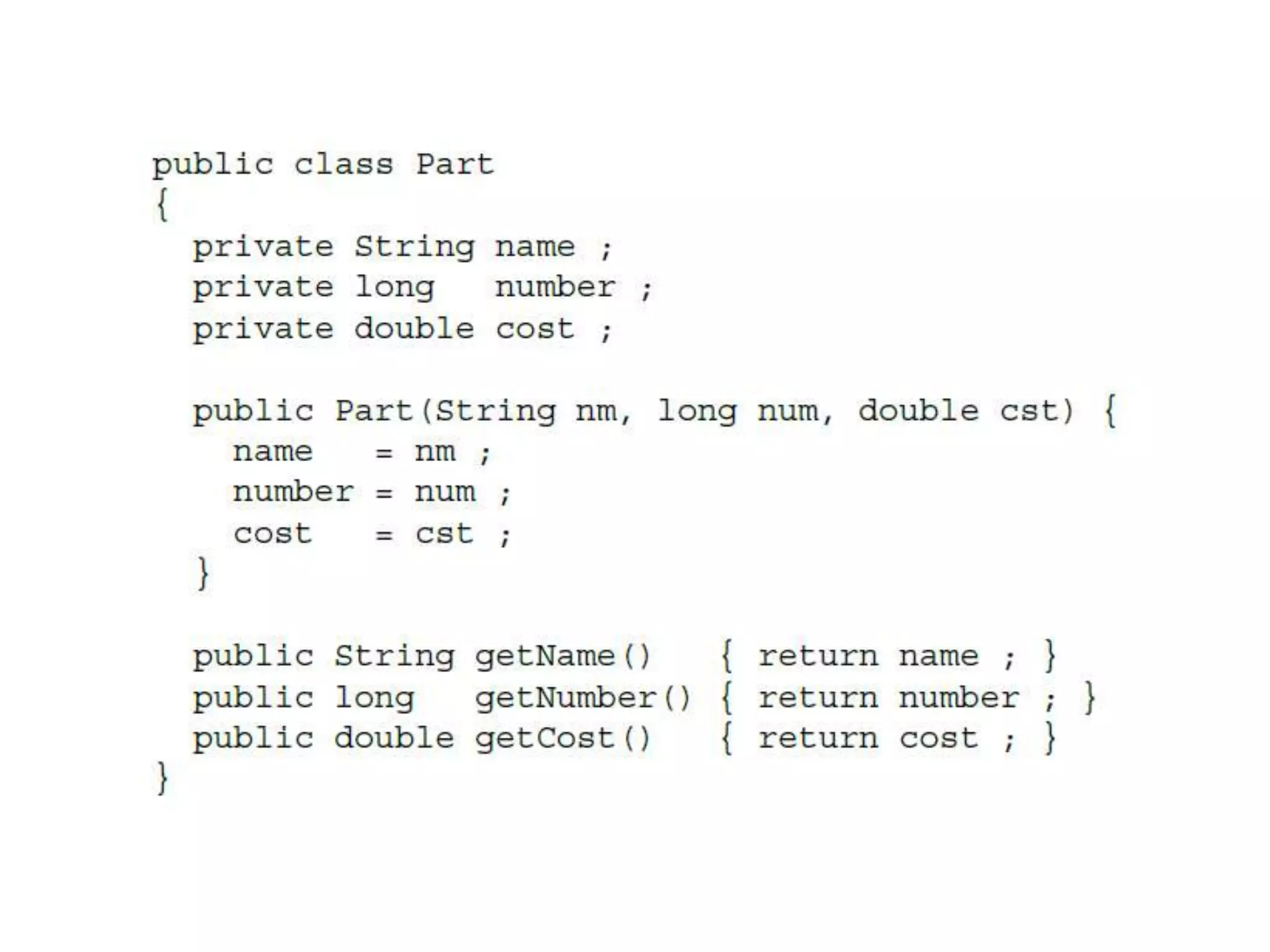
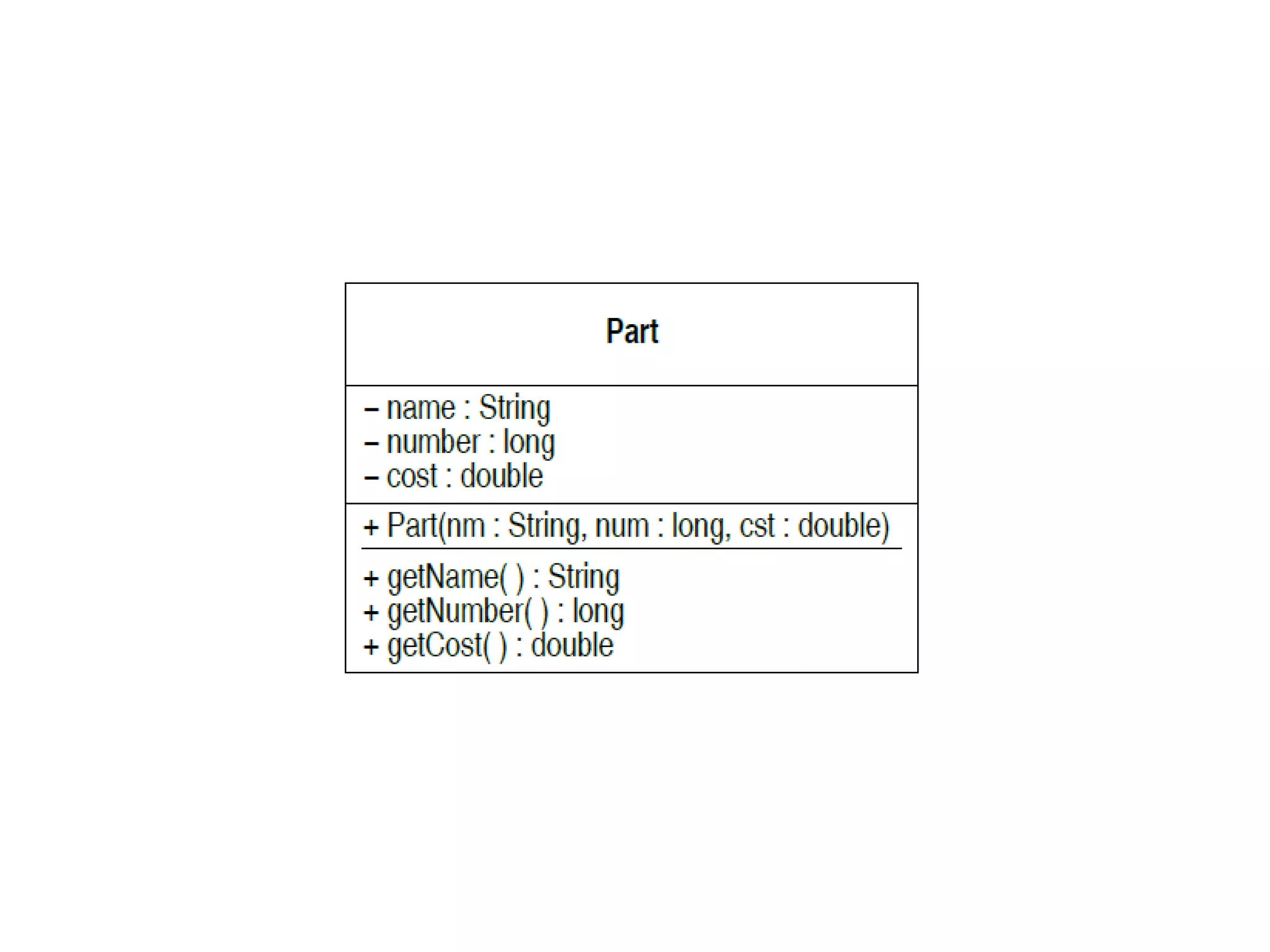
CLASSES AND OBJECTS
• Class
• instance of the class
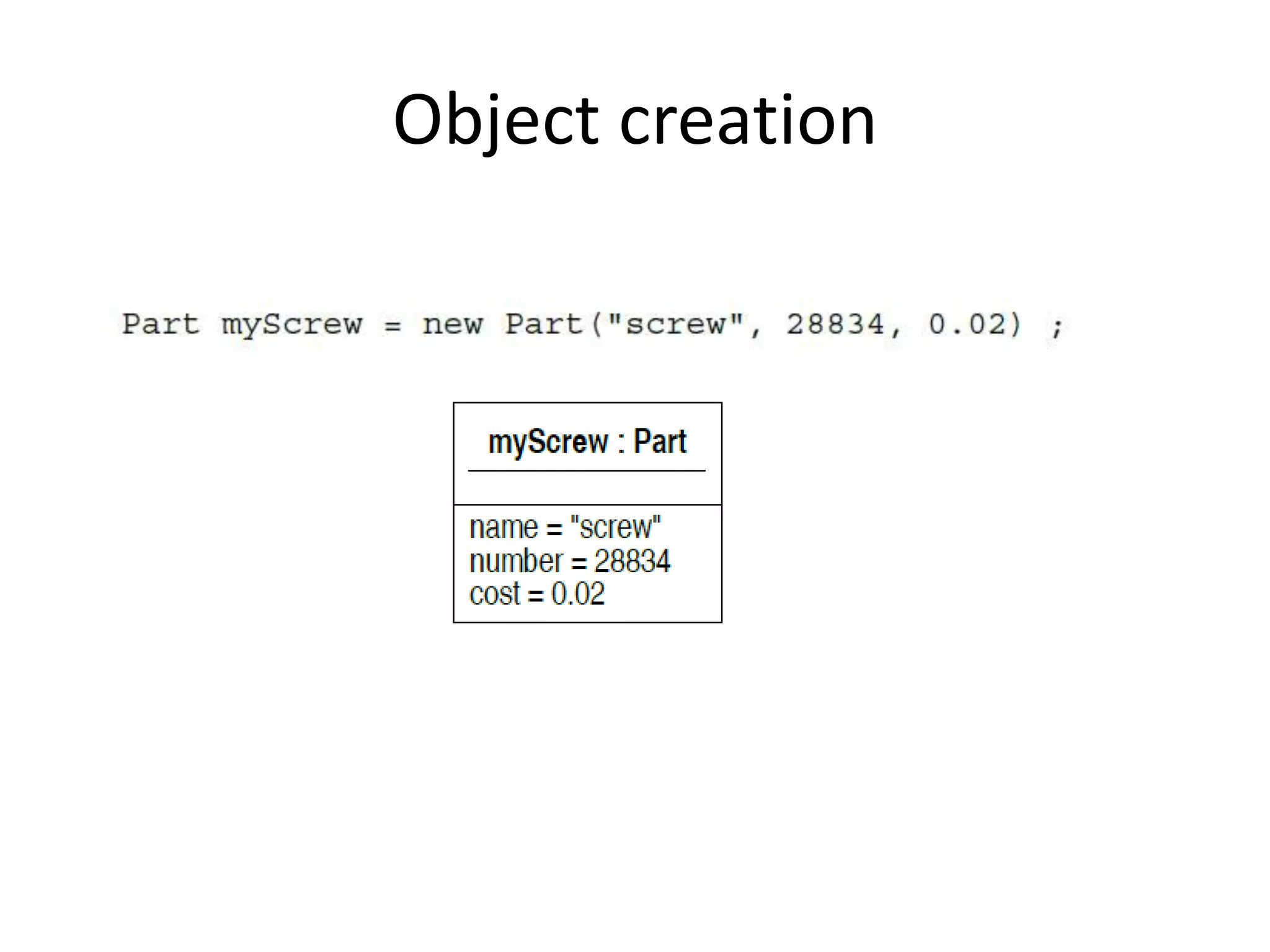
Object creation
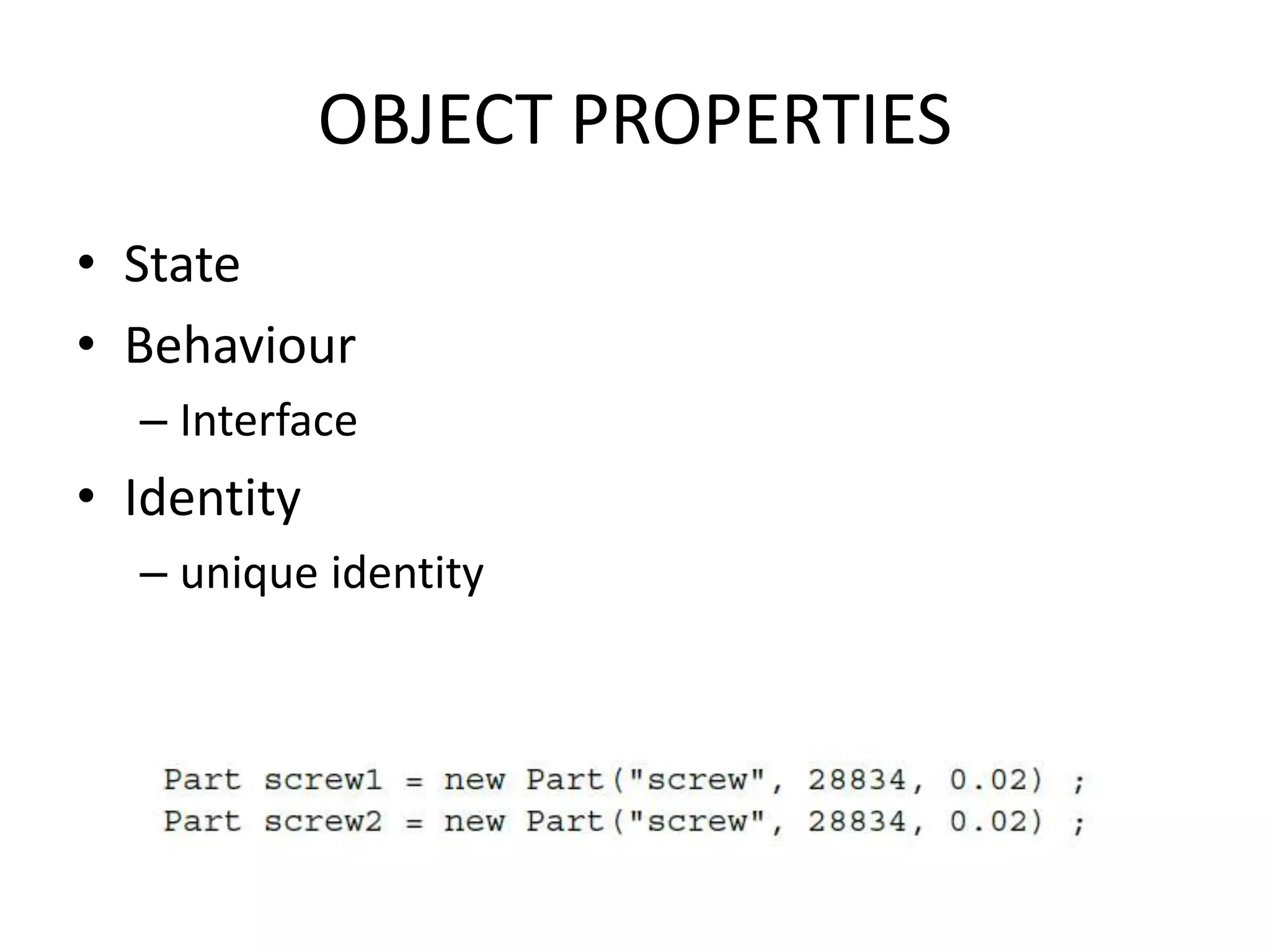
OBJECT PROPERTIES
• State
• Behaviour
– Interface
• Identity
– unique identity
• Object names (UML)
• Encapsulation
– Class based form of encapsulation is weaker than
the object-based form
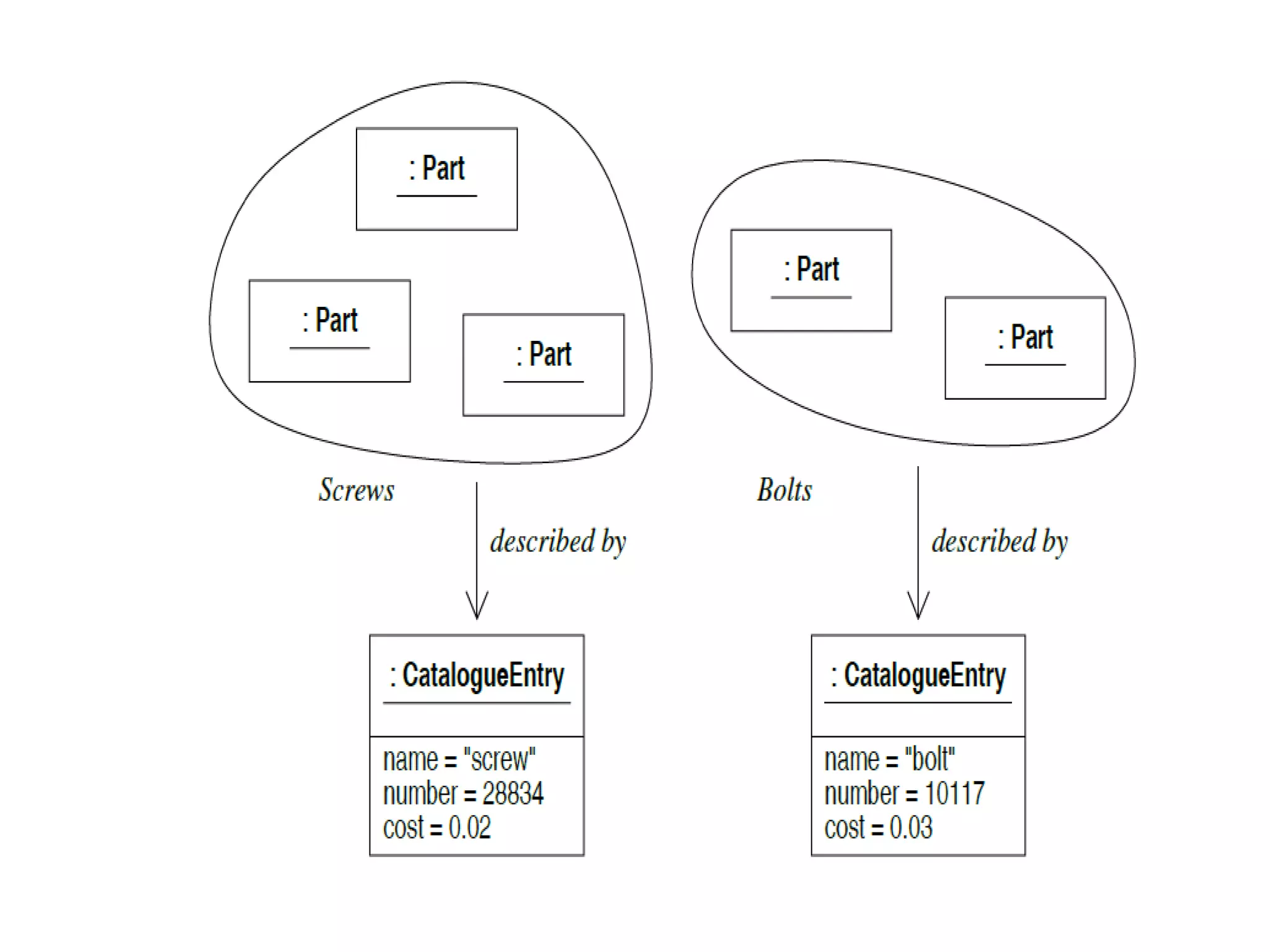
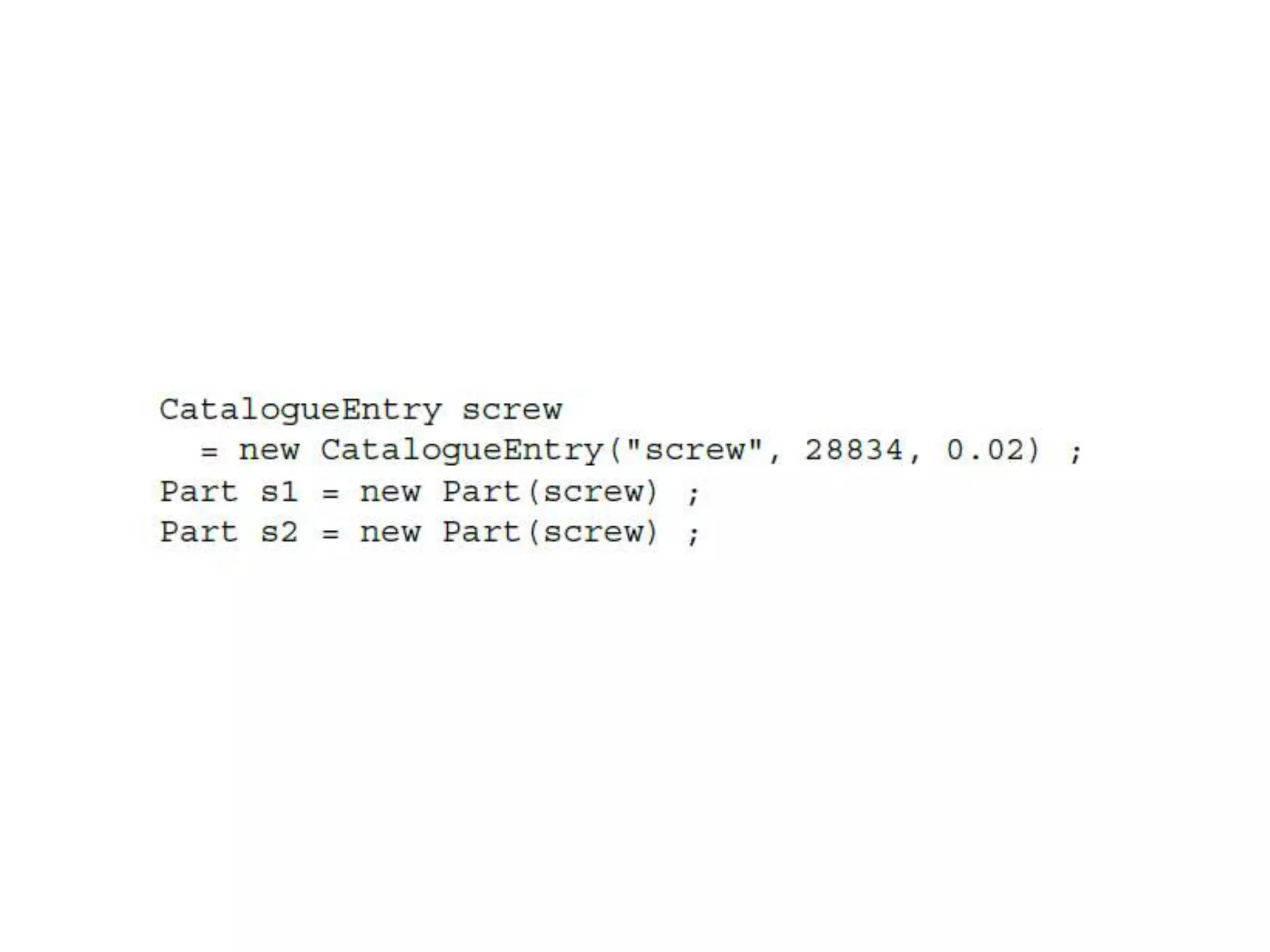
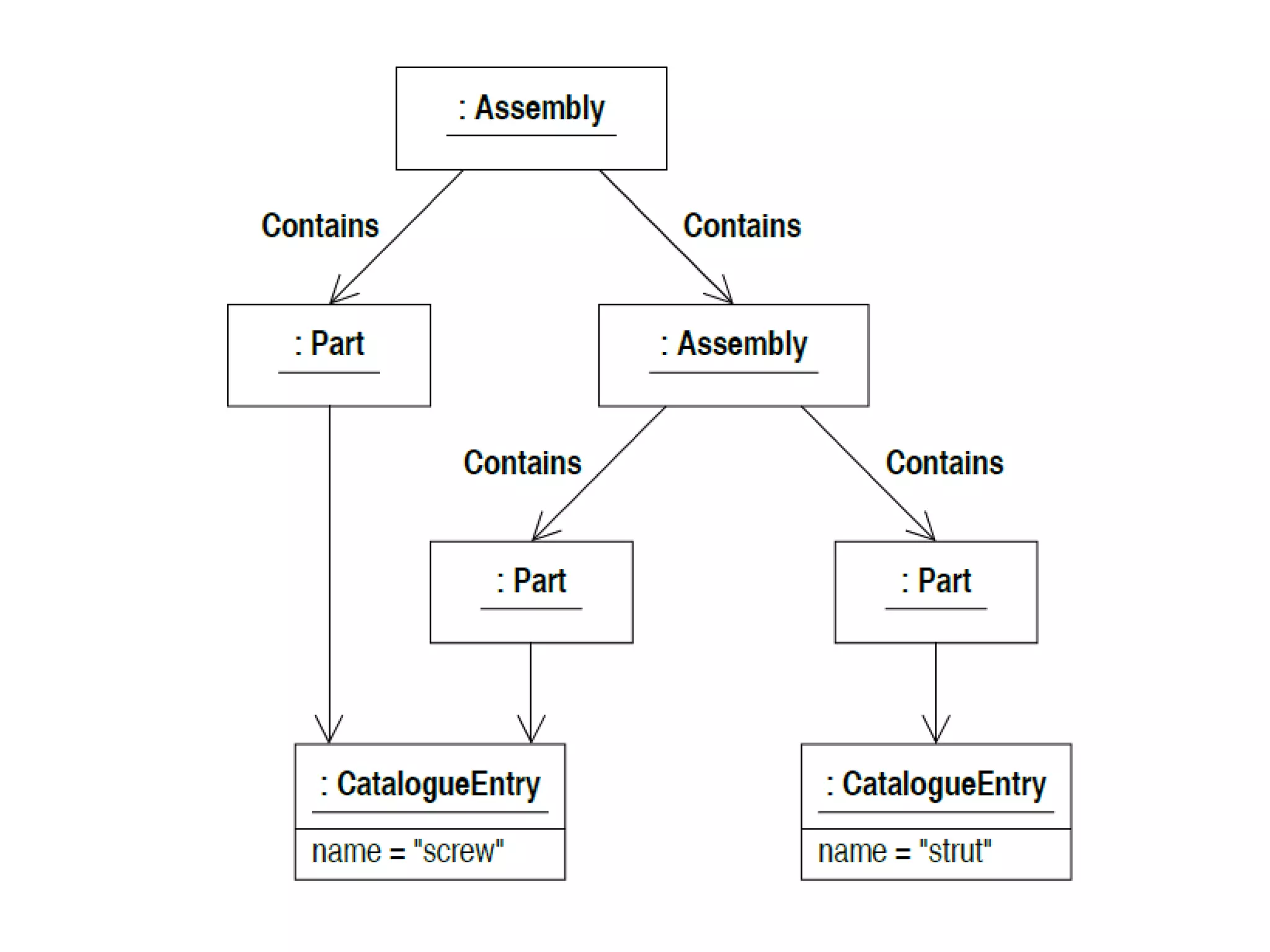
AVOIDING DATA REPLICATION
• Redundancy
• Maintenance
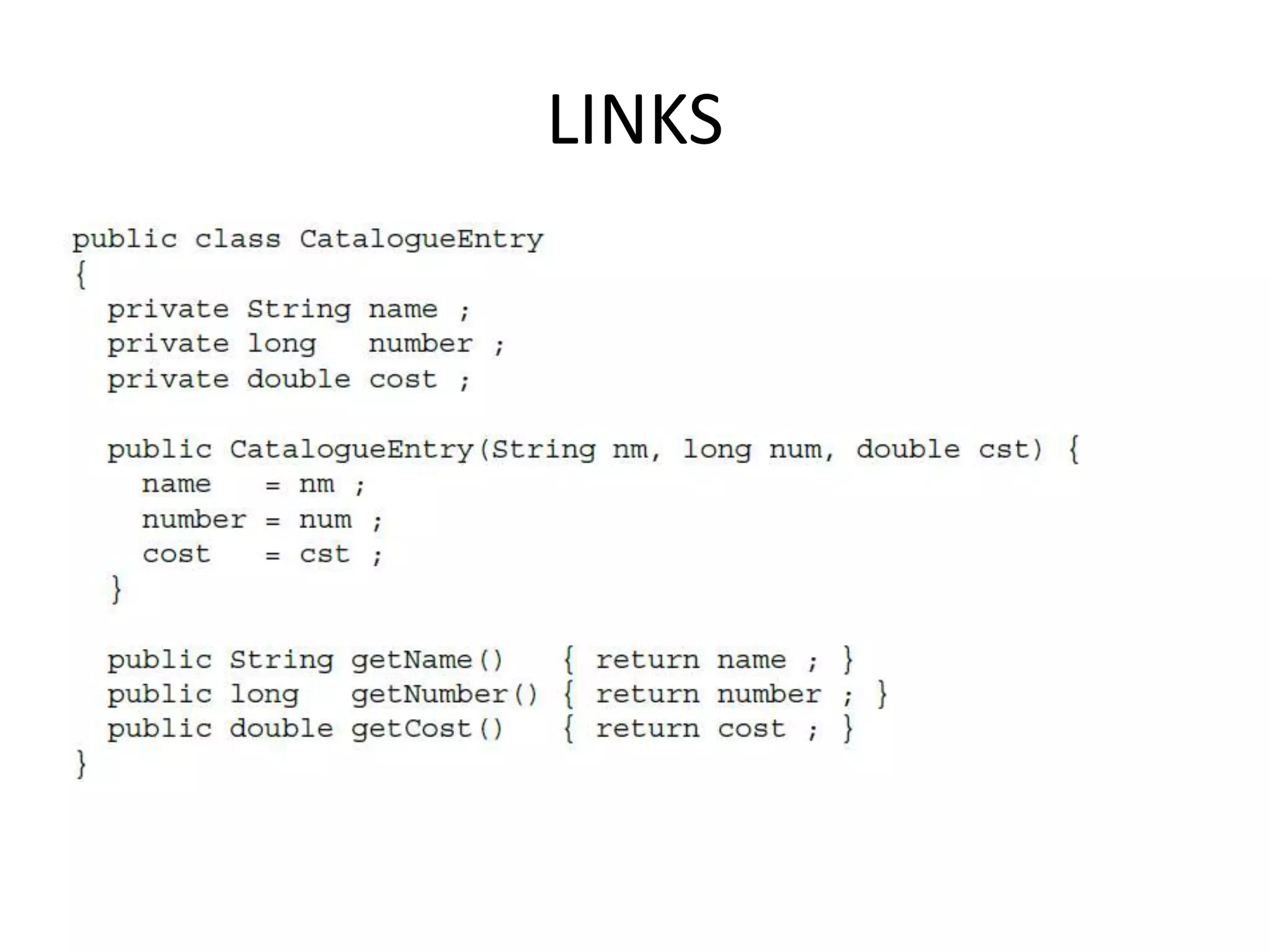
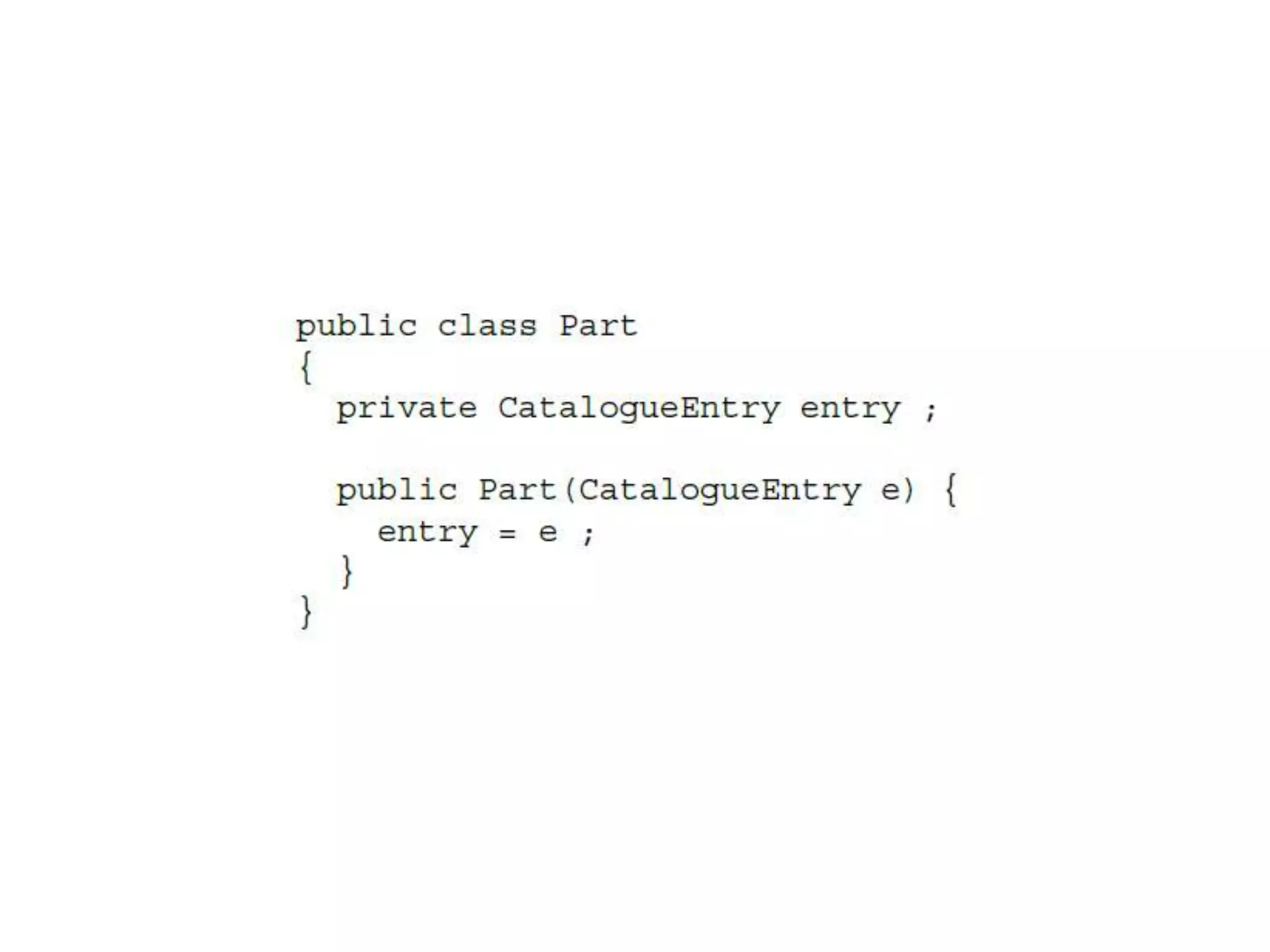
• catalogue information
– catalogue entry
LINKS
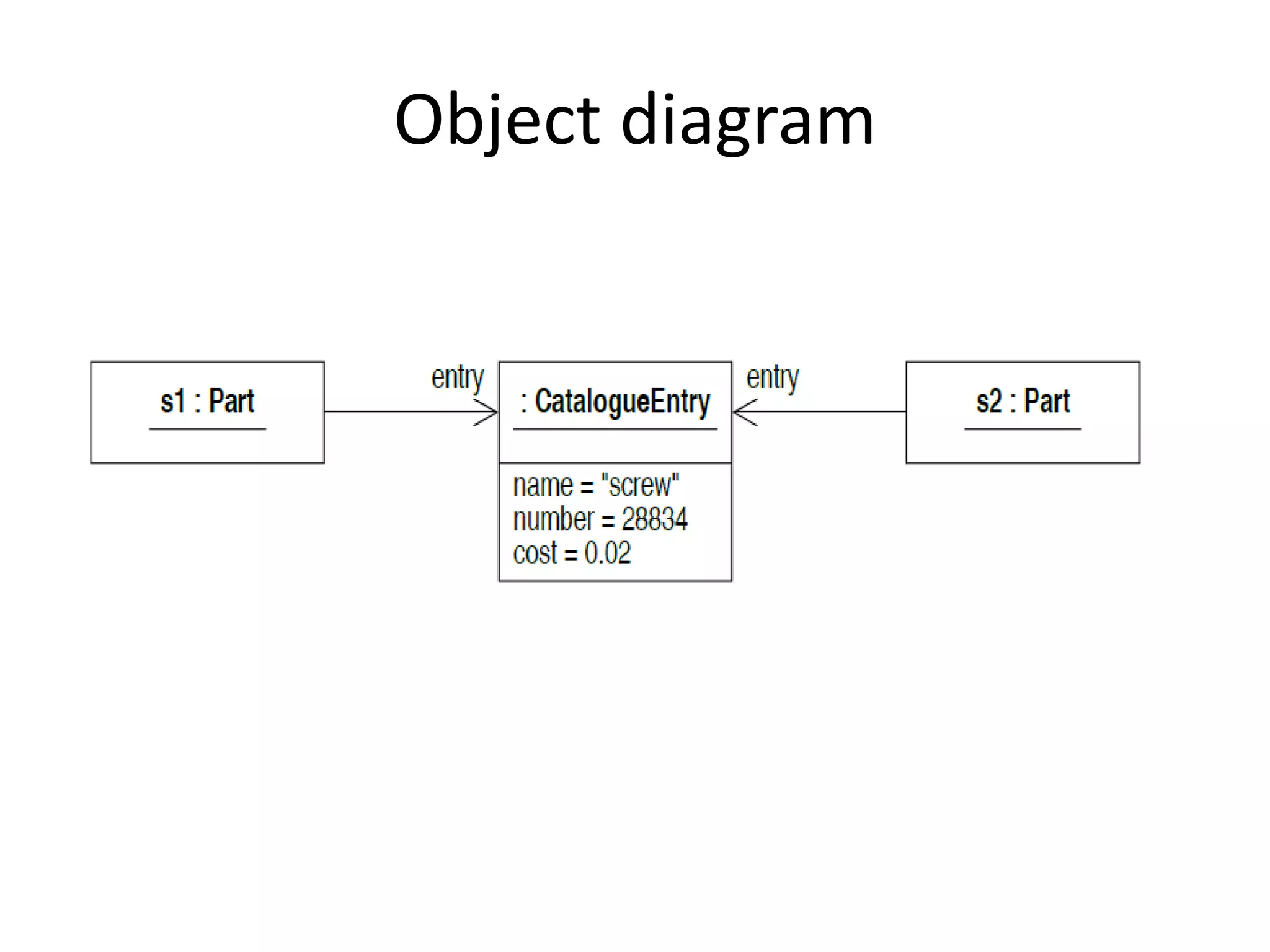
Object diagram
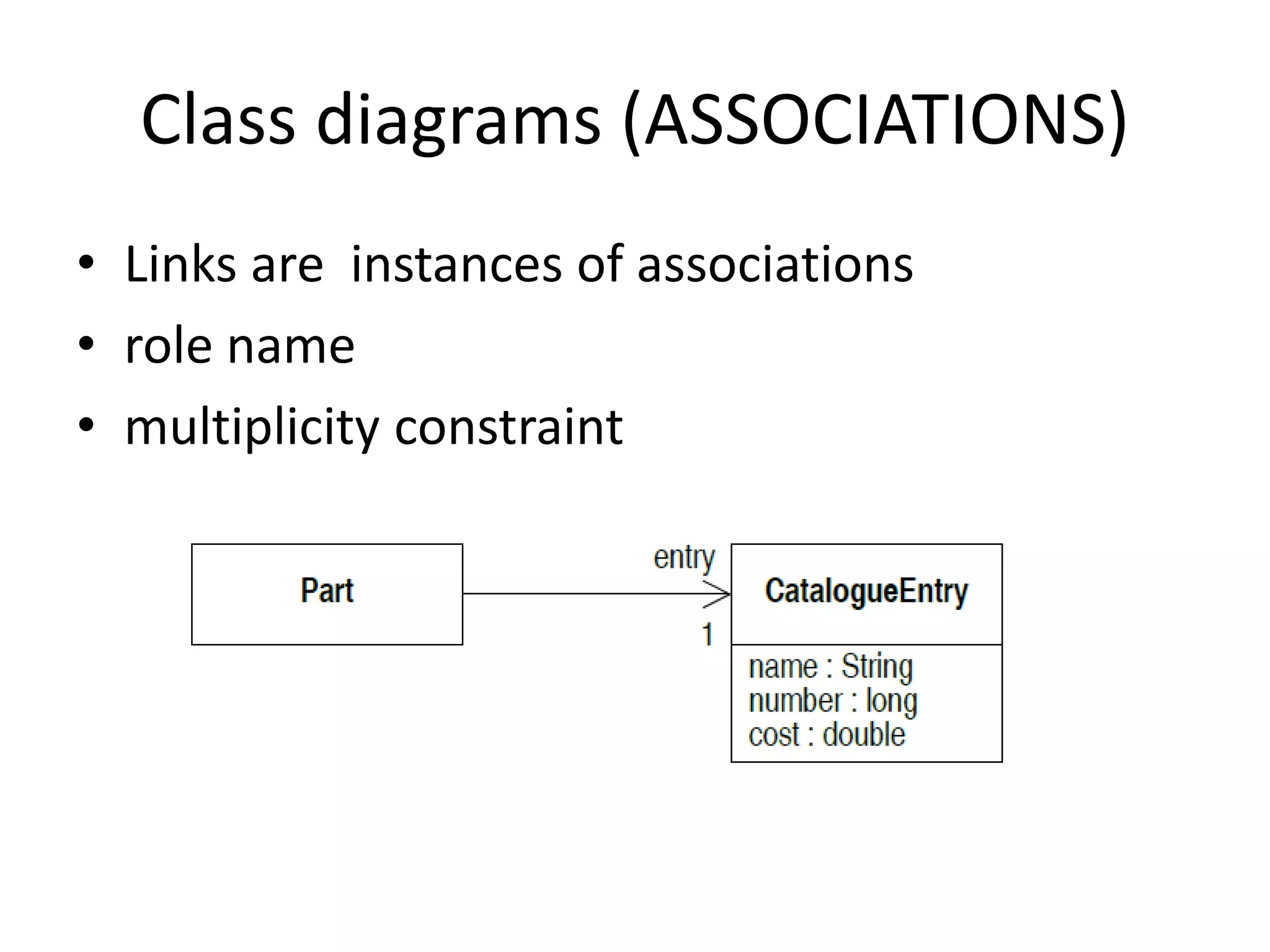
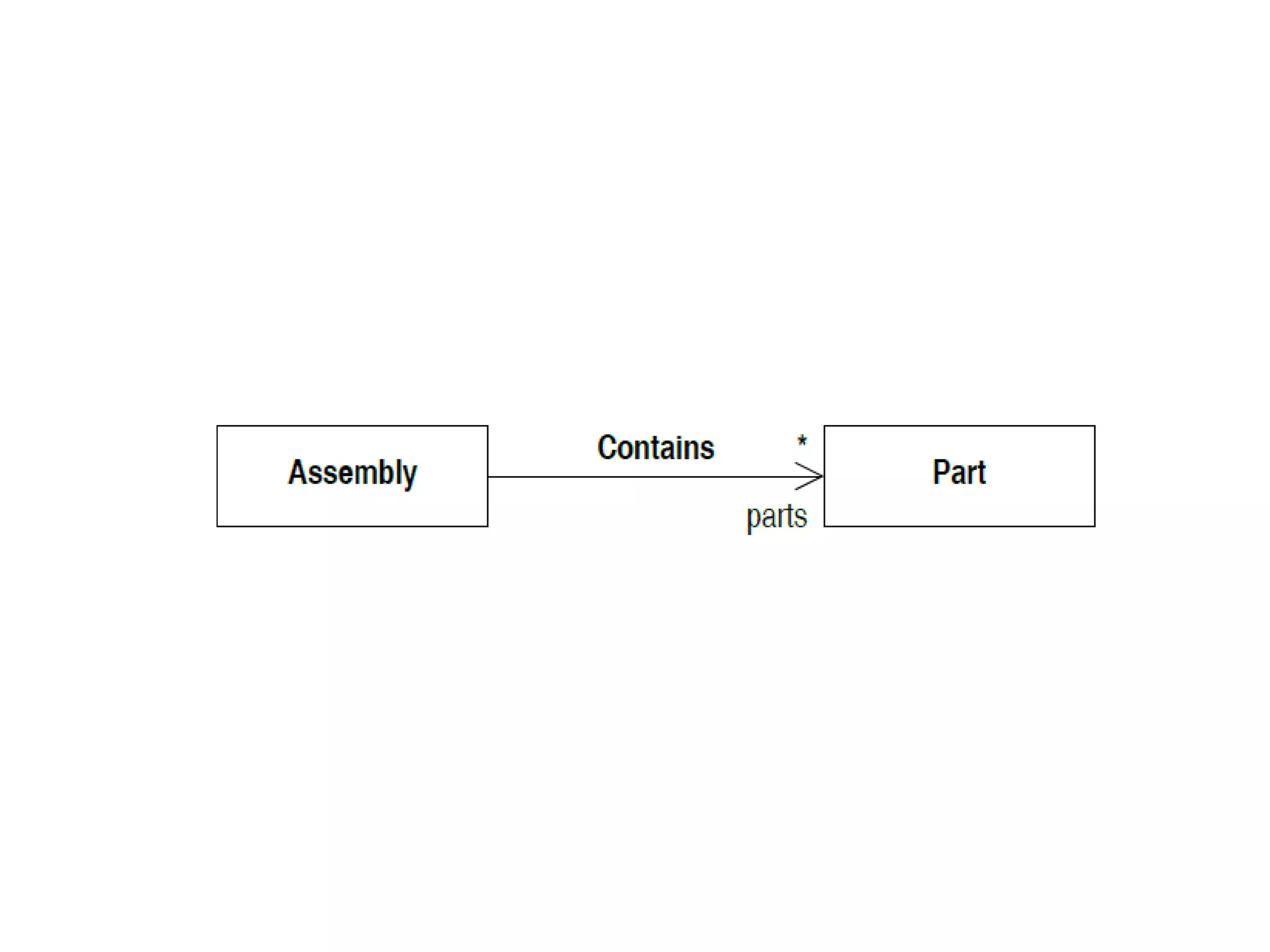
Class diagrams (ASSOCIATIONS)
• Links are instances of associations
• role name
• multiplicity constraint
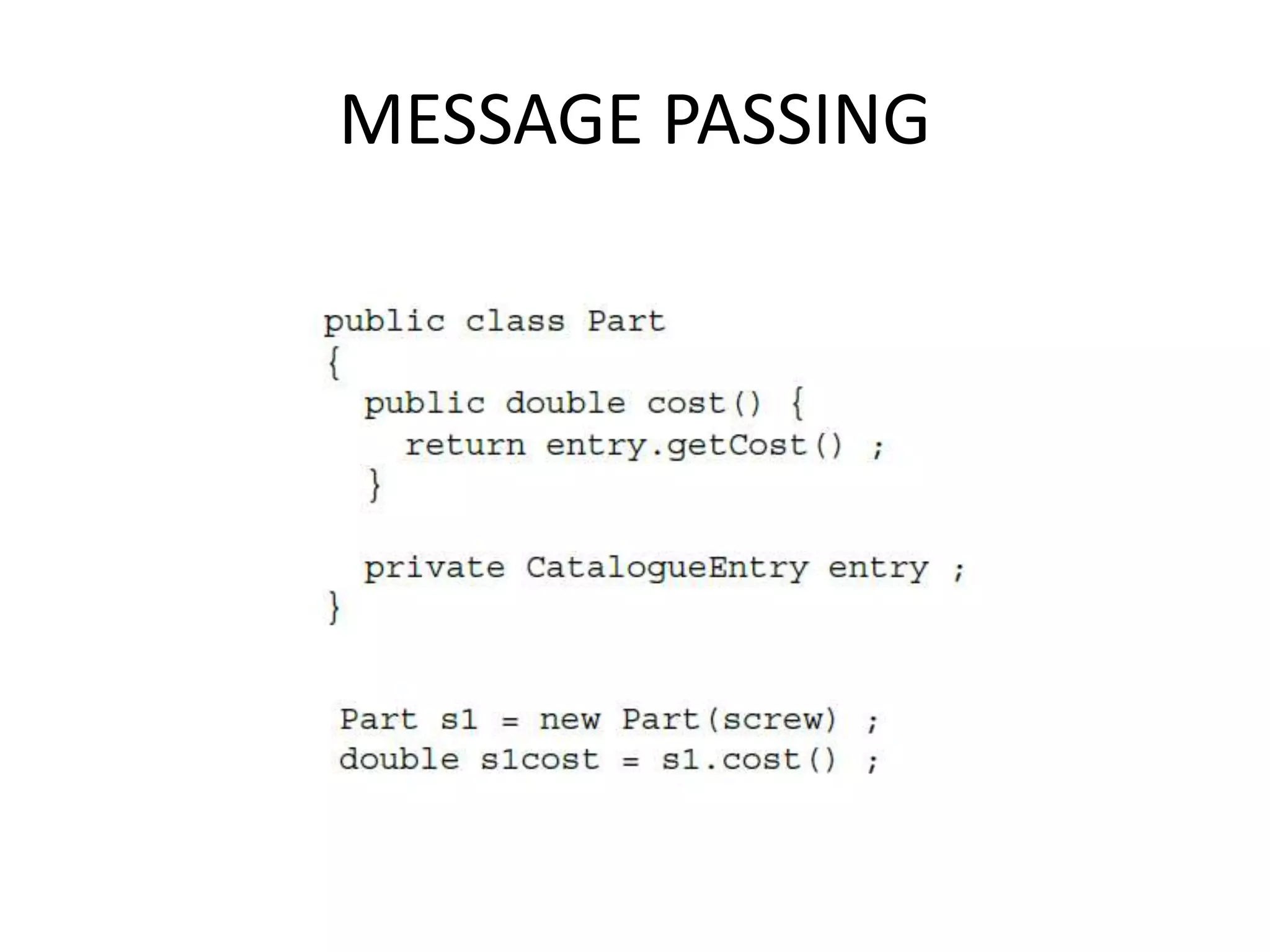
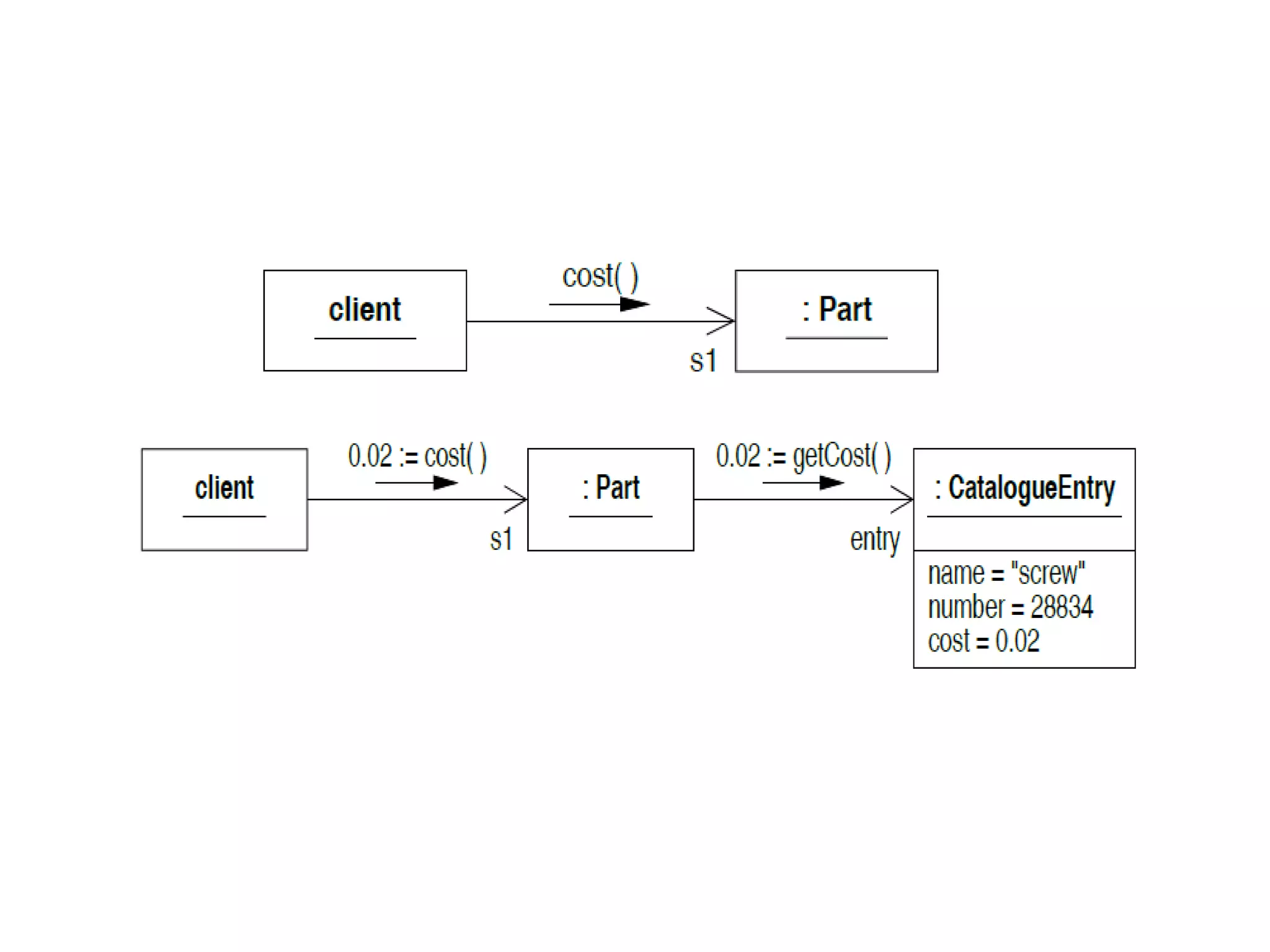
MESSAGE PASSING
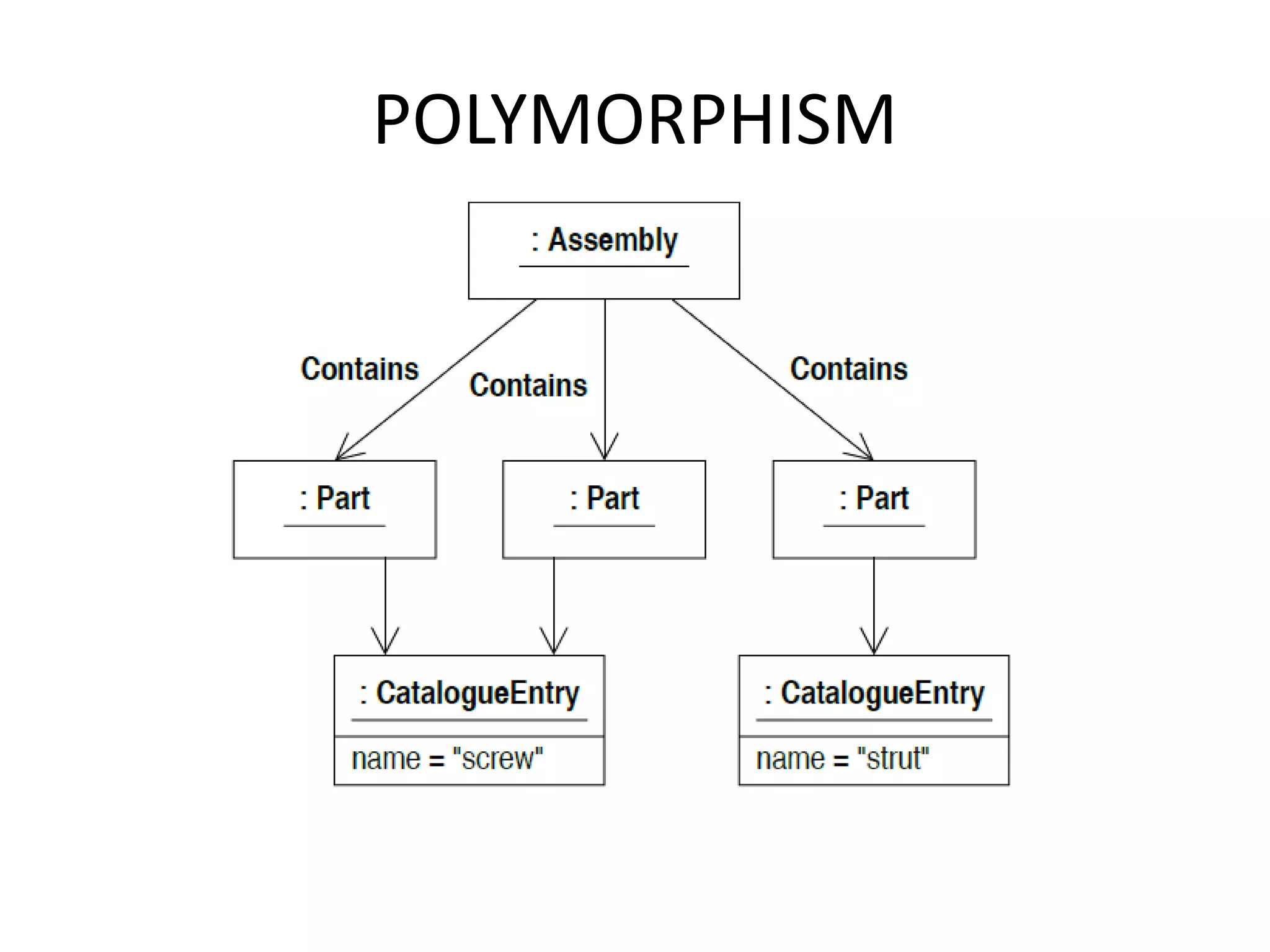
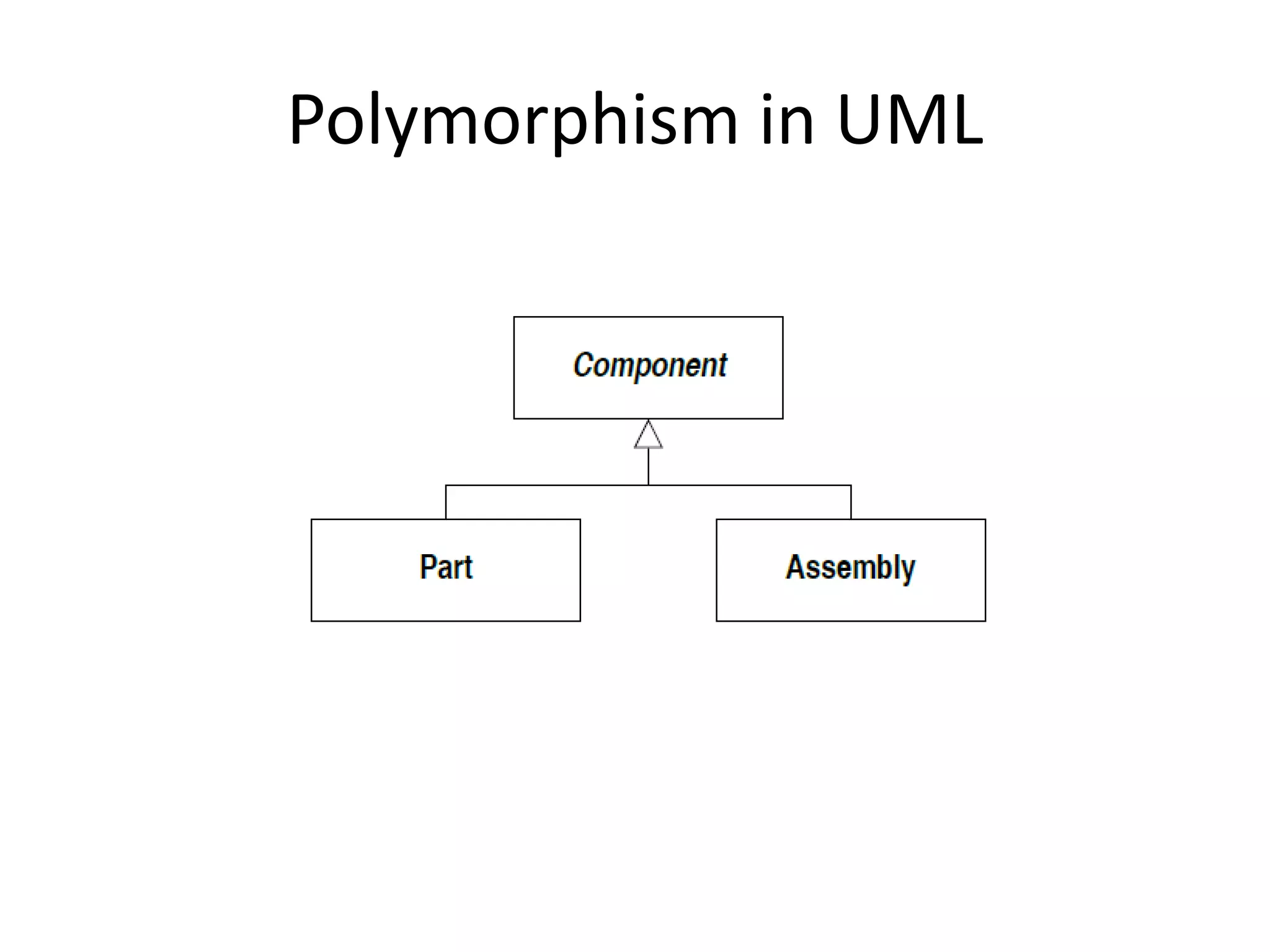
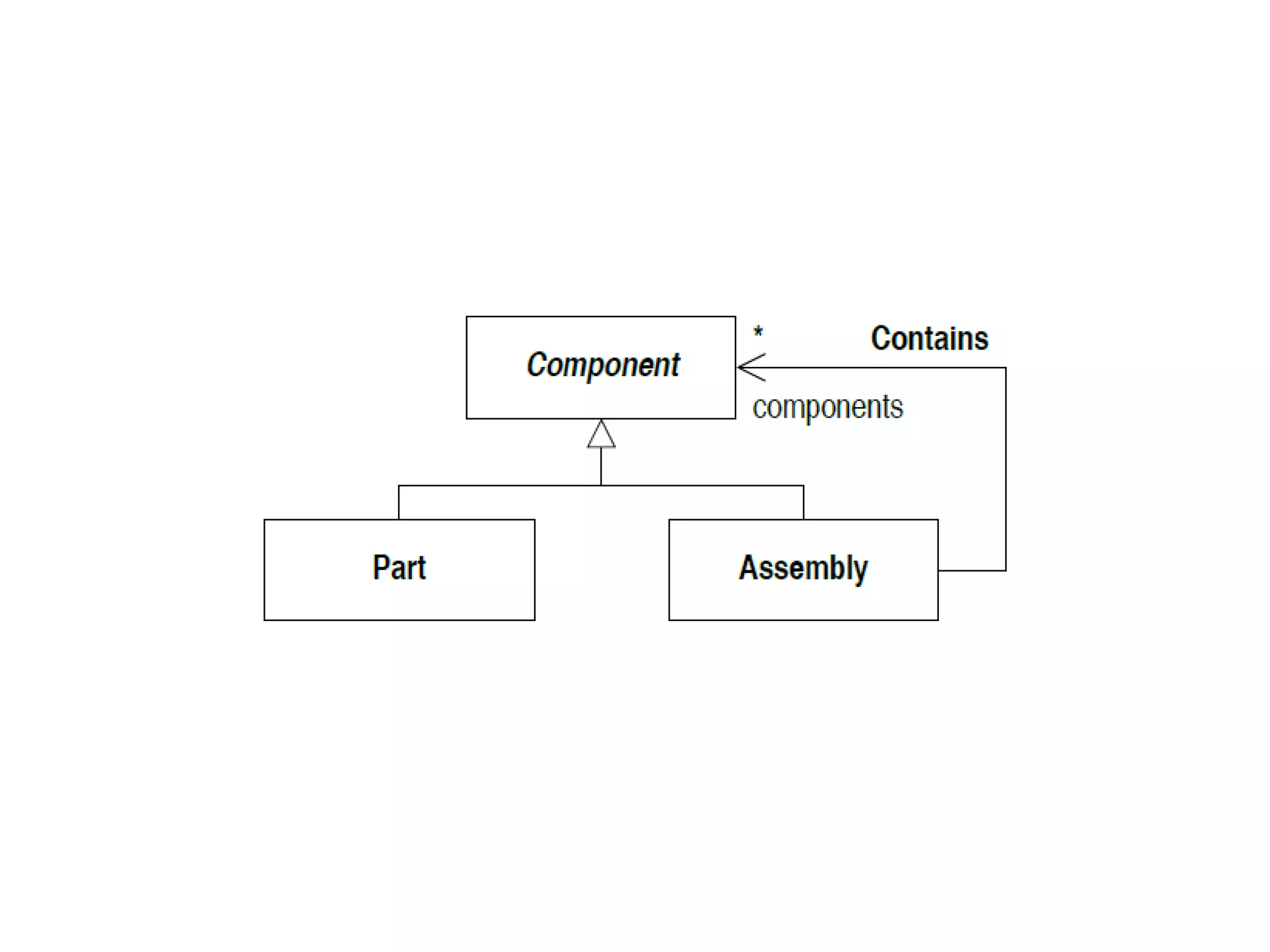
POLYMORPHISM
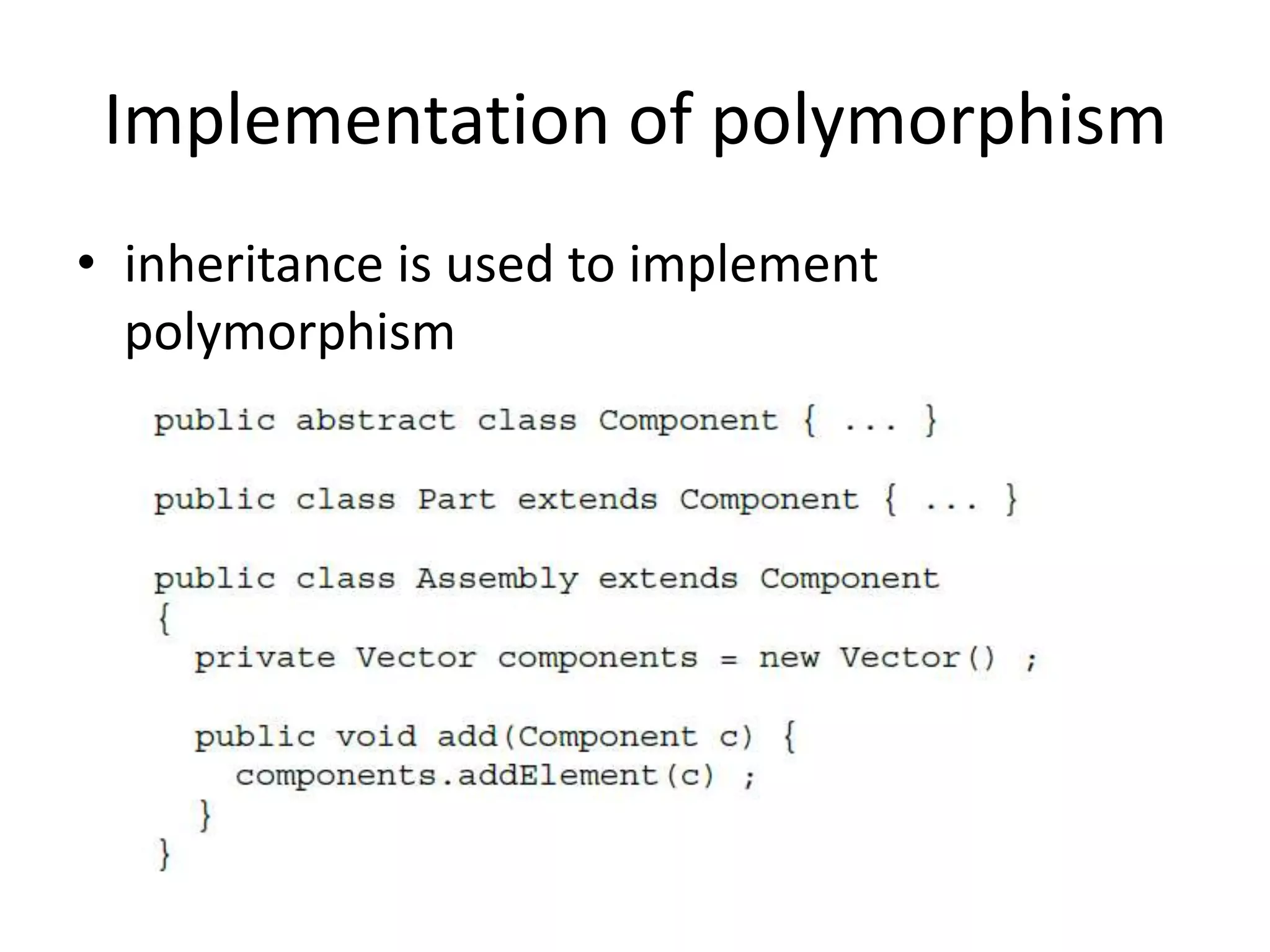
Implementation of polymorphism
• inheritance is used to implement
polymorphism
Polymorphism in UML
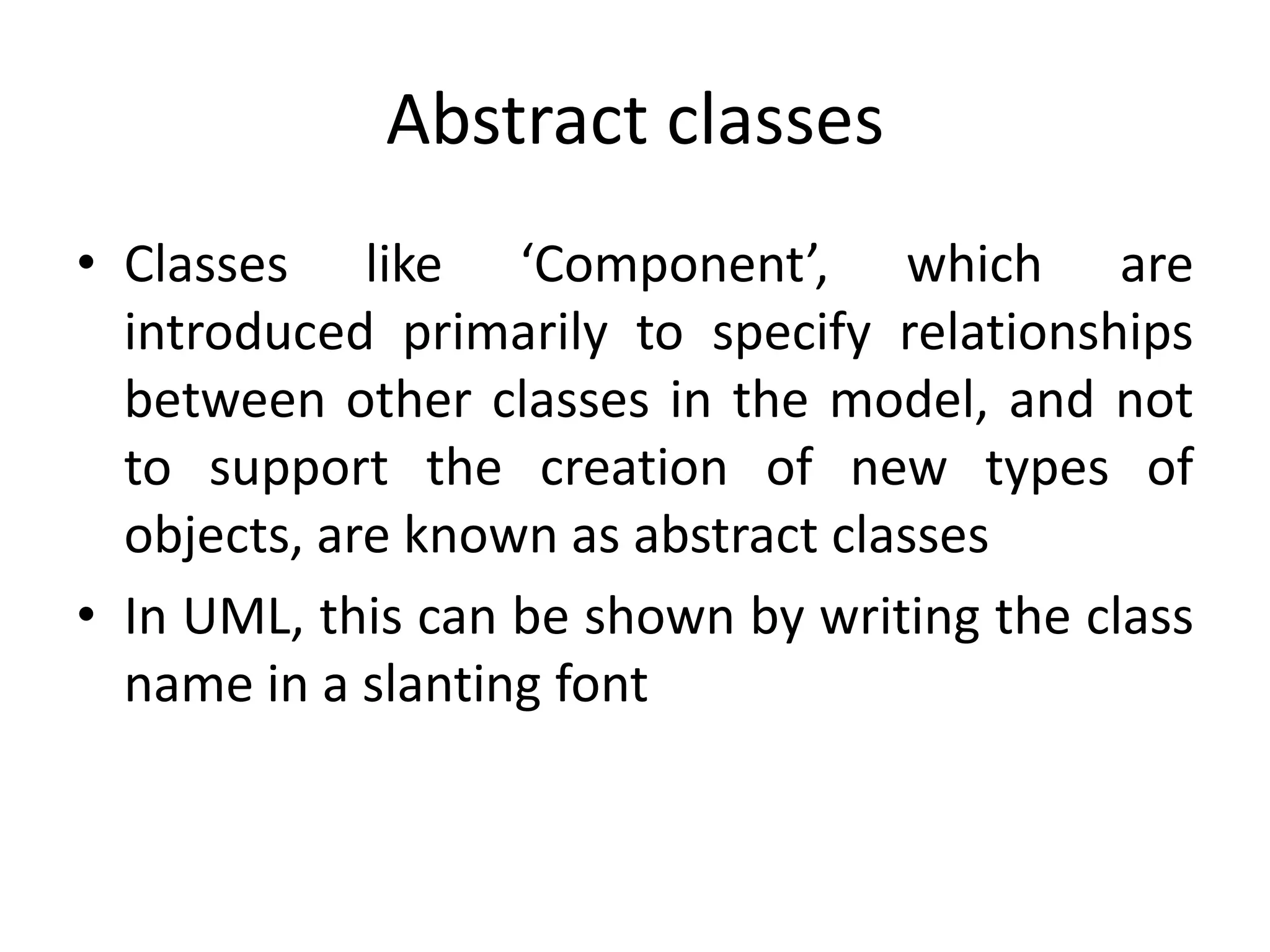
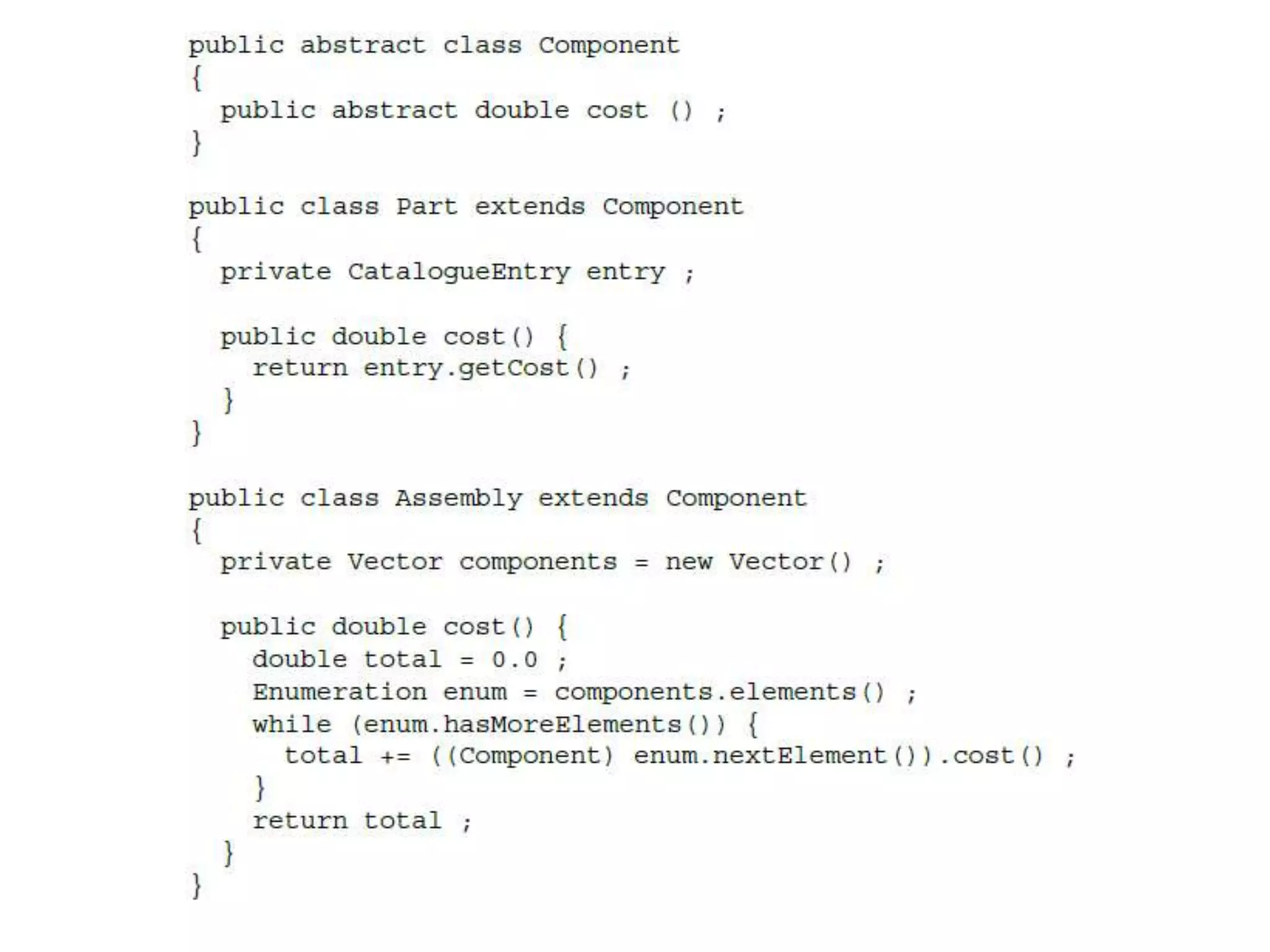
Abstract classes
• Classes like ‘Component’, which are
introduced primarily to specify relationships
between other classes in the model, and not
to support the creation of new types of
objects, are known as abstract classes
• In UML, this can be shown by writing the class
name in a slanting font
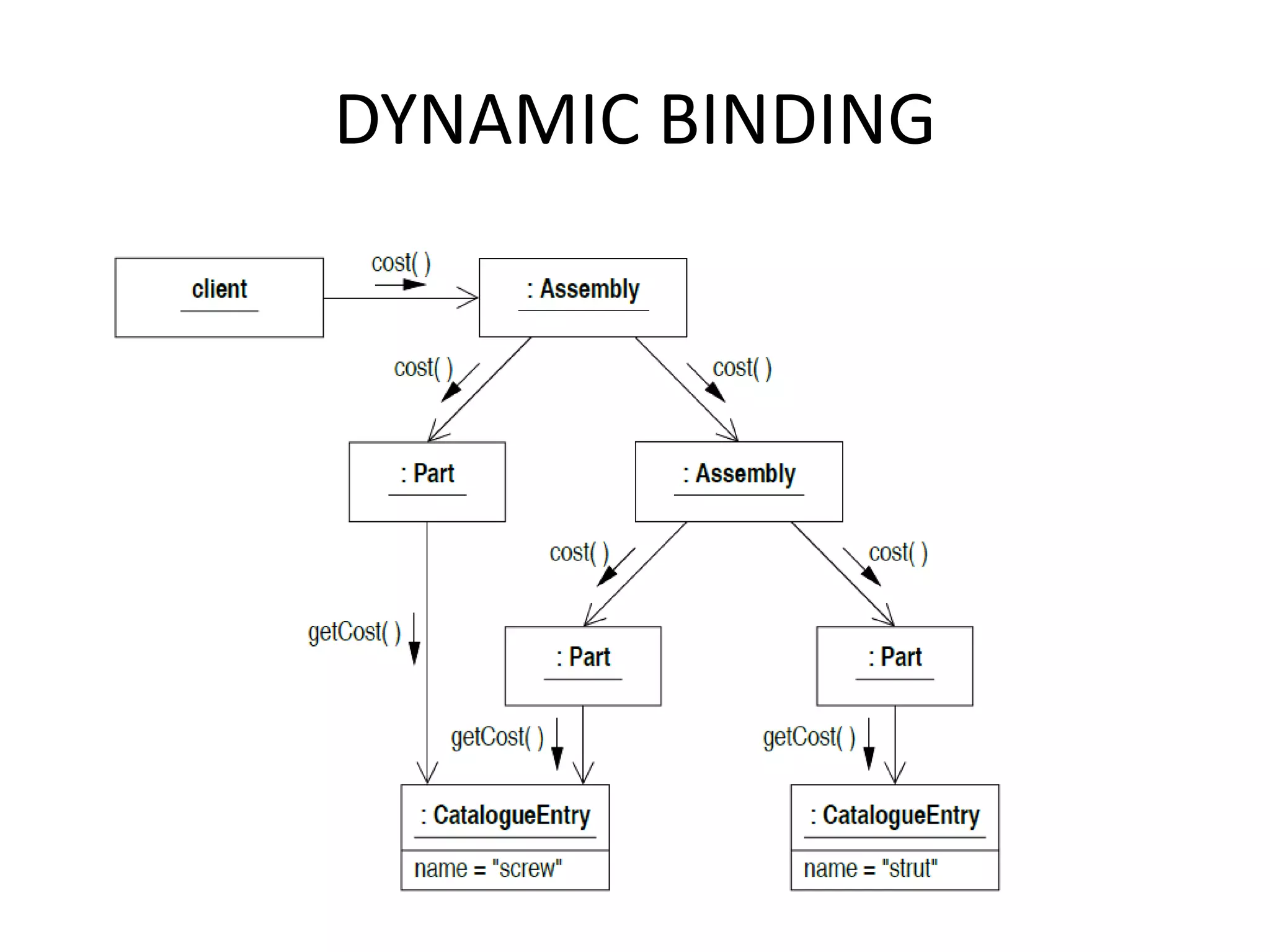
DYNAMIC BINDING
THE APPLICABILITY OF THE OBJECT
MODEL
• Close connection between the concepts of object
model & object-oriented programming languages
• some systems there is a fairly direct
correspondence between some of the real-world
objects being modeled and some of the software
objects
• But this analogy cannot be taken as a terribly
helpful guide to building object oriented systems
• overriding aims in designing software are to
produce systems that meet the users’
requirements, are easily maintainable, easy to
modify and reuse, and that make efficient use
of resources
– Ex. parts as part objects
• lead to significant problems of efficiency and
maintainability
• doubt as to whether it could meet the functional
requirements of the system
• message-passing mechanism used for communication
between objects in the object model does not seem to
represent accurately the way that many events happen
in the real world
• consider a situation where two people, not looking
where they are going, bump into each other
• It is very counterintuitive to think of this as a situation
where one of the people sends a ‘bump’ message to
the other
• Rather it seems that an event has taken place in which
each person is an equal and unintentional participant
• For this kind of reason, some object-oriented
analysis methods recommend modeling the real
world in terms of objects and events, and only
introduce messages relatively late on in the
design process
• Clearly there are cases where real-world objects,
and in particular agents, can be thought of as
sending messages to other objects
• Object oriented structure are more likely to
possess a number of desirable properties, such as
being easy to understand and maintain.
• In traditional procedural systems the data and the
functions that process the data are separated
• Object oriented approaches attempt to do is to
split up the data repository and integrate pieces
of data with the operations that directly
manipulate them
– significant technical advantages over more traditional
structures
– ease of understanding
SUMMARY
• Object-oriented modelling languages are based on an
abstract object model, which views a running system as
being a dynamic network of interacting objects.
• This model also provides an abstract interpretation of
the run-time properties of object oriented programs.
• Objects contain data and a set of operations to
manipulate that data.
• Every object is distinguishable from every other object,
irrespective of the data held or operations provided.
• These properties of objects are known as the state,
behaviour and identity of an object.
• A class describes a set of objects that share the
same structure and properties.
• These objects are known as the instances of the
class.
• Objects typically prevent external objects from
having access to their data, which is then said to
be encapsulated.
• Object diagrams show a set of objects, at run-
time, together with the links between them.
• Objects can be named, and the values of their
attributes can be shown.
• Objects co-operate by sending messages to other
objects.
• When an object receives a message it executes
one of its operations.
• Sending the same message to different objects
can result in different operations being executed.
• Interactions between objects, in the form of
messages, can be shown on object diagrams,
together with parameters and return values.
• Class diagrams provide an abstract summary of
the information shown on a set of object
diagrams.
• They show the same kind of information as is
typically found in a system’s source code.
• A rule of thumb that is often used in object-
oriented modelling is to base a design on the
objects found in the real world.
• The suitability of designs arrived at in this way
needs to be evaluated carefully, however.

MODELLING WITH OBJECTS.pptx

  • 1.
    MODELLING WITH OBJECTS Reference:PRACTICAL OBJECT- ORIENTED DESIGN WITH UML, Mark Priestley
  • 2.
    • Objects • Links •Messages • Classes • Static diagrams • Dynamic diagrams
  • 3.
  • 4.
    A stock controlexample • Parts – Its catalogue reference number (an integer). – Its name (a string). – The cost of an individual part (a floating point value). • Assemblies – parts – Subassemblies • query function that will find out the cost of the materials in an assembly by adding up the costs of all the parts it contains
  • 5.
    CLASSES AND OBJECTS •Class • instance of the class
  • 8.
  • 9.
    OBJECT PROPERTIES • State •Behaviour – Interface • Identity – unique identity
  • 10.
    • Object names(UML) • Encapsulation – Class based form of encapsulation is weaker than the object-based form
  • 11.
    AVOIDING DATA REPLICATION •Redundancy • Maintenance • catalogue information – catalogue entry
  • 13.
  • 16.
  • 17.
    Class diagrams (ASSOCIATIONS) •Links are instances of associations • role name • multiplicity constraint
  • 18.
  • 20.
  • 24.
    Implementation of polymorphism •inheritance is used to implement polymorphism
  • 25.
  • 27.
    Abstract classes • Classeslike ‘Component’, which are introduced primarily to specify relationships between other classes in the model, and not to support the creation of new types of objects, are known as abstract classes • In UML, this can be shown by writing the class name in a slanting font
  • 28.
  • 30.
    THE APPLICABILITY OFTHE OBJECT MODEL • Close connection between the concepts of object model & object-oriented programming languages • some systems there is a fairly direct correspondence between some of the real-world objects being modeled and some of the software objects • But this analogy cannot be taken as a terribly helpful guide to building object oriented systems
  • 31.
    • overriding aimsin designing software are to produce systems that meet the users’ requirements, are easily maintainable, easy to modify and reuse, and that make efficient use of resources – Ex. parts as part objects • lead to significant problems of efficiency and maintainability • doubt as to whether it could meet the functional requirements of the system
  • 32.
    • message-passing mechanismused for communication between objects in the object model does not seem to represent accurately the way that many events happen in the real world • consider a situation where two people, not looking where they are going, bump into each other • It is very counterintuitive to think of this as a situation where one of the people sends a ‘bump’ message to the other • Rather it seems that an event has taken place in which each person is an equal and unintentional participant
  • 33.
    • For thiskind of reason, some object-oriented analysis methods recommend modeling the real world in terms of objects and events, and only introduce messages relatively late on in the design process • Clearly there are cases where real-world objects, and in particular agents, can be thought of as sending messages to other objects • Object oriented structure are more likely to possess a number of desirable properties, such as being easy to understand and maintain.
  • 34.
    • In traditionalprocedural systems the data and the functions that process the data are separated • Object oriented approaches attempt to do is to split up the data repository and integrate pieces of data with the operations that directly manipulate them – significant technical advantages over more traditional structures – ease of understanding
  • 35.
    SUMMARY • Object-oriented modellinglanguages are based on an abstract object model, which views a running system as being a dynamic network of interacting objects. • This model also provides an abstract interpretation of the run-time properties of object oriented programs. • Objects contain data and a set of operations to manipulate that data. • Every object is distinguishable from every other object, irrespective of the data held or operations provided. • These properties of objects are known as the state, behaviour and identity of an object.
  • 36.
    • A classdescribes a set of objects that share the same structure and properties. • These objects are known as the instances of the class. • Objects typically prevent external objects from having access to their data, which is then said to be encapsulated. • Object diagrams show a set of objects, at run- time, together with the links between them. • Objects can be named, and the values of their attributes can be shown.
  • 37.
    • Objects co-operateby sending messages to other objects. • When an object receives a message it executes one of its operations. • Sending the same message to different objects can result in different operations being executed. • Interactions between objects, in the form of messages, can be shown on object diagrams, together with parameters and return values.
  • 38.
    • Class diagramsprovide an abstract summary of the information shown on a set of object diagrams. • They show the same kind of information as is typically found in a system’s source code. • A rule of thumb that is often used in object- oriented modelling is to base a design on the objects found in the real world. • The suitability of designs arrived at in this way needs to be evaluated carefully, however.