MODAL VERBS
S U G G E S T I O N A N D A D V I C E
O B L I G A T I O N A N D P R O H I B I T I O N
L A C K O F O B L I G A T I O N / N E C E S S I T Y
SUGGESTION AND ADVICE
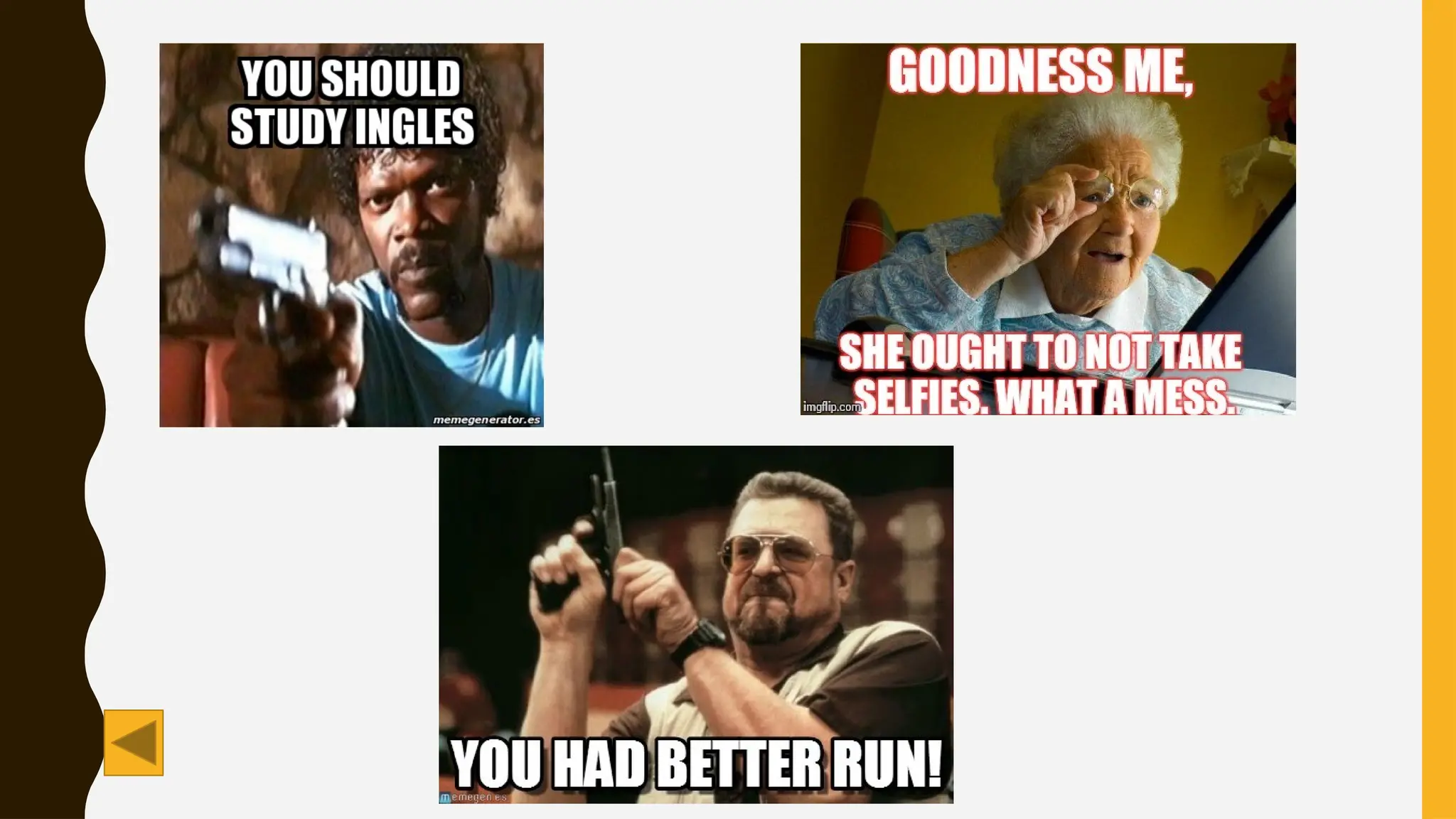
Should
• General advice
• The most common modal verb
Ought to
• More formal than should
• Not used in questions and rarely in negatives.
Had better
• It is common when making a stronger suggestion.
• It is not used in questions
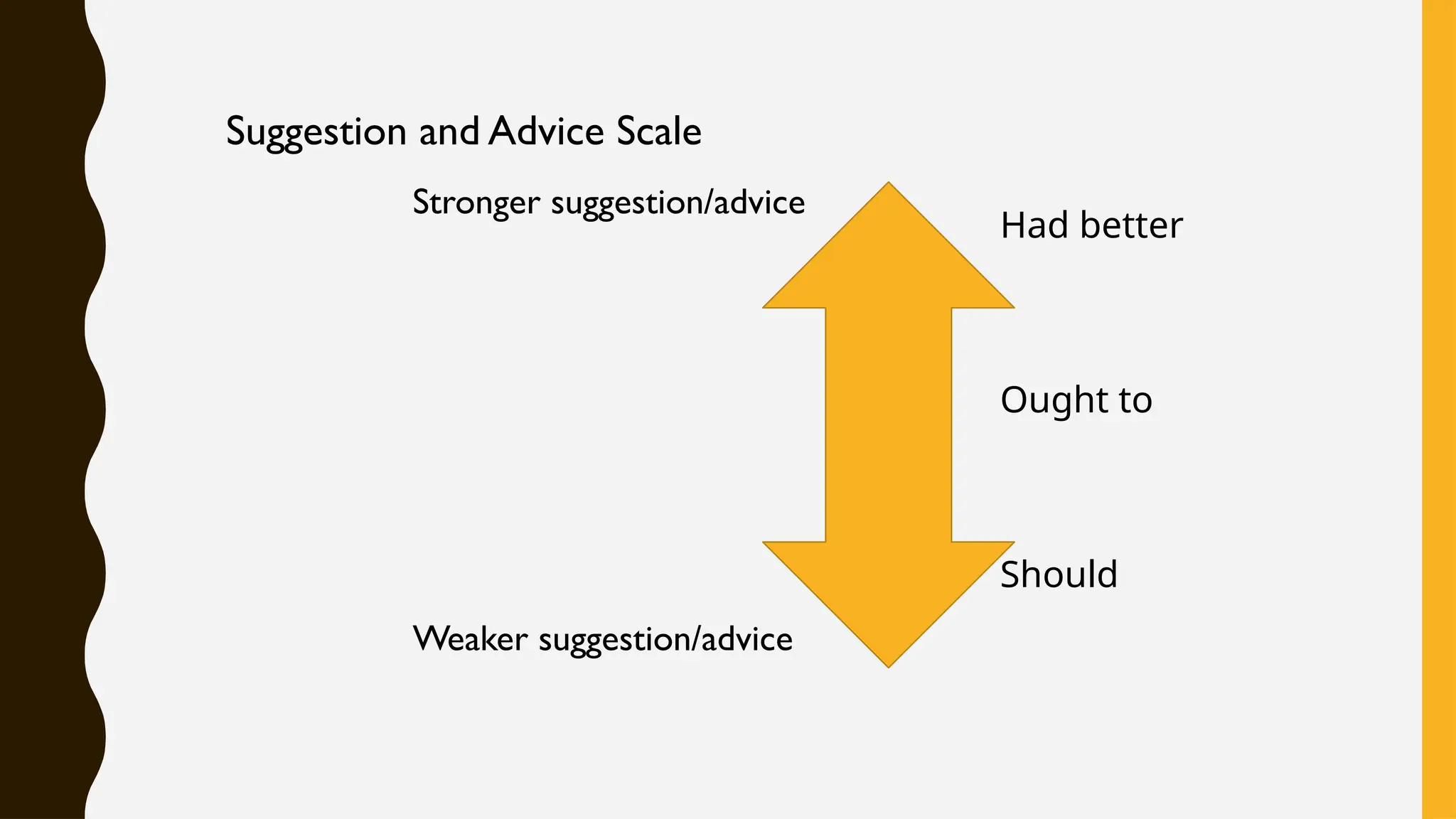
Suggestion and Advice Scale
Stronger suggestion/advice
Weaker suggestion/advice
Had better
Ought to
Should
OBLIGATION
Must
It shows us that the
obligation comes from the
speaker. It isn’t a law or a
rule.
• I must call my dad tonight.
Have to
It shows us that the
obligation comes from
somebody else. It’s a law
or a rule and the speaker
can’t change it.
• John can’t come because he has
to work tomorrow.
PROHIBITION
Both can’t and mustn’t are used to show that something is prohibited – it is
not allowed.
Can’t tells us
that something
is against the
rules.
Mustn’t mean
s that we are
not allowed to
do something.
It is prohibited.
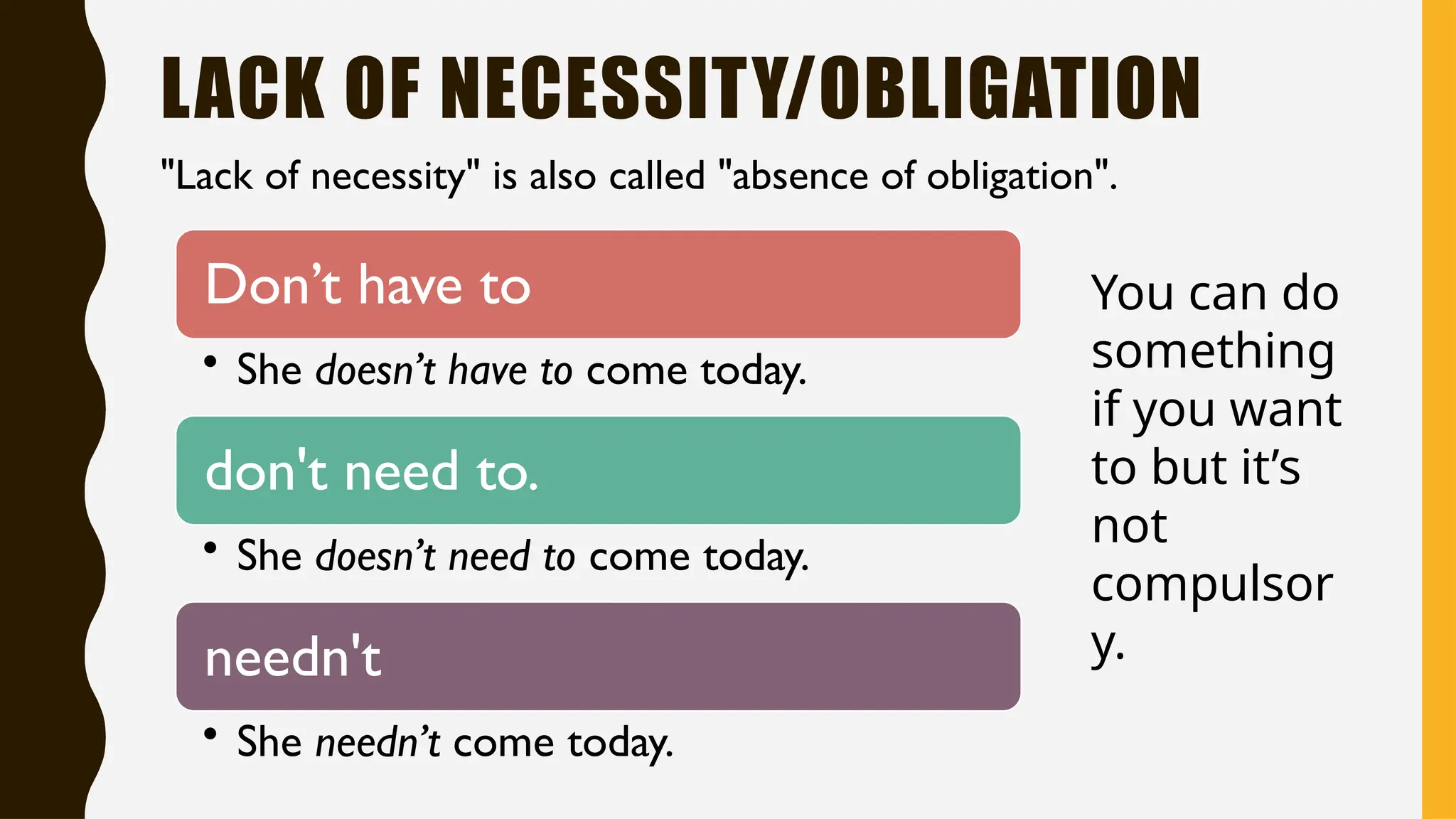
LACK OF NECESSITY/OBLIGATION
"Lack of necessity" is also called "absence of obligation".
Don’t have to
• She doesn’t have to come today.
don't need to.
• She doesn’t need to come today.
needn't
• She needn’t come today.
You can do
something
if you want
to but it’s
not
compulsor
y.
modal verbs in memes.pptx - a presentation

modal verbs in memes.pptx - a presentation

  • 1.
    MODAL VERBS S UG G E S T I O N A N D A D V I C E O B L I G A T I O N A N D P R O H I B I T I O N L A C K O F O B L I G A T I O N / N E C E S S I T Y
  • 2.
    SUGGESTION AND ADVICE Should •General advice • The most common modal verb Ought to • More formal than should • Not used in questions and rarely in negatives. Had better • It is common when making a stronger suggestion. • It is not used in questions
  • 4.
    Suggestion and AdviceScale Stronger suggestion/advice Weaker suggestion/advice Had better Ought to Should
  • 5.
    OBLIGATION Must It shows usthat the obligation comes from the speaker. It isn’t a law or a rule. • I must call my dad tonight. Have to It shows us that the obligation comes from somebody else. It’s a law or a rule and the speaker can’t change it. • John can’t come because he has to work tomorrow.
  • 7.
    PROHIBITION Both can’t andmustn’t are used to show that something is prohibited – it is not allowed. Can’t tells us that something is against the rules. Mustn’t mean s that we are not allowed to do something. It is prohibited.
  • 9.
    LACK OF NECESSITY/OBLIGATION "Lackof necessity" is also called "absence of obligation". Don’t have to • She doesn’t have to come today. don't need to. • She doesn’t need to come today. needn't • She needn’t come today. You can do something if you want to but it’s not compulsor y.