MOBILE TECHNOLOGIES AND
SERVICES FOR NIGERIAN LIBRARIES
A Training Session at the Innovations in Libraries Series of the Nigerian
Library Association, Delta State Chapter
Venue: Petroleum Training Institute, Warri, Delta State | Date: September 11, 2018
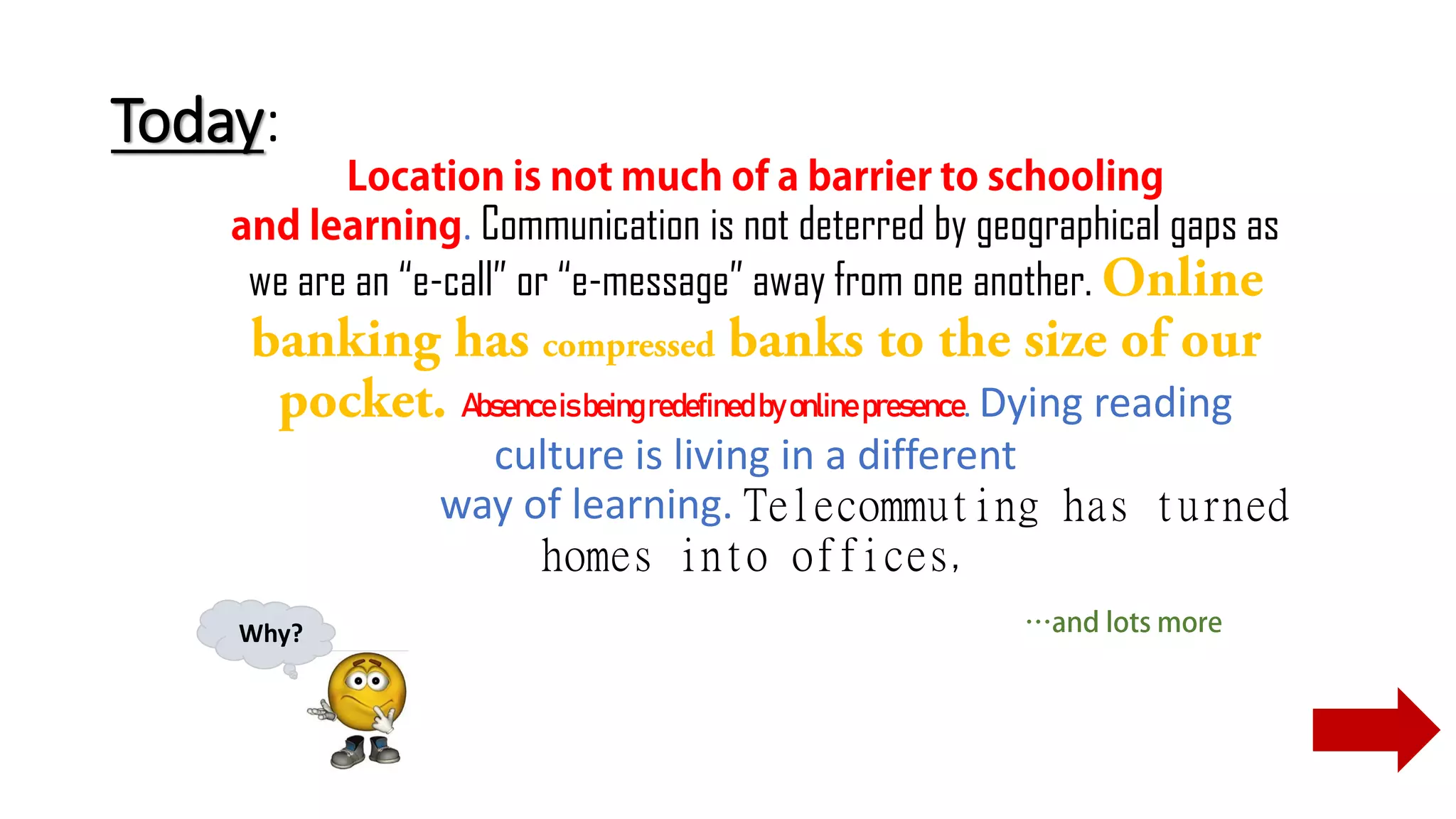
Today:
. Communication is not deterred by geographical gaps as
we are an “e-call” or “e-message” away from one another.
Absenceisbeingredefined byonline presence. Dying reading
culture is living in a different
way of learning. Telecommuting has turned
homes into offices,
Why?
MOBILE TECHNOLOGIES
BENEFITS
OF THE
INTERNET
ACCORDING TO
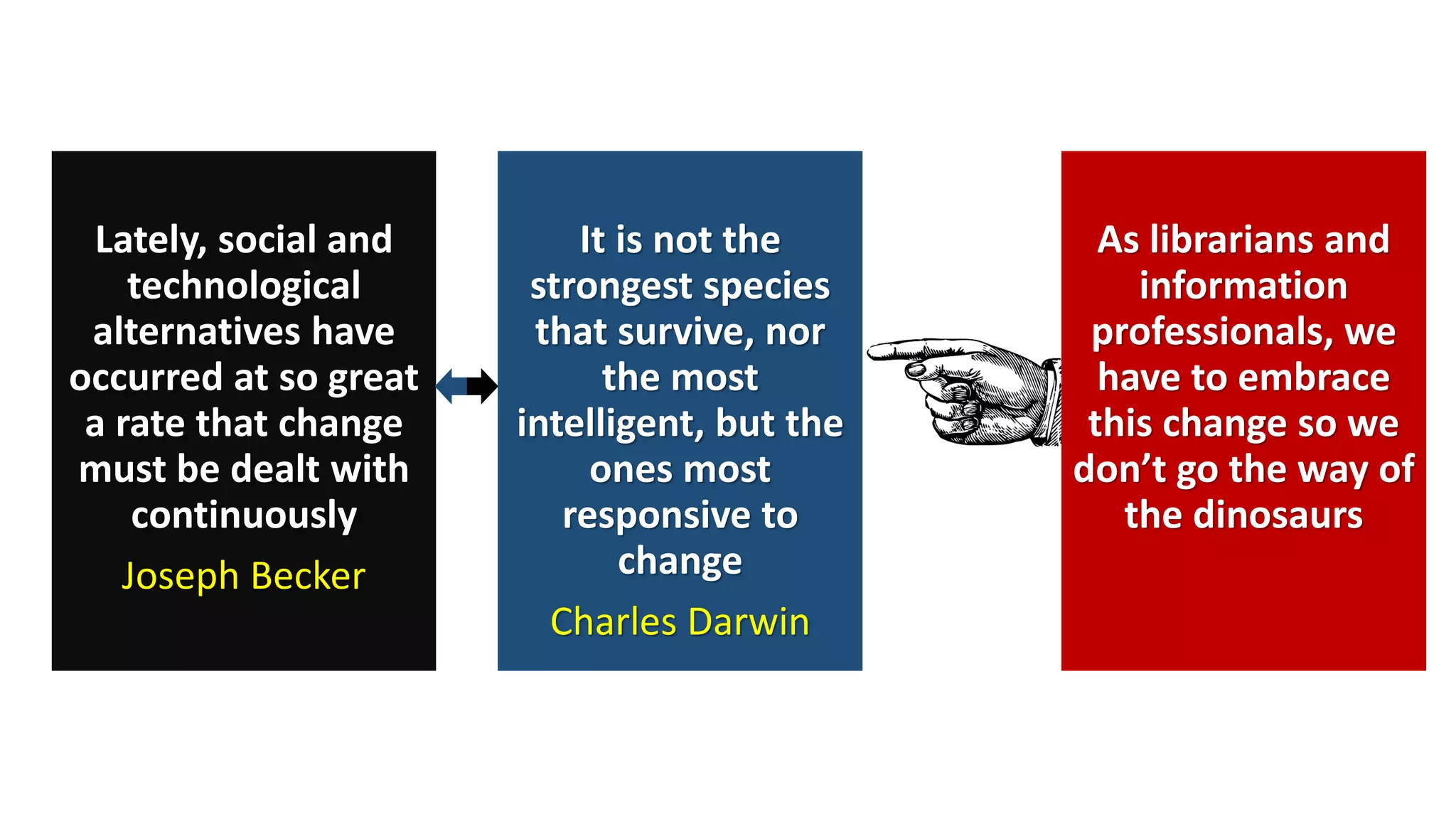
Lately, social and
technological
alternatives have
occurred at so great
a rate that change
must be dealt with
continuously
Joseph Becker
It is not the
strongest species
that survive, nor
the most
intelligent, but the
ones most
responsive to
change
Charles Darwin
As librarians and
information
professionals, we
have to embrace
this change so we
don’t go the way of
the dinosaurs
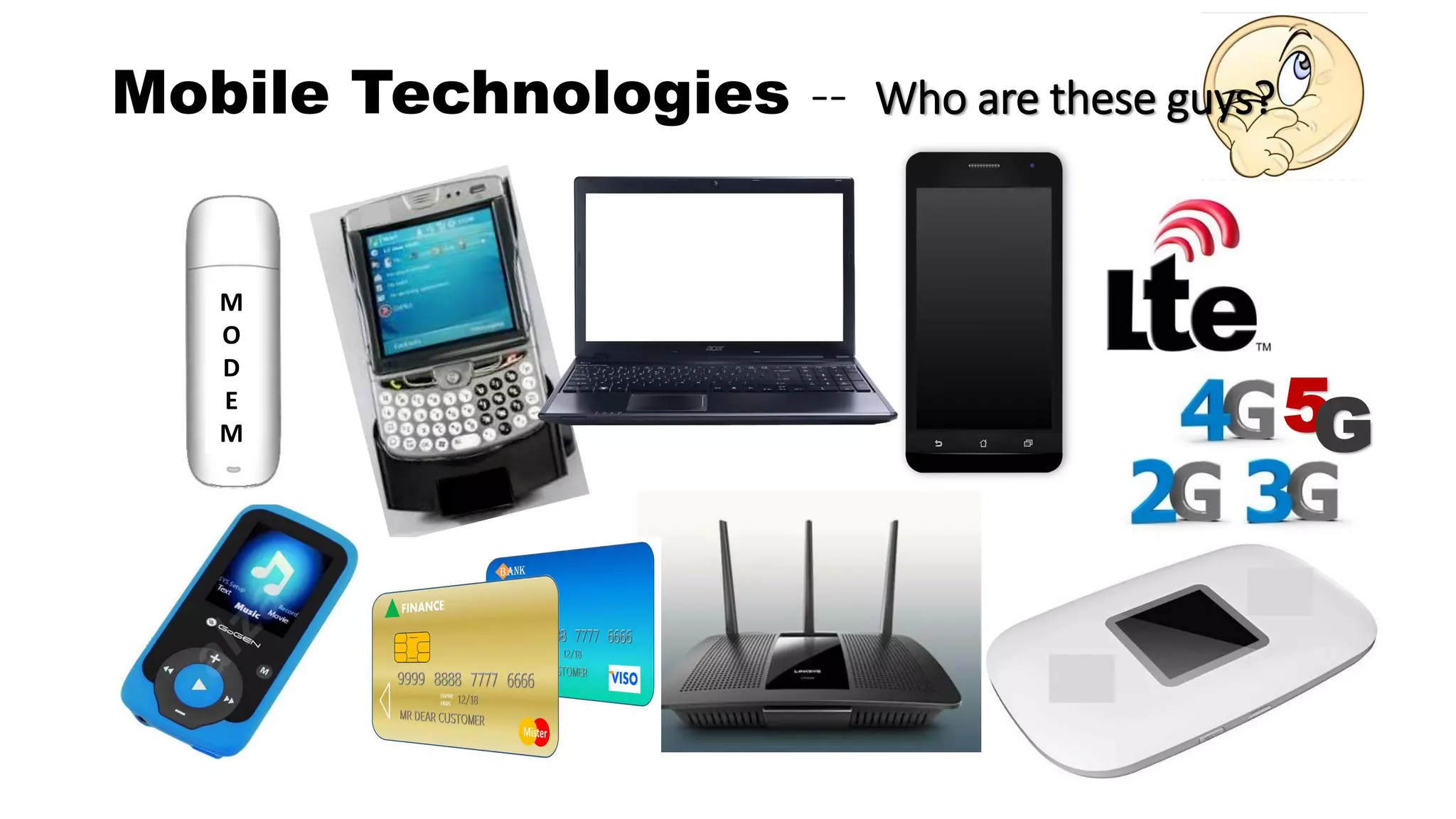
Mobile Technologies -- Who are these guys?
M
O
D
E
M 5G
(Coates et al., 2009)
Simply
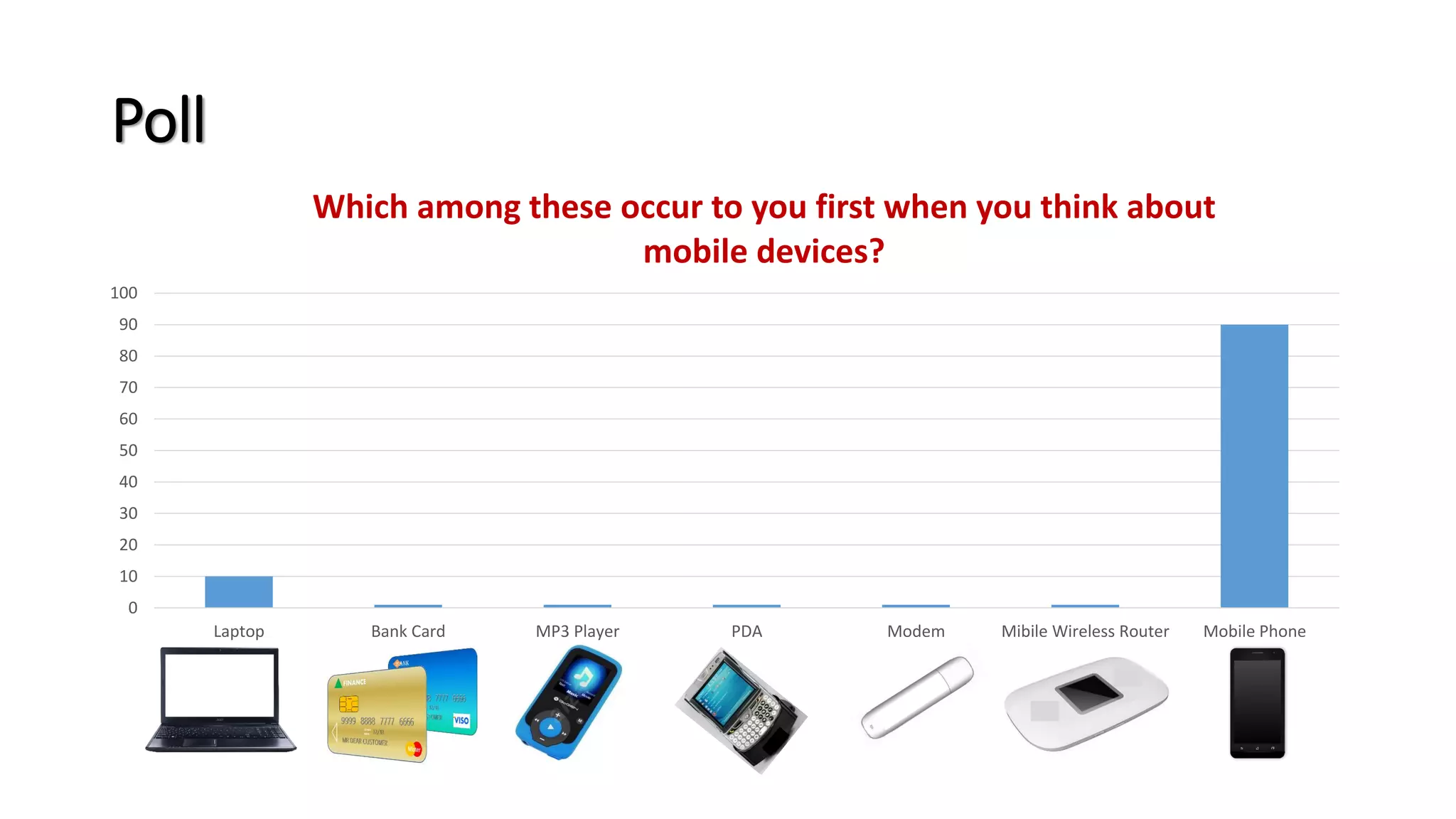
Poll
0
10
20
30
40
50
60
70
80
90
100
Laptop Bank Card MP3 Player PDA Modem Mibile Wireless Router Mobile Phone
Which among these occur to you first when you think about
mobile devices?
Series 1 Series 2 Series 3
Why is that?
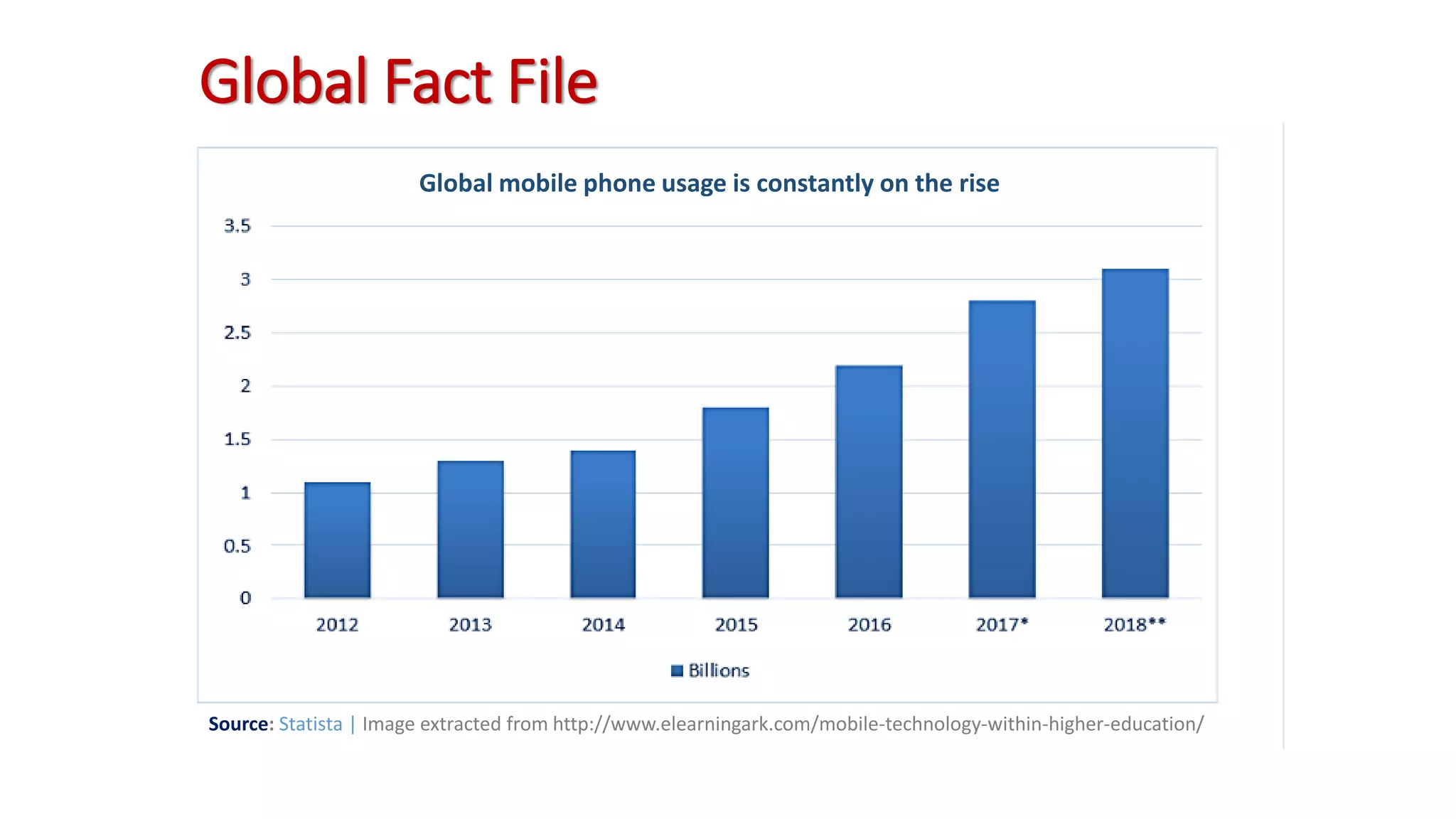
The manifestation of mobile technology is
frequently embodied by smartphones and tablet
devices. Smartphones are an integral part of
many people’s lives and the adoption rate
continues to grow year on year
(Gartner, 2017 in eLearning Ark)
Global Fact File
Global mobile phone usage is constantly on the rise
Source: Statista | Image extracted from http://www.elearningark.com/mobile-technology-within-higher-education/
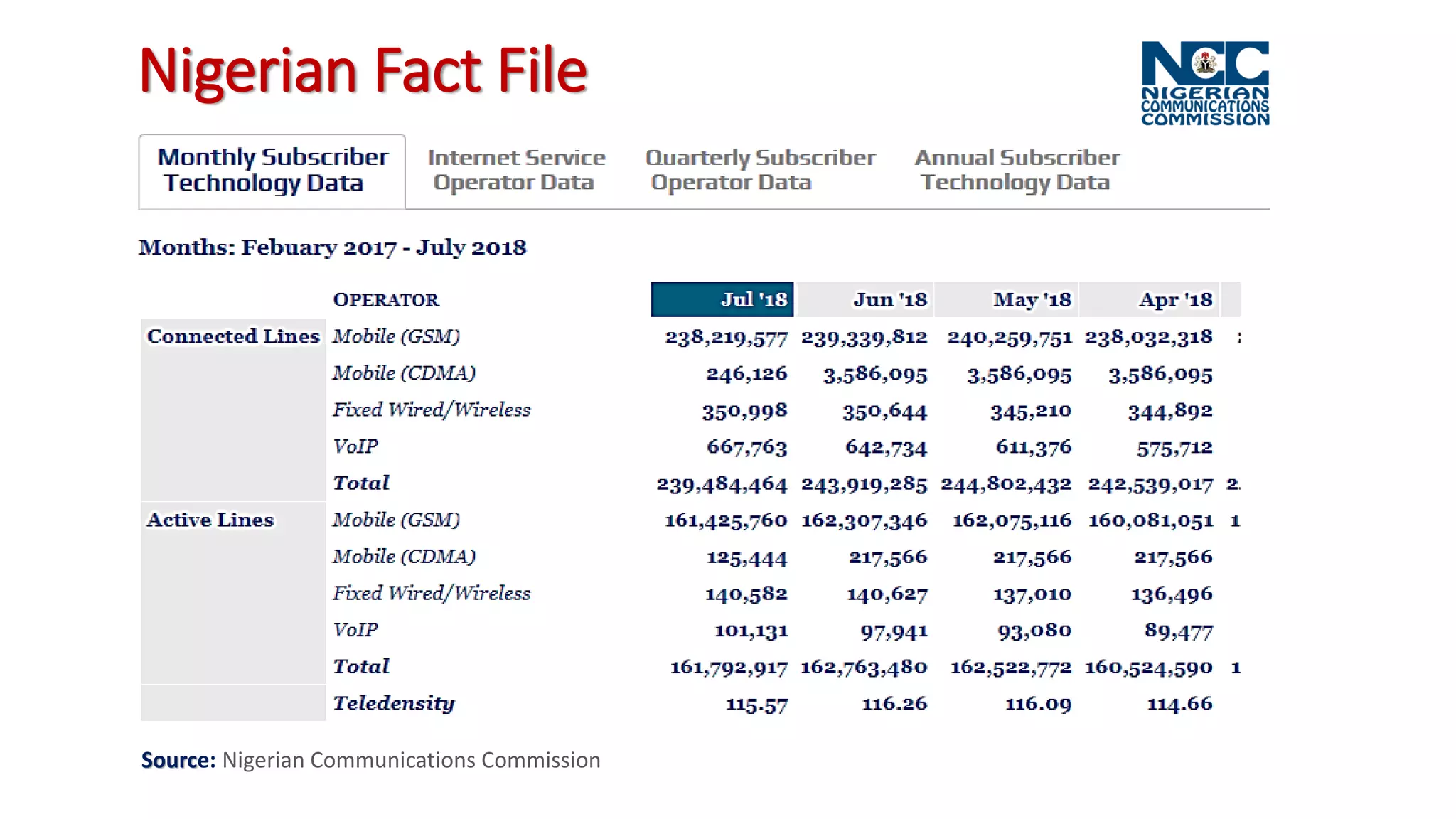
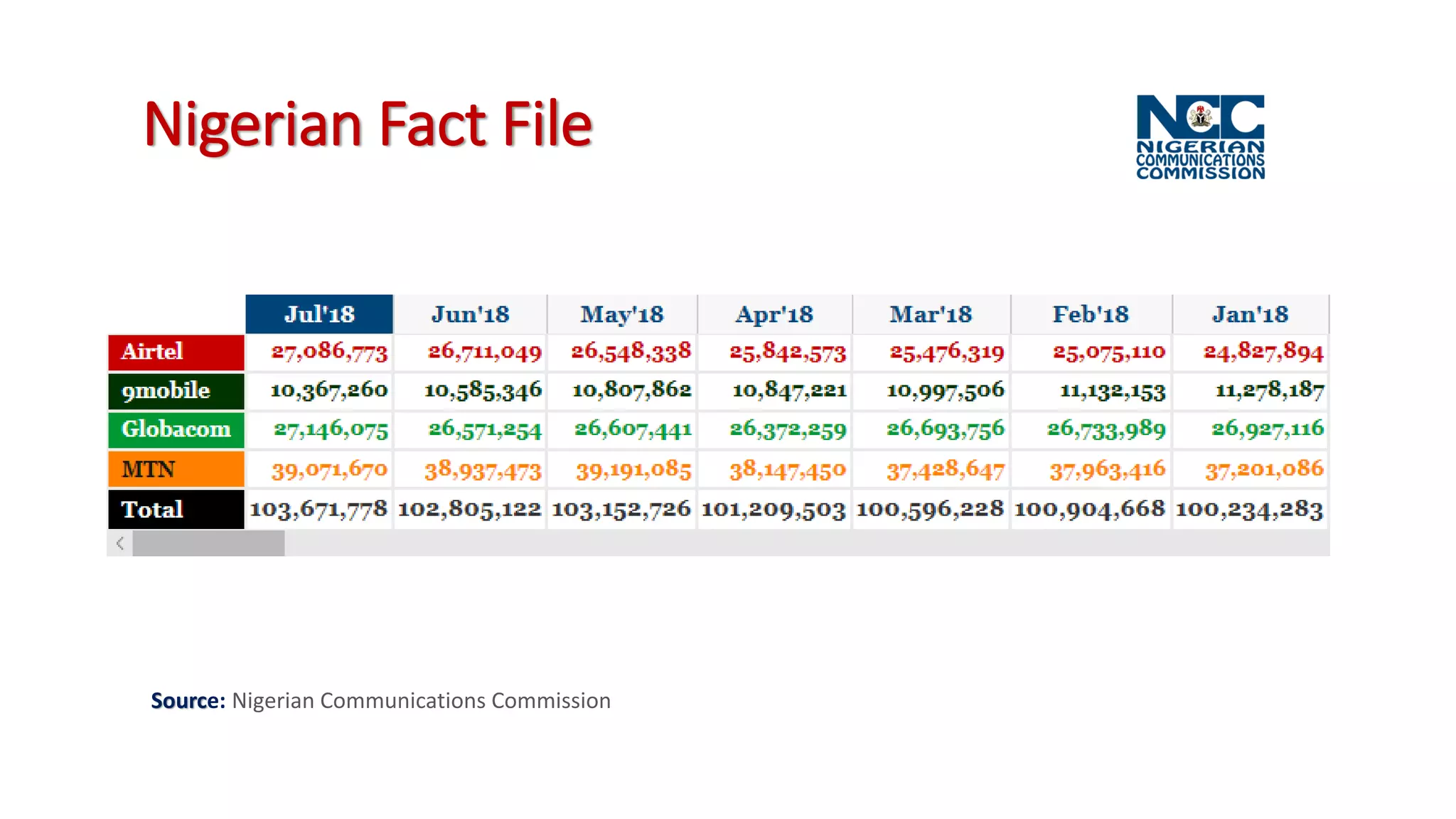
Source: Nigerian Communications Commission
Nigerian Fact File
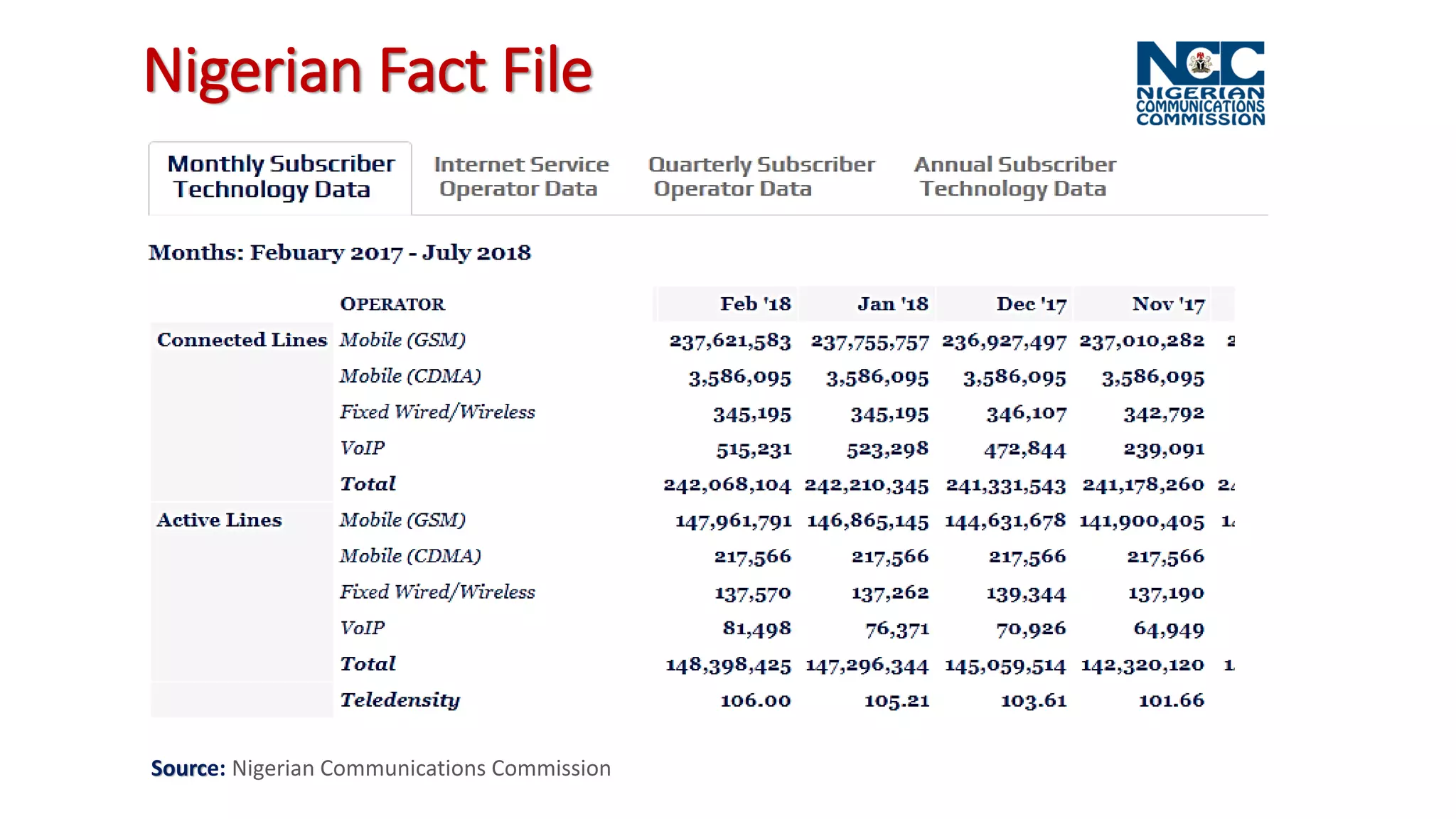
Source: Nigerian Communications Commission
Nigerian Fact File
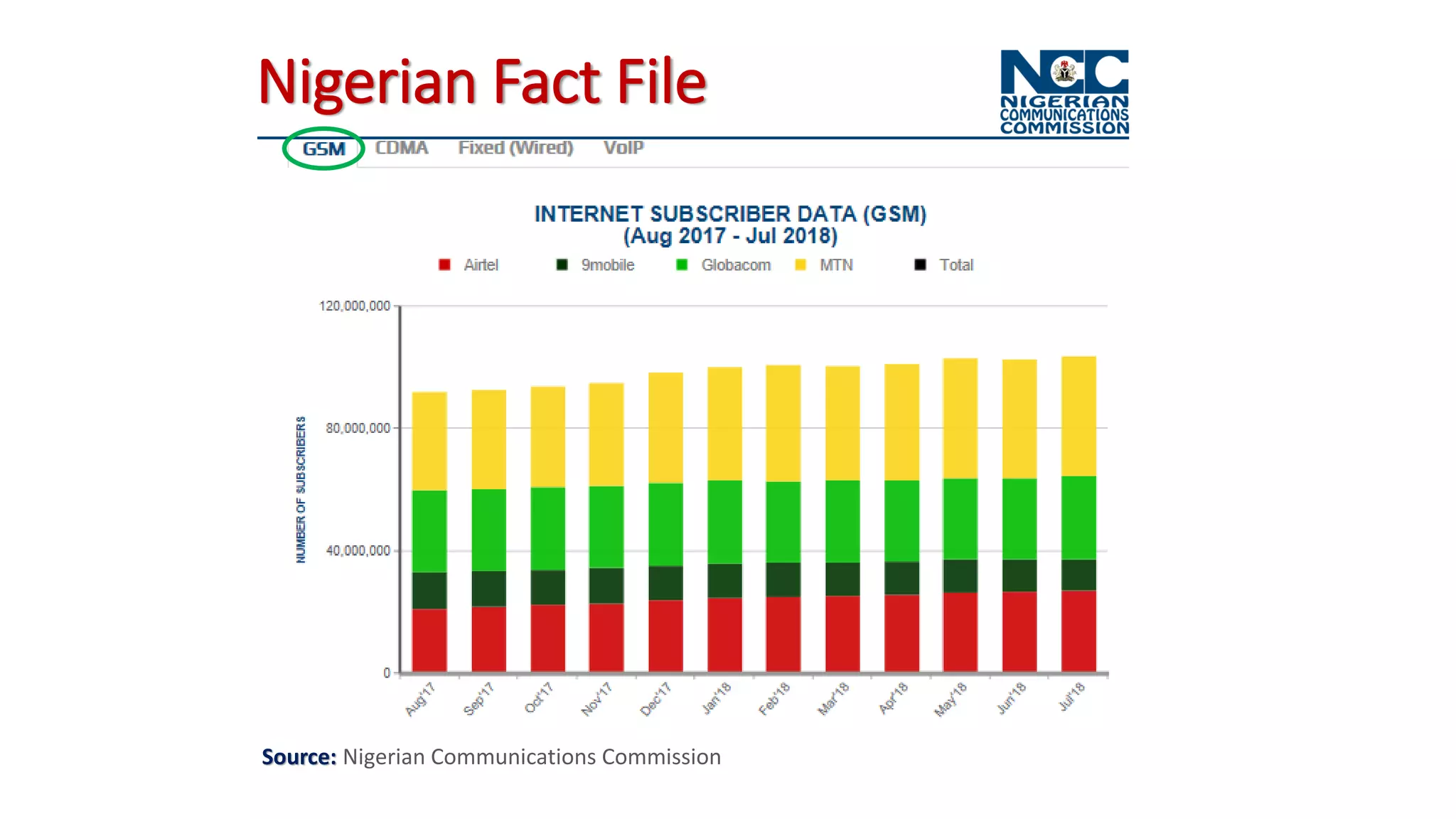
Source: Nigerian Communications Commission
Nigerian Fact File
Source: Nigerian Communications Commission
Nigerian Fact File
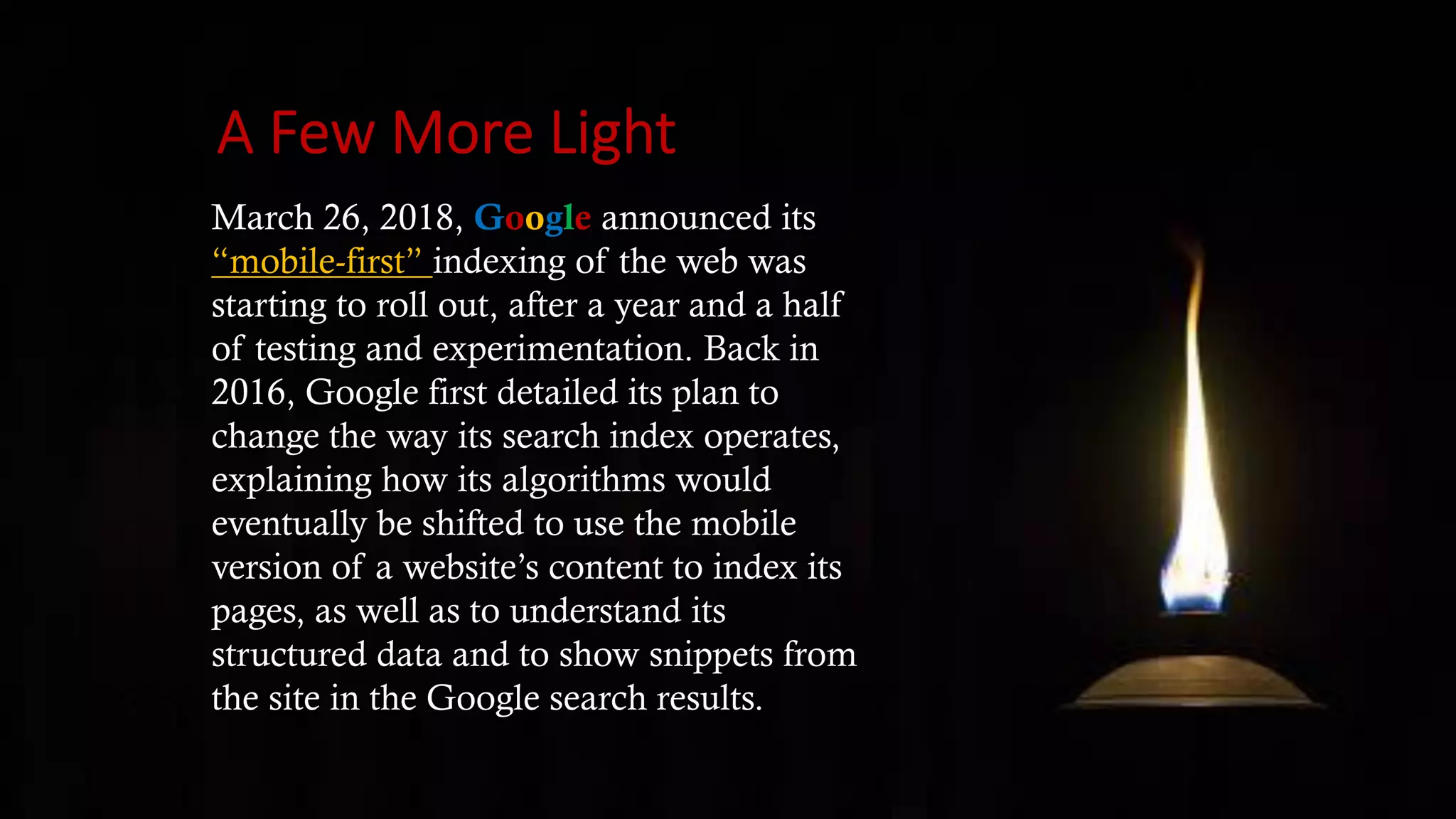
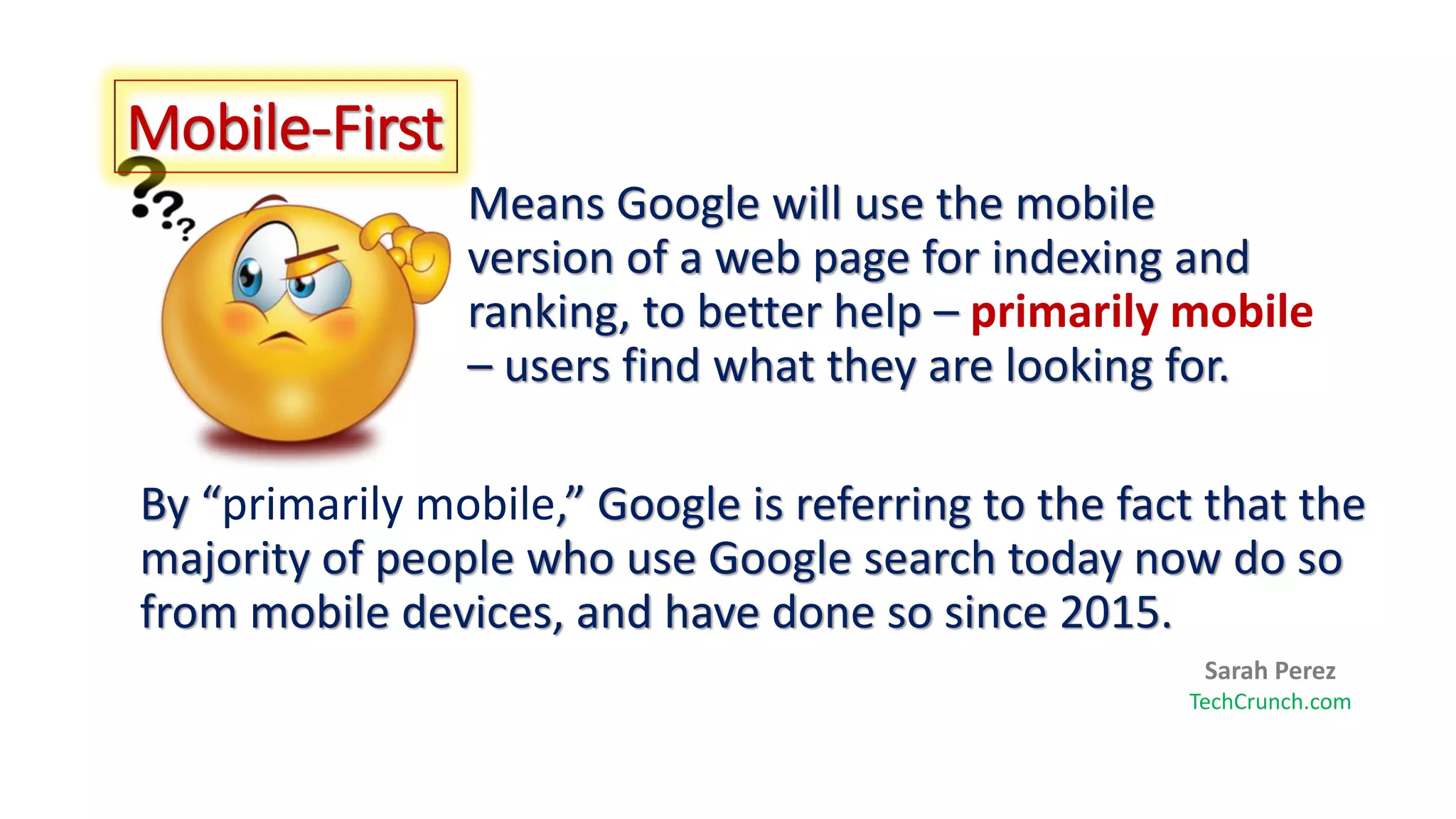
Means Google will use the mobile
version of a web page for indexing and
ranking, to better help – primarily mobile
– users find what they are looking for.
By “primarily mobile,” Google is referring to the fact that the
majority of people who use Google search today now do so
from mobile devices, and have done so since 2015.
Mobile-First
Sarah Perez
TechCrunch.com
Why ShouldWe as Library and
Information Professionals
Care About MobileTechnologies?
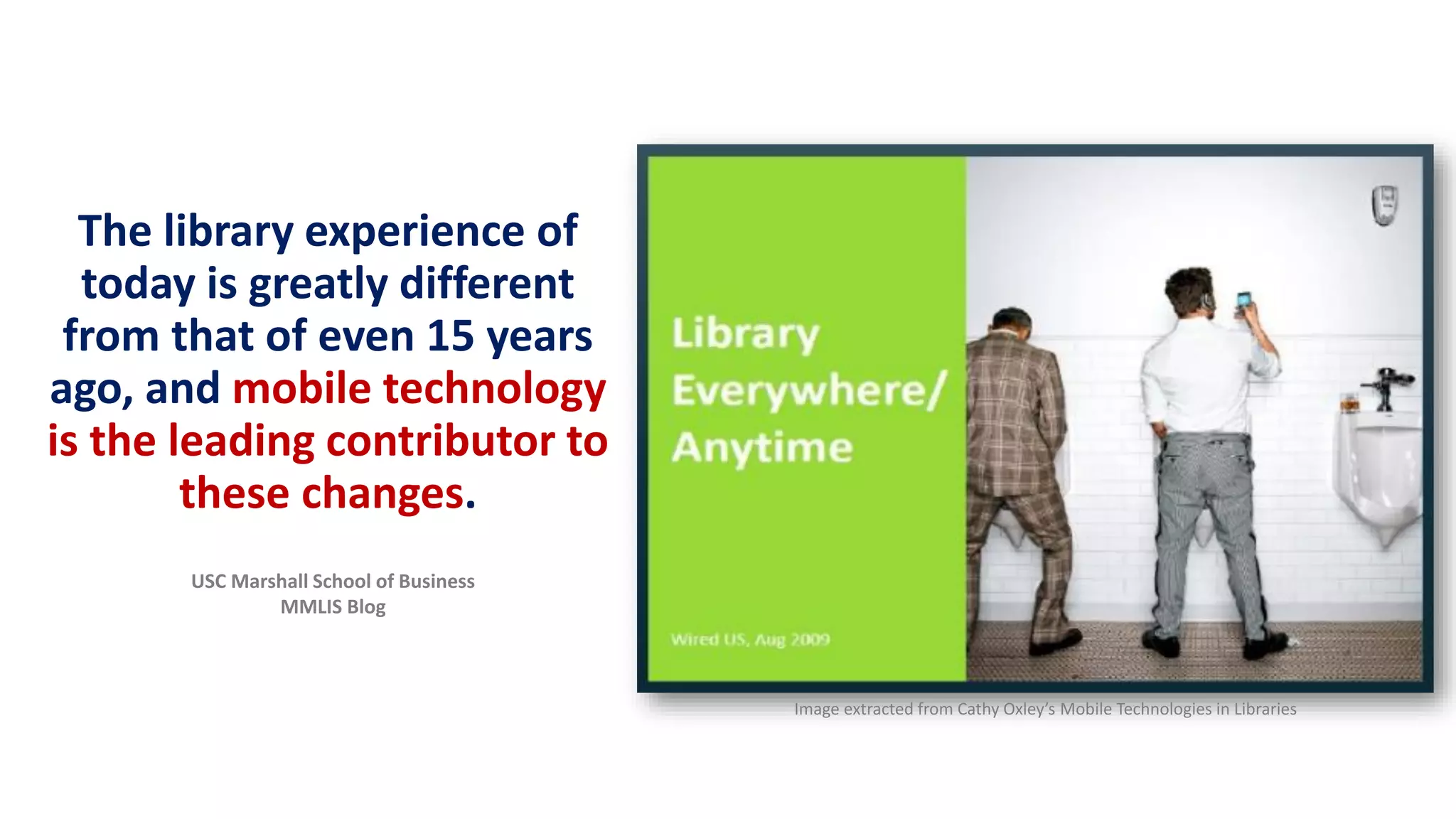
The library experience of
today is greatly different
from that of even 15 years
ago, and mobile technology
is the leading contributor to
these changes.
Image extracted from Cathy Oxley’s Mobile Technologies in Libraries
USC Marshall School of Business
MMLIS Blog
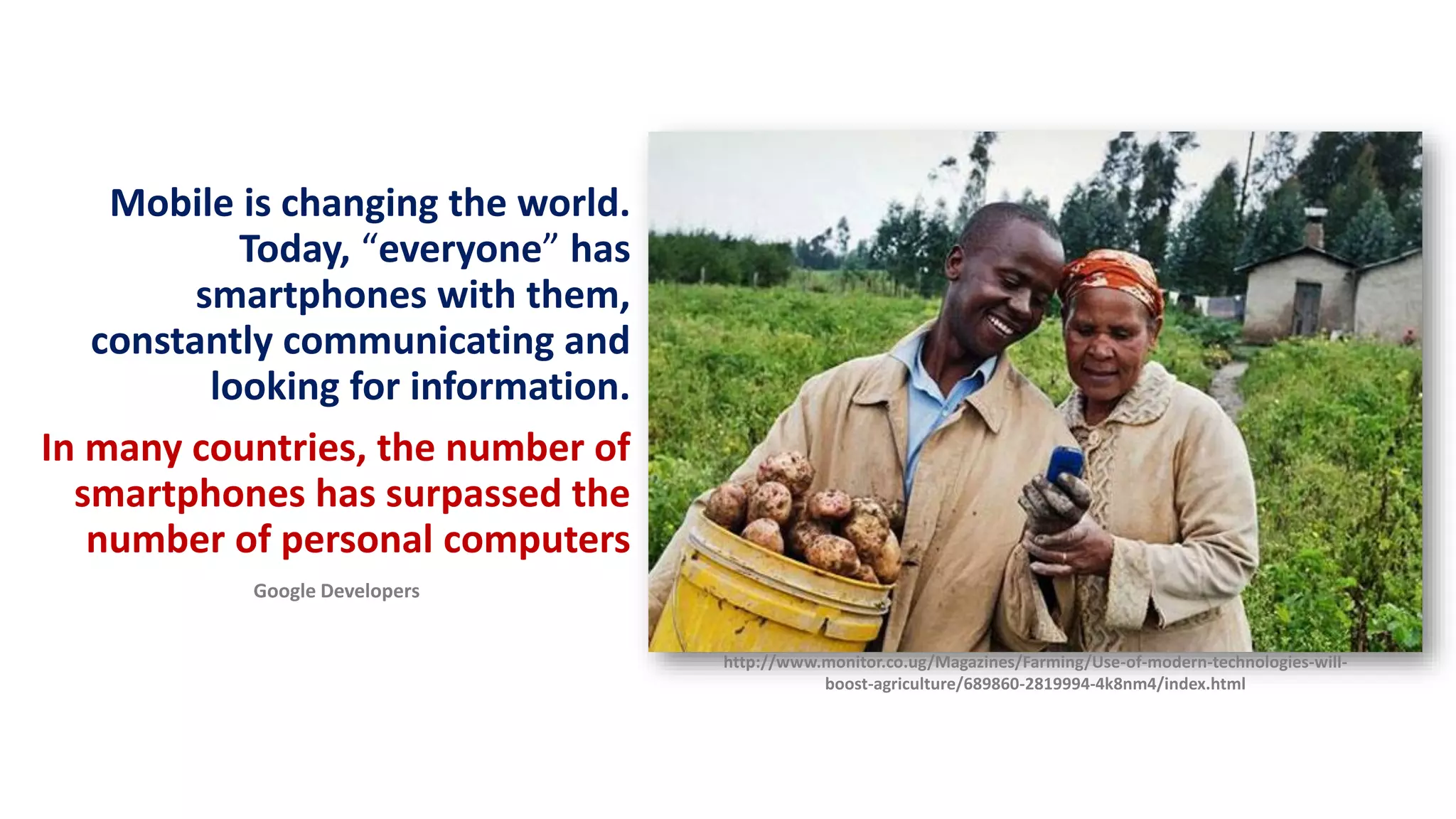
Mobile is changing the world.
Today, “everyone” has
smartphones with them,
constantly communicating and
looking for information.
In many countries, the number of
smartphones has surpassed the
number of personal computers
Google Developers
http://www.monitor.co.ug/Magazines/Farming/Use-of-modern-technologies-will-
boost-agriculture/689860-2819994-4k8nm4/index.html
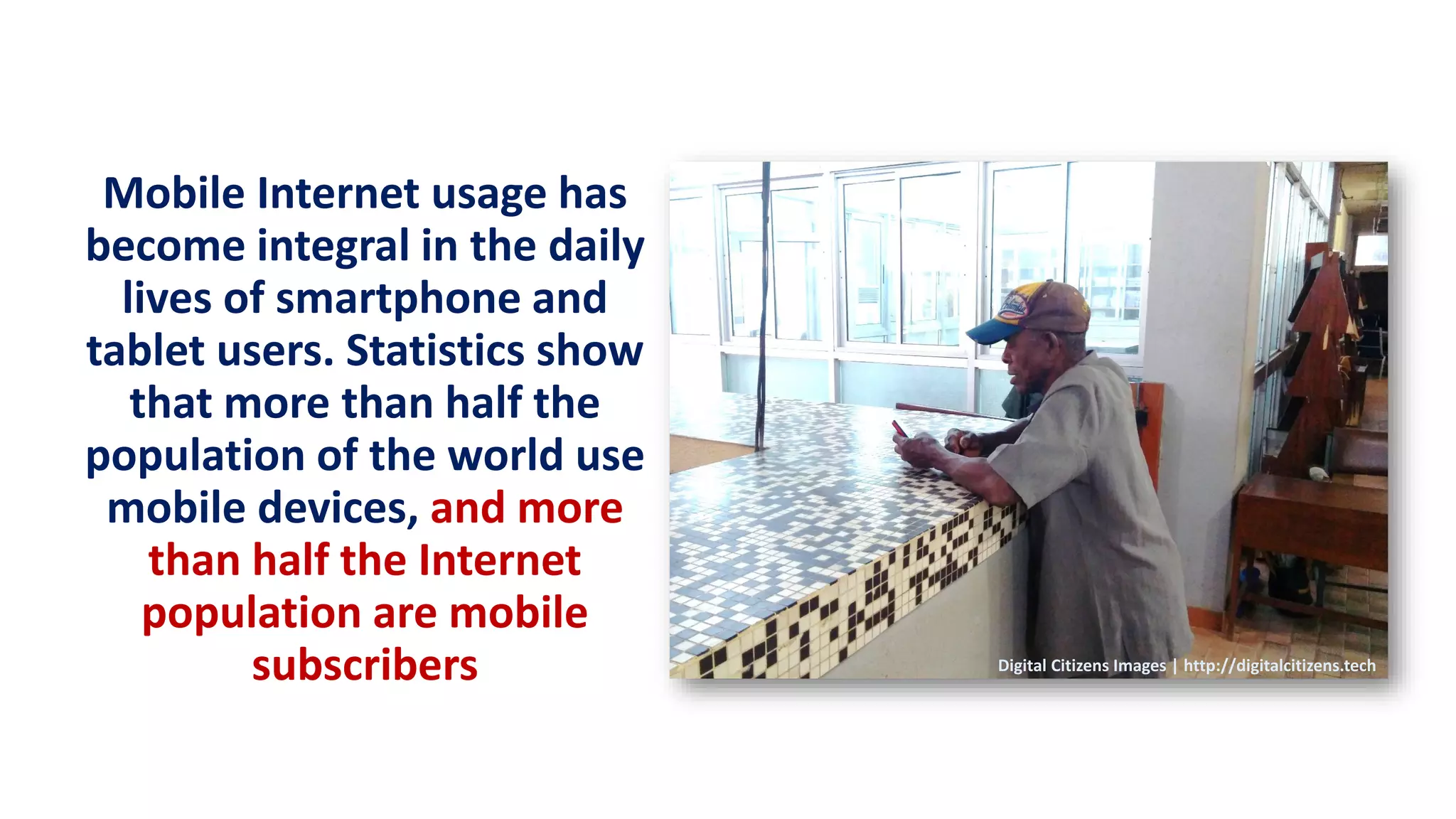
Mobile Internet usage has
become integral in the daily
lives of smartphone and
tablet users. Statistics show
that more than half the
population of the world use
mobile devices, and more
than half the Internet
population are mobile
subscribers Digital Citizens Images | http://digitalcitizens.tech
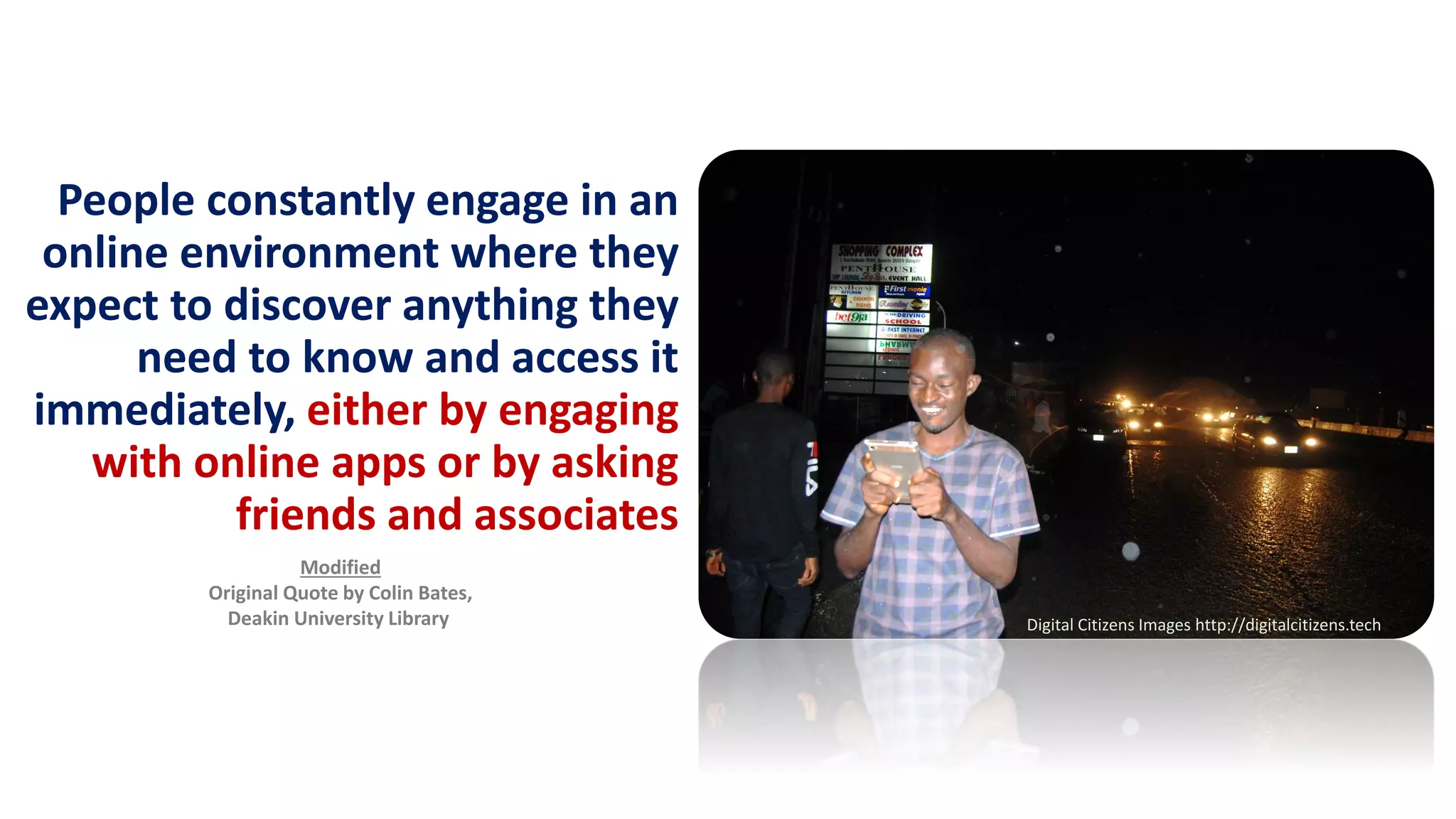
People constantly engage in an
online environment where they
expect to discover anything they
need to know and access it
immediately, either by engaging
with online apps or by asking
friends and associates
Modified
Original Quote by Colin Bates,
Deakin University Library Digital Citizens Images http://digitalcitizens.tech
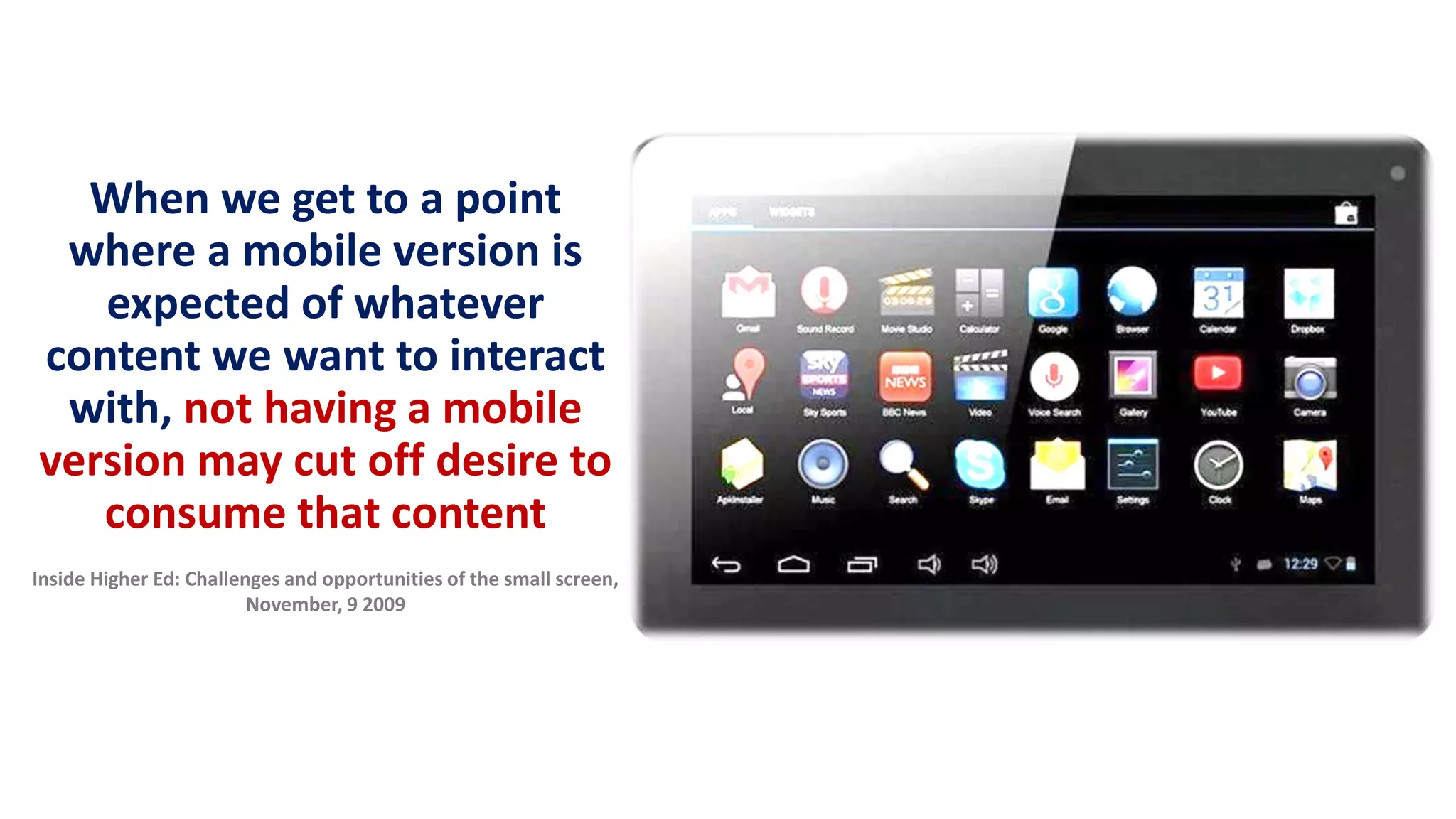
When we get to a point
where a mobile version is
expected of whatever
content we want to interact
with, not having a mobile
version may cut off desire to
consume that content
Inside Higher Ed: Challenges and opportunities of the small screen,
November, 9 2009
So, what’s the implication for us?
It is an opportunity for libraries
to plug in to the current
information base (mobile
atmosphere) of our clients, if we
must render enhanced user
services to them and stay
relevant
What do we stand to gain?
• Benefit of understanding their needs better, and tailoring our services
towards those needs
• Improved communication between us and them in and out of the library
– feedbacks, notices, SDI, CAS, and other information and
communication services
• Improved networking capabilities
• Timely services capabilities
• Higher efficiency and productivity on our part
• Benefit of being up to date in mobile trends, products and services
• Impactful services in general
Practicable Mobile Services
• Mobile Online Public Access
Catalogue (MOPAC)
• Book Meeting Room / Mobile Book
Clubs
• Ask-A-Librarian – phone number, chat
platform, email, etc., for specified hours of the day
• Email and SMS Notifications --
overdue notices, new arrivals, CAS and SDI, etc.
• Library orientation / library
education on Mobile
• E-resources optimized for mobile
devices
• Interlibrary Lending
• Library Virtual/Audio Tours
• QR Codes on Mobile – upcoming events,
new arrivals, library directions, easily accessible
library instruction
All services in one place
• Mobile Library Website
• The aforementioned services and more can be available here
• Library Mobile App
• Depending on the design, this may serve the purpose of the library website or
may be designed for specific services
• Quick and easy to access as it is just one touch/click away
• Social Media Account
• Networking and communication platforms already available
• Can serve as information dissemination platform
Bibliography
• Coates, C., Dearnley, C., Draisfield, M., Fauhall, J., Haigh, J., Hennessy, S., . . . Taylor, J. (2009). Using mobile technology for
assessment and learning in practice settings. Outcomes of five case students. International Journal on E-incoming, 8(2),
193-207.
• eLearning Ark. (2017, April 12). Mobile technology within Higher Education. Retrieved September 5, 2018, from eLearning Ark:
www.elearningark.com/mobile-technology-within-higher-education/
• Google Developers. (2018, July 16). Mobile Sites. Retrieved September 7, 2018, from Google Search:
https://developers.google.com/search/mobile-sites/
• Nigerian Communications Commission. (2018, August). Internet Subscriber Data. Retrieved September 7, 2018, from Nigerian
Communications Commission: https://www.ncc.gov.ng/stakeholder/statistics-reports/industry-overview#view-graphs-
tables-5
• Nigerian Communications Commission. (2018, August). Subscriber Statistics. Retrieved September 7, 2018, from Nigerian
Communications Commission: https://www.ncc.gov.ng/stakeholder/statistics-reports/subscriber-data
• Oxley, C. (2011, October). Mobile Technologies in Libraries. Retrieved September 5, 2018, from SlideShare:
https://www.slideshare.net/ASLAonline/mobile-technologies-in-libraries
• TechCrunch. (2018, March 26). Google begins to roll out mobile-first indexing. Retrieved September 5, 2018, from TechCrunch:
https://techcrunch.com/
• USC Marshall School of Business. (2018). How Mobile Technology Changes the Library Experience. Retrieved September 5, 2018,
from USC Marshall School of Business: https://librarysciencedegree.usc.edu/blog/how-mobile-technology-changes-the-
library-experience/

Mobile Technologies and Services for Nigerian Libraries

  • 1.
    MOBILE TECHNOLOGIES AND SERVICESFOR NIGERIAN LIBRARIES A Training Session at the Innovations in Libraries Series of the Nigerian Library Association, Delta State Chapter Venue: Petroleum Training Institute, Warri, Delta State | Date: September 11, 2018
  • 2.
    Today: . Communication isnot deterred by geographical gaps as we are an “e-call” or “e-message” away from one another. Absenceisbeingredefined byonline presence. Dying reading culture is living in a different way of learning. Telecommuting has turned homes into offices, Why?
  • 3.
  • 4.
    Lately, social and technological alternativeshave occurred at so great a rate that change must be dealt with continuously Joseph Becker It is not the strongest species that survive, nor the most intelligent, but the ones most responsive to change Charles Darwin As librarians and information professionals, we have to embrace this change so we don’t go the way of the dinosaurs
  • 5.
    Mobile Technologies --Who are these guys? M O D E M 5G
  • 6.
    (Coates et al.,2009) Simply
  • 7.
    Poll 0 10 20 30 40 50 60 70 80 90 100 Laptop Bank CardMP3 Player PDA Modem Mibile Wireless Router Mobile Phone Which among these occur to you first when you think about mobile devices? Series 1 Series 2 Series 3
  • 8.
    Why is that? Themanifestation of mobile technology is frequently embodied by smartphones and tablet devices. Smartphones are an integral part of many people’s lives and the adoption rate continues to grow year on year (Gartner, 2017 in eLearning Ark)
  • 9.
    Global Fact File Globalmobile phone usage is constantly on the rise Source: Statista | Image extracted from http://www.elearningark.com/mobile-technology-within-higher-education/
  • 10.
    Source: Nigerian CommunicationsCommission Nigerian Fact File
  • 11.
    Source: Nigerian CommunicationsCommission Nigerian Fact File
  • 12.
    Source: Nigerian CommunicationsCommission Nigerian Fact File
  • 13.
    Source: Nigerian CommunicationsCommission Nigerian Fact File
  • 15.
    Means Google willuse the mobile version of a web page for indexing and ranking, to better help – primarily mobile – users find what they are looking for. By “primarily mobile,” Google is referring to the fact that the majority of people who use Google search today now do so from mobile devices, and have done so since 2015. Mobile-First Sarah Perez TechCrunch.com
  • 16.
    Why ShouldWe asLibrary and Information Professionals Care About MobileTechnologies?
  • 17.
    The library experienceof today is greatly different from that of even 15 years ago, and mobile technology is the leading contributor to these changes. Image extracted from Cathy Oxley’s Mobile Technologies in Libraries USC Marshall School of Business MMLIS Blog
  • 18.
    Mobile is changingthe world. Today, “everyone” has smartphones with them, constantly communicating and looking for information. In many countries, the number of smartphones has surpassed the number of personal computers Google Developers http://www.monitor.co.ug/Magazines/Farming/Use-of-modern-technologies-will- boost-agriculture/689860-2819994-4k8nm4/index.html
  • 19.
    Mobile Internet usagehas become integral in the daily lives of smartphone and tablet users. Statistics show that more than half the population of the world use mobile devices, and more than half the Internet population are mobile subscribers Digital Citizens Images | http://digitalcitizens.tech
  • 20.
    People constantly engagein an online environment where they expect to discover anything they need to know and access it immediately, either by engaging with online apps or by asking friends and associates Modified Original Quote by Colin Bates, Deakin University Library Digital Citizens Images http://digitalcitizens.tech
  • 21.
    When we getto a point where a mobile version is expected of whatever content we want to interact with, not having a mobile version may cut off desire to consume that content Inside Higher Ed: Challenges and opportunities of the small screen, November, 9 2009
  • 22.
    So, what’s theimplication for us? It is an opportunity for libraries to plug in to the current information base (mobile atmosphere) of our clients, if we must render enhanced user services to them and stay relevant
  • 23.
    What do westand to gain? • Benefit of understanding their needs better, and tailoring our services towards those needs • Improved communication between us and them in and out of the library – feedbacks, notices, SDI, CAS, and other information and communication services • Improved networking capabilities • Timely services capabilities • Higher efficiency and productivity on our part • Benefit of being up to date in mobile trends, products and services • Impactful services in general
  • 24.
    Practicable Mobile Services •Mobile Online Public Access Catalogue (MOPAC) • Book Meeting Room / Mobile Book Clubs • Ask-A-Librarian – phone number, chat platform, email, etc., for specified hours of the day • Email and SMS Notifications -- overdue notices, new arrivals, CAS and SDI, etc. • Library orientation / library education on Mobile • E-resources optimized for mobile devices • Interlibrary Lending • Library Virtual/Audio Tours • QR Codes on Mobile – upcoming events, new arrivals, library directions, easily accessible library instruction
  • 25.
    All services inone place • Mobile Library Website • The aforementioned services and more can be available here • Library Mobile App • Depending on the design, this may serve the purpose of the library website or may be designed for specific services • Quick and easy to access as it is just one touch/click away • Social Media Account • Networking and communication platforms already available • Can serve as information dissemination platform
  • 26.
    Bibliography • Coates, C.,Dearnley, C., Draisfield, M., Fauhall, J., Haigh, J., Hennessy, S., . . . Taylor, J. (2009). Using mobile technology for assessment and learning in practice settings. Outcomes of five case students. International Journal on E-incoming, 8(2), 193-207. • eLearning Ark. (2017, April 12). Mobile technology within Higher Education. Retrieved September 5, 2018, from eLearning Ark: www.elearningark.com/mobile-technology-within-higher-education/ • Google Developers. (2018, July 16). Mobile Sites. Retrieved September 7, 2018, from Google Search: https://developers.google.com/search/mobile-sites/ • Nigerian Communications Commission. (2018, August). Internet Subscriber Data. Retrieved September 7, 2018, from Nigerian Communications Commission: https://www.ncc.gov.ng/stakeholder/statistics-reports/industry-overview#view-graphs- tables-5 • Nigerian Communications Commission. (2018, August). Subscriber Statistics. Retrieved September 7, 2018, from Nigerian Communications Commission: https://www.ncc.gov.ng/stakeholder/statistics-reports/subscriber-data • Oxley, C. (2011, October). Mobile Technologies in Libraries. Retrieved September 5, 2018, from SlideShare: https://www.slideshare.net/ASLAonline/mobile-technologies-in-libraries • TechCrunch. (2018, March 26). Google begins to roll out mobile-first indexing. Retrieved September 5, 2018, from TechCrunch: https://techcrunch.com/ • USC Marshall School of Business. (2018). How Mobile Technology Changes the Library Experience. Retrieved September 5, 2018, from USC Marshall School of Business: https://librarysciencedegree.usc.edu/blog/how-mobile-technology-changes-the- library-experience/