ELEMENTARY ART  1 st  to 5 th  Grade 2009-2011
View Introduction as  Prezi
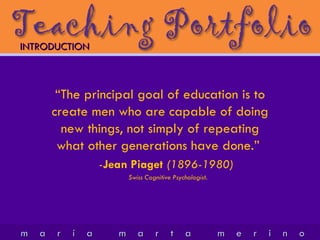
“ The principal goal of education is to create men who are capable of doing new things, not simply of repeating what other generations have done.”  - Jean Piaget  (1896-1980)  Swiss  C ognitive  P sychologist. INTRODUCTION
My classroom is a relatively enclosed space, but you wouldn’t know this by looking at my students work. They are constantly encouraged and motivated to let their imagination fly, dance, skip or run outside of the four walls designated as the Elementary School Art Room. The best evidence of this is the enthusiasm with which students walk in and out of my room. INTRODUCTION
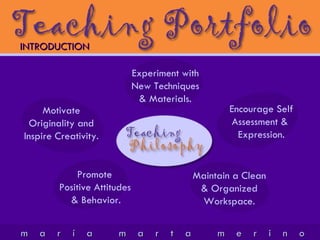
Experiment  with New Techniques & Materials. Maintain a Clean &  Organized  Workspace. Encourage Self Assessment &  Expression . Motivate Originality and Inspire  Creativity . Promote  Positive Attitudes  & Behavior. INTRODUCTION
A course Curriculum/ Pacing  is in place for each grade level: First  Grade ,  Second  Grade,  Third  Grade,  Fourth  Grade &  Fifth  Grade. Classes are planned ahead through the use of Lesson Plans for every Grade level/Unit.   First  Grade ( 2011 ) ,  Second  Grade ( 2011 ) ,  Third  Grade ( 2011 ) ,  Fourth  Grade ( 2011 ) &  Fifth  Grade ( 2011 ) .  Examples for 09-10 School Year:   First  Grade ,  Second  Grade ,  Third  Grade,  Fourth  Grade ,  Fifth  Grade. Examples for 10-11 School Year: First  Grade ,  Second  Grade,  Third  Grade,  Fourth  Grade,  Fifth  Grade. PLANNING & PREPARATION
Study/Application of  Best Teaching Practices in Art.   (Slide #24) Instructional outcomes are planned through the  Backward Design  Method.  ( Examples for 2009-2010 )  (Example for  2010-11 ) Instruction is designed to be coherent through  Curriculum   Maps  and  UBD Units   . 2010-2011 UBD Unit Examples First  Grade ,  Second  Grade,  Third  Grade,  Fourth  Grade,  Fifth  Grade. PLANNING & PREPARATION
CLASSROOM ENVIRONMENT The  1 st  class  of each semester focuses on Classroom  procedures and regulations.   (2010-11 Example ) The classroom is organized for maximum  efficiency and use of space.   ( Example for 2009-2010 )   (2010-11  example ) Each class is broken up into  groups of 5  to optimize individual attention.  (2010-11  example  ) This groups also work as  Teams  in order to gain/loose class work points and complete projects. ( Example for 2009-2010 ) (Example for  2010-11 ) Students  help create  a positive environment by adding/editing  their own rules .
CLASSROOM ENVIRONMENT A Conduct System is in place including an  Art Refocus Form. Students are aware of what is expected of them  through the rules  (conduct) , guiding questions ( learning ) and instructions ( assignments ).  2009 -2010 Examples of  Guiding Questions  & 2010-11  Example .  Students are proud  and enthusiastic about their work and  displaying it.   2009 -2010 Display of  Student Work 2011 -2012 Display of  Student Work  &  Projects . 2010-2011 - A positive climate is created through the  display of posters .
INSTRUCTION & ASSESSMENT   Directions and procedures  are communicated  clearly and accurately . Questioning and discussion  techniques are utilized in class. (Quality of questions- Six Facets of Understanding-  Habits of Mind  2011 ) Students are engaged in learning through the use  innovative materials. 2009 -2010 Example of  Innovative Material  (2010-11  example ) Each Unit includes an  Art Project  students need to fulfill. 2009 -2010 Example of  Art Project  (2010-11 Example of  Art Project ) Special Activities  are constantly part of the class  dynamics. (2009-2010 Example of  Special Activities ) (Art & Music Week  2011 ) Technology is used on a daily basis in the form of  Prezi  Presentations,  Power Point  , video beam, blog,  Google image, etc.
INSTRUCTION & ASSESSMENT   Rubrics  and  checklists  are utilized to assess students  performance . Students are given  feedback   on a daily basis and with  Progress Reports  when needed. ( Example )  Students are given the opportunity to reflect with  self-assessments  . Lesson are adjusted to cater to different  Learning Styles . ( Example )
Student  grades  are handed in on time and kept in order. Communication with families is done with emails, one-on-one and  through the  webpage . Communication with the community is done via  Edline  updates & Lincoln This Week news Engagement of families in the instructional program is done through Lincoln Loves Art  Blog . Information about the  Arts Instructional Program  is available at the  Curriculum Office. Engagement of families  in the instructional program. Participation in the  community  is done through  special projects , like the  5 th  grade Musical.   (2009 -2010  Bottle Cap Art ) (2010 Arts & Music Week) The Art Class and  it’s resources  are always available to other teachers and  their activities.   (2011  Kinder Class  , 2011 Preschool  Bulletin Board ) PROFESSIONAL RESPONSABILITIES
Pedagogical skills and content knowledge are improved on an a yearly basis. ( Teacher’s goals )  2010-12  Teacher Goals . Growing and developing professionally/participating in the MoMA Summer Institute for Teachers  Connecting Collection 2011 . The  Sponsor an Angel Program  has been a  successful contribution to  the  Service Learning Projects.   (Christmas  2010 ) Compliance with school regulations as well as to the mission and vision of Lincoln School are seen through the Teacher’s commitment to the  English Improvement Plan . Teacher shows professionalism and is seen as a role model through participation in  programs like  Enrichment  and the trial  Clusters.   (2009-2010  Clusters ) Reflection  and feedback  from observations  is taken into consideration for  professional growth. Parent/Student  questionnaires done with  online evaluations . PROFESSIONAL RESPONSABILITIES

MMerino Teaching Portfolio

  • 1.
    ELEMENTARY ART 1 st to 5 th Grade 2009-2011
  • 2.
  • 3.
    “ The principalgoal of education is to create men who are capable of doing new things, not simply of repeating what other generations have done.” - Jean Piaget (1896-1980) Swiss C ognitive P sychologist. INTRODUCTION
  • 4.
    My classroom isa relatively enclosed space, but you wouldn’t know this by looking at my students work. They are constantly encouraged and motivated to let their imagination fly, dance, skip or run outside of the four walls designated as the Elementary School Art Room. The best evidence of this is the enthusiasm with which students walk in and out of my room. INTRODUCTION
  • 5.
    Experiment withNew Techniques & Materials. Maintain a Clean & Organized Workspace. Encourage Self Assessment & Expression . Motivate Originality and Inspire Creativity . Promote Positive Attitudes & Behavior. INTRODUCTION
  • 6.
    A course Curriculum/Pacing is in place for each grade level: First Grade , Second Grade, Third Grade, Fourth Grade & Fifth Grade. Classes are planned ahead through the use of Lesson Plans for every Grade level/Unit. First Grade ( 2011 ) , Second Grade ( 2011 ) , Third Grade ( 2011 ) , Fourth Grade ( 2011 ) & Fifth Grade ( 2011 ) . Examples for 09-10 School Year: First Grade , Second Grade , Third Grade, Fourth Grade , Fifth Grade. Examples for 10-11 School Year: First Grade , Second Grade, Third Grade, Fourth Grade, Fifth Grade. PLANNING & PREPARATION
  • 7.
    Study/Application of Best Teaching Practices in Art. (Slide #24) Instructional outcomes are planned through the Backward Design Method. ( Examples for 2009-2010 ) (Example for 2010-11 ) Instruction is designed to be coherent through Curriculum Maps and UBD Units . 2010-2011 UBD Unit Examples First Grade , Second Grade, Third Grade, Fourth Grade, Fifth Grade. PLANNING & PREPARATION
  • 8.
    CLASSROOM ENVIRONMENT The 1 st class of each semester focuses on Classroom procedures and regulations. (2010-11 Example ) The classroom is organized for maximum efficiency and use of space. ( Example for 2009-2010 ) (2010-11 example ) Each class is broken up into groups of 5 to optimize individual attention. (2010-11 example ) This groups also work as Teams in order to gain/loose class work points and complete projects. ( Example for 2009-2010 ) (Example for 2010-11 ) Students help create a positive environment by adding/editing their own rules .
  • 9.
    CLASSROOM ENVIRONMENT AConduct System is in place including an Art Refocus Form. Students are aware of what is expected of them through the rules (conduct) , guiding questions ( learning ) and instructions ( assignments ). 2009 -2010 Examples of Guiding Questions & 2010-11 Example . Students are proud and enthusiastic about their work and displaying it. 2009 -2010 Display of Student Work 2011 -2012 Display of Student Work & Projects . 2010-2011 - A positive climate is created through the display of posters .
  • 10.
    INSTRUCTION & ASSESSMENT  Directions and procedures are communicated clearly and accurately . Questioning and discussion techniques are utilized in class. (Quality of questions- Six Facets of Understanding- Habits of Mind 2011 ) Students are engaged in learning through the use innovative materials. 2009 -2010 Example of Innovative Material (2010-11 example ) Each Unit includes an Art Project students need to fulfill. 2009 -2010 Example of Art Project (2010-11 Example of Art Project ) Special Activities are constantly part of the class dynamics. (2009-2010 Example of Special Activities ) (Art & Music Week 2011 ) Technology is used on a daily basis in the form of Prezi Presentations, Power Point , video beam, blog, Google image, etc.
  • 11.
    INSTRUCTION & ASSESSMENT  Rubrics and checklists are utilized to assess students performance . Students are given feedback on a daily basis and with Progress Reports when needed. ( Example ) Students are given the opportunity to reflect with self-assessments . Lesson are adjusted to cater to different Learning Styles . ( Example )
  • 12.
    Student grades are handed in on time and kept in order. Communication with families is done with emails, one-on-one and through the webpage . Communication with the community is done via Edline updates & Lincoln This Week news Engagement of families in the instructional program is done through Lincoln Loves Art Blog . Information about the Arts Instructional Program is available at the Curriculum Office. Engagement of families in the instructional program. Participation in the community is done through special projects , like the 5 th grade Musical. (2009 -2010 Bottle Cap Art ) (2010 Arts & Music Week) The Art Class and it’s resources are always available to other teachers and their activities. (2011 Kinder Class , 2011 Preschool Bulletin Board ) PROFESSIONAL RESPONSABILITIES
  • 13.
    Pedagogical skills andcontent knowledge are improved on an a yearly basis. ( Teacher’s goals ) 2010-12 Teacher Goals . Growing and developing professionally/participating in the MoMA Summer Institute for Teachers Connecting Collection 2011 . The Sponsor an Angel Program has been a successful contribution to the Service Learning Projects. (Christmas 2010 ) Compliance with school regulations as well as to the mission and vision of Lincoln School are seen through the Teacher’s commitment to the English Improvement Plan . Teacher shows professionalism and is seen as a role model through participation in programs like Enrichment and the trial Clusters. (2009-2010 Clusters ) Reflection and feedback from observations is taken into consideration for professional growth. Parent/Student questionnaires done with online evaluations . PROFESSIONAL RESPONSABILITIES