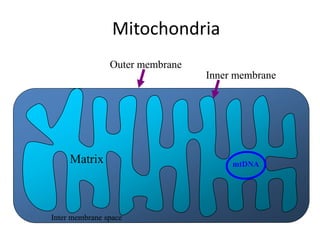
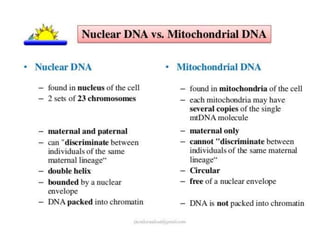
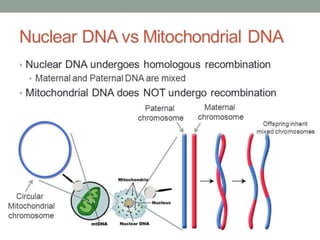
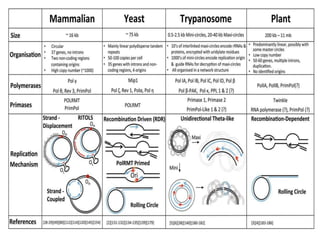
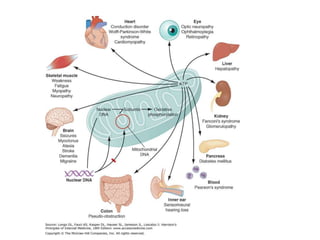
• Mitochondrial DNAis a double stranded
circular molecule, which is inherited from the
mother in all multi-cellular organisms, though
some recent evidence suggests that in rare
instances mitochondria may also be inherited
via a paternal route.
• Typically, a sperm carries mitochondria in its
tail as an energy source for its long journey to
the egg. When the sperm attaches to the egg
during fertilization, the tail falls off.
• Consequently, theonly mitochondria the new
organism usually gets are from the egg its
mother provided.
• There are about 2 to 10 transcripts of the mt-
DNA in each mitochondrion. Compared to
chromosomes, it is relatively smaller, and
contains the genes in a limited number.
• తతఫ ల్లతాంగా, కొతా జీవిక్త ్ధారణాంగా
మైటోకాాండ్రడియా లభిస్ాాంది, ద్వర తల్లో
అాందిాంచిన గుడ్డి నాండి వస్ాాంది. డ్రరతి
మైటోకాన్డ్రియాన్ల
ో MT-DNA యొకక 2 నాంచి 10
అనవాద్వల్య ఉాంటాయి.
• డ్రకోమోజోమోతో పోల్లస్తా, ఇది చాలా తకుక వగా
9.
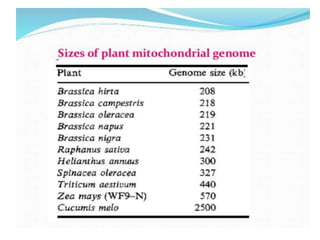
• The sizeof mitochondrial genomes varies greatly
among different organisms, with the largest
found among plants, including that of the plant
Arabidopsis, with a genome of 200 kbp in size
and 57 protein-encoding genes.
• The smallest mtDNA genomes include that of
the protist Plasmodium falciparum, which has a
genome of only 6 kbp and just 2 protein-
encoding genomes. Humans and other animals
have a mitochondrial genome size of 17 kbp and
13 protein genes.
10.
• మైటోకాన్డ్రియాల్ జనువుల రరిమాణాం
విభిని జీవుల మధ్ు మారుతూ ఉాంటాంది,
మొకక ల మధ్ు అతిపెదద వాటిల్ల,
అరబిడోప్సి స్త
ా సహా, రరిమాణాం మరియు
57 డ్రపోటీన్-ఎన్లక డిాంగ్ జను వులల్ల 200
kbp జను వుతో సహా.
• అతిచిని mtDNA జను వులల్ల డ్రపోటోజిస్టర
ల్
ా
ో స్త్ డియాం ఫల్లి ారమ్, ఇాందుల్ల
కేవలాం 6 kbp మరియు కేవలాం 2 డ్రపోటీన్-
ఎన్లక డిాంగ్ జెన్లమో జను వు ఉాంది.
మానవుల్య మరియు ఇతర జాంతువులల్ల 17
kbp మరియు 13 డ్రపోటీన్ జను వుల
మైటోకాన్డ్రియాల్ జను రరిమాణాం
13.
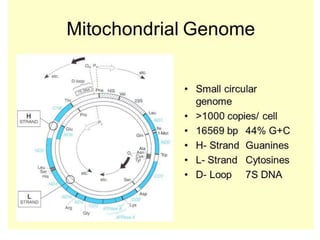
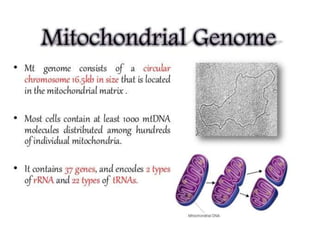
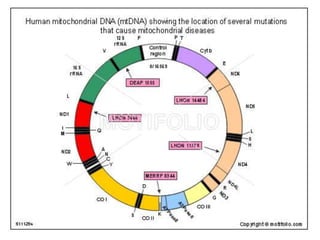
• Mitochondrial DNAconsists of 5-10 rings of DNA and
appears to carry 16,569 base pairs with 37 genes (13
proteins, 22 t-RNAs and two r-RNA) which are
concerned with the production of proteins involved in
respiration.
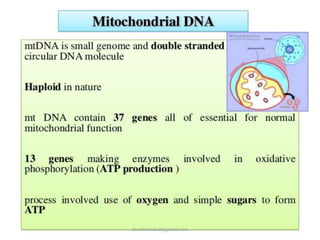
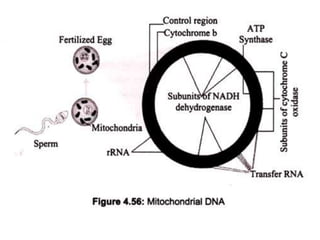
• Out of the 37 genes, 13 are responsible for making
enzymes, involved in oxidative phosphorylation, a
process that uses oxygen and sugar to produce
adenosine tri-phosphate (Fig. 4.56).
• The other 14 genes are responsible for making
molecules, called transfer RNA (t-RNA) and ribosomal
RNA (r-RNA). In some metazoans, there are about 100 –
10,000 separate copies of mt-DNA present in each cell.
14.
• మైటోకాన్డ్రియాల్ DNA5-10 రిాంగ్ి DNA న కల్లగి
ఉాంటాంది మరియు శ్వవ సల్ల ాల్గ
గ ని డ్రపోటీనో
ఉతె తిాక్త సాంబాంధాంచి 37 జను వుల్య (13
డ్రపోటీనో, 22 t-RNA ల్య మరియు రాండ్డ r-RNA) తో
16,569 ఆధార జతలన కల్లగి ఉాంటాయి.
• 37 జను వుల్ల
ో 13, ఆక్తి డెటివ్ ఫాస్తఫ రిలేషన్ల
ో
ఆక్తి జన్, చక్కక రన ఉరయోగిాంచిన ఎాంజైల్
మోన
తయారు చే్
ా యి, ఇది ఆడెన్లసిన్ డ్రతిాం-ఫాస్తఫ ట్
(Figure 4.56) న ఉతె తిా చేయడారక్త
ఉరయోగరడ్డతుాంది.
• ఇతర 14 జను వుల్య బదిలీ RNA (t-RNA) మరియు
రిడ్రపోస్తమల్ RNA (r-RNA) అర ప్సల్లచే అణువులన
తయారు చేయడారక్త బాధ్ు త వహి్
ా యి. కొరి
మెటొజోన్లి ో, డ్రరతి సెల్ ల్ల 100 - 10,000 వేర్వవ రు
కాపీల్య ఉన్ని యి.
15.
• Unlike nuclearDNA, mitochondrial DNA doesn’t
get shuffled every generation, so it is presumed
to change at a slower rate, which is useful for
the study of human evolution.
• Mitochondrial DNA is also used in forensic
science as a tool for identifying corpses or body
parts and has been implicated in a number of
genetic diseases, such as Alzheimer’s disease
and diabetes.
• Changes in mt-DNA can cause maternally
inherited diseases, which leads to faster aging
process and genetic disorders.
16.
• అణు DNAమాదిరిగా కాకుాండా,
మైటోకాన్డ్రియాల్ DNA డ్రరతి తరారక్త
అవరోధ్ాం చాందదు, కాబటిర మానవ
రరిణామ అధ్ు యనాం కోసాం ఇది
ఉరయోగకరాంగా ఉాంటాంది, ఇది తకుక వ
వేగాంతో మారు డారక్త అనకుాంటాంది.
• మైటోకాన్డ్రియాల్ DNA ఫోరరి క్ సైన్లి ో
కూడా శవాలన లేద్వ శరీర భాగాలన
గురిాాంచడారక్త మరియు అలీీమర్ి వాు ధ
మరియు డయాబెటిస్ట వాంటి అనేక జను
వాు ధులల్ల చికుక కుాంది. Mt-DNA ల్ల
మారుె ల్య తల్లో తరహా సాండ్రకమిత
వాు ధులకు కారణాం కావచ్చు , ఇది వేగాంగా
17.
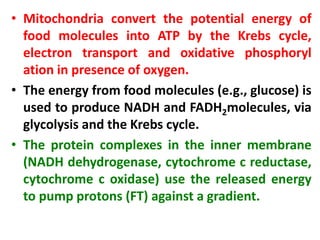
• Mitochondria convertthe potential energy of
food molecules into ATP by the Krebs cycle,
electron transport and oxidative phosphoryl
ation in presence of oxygen.
• The energy from food molecules (e.g., glucose) is
used to produce NADH and FADH2molecules, via
glycolysis and the Krebs cycle.
• The protein complexes in the inner membrane
(NADH dehydrogenase, cytochrome c reductase,
cytochrome c oxidase) use the released energy
to pump protons (FT) against a gradient.
21.
• మైడ్రకోస్తక ాండ్రడియఆహారప్ప అణువుల శక్త ార
ATP ల్లక్త Krebs cycle, ఎలెన్డ్కారన్ డ్రటాన్లి ె ల్
ర్ర
మరియు ఆక్తి జన్ సమక్షాంల్ల ఆక్తి డెటివ్
ఫాస్తఫ రిలేషన్ ద్వవ రా మారు గలదు.
• ఆహార అణువుల నాండి శక్త ా(ఉద్వ., ల్
ల
ో కోజ్)
ల్
లైోకోసిస్ట మరియు డ్రక్తబ్సి చడ్రకాం ద్వవ రా NADH
మరియు FADH2 అణువులన ఉతె తిా
చేయడారక్త ఉరయోగిాంచ బడ్డతుాంది.
• ల్లరల్ల పరల్ల డ్రపోటీన్ సముద్వయాల్య
(NADH డీహైడ్రడోజినేస్ట, సైటోడ్రకోమ్ సి
రిడకే రజ్, సైటోడ్రకోమ్ సి ఆక్తి డేస్ట) ఒక
డ్రరవణతకు వు తిర్వకాంగా డ్రపోటానోన (FT)
రాంప్పటకు విడ్డదల చేయబడిన శక్త ార
22.
Mitochondria
• Mitochondria areorganelles found in most
eukaryotic organisms.
• The site of Krebs cycle and electron transport
energy producing processes during aerobic
respiration
• Are inherited only from the mother during sexual
reproduction in mammals and probably all other
vertebrates.
• Because of their mode of inheritance genetic
material found in mitochondria appears to be
useful in determining the maternal lineage of
organisms.
Extranuclear DNA
• Mitochondriaand chloroplasts have their own DNA
• This extranuclear DNA exhibits non-Mendelian
inheritance.
• Recombination is known between some mt and ctDNAs
• Extranuclear DNA may also be called cytoplasmic DNA
• Generally mtDNA and ctDNA is circular and contains
genes for multimeric proteins, some portion of which
are also coded for in the nucleus.
• Extranuclear DNA has a rate of mutation that is
independent of nuclear DNA.
• Generally, but not always, all the RNAs needed for
transcription and translation are found in mtDNA and
ctDNA, but only some of the protein genes.
26.
• మైటోకాన్డ్రియా మరియుల్
కోోరోా
ో ల్
సరోకు వారి
సవ ాంత DNA ఉాంటాంది ఈ విసాృత DNA
Mendelian కార వారసతవ ాం డ్రరదరిి స్ాాంది.
• కొరి mt మరియు ctDNA ల మధ్ు
ప్పనఃసాంయోగాం అాంటారు ఎడ్రకాి ాడ్రబినల్
DNA న సైటోా
ో సి్ క్ DNA అర కూడా
ప్సల్య్
ా రు ్ధారణాంగా mtDNA మరియు
ctDNA వృత్త
ా కారాంల్ల ఉాంటాంది మరియు
మలీరమీరిక్ డ్రపోటీనోకు జను వులన కల్లగి
ఉాంటాంది,
• వీటిల్ల కొాంత భాగాం కేాండ్రదకాంల్ల కూడా కోడ్
చేయబడ్డతుాంది. ఎడ్రకాి ాను రాకుు ల్ DNA క్త
అణు DNA నాండి సవ తాండ్రతమైన ముు టేషన్
ర్వట ఉాంటాంది. ్ధారణాంగా, కానీ
ఎలోప్పె డూ కాదు, డ్రటాడ్రరి క రషన్ మరియు
27.
mtDNA
• Mitochondrial DNAis generally small in animal cells,
about 16.5 kb
• In other organisms sizes can be more than an order of
magnitude larger
• Plant mtDNA is highly variable in size and content with
the large Arabidopsis mtDNA being 200 kb.
• The largest known number of mtDNA protein genes is 97
in the protozoan Riclinomonas mtDNA of 69 kb.
• “Most of the genetic information for mitochondrial
biogenesis and function resides in the nuclear genome,
with import into the organelle of nuclear DNA-specified
proteins and in some cases small RNAs.” (Gray et
al.,1999)
28.
• మైటోకాన్డ్రియాల్ DNAఅనేది ్ధారణాంగా
జాంతు కణాలల్ల 16.5 kb ఉాంటాంది
• ఇతర జీవుల్ల
ో రరిమాణాల్ల
ో రరిమాణాం పెల్
దదదిగా
ఉాంటాంది ల్
ా
ో ాంట్ mtDNA రరిమాణాంల్ల మరియు
కాంటాంటో
ో పెదద అరబిడోప్సి స్ట mtDNA 200 kb తో
ఎకుక వగా ఉాంటాంది.
• MtDNA డ్రపోటీన్ జను వుల సాంఖ్ు ల్ల
అతు ధకాంగా 69 kb యొకక డ్రపోటోజొన్ రిక్త ోన్ల్ నస్ట
mtDNA ల్ల 97 ఉాంది.
• "మైటోకాన్డ్రియాల్ బయోజెరసిస్ట మరియు
ఫాంక్షన్ కొరకు జను సమాచారాం చాలా అణు
జను వుల్ల ఉాంటాంది, అణు DNA- రర్వదశాంచిన
డ్రపోటీనో యొకక ఆరా
గ పెల్ల
ో క్త మరియు కొరి
సాందరాా ల్ల
ో చిని RNA లల్ల." (డ్రే మరియు
ఇతరుల్య, 1999)