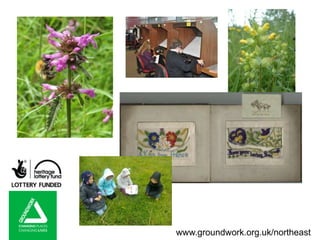
www.groundwork.org.uk/northeast
GROUNDWORKCHANGING PLACES CHANGING LIVES
Miners’ Memorial
Meadows
Lesley Silvera
Senior Project Officer
www.groundwork.org.uk/northeast
Miners’ Memorial Meadows
This project will focus on two aspects –
historical investigation into Northumbrian
miners and their families in WW1 and the
creation of beautiful wildflower places to
reflect and remember miners in WW1.
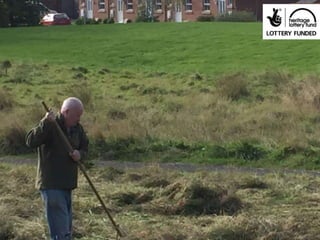
www.groundwork.org.uk/northeast
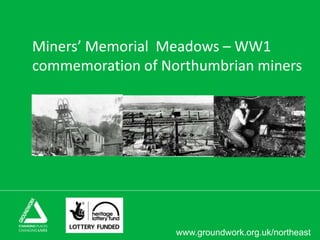
Miners’ Memorial Meadows – WW1
commemoration of Northumbrian miners
www.groundwork.org.uk/northeast
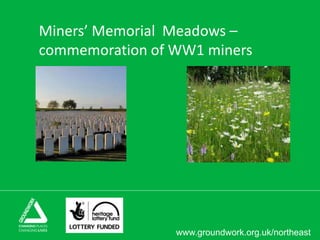
Miners’ Memorial Meadows –
commemoration of WW1 miners
www.groundwork.org.uk/northeast
Quote from Lieutenant Nixon, N’land
Fuseliers War Diaries 1915
At 7a.m. on the 1st July …..two and a half platoons of “B” company, noted diggers, all of

them Northumberland and Durham colliery men, detailed to dig a communication
trench across No Man’s Land to the Boche lines as soon as the attacking force had
passed over. It was a lovely morning, bright sun and very little wind. The guns kept up
an incessant roar, but above us hovered a lark quite undisturbed.
www.groundwork.org.uk/northeast
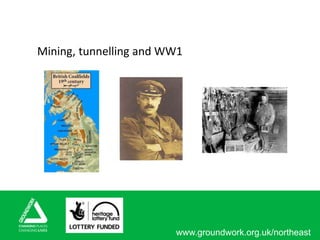
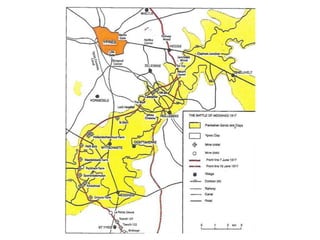
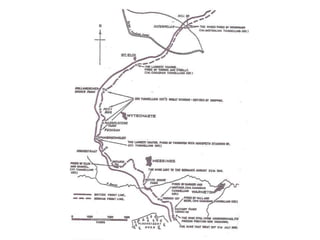
Mining, tunnelling and WW1
www.groundwork.org.uk/northeast
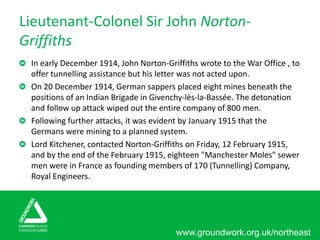
Lieutenant-Colonel Sir John Norton-
Griffiths
In early December 1914, John Norton-Griffiths wrote to the War Office , to
offer tunnelling assistance but his letter was not acted upon.
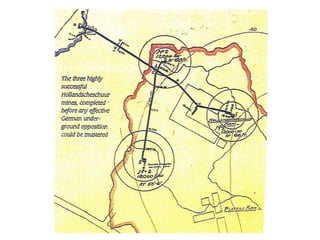
On 20 December 1914, German sappers placed eight mines beneath the
positions of an Indian Brigade in Givenchy-lès-la-Bassée. The detonation
and follow up attack wiped out the entire company of 800 men.
Following further attacks, it was evident by January 1915 that the
Germans were mining to a planned system.
Lord Kitchener, contacted Norton-Griffiths on Friday, 12 February 1915,
and by the end of the February 1915, eighteen "Manchester Moles" sewer
men were in France as founding members of 170 (Tunnelling) Company,
Royal Engineers.
www.groundwork.org.uk/northeast
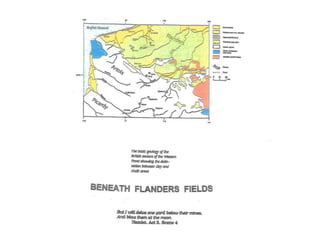
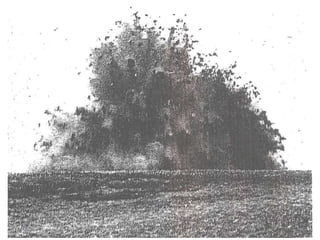
But I will delve one yard below
their mines,
And blow them at the moon
Hamlet, Act 3, Scene 4
www.groundwork.org.uk/northeast
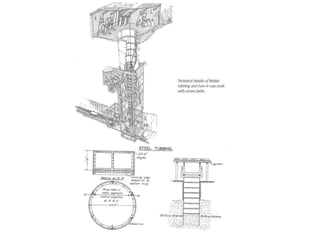
Tunnelling Strategy 1915-18
8 tunnelling companies created
By mid 1916, the British Army had around
25,000 trained tunnellers
Most were volunteers from coal mining
communities
50,000 acted as ‘attached infantry’, moving
the earth out of the tunnels
www.groundwork.org.uk/northeast
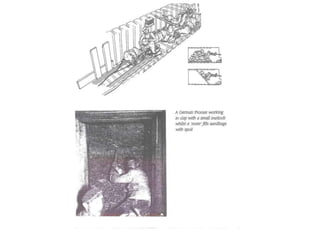
Tasks
Digging tunnels and subways
Saps (narrow trenches to approach enemy trenches)
Cable trenches
Underground chambers for signals
Chambers for medical services
It was offensive and defensive activity
www.groundwork.org.uk/northeast
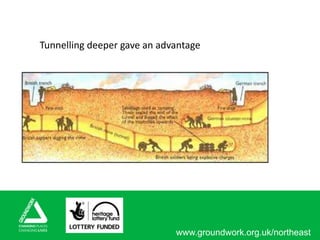
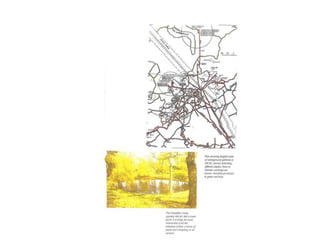
Tunnelling deeper gave an advantage
www.groundwork.org.uk/northeast
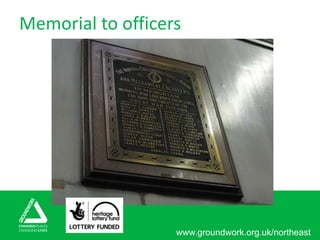
Memorial to officers
www.groundwork.org.uk/northeast
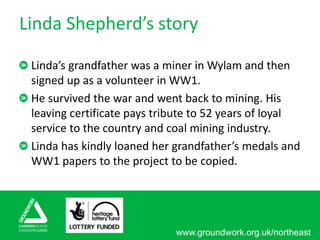
Linda Shepherd’s story
Linda’s grandfather was a miner in Wylam and then
signed up as a volunteer in WW1.
He survived the war and went back to mining. His
leaving certificate pays tribute to 52 years of loyal
service to the country and coal mining industry.
Linda has kindly loaned her grandfather’s medals and
WW1 papers to the project to be copied.
www.groundwork.org.uk/northeast
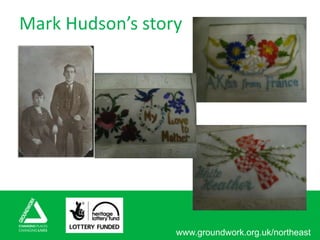
Mark Hudson’s story
www.groundwork.org.uk/northeast
Karen Blore’s stories
Karen’s grandfather was
captured and, in the
POW camp in Limburg,
met an Australian who
then wrote as he was
leaving for Australia.
Her grandfather’s cousin
was killed in action on
20 Oct 2918.
www.groundwork.org.uk/northeast
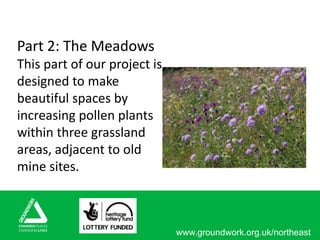
Part 2: The Meadows
This part of our project is
designed to make
beautiful spaces by
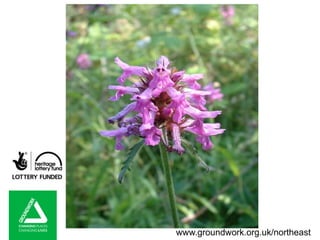
increasing pollen plants
within three grassland
areas, adjacent to old
mine sites.
www.groundwork.org.uk/northeast
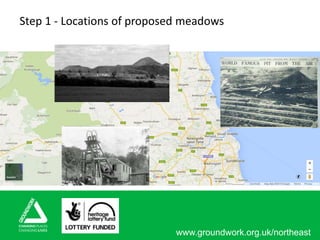
Step 1 - Locations of proposed meadows
www.groundwork.org.uk/northeast
How does it work?
3 meadow sites were chosen with NCC’s permission
We want to increase the native species for each particular site
ie. a woodland glade, a reclaimed coal site and woodland
clearing
We have involved local schools and volunteers
Year 1 surveys have been done
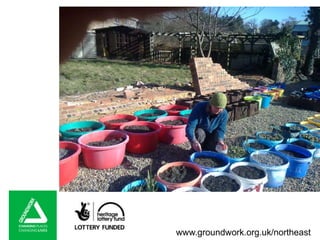
Seed collection and propagation is underway, planting out is
due in autumn 2017
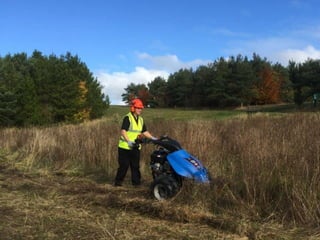
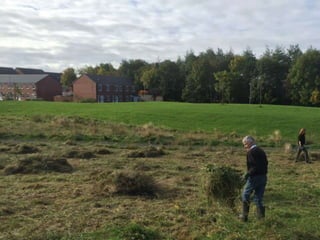
Mowing, management and interpretation is underway
www.groundwork.org.uk/northeast
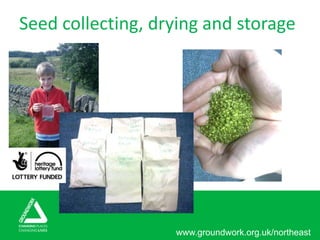
Seed collecting, drying and storage
www.groundwork.org.uk/northeast
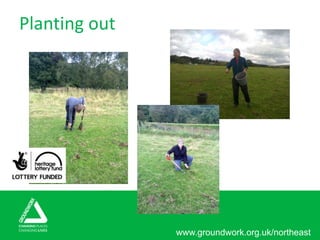
Planting out
www.groundwork.org.uk/northeast
Important meadow
visitors - bees,
hoverflies and
butterflies…
www.groundwork.org.uk/northeast
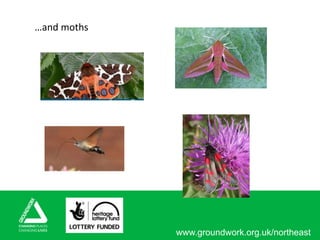
…and moths
www.groundwork.org.uk/northeast
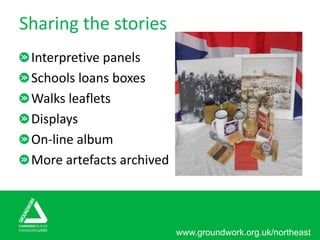
Sharing the stories
Interpretive panels
Schools loans boxes
Walks leaflets
Displays
On-line album
More artefacts archived
www.groundwork.org.uk/northeast
Thank you for listening, are there
any questions?
Lesley Silvera
UNIUN DEPOT
Front St
Pegswood
NE61 6RG
01670514876

Miners Memorial Meadows: Lesley Silvera (Groundwork)

Editor's Notes

  • #3 Two aspects of this HLF funded project with many partners – Woodhorn archivists, The Mining Institute, Active Northumberland, Northumberland County Council, Friends of groups, NE War Memorial Project, family history society, individual researchers, botanists, volunteers.
  • #4 “I am acutely aware of the speed at which nearly all traces of our once great mining industry have been erased. It is incredible considering its once all pervasive nature in the life of the north east. A dawning realization of this loss to the community makes a project such as you propose a very fitting addition to the memory of those mines and the miners who fought in the Great War and who, in some cases, made the ultimate sacrifice.” William Bell, past President of the North of England Institute of Mining and Mechanical Engineers
  • #5 Janet Brown of the North East War Memorial project wrote: “The CWGC cemeteries with their uniform layout of headstones convey to me a serenity which is in total contrast to the horrors experienced by those who died. I think that the wild meadows you propose will convey a feeling of peace which is in high contrast to the conditions of those who worked underground, either as miners or sappers.”
  • #7 Lieutenant-Colonel Sir John Norton-Griffiths In early December 1914, Norton-Griffiths wrote to the War Office that his tunnelling workers could be useful for the war effort, but his letter was not acted upon.[6] However, on 20 December 1914, German sappers placed eight mines beneath the positions of an Indian Brigade in Givenchy-lès-la-Bassée. The detonation and followup attack wiped out the entire company of 800 men,[7][8] and following further attacks, it was evident by January 1915 that the Germans were mining to a planned system. Lord Kitchener, contacted Norton-Griffiths on Friday, 12 February 1915, and by the end of the month eighteen "Manchester Moles" sewer men were in France as founding members of 170 (Tunnelling) Company, Royal Engineers.[9]
  • #25 Mark Hudson’s grandfather was John Thomas Hudson born in 1895; one of 12 and poor. He moved with his family to Ashington to work in the pit from the age of 12. He volunteered aged 18 and signed up to fight in WW1 and sent beautiful silk embroidered post cards from the trenches to his mother and the girl he loved. He survived the war to marry Mark’s grandmother in 1920. Mark has an album of beautiful silk embroidered post cards which was left to him from his grandmother.
  • #28 3 meadows will be improved; one each in Prudhoe, Pegswood and Ashington Life stories of WW1 Northumbrian miners researched Education in at least 3 schools 3 artefacts handling collections made available for schools Talks, walks, events Training in archival research Training in wildflower seed ID and collection and meadow enhancement techniques Interpretation – panels and leaflets, an album Development of partnerships
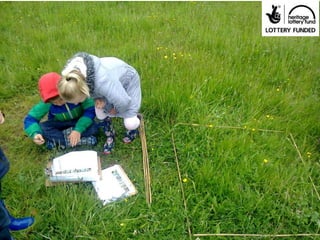
  • #30 This is Pegswood First School working on mapping vegetation, using quadrats and marking species presence/ absence and abundance in spring 2016.
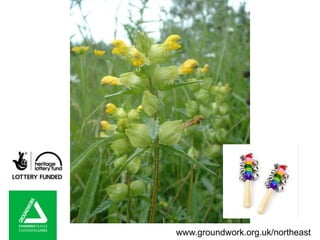
  • #31 Yellow rattle is a semi-parasitic so good at reducing the vigour of grasses. Known as ‘poverty’ in the North pennines. Named after its seed shape as an old fashioned baby’s rattle…
  • #32 Yellow rattle is a semi-parasitic so good at reducing the vigour of grasses. Known as ‘poverty’ in the North pennines. Named after its seed shape as an old fashioned baby’s rattle…
  • #41 Garden tiger (general visitor) The striking caterpillars are large, black and covered in long, dense, black and ginger hairs: they are commonly called 'Woolly Bears'. They feed on Stinging Nettles, Dock leaves and many garden plants. Elephant hawk moth commonly found in parks and gardens, as well as woodland edges, rough grassland and sand dunes. The caterpillars are seen from July to September and are very characteristic: greyish-green or brown with two enormous, black eyespots towards the head. When disturbed, they swell up to show these spots and scare-off predators. The caterpillars feed on willowherbs, fuchsia and bedstraw, and the adults feed on nectar. The caterpillars overwinter as chrysalides, hidden amongst low vegetation or in the soil. Hummingbird hawk (I’ve seen it on valerian) Hummingbird hawk-moths can be easily seen in gardens, parks, meadows, bushes, and woodland edge, where the preferred food plants grow (honeysuckle, red valerian and many others). Their larvae usually feed on bedstraws or madders (Rubia) but have been recorded on other Rubiaceae and Centranthus, Stellaria, and Epilobium.[2] Adults are particularly fond of nectar-rich flowers with a long and narrow calyx, since they can then take advantage of their long proboscis and avoid competition from other insects. Examples of such plants include Centranthus, Jasminum, Buddleia, Nicotiana, Primula, Viola, Syringa, Verbena, Echium, Phlox, and Stachys.[2] They are reported to trap-line, that is, to return to the same flower beds at about the same time each day. Emporer on ling
  • #43 Some of the project work that is underway….