MINDFUL METRICS
DMITRY SHARKOV
METRICS!
1. metrics are good
2. metrics are bad
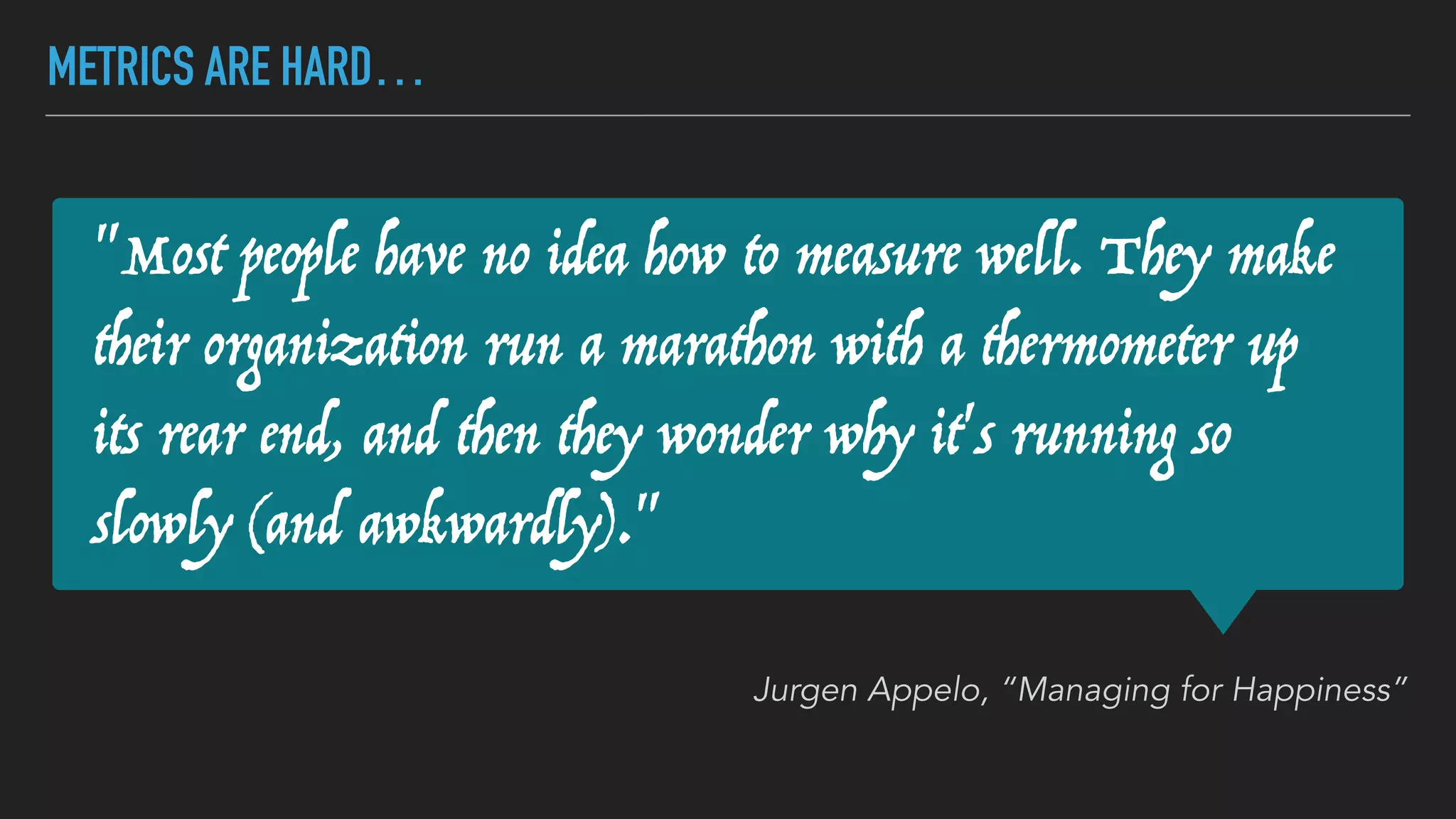
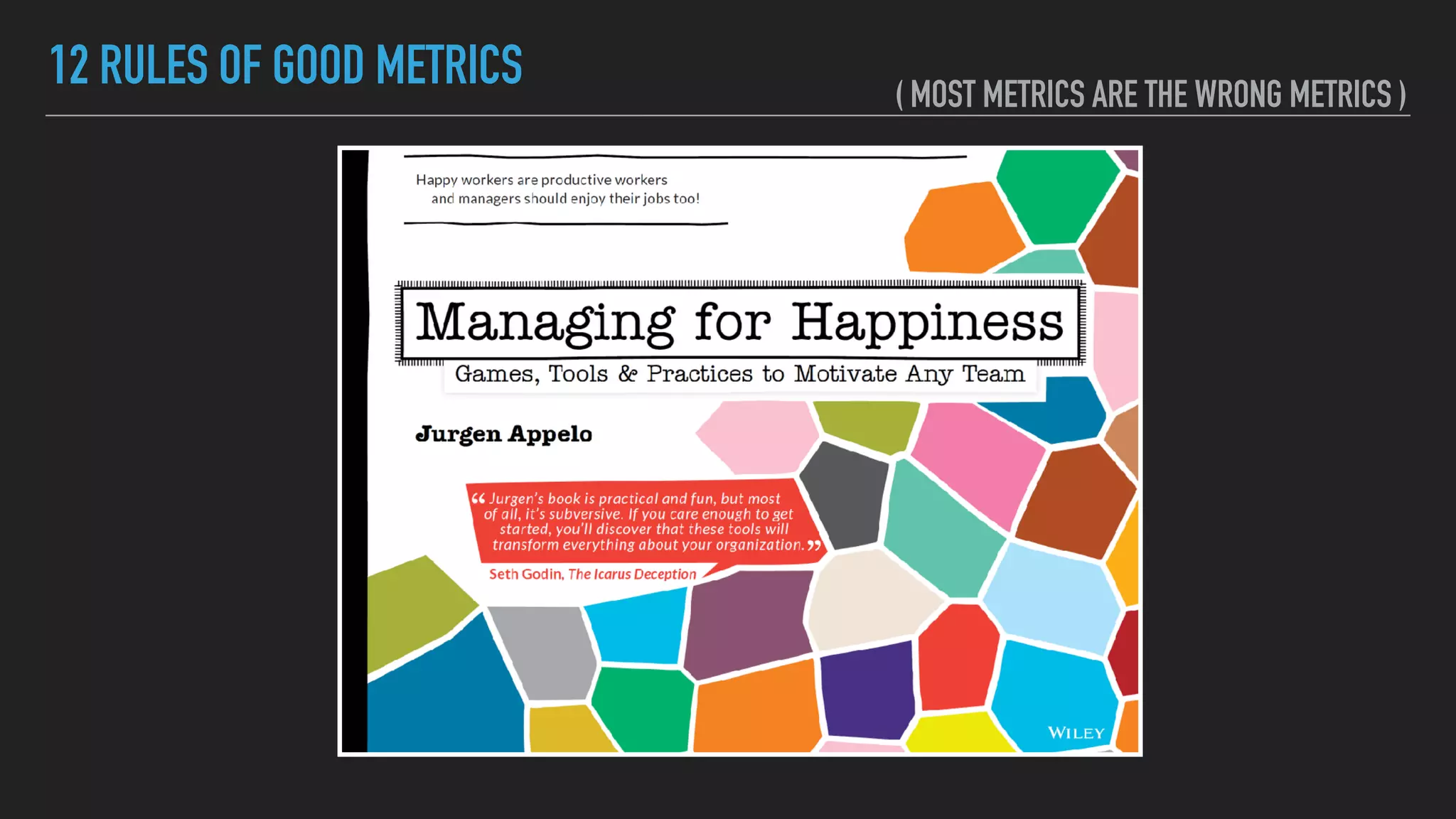
"Most people have no idea how to measure well. They make
their organization run a marathon with a thermometer up
its rear end, and then they wonder why it's running so
slowly (and awkwardly)."
Jurgen Appelo, “Managing for Happiness”
METRICS ARE HARD…
MOST METRICS ARE HARMFUL IF…
The wrong metrics are harmful.
Most metrics are the wrong metrics.
DEFINE: METRICS
metric: (n) measurement of characteristics that are
countable or quantifiable
TYPES OF METRICS
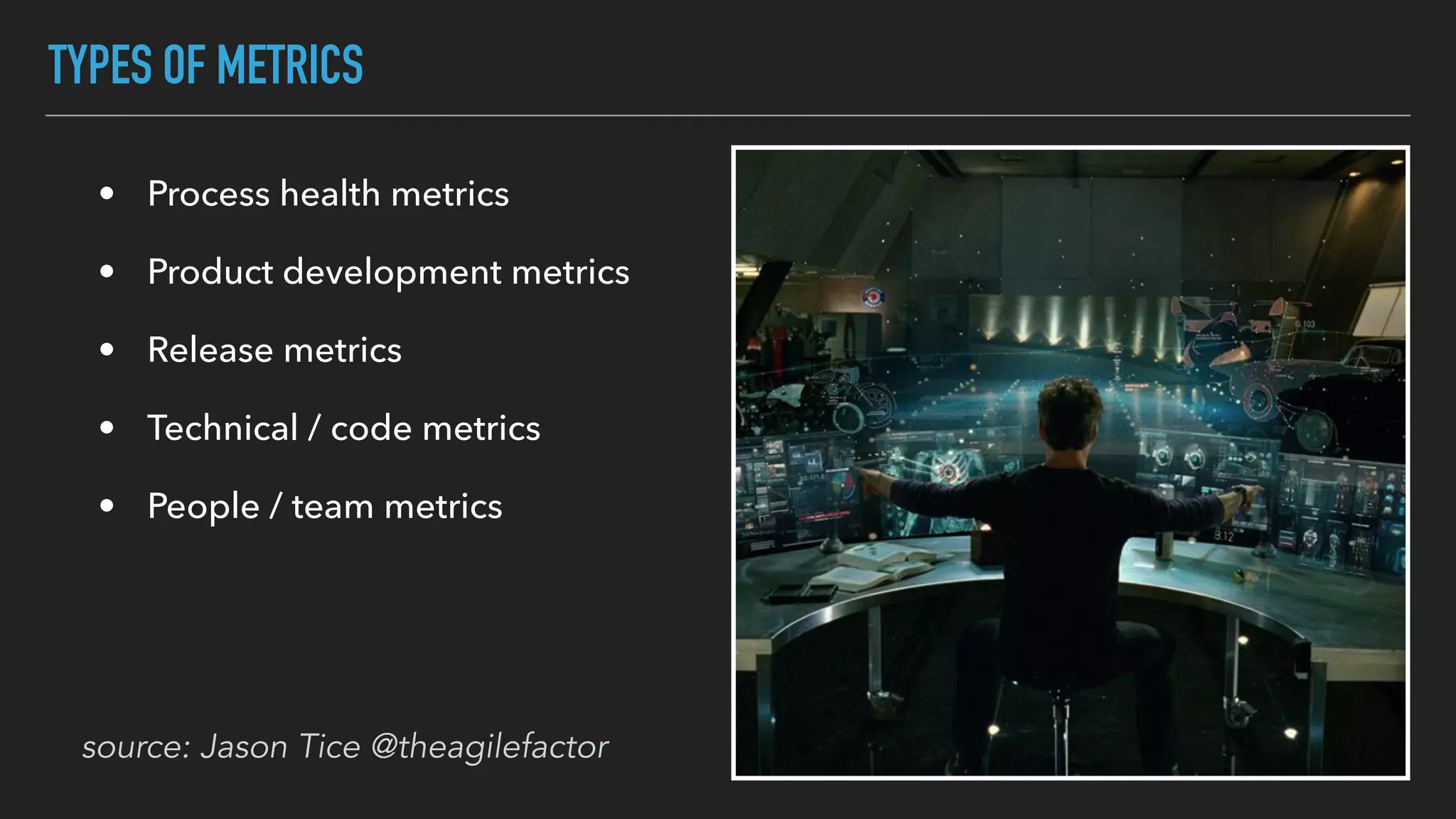
• Process health metrics
• Product development metrics
• Release metrics
• Technical / code metrics
• People / team metrics
source: Jason Tice @theagilefactor
TYPES OF METRICS (2)
• Productivity
• Predictability
• Responsiveness
• Quality
source: asynchrony.com
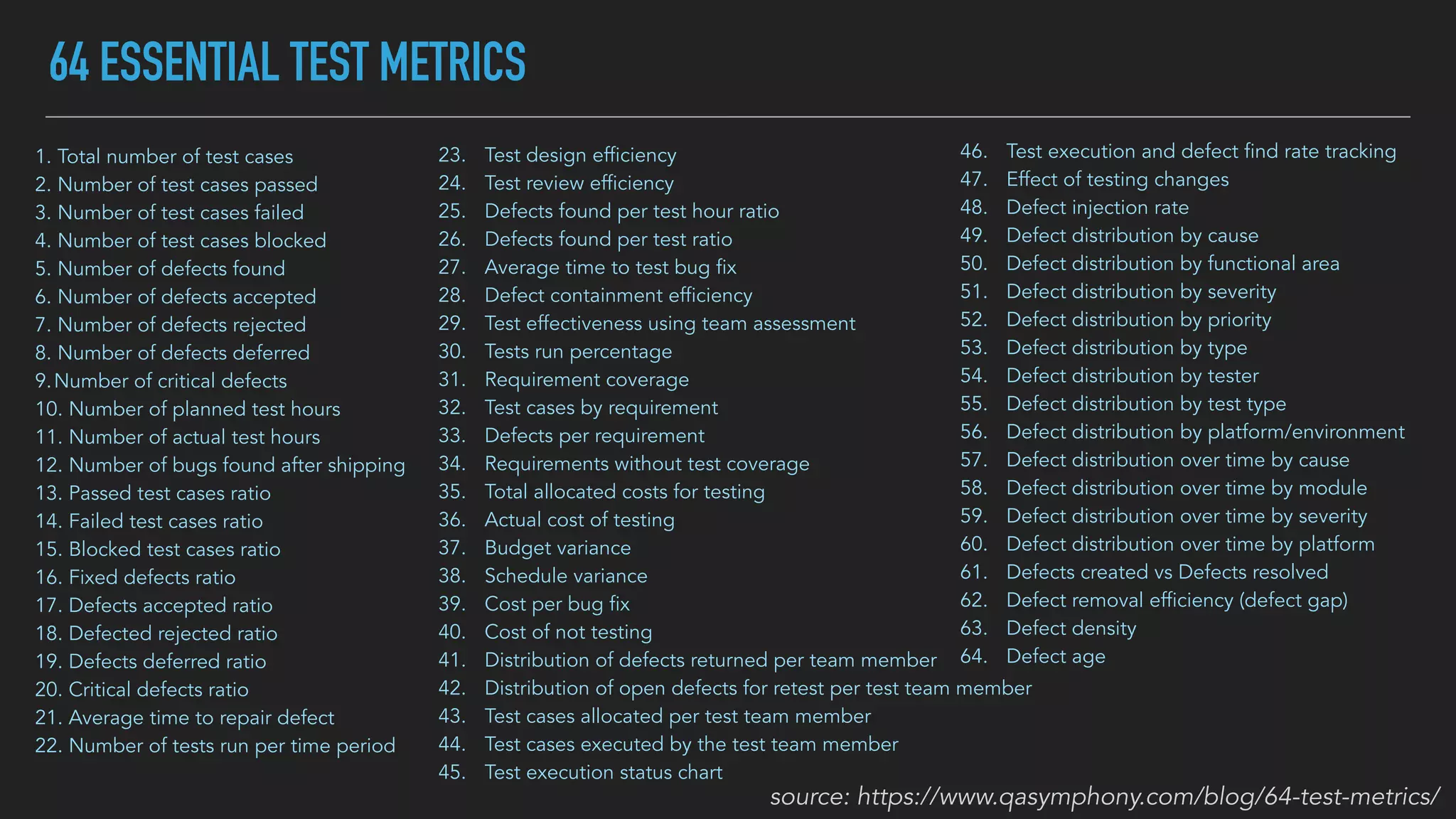
64 ESSENTIAL TEST METRICS
1. Total number of test cases
2. Number of test cases passed
3. Number of test cases failed
4. Number of test cases blocked
5. Number of defects found
6. Number of defects accepted
7. Number of defects rejected
8. Number of defects deferred
9.Number of critical defects
10. Number of planned test hours
11. Number of actual test hours
12. Number of bugs found after shipping
13. Passed test cases ratio
14. Failed test cases ratio
15. Blocked test cases ratio
16. Fixed defects ratio
17. Defects accepted ratio
18. Defected rejected ratio
19. Defects deferred ratio
20. Critical defects ratio
21. Average time to repair defect
22. Number of tests run per time period
23. Test design efficiency
24. Test review efficiency
25. Defects found per test hour ratio
26. Defects found per test ratio
27. Average time to test bug fix
28. Defect containment efficiency
29. Test effectiveness using team assessment
30. Tests run percentage
31. Requirement coverage
32. Test cases by requirement
33. Defects per requirement
34. Requirements without test coverage
35. Total allocated costs for testing
36. Actual cost of testing
37. Budget variance
38. Schedule variance
39. Cost per bug fix
40. Cost of not testing
41. Distribution of defects returned per team member
42. Distribution of open defects for retest per test team member
43. Test cases allocated per test team member
44. Test cases executed by the test team member
45. Test execution status chart
46. Test execution and defect find rate tracking
47. Effect of testing changes
48. Defect injection rate
49. Defect distribution by cause
50. Defect distribution by functional area
51. Defect distribution by severity
52. Defect distribution by priority
53. Defect distribution by type
54. Defect distribution by tester
55. Defect distribution by test type
56. Defect distribution by platform/environment
57. Defect distribution over time by cause
58. Defect distribution over time by module
59. Defect distribution over time by severity
60. Defect distribution over time by platform
61. Defects created vs Defects resolved
62. Defect removal efficiency (defect gap)
63. Defect density
64. Defect age
source: https://www.qasymphony.com/blog/64-test-metrics/
WHAT IS HARM? ( THE WRONG METRICS ARE HARMFUL )
AMAZON, WHOLE FOODS, AND METRICS
source: gizmodo.com
“They say many employees are terrified
of losing their jobs under the new system
and that they spend more hours mired in
OTS-related paperwork than helping
customers.”
“Seeing someone cry at work is
becoming normal.”
( THE WRONG METRICS ARE HARMFUL )
AMAZON, WHOLE FOODS, AND METRICS
source: gizmodo.com
( THE WRONG METRICS ARE HARMFUL )
INCREASING VELOCITY IN BOSTON ( THE WRONG METRICS ARE HARMFUL )
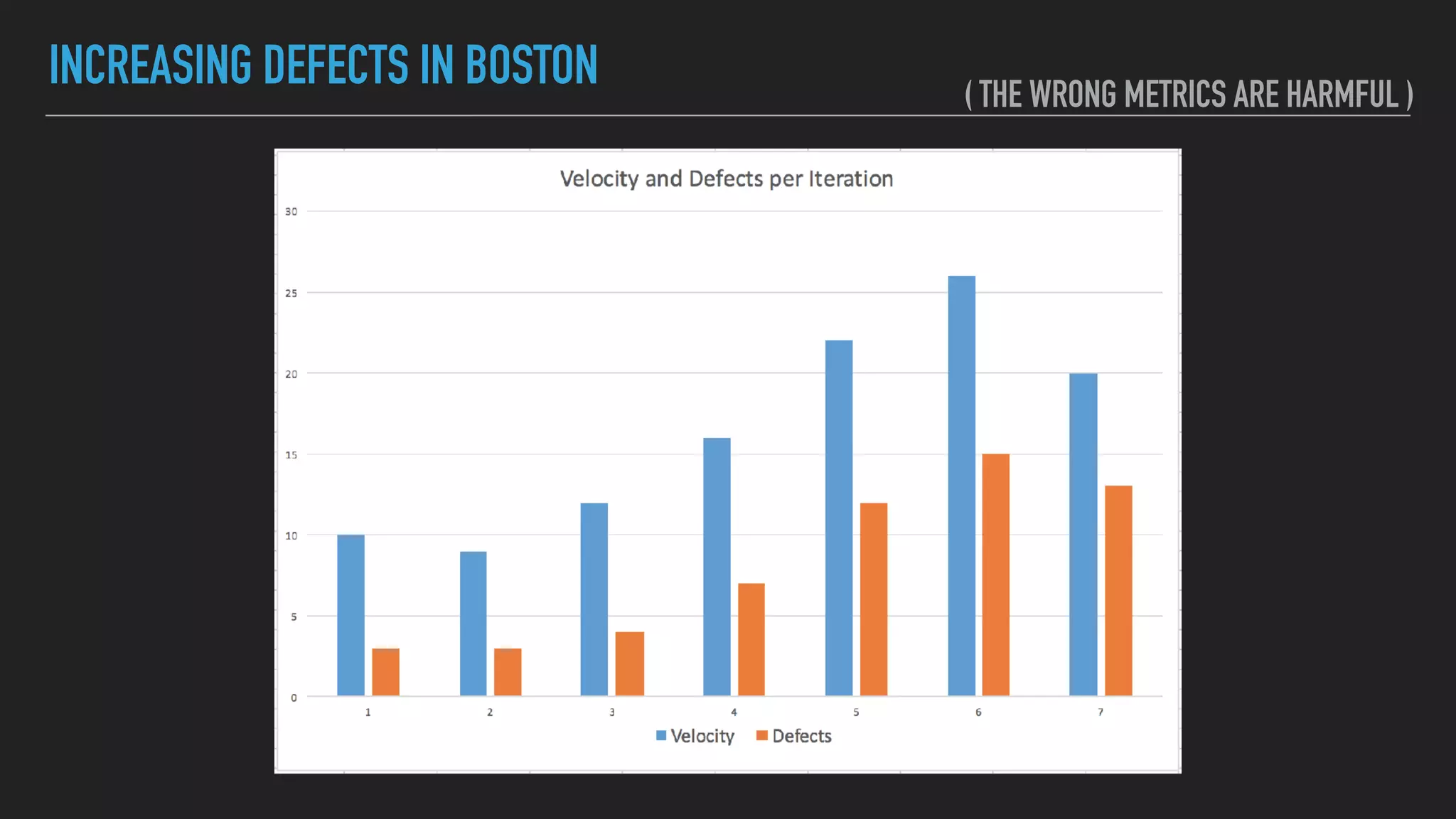
INCREASING DEFECTS IN BOSTON ( THE WRONG METRICS ARE HARMFUL )
IN HARM’S WAY
Icons made by Freepik from www.flaticon.com
Product Process People
( THE WRONG METRICS ARE HARMFUL )
WHAT METRICS DO…
“What gets measured, gets done.”
“What gets measured, improves.”
( THE WRONG METRICS ARE HARMFUL )
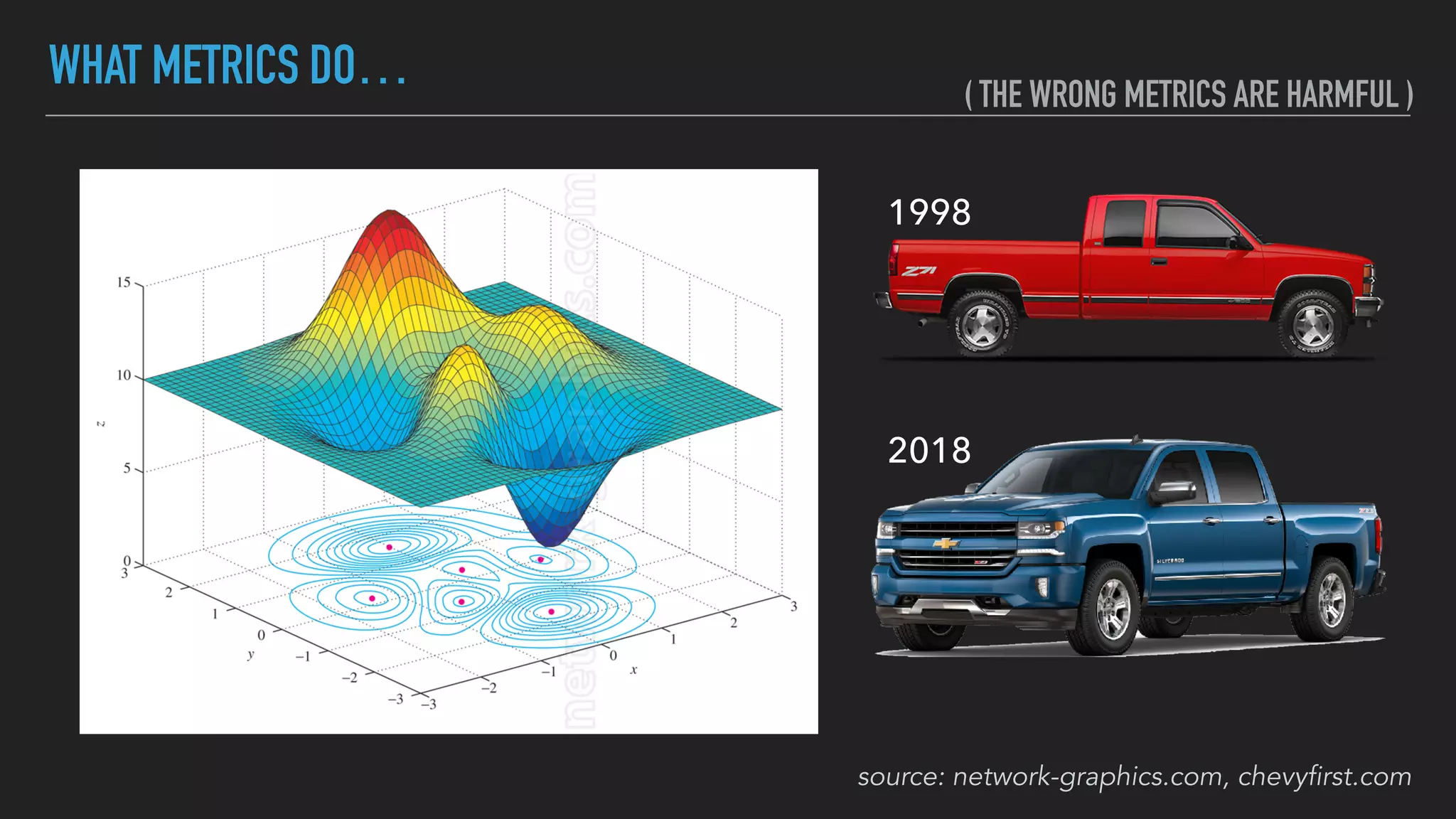
WHAT METRICS DO…
source: network-graphics.com, chevyfirst.com
( THE WRONG METRICS ARE HARMFUL )
1998
2018
INCENTIVES…
“When a measure becomes a target, it ceases to be a good metric.”
Goodhart’s Law
“As soon as you set a target for others, they will pursue the target
instead of the original purpose.”
Jurgen Appelo, “Managing for Happiness”
( THE WRONG METRICS ARE HARMFUL )
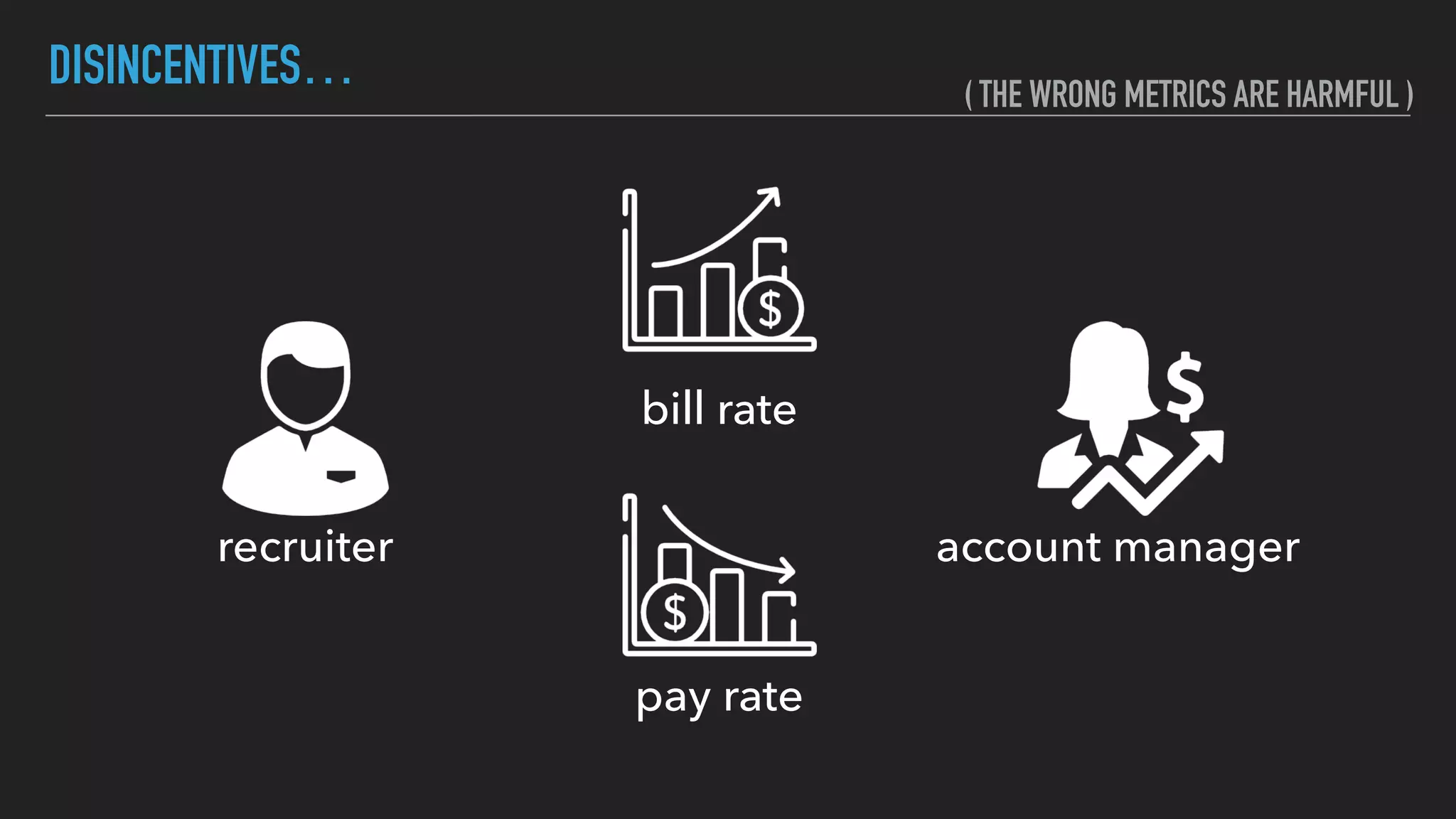
DISINCENTIVES…
bill rate
pay rate
recruiter account manager
( THE WRONG METRICS ARE HARMFUL )
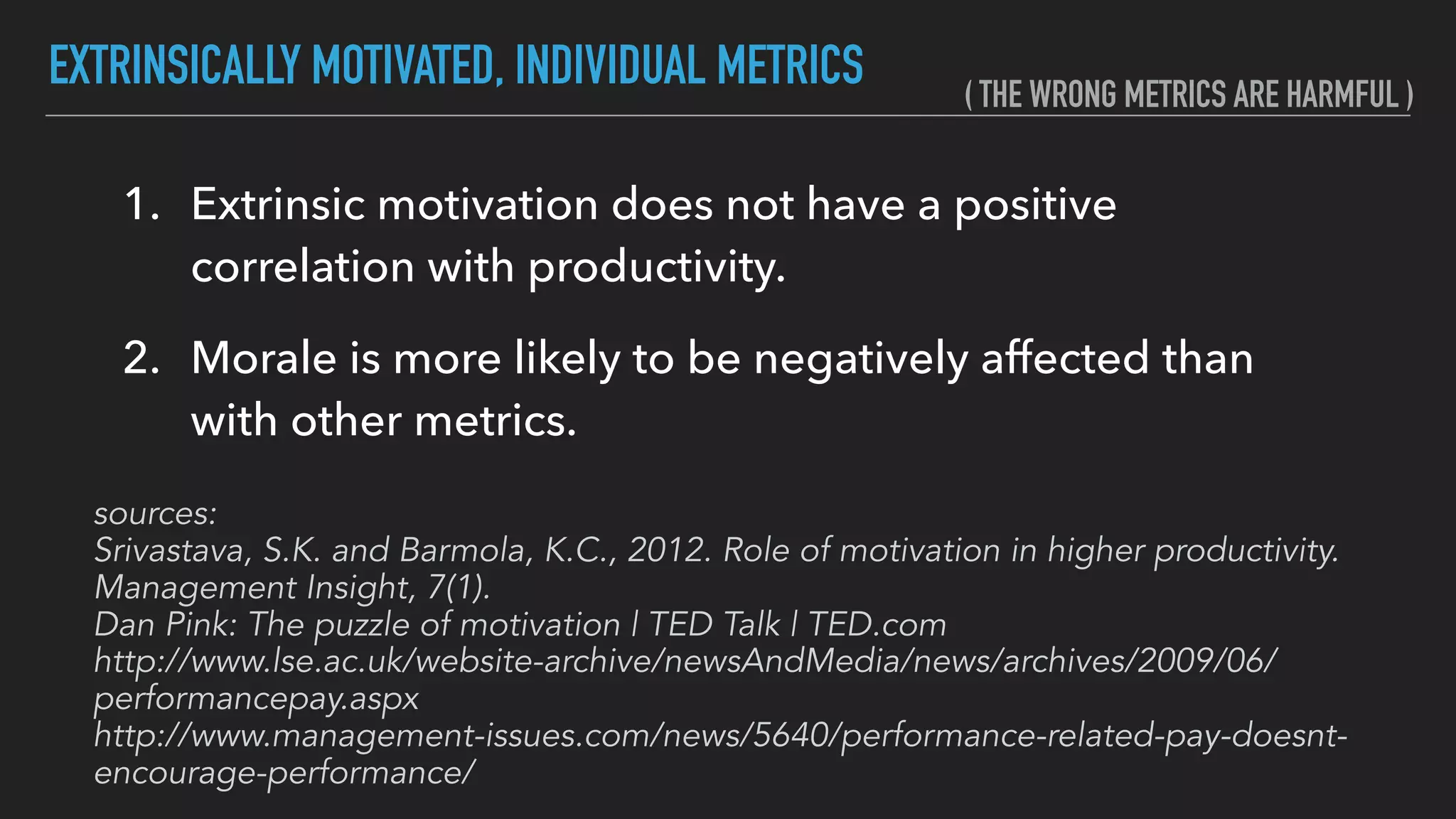
EXTRINSICALLY MOTIVATED, INDIVIDUAL METRICS
1. Extrinsic motivation does not have a positive
correlation with productivity.
2. Morale is more likely to be negatively affected than
with other metrics.
sources:

Srivastava, S.K. and Barmola, K.C., 2012. Role of motivation in higher productivity.
Management Insight, 7(1).
Dan Pink: The puzzle of motivation | TED Talk | TED.com
http://www.lse.ac.uk/website-archive/newsAndMedia/news/archives/2009/06/
performancepay.aspx
http://www.management-issues.com/news/5640/performance-related-pay-doesnt-
encourage-performance/
( THE WRONG METRICS ARE HARMFUL )
"Gathering and analyzing data is a burden the team bears
at the expense of other work"
Me, today
THE WRONG METRICS ARE HARMFUL.
“If you torture the data long enough, it will confess.”
Ronald H. Coase
(20th century British economist)
MOST METRICS ARE THE WRONG METRICS.
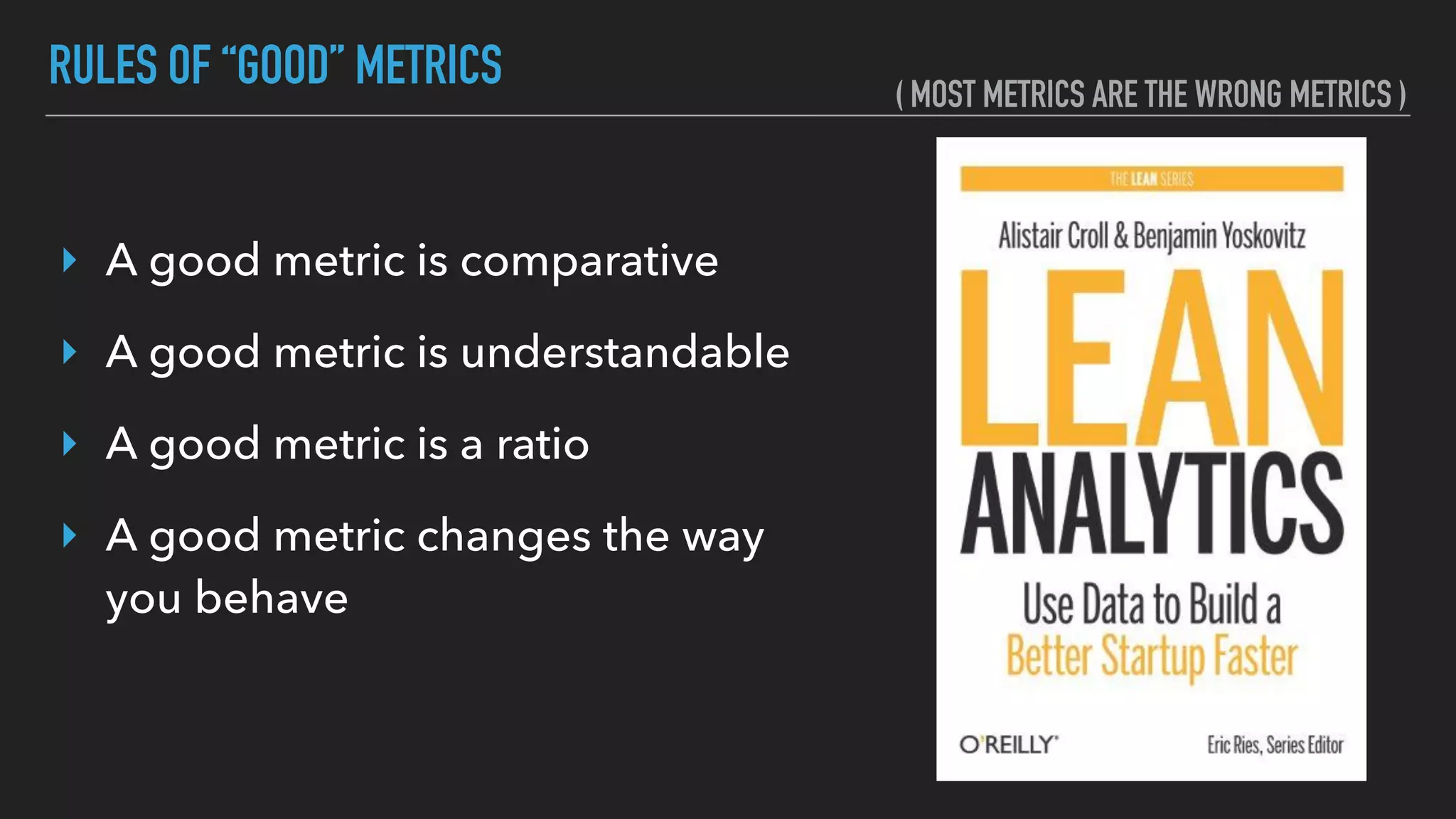
RULES OF “GOOD” METRICS
‣ A good metric is comparative
‣ A good metric is understandable
‣ A good metric is a ratio
‣ A good metric changes the way
you behave
( MOST METRICS ARE THE WRONG METRICS )
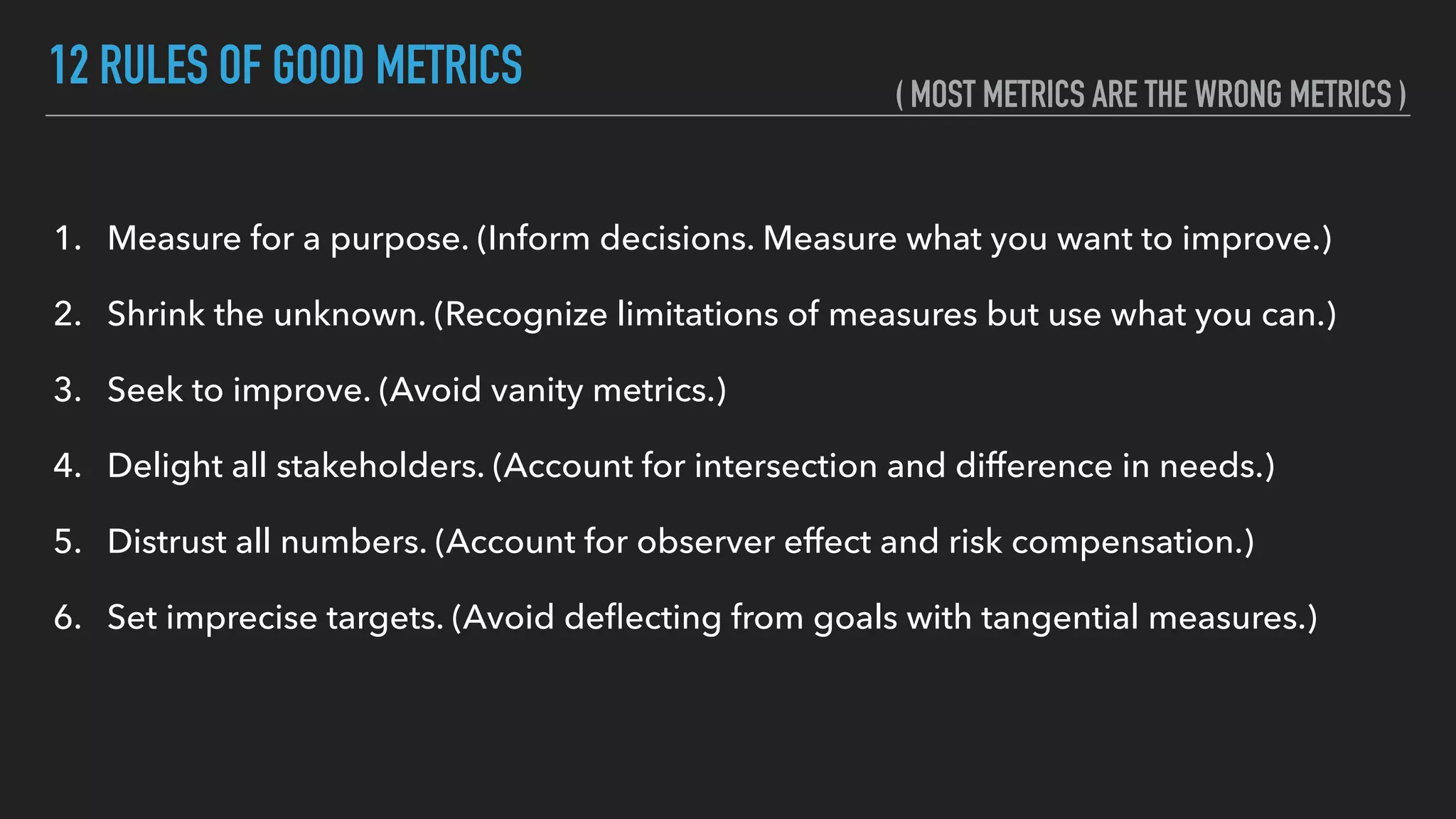
12 RULES OF GOOD METRICS ( MOST METRICS ARE THE WRONG METRICS )
12 RULES OF GOOD METRICS
1. Measure for a purpose. (Inform decisions. Measure what you want to improve.)
2. Shrink the unknown. (Recognize limitations of measures but use what you can.)
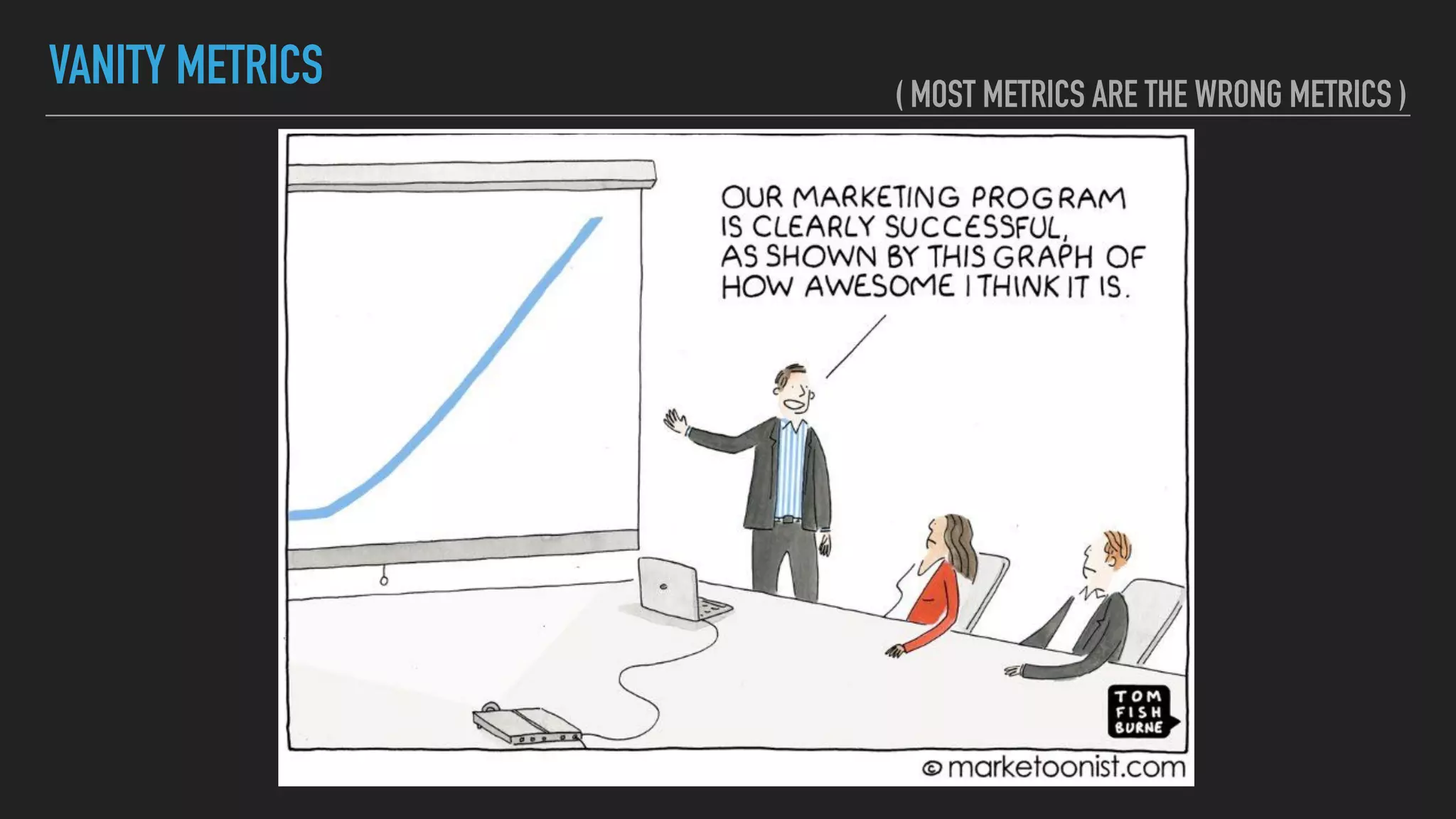
3. Seek to improve. (Avoid vanity metrics.)
4. Delight all stakeholders. (Account for intersection and difference in needs.)
5. Distrust all numbers. (Account for observer effect and risk compensation.)
6. Set imprecise targets. (Avoid deflecting from goals with tangential measures.)

( MOST METRICS ARE THE WRONG METRICS )
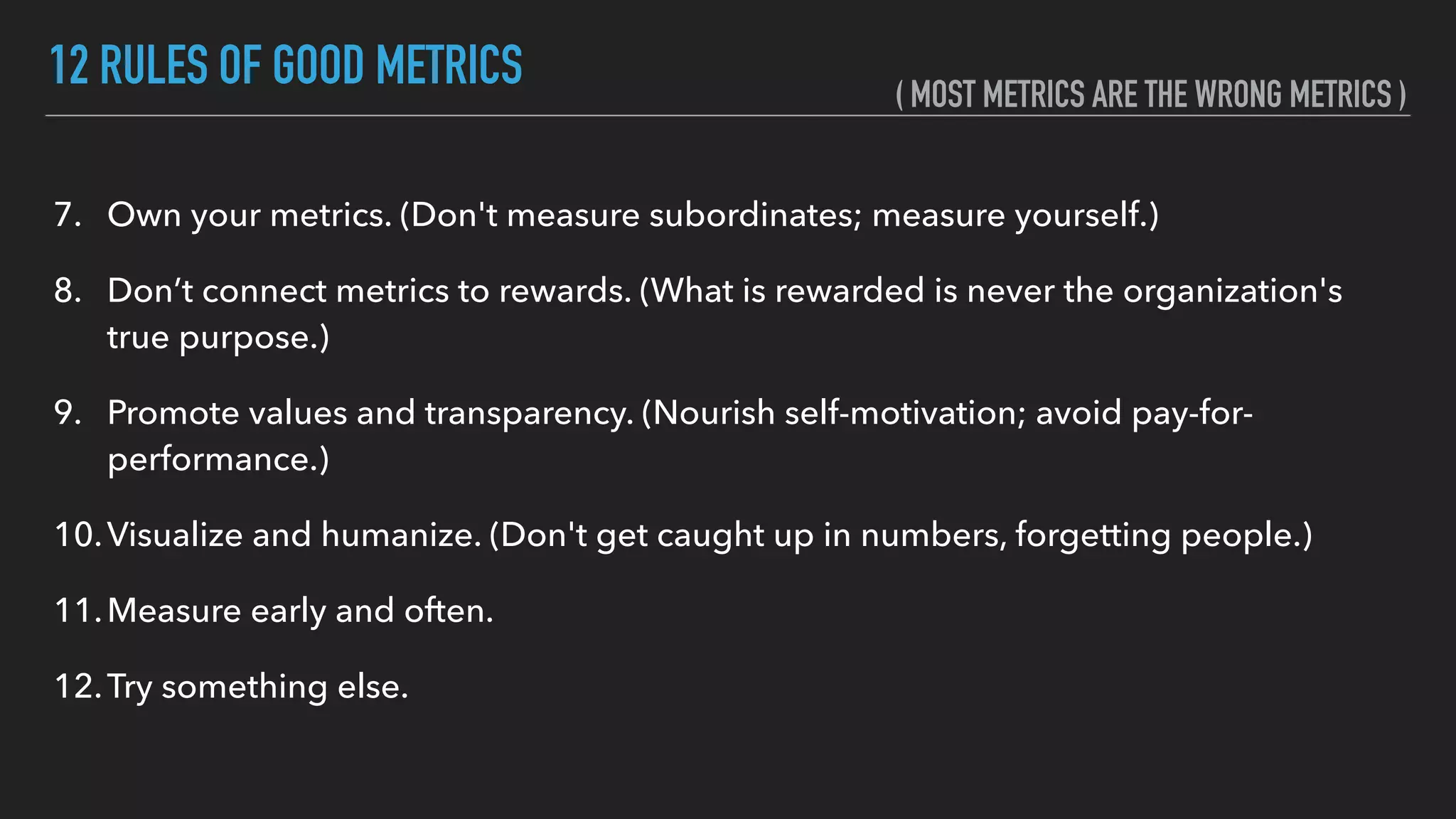
12 RULES OF GOOD METRICS
7. Own your metrics. (Don't measure subordinates; measure yourself.)
8. Don’t connect metrics to rewards. (What is rewarded is never the organization's
true purpose.)
9. Promote values and transparency. (Nourish self-motivation; avoid pay-for-
performance.)
10.Visualize and humanize. (Don't get caught up in numbers, forgetting people.)
11.Measure early and often.
12.Try something else.
( MOST METRICS ARE THE WRONG METRICS )
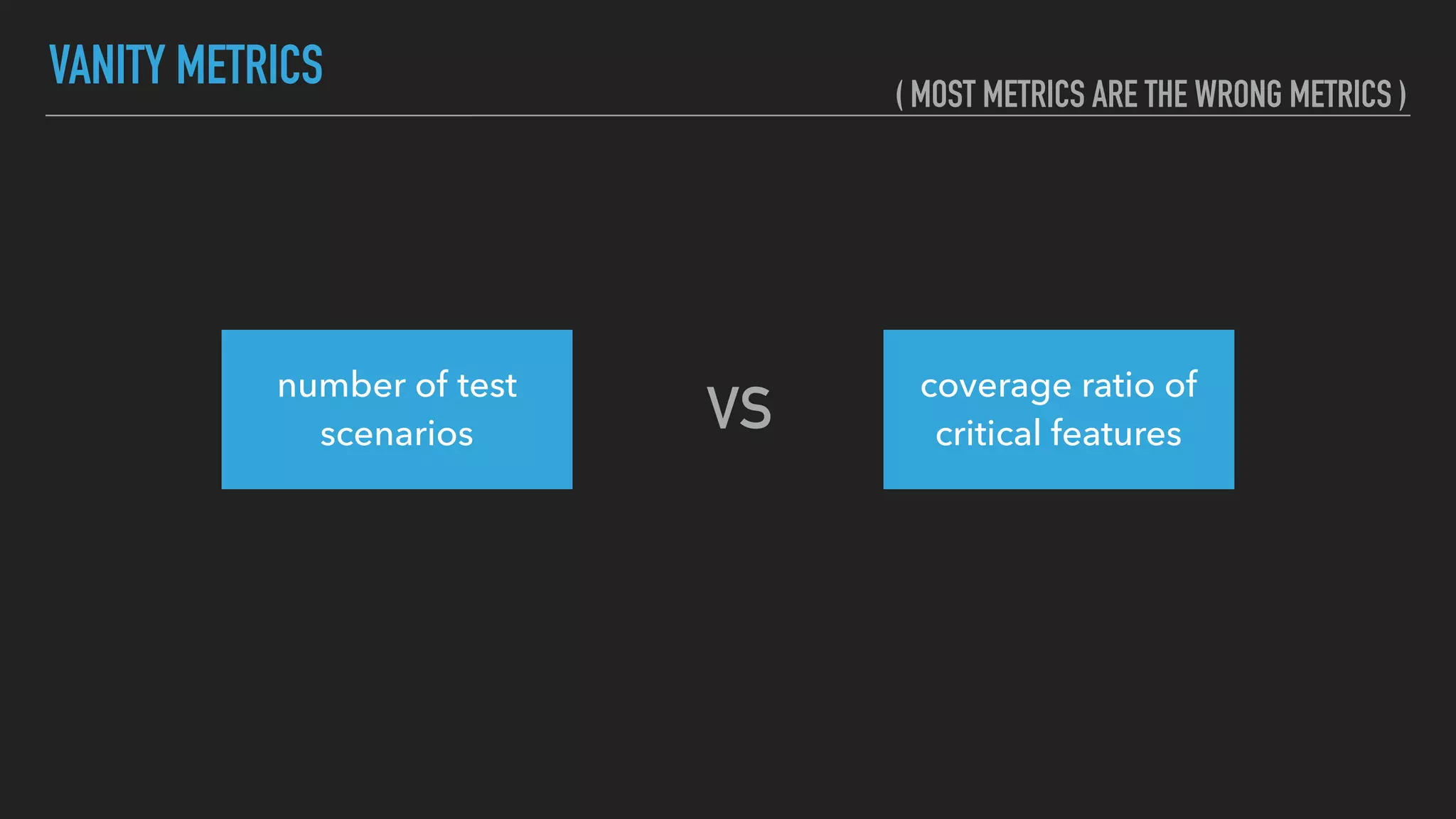
VANITY METRICS ( MOST METRICS ARE THE WRONG METRICS )
number of test
scenarios
coverage ratio of
critical featuresVS
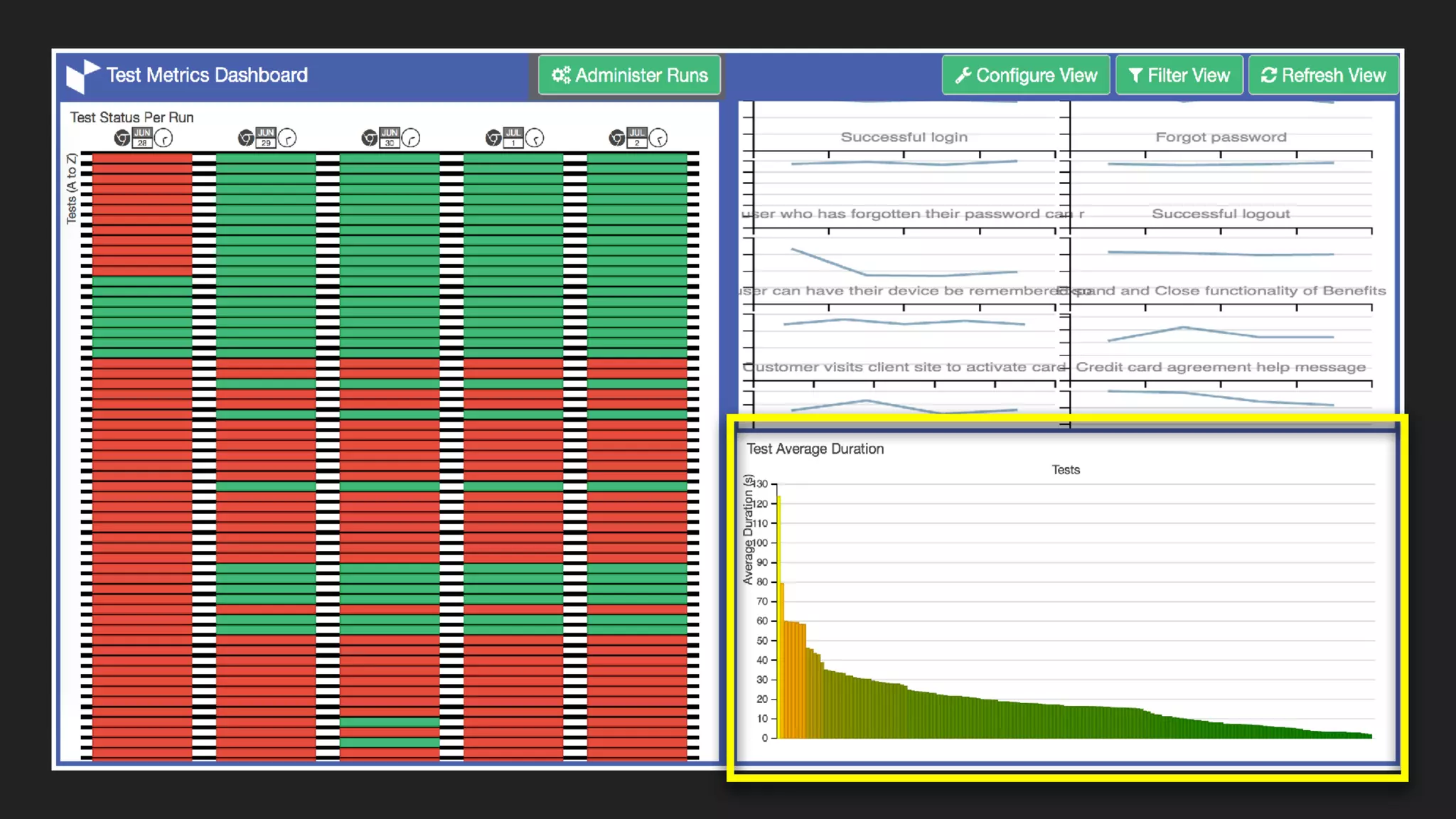
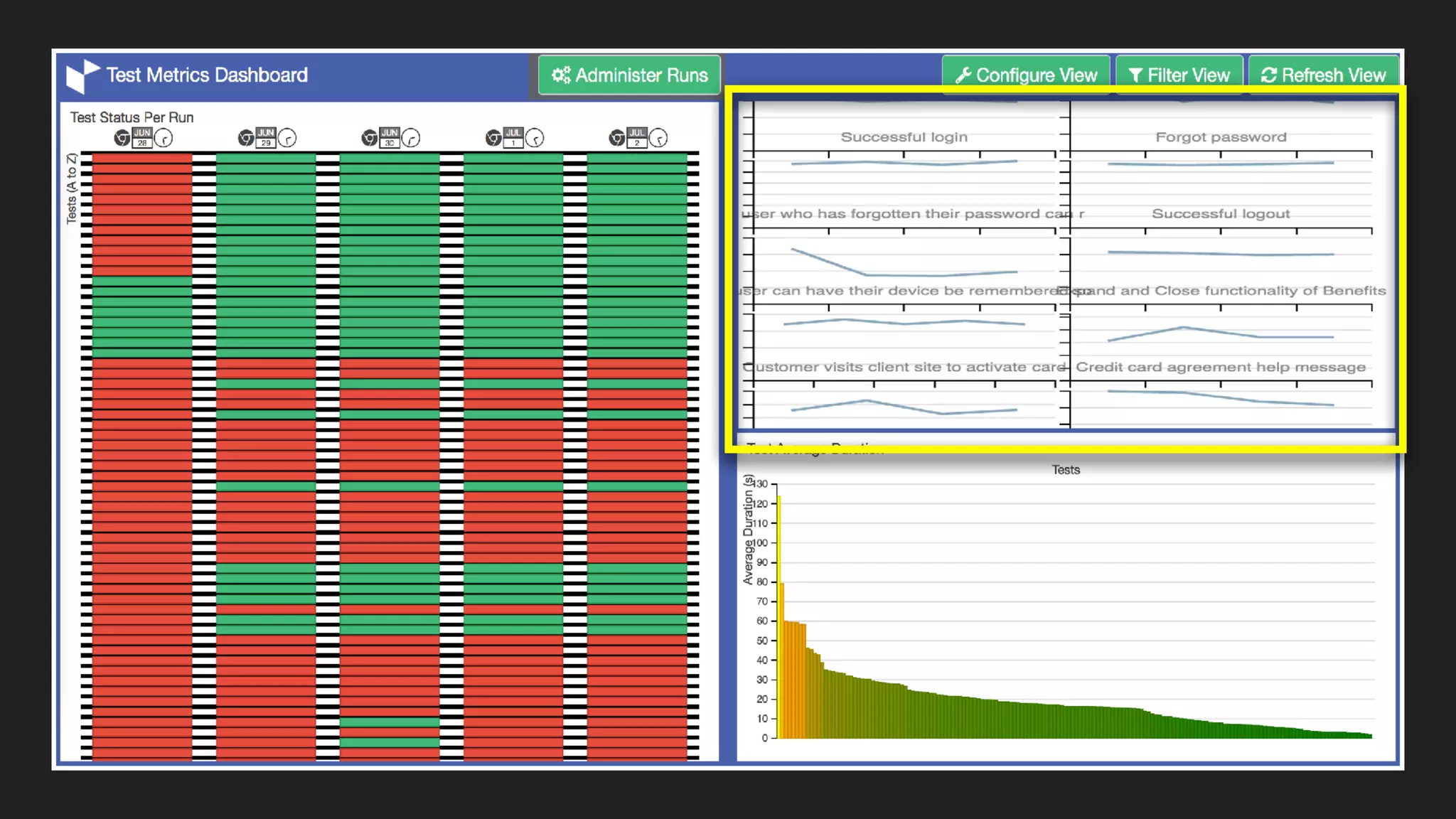
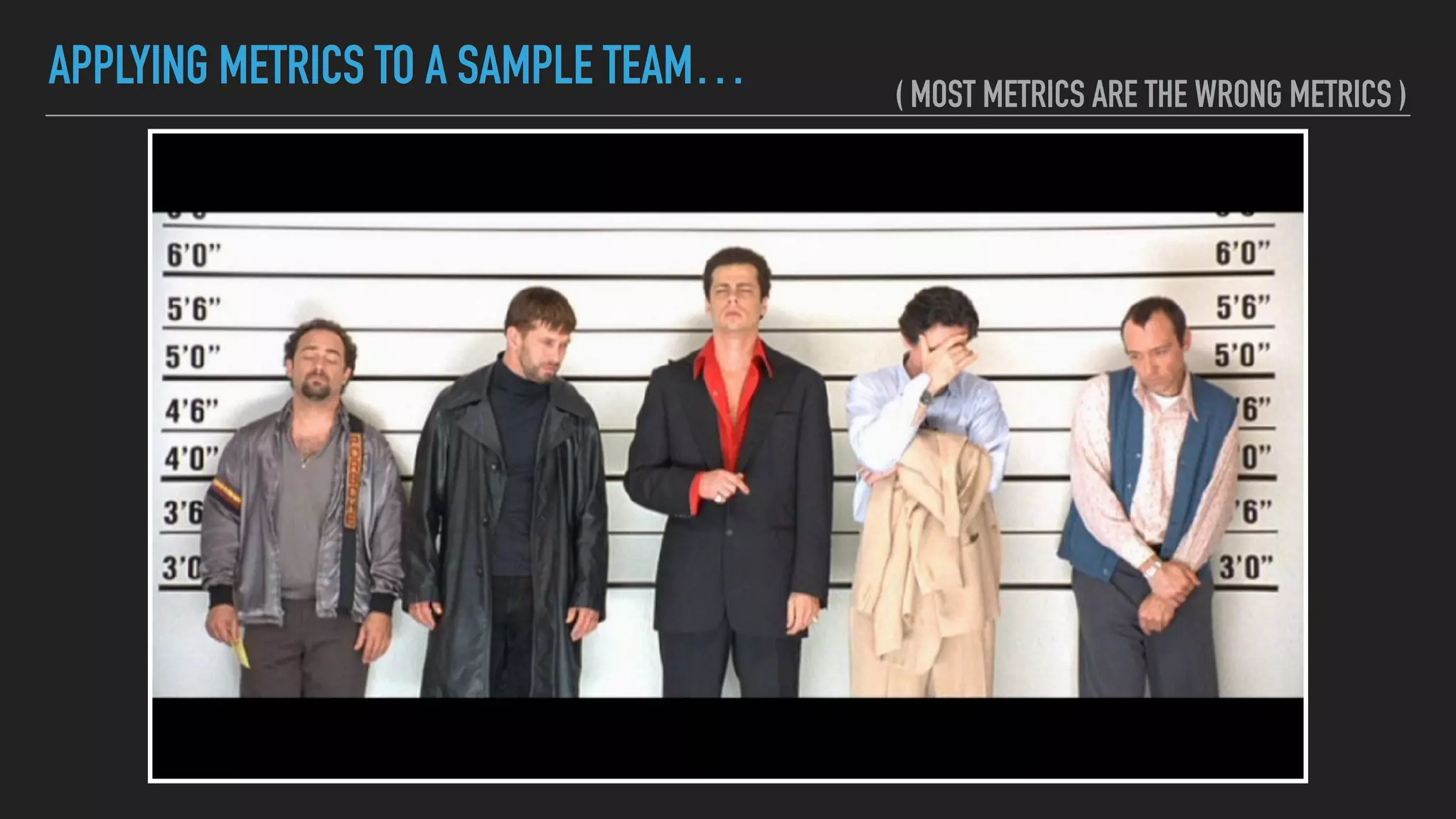
APPLYING METRICS TO A SAMPLE TEAM… ( MOST METRICS ARE THE WRONG METRICS )
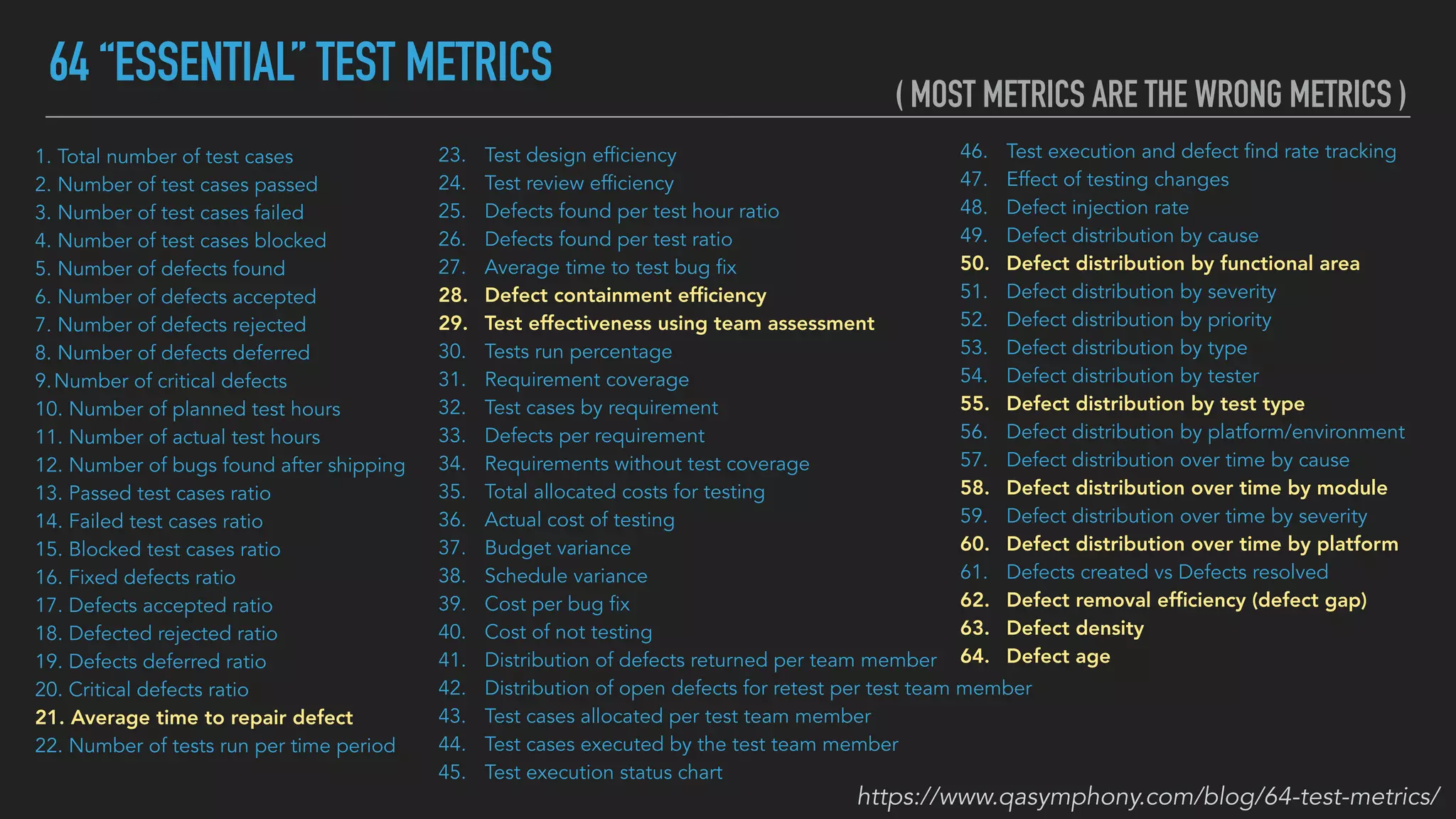
64 “ESSENTIAL” TEST METRICS
1. Total number of test cases
2. Number of test cases passed
3. Number of test cases failed
4. Number of test cases blocked
5. Number of defects found
6. Number of defects accepted
7. Number of defects rejected
8. Number of defects deferred
9.Number of critical defects
10. Number of planned test hours
11. Number of actual test hours
12. Number of bugs found after shipping
13. Passed test cases ratio
14. Failed test cases ratio
15. Blocked test cases ratio
16. Fixed defects ratio
17. Defects accepted ratio
18. Defected rejected ratio
19. Defects deferred ratio
20. Critical defects ratio
21. Average time to repair defect
22. Number of tests run per time period
23. Test design efficiency
24. Test review efficiency
25. Defects found per test hour ratio
26. Defects found per test ratio
27. Average time to test bug fix
28. Defect containment efficiency
29. Test effectiveness using team assessment
30. Tests run percentage
31. Requirement coverage
32. Test cases by requirement
33. Defects per requirement
34. Requirements without test coverage
35. Total allocated costs for testing
36. Actual cost of testing
37. Budget variance
38. Schedule variance
39. Cost per bug fix
40. Cost of not testing
41. Distribution of defects returned per team member
42. Distribution of open defects for retest per test team member
43. Test cases allocated per test team member
44. Test cases executed by the test team member
45. Test execution status chart
46. Test execution and defect find rate tracking
47. Effect of testing changes
48. Defect injection rate
49. Defect distribution by cause
50. Defect distribution by functional area
51. Defect distribution by severity
52. Defect distribution by priority
53. Defect distribution by type
54. Defect distribution by tester
55. Defect distribution by test type
56. Defect distribution by platform/environment
57. Defect distribution over time by cause
58. Defect distribution over time by module
59. Defect distribution over time by severity
60. Defect distribution over time by platform
61. Defects created vs Defects resolved
62. Defect removal efficiency (defect gap)
63. Defect density
64. Defect age
https://www.qasymphony.com/blog/64-test-metrics/
( MOST METRICS ARE THE WRONG METRICS )
OK THEN…
How do we identify those metrics that are useful and unlikely to
"go bad" or be misused?

How do we prevent those that seem useful from "going bad" or
being misused?
"..it's no wonder that an organization which measures very
little and just runs around blindly usually goes much
faster, until it runs into a tree, hopefully not with a
thermometer in its mouth."
Jurgen Appelo, “Managing for Happiness”
GOOD METRICS
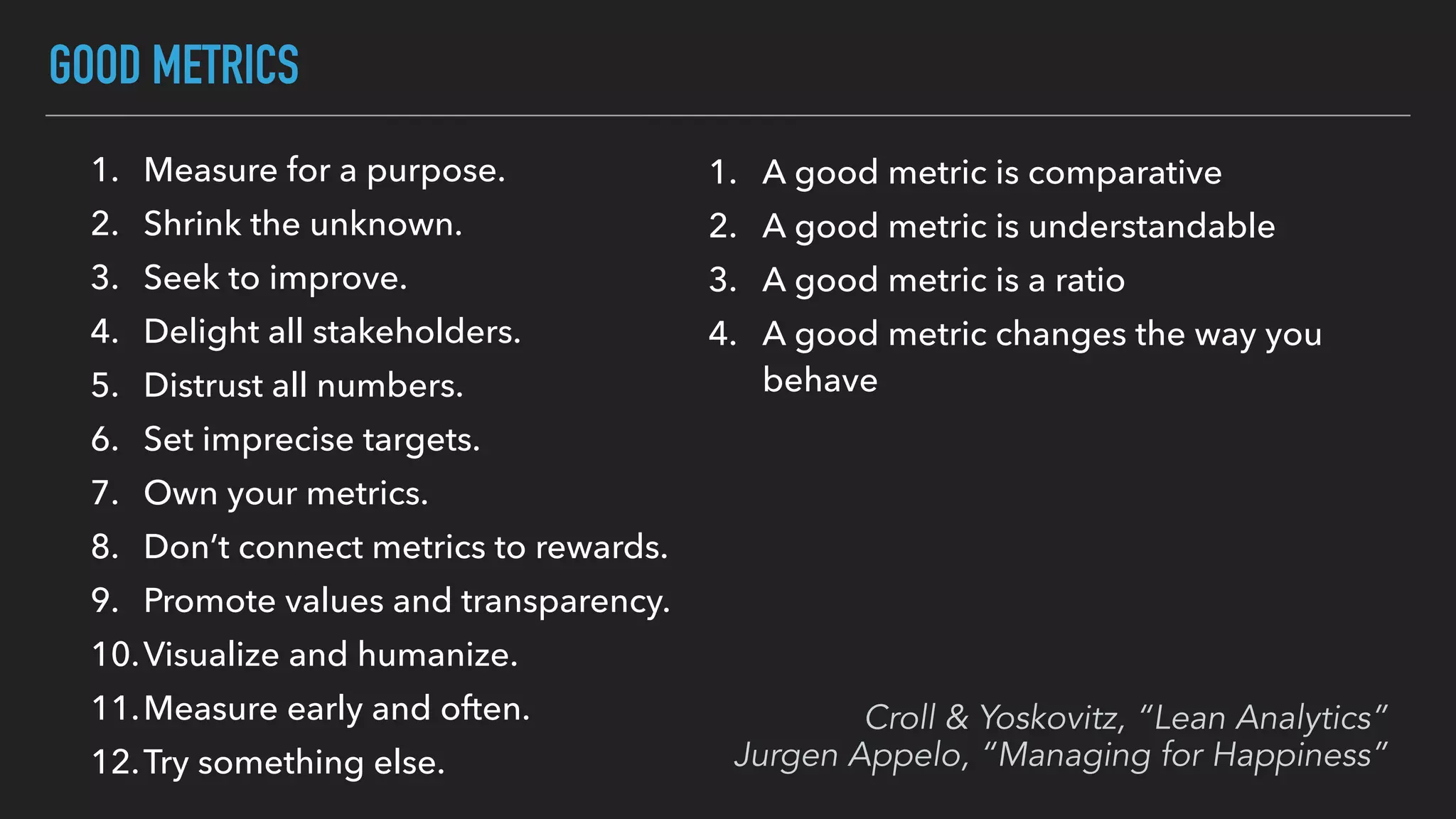
1. A good metric is comparative
2. A good metric is understandable
3. A good metric is a ratio
4. A good metric changes the way you
behave
1. Measure for a purpose.
2. Shrink the unknown.
3. Seek to improve.
4. Delight all stakeholders.
5. Distrust all numbers.
6. Set imprecise targets.
7. Own your metrics.
8. Don’t connect metrics to rewards.
9. Promote values and transparency.
10.Visualize and humanize.
11.Measure early and often.
12.Try something else.
Croll & Yoskovitz, “Lean Analytics”
Jurgen Appelo, “Managing for Happiness”
GOOD METRICS — 4 VALUES
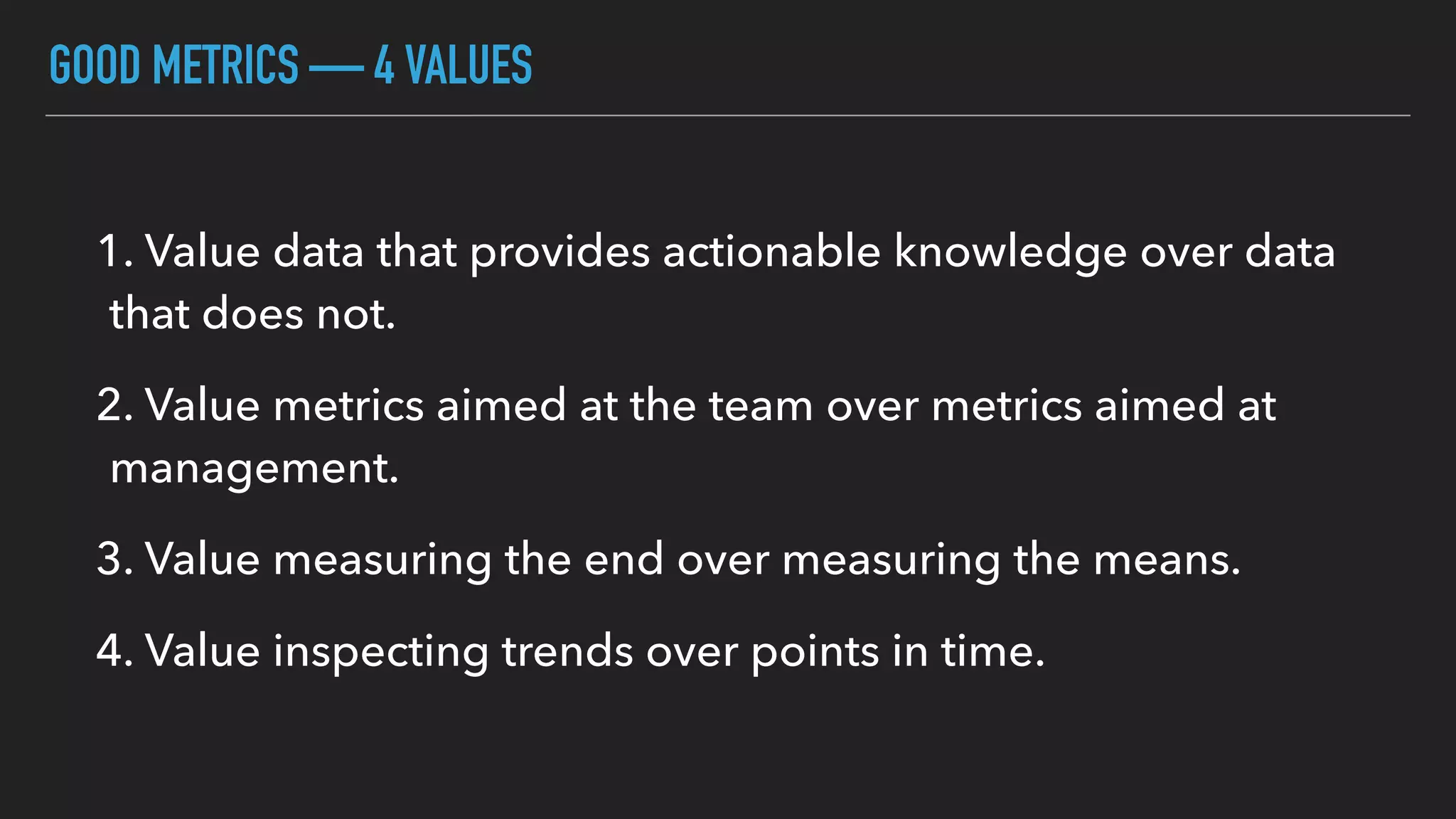
1. Value data that provides actionable knowledge over data
that does not.
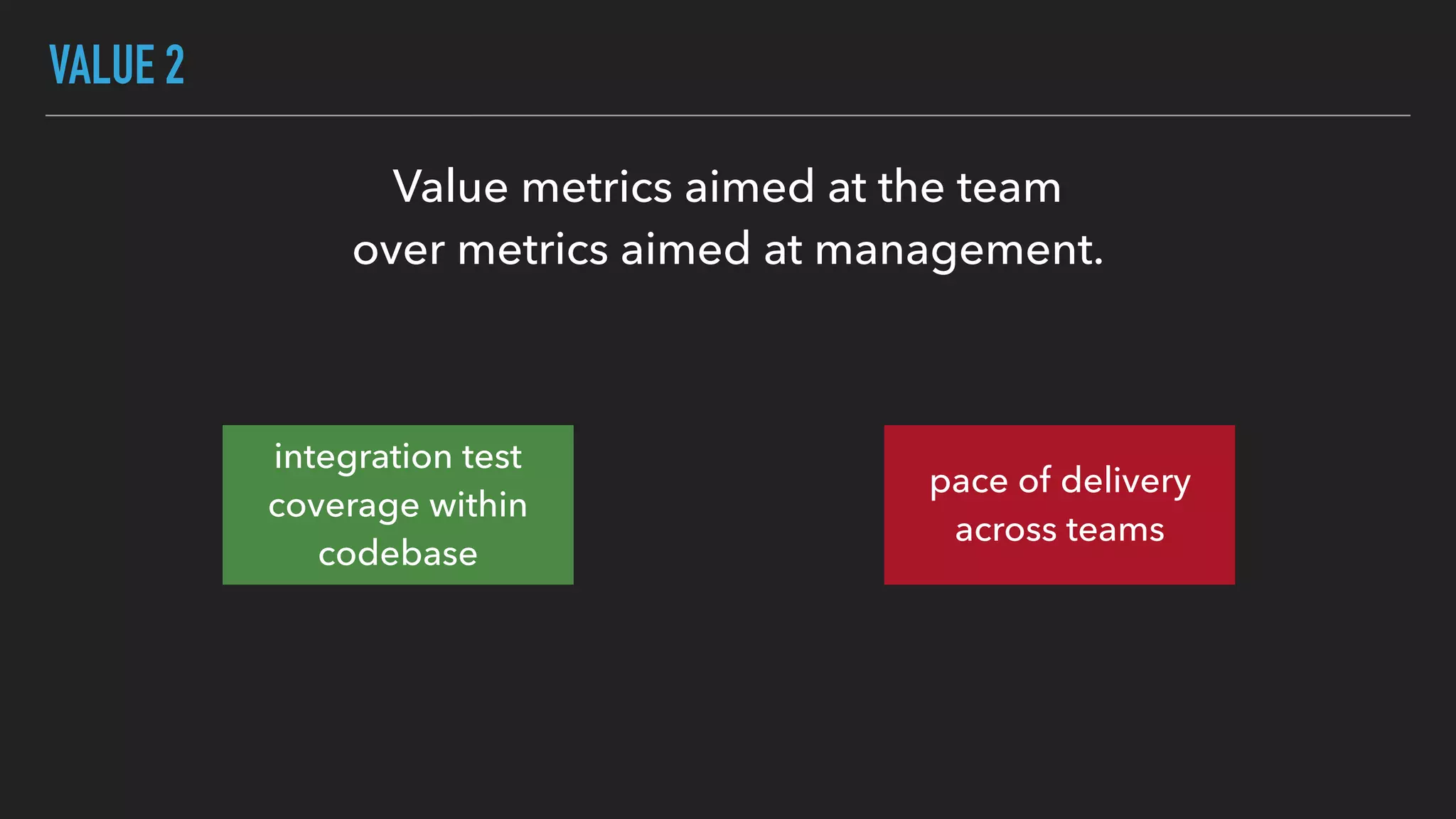
2. Value metrics aimed at the team over metrics aimed at
management.
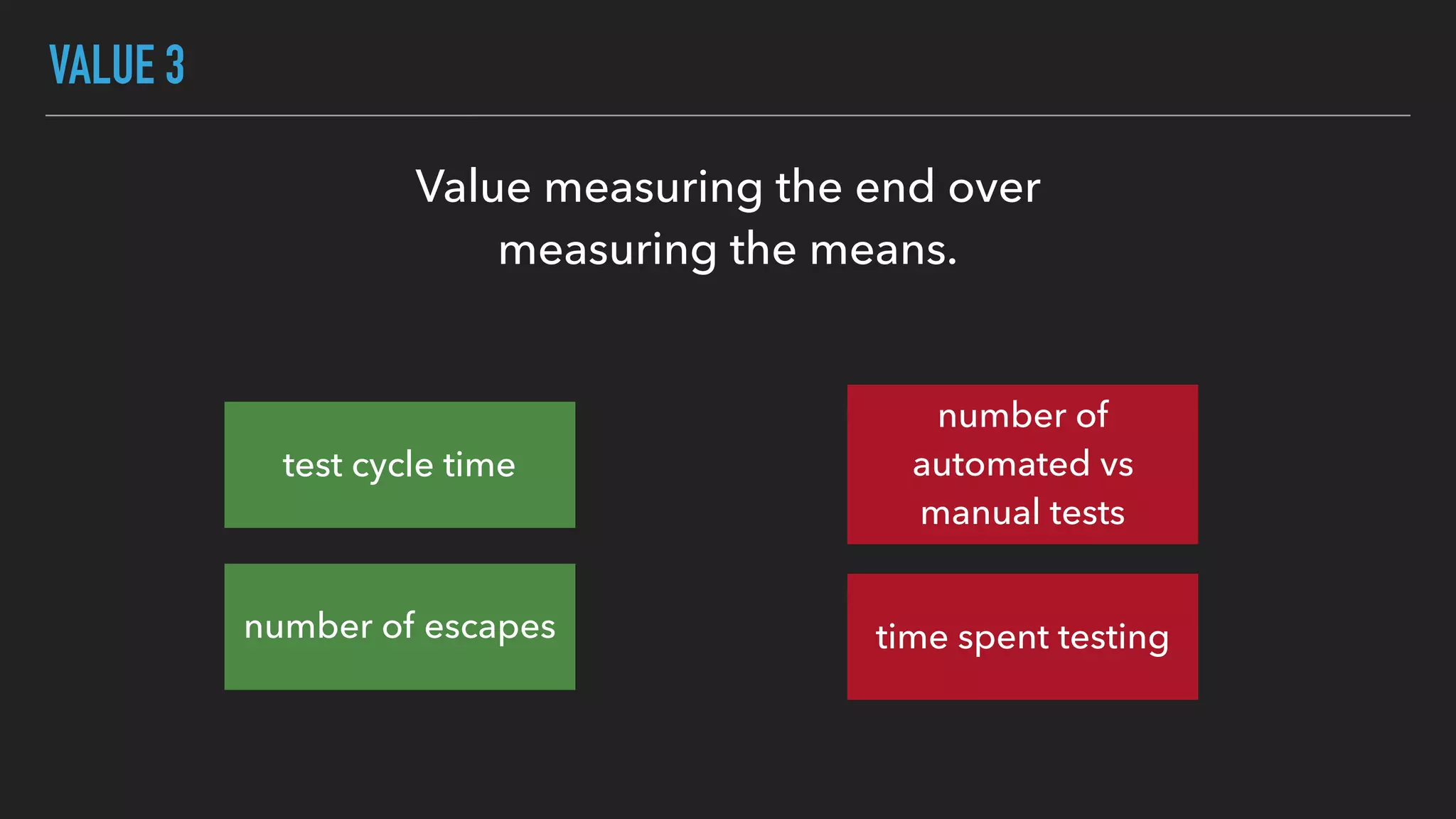
3. Value measuring the end over measuring the means.
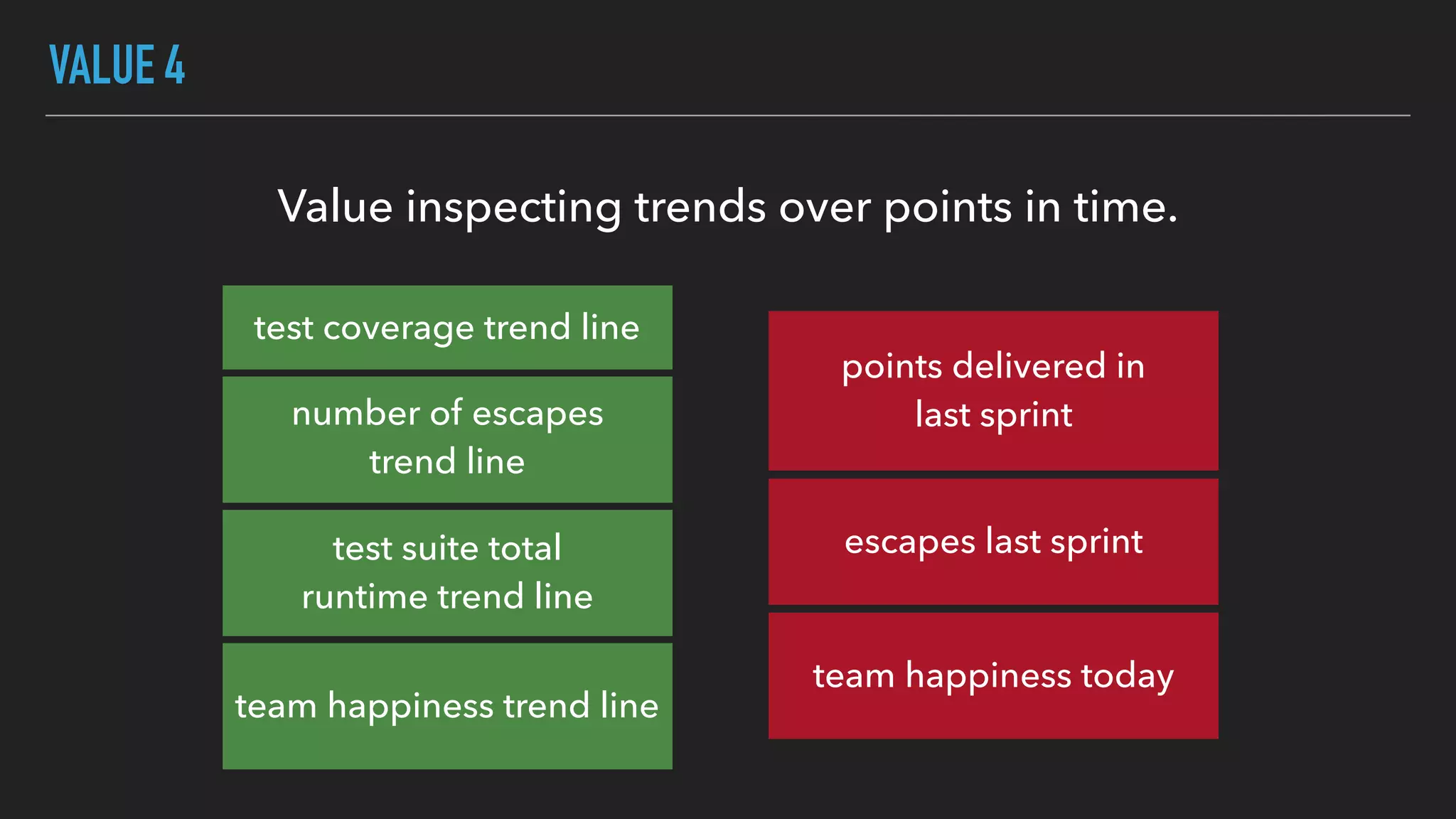
4. Value inspecting trends over points in time.
VALUE 1
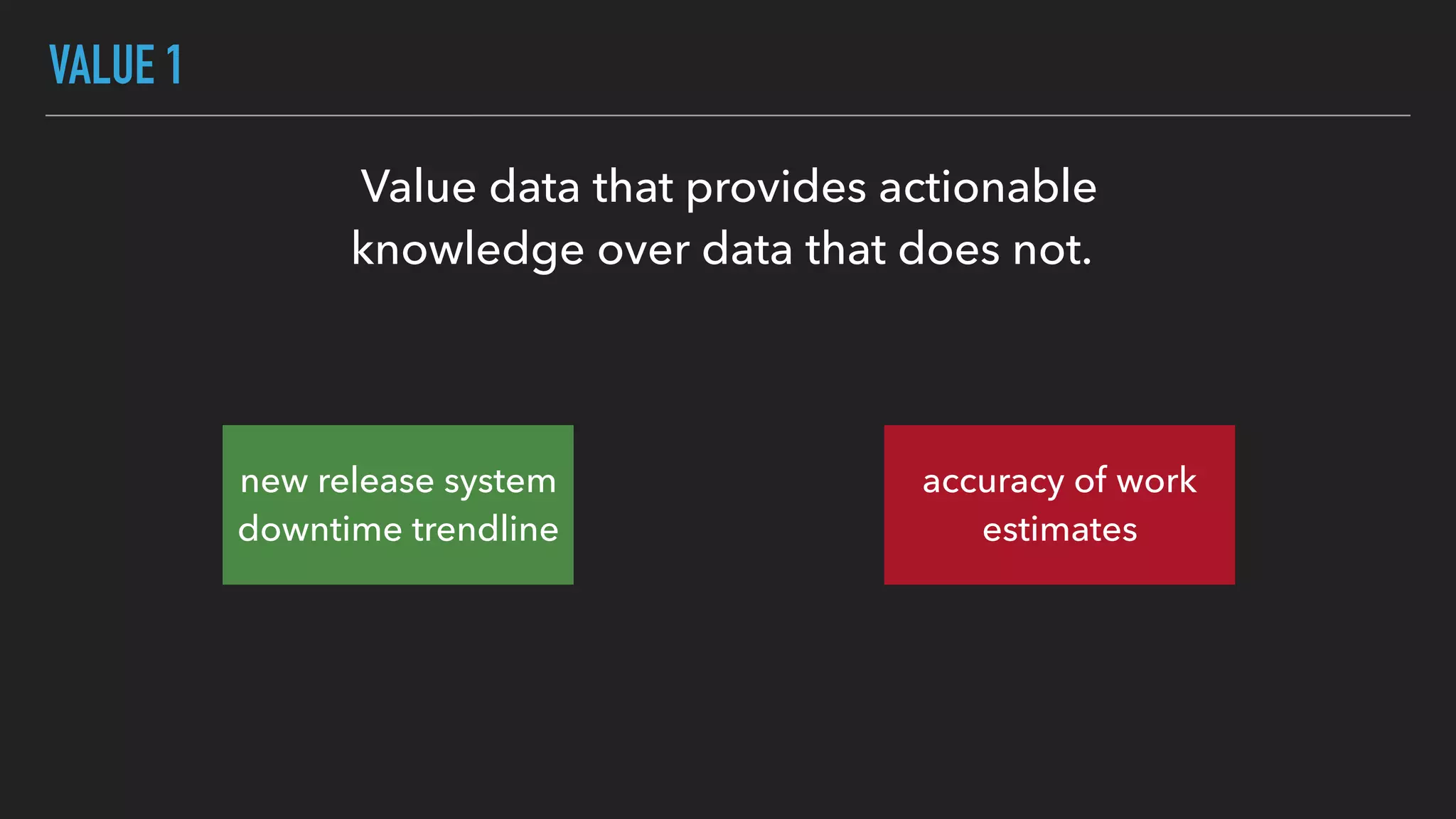
Value data that provides actionable
knowledge over data that does not.
new release system
downtime trendline
accuracy of work
estimates
VALUE 2
Value metrics aimed at the team
over metrics aimed at management.
integration test
coverage within
codebase
pace of delivery
across teams
VALUE 3
Value measuring the end over
measuring the means.
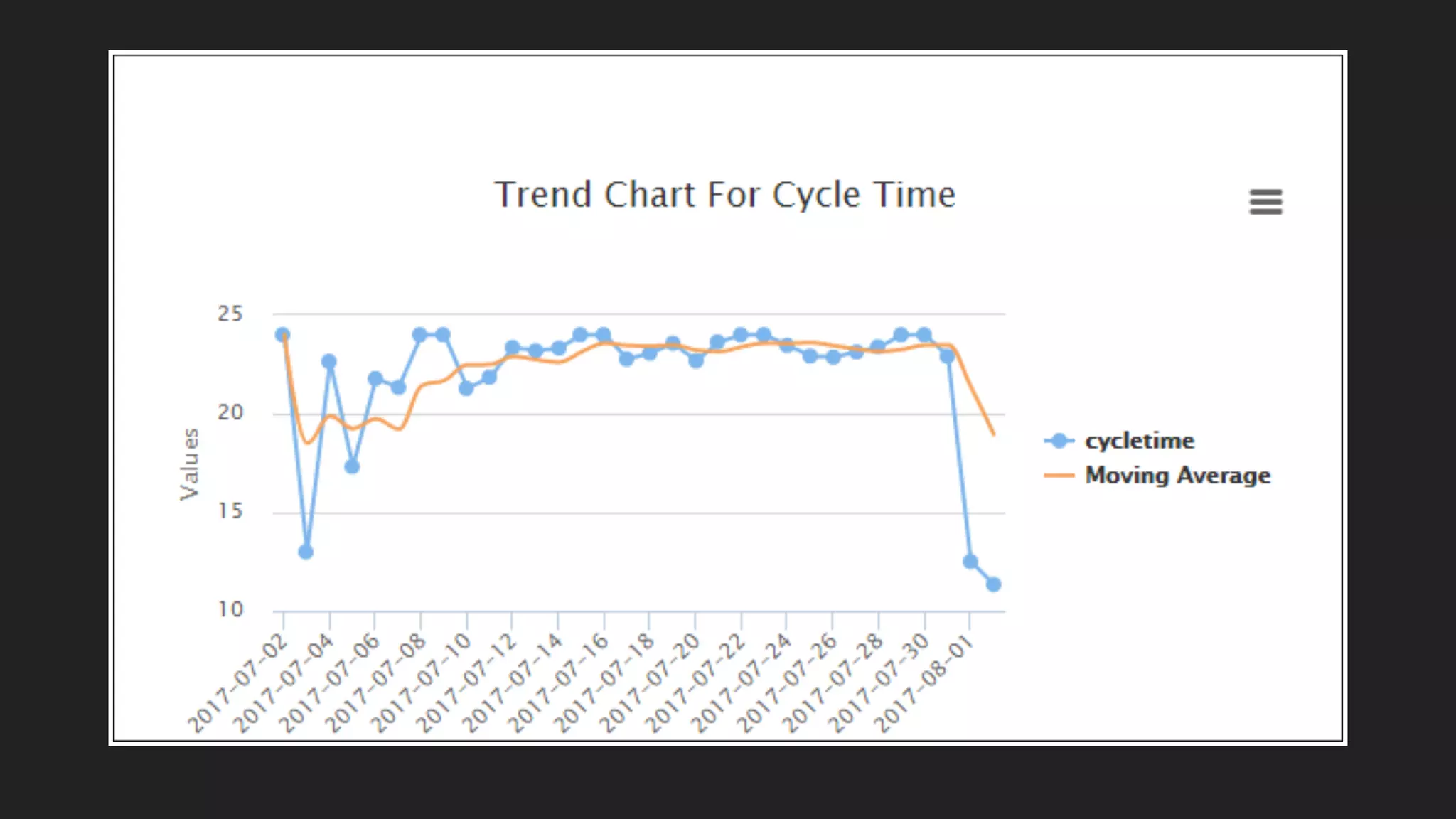
test cycle time
number of
automated vs
manual tests
number of escapes time spent testing
VALUE 4
Value inspecting trends over points in time.
test coverage trend line
points delivered in
last sprintnumber of escapes
trend line
escapes last sprinttest suite total
runtime trend line
team happiness trend line
team happiness today
GOOD METRICS — 5 PRINCIPLES
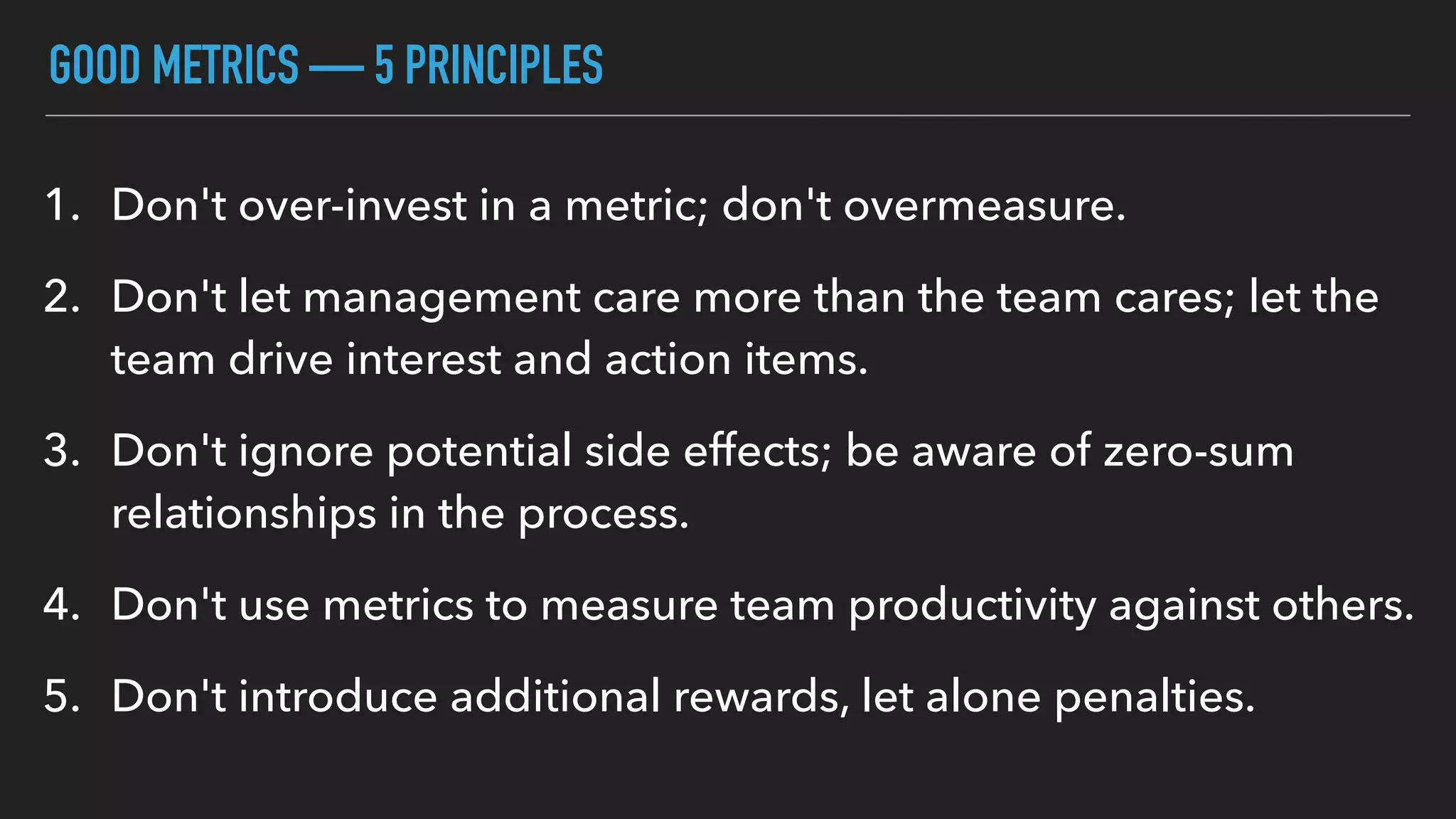
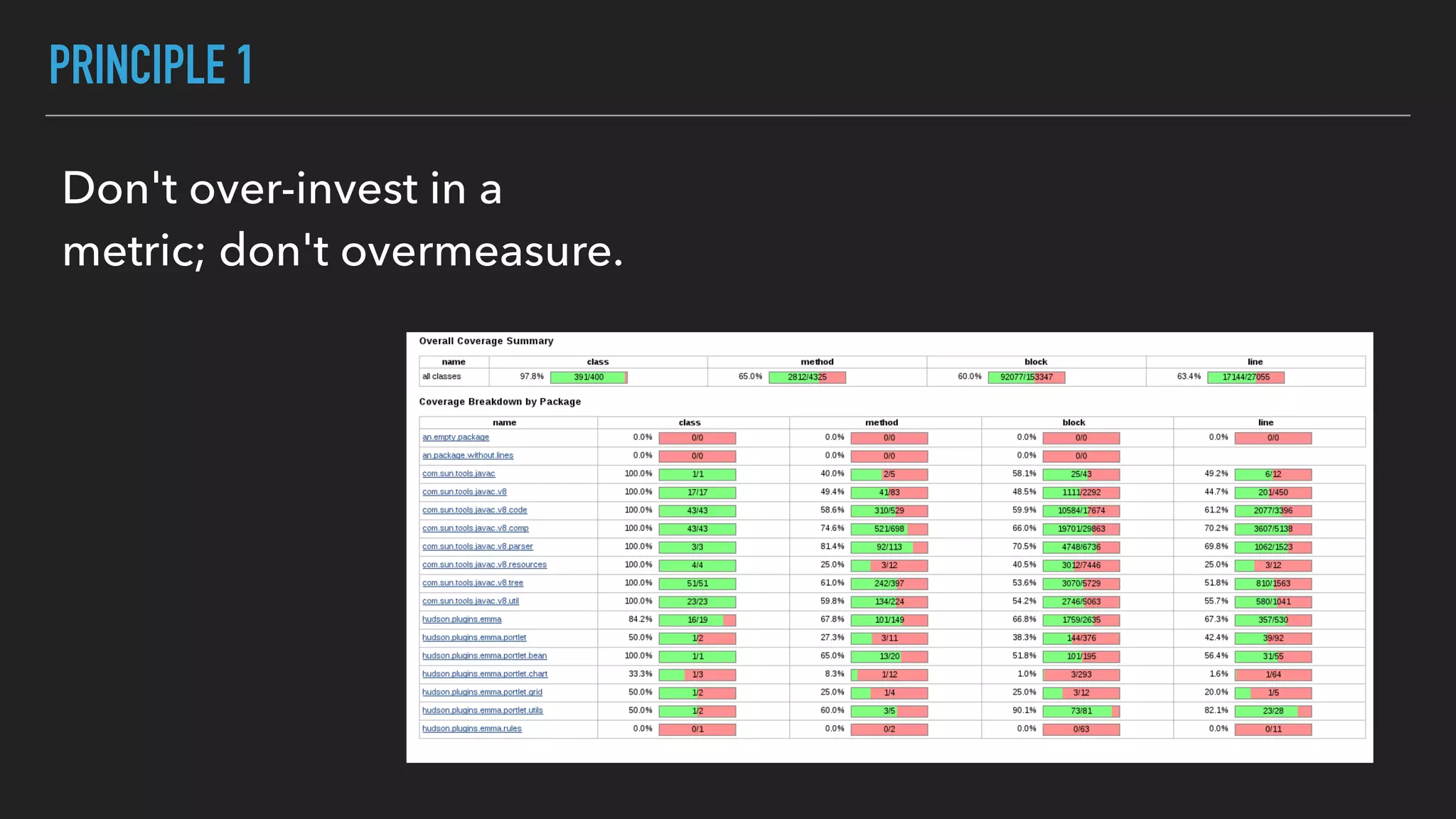
1. Don't over-invest in a metric; don't overmeasure.
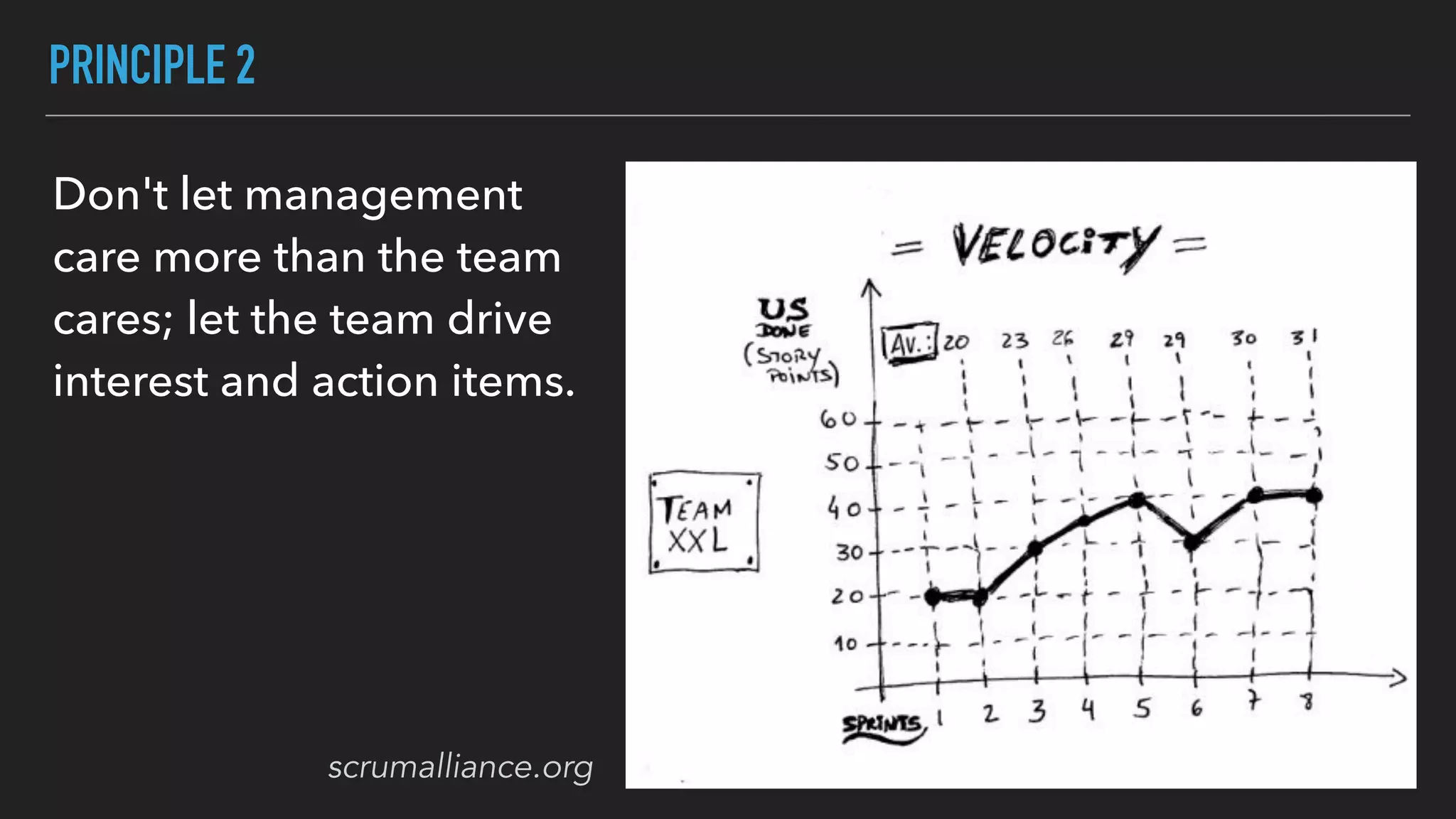
2. Don't let management care more than the team cares; let the
team drive interest and action items.
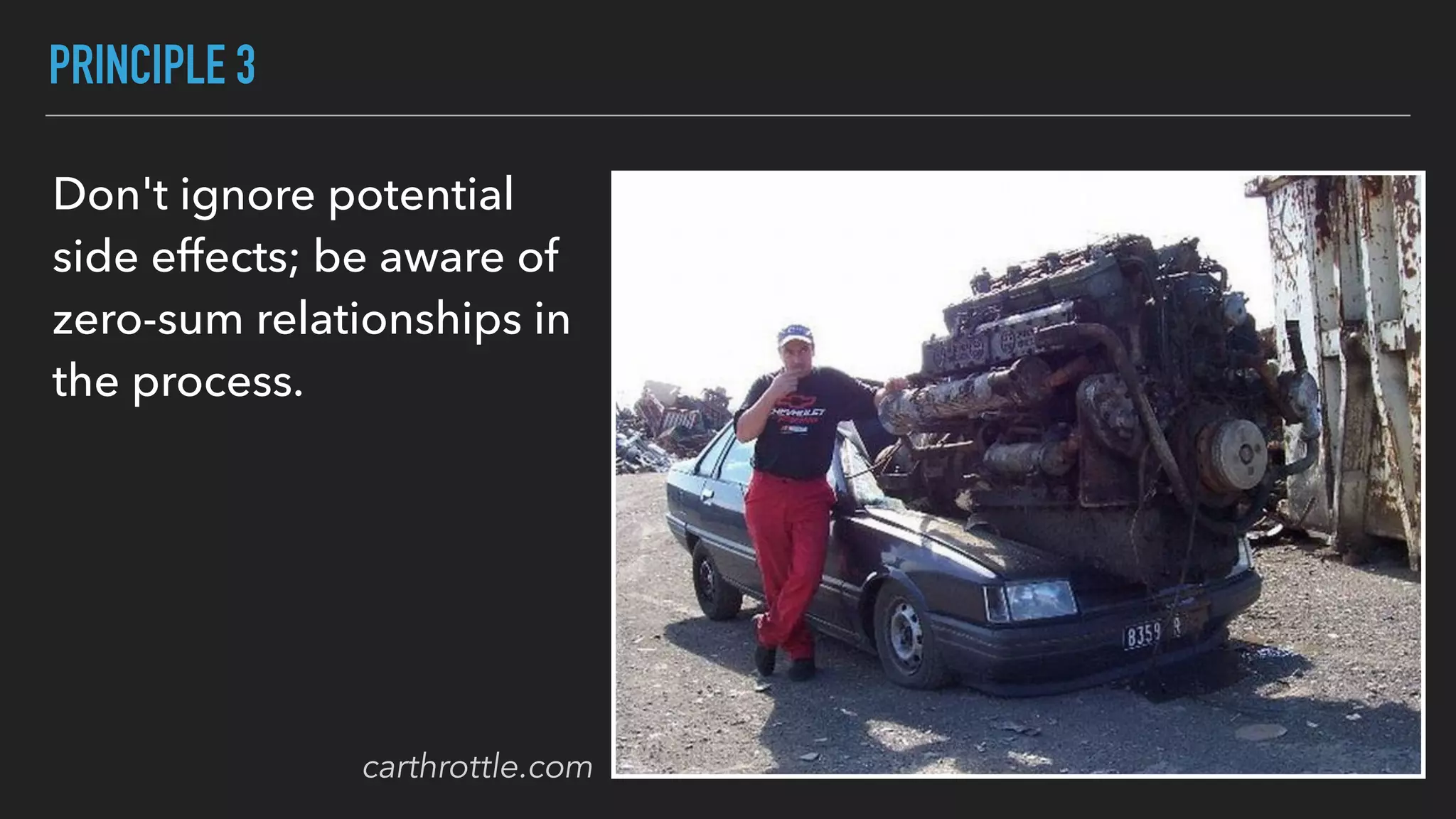
3. Don't ignore potential side effects; be aware of zero-sum
relationships in the process.
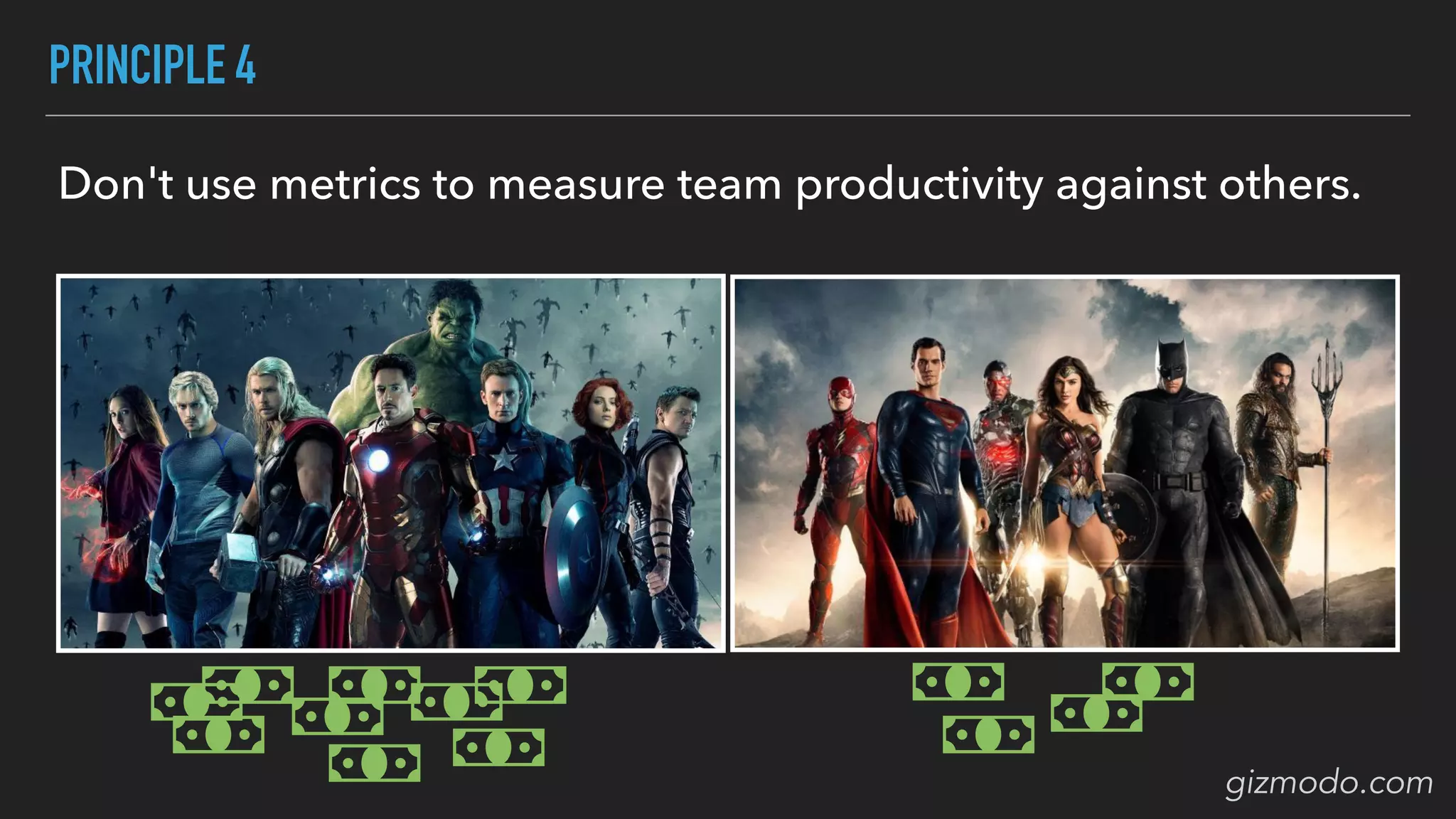
4. Don't use metrics to measure team productivity against others.
5. Don't introduce additional rewards, let alone penalties.
PRINCIPLE 1
Don't over-invest in a
metric; don't overmeasure.
PRINCIPLE 2
Don't let management
care more than the team
cares; let the team drive
interest and action items.
scrumalliance.org
PRINCIPLE 3
Don't ignore potential
side effects; be aware of
zero-sum relationships in
the process.
carthrottle.com
PRINCIPLE 4
Don't use metrics to measure team productivity against others.
gizmodo.com
PRINCIPLE 5
Don't introduce additional
rewards, let alone penalties.
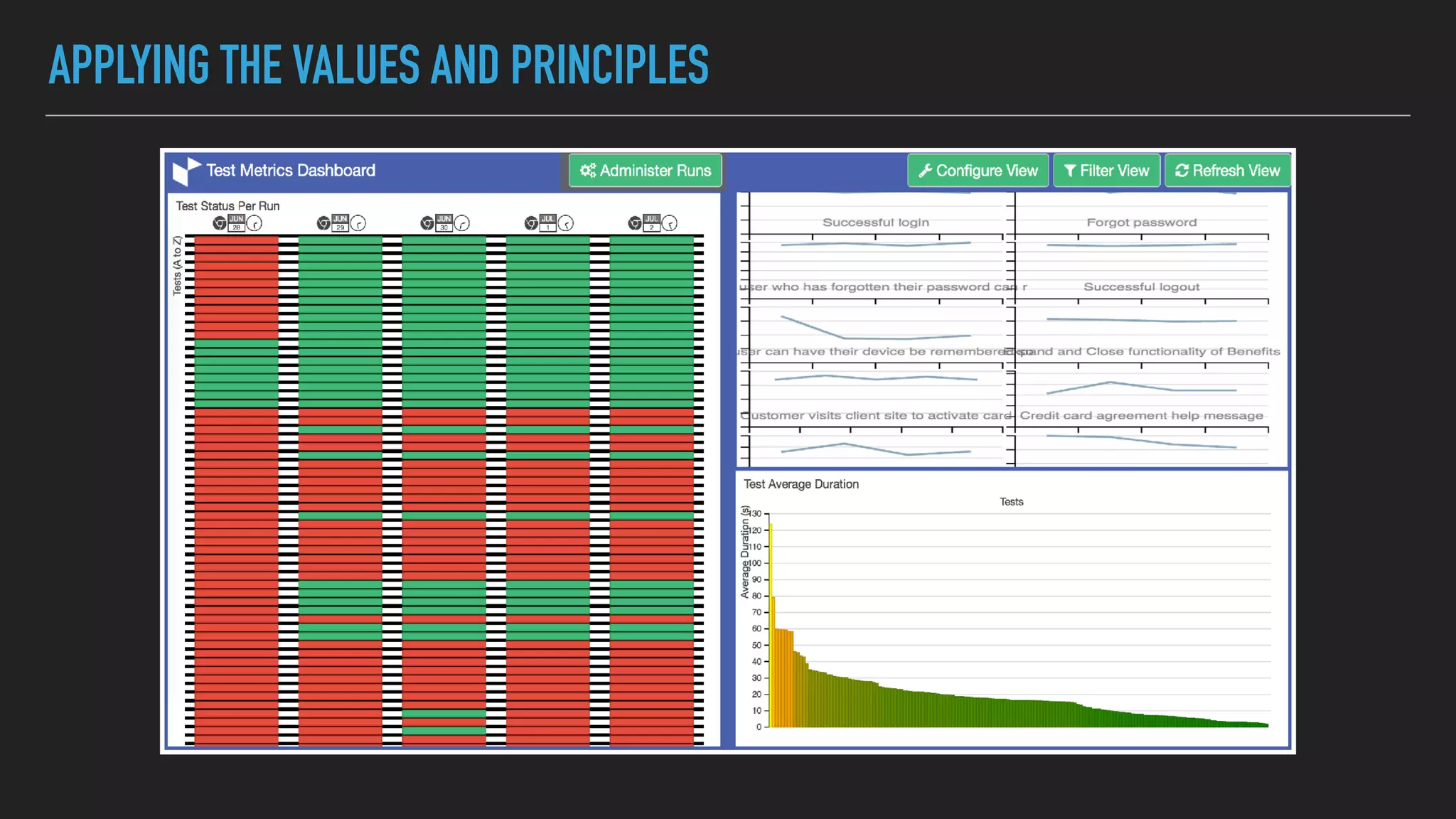
APPLYING THE VALUES AND PRINCIPLES
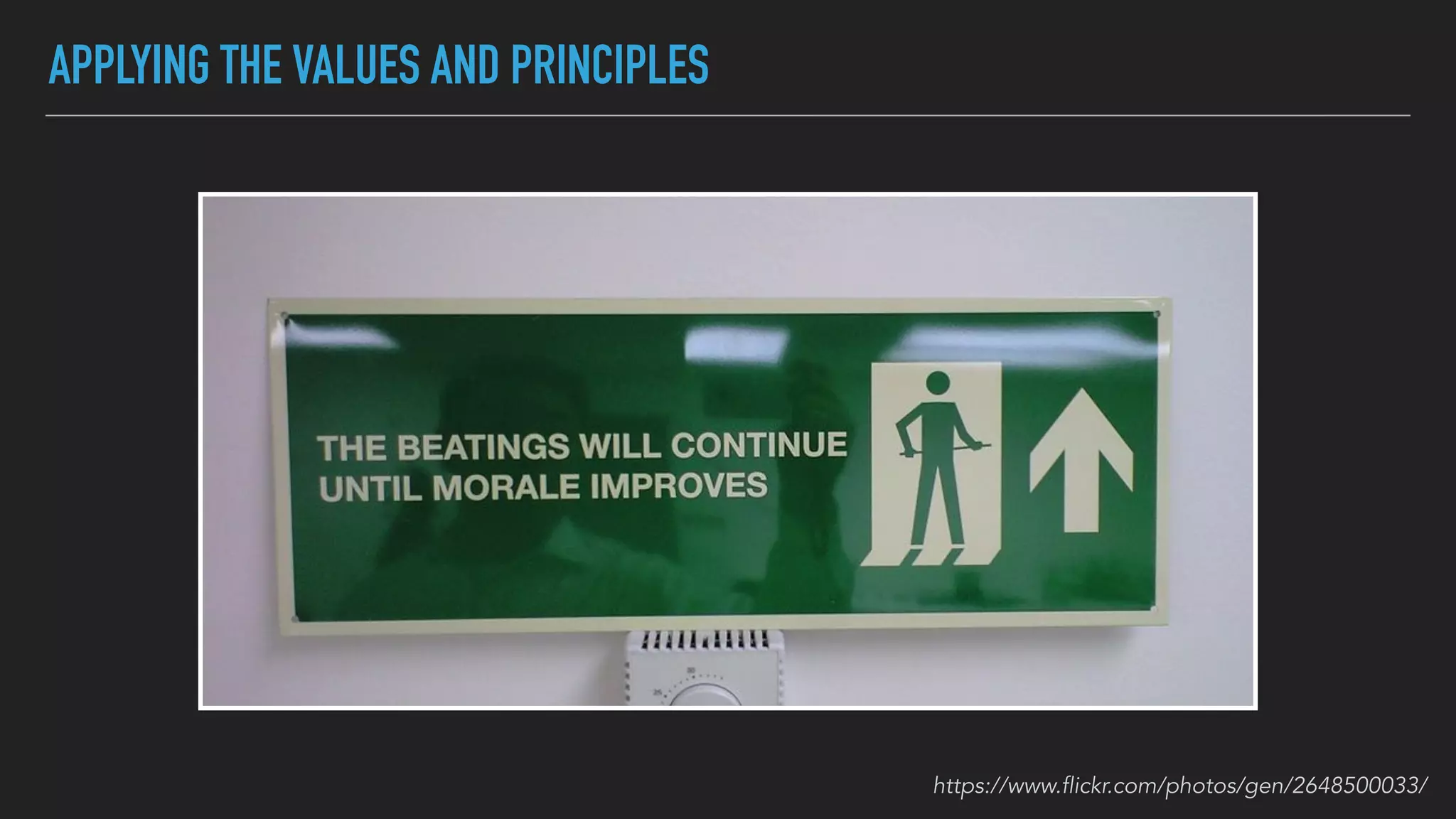
https://www.flickr.com/photos/gen/2648500033/
APPLYING THE VALUES AND PRINCIPLES
Lisa Mckelvie / Getty Images
MINDFUL METRICS
@DmitrySharkov

Mindful Metrics (QAotHW 2018)

  • 1.
  • 6.
    METRICS! 1. metrics aregood 2. metrics are bad
  • 7.
    "Most people haveno idea how to measure well. They make their organization run a marathon with a thermometer up its rear end, and then they wonder why it's running so slowly (and awkwardly)." Jurgen Appelo, “Managing for Happiness” METRICS ARE HARD…
  • 9.
    MOST METRICS AREHARMFUL IF… The wrong metrics are harmful. Most metrics are the wrong metrics.
  • 10.
    DEFINE: METRICS metric: (n)measurement of characteristics that are countable or quantifiable
  • 11.
    TYPES OF METRICS •Process health metrics • Product development metrics • Release metrics • Technical / code metrics • People / team metrics source: Jason Tice @theagilefactor
  • 12.
    TYPES OF METRICS(2) • Productivity • Predictability • Responsiveness • Quality source: asynchrony.com
  • 13.
    64 ESSENTIAL TESTMETRICS 1. Total number of test cases 2. Number of test cases passed 3. Number of test cases failed 4. Number of test cases blocked 5. Number of defects found 6. Number of defects accepted 7. Number of defects rejected 8. Number of defects deferred 9.Number of critical defects 10. Number of planned test hours 11. Number of actual test hours 12. Number of bugs found after shipping 13. Passed test cases ratio 14. Failed test cases ratio 15. Blocked test cases ratio 16. Fixed defects ratio 17. Defects accepted ratio 18. Defected rejected ratio 19. Defects deferred ratio 20. Critical defects ratio 21. Average time to repair defect 22. Number of tests run per time period 23. Test design efficiency 24. Test review efficiency 25. Defects found per test hour ratio 26. Defects found per test ratio 27. Average time to test bug fix 28. Defect containment efficiency 29. Test effectiveness using team assessment 30. Tests run percentage 31. Requirement coverage 32. Test cases by requirement 33. Defects per requirement 34. Requirements without test coverage 35. Total allocated costs for testing 36. Actual cost of testing 37. Budget variance 38. Schedule variance 39. Cost per bug fix 40. Cost of not testing 41. Distribution of defects returned per team member 42. Distribution of open defects for retest per test team member 43. Test cases allocated per test team member 44. Test cases executed by the test team member 45. Test execution status chart 46. Test execution and defect find rate tracking 47. Effect of testing changes 48. Defect injection rate 49. Defect distribution by cause 50. Defect distribution by functional area 51. Defect distribution by severity 52. Defect distribution by priority 53. Defect distribution by type 54. Defect distribution by tester 55. Defect distribution by test type 56. Defect distribution by platform/environment 57. Defect distribution over time by cause 58. Defect distribution over time by module 59. Defect distribution over time by severity 60. Defect distribution over time by platform 61. Defects created vs Defects resolved 62. Defect removal efficiency (defect gap) 63. Defect density 64. Defect age source: https://www.qasymphony.com/blog/64-test-metrics/
  • 14.
    WHAT IS HARM?( THE WRONG METRICS ARE HARMFUL )
  • 17.
    AMAZON, WHOLE FOODS,AND METRICS source: gizmodo.com “They say many employees are terrified of losing their jobs under the new system and that they spend more hours mired in OTS-related paperwork than helping customers.” “Seeing someone cry at work is becoming normal.” ( THE WRONG METRICS ARE HARMFUL )
  • 18.
    AMAZON, WHOLE FOODS,AND METRICS source: gizmodo.com ( THE WRONG METRICS ARE HARMFUL )
  • 19.
    INCREASING VELOCITY INBOSTON ( THE WRONG METRICS ARE HARMFUL )
  • 20.
    INCREASING DEFECTS INBOSTON ( THE WRONG METRICS ARE HARMFUL )
  • 21.
    IN HARM’S WAY Iconsmade by Freepik from www.flaticon.com Product Process People ( THE WRONG METRICS ARE HARMFUL )
  • 22.
    WHAT METRICS DO… “Whatgets measured, gets done.” “What gets measured, improves.” ( THE WRONG METRICS ARE HARMFUL )
  • 23.
    WHAT METRICS DO… source:network-graphics.com, chevyfirst.com ( THE WRONG METRICS ARE HARMFUL ) 1998 2018
  • 24.
    INCENTIVES… “When a measurebecomes a target, it ceases to be a good metric.” Goodhart’s Law “As soon as you set a target for others, they will pursue the target instead of the original purpose.” Jurgen Appelo, “Managing for Happiness” ( THE WRONG METRICS ARE HARMFUL )
  • 25.
    DISINCENTIVES… bill rate pay rate recruiteraccount manager ( THE WRONG METRICS ARE HARMFUL )
  • 26.
    EXTRINSICALLY MOTIVATED, INDIVIDUALMETRICS 1. Extrinsic motivation does not have a positive correlation with productivity. 2. Morale is more likely to be negatively affected than with other metrics. sources:
 Srivastava, S.K. and Barmola, K.C., 2012. Role of motivation in higher productivity. Management Insight, 7(1). Dan Pink: The puzzle of motivation | TED Talk | TED.com http://www.lse.ac.uk/website-archive/newsAndMedia/news/archives/2009/06/ performancepay.aspx http://www.management-issues.com/news/5640/performance-related-pay-doesnt- encourage-performance/ ( THE WRONG METRICS ARE HARMFUL )
  • 27.
    "Gathering and analyzingdata is a burden the team bears at the expense of other work" Me, today THE WRONG METRICS ARE HARMFUL.
  • 28.
    “If you torturethe data long enough, it will confess.” Ronald H. Coase (20th century British economist) MOST METRICS ARE THE WRONG METRICS.
  • 29.
    RULES OF “GOOD”METRICS ‣ A good metric is comparative ‣ A good metric is understandable ‣ A good metric is a ratio ‣ A good metric changes the way you behave ( MOST METRICS ARE THE WRONG METRICS )
  • 30.
    12 RULES OFGOOD METRICS ( MOST METRICS ARE THE WRONG METRICS )
  • 31.
    12 RULES OFGOOD METRICS 1. Measure for a purpose. (Inform decisions. Measure what you want to improve.) 2. Shrink the unknown. (Recognize limitations of measures but use what you can.) 3. Seek to improve. (Avoid vanity metrics.) 4. Delight all stakeholders. (Account for intersection and difference in needs.) 5. Distrust all numbers. (Account for observer effect and risk compensation.) 6. Set imprecise targets. (Avoid deflecting from goals with tangential measures.)
 ( MOST METRICS ARE THE WRONG METRICS )
  • 32.
    12 RULES OFGOOD METRICS 7. Own your metrics. (Don't measure subordinates; measure yourself.) 8. Don’t connect metrics to rewards. (What is rewarded is never the organization's true purpose.) 9. Promote values and transparency. (Nourish self-motivation; avoid pay-for- performance.) 10.Visualize and humanize. (Don't get caught up in numbers, forgetting people.) 11.Measure early and often. 12.Try something else. ( MOST METRICS ARE THE WRONG METRICS )
  • 33.
    VANITY METRICS (MOST METRICS ARE THE WRONG METRICS )
  • 34.
    VANITY METRICS (MOST METRICS ARE THE WRONG METRICS ) number of test scenarios coverage ratio of critical featuresVS
  • 35.
    APPLYING METRICS TOA SAMPLE TEAM… ( MOST METRICS ARE THE WRONG METRICS )
  • 36.
    64 “ESSENTIAL” TESTMETRICS 1. Total number of test cases 2. Number of test cases passed 3. Number of test cases failed 4. Number of test cases blocked 5. Number of defects found 6. Number of defects accepted 7. Number of defects rejected 8. Number of defects deferred 9.Number of critical defects 10. Number of planned test hours 11. Number of actual test hours 12. Number of bugs found after shipping 13. Passed test cases ratio 14. Failed test cases ratio 15. Blocked test cases ratio 16. Fixed defects ratio 17. Defects accepted ratio 18. Defected rejected ratio 19. Defects deferred ratio 20. Critical defects ratio 21. Average time to repair defect 22. Number of tests run per time period 23. Test design efficiency 24. Test review efficiency 25. Defects found per test hour ratio 26. Defects found per test ratio 27. Average time to test bug fix 28. Defect containment efficiency 29. Test effectiveness using team assessment 30. Tests run percentage 31. Requirement coverage 32. Test cases by requirement 33. Defects per requirement 34. Requirements without test coverage 35. Total allocated costs for testing 36. Actual cost of testing 37. Budget variance 38. Schedule variance 39. Cost per bug fix 40. Cost of not testing 41. Distribution of defects returned per team member 42. Distribution of open defects for retest per test team member 43. Test cases allocated per test team member 44. Test cases executed by the test team member 45. Test execution status chart 46. Test execution and defect find rate tracking 47. Effect of testing changes 48. Defect injection rate 49. Defect distribution by cause 50. Defect distribution by functional area 51. Defect distribution by severity 52. Defect distribution by priority 53. Defect distribution by type 54. Defect distribution by tester 55. Defect distribution by test type 56. Defect distribution by platform/environment 57. Defect distribution over time by cause 58. Defect distribution over time by module 59. Defect distribution over time by severity 60. Defect distribution over time by platform 61. Defects created vs Defects resolved 62. Defect removal efficiency (defect gap) 63. Defect density 64. Defect age https://www.qasymphony.com/blog/64-test-metrics/ ( MOST METRICS ARE THE WRONG METRICS )
  • 38.
    OK THEN… How dowe identify those metrics that are useful and unlikely to "go bad" or be misused?
 How do we prevent those that seem useful from "going bad" or being misused?
  • 39.
    "..it's no wonderthat an organization which measures very little and just runs around blindly usually goes much faster, until it runs into a tree, hopefully not with a thermometer in its mouth." Jurgen Appelo, “Managing for Happiness”
  • 40.
    GOOD METRICS 1. Agood metric is comparative 2. A good metric is understandable 3. A good metric is a ratio 4. A good metric changes the way you behave 1. Measure for a purpose. 2. Shrink the unknown. 3. Seek to improve. 4. Delight all stakeholders. 5. Distrust all numbers. 6. Set imprecise targets. 7. Own your metrics. 8. Don’t connect metrics to rewards. 9. Promote values and transparency. 10.Visualize and humanize. 11.Measure early and often. 12.Try something else. Croll & Yoskovitz, “Lean Analytics” Jurgen Appelo, “Managing for Happiness”
  • 41.
    GOOD METRICS —4 VALUES 1. Value data that provides actionable knowledge over data that does not. 2. Value metrics aimed at the team over metrics aimed at management. 3. Value measuring the end over measuring the means. 4. Value inspecting trends over points in time.
  • 42.
    VALUE 1 Value datathat provides actionable knowledge over data that does not. new release system downtime trendline accuracy of work estimates
  • 43.
    VALUE 2 Value metricsaimed at the team over metrics aimed at management. integration test coverage within codebase pace of delivery across teams
  • 44.
    VALUE 3 Value measuringthe end over measuring the means. test cycle time number of automated vs manual tests number of escapes time spent testing
  • 45.
    VALUE 4 Value inspectingtrends over points in time. test coverage trend line points delivered in last sprintnumber of escapes trend line escapes last sprinttest suite total runtime trend line team happiness trend line team happiness today
  • 46.
    GOOD METRICS —5 PRINCIPLES 1. Don't over-invest in a metric; don't overmeasure. 2. Don't let management care more than the team cares; let the team drive interest and action items. 3. Don't ignore potential side effects; be aware of zero-sum relationships in the process. 4. Don't use metrics to measure team productivity against others. 5. Don't introduce additional rewards, let alone penalties.
  • 47.
    PRINCIPLE 1 Don't over-investin a metric; don't overmeasure.
  • 48.
    PRINCIPLE 2 Don't letmanagement care more than the team cares; let the team drive interest and action items. scrumalliance.org
  • 49.
    PRINCIPLE 3 Don't ignorepotential side effects; be aware of zero-sum relationships in the process. carthrottle.com
  • 50.
    PRINCIPLE 4 Don't usemetrics to measure team productivity against others. gizmodo.com
  • 51.
    PRINCIPLE 5 Don't introduceadditional rewards, let alone penalties.
  • 52.
    APPLYING THE VALUESAND PRINCIPLES
  • 53.
    APPLYING THE VALUESAND PRINCIPLES
  • 54.
    APPLYING THE VALUESAND PRINCIPLES
  • 55.
    APPLYING THE VALUESAND PRINCIPLES https://www.flickr.com/photos/gen/2648500033/
  • 56.
    APPLYING THE VALUESAND PRINCIPLES Lisa Mckelvie / Getty Images
  • 57.