Mindful Communication: ​
Stop Ruining Conversations!
Key Takeaways
●​ Mindful communication: Focus fully on the conversation at hand.
●​ Listen Actively: Show genuine interest and understanding.
●​ Communicate Clearly: Express your thoughts with clarity and compassion.
●​ Manage Emotions: Respond thoughtfully, not reactively.
●​ Practice Empathy: Seek to understand others’ perspectives.
The Moment That Changed Everything
I still remember the day I lost a friend—not because of a big fight, but because of a
conversation gone wrong. I was distracted, defensive, and not truly listening. What started
as a simple chat turned into a misunderstanding that neither of us could mend. That
experience taught me a valuable lesson: the way we communicate can either build bridges
or burn them.
In our fast-paced world, it’s easy to fall into communication traps—interrupting, assuming,
reacting without thinking. But there’s a better way. Mindful communication offers a path to
more meaningful, respectful, and effective interactions.
It’s about being present, listening with intention, and speaking with clarity and compassion.
In this guide, we’ll explore how to stop ruining conversations and start connecting on a
deeper level.
What Is Mindful Communication?
Mindful communication means paying full attention during a conversation. It’s about really
listening to the other person, thinking before you speak, and being aware of how your words
and body language affect others. Instead of reacting quickly or talking over someone, you
slow down and stay focused on the present moment.
This helps you understand others better and avoid common mistakes like interrupting or
making assumptions. By practicing mindful communication, you build trust, avoid confusion,
and create stronger, more respectful relationships—whether at home, work, or in daily life.
It’s simple, powerful, and truly effective.
The Cost of Poor Communication
Miscommunication can lead to conflicts, damaged relationships, and missed opportunities.
According to a study by the Project Management Institute, ineffective communication is a
primary factor in project failure one-third of the time. In personal relationships, poor
communication can erode trust and intimacy.
Benefits of Mindful Communication
●​ Improved Relationships: Mindful communication helps you build trust and deeper
connections by showing respect, listening carefully, and responding thoughtfully to
others’ needs and feelings.
●​ Enhanced Clarity: By staying present and choosing your words carefully, you reduce
confusion and make your message easier to understand, helping others feel heard
and valued.
●​ Emotional Intelligence: It strengthens your ability to recognize your own emotions
and understand others’ feelings, making your responses more thoughtful and less
reactive in any conversation.
●​ Conflict Resolution: Mindful communication calms tense situations, encourages
respectful dialogue, and helps people work through disagreements without anger or
blame, leading to better outcomes for everyone.
Core Principles of Mindful Communication
1.​ Presence: Being fully present means giving your undivided attention to the
conversation. This involves putting away distractions and focusing on the speaker.
2.​ Active Listening: Active listening requires more than just hearing words; it involves
understanding the message and emotions behind them. Techniques include nodding,
summarizing, and asking clarifying questions.
3.​ Non-Judgment: Approach conversations without preconceived notions or judgments.
This openness encourages honest and productive dialogue.
4.​ Empathy: Empathy involves understanding and sharing the feelings of others. It helps
in building connections and resolving conflicts.
Common Communication Pitfalls
●​ Interrupting: Speaking over someone can make them feel ignored. It shows you’re
not truly listening, which damages trust and weakens your connection.
●​ Multitasking: Checking your phone or doing other tasks during a conversation shows
you’re not fully present, making others feel unimportant or overlooked.
●​ Assumptions: Guessing what someone means without asking for clarity can lead to
confusion, missed points, and unnecessary tension in your conversations.
●​ Reactive Responses: Answering with strong emotions instead of calm thoughts can
quickly turn a simple talk into a heated argument, causing regret later.
Strategies to Enhance Mindful Communication
Mindful communication is not just about speaking thoughtfully—it’s about connecting with
others through awareness, presence, and respect. These strategies help you communicate
more clearly, listen better, and reduce the chances of misunderstandings. Let’s explore how
you can strengthen your communication using practical, easy-to-follow methods.
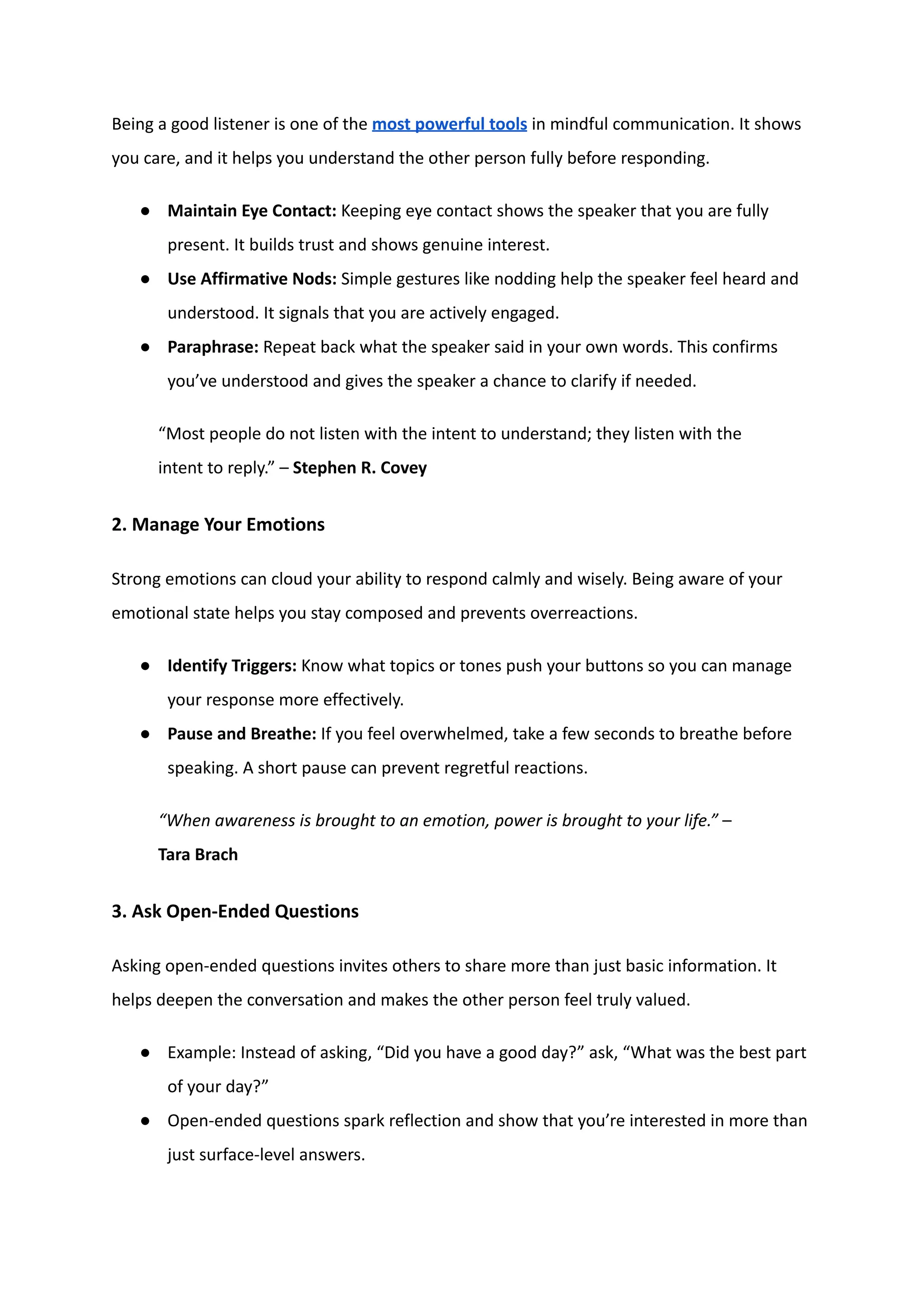
1. Practice Active Listening
Being a good listener is one of the most powerful tools in mindful communication. It shows
you care, and it helps you understand the other person fully before responding.
●​ Maintain Eye Contact: Keeping eye contact shows the speaker that you are fully
present. It builds trust and shows genuine interest.
●​ Use Affirmative Nods: Simple gestures like nodding help the speaker feel heard and
understood. It signals that you are actively engaged.
●​ Paraphrase: Repeat back what the speaker said in your own words. This confirms
you’ve understood and gives the speaker a chance to clarify if needed.
“Most people do not listen with the intent to understand; they listen with the
intent to reply.” – Stephen R. Covey
2. Manage Your Emotions
Strong emotions can cloud your ability to respond calmly and wisely. Being aware of your
emotional state helps you stay composed and prevents overreactions.
●​ Identify Triggers: Know what topics or tones push your buttons so you can manage
your response more effectively.
●​ Pause and Breathe: If you feel overwhelmed, take a few seconds to breathe before
speaking. A short pause can prevent regretful reactions.
“When awareness is brought to an emotion, power is brought to your life.” –
Tara Brach
3. Ask Open-Ended Questions
Asking open-ended questions invites others to share more than just basic information. It
helps deepen the conversation and makes the other person feel truly valued.
●​ Example: Instead of asking, “Did you have a good day?” ask, “What was the best part
of your day?”
●​ Open-ended questions spark reflection and show that you’re interested in more than
just surface-level answers.
4. Reflect Before Responding
Taking even a few seconds before you speak can make a huge difference. This small pause
gives your brain time to choose your words carefully and match your tone with your
message.
●​ Ask yourself: “Is what I’m about to say helpful and respectful?”
●​ Reflection helps you speak with purpose, not out of emotion or impulse.
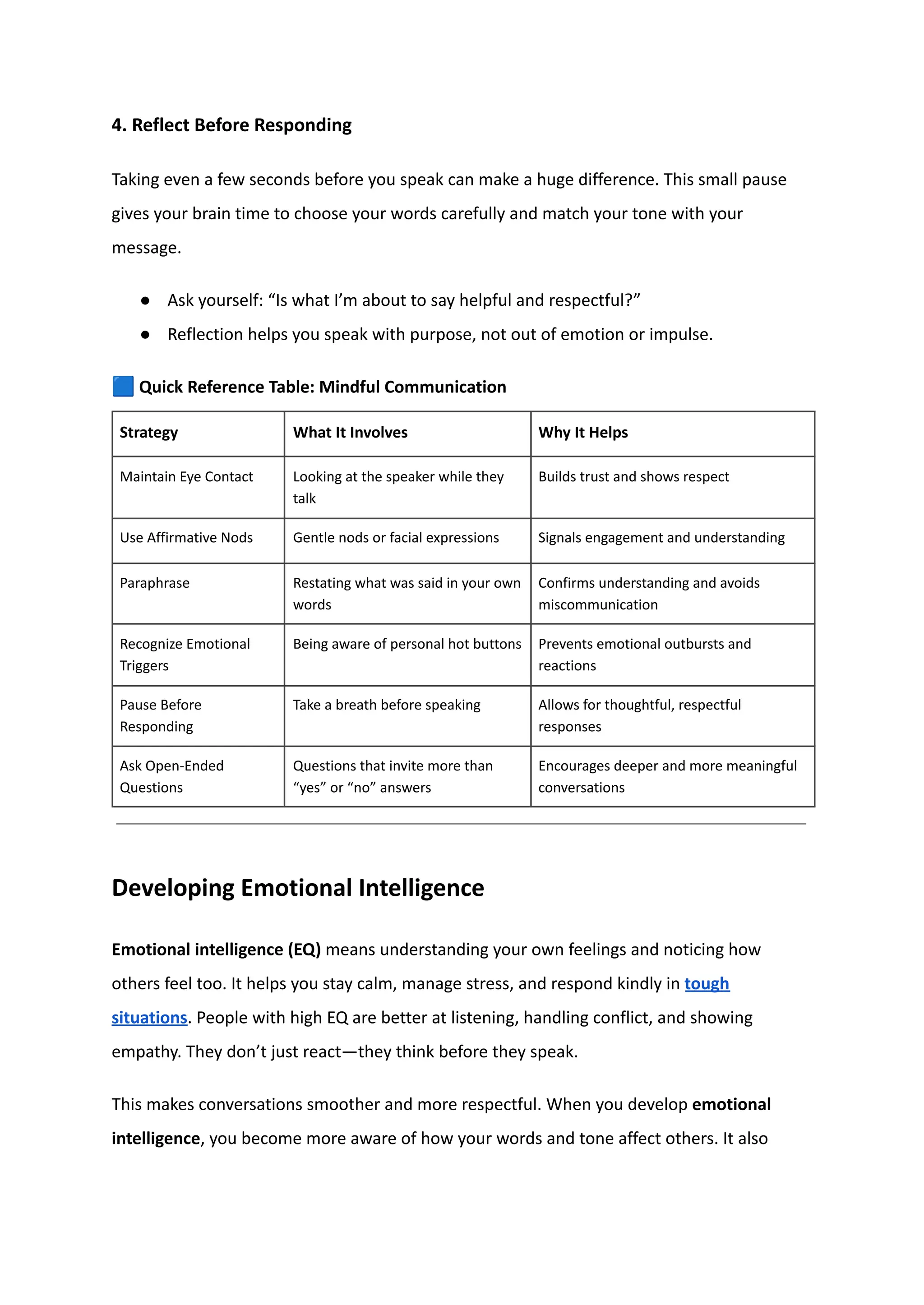
🟦Quick Reference Table: Mindful Communication
Strategy What It Involves Why It Helps
Maintain Eye Contact Looking at the speaker while they
talk
Builds trust and shows respect
Use Affirmative Nods Gentle nods or facial expressions Signals engagement and understanding
Paraphrase Restating what was said in your own
words
Confirms understanding and avoids
miscommunication
Recognize Emotional
Triggers
Being aware of personal hot buttons Prevents emotional outbursts and
reactions
Pause Before
Responding
Take a breath before speaking Allows for thoughtful, respectful
responses
Ask Open-Ended
Questions
Questions that invite more than
“yes” or “no” answers
Encourages deeper and more meaningful
conversations
Developing Emotional Intelligence
Emotional intelligence (EQ) means understanding your own feelings and noticing how
others feel too. It helps you stay calm, manage stress, and respond kindly in tough
situations. People with high EQ are better at listening, handling conflict, and showing
empathy. They don’t just react—they think before they speak.
This makes conversations smoother and more respectful. When you develop emotional
intelligence, you become more aware of how your words and tone affect others. It also
helps you read body language and facial expressions better, so you can respond in a way that
builds trust and keeps the conversation positive.
Explore BuySmart Personal Dev Hub…
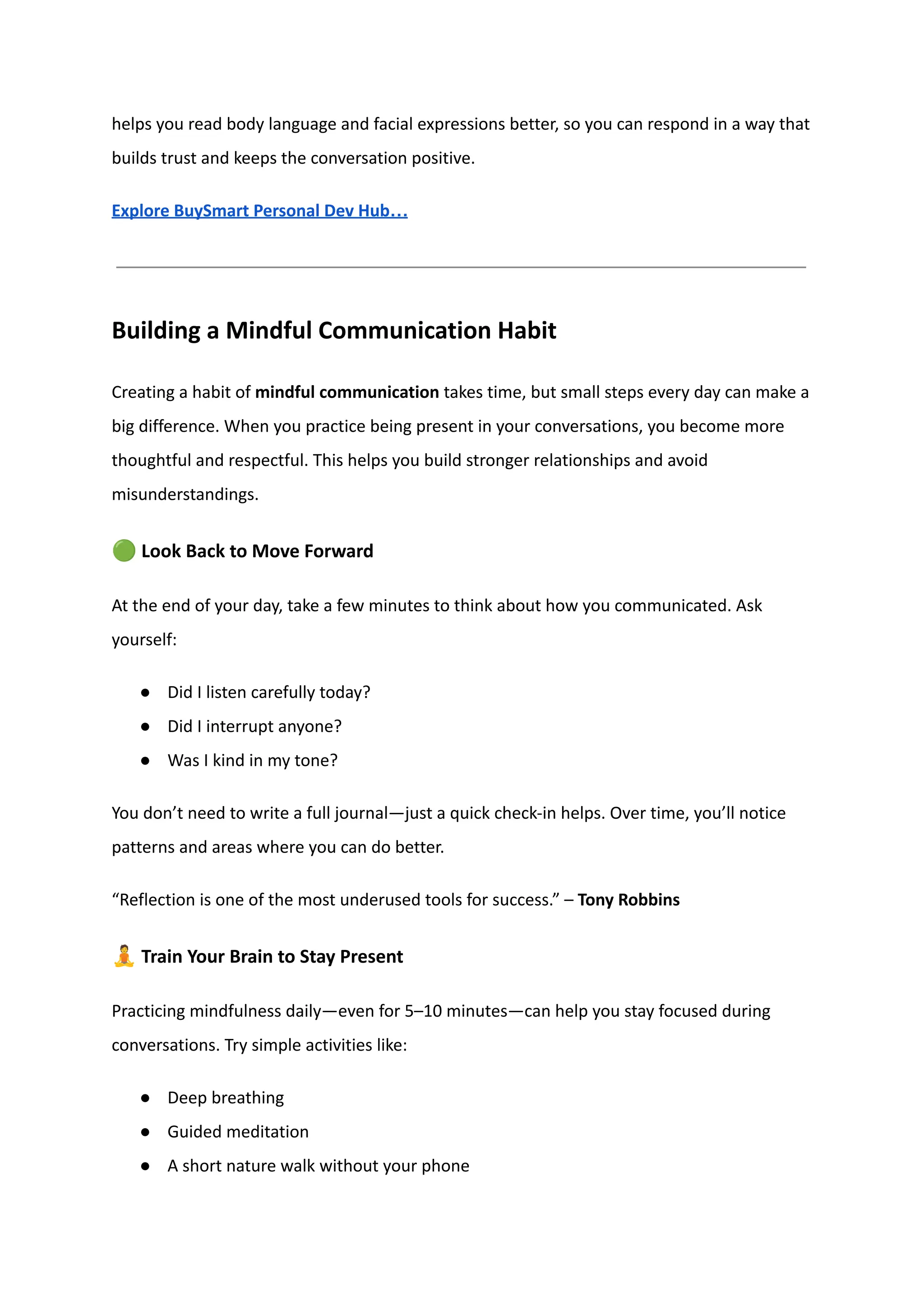
Building a Mindful Communication Habit
Creating a habit of mindful communication takes time, but small steps every day can make a
big difference. When you practice being present in your conversations, you become more
thoughtful and respectful. This helps you build stronger relationships and avoid
misunderstandings.
🟢Look Back to Move Forward
At the end of your day, take a few minutes to think about how you communicated. Ask
yourself:
●​ Did I listen carefully today?
●​ Did I interrupt anyone?
●​ Was I kind in my tone?
You don’t need to write a full journal—just a quick check-in helps. Over time, you’ll notice
patterns and areas where you can do better.
“Reflection is one of the most underused tools for success.” – Tony Robbins
🧘Train Your Brain to Stay Present
Practicing mindfulness daily—even for 5–10 minutes—can help you stay focused during
conversations. Try simple activities like:
●​ Deep breathing
●​ Guided meditation
●​ A short nature walk without your phone
According to the American Psychological Association, mindfulness reduces stress and
improves attention span—both important for healthy communication.
📣Let Others Help You Grow
Ask a friend, coworker, or family member you trust:
“Hey, how do you feel when we talk? Is there anything I could do better?”
People around you often notice things you may not. Their honest feedback helps you grow
and improve your communication in real-life situations.
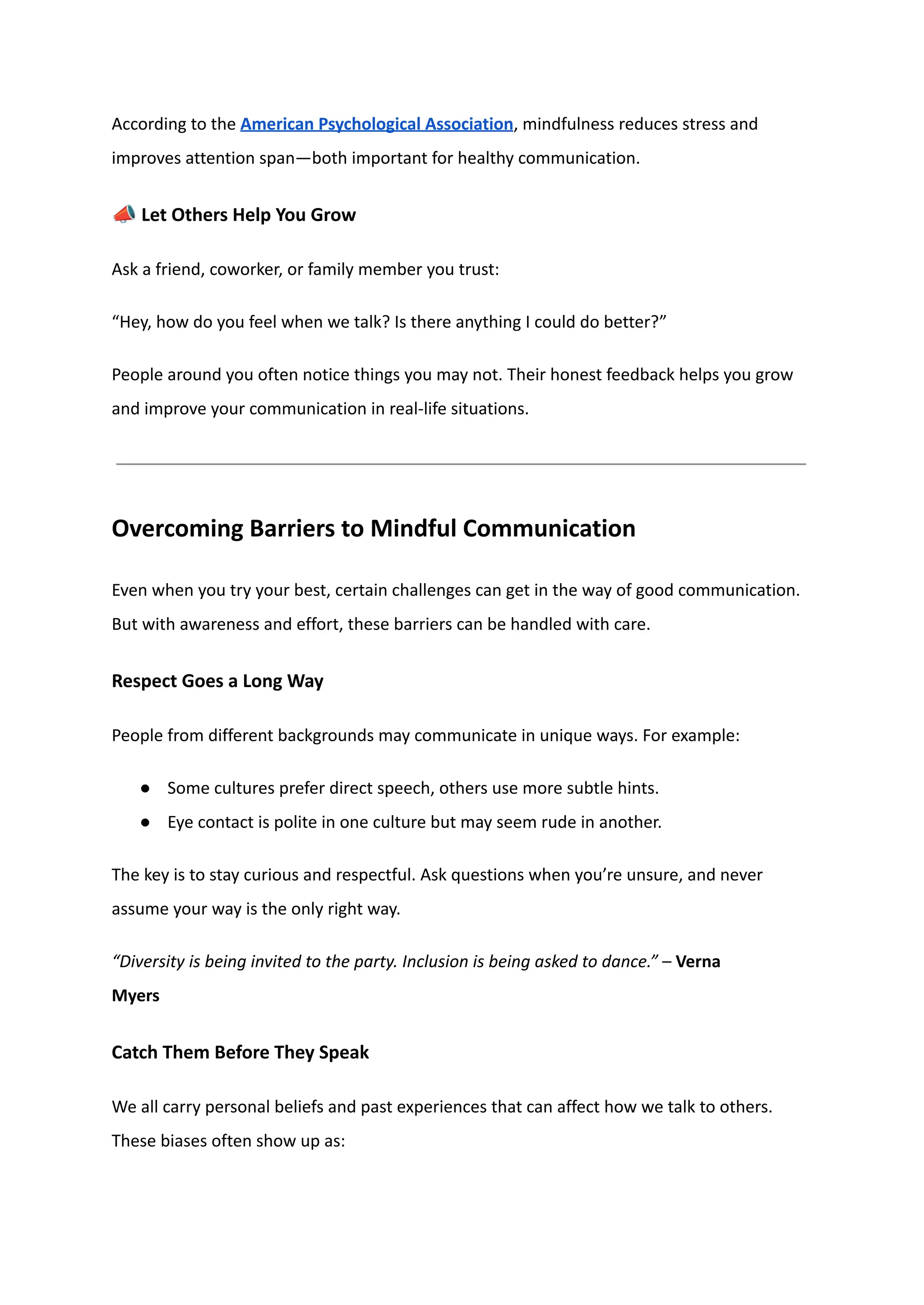
Overcoming Barriers to Mindful Communication
Even when you try your best, certain challenges can get in the way of good communication.
But with awareness and effort, these barriers can be handled with care.
Respect Goes a Long Way
People from different backgrounds may communicate in unique ways. For example:
●​ Some cultures prefer direct speech, others use more subtle hints.
●​ Eye contact is polite in one culture but may seem rude in another.
The key is to stay curious and respectful. Ask questions when you’re unsure, and never
assume your way is the only right way.
“Diversity is being invited to the party. Inclusion is being asked to dance.” – Verna
Myers
Catch Them Before They Speak
We all carry personal beliefs and past experiences that can affect how we talk to others.
These biases often show up as:
●​ Quick judgments
●​ Unfair assumptions
●​ Dismissing someone’s opinion
To overcome this, pause and ask yourself:-
“Am I really hearing what they’re saying, or just what I expect to hear?”
Self-awareness is the first step toward fair and mindful conversations.
Tired Minds Can’t Communicate Well
It’s hard to be a mindful communicator when you’re exhausted or overwhelmed. Stress
causes your brain to react instead of respond. You may speak harshly without meaning to.
That’s why self-care is a vital part of good communication. Simple steps like:
●​ Getting enough sleep
●​ Taking breaks during work
●​ Eating healthy meals
…can keep your mind calm and focused, helping you stay kind and thoughtful during tough
talks.
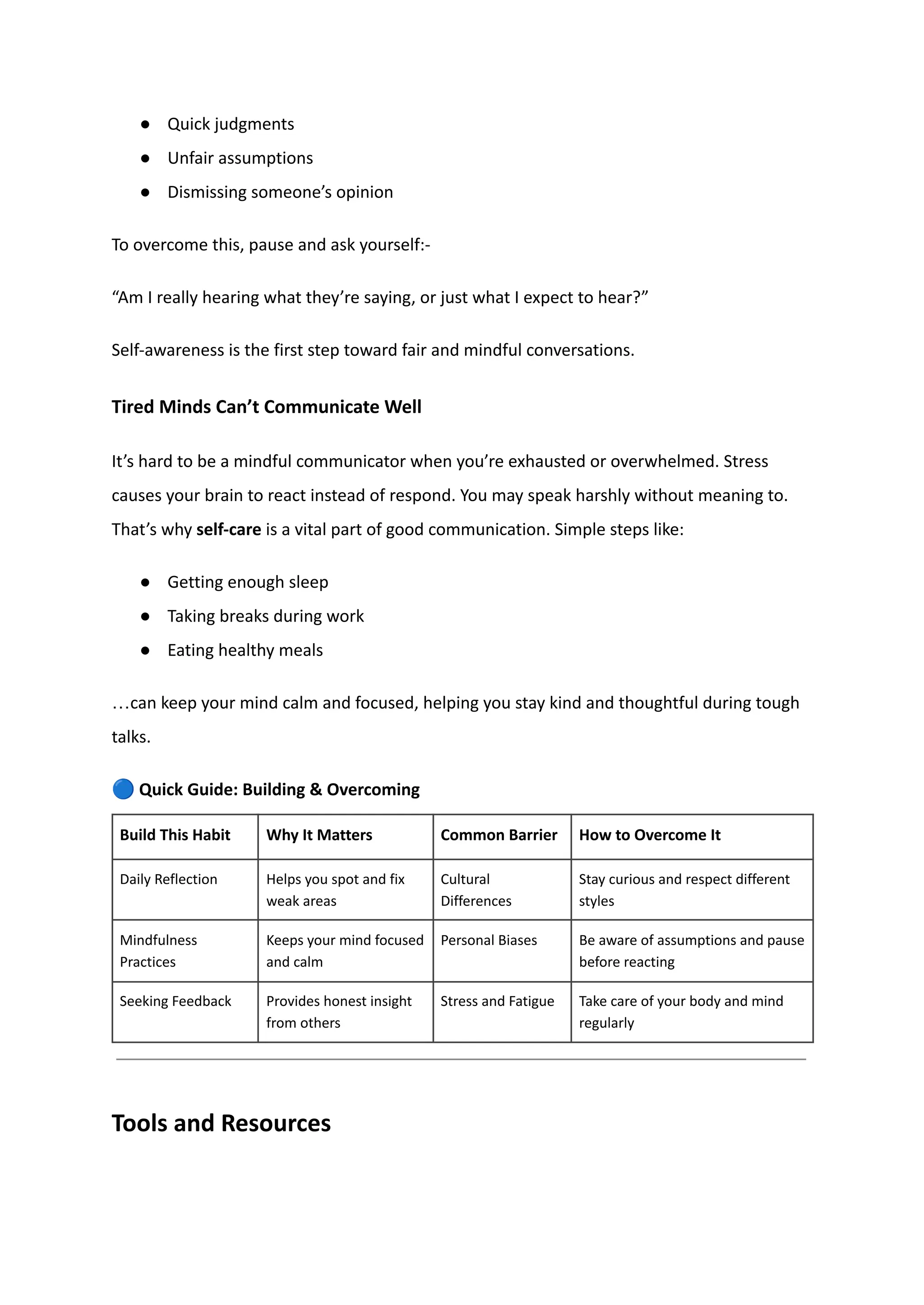
🔵Quick Guide: Building & Overcoming
Build This Habit Why It Matters Common Barrier How to Overcome It
Daily Reflection Helps you spot and fix
weak areas
Cultural
Differences
Stay curious and respect different
styles
Mindfulness
Practices
Keeps your mind focused
and calm
Personal Biases Be aware of assumptions and pause
before reacting
Seeking Feedback Provides honest insight
from others
Stress and Fatigue Take care of your body and mind
regularly
Tools and Resources
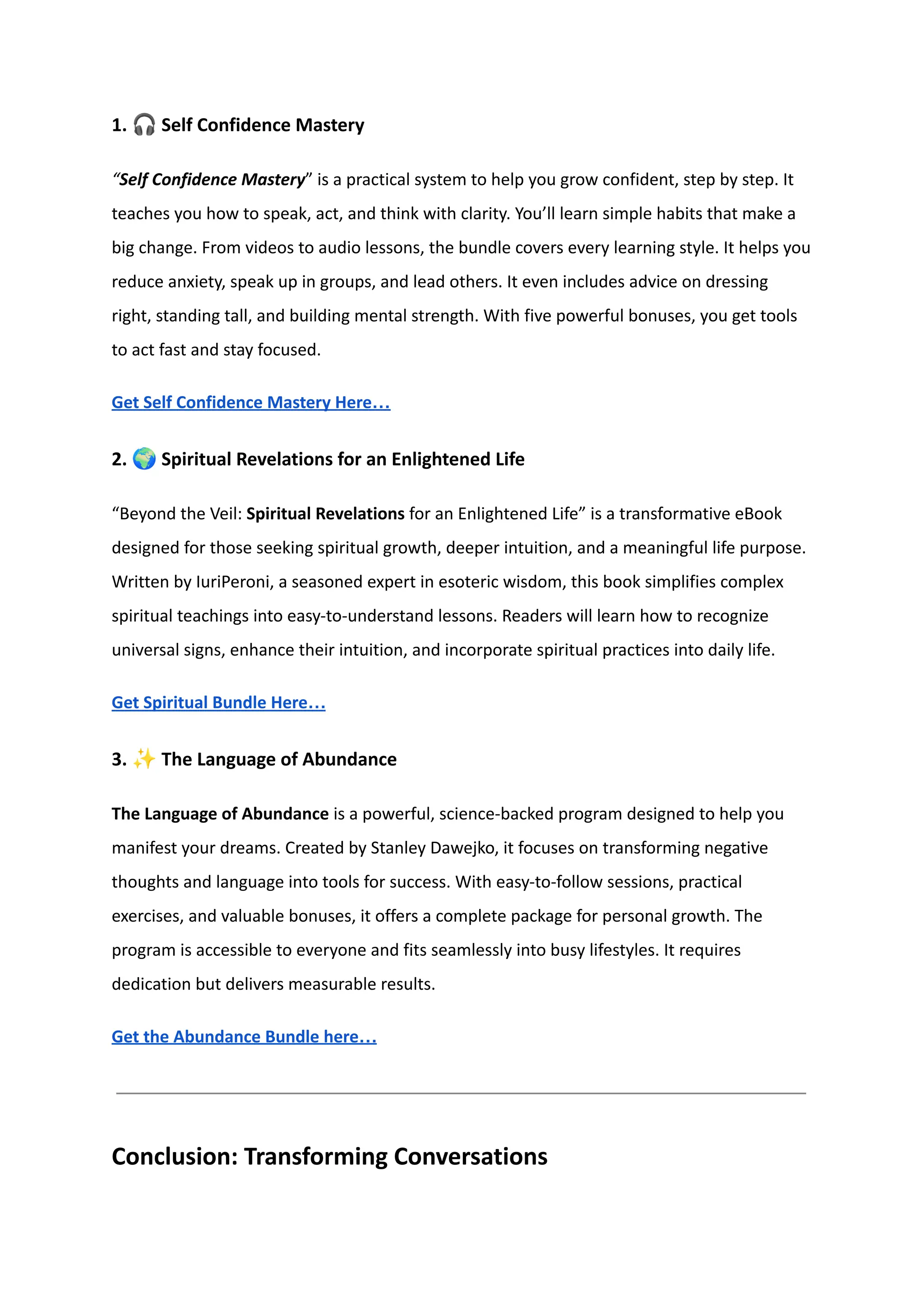
1. 🎧Self Confidence Mastery
“Self Confidence Mastery” is a practical system to help you grow confident, step by step. It
teaches you how to speak, act, and think with clarity. You’ll learn simple habits that make a
big change. From videos to audio lessons, the bundle covers every learning style. It helps you
reduce anxiety, speak up in groups, and lead others. It even includes advice on dressing
right, standing tall, and building mental strength. With five powerful bonuses, you get tools
to act fast and stay focused.
Get Self Confidence Mastery Here…
2. 🌍Spiritual Revelations for an Enlightened Life
“Beyond the Veil: Spiritual Revelations for an Enlightened Life” is a transformative eBook
designed for those seeking spiritual growth, deeper intuition, and a meaningful life purpose.
Written by IuriPeroni, a seasoned expert in esoteric wisdom, this book simplifies complex
spiritual teachings into easy-to-understand lessons. Readers will learn how to recognize
universal signs, enhance their intuition, and incorporate spiritual practices into daily life.
Get Spiritual Bundle Here…
3. ✨The Language of Abundance
The Language of Abundance is a powerful, science-backed program designed to help you
manifest your dreams. Created by Stanley Dawejko, it focuses on transforming negative
thoughts and language into tools for success. With easy-to-follow sessions, practical
exercises, and valuable bonuses, it offers a complete package for personal growth. The
program is accessible to everyone and fits seamlessly into busy lifestyles. It requires
dedication but delivers measurable results.
Get the Abundance Bundle here…
Conclusion: Transforming Conversations
Mindful communication isn’t just a skill—it’s a powerful habit that can completely change
the way you connect with others. When you’re fully present, you listen with care, speak with
purpose, and respond with thought, not just emotion.
This builds deeper trust, clears up misunderstandings, and creates a stronger sense of
respect. Yes, it takes daily effort—like reflecting on your conversations, staying aware of
stress, and keeping your emotions in check.
But over time, you’ll notice how much easier and more fulfilling your interactions become.
Whether at home, at work, or with friends, being mindful can stop the cycle of ruined
conversations and open the door to understanding, kindness, and real connection. It’s worth
every bit of effort.
Sources
●​ Mindful Communication – SIGMA Assessment Systems
●​ 8 Ways You Can Improve Your Communication Skills – Harvard DCE
●​ Using Emotional Intelligence to Improve Communication – DDI
●​ Key Tips for Active Listening – MIT Human Resources
●​ Body Language and Nonverbal Communication – HelpGuide.org

Mindful Communication - Stop Ruining Conversations.pdf

  • 1.
    Mindful Communication: ​ StopRuining Conversations! Key Takeaways ●​ Mindful communication: Focus fully on the conversation at hand. ●​ Listen Actively: Show genuine interest and understanding. ●​ Communicate Clearly: Express your thoughts with clarity and compassion. ●​ Manage Emotions: Respond thoughtfully, not reactively. ●​ Practice Empathy: Seek to understand others’ perspectives. The Moment That Changed Everything I still remember the day I lost a friend—not because of a big fight, but because of a conversation gone wrong. I was distracted, defensive, and not truly listening. What started
  • 2.
    as a simplechat turned into a misunderstanding that neither of us could mend. That experience taught me a valuable lesson: the way we communicate can either build bridges or burn them. In our fast-paced world, it’s easy to fall into communication traps—interrupting, assuming, reacting without thinking. But there’s a better way. Mindful communication offers a path to more meaningful, respectful, and effective interactions. It’s about being present, listening with intention, and speaking with clarity and compassion. In this guide, we’ll explore how to stop ruining conversations and start connecting on a deeper level. What Is Mindful Communication? Mindful communication means paying full attention during a conversation. It’s about really listening to the other person, thinking before you speak, and being aware of how your words and body language affect others. Instead of reacting quickly or talking over someone, you slow down and stay focused on the present moment. This helps you understand others better and avoid common mistakes like interrupting or making assumptions. By practicing mindful communication, you build trust, avoid confusion, and create stronger, more respectful relationships—whether at home, work, or in daily life. It’s simple, powerful, and truly effective. The Cost of Poor Communication Miscommunication can lead to conflicts, damaged relationships, and missed opportunities. According to a study by the Project Management Institute, ineffective communication is a primary factor in project failure one-third of the time. In personal relationships, poor communication can erode trust and intimacy.
  • 3.
    Benefits of MindfulCommunication ●​ Improved Relationships: Mindful communication helps you build trust and deeper connections by showing respect, listening carefully, and responding thoughtfully to others’ needs and feelings. ●​ Enhanced Clarity: By staying present and choosing your words carefully, you reduce confusion and make your message easier to understand, helping others feel heard and valued. ●​ Emotional Intelligence: It strengthens your ability to recognize your own emotions and understand others’ feelings, making your responses more thoughtful and less reactive in any conversation. ●​ Conflict Resolution: Mindful communication calms tense situations, encourages respectful dialogue, and helps people work through disagreements without anger or blame, leading to better outcomes for everyone. Core Principles of Mindful Communication 1.​ Presence: Being fully present means giving your undivided attention to the conversation. This involves putting away distractions and focusing on the speaker. 2.​ Active Listening: Active listening requires more than just hearing words; it involves understanding the message and emotions behind them. Techniques include nodding, summarizing, and asking clarifying questions. 3.​ Non-Judgment: Approach conversations without preconceived notions or judgments. This openness encourages honest and productive dialogue. 4.​ Empathy: Empathy involves understanding and sharing the feelings of others. It helps in building connections and resolving conflicts. Common Communication Pitfalls
  • 4.
    ●​ Interrupting: Speakingover someone can make them feel ignored. It shows you’re not truly listening, which damages trust and weakens your connection. ●​ Multitasking: Checking your phone or doing other tasks during a conversation shows you’re not fully present, making others feel unimportant or overlooked. ●​ Assumptions: Guessing what someone means without asking for clarity can lead to confusion, missed points, and unnecessary tension in your conversations. ●​ Reactive Responses: Answering with strong emotions instead of calm thoughts can quickly turn a simple talk into a heated argument, causing regret later. Strategies to Enhance Mindful Communication Mindful communication is not just about speaking thoughtfully—it’s about connecting with others through awareness, presence, and respect. These strategies help you communicate more clearly, listen better, and reduce the chances of misunderstandings. Let’s explore how you can strengthen your communication using practical, easy-to-follow methods. 1. Practice Active Listening
  • 5.
    Being a goodlistener is one of the most powerful tools in mindful communication. It shows you care, and it helps you understand the other person fully before responding. ●​ Maintain Eye Contact: Keeping eye contact shows the speaker that you are fully present. It builds trust and shows genuine interest. ●​ Use Affirmative Nods: Simple gestures like nodding help the speaker feel heard and understood. It signals that you are actively engaged. ●​ Paraphrase: Repeat back what the speaker said in your own words. This confirms you’ve understood and gives the speaker a chance to clarify if needed. “Most people do not listen with the intent to understand; they listen with the intent to reply.” – Stephen R. Covey 2. Manage Your Emotions Strong emotions can cloud your ability to respond calmly and wisely. Being aware of your emotional state helps you stay composed and prevents overreactions. ●​ Identify Triggers: Know what topics or tones push your buttons so you can manage your response more effectively. ●​ Pause and Breathe: If you feel overwhelmed, take a few seconds to breathe before speaking. A short pause can prevent regretful reactions. “When awareness is brought to an emotion, power is brought to your life.” – Tara Brach 3. Ask Open-Ended Questions Asking open-ended questions invites others to share more than just basic information. It helps deepen the conversation and makes the other person feel truly valued. ●​ Example: Instead of asking, “Did you have a good day?” ask, “What was the best part of your day?” ●​ Open-ended questions spark reflection and show that you’re interested in more than just surface-level answers.
  • 6.
    4. Reflect BeforeResponding Taking even a few seconds before you speak can make a huge difference. This small pause gives your brain time to choose your words carefully and match your tone with your message. ●​ Ask yourself: “Is what I’m about to say helpful and respectful?” ●​ Reflection helps you speak with purpose, not out of emotion or impulse. 🟦Quick Reference Table: Mindful Communication Strategy What It Involves Why It Helps Maintain Eye Contact Looking at the speaker while they talk Builds trust and shows respect Use Affirmative Nods Gentle nods or facial expressions Signals engagement and understanding Paraphrase Restating what was said in your own words Confirms understanding and avoids miscommunication Recognize Emotional Triggers Being aware of personal hot buttons Prevents emotional outbursts and reactions Pause Before Responding Take a breath before speaking Allows for thoughtful, respectful responses Ask Open-Ended Questions Questions that invite more than “yes” or “no” answers Encourages deeper and more meaningful conversations Developing Emotional Intelligence Emotional intelligence (EQ) means understanding your own feelings and noticing how others feel too. It helps you stay calm, manage stress, and respond kindly in tough situations. People with high EQ are better at listening, handling conflict, and showing empathy. They don’t just react—they think before they speak. This makes conversations smoother and more respectful. When you develop emotional intelligence, you become more aware of how your words and tone affect others. It also
  • 7.
    helps you readbody language and facial expressions better, so you can respond in a way that builds trust and keeps the conversation positive. Explore BuySmart Personal Dev Hub… Building a Mindful Communication Habit Creating a habit of mindful communication takes time, but small steps every day can make a big difference. When you practice being present in your conversations, you become more thoughtful and respectful. This helps you build stronger relationships and avoid misunderstandings. 🟢Look Back to Move Forward At the end of your day, take a few minutes to think about how you communicated. Ask yourself: ●​ Did I listen carefully today? ●​ Did I interrupt anyone? ●​ Was I kind in my tone? You don’t need to write a full journal—just a quick check-in helps. Over time, you’ll notice patterns and areas where you can do better. “Reflection is one of the most underused tools for success.” – Tony Robbins 🧘Train Your Brain to Stay Present Practicing mindfulness daily—even for 5–10 minutes—can help you stay focused during conversations. Try simple activities like: ●​ Deep breathing ●​ Guided meditation ●​ A short nature walk without your phone
  • 8.
    According to theAmerican Psychological Association, mindfulness reduces stress and improves attention span—both important for healthy communication. 📣Let Others Help You Grow Ask a friend, coworker, or family member you trust: “Hey, how do you feel when we talk? Is there anything I could do better?” People around you often notice things you may not. Their honest feedback helps you grow and improve your communication in real-life situations. Overcoming Barriers to Mindful Communication Even when you try your best, certain challenges can get in the way of good communication. But with awareness and effort, these barriers can be handled with care. Respect Goes a Long Way People from different backgrounds may communicate in unique ways. For example: ●​ Some cultures prefer direct speech, others use more subtle hints. ●​ Eye contact is polite in one culture but may seem rude in another. The key is to stay curious and respectful. Ask questions when you’re unsure, and never assume your way is the only right way. “Diversity is being invited to the party. Inclusion is being asked to dance.” – Verna Myers Catch Them Before They Speak We all carry personal beliefs and past experiences that can affect how we talk to others. These biases often show up as:
  • 9.
    ●​ Quick judgments ●​Unfair assumptions ●​ Dismissing someone’s opinion To overcome this, pause and ask yourself:- “Am I really hearing what they’re saying, or just what I expect to hear?” Self-awareness is the first step toward fair and mindful conversations. Tired Minds Can’t Communicate Well It’s hard to be a mindful communicator when you’re exhausted or overwhelmed. Stress causes your brain to react instead of respond. You may speak harshly without meaning to. That’s why self-care is a vital part of good communication. Simple steps like: ●​ Getting enough sleep ●​ Taking breaks during work ●​ Eating healthy meals …can keep your mind calm and focused, helping you stay kind and thoughtful during tough talks. 🔵Quick Guide: Building & Overcoming Build This Habit Why It Matters Common Barrier How to Overcome It Daily Reflection Helps you spot and fix weak areas Cultural Differences Stay curious and respect different styles Mindfulness Practices Keeps your mind focused and calm Personal Biases Be aware of assumptions and pause before reacting Seeking Feedback Provides honest insight from others Stress and Fatigue Take care of your body and mind regularly Tools and Resources
  • 10.
    1. 🎧Self ConfidenceMastery “Self Confidence Mastery” is a practical system to help you grow confident, step by step. It teaches you how to speak, act, and think with clarity. You’ll learn simple habits that make a big change. From videos to audio lessons, the bundle covers every learning style. It helps you reduce anxiety, speak up in groups, and lead others. It even includes advice on dressing right, standing tall, and building mental strength. With five powerful bonuses, you get tools to act fast and stay focused. Get Self Confidence Mastery Here… 2. 🌍Spiritual Revelations for an Enlightened Life “Beyond the Veil: Spiritual Revelations for an Enlightened Life” is a transformative eBook designed for those seeking spiritual growth, deeper intuition, and a meaningful life purpose. Written by IuriPeroni, a seasoned expert in esoteric wisdom, this book simplifies complex spiritual teachings into easy-to-understand lessons. Readers will learn how to recognize universal signs, enhance their intuition, and incorporate spiritual practices into daily life. Get Spiritual Bundle Here… 3. ✨The Language of Abundance The Language of Abundance is a powerful, science-backed program designed to help you manifest your dreams. Created by Stanley Dawejko, it focuses on transforming negative thoughts and language into tools for success. With easy-to-follow sessions, practical exercises, and valuable bonuses, it offers a complete package for personal growth. The program is accessible to everyone and fits seamlessly into busy lifestyles. It requires dedication but delivers measurable results. Get the Abundance Bundle here… Conclusion: Transforming Conversations
  • 11.
    Mindful communication isn’tjust a skill—it’s a powerful habit that can completely change the way you connect with others. When you’re fully present, you listen with care, speak with purpose, and respond with thought, not just emotion. This builds deeper trust, clears up misunderstandings, and creates a stronger sense of respect. Yes, it takes daily effort—like reflecting on your conversations, staying aware of stress, and keeping your emotions in check. But over time, you’ll notice how much easier and more fulfilling your interactions become. Whether at home, at work, or with friends, being mindful can stop the cycle of ruined conversations and open the door to understanding, kindness, and real connection. It’s worth every bit of effort. Sources ●​ Mindful Communication – SIGMA Assessment Systems ●​ 8 Ways You Can Improve Your Communication Skills – Harvard DCE ●​ Using Emotional Intelligence to Improve Communication – DDI ●​ Key Tips for Active Listening – MIT Human Resources ●​ Body Language and Nonverbal Communication – HelpGuide.org