Understanding the
Visual Arts
CHAPTER 3
Objectives:
• Apply the skills and language of
the specific visual art and
demonstrate the ability to create
in the visual arts.
• Understand and evaluate how
the specific visual art convey
meaning.
Representational Art
• Representational artwork aims to represent actual objects or
subjects from reality. We can easily identify with recognizable
subjects in a painting, drawing or sculpture. This make
representational art widely accepted among masses.
• Representational art also represent the largest collection of artwork
created.
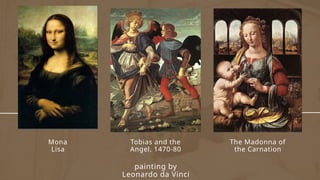
Mona
Lisa
Tobias and the
Angel, 1470-80
The Madonna of
the Carnation
painting by
Leonardo da Vinci
Abstract Art
• Many people have difficulty in understanding the differences
between abstract art and non-objective art.
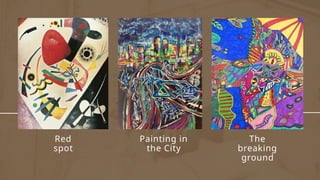
• Abstract art often misunderstood type of art known as abstraction
aims to take subjects from reality but presents them in the way that
is different from the way they are viewed in our reality. This may take
the form of emphasizing lines, shapes, or colors that transform the
subject.
• Abstract art includes the subcategories of Minimalism, Cubism, and
Precisionism. Abstraction can also happen when the artist decides to
view the subjects in a traditional manner.
Red
spot
Painting in
the City
The
breaking
ground
Non-objective Art
• Non-objective art takes nothing from reality. It is created purely for
aesthetic reasons. Non-objective art is abstract or non-
representational art. It tends to be geometric and does not represent
specific objects, people, or other subjects found in the natural world.
• One of the best known non-objective artists is Wassily Kandinsky
(1866-1944), a pioneer of abstract art.
How to read and
understand Visual Art?
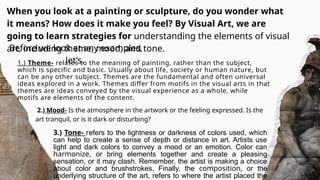
When you look at a painting or sculpture, do you wonder what
it means? How does it make you feel? By Visual Art, we are
going to learn strategies for understanding the elements of visual
art, including theme, mood, and tone.
Before we look at any examples,
let’s.
1.) Theme- relates to the meaning of painting, rather than the subject,
which is specific and basic. Usually about life, society or human nature, but
can be any other subject. Themes are the fundamental and often universal
ideas explored in a work. Themes differ from motifs in the visual arts in that
themes are ideas conveyed by the visual experience as a whole, while
motifs are elements of the content.
2.) Mood- Is the atmosphere in the artwork or the feeling expressed. Is the
art tranquil, or is it dark or disturbing?
3.) Tone- refers to the lightness or darkness of colors used, which
can help to create a sense of depth or distance in art. Artists use
light and dark colors to convey a mood or an emotion. Color can
harmonize, or bring elements together and create a pleasing
sensation, or it may clash. Remember, the artist is making a choice
about color and brushstrokes. Finally, the composition, or the
underlying structure of the art, refers to where the artist placed the
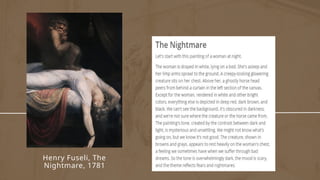
Henry Fuseli, The
Nightmare, 1781
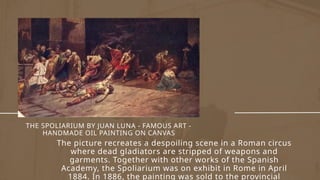
THE SPOLIARIUM BY JUAN LUNA - FAMOUS ART -
HANDMADE OIL PAINTING ON CANVAS
The picture recreates a despoiling scene in a Roman circus
where dead gladiators are stripped of weapons and
garments. Together with other works of the Spanish
Academy, the Spoliarium was on exhibit in Rome in April
1884. In 1886, the painting was sold to the provincial
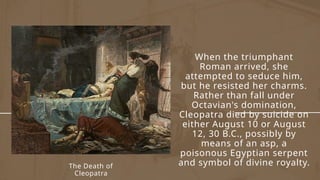
The Death of
Cleopatra
When the triumphant
Roman arrived, she
attempted to seduce him,
but he resisted her charms.
Rather than fall under
Octavian's domination,
Cleopatra died by suicide on
either August 10 or August
12, 30 B.C., possibly by
means of an asp, a
poisonous Egyptian serpent
and symbol of divine royalty.
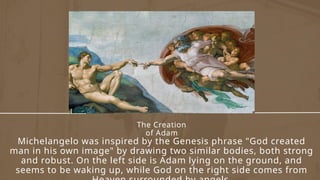
The Creation
of Adam
Michelangelo was inspired by the Genesis phrase "God created
man in his own image" by drawing two similar bodies, both strong
and robust. On the left side is Adam lying on the ground, and
seems to be waking up, while God on the right side comes from

MIDTERMTOPIC 3 ART101.pptxpppppppppppppp

  • 1.
  • 2.
    Objectives: • Apply theskills and language of the specific visual art and demonstrate the ability to create in the visual arts. • Understand and evaluate how the specific visual art convey meaning.
  • 3.
    Representational Art • Representationalartwork aims to represent actual objects or subjects from reality. We can easily identify with recognizable subjects in a painting, drawing or sculpture. This make representational art widely accepted among masses. • Representational art also represent the largest collection of artwork created.
  • 4.
    Mona Lisa Tobias and the Angel,1470-80 The Madonna of the Carnation painting by Leonardo da Vinci
  • 5.
    Abstract Art • Manypeople have difficulty in understanding the differences between abstract art and non-objective art. • Abstract art often misunderstood type of art known as abstraction aims to take subjects from reality but presents them in the way that is different from the way they are viewed in our reality. This may take the form of emphasizing lines, shapes, or colors that transform the subject. • Abstract art includes the subcategories of Minimalism, Cubism, and Precisionism. Abstraction can also happen when the artist decides to view the subjects in a traditional manner.
  • 6.
  • 7.
    Non-objective Art • Non-objectiveart takes nothing from reality. It is created purely for aesthetic reasons. Non-objective art is abstract or non- representational art. It tends to be geometric and does not represent specific objects, people, or other subjects found in the natural world. • One of the best known non-objective artists is Wassily Kandinsky (1866-1944), a pioneer of abstract art.
  • 8.
    How to readand understand Visual Art?
  • 9.
    When you lookat a painting or sculpture, do you wonder what it means? How does it make you feel? By Visual Art, we are going to learn strategies for understanding the elements of visual art, including theme, mood, and tone. Before we look at any examples, let’s. 1.) Theme- relates to the meaning of painting, rather than the subject, which is specific and basic. Usually about life, society or human nature, but can be any other subject. Themes are the fundamental and often universal ideas explored in a work. Themes differ from motifs in the visual arts in that themes are ideas conveyed by the visual experience as a whole, while motifs are elements of the content. 2.) Mood- Is the atmosphere in the artwork or the feeling expressed. Is the art tranquil, or is it dark or disturbing? 3.) Tone- refers to the lightness or darkness of colors used, which can help to create a sense of depth or distance in art. Artists use light and dark colors to convey a mood or an emotion. Color can harmonize, or bring elements together and create a pleasing sensation, or it may clash. Remember, the artist is making a choice about color and brushstrokes. Finally, the composition, or the underlying structure of the art, refers to where the artist placed the
  • 10.
  • 12.
    THE SPOLIARIUM BYJUAN LUNA - FAMOUS ART - HANDMADE OIL PAINTING ON CANVAS The picture recreates a despoiling scene in a Roman circus where dead gladiators are stripped of weapons and garments. Together with other works of the Spanish Academy, the Spoliarium was on exhibit in Rome in April 1884. In 1886, the painting was sold to the provincial
  • 13.
    The Death of Cleopatra Whenthe triumphant Roman arrived, she attempted to seduce him, but he resisted her charms. Rather than fall under Octavian's domination, Cleopatra died by suicide on either August 10 or August 12, 30 B.C., possibly by means of an asp, a poisonous Egyptian serpent and symbol of divine royalty.
  • 14.
    The Creation of Adam Michelangelowas inspired by the Genesis phrase "God created man in his own image" by drawing two similar bodies, both strong and robust. On the left side is Adam lying on the ground, and seems to be waking up, while God on the right side comes from