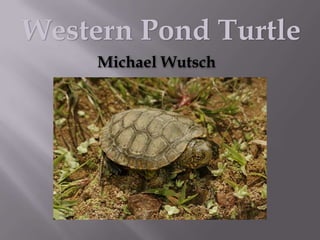
Western Pond Turtle
     Michael Wutsch
   Eukarya
   Animalia
   Chordata
   Reptilia
   Testudines
   Emydidae
   Actinemys or Emys
   A. marmorata
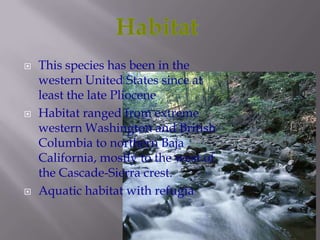
   This species has been in the
    western United States since at
    least the late Pliocene
   Habitat ranged from extreme
    western Washington and British
    Columbia to northern Baja
    California, mostly to the west of
    the Cascade-Sierra crest.
   Aquatic habitat with refugia
   They are unable to
    swallow food in the air;
    they must ingest their
    prey in the water
   Omnivorous diet
    includes adult and larval
    aquatic insects, terrestrial
    grasshoppers and aerial
    flies off the water's
    surface, beetles, fish,
    worms, and more
Population


 Many turtle populations have 20 individuals or
  less and are separated from each other by
  several miles.
 Also known as the Pacific pond turtle or
  Pacific mud turtle
 Only fresh-water turtle native to the North
  American Pacific Coast west of the Sierra-
  Cascade divide, with the exception of the
  Sonoran mud turtle
   Also known as:
   Actinemys marmota
   Clemmys marmorata
   Emys marmorata
   http://www.blm.gov/ca/pdfs/cdd_pdfs/cle
    mmys1.PDF
   http://www.jstor.org/pss/3802535
   http://www.atlantismagazine.com/bettelheim
    /pondturtle.html
   http://www.dfw.state.or.us/wildlife/living_
    with/docs/turtles.pdf


Michael westernpondturtle wildlife

  • 1.
    Western Pond Turtle Michael Wutsch
  • 2.
    Eukarya  Animalia  Chordata  Reptilia  Testudines  Emydidae  Actinemys or Emys  A. marmorata
  • 3.
    This species has been in the western United States since at least the late Pliocene  Habitat ranged from extreme western Washington and British Columbia to northern Baja California, mostly to the west of the Cascade-Sierra crest.  Aquatic habitat with refugia
  • 4.
    They are unable to swallow food in the air; they must ingest their prey in the water  Omnivorous diet includes adult and larval aquatic insects, terrestrial grasshoppers and aerial flies off the water's surface, beetles, fish, worms, and more
  • 5.
    Population  Many turtlepopulations have 20 individuals or less and are separated from each other by several miles.
  • 6.
     Also knownas the Pacific pond turtle or Pacific mud turtle  Only fresh-water turtle native to the North American Pacific Coast west of the Sierra- Cascade divide, with the exception of the Sonoran mud turtle
  • 7.
    Also known as:  Actinemys marmota  Clemmys marmorata  Emys marmorata
  • 8.
    http://www.blm.gov/ca/pdfs/cdd_pdfs/cle mmys1.PDF  http://www.jstor.org/pss/3802535  http://www.atlantismagazine.com/bettelheim /pondturtle.html  http://www.dfw.state.or.us/wildlife/living_ with/docs/turtles.pdf 