What is a Board Certified PSP?
The Physical Security Professional designation is a specialty
certification awarded to security practitioners who have demonstrated
in-depth knowledge and experience in threat assessment and risk
analysis; integrated physical security systems; and the appropriate
identification, implementation, and ongoing evaluation of security
measures.

The PSP credential allows practitioners to demonstrate expertise in
conducting physical security surveys to identify vulnerabilities and
performing cost analysis for the selection of integrated physical security
measures. The PSP officially recognizes specialized knowledge in
systems design, procurement, final acceptance testing, and
implementation procedures.
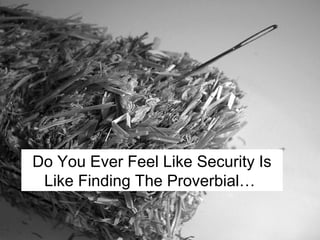
Do You Ever Feel Like Security Is
 Like Finding The Proverbial…
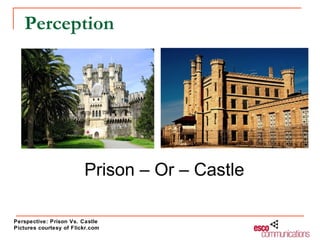
Perception


                         Prison – Or – Castle

Perspective: Prison Vs. Castle
Pictures courtesy of Flickr.com
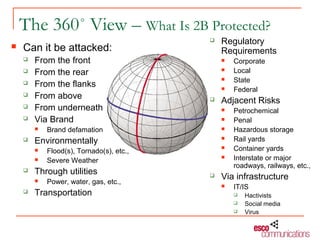
The 360˚ View – What Is 2B Protected?
                                             Regulatory
   Can it be attacked:                       Requirements
       From the front                           Corporate
       From the rear                            Local
                                                 State
       From the flanks                          Federal
       From above                           Adjacent Risks
       From underneath                          Petrochemical
       Via Brand                                Penal
           Brand defamation                     Hazardous storage
       Environmentally                          Rail yards
           Flood(s), Tornado(s), etc.,
                                                 Container yards
           Severe Weather
                                                 Interstate or major
                                                  roadways, railways, etc.,
       Through utilities                    Via infrastructure
           Power, water, gas, etc.,
                                                 IT/IS
       Transportation                               Hactivists
                                                     Social media
                                                     Virus
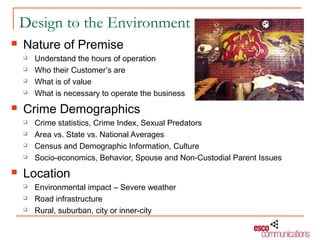
Design to the Environment
   Nature of Premise
       Understand the hours of operation
       Who their Customer’s are
       What is of value
       What is necessary to operate the business
   Crime Demographics
       Crime statistics, Crime Index, Sexual Predators
       Area vs. State vs. National Averages
       Census and Demographic Information, Culture
       Socio-economics, Behavior, Spouse and Non-Custodial Parent Issues
   Location
       Environmental impact – Severe weather
       Road infrastructure
       Rural, suburban, city or inner-city
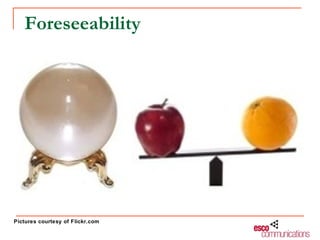
Foreseeability


Pictures courtesy of Flickr.com
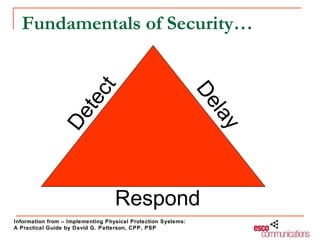
Fundamentals of Security…


                        t


                                                               De
                  t   ec


                                                                  lay
               De


                                   Respond
Information from – Implementing Physical Protection Systems:
A Practical Guide by David G. Patterson, CPP, PSP
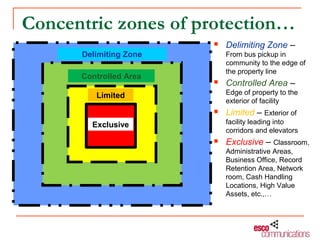
Concentric zones of protection…
                           Delimiting Zone –
      Delimiting Zone       From bus pickup in
                            community to the edge of
                            the property line
      Controlled Area
                           Controlled Area –
         Limited            Edge of property to the
                            exterior of facility
                           Limited – Exterior of
        Exclusive           facility leading into
                            corridors and elevators
                           Exclusive – Classroom,
                            Administrative Areas,
                            Business Office, Record
                            Retention Area, Network
                            room, Cash Handling
                            Locations, High Value
                            Assets, etc.,…
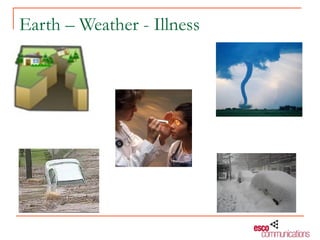
Earth – Weather - Illness
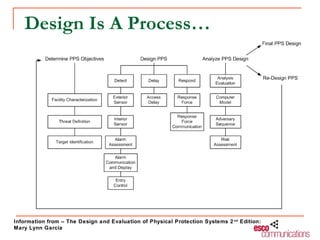
Design Is A Process…


Information from – The Design and Evaluation of Physical Protection Systems 2 nd Edition:
Mary Lynn Garcia
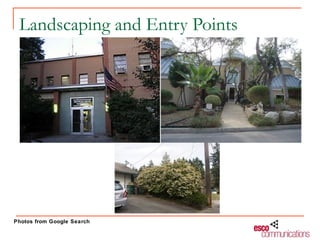
Landscaping and Entry Points


Photos from Google Search
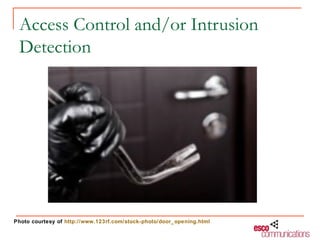
Access Control and/or Intrusion
 Detection


Photo courtesy of http://www.123rf.com/stock-photo/door_opening.html
Credential
Technology
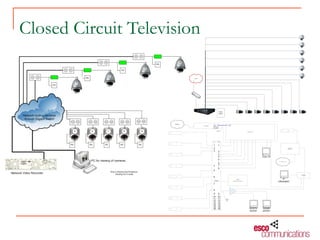
Closed Circuit Television
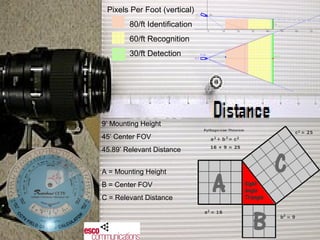
Pixels Per Foot (vertical)
        80/ft Identification
        60/ft Recognition
        30/ft Detection


9’ Mounting Height
45’ Center FOV
45.89’ Relevant Distance


A = Mounting Height
B = Center FOV
C = Relevant Distance
Field of View
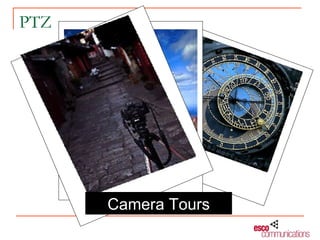
PTZ


      Camera Tours
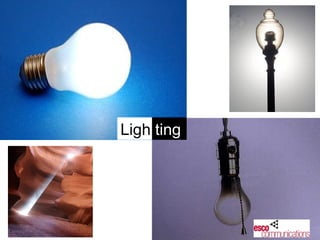
Ligh ting
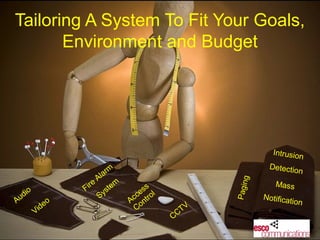
Tailoring A System To Fit Your Goals,
       Environment and Budget


                                                               Intrusion
                                                             Detectio
                         rm                                           n
                      Ala


                                                        g
                  r e       m                                  Mass


                                                   Pagin
    o           Fi       ste          s
                                    es ol
  di                  Sy          c                         Notificat
Au          o                   Ac ontr                              io   n
          de                                  TV
        Vi                        C
                                            CC

Methodology design

  • 1.
    What is aBoard Certified PSP? The Physical Security Professional designation is a specialty certification awarded to security practitioners who have demonstrated in-depth knowledge and experience in threat assessment and risk analysis; integrated physical security systems; and the appropriate identification, implementation, and ongoing evaluation of security measures. The PSP credential allows practitioners to demonstrate expertise in conducting physical security surveys to identify vulnerabilities and performing cost analysis for the selection of integrated physical security measures. The PSP officially recognizes specialized knowledge in systems design, procurement, final acceptance testing, and implementation procedures.
  • 2.
    Do You EverFeel Like Security Is Like Finding The Proverbial…
  • 3.
    Perception Prison – Or – Castle Perspective: Prison Vs. Castle Pictures courtesy of Flickr.com
  • 4.
    The 360˚ View– What Is 2B Protected?  Regulatory  Can it be attacked: Requirements  From the front  Corporate  From the rear  Local  State  From the flanks  Federal  From above  Adjacent Risks  From underneath  Petrochemical  Via Brand  Penal  Brand defamation  Hazardous storage  Environmentally  Rail yards  Flood(s), Tornado(s), etc.,  Container yards  Severe Weather  Interstate or major roadways, railways, etc.,  Through utilities  Via infrastructure  Power, water, gas, etc.,  IT/IS  Transportation  Hactivists  Social media  Virus
  • 5.
    Design to theEnvironment  Nature of Premise  Understand the hours of operation  Who their Customer’s are  What is of value  What is necessary to operate the business  Crime Demographics  Crime statistics, Crime Index, Sexual Predators  Area vs. State vs. National Averages  Census and Demographic Information, Culture  Socio-economics, Behavior, Spouse and Non-Custodial Parent Issues  Location  Environmental impact – Severe weather  Road infrastructure  Rural, suburban, city or inner-city
  • 6.
  • 7.
    Fundamentals of Security… t De t ec lay De Respond Information from – Implementing Physical Protection Systems: A Practical Guide by David G. Patterson, CPP, PSP
  • 8.
    Concentric zones ofprotection…  Delimiting Zone – Delimiting Zone From bus pickup in community to the edge of the property line Controlled Area  Controlled Area – Limited Edge of property to the exterior of facility  Limited – Exterior of Exclusive facility leading into corridors and elevators  Exclusive – Classroom, Administrative Areas, Business Office, Record Retention Area, Network room, Cash Handling Locations, High Value Assets, etc.,…
  • 9.
  • 11.
    Design Is AProcess… Information from – The Design and Evaluation of Physical Protection Systems 2 nd Edition: Mary Lynn Garcia
  • 12.
    Landscaping and EntryPoints Photos from Google Search
  • 13.
    Access Control and/orIntrusion Detection Photo courtesy of http://www.123rf.com/stock-photo/door_opening.html
  • 14.
  • 15.
  • 16.
    Pixels Per Foot(vertical) 80/ft Identification 60/ft Recognition 30/ft Detection 9’ Mounting Height 45’ Center FOV 45.89’ Relevant Distance A = Mounting Height B = Center FOV C = Relevant Distance
  • 17.
  • 18.
    PTZ Camera Tours
  • 19.
  • 20.
    Tailoring A SystemTo Fit Your Goals, Environment and Budget Intrusion Detectio rm n Ala g r e m Mass Pagin o Fi ste s es ol di Sy c Notificat Au o Ac ontr io n de TV Vi C CC

Editor's Notes

  • #2 One must be approved to sit the exam, a work history/experience coupled with a minimum five years in the field is required in order to sit the exam. Once approved, a candidate has two years to schedule and pass the exam. The exam is a weighted test taken at a Prometric testing center where the results are provided after submitting your final questions or the time limit expires. The test is 2 ½ hours for the certification which provides testing in three domains Physical Security Assessments Application, Design and Integration of Physical Security Systems Implementation of Physical Security Measures This designation requires continuing professional education hours every three years to re-qualify. There are approximately 964 PSP’s worldwide. PSP – Physical Security Professional ASIS International Board Certified Physical Security Professional 1 of 8 in the State of Indiana (Kimball Limited, NiSource, Old National, Marathon and ArcelorMittal Burns Harbor.
  • #4 Foreseeability – Litigation, lighting and security: Adequate or Not? Foreseeability is a statistical concept in the broad sense. It takes experience, quantitative and qualitative methods to arrive at an evaluation, and not solely based on numerical data or calculations. With respect to “crime foreseeability” there are three factors or components of a foreseeability evaluation: (1) Nature of the premises (2) crime demographics (3) location. Of these factors, various conditions can influence foreseeability. Conditions can be placed into the following two categories: (1) Physical Conditions and (2) Procedures Physical conditions can include : Lighting, noise, hardware (fence, locks, alarms, CCTV), foliage, signage, visibility, pedestrian and vehicle traffic flow. Procedural conditions can include : cash handling policies, a schedule for locking certain doors, turning on lights, key control system, security guard patrol methods, reporting procedures and repairing of any problems. Since litigation has been won or lost based on lighting I wanted to focus on this issue… to help protect facility and brand.
  • #7 Foreseeability – Litigation, lighting and security: Adequate or Not? Foreseeability is a statistical concept in the broad sense. It takes experience, quantitative and qualitative methods to arrive at an evaluation, and not solely based on numerical data or calculations. With respect to “crime foreseeability” there are three factors or components of a foreseeability evaluation: (1) Nature of the premises (2) crime demographics (3) location. Of these factors, various conditions can influence foreseeability. Conditions can be placed into the following two categories: (1) Physical Conditions and (2) Procedures Physical conditions can include : Lighting, noise, hardware (fence, locks, alarms, CCTV), foliage, signage, visibility, pedestrian and vehicle traffic flow. Procedural conditions can include : cash handling policies, a schedule for locking certain doors, turning on lights, key control system, security guard patrol methods, reporting procedures and repairing of any problems. Since litigation has been won or lost based on lighting I wanted to focus on this issue… to help protect facility and brand.
  • #8 Foreseeability – Litigation, lighting and security: Adequate or Not? Foreseeability is a statistical concept in the broad sense. It takes experience, quantitative and qualitative methods to arrive at an evaluation, and not solely based on numerical data or calculations. With respect to “crime foreseeability” there are three factors or components of a foreseeability evaluation: (1) Nature of the premises (2) crime demographics (3) location. Of these factors, various conditions can influence foreseeability. Conditions can be placed into the following two categories: (1) Physical Conditions and (2) Procedures Physical conditions can include : Lighting, noise, hardware (fence, locks, alarms, CCTV), foliage, signage, visibility, pedestrian and vehicle traffic flow. Procedural conditions can include : cash handling policies, a schedule for locking certain doors, turning on lights, key control system, security guard patrol methods, reporting procedures and repairing of any problems. Since litigation has been won or lost based on lighting I wanted to focus on this issue… to help protect facility and brand.
  • #9 Foreseeability – Litigation, lighting and security: Adequate or Not? Foreseeability is a statistical concept in the broad sense. It takes experience, quantitative and qualitative methods to arrive at an evaluation, and not solely based on numerical data or calculations. With respect to “crime foreseeability” there are three factors or components of a foreseeability evaluation: (1) Nature of the premises (2) crime demographics (3) location. Of these factors, various conditions can influence foreseeability. Conditions can be placed into the following two categories: (1) Physical Conditions and (2) Procedures Physical conditions can include : Lighting, noise, hardware (fence, locks, alarms, CCTV), foliage, signage, visibility, pedestrian and vehicle traffic flow. Procedural conditions can include : cash handling policies, a schedule for locking certain doors, turning on lights, key control system, security guard patrol methods, reporting procedures and repairing of any problems. Since litigation has been won or lost based on lighting I wanted to focus on this issue… to help protect facility and brand.
  • #11 Need to perform seasonal site assessments because their facility needs change throughout a year.