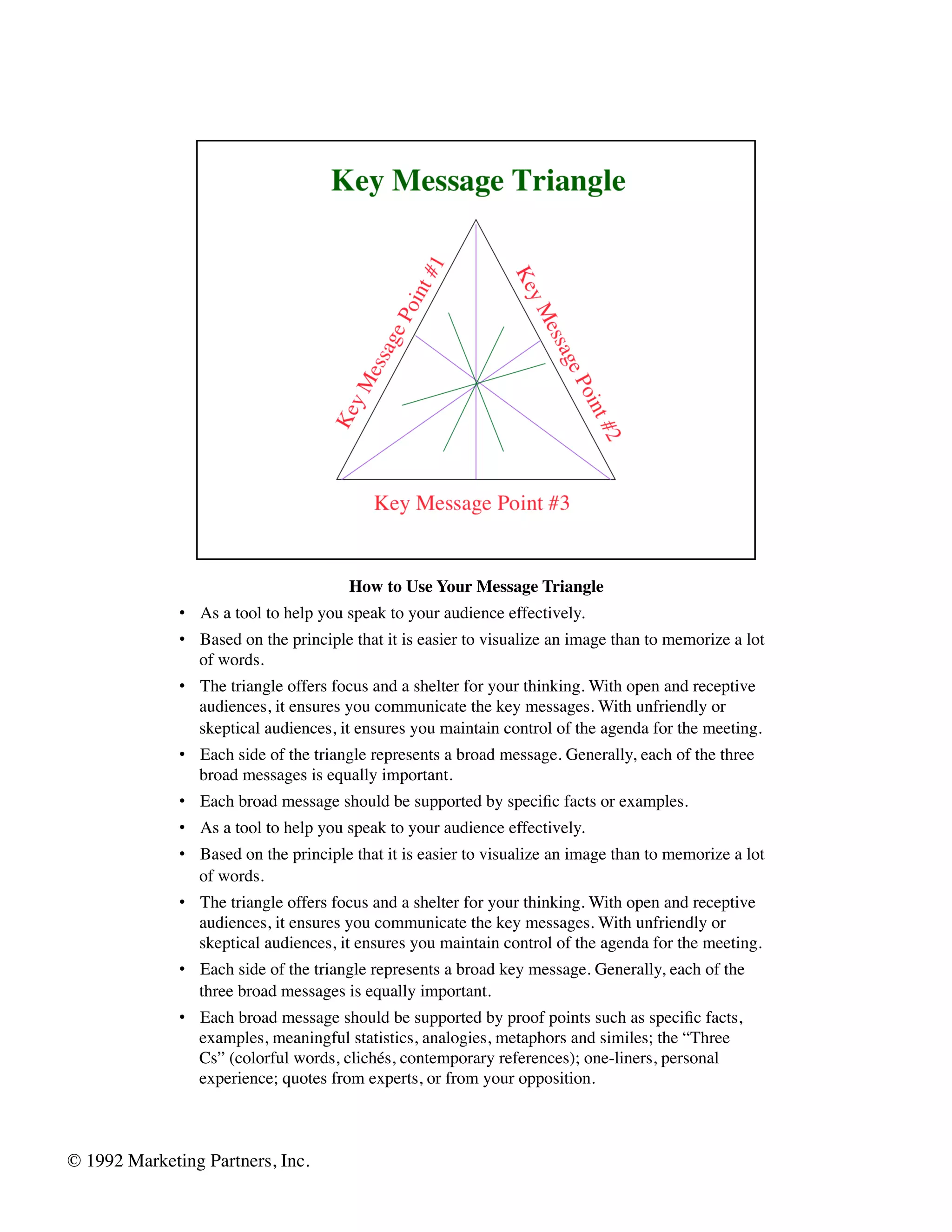
How to Use Your Message Triangle	

•  As a tool to help you speak to your audience effectively.	

•  Based on the principle that it is easier to visualize an image than to memorize a lot
of words.	

•  The triangle offers focus and a shelter for your thinking. With open and receptive
audiences, it ensures you communicate the key messages. With unfriendly or
skeptical audiences, it ensures you maintain control of the agenda for the meeting.	

•  Each side of the triangle represents a broad message. Generally, each of the three
broad messages is equally important.	

•  Each broad message should be supported by proof points such as specific facts,
examples, meaningful statistics, analogies, metaphors and similes; the “Three
Cs” (colorful words, clichés, contemporary references); one-liners, personal
experience; quotes from experts, or from your opposition.
© 1992 Marketing Partners, Inc.
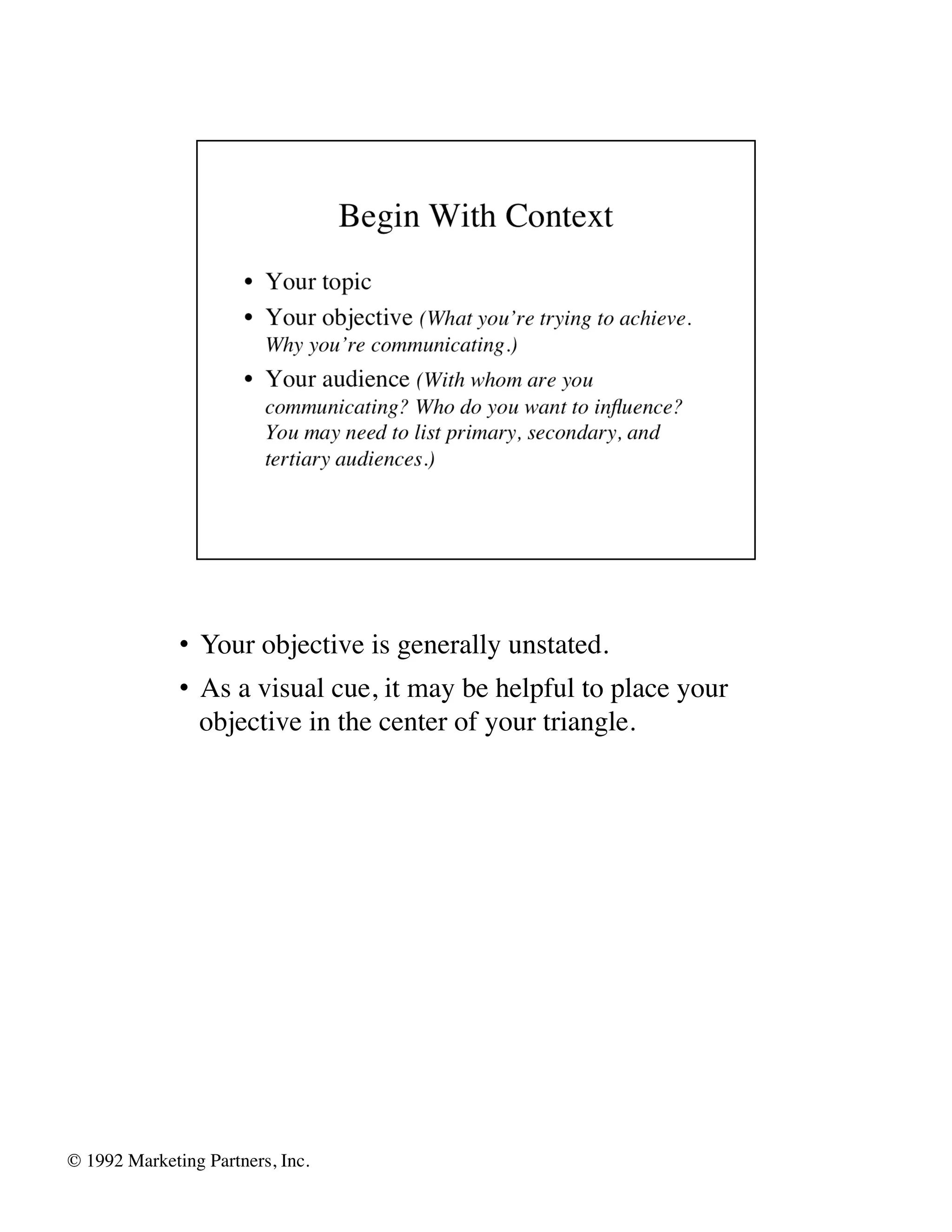
•  Your objective is generally unstated. 	

•  As a visual cue, it may be helpful to place your
objective in the center of your triangle. 	

© 1992 Marketing Partners, Inc.
© 1992 Marketing Partners, Inc. 	

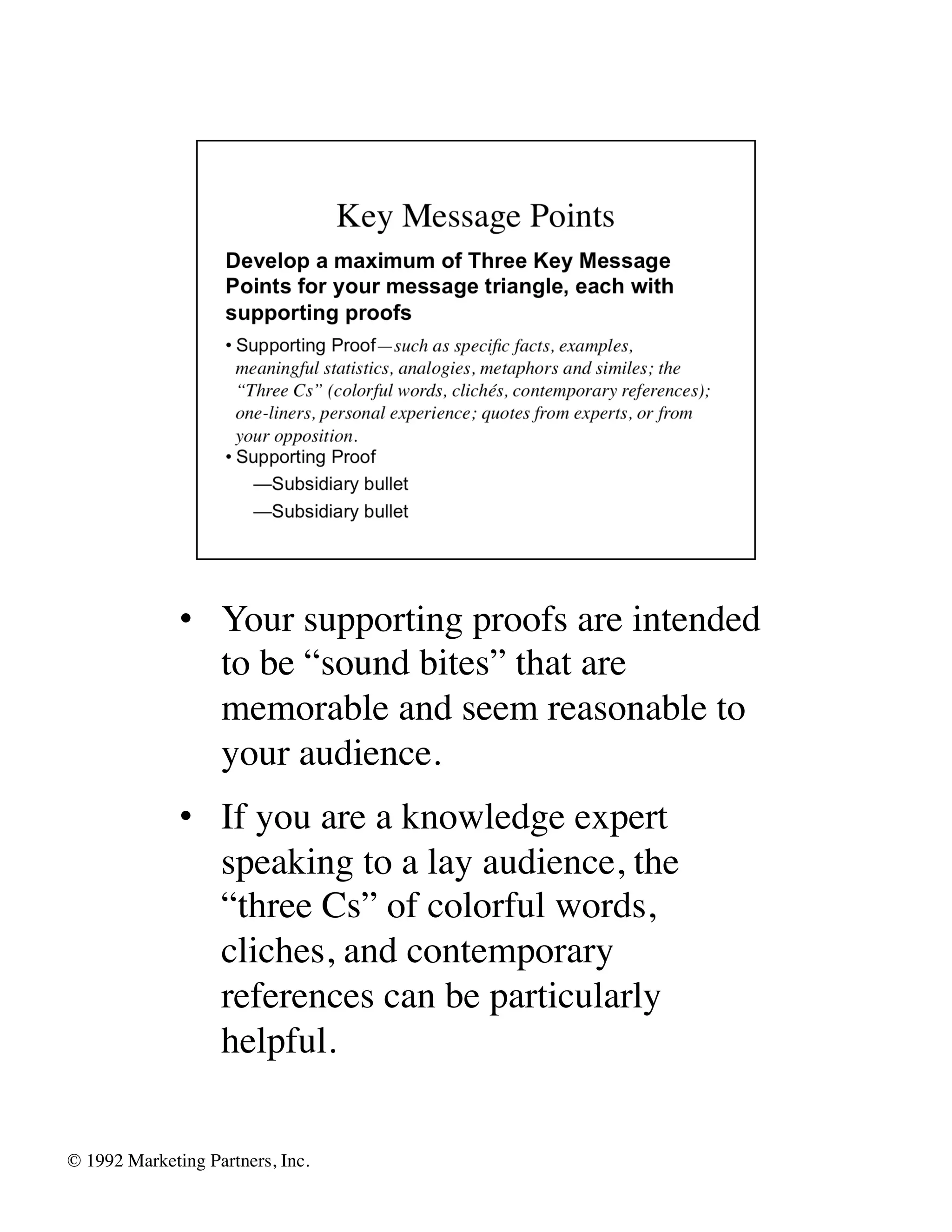
•  Your supporting proofs are intended
to be “sound bites” that are
memorable and seem reasonable to
your audience.	

•  If you are a knowledge expert
speaking to a lay audience, the
“three Cs” of colorful words,
cliches, and contemporary
references can be particularly
helpful.
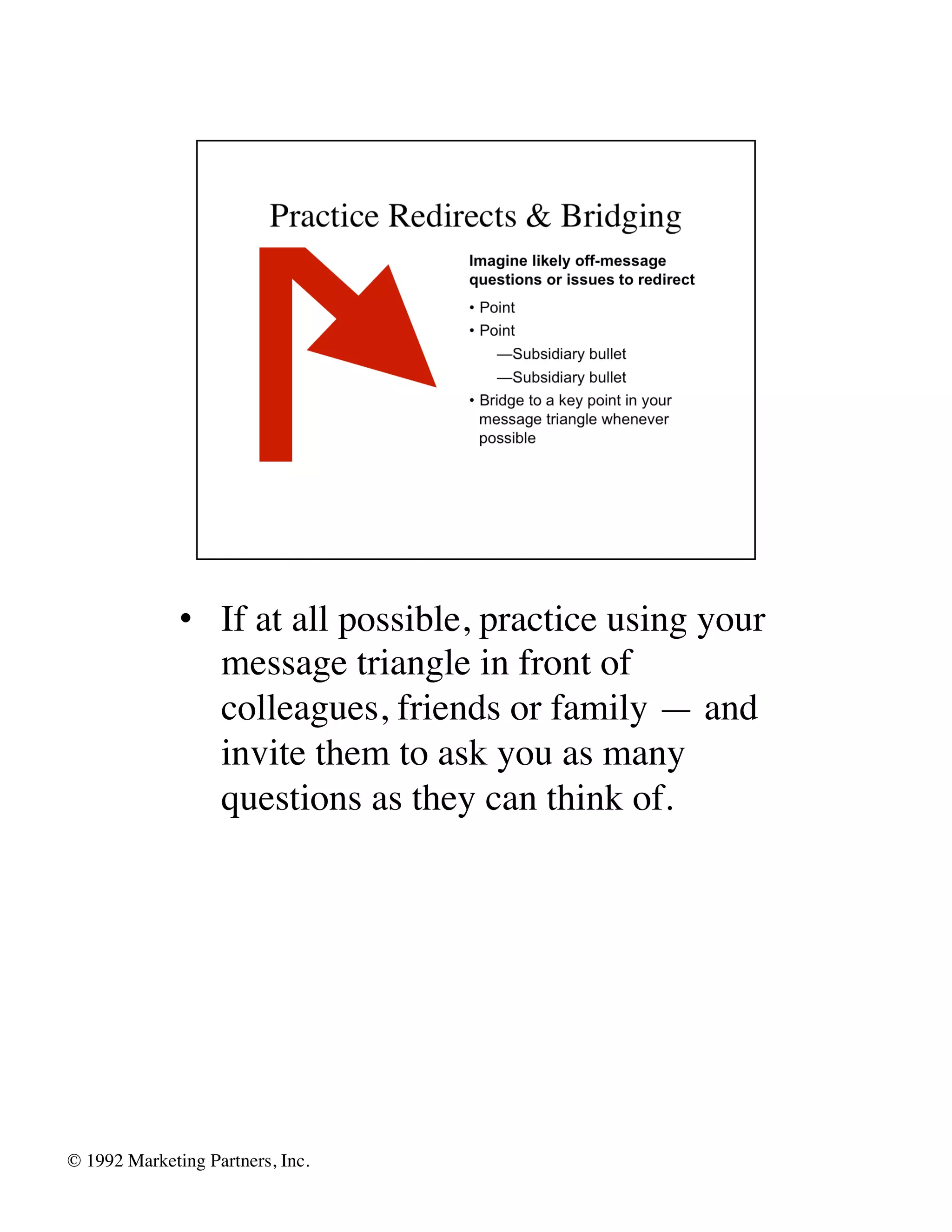
•  If at all possible, practice using your
message triangle in front of
colleagues, friends or family — and
invite them to ask you as many
questions as they can think of.	

© 1992 Marketing Partners, Inc.

Message Triangles: A 3-Step Guide on How to Develop & Use Yours

  • 1.
    How to UseYour Message Triangle •  As a tool to help you speak to your audience effectively. •  Based on the principle that it is easier to visualize an image than to memorize a lot of words. •  The triangle offers focus and a shelter for your thinking. With open and receptive audiences, it ensures you communicate the key messages. With unfriendly or skeptical audiences, it ensures you maintain control of the agenda for the meeting. •  Each side of the triangle represents a broad message. Generally, each of the three broad messages is equally important. •  Each broad message should be supported by proof points such as specific facts, examples, meaningful statistics, analogies, metaphors and similes; the “Three Cs” (colorful words, clichés, contemporary references); one-liners, personal experience; quotes from experts, or from your opposition. © 1992 Marketing Partners, Inc.
  • 2.
    •  Your objectiveis generally unstated. •  As a visual cue, it may be helpful to place your objective in the center of your triangle. © 1992 Marketing Partners, Inc.
  • 3.
    © 1992 MarketingPartners, Inc. •  Your supporting proofs are intended to be “sound bites” that are memorable and seem reasonable to your audience. •  If you are a knowledge expert speaking to a lay audience, the “three Cs” of colorful words, cliches, and contemporary references can be particularly helpful.
  • 4.
    •  If atall possible, practice using your message triangle in front of colleagues, friends or family — and invite them to ask you as many questions as they can think of. © 1992 Marketing Partners, Inc.