Mental Models and
                              Intuition
                               Ajay Ganapathy


Tuesday, January 22, 13
What is a mental
                               model?

                    • A sense of how something works
                    • the ability to predict an output for an
                          untested input


Tuesday, January 22, 13
Who uses mental
                               models?

                    • Everyone uses mental models.
                    • Studies strongly suggest that people
                          instinctively create mental models in order
                          to explain the world around them.


Tuesday, January 22, 13
Why use mental
                               models?
                    • Mental models simplify the task of
                          remembering input-output pairs.
                          • for example, instead of memorizing every
                            multiplication table, you can simply make
                            a mental model for multiplication, and use
                            that logic to solve any multiplication table
                            on the fly


Tuesday, January 22, 13
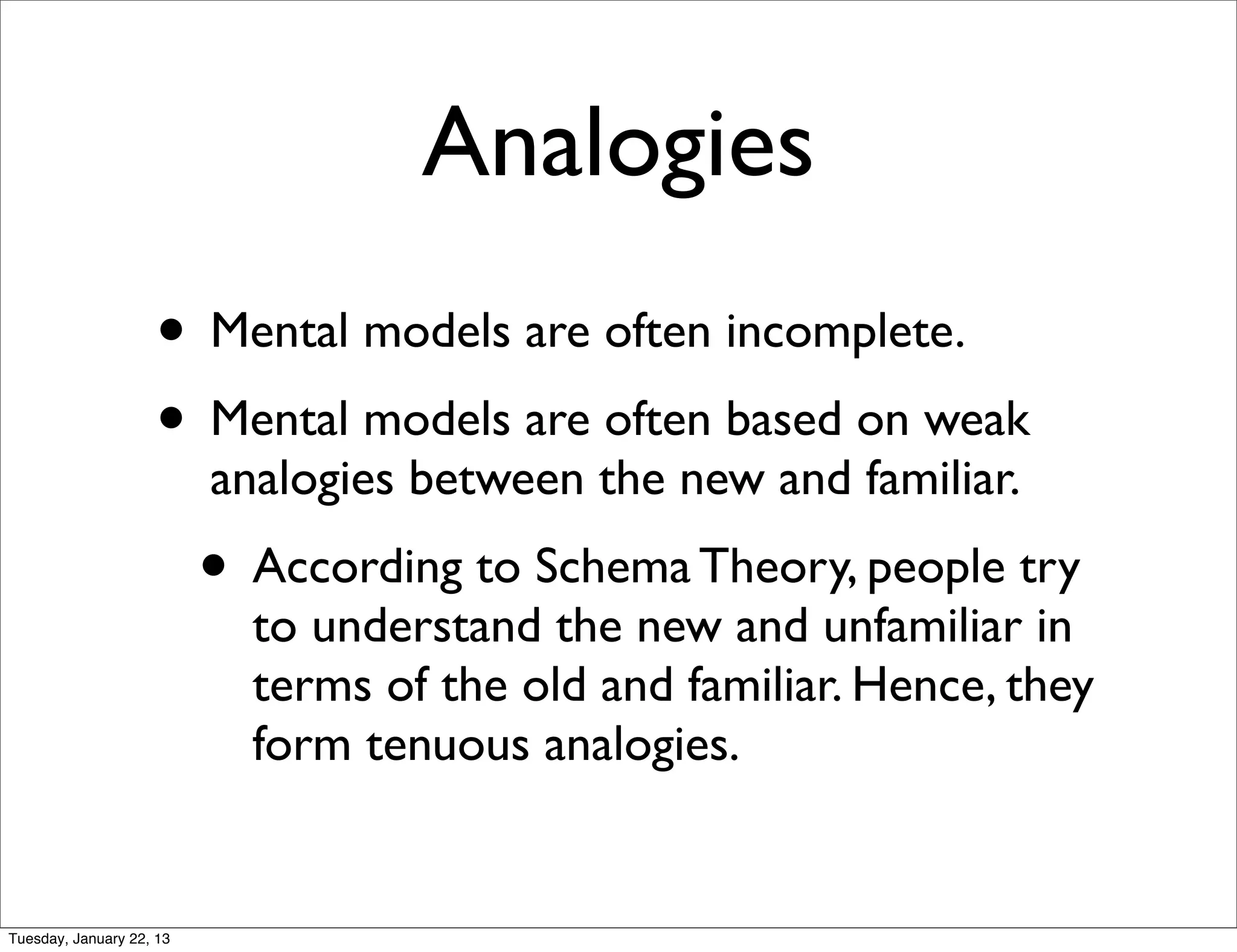
Analogies
                    • Mental models are often incomplete.
                    • Mental models are often based on weak
                          analogies between the new and familiar.
                          • According to Schema Theory, people try
                            to understand the new and unfamiliar in
                            terms of the old and familiar. Hence, they
                            form tenuous analogies.


Tuesday, January 22, 13
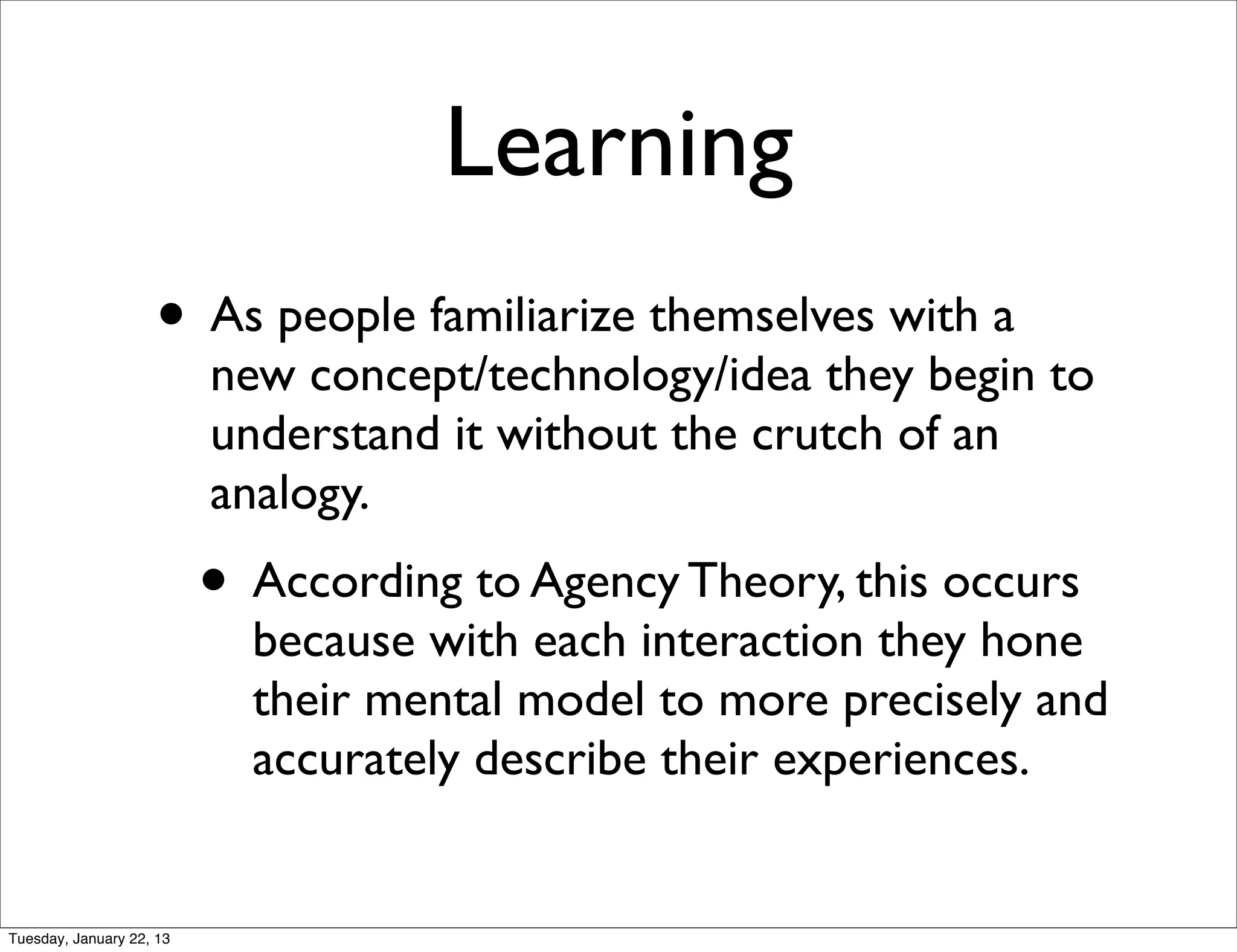
Learning
                    • As people familiarize themselves with a
                          new concept/technology/idea they begin to
                          understand it without the crutch of an
                          analogy.
                          • According to Agency Theory, this occurs
                            because with each interaction they hone
                            their mental model to more precisely and
                            accurately describe their experiences.


Tuesday, January 22, 13
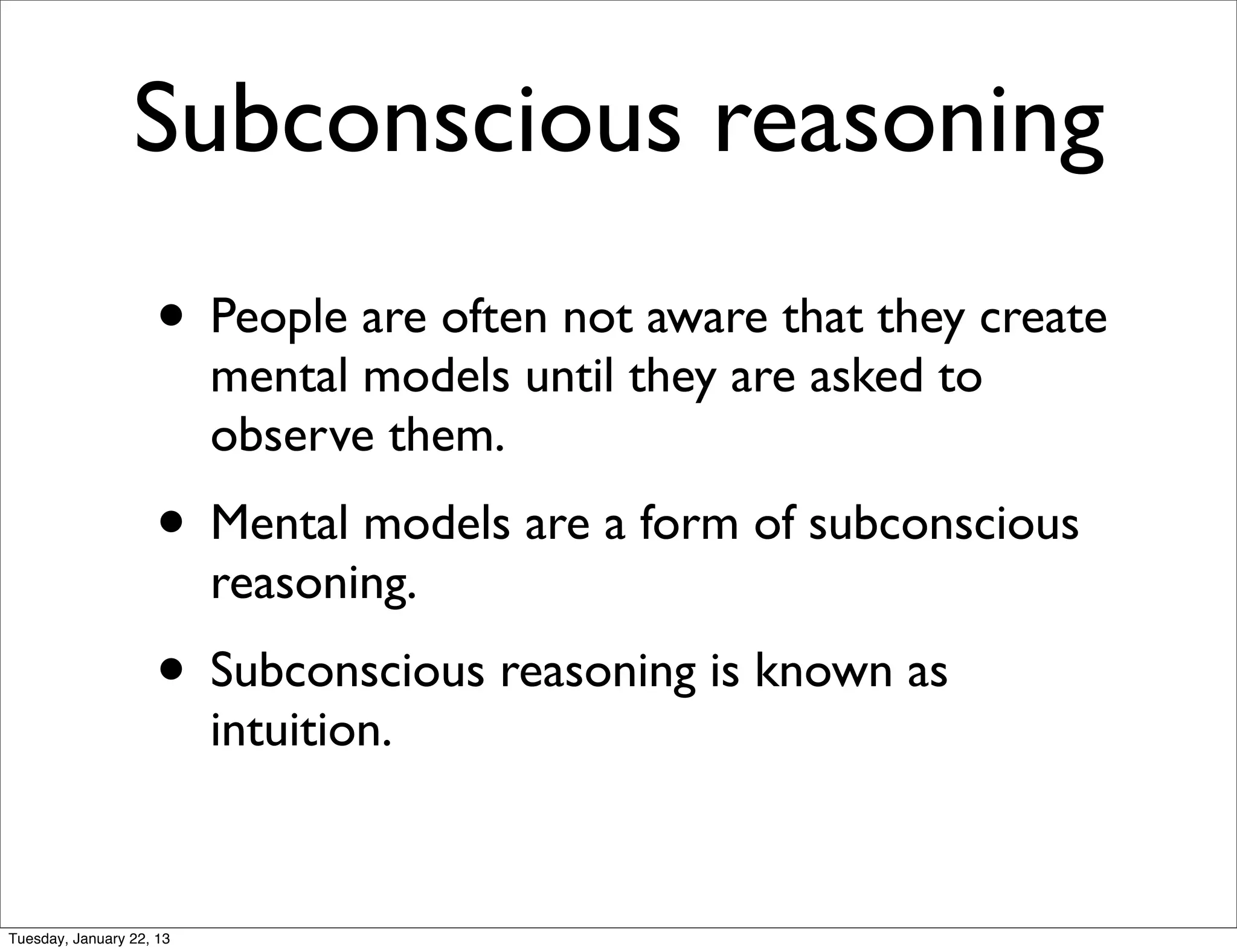
Subconscious reasoning
                    • People are often not aware that they create
                          mental models until they are asked to
                          observe them.
                    • Mental models are a form of subconscious
                          reasoning.
                    • Subconscious reasoning is known as
                          intuition.


Tuesday, January 22, 13
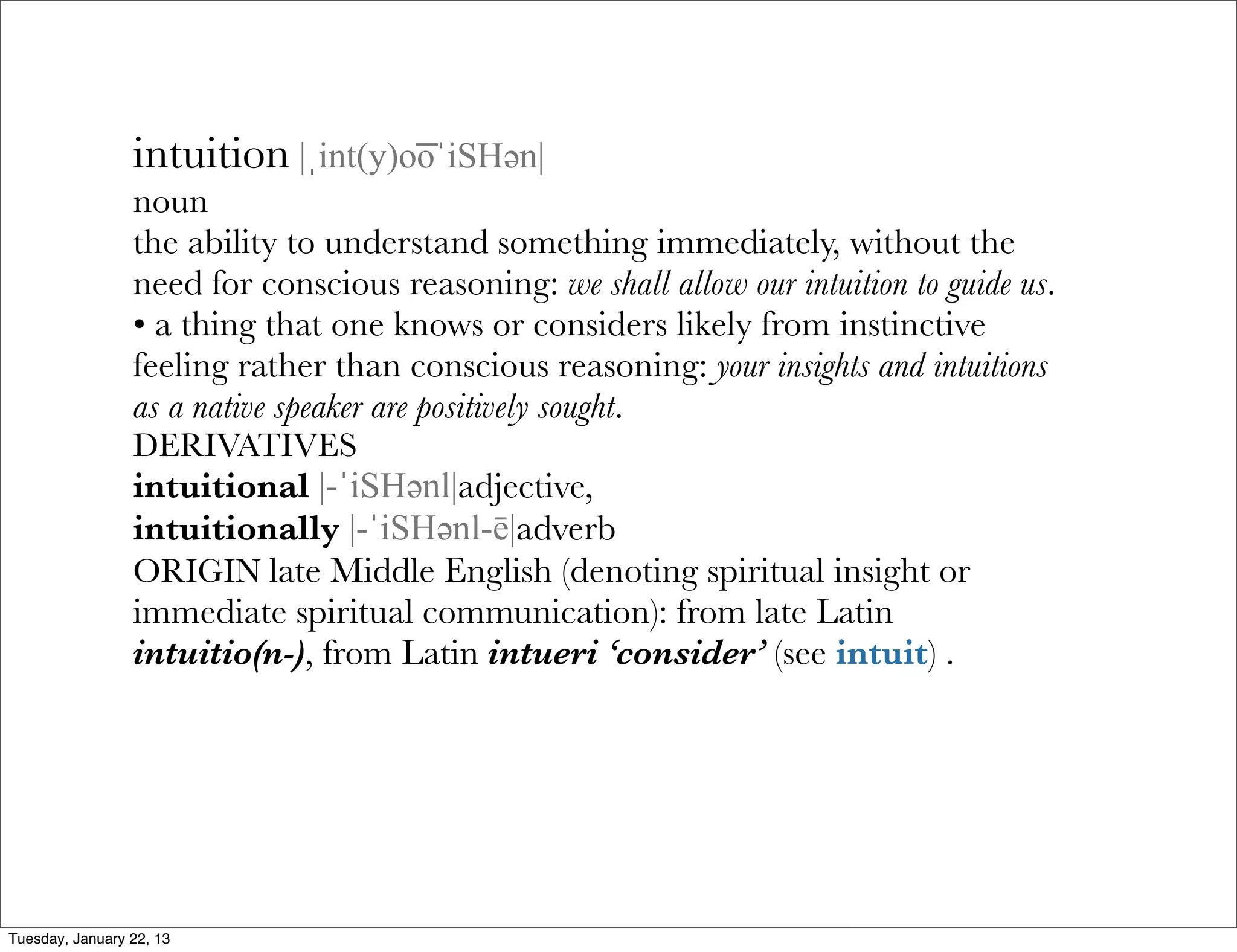
intuition |ˌint(y)o͞oˈiSHəәn|
                 noun
                 the ability to understand something immediately, without the
                 need for conscious reasoning: we shall allow our intuition to guide us.
                 • a thing that one knows or considers likely from instinctive
                 feeling rather than conscious reasoning: your insights and intuitions
                 as a native speaker are positively sought.
                 DERIVATIVES
                 intuitional |-ˈiSHəәnl|adjective,
                 intuitionally |-ˈiSHəәnl-ē|adverb
                 ORIGIN late Middle English (denoting spiritual insight or
                 immediate spiritual communication): from late Latin
                 intuitio(n-), from Latin intueri ‘consider’ (see intuit) .


Tuesday, January 22, 13
Intuition = Power

                    • Intuition is the closest thing most of us
                          have to clairvoyance.
                    • Intuition, and more broadly, all types of
                          reasoning give humans the unique ability to
                          predict the future.
                    • This ability is also known as foresight.

Tuesday, January 22, 13
Intuitive interfaces


                    • An interface is considered intuitive when a
                          user’s incomplete mental model is capable
                          of predicting the behaviors of said interface.


Tuesday, January 22, 13
Making intuitive
                                interfaces:
                    • Piggyback off of existing visual vocabulary
                     • use conventional symbols to convey
                            functionality
                          • use skeuomorphs where appropriate
                    • Use a just one single consistent metaphor
                          throughout the entirety of your interface.
                          • ie: layers in photoshop or AE
Tuesday, January 22, 13

Mental models and intuition

  • 1.
    Mental Models and Intuition Ajay Ganapathy Tuesday, January 22, 13
  • 2.
    What is amental model? • A sense of how something works • the ability to predict an output for an untested input Tuesday, January 22, 13
  • 3.
    Who uses mental models? • Everyone uses mental models. • Studies strongly suggest that people instinctively create mental models in order to explain the world around them. Tuesday, January 22, 13
  • 4.
    Why use mental models? • Mental models simplify the task of remembering input-output pairs. • for example, instead of memorizing every multiplication table, you can simply make a mental model for multiplication, and use that logic to solve any multiplication table on the fly Tuesday, January 22, 13
  • 5.
    Analogies • Mental models are often incomplete. • Mental models are often based on weak analogies between the new and familiar. • According to Schema Theory, people try to understand the new and unfamiliar in terms of the old and familiar. Hence, they form tenuous analogies. Tuesday, January 22, 13
  • 6.
    Learning • As people familiarize themselves with a new concept/technology/idea they begin to understand it without the crutch of an analogy. • According to Agency Theory, this occurs because with each interaction they hone their mental model to more precisely and accurately describe their experiences. Tuesday, January 22, 13
  • 7.
    Subconscious reasoning • People are often not aware that they create mental models until they are asked to observe them. • Mental models are a form of subconscious reasoning. • Subconscious reasoning is known as intuition. Tuesday, January 22, 13
  • 8.
    intuition |ˌint(y)o͞oˈiSHəәn| noun the ability to understand something immediately, without the need for conscious reasoning: we shall allow our intuition to guide us. • a thing that one knows or considers likely from instinctive feeling rather than conscious reasoning: your insights and intuitions as a native speaker are positively sought. DERIVATIVES intuitional |-ˈiSHəәnl|adjective, intuitionally |-ˈiSHəәnl-ē|adverb ORIGIN late Middle English (denoting spiritual insight or immediate spiritual communication): from late Latin intuitio(n-), from Latin intueri ‘consider’ (see intuit) . Tuesday, January 22, 13
  • 9.
    Intuition = Power • Intuition is the closest thing most of us have to clairvoyance. • Intuition, and more broadly, all types of reasoning give humans the unique ability to predict the future. • This ability is also known as foresight. Tuesday, January 22, 13
  • 10.
    Intuitive interfaces • An interface is considered intuitive when a user’s incomplete mental model is capable of predicting the behaviors of said interface. Tuesday, January 22, 13
  • 11.
    Making intuitive interfaces: • Piggyback off of existing visual vocabulary • use conventional symbols to convey functionality • use skeuomorphs where appropriate • Use a just one single consistent metaphor throughout the entirety of your interface. • ie: layers in photoshop or AE Tuesday, January 22, 13