The Memory Project
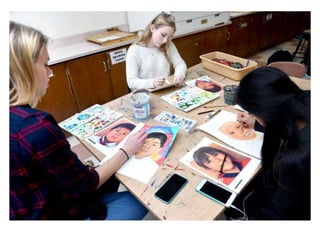
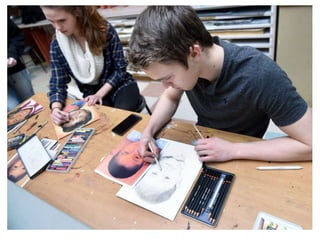
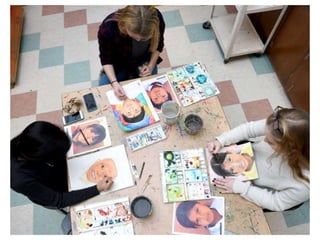
The Memory Project is a charitable nonprofit
organization that invites art teachers and
their students to create portraits for youth around
the world who have faced substantial challenges,
such as neglect, abuse, loss of parents, violence,
and extreme poverty.
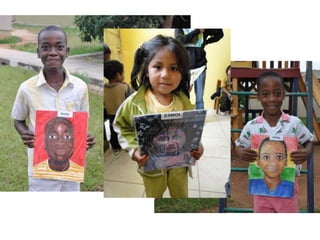
Since 2004, The Memory Project has created
over 110,000 portraits for children in 45 countries.
Video from Bolivia
“It’s good to give to the underprivileged children
because they don’t see things like this. It’s a new
experience and it brings them happiness.”
“It’s nice for them to have some nice things to
own. Having art always makes you feel good,”
“There’s nothing more satisfying than seeing the
happiness of a kid laughing. You can’t help but
smile. It gives you a sense of community across
such an enormous span.”
Quotes from my students:
What are we doing today?
● Portrait creation process
● How to get involved
● Funding
● Benefits of students’
participation
● Create exemplar
If you are interested in participating, send an email to
portraits@memoryproject.org
Memory Project will:
-ask you about your preferred time frame
-ask you how many portraits your school would like to create
-match you with the children’s photos and send you full-page
prints and digital copies
Participation is open year-round and participants usually have
several months or longer to create the portraits.
Most participants are high school art students, but university
students, middle and elementary students, and adult artists
are sometimes involved.
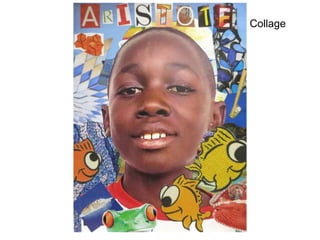
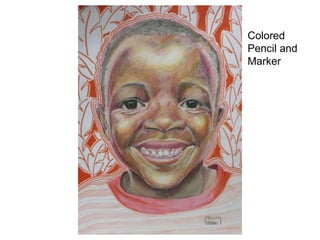
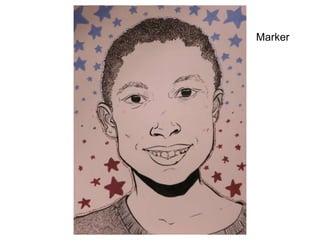
Most participants create drawings or paintings, but any medium
is welcome (photo collage, mixed media, digital art, etc.)
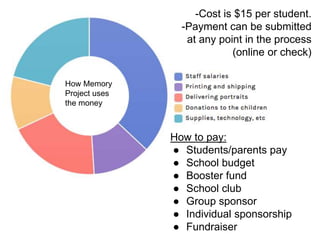
-Cost is $15 per student.
-Payment can be submitted
at any point in the process
(online or check)
How Memory
Project uses
the money
How to pay:
● Students/parents pay
● School budget
● Booster fund
● School club
● Group sponsor
● Individual sponsorship
● Fundraiser
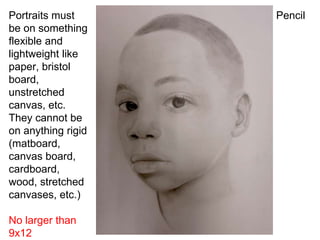
PencilPortraits must
be on something
flexible and
lightweight like
paper, bristol
board,
unstretched
canvas, etc.
They cannot be
on anything rigid
(matboard,
canvas board,
cardboard,
wood, stretched
canvases, etc.)
No larger than
9x12
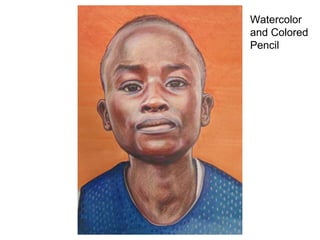
Watercolor
and Colored
Pencil
Collage
Colored
Pencil and
Marker
Marker
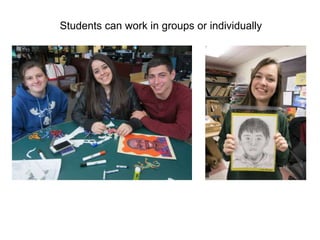
Students can work in groups or individually
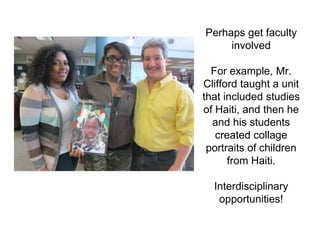
Perhaps get faculty
involved
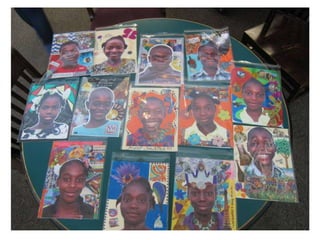
For example, Mr.
Clifford taught a unit
that included studies
of Haiti, and then he
and his students
created collage
portraits of children
from Haiti.
Interdisciplinary
opportunities!
AHS students have created portraits for children in:
The Democratic Republic of the Congo
Bolivia
Ghana
Mexico
Haiti
Rwanda
Sierra Leone
Indonesia
Peru
Honduras
EXEMPLAR TIME :)
Materials:
Whatever you brought with you!
Plus…
● Bristol board (provided)
● Collage materials (colored paper,
magazines, glue, scissors)
● Pencils
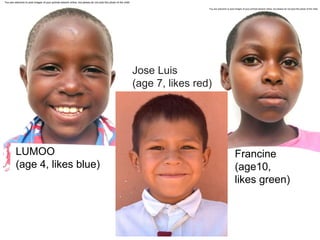
LUMOO
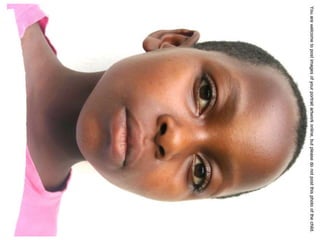
(age 4, likes blue)
Jose Luis
(age 7, likes red)
Francine
(age10,
likes green)
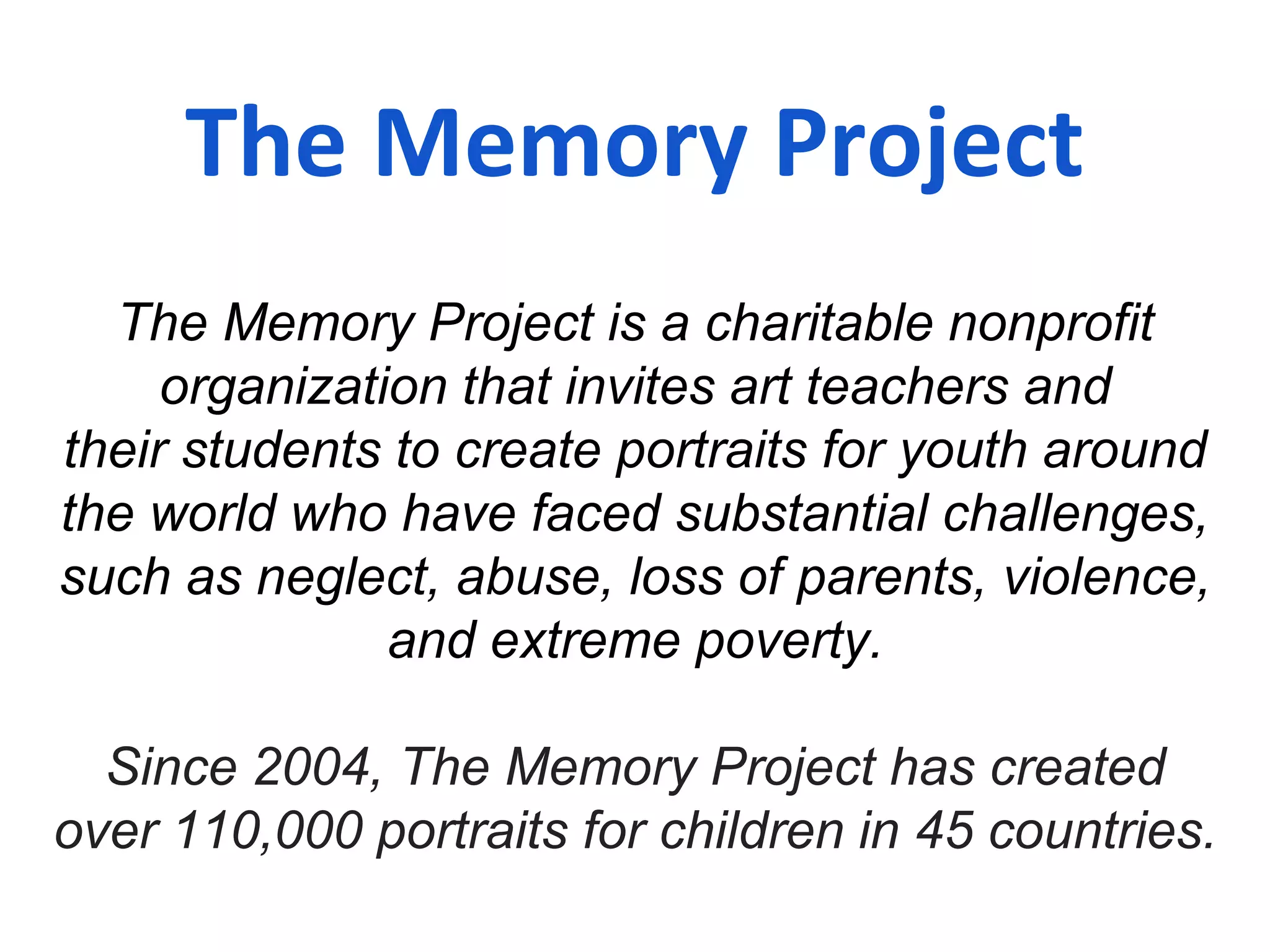
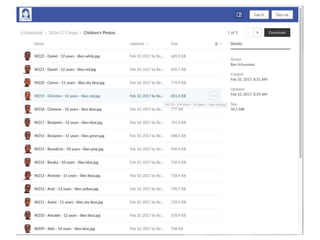
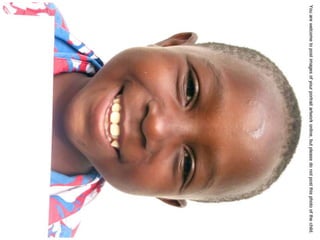
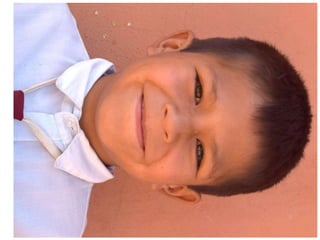
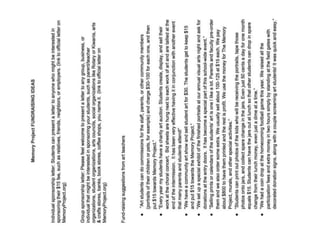
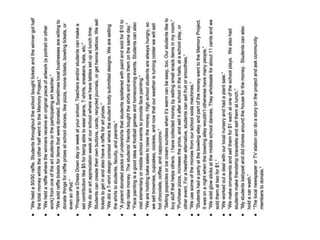
The following photos and handouts are resources and handouts for the
workshop participants. The photos will help them create exemplars, and
the fundraising ideas will be handed out.
Memory project caea conference

Memory project caea conference

  • 1.
    The Memory Project TheMemory Project is a charitable nonprofit organization that invites art teachers and their students to create portraits for youth around the world who have faced substantial challenges, such as neglect, abuse, loss of parents, violence, and extreme poverty. Since 2004, The Memory Project has created over 110,000 portraits for children in 45 countries.
  • 7.
    Video from Bolivia “It’sgood to give to the underprivileged children because they don’t see things like this. It’s a new experience and it brings them happiness.” “It’s nice for them to have some nice things to own. Having art always makes you feel good,” “There’s nothing more satisfying than seeing the happiness of a kid laughing. You can’t help but smile. It gives you a sense of community across such an enormous span.” Quotes from my students:
  • 8.
    What are wedoing today? ● Portrait creation process ● How to get involved ● Funding ● Benefits of students’ participation ● Create exemplar
  • 9.
    If you areinterested in participating, send an email to portraits@memoryproject.org Memory Project will: -ask you about your preferred time frame -ask you how many portraits your school would like to create -match you with the children’s photos and send you full-page prints and digital copies Participation is open year-round and participants usually have several months or longer to create the portraits. Most participants are high school art students, but university students, middle and elementary students, and adult artists are sometimes involved. Most participants create drawings or paintings, but any medium is welcome (photo collage, mixed media, digital art, etc.)
  • 10.
    -Cost is $15per student. -Payment can be submitted at any point in the process (online or check) How Memory Project uses the money How to pay: ● Students/parents pay ● School budget ● Booster fund ● School club ● Group sponsor ● Individual sponsorship ● Fundraiser
  • 11.
    PencilPortraits must be onsomething flexible and lightweight like paper, bristol board, unstretched canvas, etc. They cannot be on anything rigid (matboard, canvas board, cardboard, wood, stretched canvases, etc.) No larger than 9x12
  • 12.
  • 13.
  • 14.
  • 15.
  • 16.
    Students can workin groups or individually
  • 17.
    Perhaps get faculty involved Forexample, Mr. Clifford taught a unit that included studies of Haiti, and then he and his students created collage portraits of children from Haiti. Interdisciplinary opportunities!
  • 19.
    AHS students havecreated portraits for children in: The Democratic Republic of the Congo Bolivia Ghana Mexico Haiti Rwanda Sierra Leone Indonesia Peru Honduras
  • 20.
    EXEMPLAR TIME :) Materials: Whateveryou brought with you! Plus… ● Bristol board (provided) ● Collage materials (colored paper, magazines, glue, scissors) ● Pencils
  • 21.
    LUMOO (age 4, likesblue) Jose Luis (age 7, likes red) Francine (age10, likes green)
  • 22.
    The following photosand handouts are resources and handouts for the workshop participants. The photos will help them create exemplars, and the fundraising ideas will be handed out.