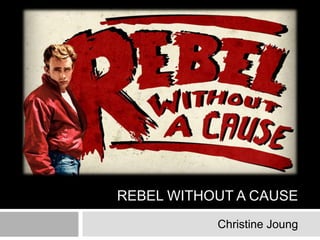
REBEL WITHOUT A CAUSE
Christine Joung
Rebel Without A Cause
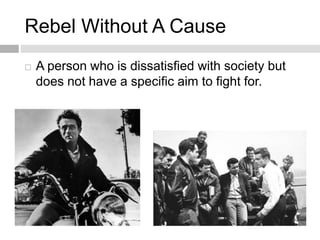
 A person who is dissatisfied with society but
does not have a specific aim to fight for.
Basic Information
 Melodrama, teen film
 January, 1955
 Nicholas Ray, Stewart Stern
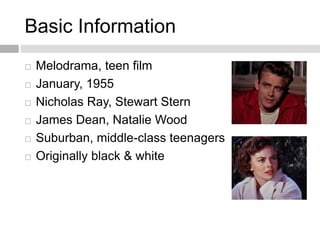
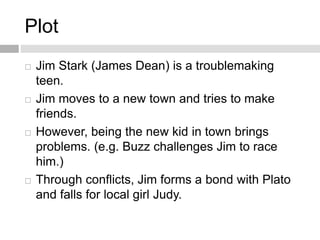
 James Dean, Natalie Wood
 Suburban, middle-class teenagers
 Originally black & white
Plot
 Jim Stark (James Dean) is a troublemaking
teen.
 Jim moves to a new town and tries to make
friends.
 However, being the new kid in town brings
problems. (e.g. Buzz challenges Jim to race
him.)
 Through conflicts, Jim forms a bond with Plato
and falls for local girl Judy.
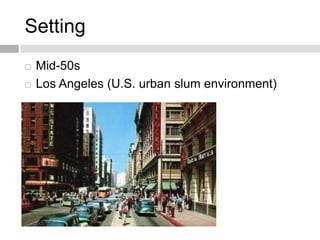
Setting
 Mid-50s
 Los Angeles (U.S. urban slum environment)
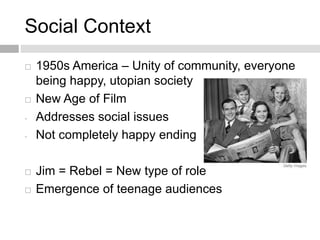
Social Context
 1950s America – Unity of community, everyone
being happy, utopian society
 New Age of Film
- Addresses social issues
- Not completely happy ending
 Jim = Rebel = New type of role
 Emergence of teenage audiences
Characteristics
 Several different plots within a plot (life that
each of the three characters go through)
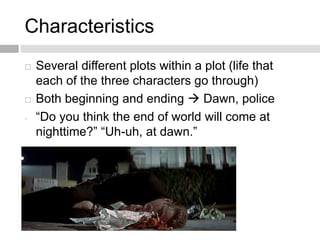
 Both beginning and ending  Dawn, police
- “Do you think the end of world will come at
nighttime?” “Uh-uh, at dawn.”
Color
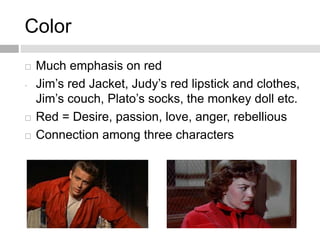
 Much emphasis on red
- Jim’s red Jacket, Judy’s red lipstick and clothes,
Jim’s couch, Plato’s socks, the monkey doll etc.
 Red = Desire, passion, love, anger, rebellious
 Connection among three characters
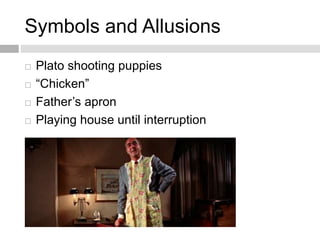
Symbols and Allusions
 Plato shooting puppies
 “Chicken”
 Father’s apron
 Playing house until interruption
Themes
 Existentialism
- Seeking identity and purpose of life
- “Is this where you live?” “Who lives?”
- “I don’t know what to do anymore, except
maybe die.”
 Family
- Dysfunctional conflict between parents and
children
- Problems that children face due to lack of
“father figure”
- “If only you coulda been my dad.”
Themes (Common themes in 50s)
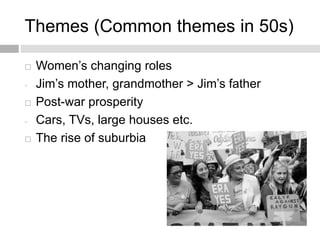
 Women’s changing roles
- Jim’s mother, grandmother > Jim’s father
 Post-war prosperity
- Cars, TVs, large houses etc.
 The rise of suburbia
Aspects of Melodrama
 Melodrama: sub-type of drama films,
characterized by a plot designed to appeal
strongly to the emotions
 Family melodrama
- Conflicts in family
- Characters’ aspiration of happy family
 Male melodrama
- Struggle of identity is the core
- Masculine figure becomes emotional
- “You did everything a man could.”
Aspects of Melodrama
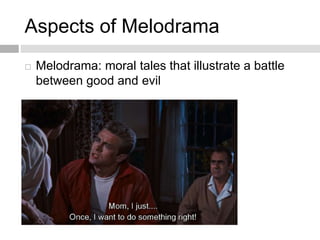
 Melodrama: moral tales that illustrate a battle
between good and evil
Conflicts / Struggles
 Seeming vs. Being
- Judy acts differently according to the group
- Jim’s parents tell him not to confess to the
police
- “I don’t know! I mean maybe he doesn’t mean it
but he acts like he does.”
 Lack of trust among all characters
- Judy hesitates following Jim to the room
- Plato loses trust for Jim when he leaves with
Judy
- Police shoots Plato even when Jim tells him
he’s safe
Conflicts / Struggles
 Desire vs. Ability
- Jim’s desire for Judy
- Jim’s desire to see his father act like a man
- Judy’s desire to receive her father’s love
- Plato’s desire to be with Jim or his family
- Buzz’s desire to prove his authority and power
 Expectation vs. Reality
Jim, Judy and Plato
 Middle-class, misunderstood, alienated
teenagers
 Identity-seeking  Confusion
- “You're tearing me apart!...You say one thing, he
says another, and everybody changes back
again.”
- "I'll tell you one thing, I don't ever want to be like
him.”
 Attain maturity through rebellion and tragic
circumstances
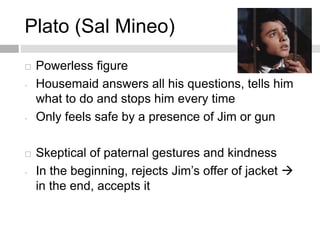
Plato (Sal Mineo)
 Powerless figure
- Housemaid answers all his questions, tells him
what to do and stops him every time
- Only feels safe by a presence of Jim or gun
 Skeptical of paternal gestures and kindness
- In the beginning, rejects Jim’s offer of jacket 
in the end, accepts it
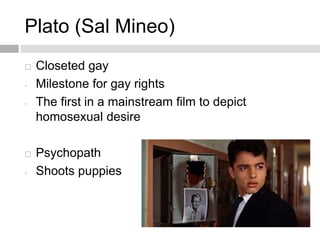
Plato (Sal Mineo)
 Closeted gay
- Milestone for gay rights
- The first in a mainstream film to depict
homosexual desire
 Psychopath
- Shoots puppies
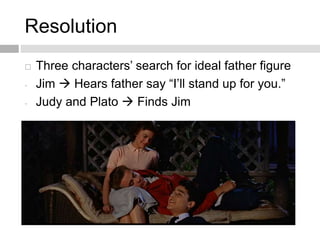
Resolution
 Three characters’ search for ideal father figure
- Jim  Hears father say “I’ll stand up for you.”
- Judy and Plato  Finds Jim
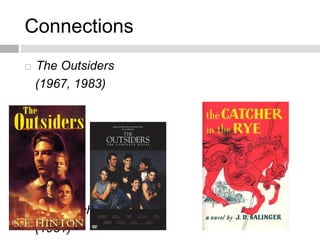
Connections
 The Outsiders
(1967, 1983)
 The Catcher in the Rye
(1951)

Melodrama Presentation - Rebel Without A Cause

  • 1.
    REBEL WITHOUT ACAUSE Christine Joung
  • 2.
    Rebel Without ACause  A person who is dissatisfied with society but does not have a specific aim to fight for.
  • 3.
    Basic Information  Melodrama,teen film  January, 1955  Nicholas Ray, Stewart Stern  James Dean, Natalie Wood  Suburban, middle-class teenagers  Originally black & white
  • 4.
    Plot  Jim Stark(James Dean) is a troublemaking teen.  Jim moves to a new town and tries to make friends.  However, being the new kid in town brings problems. (e.g. Buzz challenges Jim to race him.)  Through conflicts, Jim forms a bond with Plato and falls for local girl Judy.
  • 5.
    Setting  Mid-50s  LosAngeles (U.S. urban slum environment)
  • 6.
    Social Context  1950sAmerica – Unity of community, everyone being happy, utopian society  New Age of Film - Addresses social issues - Not completely happy ending  Jim = Rebel = New type of role  Emergence of teenage audiences
  • 7.
    Characteristics  Several differentplots within a plot (life that each of the three characters go through)  Both beginning and ending  Dawn, police - “Do you think the end of world will come at nighttime?” “Uh-uh, at dawn.”
  • 8.
    Color  Much emphasison red - Jim’s red Jacket, Judy’s red lipstick and clothes, Jim’s couch, Plato’s socks, the monkey doll etc.  Red = Desire, passion, love, anger, rebellious  Connection among three characters
  • 9.
    Symbols and Allusions Plato shooting puppies  “Chicken”  Father’s apron  Playing house until interruption
  • 10.
    Themes  Existentialism - Seekingidentity and purpose of life - “Is this where you live?” “Who lives?” - “I don’t know what to do anymore, except maybe die.”  Family - Dysfunctional conflict between parents and children - Problems that children face due to lack of “father figure” - “If only you coulda been my dad.”
  • 11.
    Themes (Common themesin 50s)  Women’s changing roles - Jim’s mother, grandmother > Jim’s father  Post-war prosperity - Cars, TVs, large houses etc.  The rise of suburbia
  • 12.
    Aspects of Melodrama Melodrama: sub-type of drama films, characterized by a plot designed to appeal strongly to the emotions  Family melodrama - Conflicts in family - Characters’ aspiration of happy family  Male melodrama - Struggle of identity is the core - Masculine figure becomes emotional - “You did everything a man could.”
  • 13.
    Aspects of Melodrama Melodrama: moral tales that illustrate a battle between good and evil
  • 14.
    Conflicts / Struggles Seeming vs. Being - Judy acts differently according to the group - Jim’s parents tell him not to confess to the police - “I don’t know! I mean maybe he doesn’t mean it but he acts like he does.”  Lack of trust among all characters - Judy hesitates following Jim to the room - Plato loses trust for Jim when he leaves with Judy - Police shoots Plato even when Jim tells him he’s safe
  • 15.
    Conflicts / Struggles Desire vs. Ability - Jim’s desire for Judy - Jim’s desire to see his father act like a man - Judy’s desire to receive her father’s love - Plato’s desire to be with Jim or his family - Buzz’s desire to prove his authority and power  Expectation vs. Reality
  • 16.
    Jim, Judy andPlato  Middle-class, misunderstood, alienated teenagers  Identity-seeking  Confusion - “You're tearing me apart!...You say one thing, he says another, and everybody changes back again.” - "I'll tell you one thing, I don't ever want to be like him.”  Attain maturity through rebellion and tragic circumstances
  • 17.
    Plato (Sal Mineo) Powerless figure - Housemaid answers all his questions, tells him what to do and stops him every time - Only feels safe by a presence of Jim or gun  Skeptical of paternal gestures and kindness - In the beginning, rejects Jim’s offer of jacket  in the end, accepts it
  • 18.
    Plato (Sal Mineo) Closeted gay - Milestone for gay rights - The first in a mainstream film to depict homosexual desire  Psychopath - Shoots puppies
  • 19.
    Resolution  Three characters’search for ideal father figure - Jim  Hears father say “I’ll stand up for you.” - Judy and Plato  Finds Jim
  • 20.
    Connections  The Outsiders (1967,1983)  The Catcher in the Rye (1951)