Information forInformation for
Prospective VolunteersProspective Volunteers
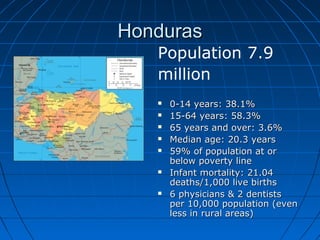
HondurasHonduras
Population 7.9
million
 0-14 years: 38.1%0-14 years: 38.1%
 15-64 years: 58.3%15-64 years: 58.3%
 65 years and over: 3.6%65 years and over: 3.6%
 Median age: 20.3 yearsMedian age: 20.3 years
 59% of population at or59% of population at or
below poverty linebelow poverty line
 Infant mortality: 21.04Infant mortality: 21.04
deaths/1,000 live birthsdeaths/1,000 live births
 6 physicians & 2 dentists6 physicians & 2 dentists
per 10,000 population (evenper 10,000 population (even
less in rural areas)less in rural areas)
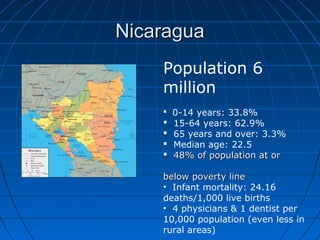
NicaraguaNicaragua
Population 6
million
 0-14 years: 33.8%
 15-64 years: 62.9%
 65 years and over: 3.3%
 Median age: 22.5
 48% of population at or48% of population at or
below poverty linebelow poverty line
• Infant mortality: 24.16
deaths/1,000 live births
• 4 physicians & 1 dentist per
10,000 population (even less in
rural areas)
Challenges for VolunteersChallenges for Volunteers
 Physical, emotional & intellectual demandsPhysical, emotional & intellectual demands
 Need to remain flexible &Need to remain flexible &
non-judgmentalnon-judgmental
 Avoid the “ugly American” labelAvoid the “ugly American” label
 Sensitivity to cultural differencesSensitivity to cultural differences
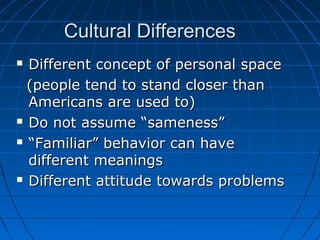
Cultural DifferencesCultural Differences
 Different concept of personal spaceDifferent concept of personal space
(people tend to stand closer than(people tend to stand closer than
Americans are used to)Americans are used to)
 Do not assume “sameness”Do not assume “sameness”
 ““Familiar” behavior can haveFamiliar” behavior can have
different meaningsdifferent meanings
 Different attitude towards problemsDifferent attitude towards problems
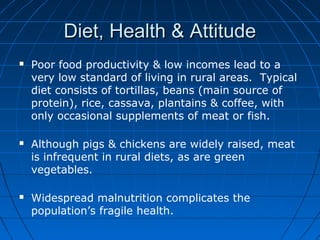
Diet, Health & AttitudeDiet, Health & Attitude
 Poor food productivity & low incomes lead to a
very low standard of living in rural areas. Typical
diet consists of tortillas, beans (main source of
protein), rice, cassava, plantains & coffee, with
only occasional supplements of meat or fish.
 Although pigs & chickens are widely raised, meat
is infrequent in rural diets, as are green
vegetables.
 Widespread malnutrition complicates the
population’s fragile health.
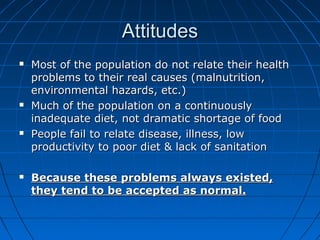
AttitudesAttitudes
 Most of the population do not relate their healthMost of the population do not relate their health
problems to their real causes (malnutrition,problems to their real causes (malnutrition,
environmental hazards, etc.)environmental hazards, etc.)
 Much of the population on a continuouslyMuch of the population on a continuously
inadequate diet, not dramatic shortage of foodinadequate diet, not dramatic shortage of food
 People fail to relate disease, illness, lowPeople fail to relate disease, illness, low
productivity to poor diet & lack of sanitationproductivity to poor diet & lack of sanitation
 Because these problems always existed,Because these problems always existed,
they tend to be accepted as normal.they tend to be accepted as normal.
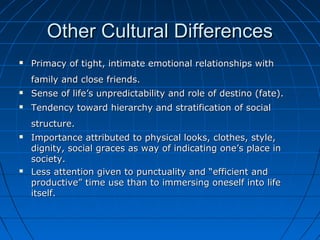
Other Cultural DifferencesOther Cultural Differences
 Primacy of tight, intimate emotional relationships withPrimacy of tight, intimate emotional relationships with
family and close friends.family and close friends.
 Sense of life’s unpredictability and role of destino (fate).Sense of life’s unpredictability and role of destino (fate).
 Tendency toward hierarchy and stratification of socialTendency toward hierarchy and stratification of social
structure.structure.
 Importance attributed to physical looks, clothes, style,Importance attributed to physical looks, clothes, style,
dignity, social graces as way of indicating one’s place indignity, social graces as way of indicating one’s place in
society.society.
 Less attention given to punctuality and “efficient andLess attention given to punctuality and “efficient and
productive” time use than to immersing oneself into lifeproductive” time use than to immersing oneself into life
itself.itself.
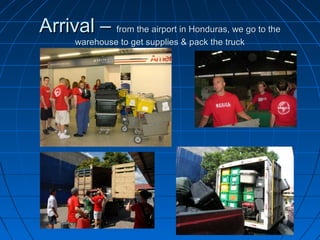
Arrival –Arrival – from the airport in Honduras, we go to thefrom the airport in Honduras, we go to the
warehouse to get supplies & pack the truckwarehouse to get supplies & pack the truck
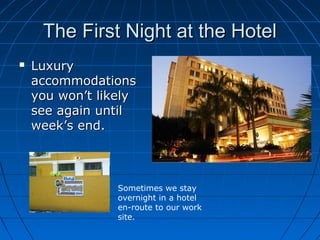
The First Night at the HotelThe First Night at the Hotel
 LuxuryLuxury
accommodationsaccommodations
you won’t likelyyou won’t likely
see again untilsee again until
week’s end.week’s end.
Sometimes we stay
overnight in a hotel
en-route to our work
site.
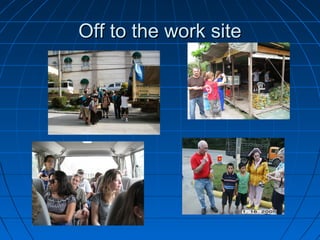
Off to the work siteOff to the work site
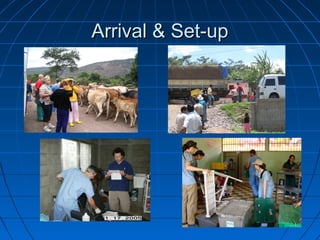
Arrival & Set-upArrival & Set-up
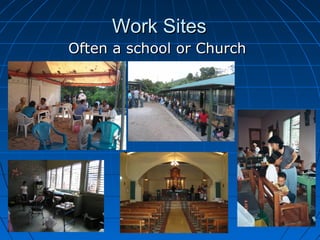
Work SitesWork Sites
Often a school or ChurchOften a school or Church
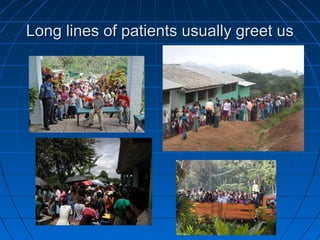
Long lines of patients usually greet usLong lines of patients usually greet us
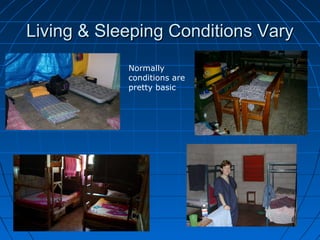
Living & Sleeping Conditions VaryLiving & Sleeping Conditions Vary
Normally
conditions are
pretty basic
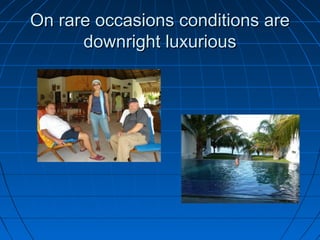
On rare occasions conditions areOn rare occasions conditions are
downright luxuriousdownright luxurious
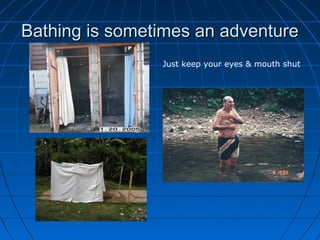
Bathing is sometimes an adventureBathing is sometimes an adventure
Just keep your eyes & mouth shut
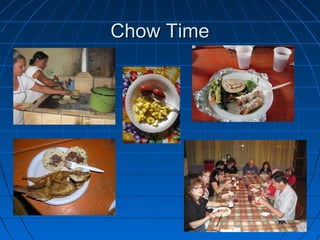
Chow TimeChow Time
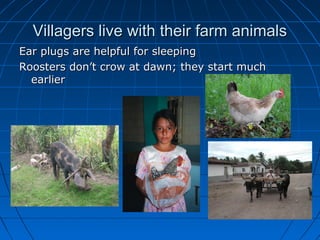
Villagers live with their farm animalsVillagers live with their farm animals
Ear plugs are helpful for sleepingEar plugs are helpful for sleeping
Roosters don’t crow at dawn; they start muchRoosters don’t crow at dawn; they start much
earlierearlier
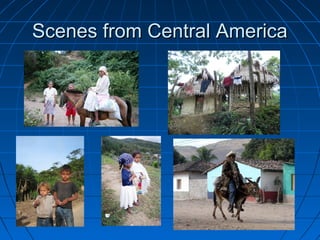
Scenes from Central AmericaScenes from Central America
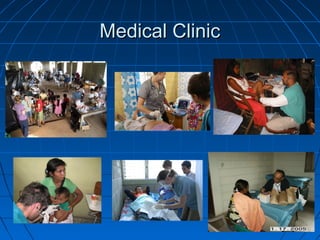
Medical ClinicMedical Clinic
Common Medical ConditionsCommon Medical Conditions
 Gastrointestinal illnessGastrointestinal illness
 Parasitic infectionsParasitic infections
 Urinary tract infectionsUrinary tract infections
 Respiratory infections and asthmaRespiratory infections and asthma
 Work related injuriesWork related injuries
 Skin conditionsSkin conditions
 Tropical diseasesTropical diseases
CausesCauses
 MalnutritionMalnutrition
 Impure waterImpure water
 Poor personal hygienePoor personal hygiene
 Inadequate housingInadequate housing
 Poor sewage disposalPoor sewage disposal
 Environmental hazardsEnvironmental hazards
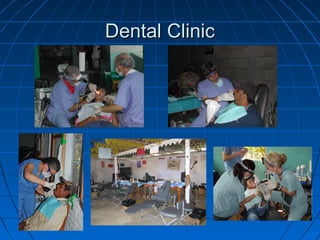
Dental ClinicDental Clinic
Dental DiseaseDental Disease
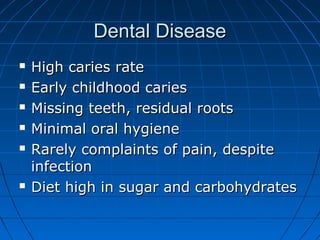
 High caries rateHigh caries rate
 Early childhood cariesEarly childhood caries
 Missing teeth, residual rootsMissing teeth, residual roots
 Minimal oral hygieneMinimal oral hygiene
 Rarely complaints of pain, despiteRarely complaints of pain, despite
infectioninfection
 Diet high in sugar and carbohydratesDiet high in sugar and carbohydrates
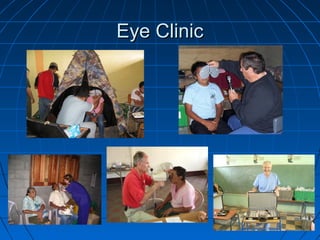
Eye ClinicEye Clinic
 CataractsCataracts
 Corneal ExposureCorneal Exposure
 PtergiaPtergia
 HyperopiaHyperopia
 RefractionRefraction
 Dispensing glassesDispensing glasses
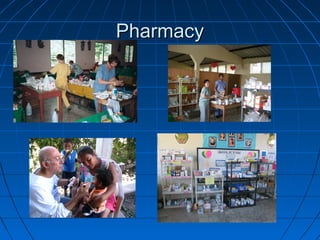
PharmacyPharmacy
Pharmacy ChallengesPharmacy Challenges
 Set up Pharmacy in less than 3 hoursSet up Pharmacy in less than 3 hours
 Instruct illiterate patientsInstruct illiterate patients
 Adapt prescriptions to a limitedAdapt prescriptions to a limited
formularyformulary
 Different names for familiar drugsDifferent names for familiar drugs
 High volume of patientsHigh volume of patients
Community PartnershipsCommunity Partnerships
Working with communities, assessing theirWorking with communities, assessing their
needs and helping them achieve longneeds and helping them achieve long
lasting improvements in the health andlasting improvements in the health and
well being of their citizens.well being of their citizens.
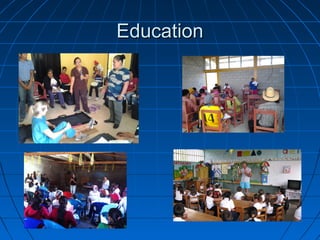
Education for community health volunteersEducation for community health volunteers
and in the schoolsand in the schools
Infrastructure projectsInfrastructure projects
Working with local physicians and hospitalsWorking with local physicians and hospitals
EducationEducation
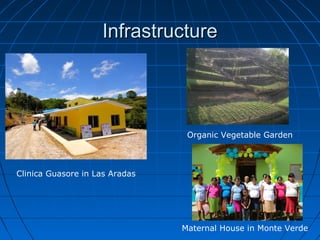
InfrastructureInfrastructure
Maternal House in Monte Verde
Clinica Guasore in Las Aradas
Organic Vegetable Garden
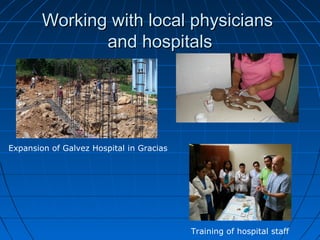
Working with local physiciansWorking with local physicians
and hospitalsand hospitals
Expansion of Galvez Hospital in Gracias
Training of hospital staff
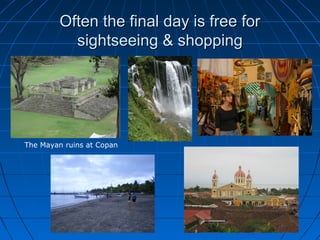
Often the final day is free forOften the final day is free for
sightseeing & shoppingsightseeing & shopping
The Mayan ruins at Copan
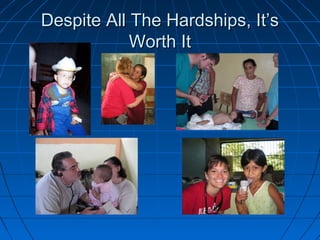
Despite All The Hardships, It’sDespite All The Hardships, It’s
Worth ItWorth It
2921 E. 17th Street,2921 E. 17th Street,
Bldg. D, Ste. 4Bldg. D, Ste. 4
Austin, TX 78702Austin, TX 78702
Phone: (512) 930-1893Phone: (512) 930-1893
Fax: (512) 869-7500Fax: (512) 869-7500
www.medico.orgwww.medico.org

Medico Info for Volunteers

  • 1.
    Information forInformation for ProspectiveVolunteersProspective Volunteers
  • 2.
    HondurasHonduras Population 7.9 million  0-14years: 38.1%0-14 years: 38.1%  15-64 years: 58.3%15-64 years: 58.3%  65 years and over: 3.6%65 years and over: 3.6%  Median age: 20.3 yearsMedian age: 20.3 years  59% of population at or59% of population at or below poverty linebelow poverty line  Infant mortality: 21.04Infant mortality: 21.04 deaths/1,000 live birthsdeaths/1,000 live births  6 physicians & 2 dentists6 physicians & 2 dentists per 10,000 population (evenper 10,000 population (even less in rural areas)less in rural areas)
  • 3.
    NicaraguaNicaragua Population 6 million  0-14years: 33.8%  15-64 years: 62.9%  65 years and over: 3.3%  Median age: 22.5  48% of population at or48% of population at or below poverty linebelow poverty line • Infant mortality: 24.16 deaths/1,000 live births • 4 physicians & 1 dentist per 10,000 population (even less in rural areas)
  • 4.
    Challenges for VolunteersChallengesfor Volunteers  Physical, emotional & intellectual demandsPhysical, emotional & intellectual demands  Need to remain flexible &Need to remain flexible & non-judgmentalnon-judgmental  Avoid the “ugly American” labelAvoid the “ugly American” label  Sensitivity to cultural differencesSensitivity to cultural differences
  • 5.
    Cultural DifferencesCultural Differences Different concept of personal spaceDifferent concept of personal space (people tend to stand closer than(people tend to stand closer than Americans are used to)Americans are used to)  Do not assume “sameness”Do not assume “sameness”  ““Familiar” behavior can haveFamiliar” behavior can have different meaningsdifferent meanings  Different attitude towards problemsDifferent attitude towards problems
  • 6.
    Diet, Health &AttitudeDiet, Health & Attitude  Poor food productivity & low incomes lead to a very low standard of living in rural areas. Typical diet consists of tortillas, beans (main source of protein), rice, cassava, plantains & coffee, with only occasional supplements of meat or fish.  Although pigs & chickens are widely raised, meat is infrequent in rural diets, as are green vegetables.  Widespread malnutrition complicates the population’s fragile health.
  • 7.
    AttitudesAttitudes  Most ofthe population do not relate their healthMost of the population do not relate their health problems to their real causes (malnutrition,problems to their real causes (malnutrition, environmental hazards, etc.)environmental hazards, etc.)  Much of the population on a continuouslyMuch of the population on a continuously inadequate diet, not dramatic shortage of foodinadequate diet, not dramatic shortage of food  People fail to relate disease, illness, lowPeople fail to relate disease, illness, low productivity to poor diet & lack of sanitationproductivity to poor diet & lack of sanitation  Because these problems always existed,Because these problems always existed, they tend to be accepted as normal.they tend to be accepted as normal.
  • 8.
    Other Cultural DifferencesOtherCultural Differences  Primacy of tight, intimate emotional relationships withPrimacy of tight, intimate emotional relationships with family and close friends.family and close friends.  Sense of life’s unpredictability and role of destino (fate).Sense of life’s unpredictability and role of destino (fate).  Tendency toward hierarchy and stratification of socialTendency toward hierarchy and stratification of social structure.structure.  Importance attributed to physical looks, clothes, style,Importance attributed to physical looks, clothes, style, dignity, social graces as way of indicating one’s place indignity, social graces as way of indicating one’s place in society.society.  Less attention given to punctuality and “efficient andLess attention given to punctuality and “efficient and productive” time use than to immersing oneself into lifeproductive” time use than to immersing oneself into life itself.itself.
  • 9.
    Arrival –Arrival –from the airport in Honduras, we go to thefrom the airport in Honduras, we go to the warehouse to get supplies & pack the truckwarehouse to get supplies & pack the truck
  • 10.
    The First Nightat the HotelThe First Night at the Hotel  LuxuryLuxury accommodationsaccommodations you won’t likelyyou won’t likely see again untilsee again until week’s end.week’s end. Sometimes we stay overnight in a hotel en-route to our work site.
  • 11.
    Off to thework siteOff to the work site
  • 12.
  • 13.
    Work SitesWork Sites Oftena school or ChurchOften a school or Church
  • 14.
    Long lines ofpatients usually greet usLong lines of patients usually greet us
  • 15.
    Living & SleepingConditions VaryLiving & Sleeping Conditions Vary Normally conditions are pretty basic
  • 16.
    On rare occasionsconditions areOn rare occasions conditions are downright luxuriousdownright luxurious
  • 17.
    Bathing is sometimesan adventureBathing is sometimes an adventure Just keep your eyes & mouth shut
  • 18.
  • 19.
    Villagers live withtheir farm animalsVillagers live with their farm animals Ear plugs are helpful for sleepingEar plugs are helpful for sleeping Roosters don’t crow at dawn; they start muchRoosters don’t crow at dawn; they start much earlierearlier
  • 20.
    Scenes from CentralAmericaScenes from Central America
  • 21.
  • 22.
    Common Medical ConditionsCommonMedical Conditions  Gastrointestinal illnessGastrointestinal illness  Parasitic infectionsParasitic infections  Urinary tract infectionsUrinary tract infections  Respiratory infections and asthmaRespiratory infections and asthma  Work related injuriesWork related injuries  Skin conditionsSkin conditions  Tropical diseasesTropical diseases
  • 23.
    CausesCauses  MalnutritionMalnutrition  ImpurewaterImpure water  Poor personal hygienePoor personal hygiene  Inadequate housingInadequate housing  Poor sewage disposalPoor sewage disposal  Environmental hazardsEnvironmental hazards
  • 24.
  • 25.
    Dental DiseaseDental Disease High caries rateHigh caries rate  Early childhood cariesEarly childhood caries  Missing teeth, residual rootsMissing teeth, residual roots  Minimal oral hygieneMinimal oral hygiene  Rarely complaints of pain, despiteRarely complaints of pain, despite infectioninfection  Diet high in sugar and carbohydratesDiet high in sugar and carbohydrates
  • 26.
  • 27.
    Eye ClinicEye Clinic CataractsCataracts  Corneal ExposureCorneal Exposure  PtergiaPtergia  HyperopiaHyperopia  RefractionRefraction  Dispensing glassesDispensing glasses
  • 28.
  • 29.
    Pharmacy ChallengesPharmacy Challenges Set up Pharmacy in less than 3 hoursSet up Pharmacy in less than 3 hours  Instruct illiterate patientsInstruct illiterate patients  Adapt prescriptions to a limitedAdapt prescriptions to a limited formularyformulary  Different names for familiar drugsDifferent names for familiar drugs  High volume of patientsHigh volume of patients
  • 30.
    Community PartnershipsCommunity Partnerships Workingwith communities, assessing theirWorking with communities, assessing their needs and helping them achieve longneeds and helping them achieve long lasting improvements in the health andlasting improvements in the health and well being of their citizens.well being of their citizens. Education for community health volunteersEducation for community health volunteers and in the schoolsand in the schools Infrastructure projectsInfrastructure projects Working with local physicians and hospitalsWorking with local physicians and hospitals
  • 31.
  • 32.
    InfrastructureInfrastructure Maternal House inMonte Verde Clinica Guasore in Las Aradas Organic Vegetable Garden
  • 33.
    Working with localphysiciansWorking with local physicians and hospitalsand hospitals Expansion of Galvez Hospital in Gracias Training of hospital staff
  • 34.
    Often the finalday is free forOften the final day is free for sightseeing & shoppingsightseeing & shopping The Mayan ruins at Copan
  • 35.
    Despite All TheHardships, It’sDespite All The Hardships, It’s Worth ItWorth It
  • 36.
    2921 E. 17thStreet,2921 E. 17th Street, Bldg. D, Ste. 4Bldg. D, Ste. 4 Austin, TX 78702Austin, TX 78702 Phone: (512) 930-1893Phone: (512) 930-1893 Fax: (512) 869-7500Fax: (512) 869-7500 www.medico.orgwww.medico.org