Vels University
Microbe requires
Water
Energy
Carbon
Nitrogen
Mineral elements
Vitamins
Oxygen
Max. yield
Max. conc. Of product
Min. yield of undesired product
Stable product
Min. problems during media making and
sterilization
Min. problems of production processes
(aeration, agitation, extraction, purification
and waste treatment.
Major component of all fermentation.
Ancillary services : heating, cooling, cleaning
and rinsing.
Suitable water:
pH, dissolved salts, effluent contamination.
Brewing: mineral content of the water.
Reuse of water after fermentation –
Methylophilus methylotrophus
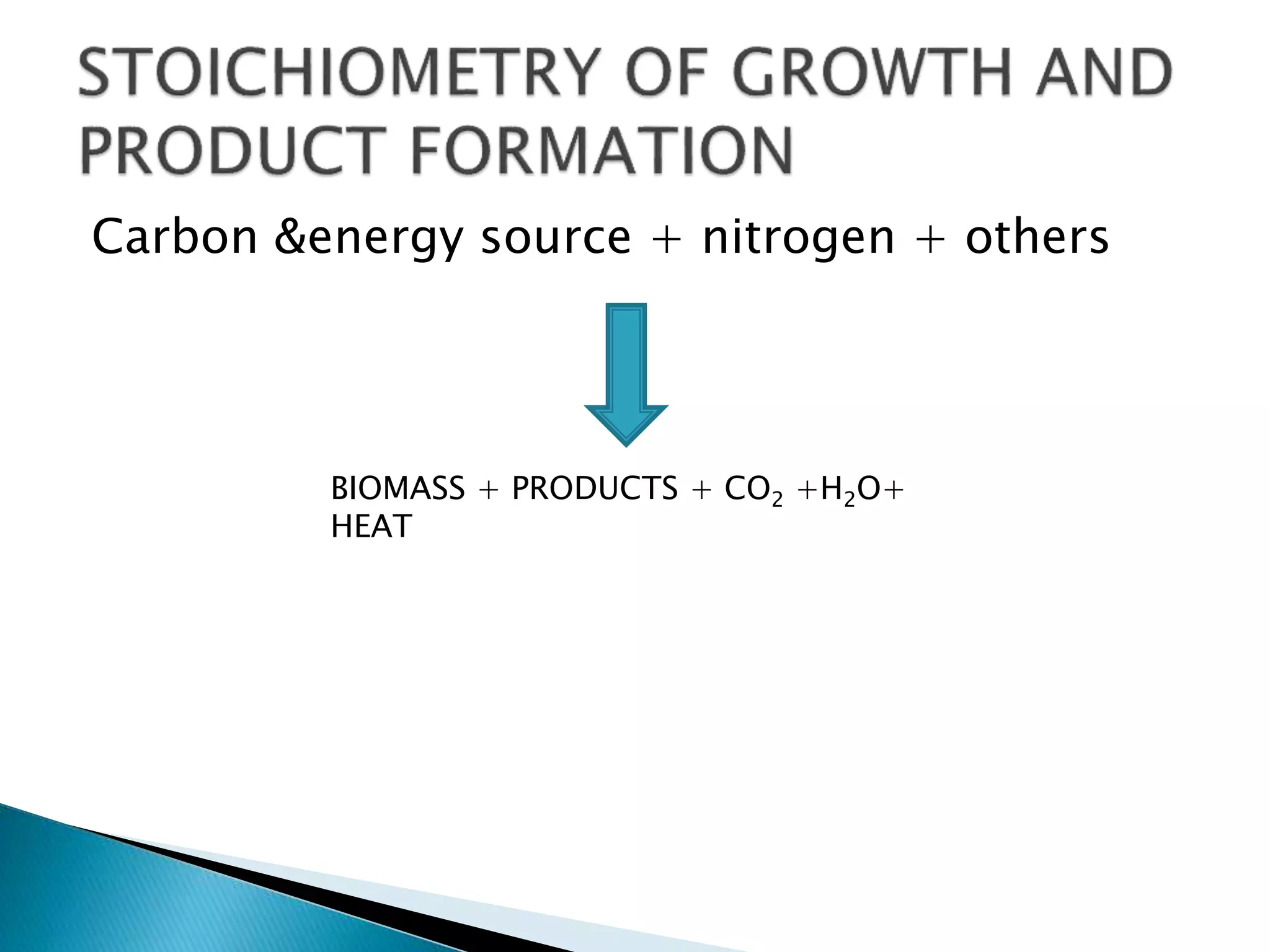
Carbon &energy source + nitrogen + others
BIOMASS + PRODUCTS + CO2 +H2O+
HEAT
 Oxidation of the medium components
(carbohydrates, lipids and proteins,
 light
 Carbohydrates
 Oils and fats
 Hydrocarbon and their derivatives
Carbohydrates:
Starch from maize, cassava, cereals, potatoes
Barley grains – malt.
Sucrose from sugar cane and sugar beet.
Molasses – high volume, low-value product.
Lactose and crude lactose
Corn steep liquor.
First used as carriers for antifoams in antibiotic
processes.
Vegetable oils – olive, maize, cotton seed, lin
seed, soybean, etc. Used as carbon
substrates.
Also provides antifoaming property.
Methly oleate – sole ‘c’source in cephalosporin
production.
Methane, methanol and n-alkanes – substrates for
biomass production.
N-alkanes – for the production of organic acids,
amino acids, vitamins and co-factors, nucleic
acids, antibiotics, enzymes and proteins.
Scp from hydrocarbons:
BP plc developed Toprina from yeast grown on n-
alkanes.
ICI plc developed pruteen from bacteria grown on
methanol.
Hoechst/UBHE (protein from bacteria on methanol)
Shell plc (bacteria on methane).
Inorganic source and organic source
Inorganic Nitrogen:
1. Ammonia gas
2. Ammonium salts
3. Nitrates
Organic nitrogen:
1. Amino acids
2. Protein
3. Urea
Protenaceous nitrogen compounds:
CSL, soya meal, peanut meal, cotton-seed meal,
distiller’s solubles, meal and yeast extract.
 Penicillin
 Bacitracin
 Riboflavin
 Novobiocin
 Rifomycin
 CSL
 Peanut granules
 Pancreatic digest of
gelatine
 Distillers solubles
 Pharmamedia,
soybean meal,
(NH4)2 SO4.
 KH2 PO4
 MgSO4. 7H20
 KCl
 CaCO3
 FeSo4. 4H2O
 ZnSO4. 8H20
 MnSo4. H2O
 CuSO4.5H2O
 Na2MoO4. 2H20
 1.0-4.0
 0.25-3.0
 0.5-12.0
 5-17
 .01-.1
 .1-1
 .01-.1
 .003-.01
 .01-.1
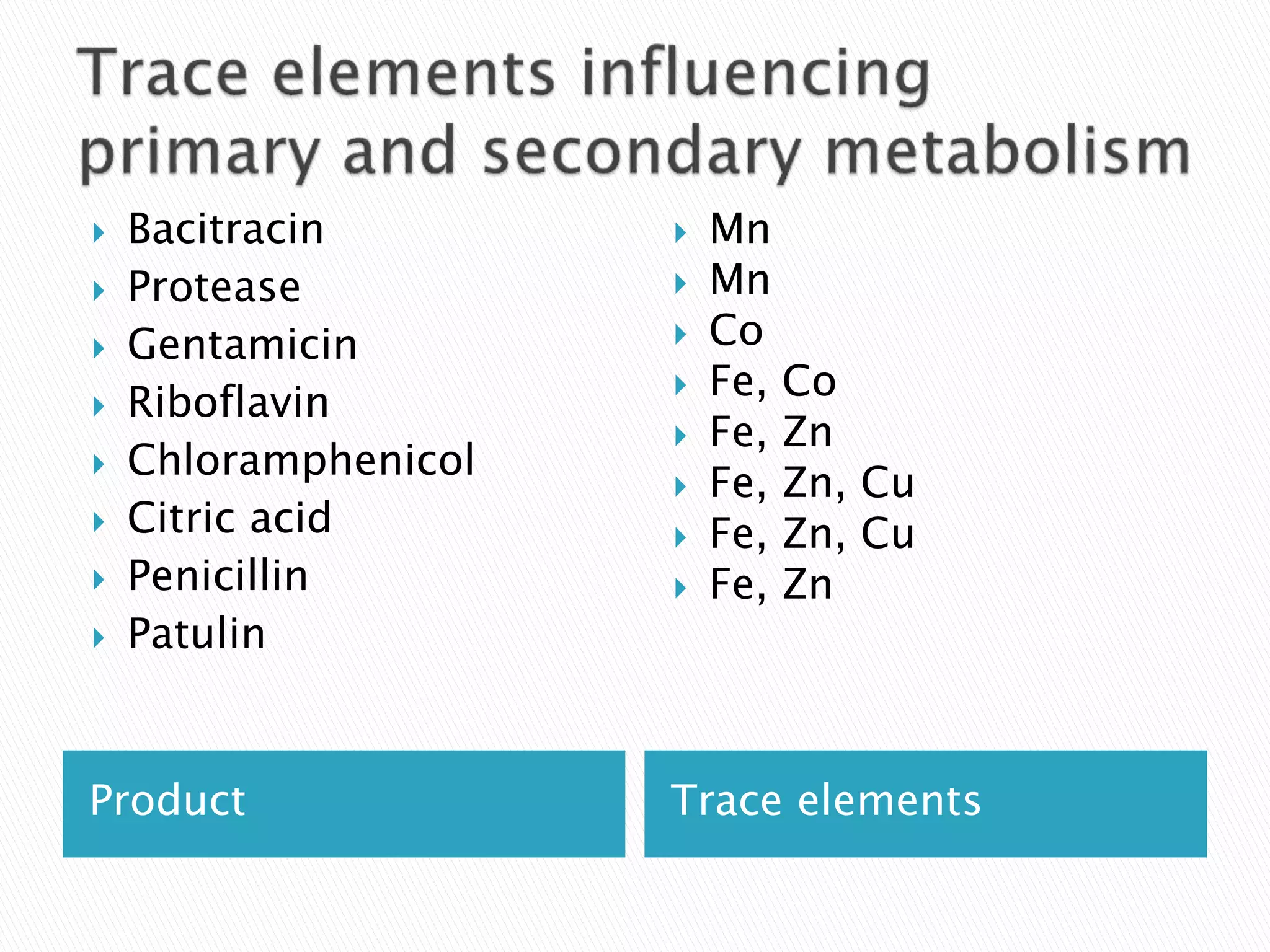
Product Trace elements
 Bacitracin
 Protease
 Gentamicin
 Riboflavin
 Chloramphenicol
 Citric acid
 Penicillin
 Patulin
 Mn
 Mn
 Co
 Fe, Co
 Fe, Zn
 Fe, Zn, Cu
 Fe, Zn, Cu
 Fe, Zn
 Vitamins
 Amino acids,
 Fatty acids
 Sterols.
 Calcium pantothenate – Vinegar production
 Biotin – glutamic acid production.
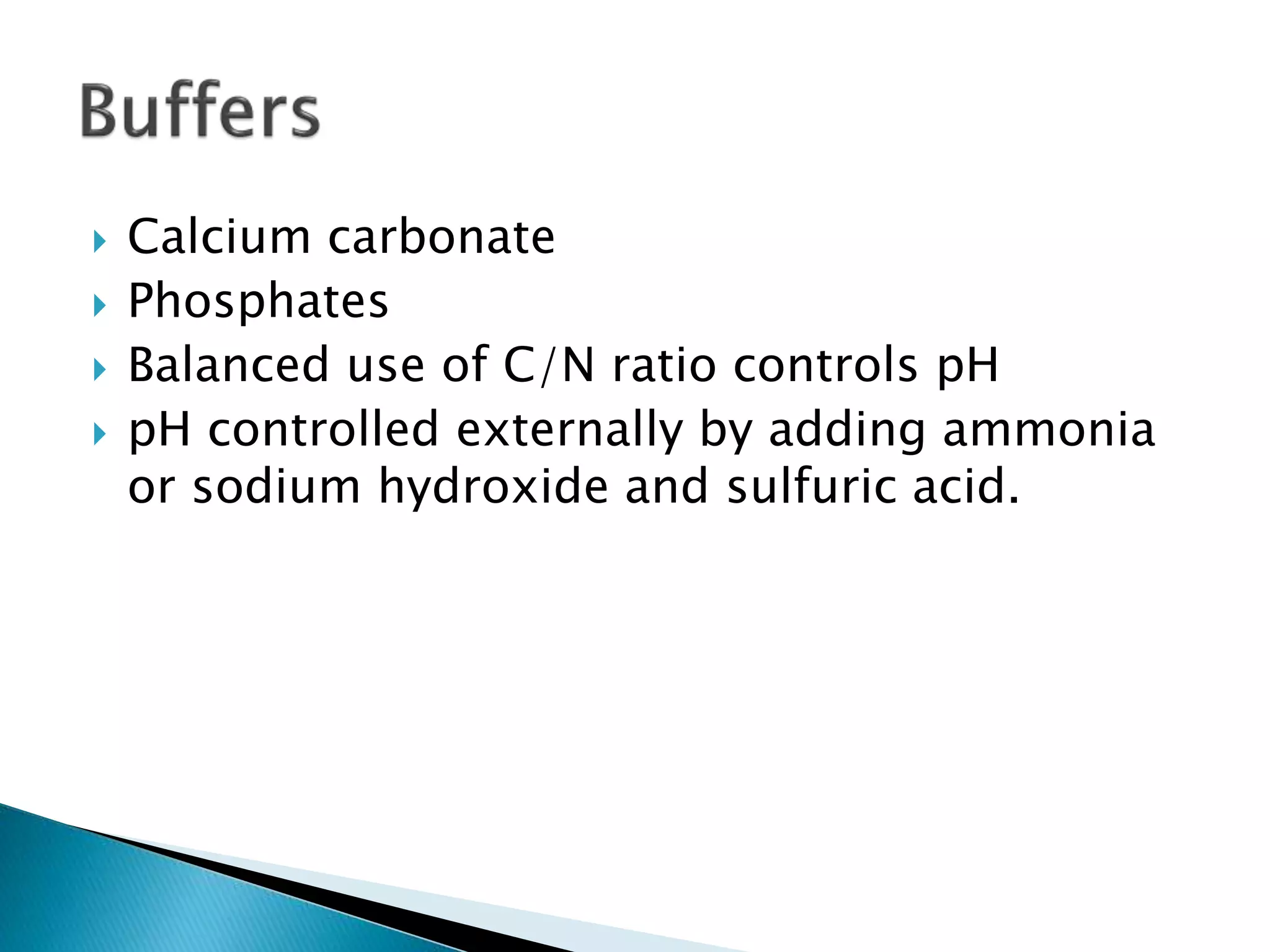
 Calcium carbonate
 Phosphates
 Balanced use of C/N ratio controls pH
 pH controlled externally by adding ammonia
or sodium hydroxide and sulfuric acid.
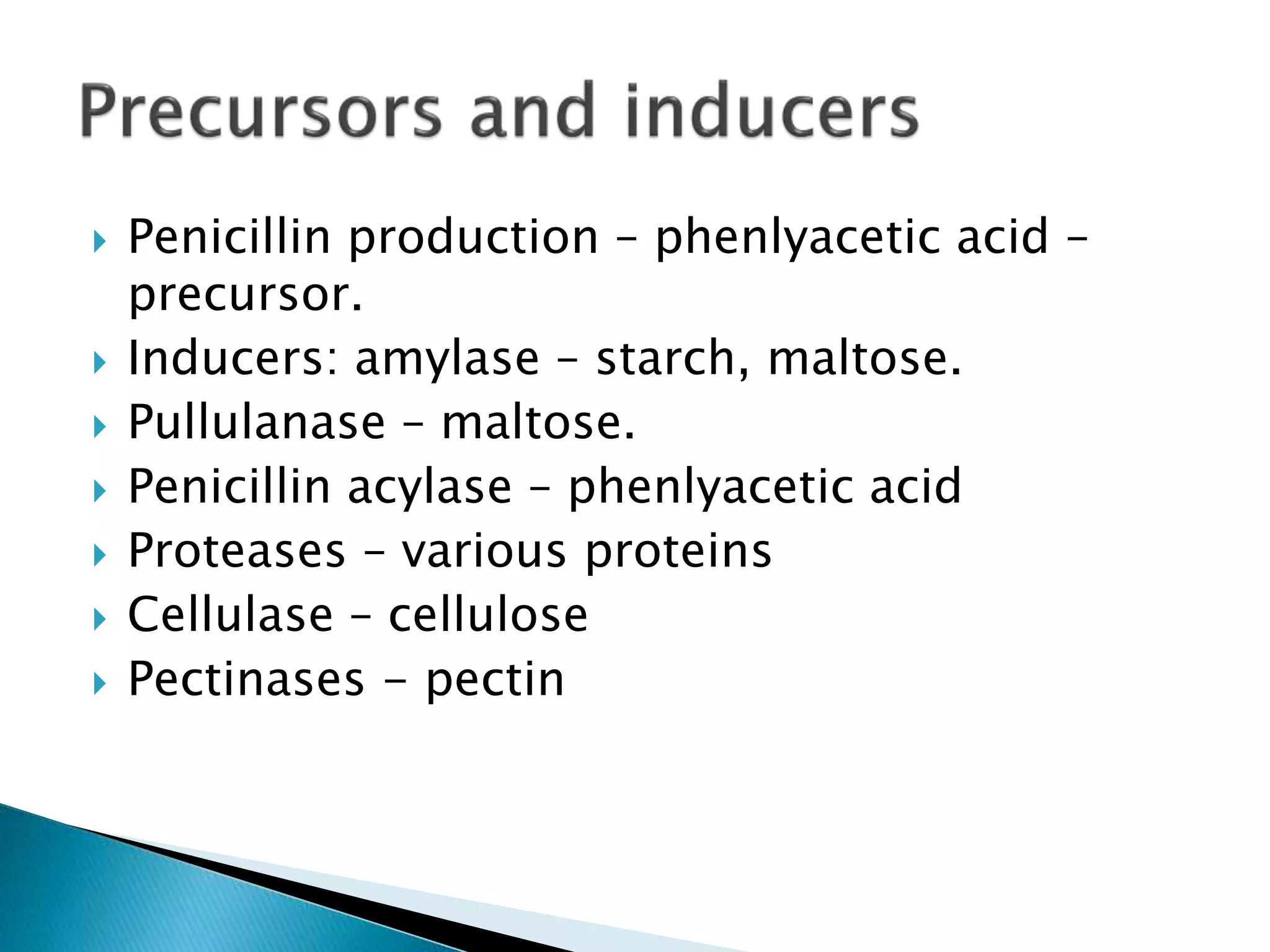
 Penicillin production – phenlyacetic acid –
precursor.
 Inducers: amylase – starch, maltose.
 Pullulanase – maltose.
 Penicillin acylase – phenlyacetic acid
 Proteases – various proteins
 Cellulase – cellulose
 Pectinases - pectin
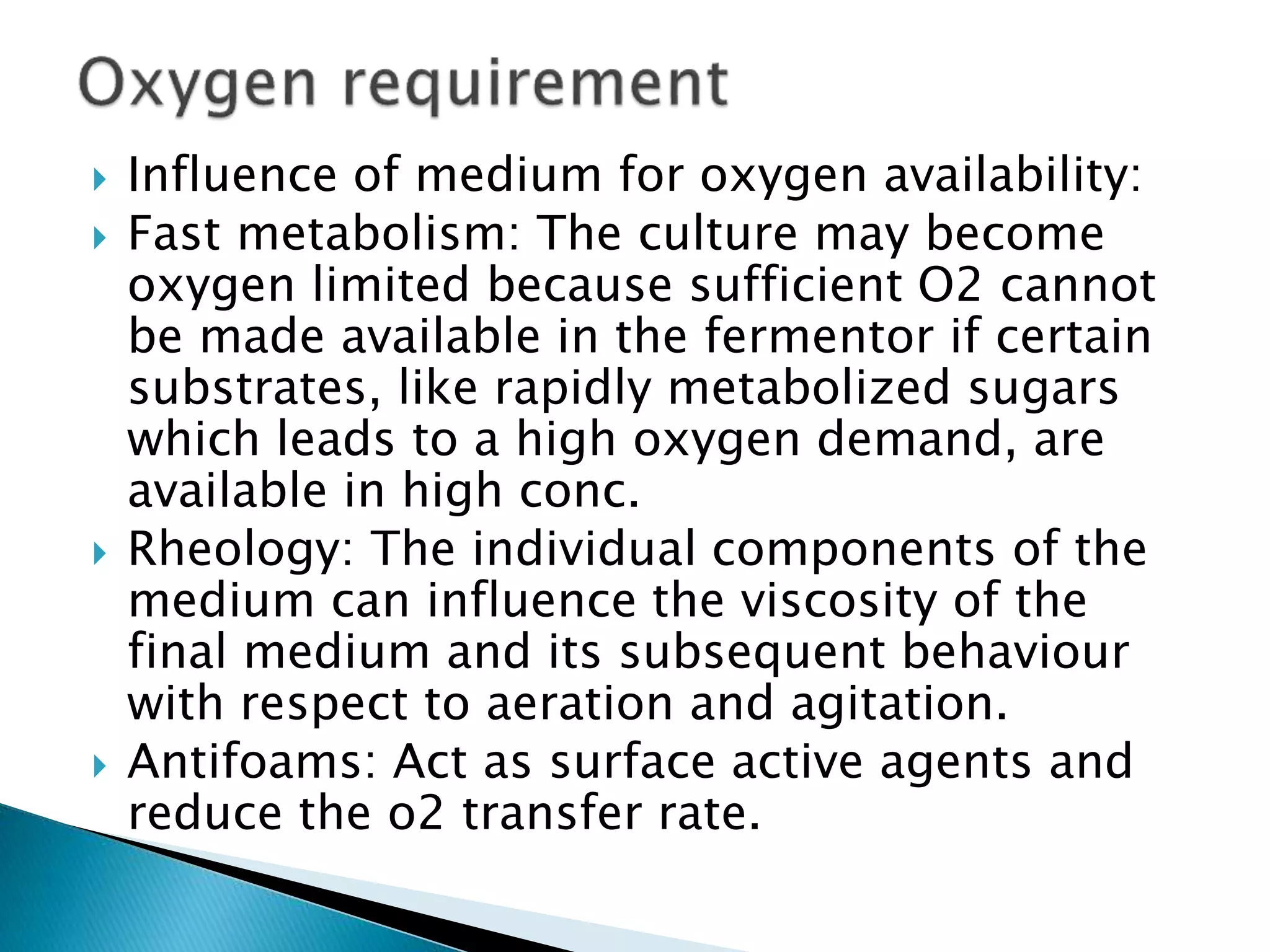
 Influence of medium for oxygen availability:
 Fast metabolism: The culture may become
oxygen limited because sufficient O2 cannot
be made available in the fermentor if certain
substrates, like rapidly metabolized sugars
which leads to a high oxygen demand, are
available in high conc.
 Rheology: The individual components of the
medium can influence the viscosity of the
final medium and its subsequent behaviour
with respect to aeration and agitation.
 Antifoams: Act as surface active agents and
reduce the o2 transfer rate.
 Foaming due to component of the medium / protein
in the medium – leads to problem.
 Characteristics of antifoams:
 Should disperse readily and have fast action on an
excisting foam.
 Should be active at low conc.
 Should be long acting in preventing new foam
formation.
 Should not be metabolized by the microorganisms.
 Should be non-toxic to the microbe,humans and
animals.
 Should not cause any problems in the downstreaming
 Should not cause any handling hazards.
 Should be cheap.
 Should have no effect on oxygen transfer
 Should be heat sterilizable.
 Alcohols; stearyl and octyl decanol
 Esters
 Fatty acids and derivatives (glycerides)
linseed oil, cottonseed oil, olive oil, castor oil,
sunflower oil, rapeseed oil and cod liver oil.
 Silicones
 Sulphonates
 Alkaterge C, oxazaline, poly-propylene
glycol.

Media formulation

  • 1.
  • 2.
  • 3.
    Max. yield Max. conc.Of product Min. yield of undesired product Stable product Min. problems during media making and sterilization Min. problems of production processes (aeration, agitation, extraction, purification and waste treatment.
  • 4.
    Major component ofall fermentation. Ancillary services : heating, cooling, cleaning and rinsing. Suitable water: pH, dissolved salts, effluent contamination. Brewing: mineral content of the water. Reuse of water after fermentation – Methylophilus methylotrophus
  • 5.
    Carbon &energy source+ nitrogen + others BIOMASS + PRODUCTS + CO2 +H2O+ HEAT
  • 6.
     Oxidation ofthe medium components (carbohydrates, lipids and proteins,  light
  • 7.
     Carbohydrates  Oilsand fats  Hydrocarbon and their derivatives Carbohydrates: Starch from maize, cassava, cereals, potatoes Barley grains – malt. Sucrose from sugar cane and sugar beet. Molasses – high volume, low-value product. Lactose and crude lactose Corn steep liquor.
  • 8.
    First used ascarriers for antifoams in antibiotic processes. Vegetable oils – olive, maize, cotton seed, lin seed, soybean, etc. Used as carbon substrates. Also provides antifoaming property. Methly oleate – sole ‘c’source in cephalosporin production.
  • 9.
    Methane, methanol andn-alkanes – substrates for biomass production. N-alkanes – for the production of organic acids, amino acids, vitamins and co-factors, nucleic acids, antibiotics, enzymes and proteins. Scp from hydrocarbons: BP plc developed Toprina from yeast grown on n- alkanes. ICI plc developed pruteen from bacteria grown on methanol. Hoechst/UBHE (protein from bacteria on methanol) Shell plc (bacteria on methane).
  • 10.
    Inorganic source andorganic source Inorganic Nitrogen: 1. Ammonia gas 2. Ammonium salts 3. Nitrates Organic nitrogen: 1. Amino acids 2. Protein 3. Urea Protenaceous nitrogen compounds: CSL, soya meal, peanut meal, cotton-seed meal, distiller’s solubles, meal and yeast extract.
  • 11.
     Penicillin  Bacitracin Riboflavin  Novobiocin  Rifomycin  CSL  Peanut granules  Pancreatic digest of gelatine  Distillers solubles  Pharmamedia, soybean meal, (NH4)2 SO4.
  • 12.
     KH2 PO4 MgSO4. 7H20  KCl  CaCO3  FeSo4. 4H2O  ZnSO4. 8H20  MnSo4. H2O  CuSO4.5H2O  Na2MoO4. 2H20  1.0-4.0  0.25-3.0  0.5-12.0  5-17  .01-.1  .1-1  .01-.1  .003-.01  .01-.1
  • 13.
    Product Trace elements Bacitracin  Protease  Gentamicin  Riboflavin  Chloramphenicol  Citric acid  Penicillin  Patulin  Mn  Mn  Co  Fe, Co  Fe, Zn  Fe, Zn, Cu  Fe, Zn, Cu  Fe, Zn
  • 14.
     Vitamins  Aminoacids,  Fatty acids  Sterols.  Calcium pantothenate – Vinegar production  Biotin – glutamic acid production.
  • 15.
     Calcium carbonate Phosphates  Balanced use of C/N ratio controls pH  pH controlled externally by adding ammonia or sodium hydroxide and sulfuric acid.
  • 16.
     Penicillin production– phenlyacetic acid – precursor.  Inducers: amylase – starch, maltose.  Pullulanase – maltose.  Penicillin acylase – phenlyacetic acid  Proteases – various proteins  Cellulase – cellulose  Pectinases - pectin
  • 17.
     Influence ofmedium for oxygen availability:  Fast metabolism: The culture may become oxygen limited because sufficient O2 cannot be made available in the fermentor if certain substrates, like rapidly metabolized sugars which leads to a high oxygen demand, are available in high conc.  Rheology: The individual components of the medium can influence the viscosity of the final medium and its subsequent behaviour with respect to aeration and agitation.  Antifoams: Act as surface active agents and reduce the o2 transfer rate.
  • 18.
     Foaming dueto component of the medium / protein in the medium – leads to problem.  Characteristics of antifoams:  Should disperse readily and have fast action on an excisting foam.  Should be active at low conc.  Should be long acting in preventing new foam formation.  Should not be metabolized by the microorganisms.  Should be non-toxic to the microbe,humans and animals.  Should not cause any problems in the downstreaming  Should not cause any handling hazards.  Should be cheap.  Should have no effect on oxygen transfer  Should be heat sterilizable.
  • 19.
     Alcohols; stearyland octyl decanol  Esters  Fatty acids and derivatives (glycerides) linseed oil, cottonseed oil, olive oil, castor oil, sunflower oil, rapeseed oil and cod liver oil.  Silicones  Sulphonates  Alkaterge C, oxazaline, poly-propylene glycol.