Dr. N. Banu,
Associate Professor,
Department of Biotechnology
Vels University
Cell disruption
(1) energy-intensive and violent
(2) without destroying interest protein
(3) contain process ( bacteria,
 yeast, mammalian, plant, and insect
 sources)
(4) be controlled
(5) be validated
Products requiring cell disruption
 Vaccines (tetanus, meningitis)
 Glucokinase
 Glycerokinase
 Invertase
 Toxin (enterotoxin)
 Subcellular components (mitochondrai, chloroplast)
 Intracellular constituents (DNA, RNA preparation, and
virus-like particles)
 Recombinant insulin
 Recombinant growth hormone
 Protein A and G.
Cell disruption
Biological products:
1. Extracellular
2. Intracellular
3. Periplasmic
Cells
• Gram positive bacterial cells
• Gram negative bacterial cells
• Yeast cell
• Mould cells
• Cultured mammalian cells
• Cultured plant cells
• Ground tissue
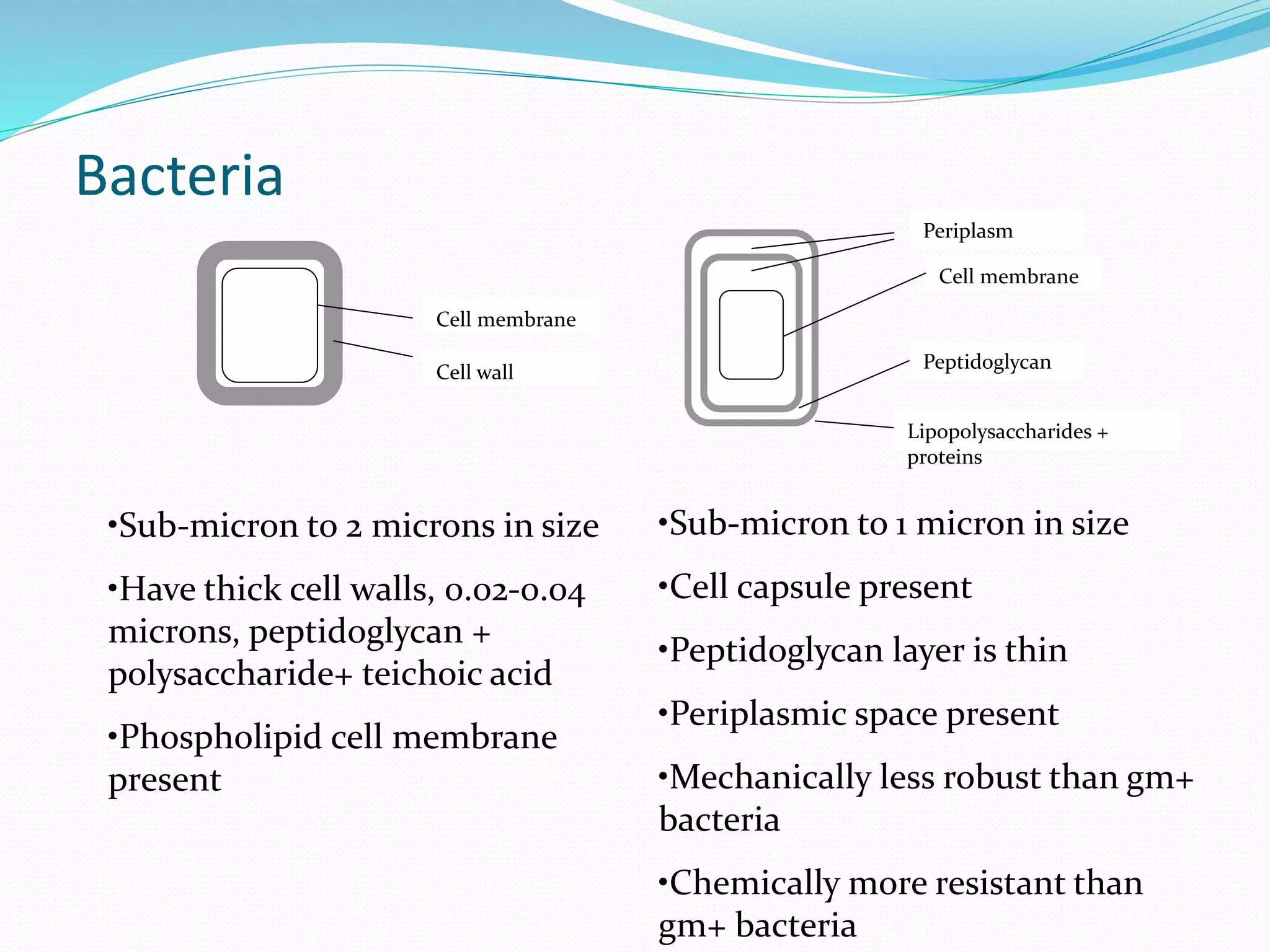
Bacteria
Cell membrane
Cell wall
Peptidoglycan
Cell membrane
Periplasm
Lipopolysaccharides +
proteins
•Sub-micron to 2 microns in size
•Have thick cell walls, 0.02-0.04
microns, peptidoglycan +
polysaccharide+ teichoic acid
•Phospholipid cell membrane
present
•Sub-micron to 1 micron in size
•Cell capsule present
•Peptidoglycan layer is thin
•Periplasmic space present
•Mechanically less robust than gm+
bacteria
•Chemically more resistant than
gm+ bacteria
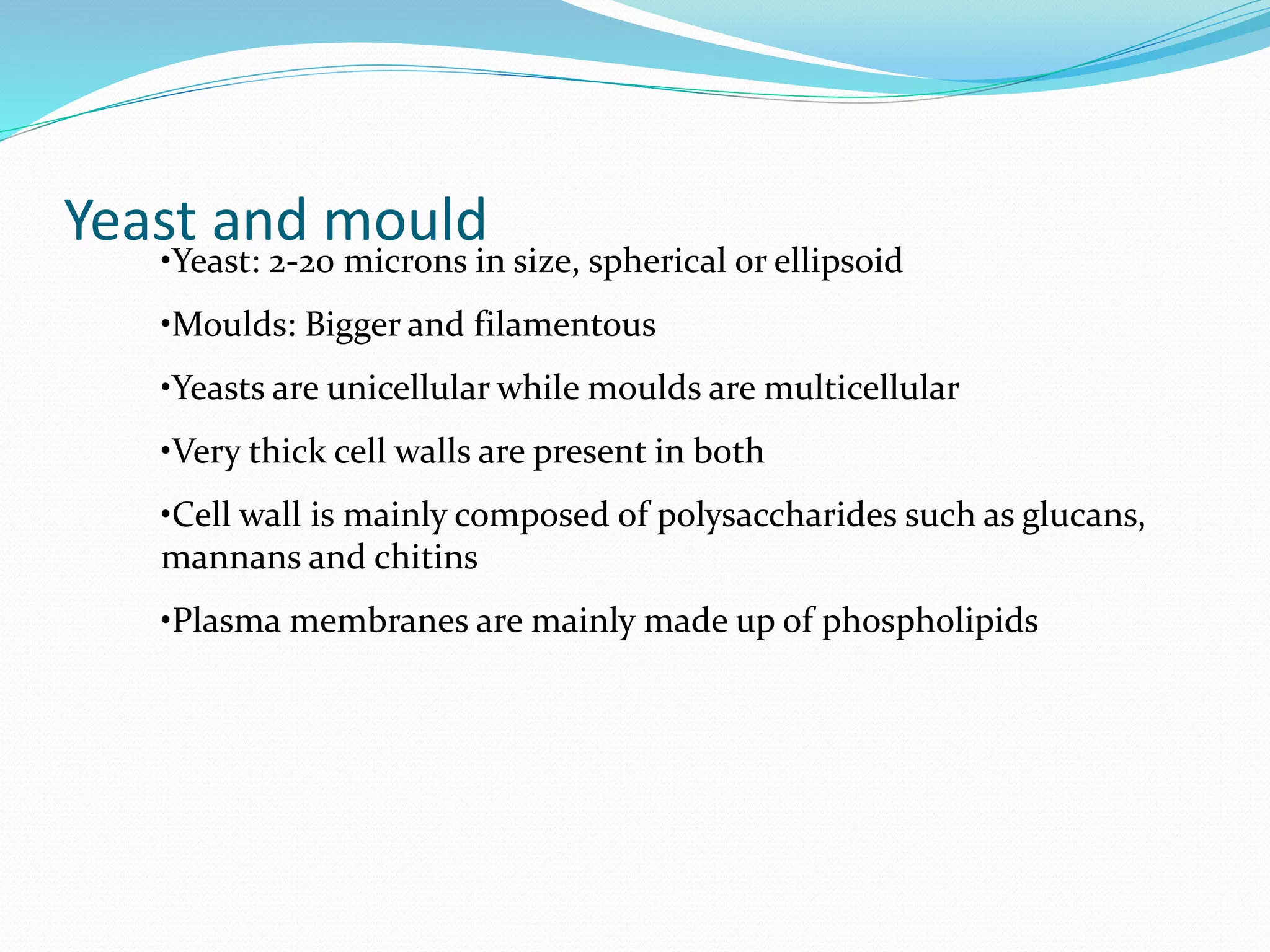
Yeast and mould
•Yeast: 2-20 microns in size, spherical or ellipsoid
•Moulds: Bigger and filamentous
•Yeasts are unicellular while moulds are multicellular
•Very thick cell walls are present in both
•Cell wall is mainly composed of polysaccharides such as glucans,
mannans and chitins
•Plasma membranes are mainly made up of phospholipids
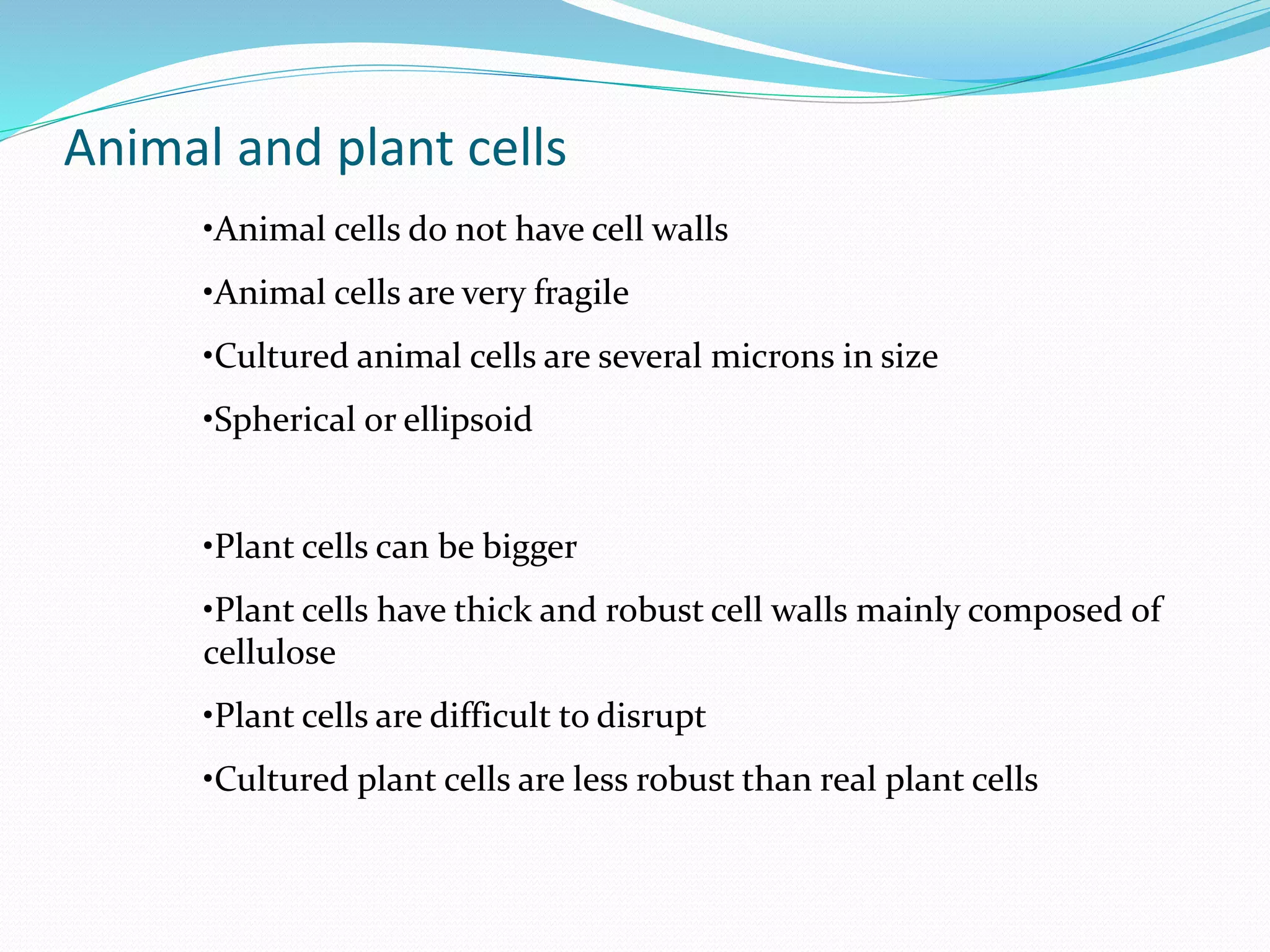
Animal and plant cells
•Animal cells do not have cell walls
•Animal cells are very fragile
•Cultured animal cells are several microns in size
•Spherical or ellipsoid
•Plant cells can be bigger
•Plant cells have thick and robust cell walls mainly composed of
cellulose
•Plant cells are difficult to disrupt
•Cultured plant cells are less robust than real plant cells
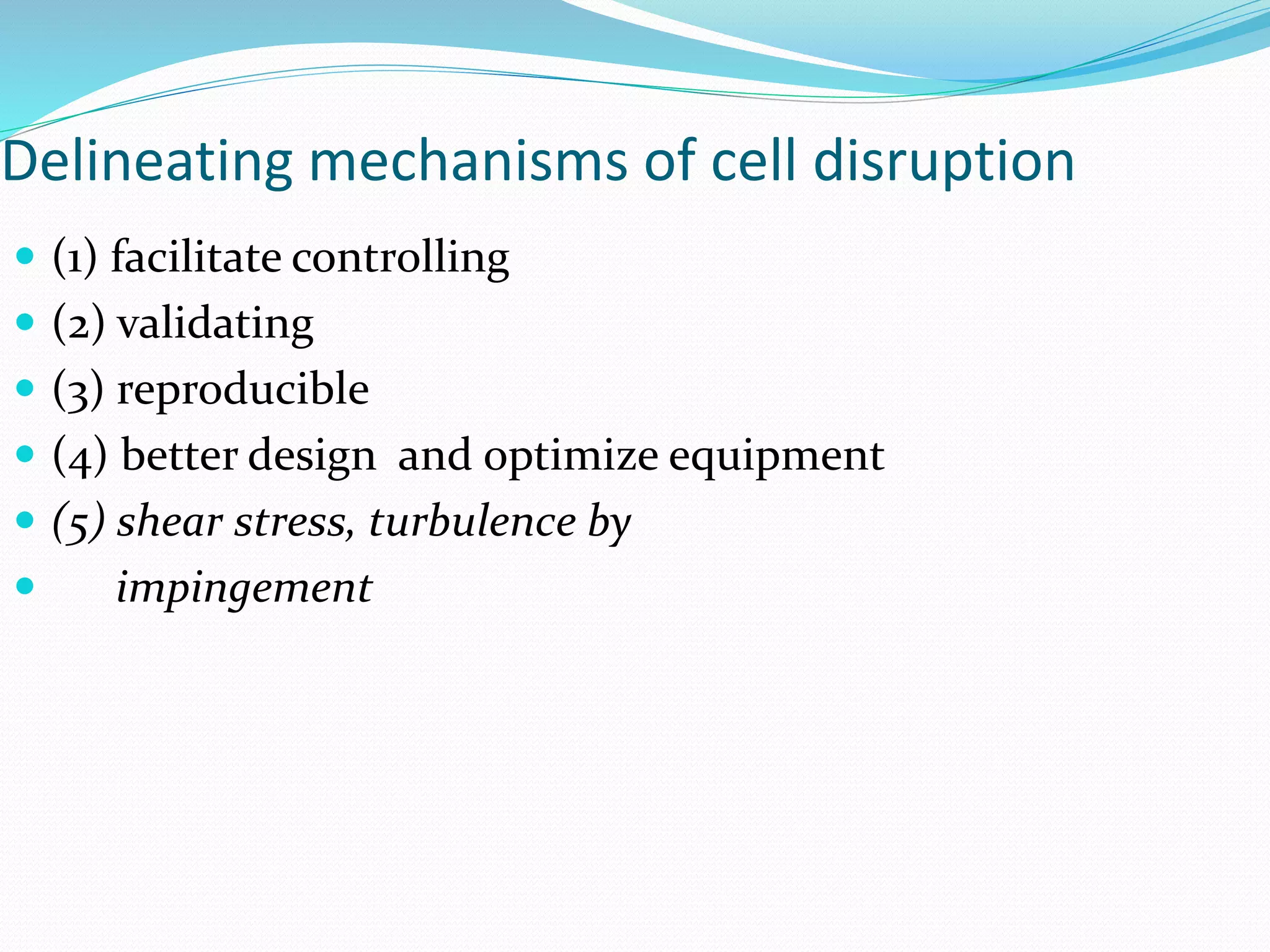
Delineating mechanisms of cell disruption
 (1) facilitate controlling
 (2) validating
 (3) reproducible
 (4) better design and optimize equipment
 (5) shear stress, turbulence by
 impingement
Choice of Disruption Method
 The method selected for large scale cell disruption will
be different in every case, but will depend on:
 Susceptibility of cells to disruption
 Product stability
 Ease of extraction from cell debris
 Speed of method
 Cost of method
Ideal large scale cell disrupter
 (1) disrupt tough organisms
 (2) mechanism of cell disruption should be well
understood
 (3) sterilizable
 (4) containable and validatable
 (5) amenable to being made automatic
 (6) continuous and compact
 (7) economical
Cell disruption goal
 Objective function (monetary value of
 product)
Small scale cell disruption
 (1) ultrasonic
 (2) freeze thawing
 (3) force cells through very small orifices at high
pressure
 (4) glass or porcelain ball mills
Cell disruption methods
Physical methods
• Disruption in bead mill
• Disruption using a colloid mill
• Disruption using French press
• Disruption using ultrasonic vibrations
Chemical and physicochemical methods
• Disruption using detergents
• Disruption using enzymes e.g. lysozyme
• Disruption using solvents
• Disruption using osmotic shock
Large scale cell disruption
 Homogenizer
 Structure (positive displacement pump, pistons, nozzle)
 Mechanisms
 (1) Shear
 (2) Cavitation
 (3) impingement
 Condition
 (1) concentration (4-175 g dry wt/liter)
 (2) pressure (30-95 MPa)
 (3) passes number (~5time)
 (4) modeled by equation
 (5) wild-type E. coli cells more difficult to disrupt (heat
induction at 42C)
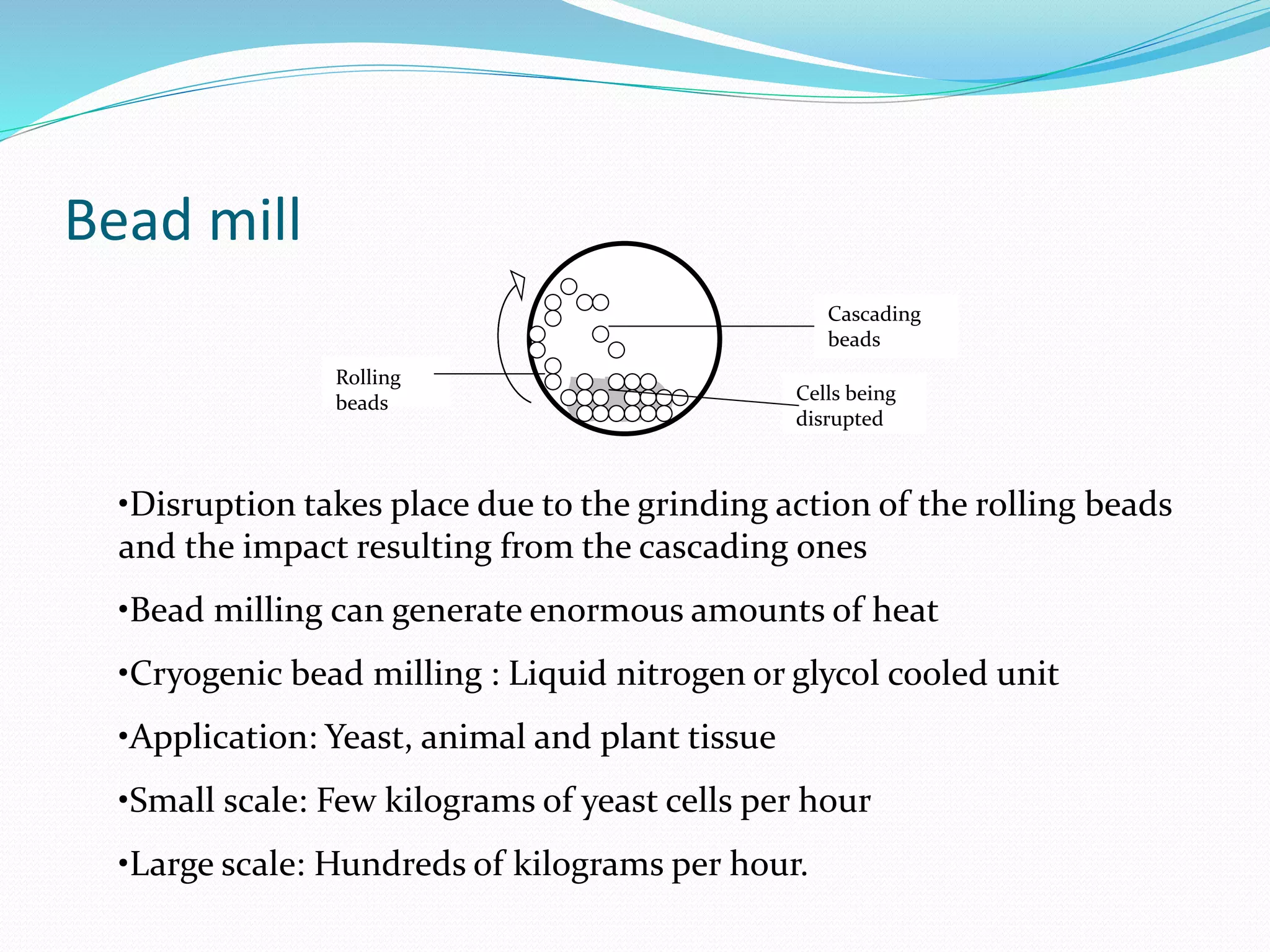
Bead mill
Cascading
beads
Cells being
disrupted
Rolling
beads
•Disruption takes place due to the grinding action of the rolling beads
and the impact resulting from the cascading ones
•Bead milling can generate enormous amounts of heat
•Cryogenic bead milling : Liquid nitrogen or glycol cooled unit
•Application: Yeast, animal and plant tissue
•Small scale: Few kilograms of yeast cells per hour
•Large scale: Hundreds of kilograms per hour.
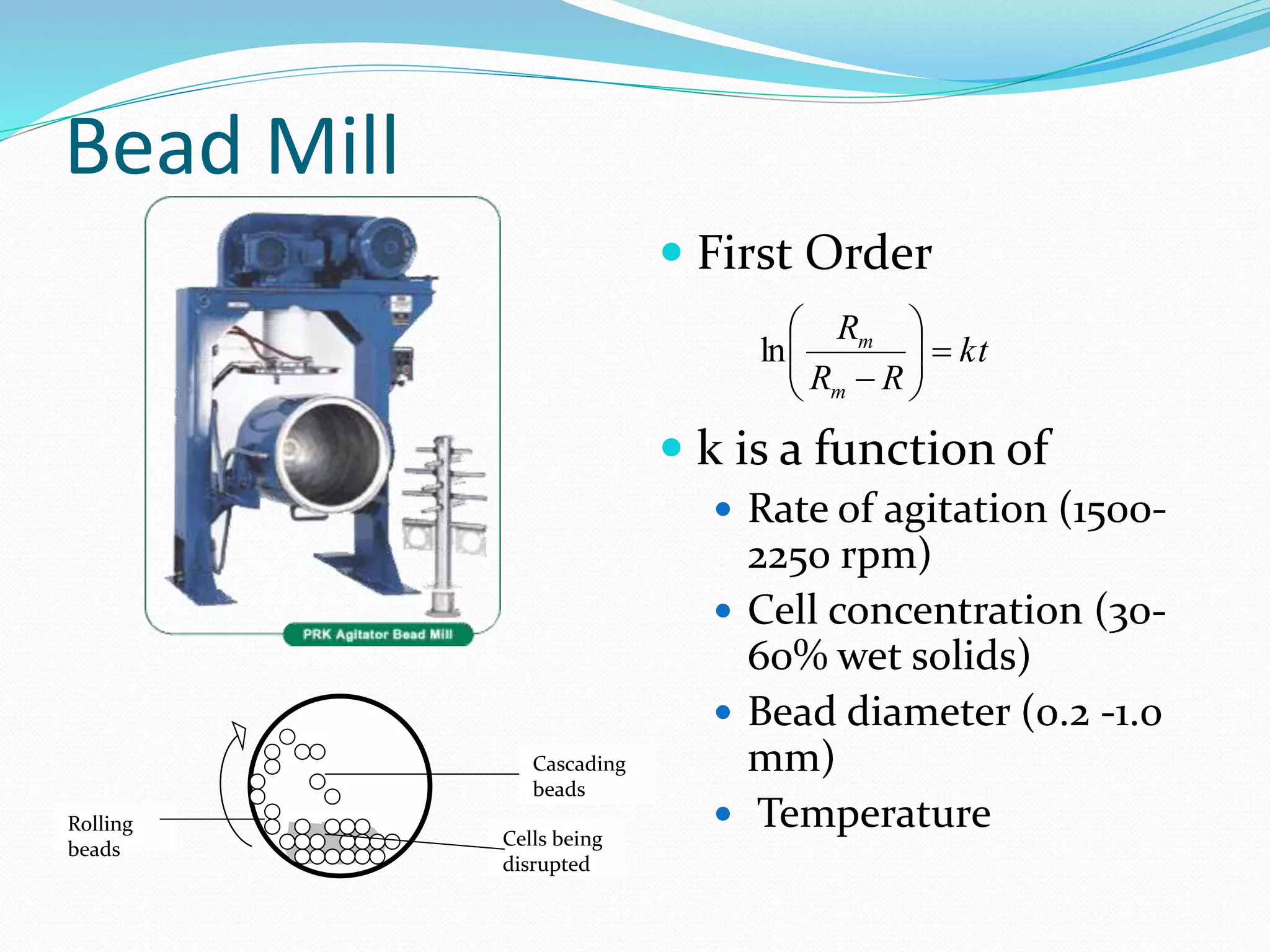
Bead Mill
kt
RR
R
m
m







ln
 First Order
 k is a function of
 Rate of agitation (1500-
2250 rpm)
 Cell concentration (30-
60% wet solids)
 Bead diameter (0.2 -1.0
mm)
 Temperature
Cascading
beads
Cells being
disrupted
Rolling
beads
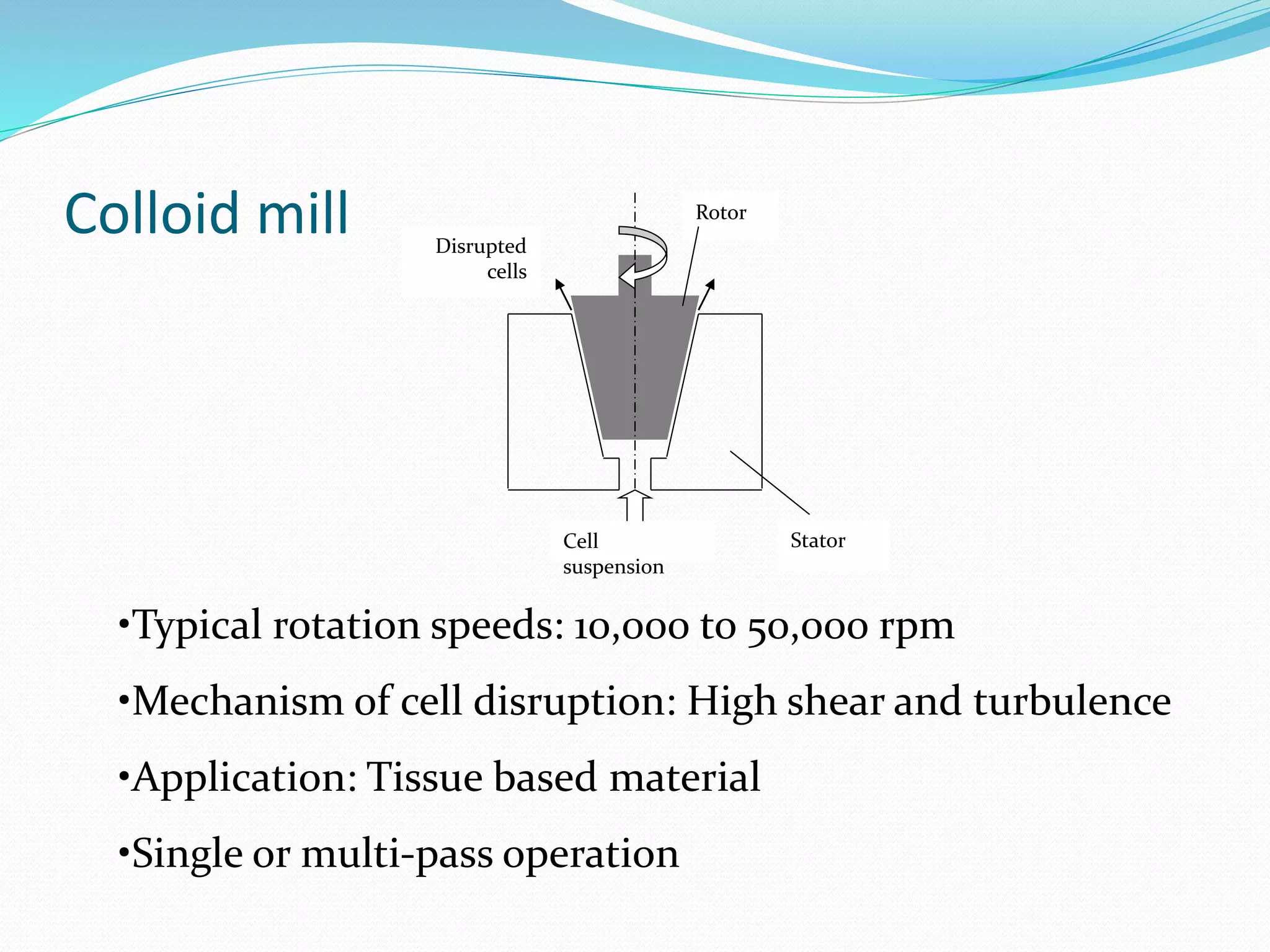
Colloid mill
Cell
suspension
Rotor
Stator
Disrupted
cells
•Typical rotation speeds: 10,000 to 50,000 rpm
•Mechanism of cell disruption: High shear and turbulence
•Application: Tissue based material
•Single or multi-pass operation
Cell disruption
17
Mechanical cell disruption methods
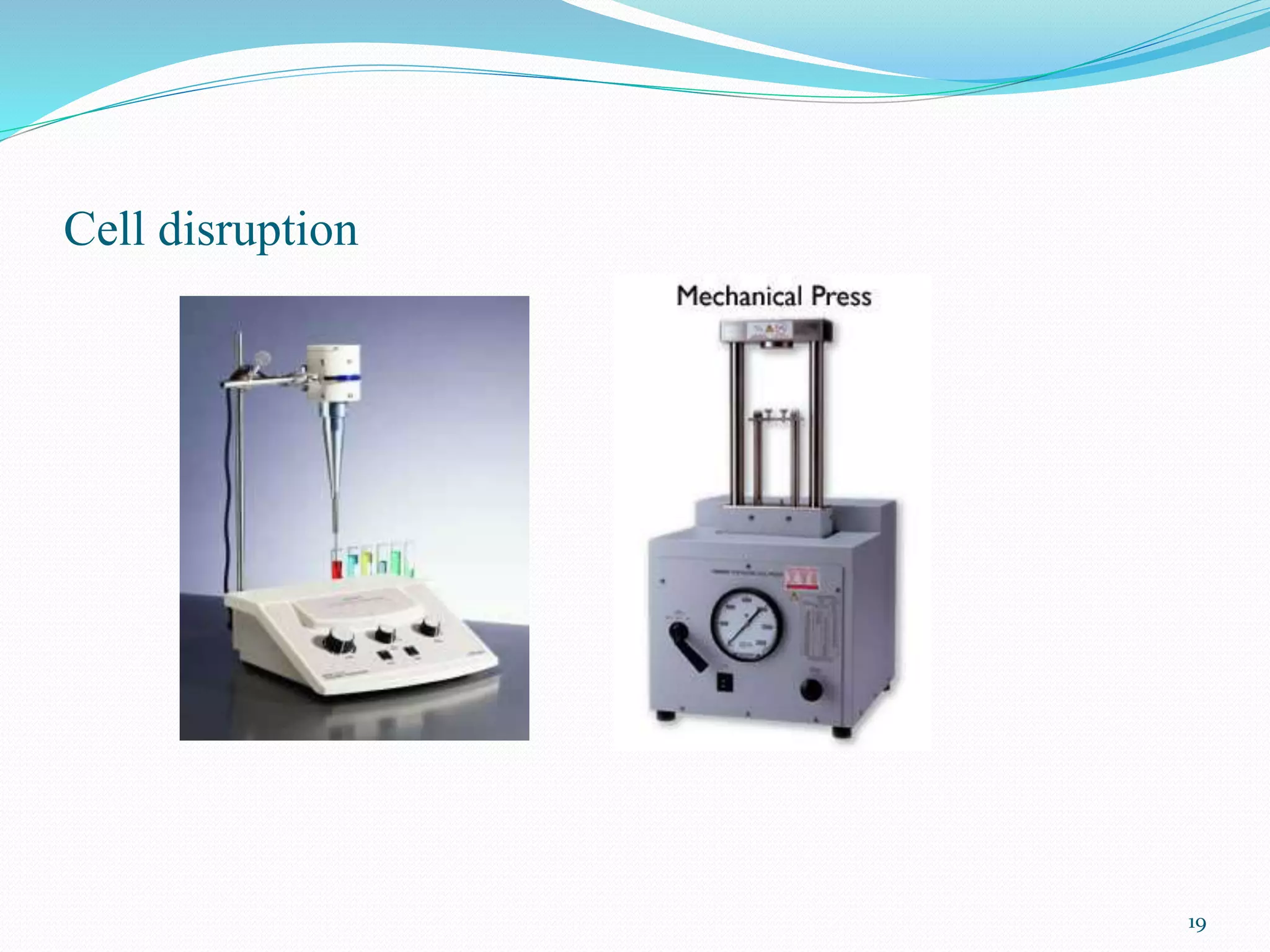
•French press (pressure cell) and high-pressure homogenizers. In these
devices, the cell suspension is drawn through a check valve into a pump
cylinder. At this point, it is forced under pressure (up to 1500 bar)
through a very narrow annulus or discharge valve, over which the
pressure drops to atmospheric. Cell disruption is primary achieved by
high liquid shear in the orifice and the sudden pressure drop upon
discharge causes explosion of the cells.
•Ultrasonic disruption. It is performed by ultrasonic vibrators that
produce a high-frequency sound with a wave density of approximately
20 kHz/s. A transducer convert the waves into mechanical oscillations
via a titanium probe immersed in the concentrated cell suspension. For
small scale
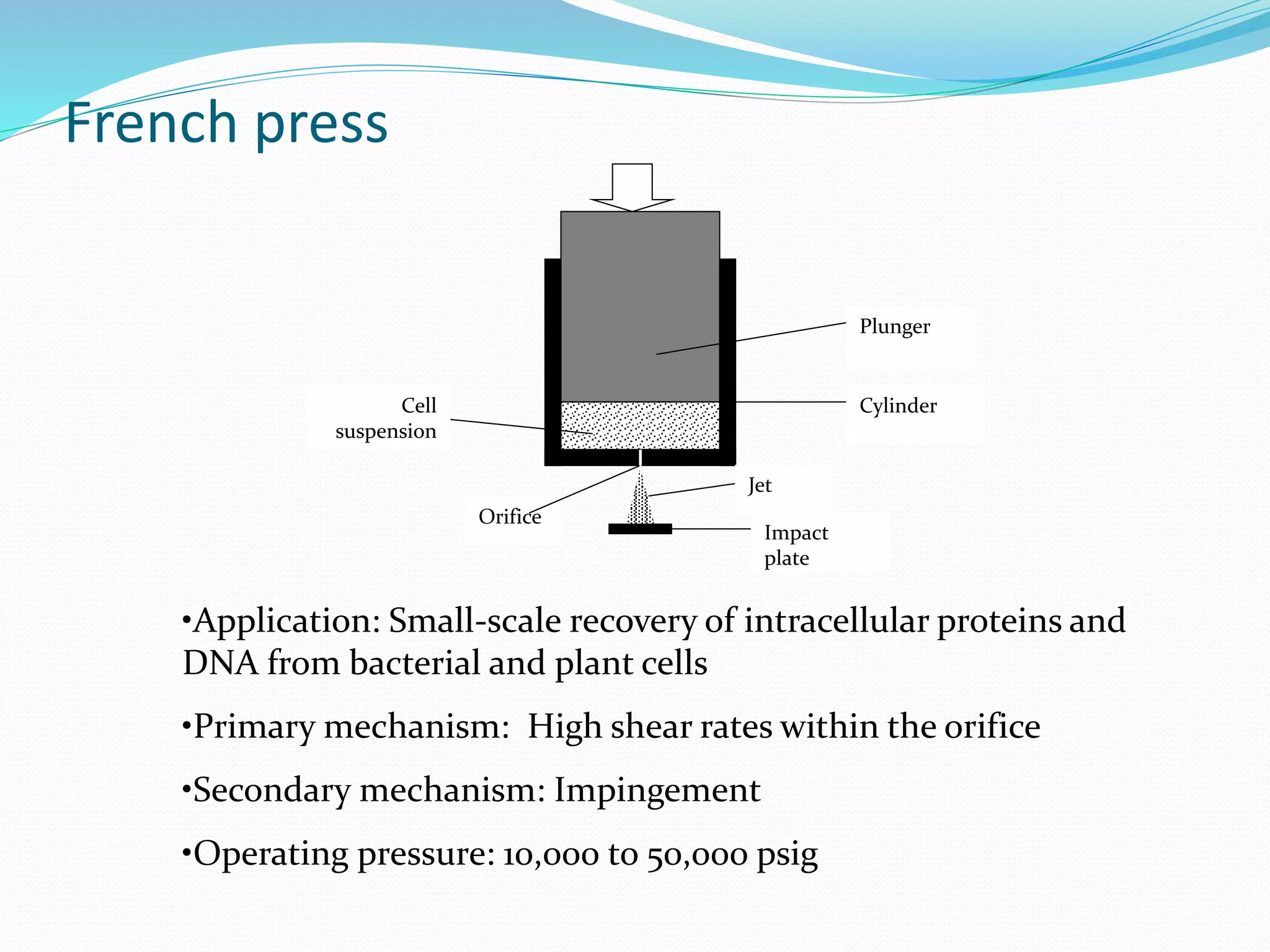
French press
Plunger
CylinderCell
suspension
Impact
plate
Jet
Orifice
•Application: Small-scale recovery of intracellular proteins and
DNA from bacterial and plant cells
•Primary mechanism: High shear rates within the orifice
•Secondary mechanism: Impingement
•Operating pressure: 10,000 to 50,000 psig
Cell disruption
19
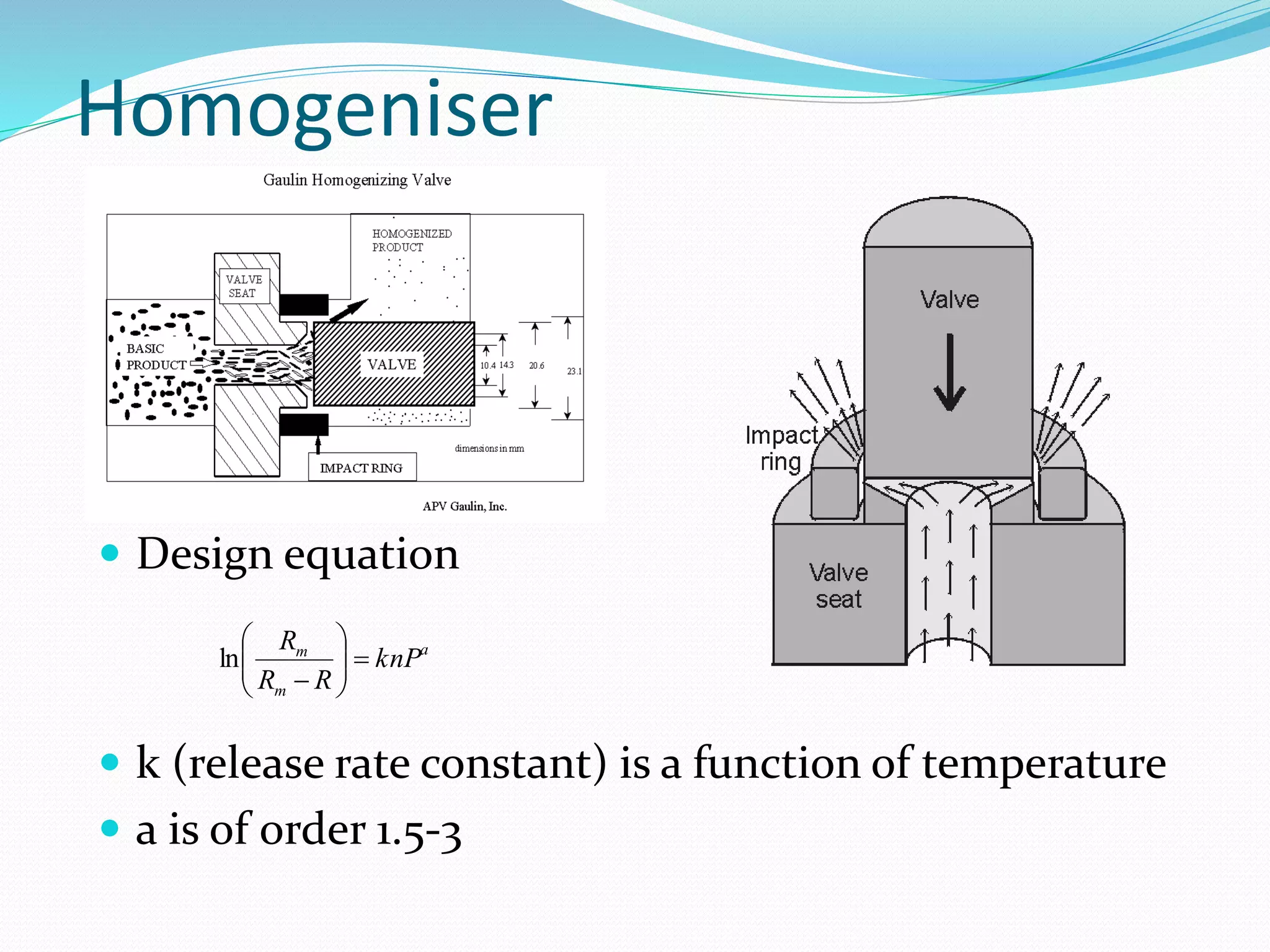
Homogeniser
 Large scale, widely used
 Variables in design
 type of valve
 pressure
 single or two-stage
 surfactant type and content
 viscosity
 temperature
 Disruption occurs through turbulence and cavitation
 High pressure (400-600 bar)
 High solids (50% solids feed)
 High heat generation (~1.5°C/1000 psi)
 Throughput 4-21 kg dry yeast/hr
Homogeniser
a
m
m
knP
RR
R







ln
 Design equation
 k (release rate constant) is a function of temperature
 a is of order 1.5-3
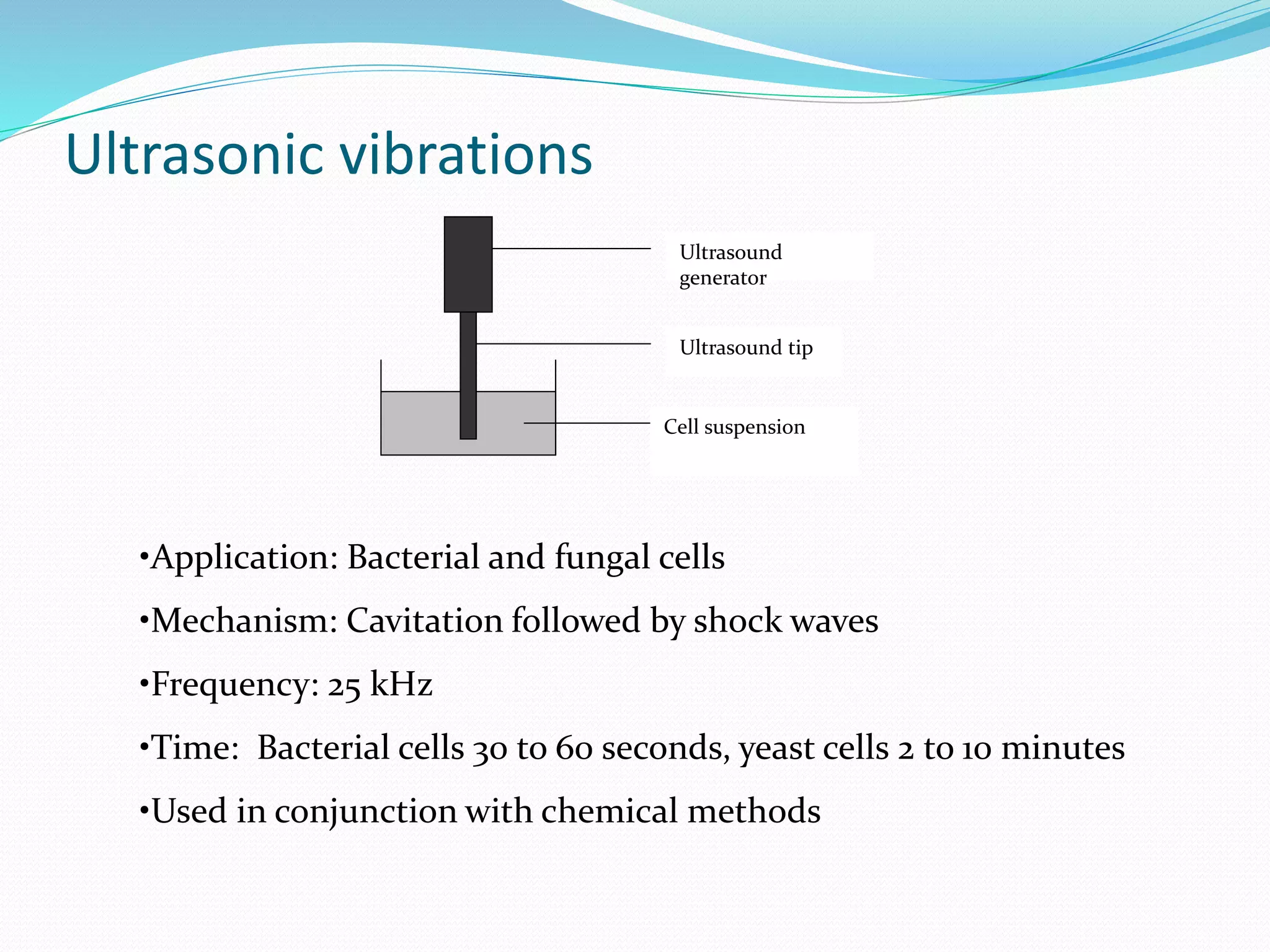
Ultrasonic vibrations
Cell suspension
Ultrasound tip
Ultrasound
generator
•Application: Bacterial and fungal cells
•Mechanism: Cavitation followed by shock waves
•Frequency: 25 kHz
•Time: Bacterial cells 30 to 60 seconds, yeast cells 2 to 10 minutes
•Used in conjunction with chemical methods
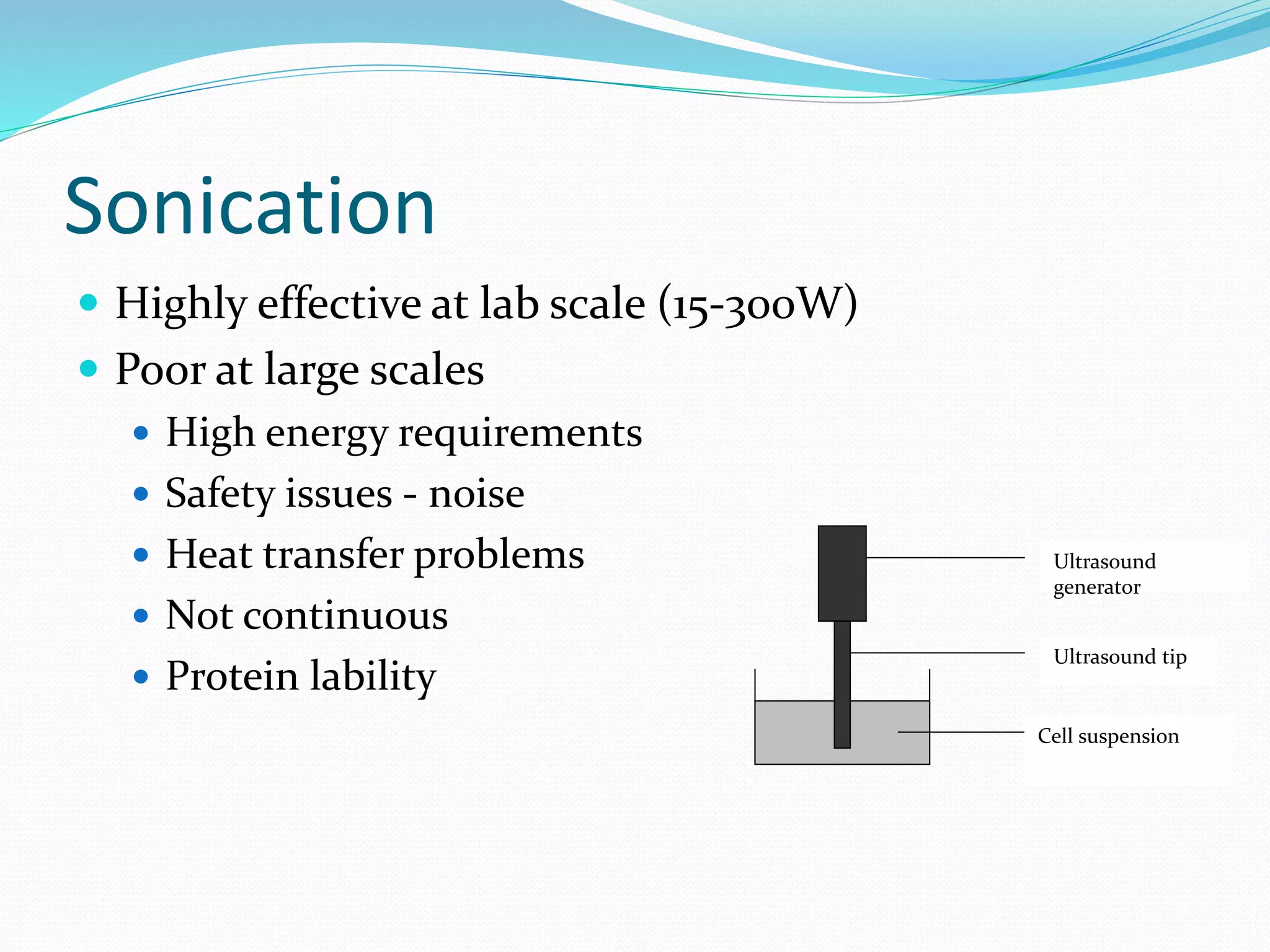
Sonication
 Highly effective at lab scale (15-300W)
 Poor at large scales
 High energy requirements
 Safety issues - noise
 Heat transfer problems
 Not continuous
 Protein lability
Cell suspension
Ultrasound tip
Ultrasound
generator
Chemical and physicochemical methods
•Detergents
•Enzymes
•Organic solvents
•Osmotic shock
Cell disruption
25
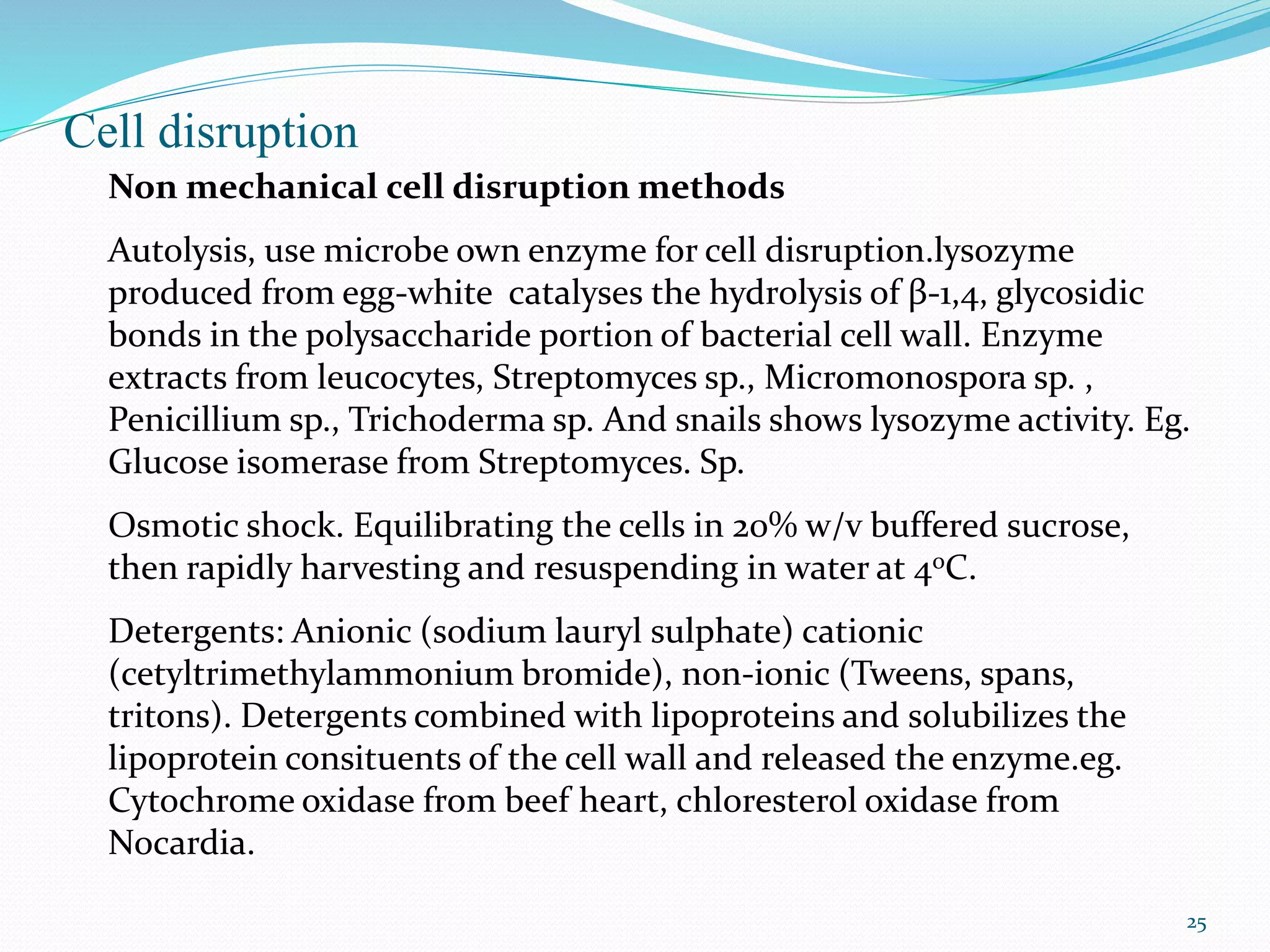
Non mechanical cell disruption methods
Autolysis, use microbe own enzyme for cell disruption.lysozyme
produced from egg-white catalyses the hydrolysis of β-1,4, glycosidic
bonds in the polysaccharide portion of bacterial cell wall. Enzyme
extracts from leucocytes, Streptomyces sp., Micromonospora sp. ,
Penicillium sp., Trichoderma sp. And snails shows lysozyme activity. Eg.
Glucose isomerase from Streptomyces. Sp.
Osmotic shock. Equilibrating the cells in 20% w/v buffered sucrose,
then rapidly harvesting and resuspending in water at 4oC.
Detergents: Anionic (sodium lauryl sulphate) cationic
(cetyltrimethylammonium bromide), non-ionic (Tweens, spans,
tritons). Detergents combined with lipoproteins and solubilizes the
lipoprotein consituents of the cell wall and released the enzyme.eg.
Cytochrome oxidase from beef heart, chloresterol oxidase from
Nocardia.
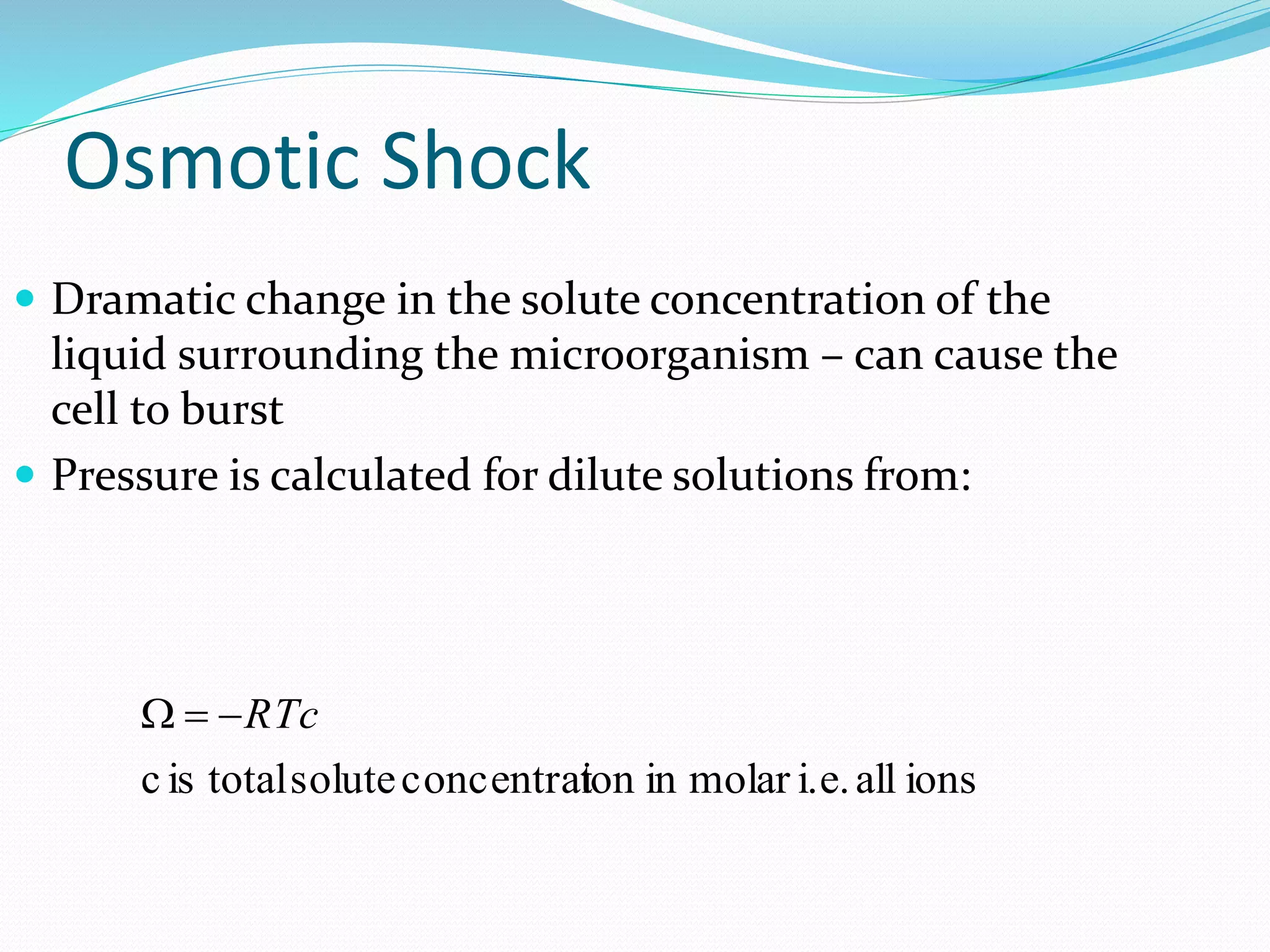
Osmotic Shock
ionsalli.e.molarinionconcentratsolutetotalisc
RTc
 Dramatic change in the solute concentration of the
liquid surrounding the microorganism – can cause the
cell to burst
 Pressure is calculated for dilute solutions from:
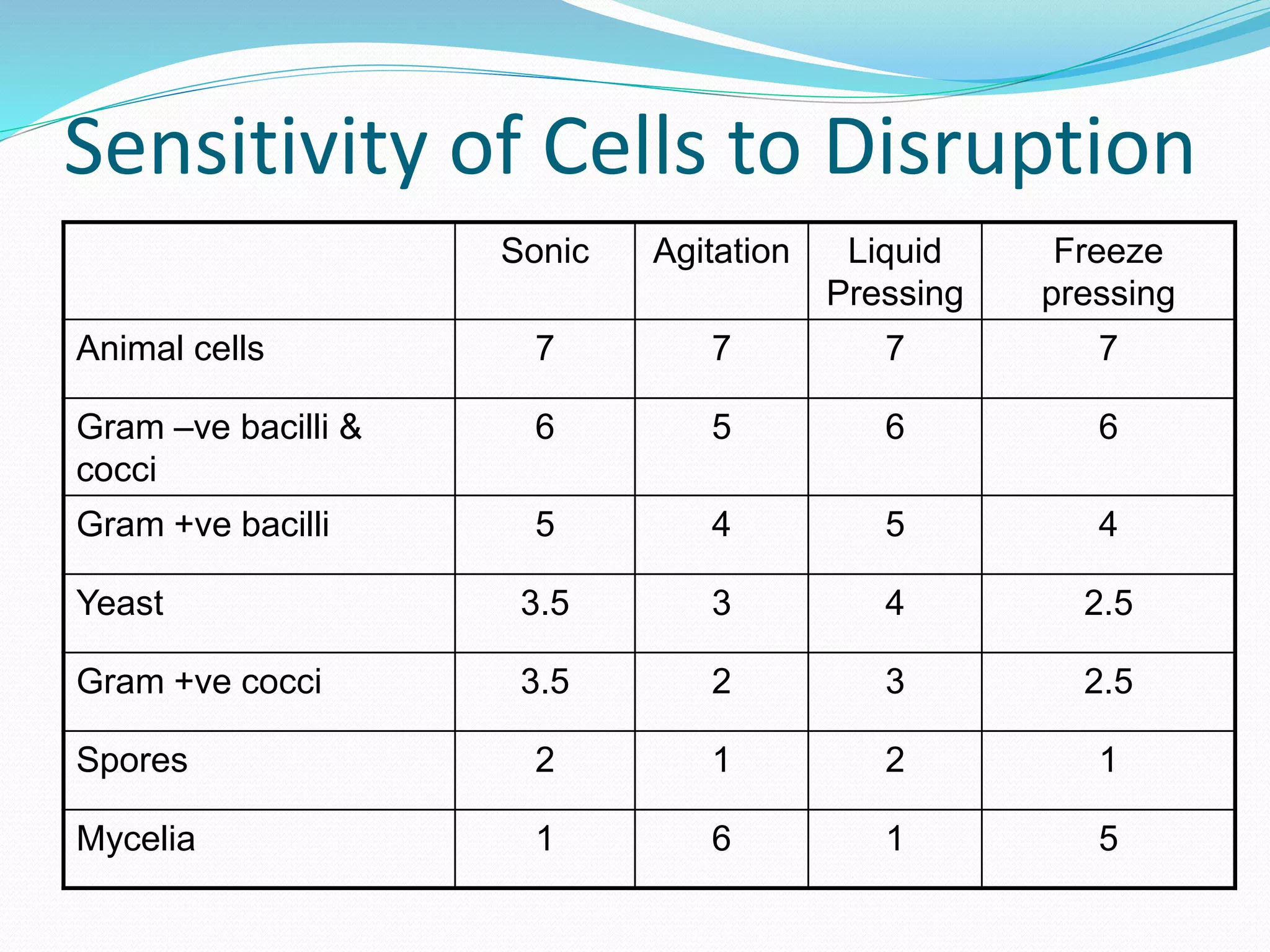
Sensitivity of Cells to Disruption
Sonic Agitation Liquid
Pressing
Freeze
pressing
Animal cells 7 7 7 7
Gram –ve bacilli &
cocci
6 5 6 6
Gram +ve bacilli 5 4 5 4
Yeast 3.5 3 4 2.5
Gram +ve cocci 3.5 2 3 2.5
Spores 2 1 2 1
Mycelia 1 6 1 5
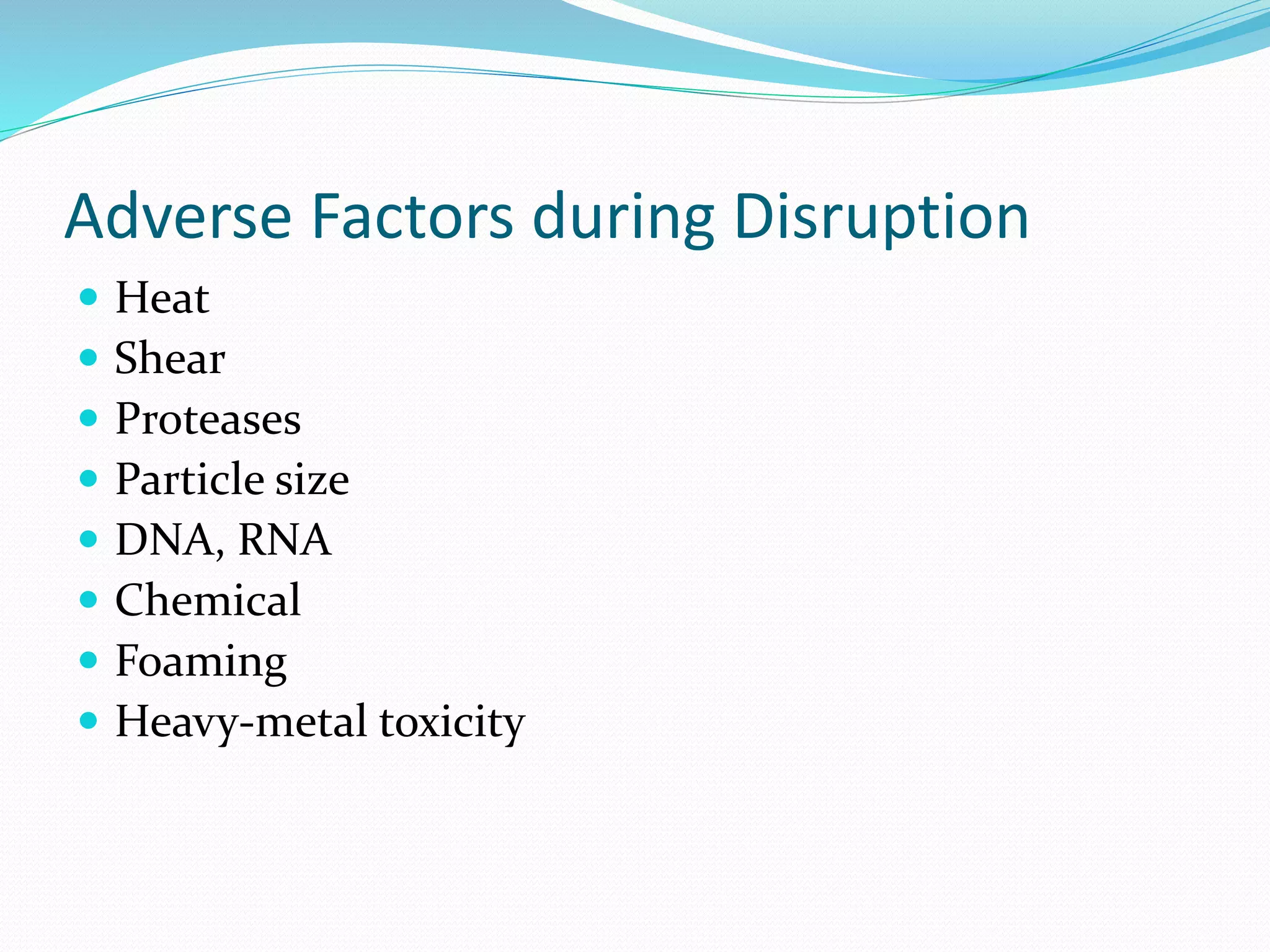
Adverse Factors during Disruption
 Heat
 Shear
 Proteases
 Particle size
 DNA, RNA
 Chemical
 Foaming
 Heavy-metal toxicity

Cell distruption

  • 1.
    Dr. N. Banu, AssociateProfessor, Department of Biotechnology Vels University
  • 2.
    Cell disruption (1) energy-intensiveand violent (2) without destroying interest protein (3) contain process ( bacteria,  yeast, mammalian, plant, and insect  sources) (4) be controlled (5) be validated
  • 3.
    Products requiring celldisruption  Vaccines (tetanus, meningitis)  Glucokinase  Glycerokinase  Invertase  Toxin (enterotoxin)  Subcellular components (mitochondrai, chloroplast)  Intracellular constituents (DNA, RNA preparation, and virus-like particles)  Recombinant insulin  Recombinant growth hormone  Protein A and G.
  • 4.
    Cell disruption Biological products: 1.Extracellular 2. Intracellular 3. Periplasmic Cells • Gram positive bacterial cells • Gram negative bacterial cells • Yeast cell • Mould cells • Cultured mammalian cells • Cultured plant cells • Ground tissue
  • 5.
    Bacteria Cell membrane Cell wall Peptidoglycan Cellmembrane Periplasm Lipopolysaccharides + proteins •Sub-micron to 2 microns in size •Have thick cell walls, 0.02-0.04 microns, peptidoglycan + polysaccharide+ teichoic acid •Phospholipid cell membrane present •Sub-micron to 1 micron in size •Cell capsule present •Peptidoglycan layer is thin •Periplasmic space present •Mechanically less robust than gm+ bacteria •Chemically more resistant than gm+ bacteria
  • 6.
    Yeast and mould •Yeast:2-20 microns in size, spherical or ellipsoid •Moulds: Bigger and filamentous •Yeasts are unicellular while moulds are multicellular •Very thick cell walls are present in both •Cell wall is mainly composed of polysaccharides such as glucans, mannans and chitins •Plasma membranes are mainly made up of phospholipids
  • 7.
    Animal and plantcells •Animal cells do not have cell walls •Animal cells are very fragile •Cultured animal cells are several microns in size •Spherical or ellipsoid •Plant cells can be bigger •Plant cells have thick and robust cell walls mainly composed of cellulose •Plant cells are difficult to disrupt •Cultured plant cells are less robust than real plant cells
  • 8.
    Delineating mechanisms ofcell disruption  (1) facilitate controlling  (2) validating  (3) reproducible  (4) better design and optimize equipment  (5) shear stress, turbulence by  impingement
  • 9.
    Choice of DisruptionMethod  The method selected for large scale cell disruption will be different in every case, but will depend on:  Susceptibility of cells to disruption  Product stability  Ease of extraction from cell debris  Speed of method  Cost of method
  • 10.
    Ideal large scalecell disrupter  (1) disrupt tough organisms  (2) mechanism of cell disruption should be well understood  (3) sterilizable  (4) containable and validatable  (5) amenable to being made automatic  (6) continuous and compact  (7) economical
  • 11.
    Cell disruption goal Objective function (monetary value of  product) Small scale cell disruption  (1) ultrasonic  (2) freeze thawing  (3) force cells through very small orifices at high pressure  (4) glass or porcelain ball mills
  • 12.
    Cell disruption methods Physicalmethods • Disruption in bead mill • Disruption using a colloid mill • Disruption using French press • Disruption using ultrasonic vibrations Chemical and physicochemical methods • Disruption using detergents • Disruption using enzymes e.g. lysozyme • Disruption using solvents • Disruption using osmotic shock
  • 13.
    Large scale celldisruption  Homogenizer  Structure (positive displacement pump, pistons, nozzle)  Mechanisms  (1) Shear  (2) Cavitation  (3) impingement  Condition  (1) concentration (4-175 g dry wt/liter)  (2) pressure (30-95 MPa)  (3) passes number (~5time)  (4) modeled by equation  (5) wild-type E. coli cells more difficult to disrupt (heat induction at 42C)
  • 14.
    Bead mill Cascading beads Cells being disrupted Rolling beads •Disruptiontakes place due to the grinding action of the rolling beads and the impact resulting from the cascading ones •Bead milling can generate enormous amounts of heat •Cryogenic bead milling : Liquid nitrogen or glycol cooled unit •Application: Yeast, animal and plant tissue •Small scale: Few kilograms of yeast cells per hour •Large scale: Hundreds of kilograms per hour.
  • 15.
    Bead Mill kt RR R m m        ln  FirstOrder  k is a function of  Rate of agitation (1500- 2250 rpm)  Cell concentration (30- 60% wet solids)  Bead diameter (0.2 -1.0 mm)  Temperature Cascading beads Cells being disrupted Rolling beads
  • 16.
    Colloid mill Cell suspension Rotor Stator Disrupted cells •Typical rotationspeeds: 10,000 to 50,000 rpm •Mechanism of cell disruption: High shear and turbulence •Application: Tissue based material •Single or multi-pass operation
  • 17.
    Cell disruption 17 Mechanical celldisruption methods •French press (pressure cell) and high-pressure homogenizers. In these devices, the cell suspension is drawn through a check valve into a pump cylinder. At this point, it is forced under pressure (up to 1500 bar) through a very narrow annulus or discharge valve, over which the pressure drops to atmospheric. Cell disruption is primary achieved by high liquid shear in the orifice and the sudden pressure drop upon discharge causes explosion of the cells. •Ultrasonic disruption. It is performed by ultrasonic vibrators that produce a high-frequency sound with a wave density of approximately 20 kHz/s. A transducer convert the waves into mechanical oscillations via a titanium probe immersed in the concentrated cell suspension. For small scale
  • 18.
    French press Plunger CylinderCell suspension Impact plate Jet Orifice •Application: Small-scalerecovery of intracellular proteins and DNA from bacterial and plant cells •Primary mechanism: High shear rates within the orifice •Secondary mechanism: Impingement •Operating pressure: 10,000 to 50,000 psig
  • 19.
  • 20.
    Homogeniser  Large scale,widely used  Variables in design  type of valve  pressure  single or two-stage  surfactant type and content  viscosity  temperature  Disruption occurs through turbulence and cavitation  High pressure (400-600 bar)  High solids (50% solids feed)  High heat generation (~1.5°C/1000 psi)  Throughput 4-21 kg dry yeast/hr
  • 21.
    Homogeniser a m m knP RR R        ln  Design equation k (release rate constant) is a function of temperature  a is of order 1.5-3
  • 22.
    Ultrasonic vibrations Cell suspension Ultrasoundtip Ultrasound generator •Application: Bacterial and fungal cells •Mechanism: Cavitation followed by shock waves •Frequency: 25 kHz •Time: Bacterial cells 30 to 60 seconds, yeast cells 2 to 10 minutes •Used in conjunction with chemical methods
  • 23.
    Sonication  Highly effectiveat lab scale (15-300W)  Poor at large scales  High energy requirements  Safety issues - noise  Heat transfer problems  Not continuous  Protein lability Cell suspension Ultrasound tip Ultrasound generator
  • 24.
    Chemical and physicochemicalmethods •Detergents •Enzymes •Organic solvents •Osmotic shock
  • 25.
    Cell disruption 25 Non mechanicalcell disruption methods Autolysis, use microbe own enzyme for cell disruption.lysozyme produced from egg-white catalyses the hydrolysis of β-1,4, glycosidic bonds in the polysaccharide portion of bacterial cell wall. Enzyme extracts from leucocytes, Streptomyces sp., Micromonospora sp. , Penicillium sp., Trichoderma sp. And snails shows lysozyme activity. Eg. Glucose isomerase from Streptomyces. Sp. Osmotic shock. Equilibrating the cells in 20% w/v buffered sucrose, then rapidly harvesting and resuspending in water at 4oC. Detergents: Anionic (sodium lauryl sulphate) cationic (cetyltrimethylammonium bromide), non-ionic (Tweens, spans, tritons). Detergents combined with lipoproteins and solubilizes the lipoprotein consituents of the cell wall and released the enzyme.eg. Cytochrome oxidase from beef heart, chloresterol oxidase from Nocardia.
  • 26.
    Osmotic Shock ionsalli.e.molarinionconcentratsolutetotalisc RTc  Dramaticchange in the solute concentration of the liquid surrounding the microorganism – can cause the cell to burst  Pressure is calculated for dilute solutions from:
  • 27.
    Sensitivity of Cellsto Disruption Sonic Agitation Liquid Pressing Freeze pressing Animal cells 7 7 7 7 Gram –ve bacilli & cocci 6 5 6 6 Gram +ve bacilli 5 4 5 4 Yeast 3.5 3 4 2.5 Gram +ve cocci 3.5 2 3 2.5 Spores 2 1 2 1 Mycelia 1 6 1 5
  • 28.
    Adverse Factors duringDisruption  Heat  Shear  Proteases  Particle size  DNA, RNA  Chemical  Foaming  Heavy-metal toxicity