Biodiversity Informatics: Mining Untapped Resources February 8, 2010 Marine Biology Laboratory and Woods Hole Oceanographic Institute Library  P. Bryan Heidorn Director University of Arizona School of Information Resources and Library Science
Biodiversity Information Diversity Wrongly perceived as bioinformatics and two sets of base-pairs Biodiversity = Data Complexity Requires new information theory and cyberinfrastructure Largely unrecognized as an interesting problem are in computer science
The problem Information is not in accessible  Computer Science, Information Science and Technology has not addressed the problem
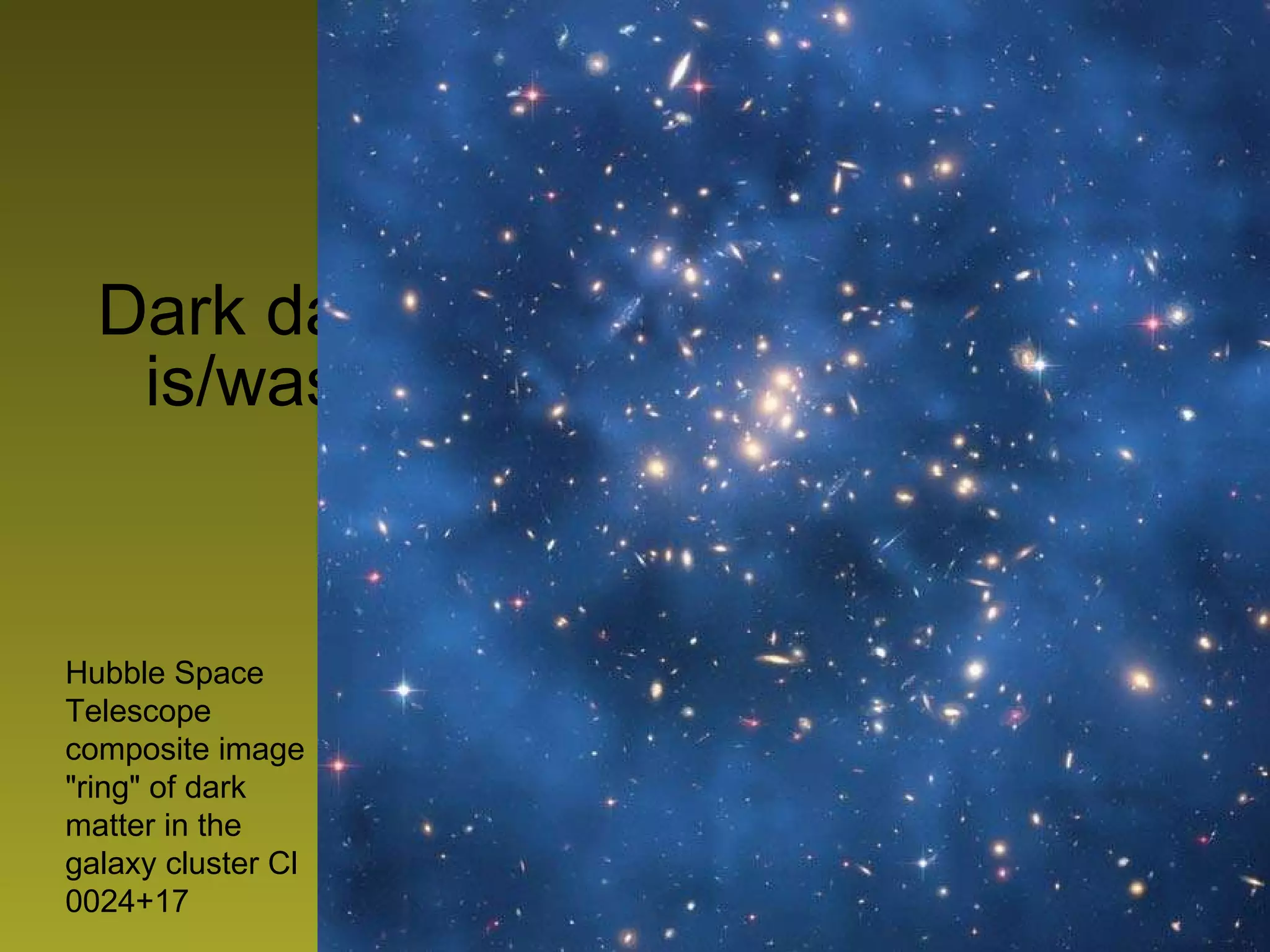
Dark data is the data that we know is/was there but we can’t see it.   Hubble Space Telescope composite image "ring" of dark matter in the galaxy cluster Cl 0024+17
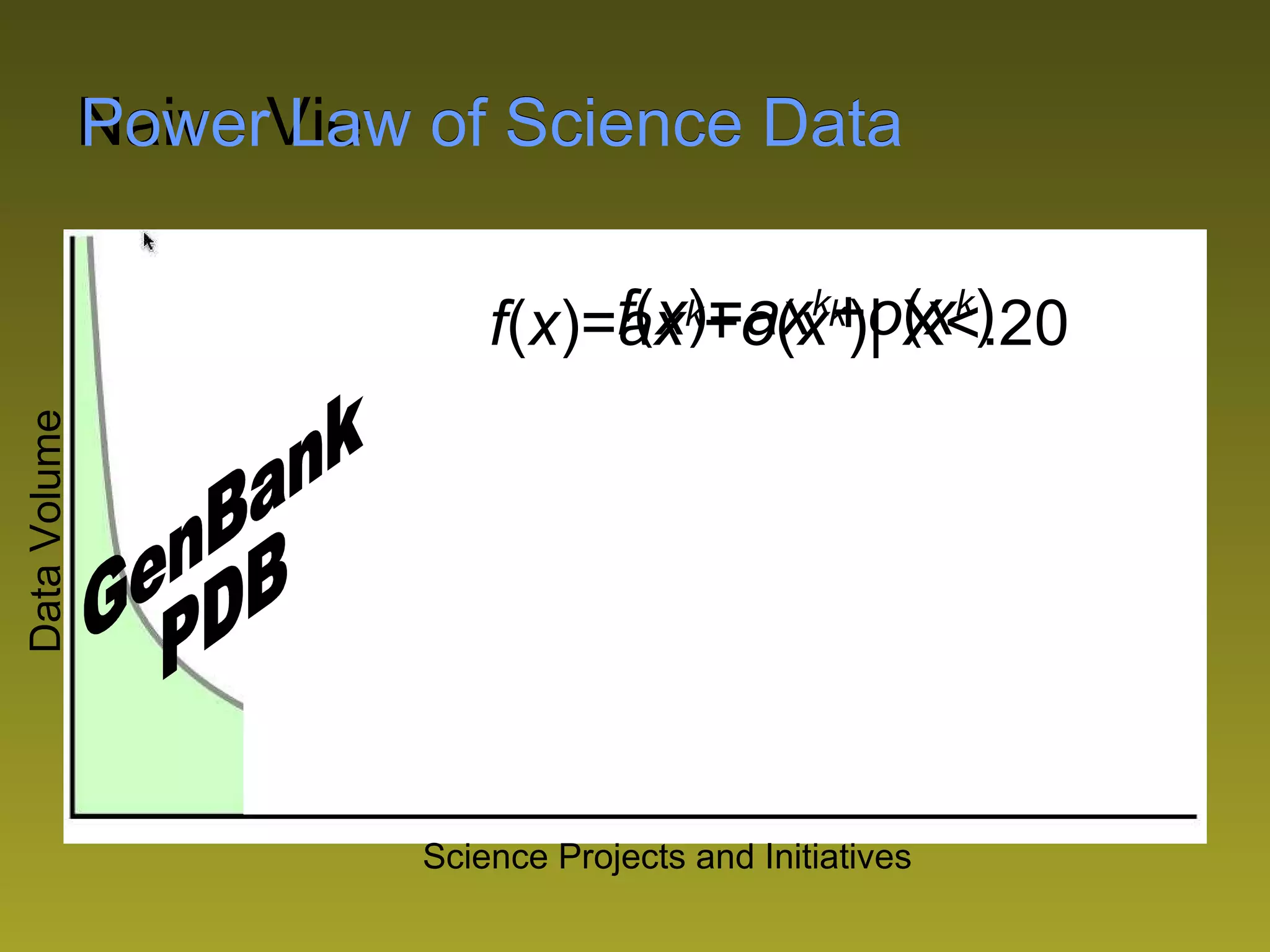
Naive View of Science Data GenBank PDB f ( x )= ax k + o ( x k ) Power Law of Science Data f ( x )= ax k + o ( x k )| X<.20 Data Volume Science Projects and Initiatives
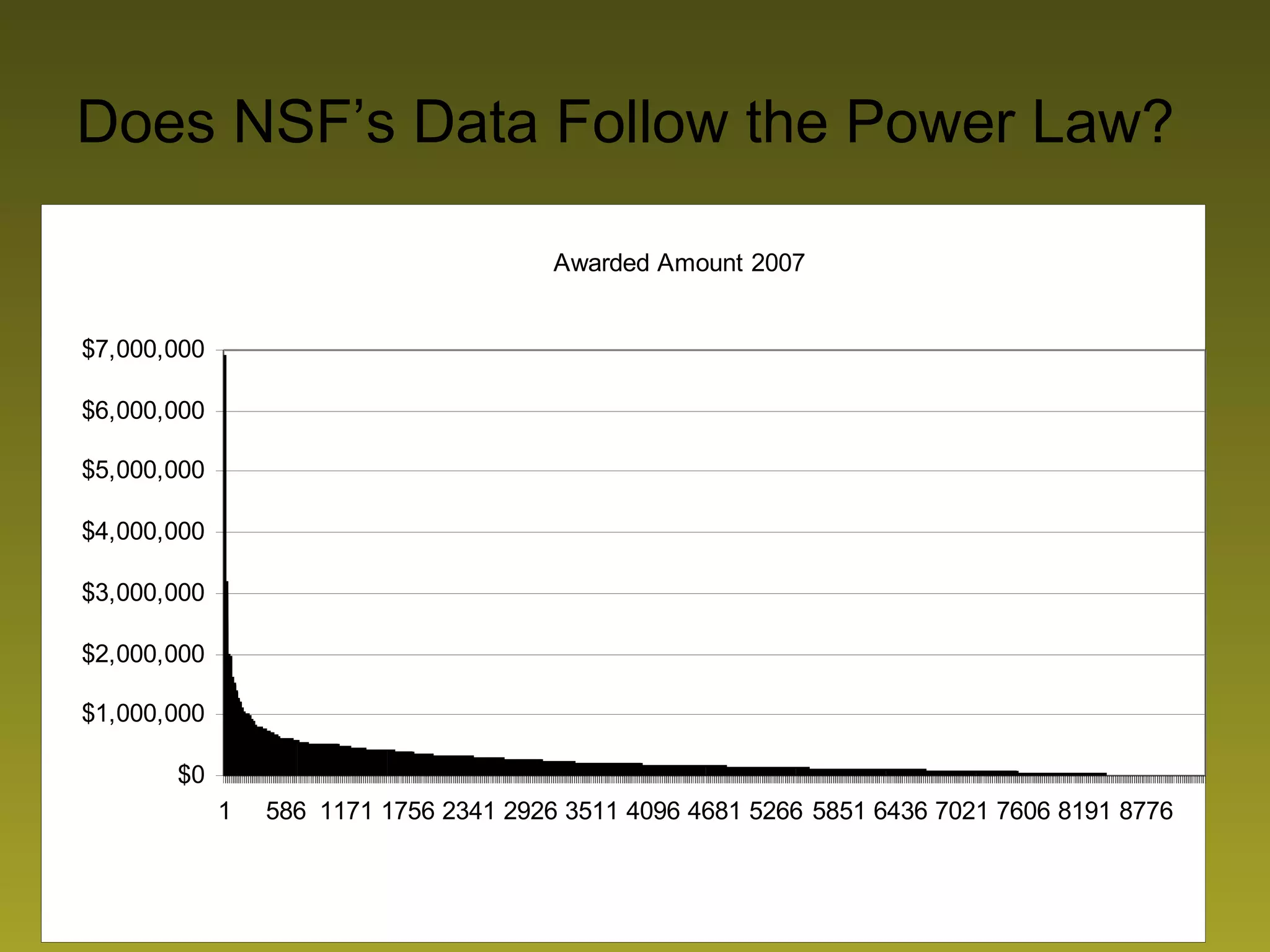
Does NSF’s Data Follow the Power Law? I do not know but if  $1 = X bytes…..
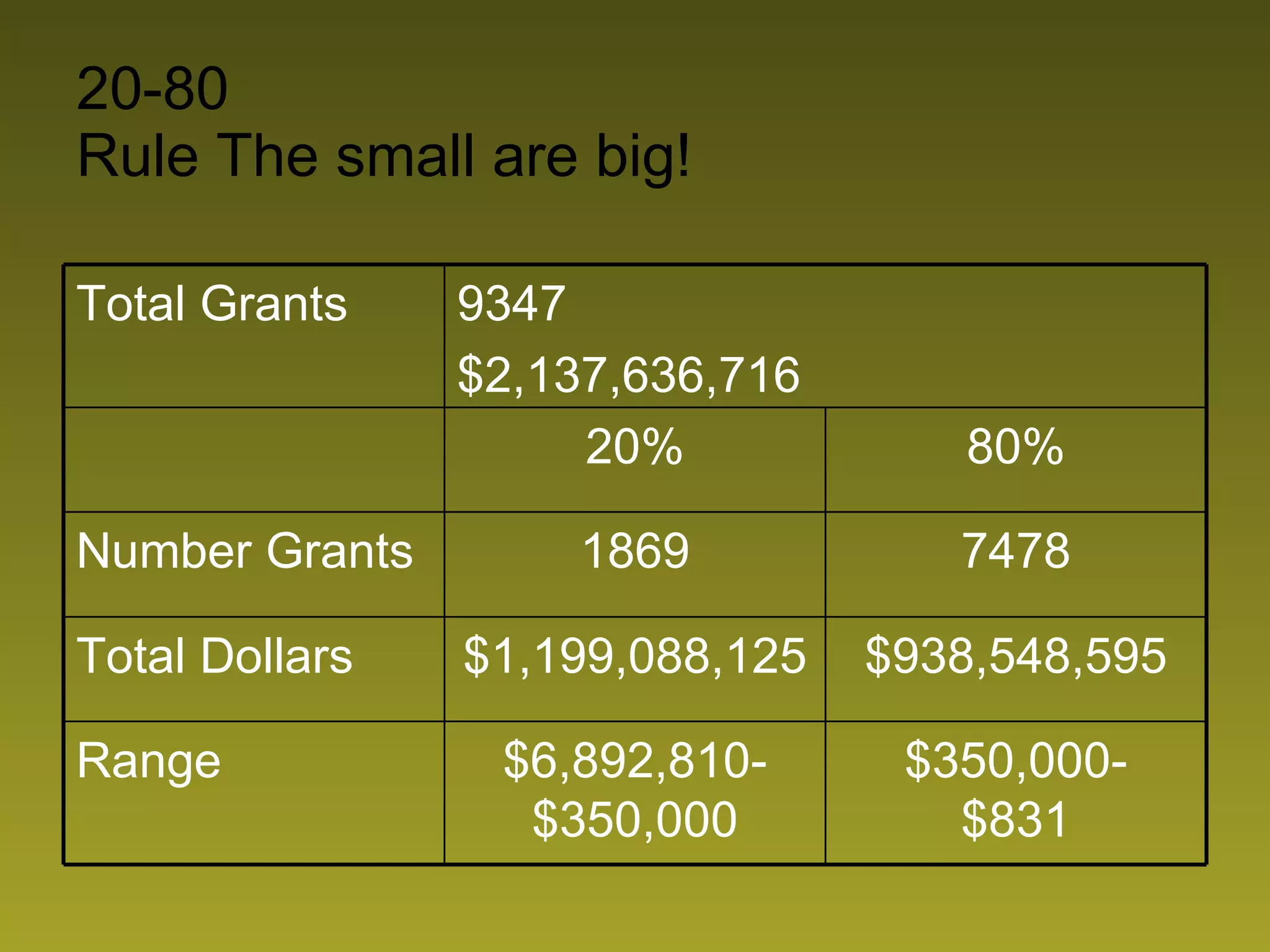
20-80  Rule The small are big! Total Grants 9347  $2,137,636,716 20% 80% Number Grants 1869 7478 Total Dollars $1,199,088,125 $938,548,595 Range $6,892,810-$350,000 $350,000- $831
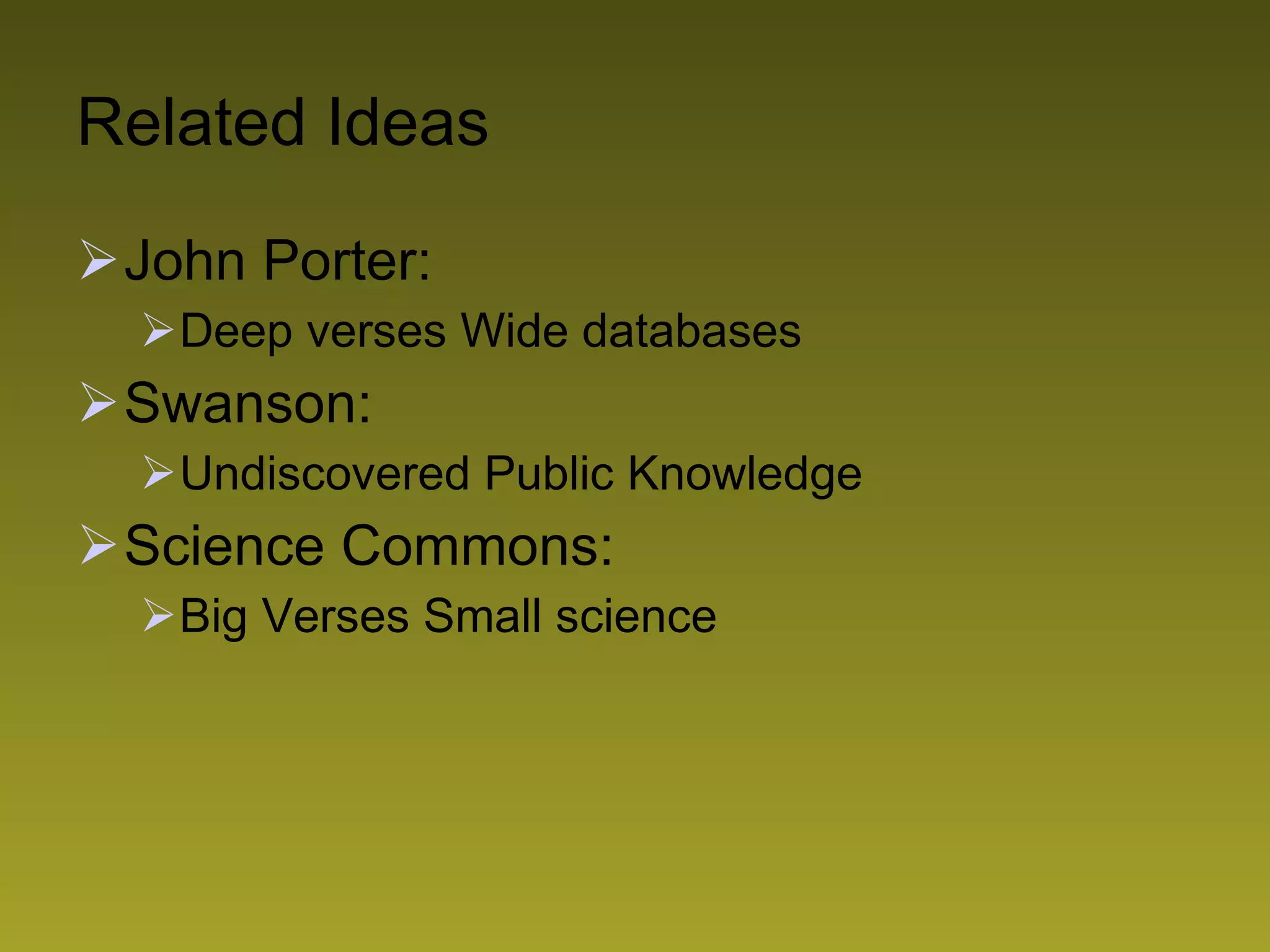
Related Ideas John Porter:  Deep verses Wide databases Swanson:  Undiscovered Public Knowledge Science Commons:  Big Verses Small science
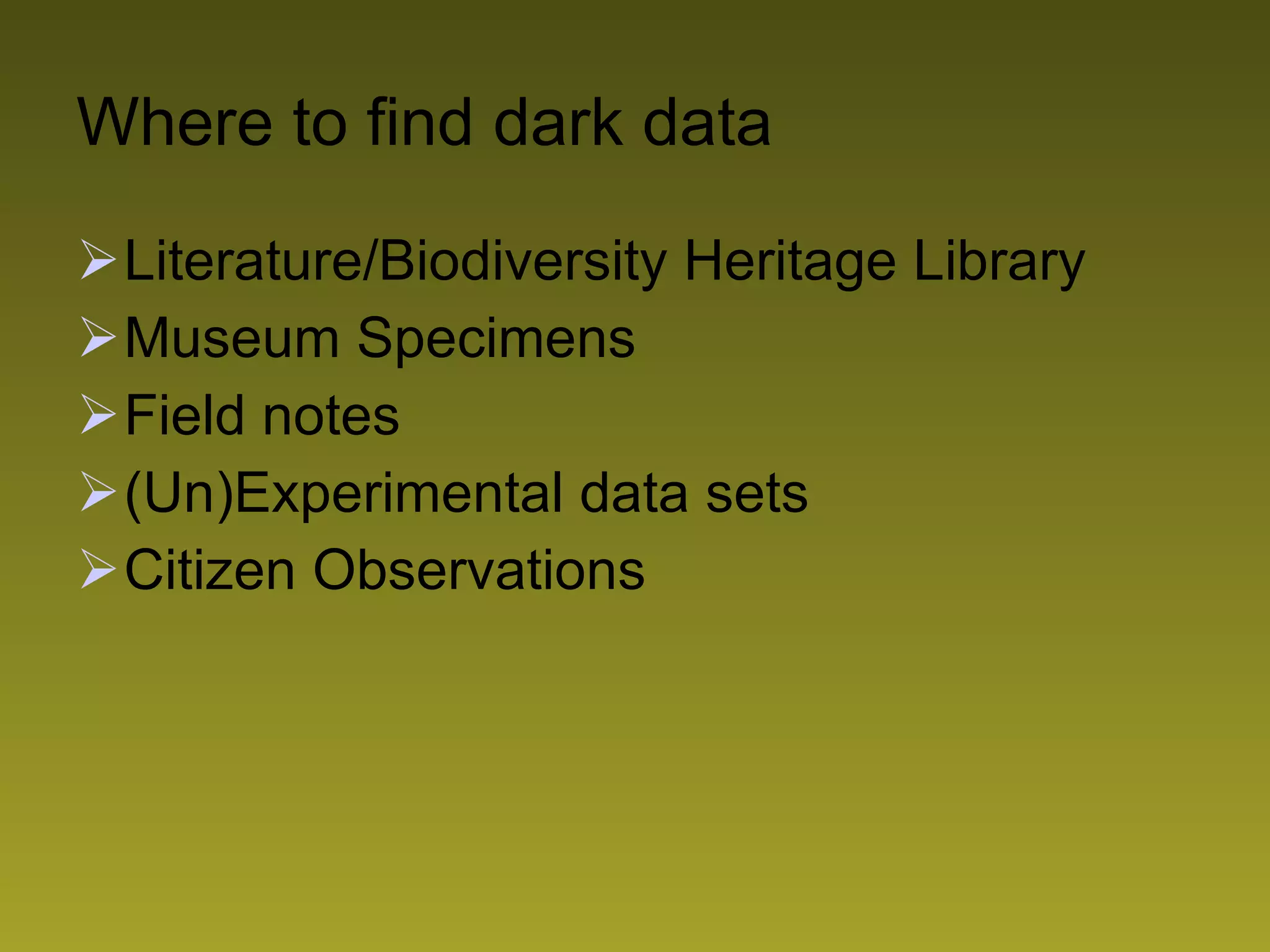
Where to find dark data Literature/Biodiversity Heritage Library Museum Specimens Field notes (Un)Experimental data sets Citizen Observations
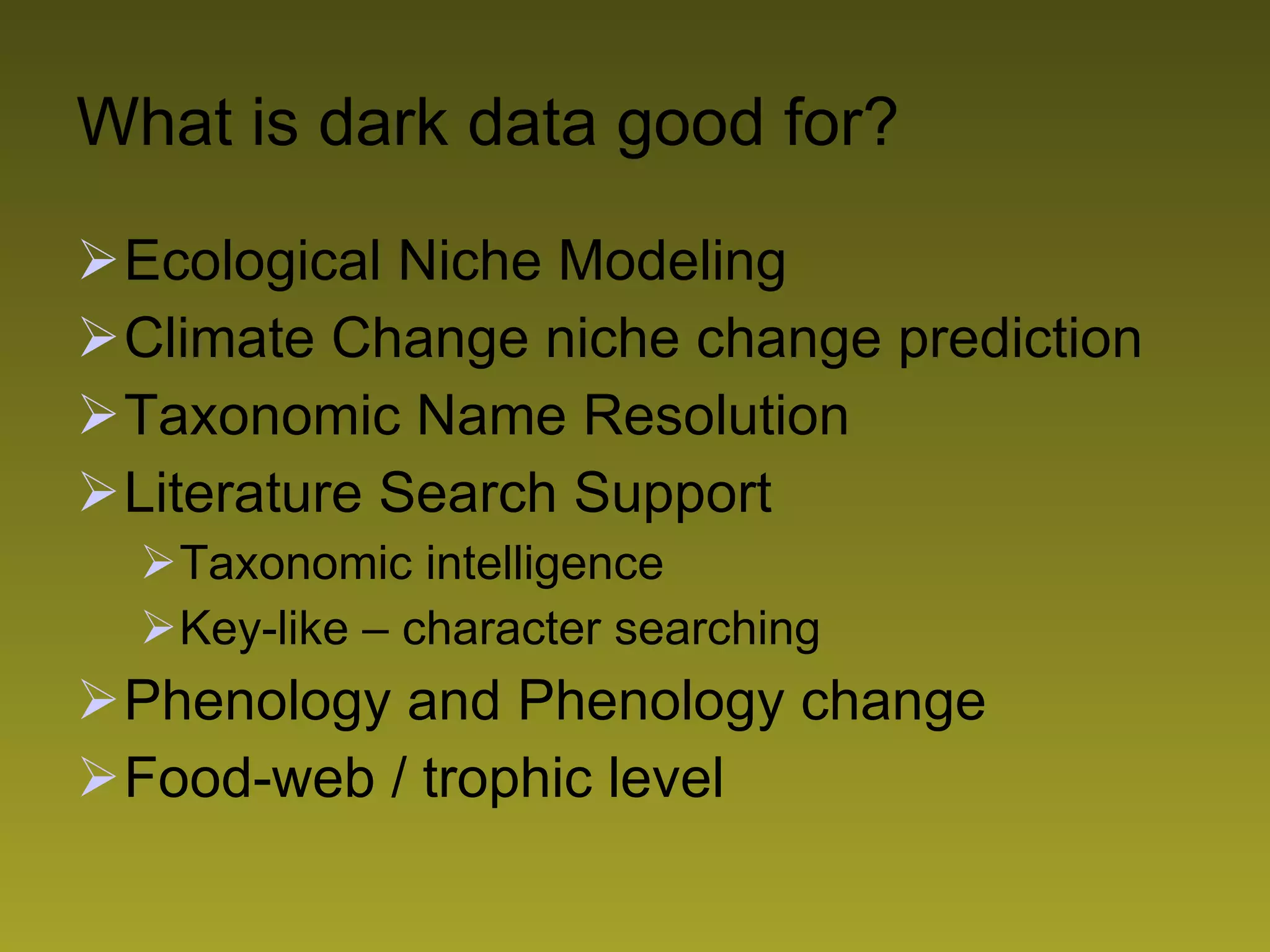
What is dark data good for? Ecological Niche Modeling Climate Change niche change prediction Taxonomic Name Resolution Literature Search Support Taxonomic intelligence Key-like – character searching Phenology and Phenology change Food-web / trophic level
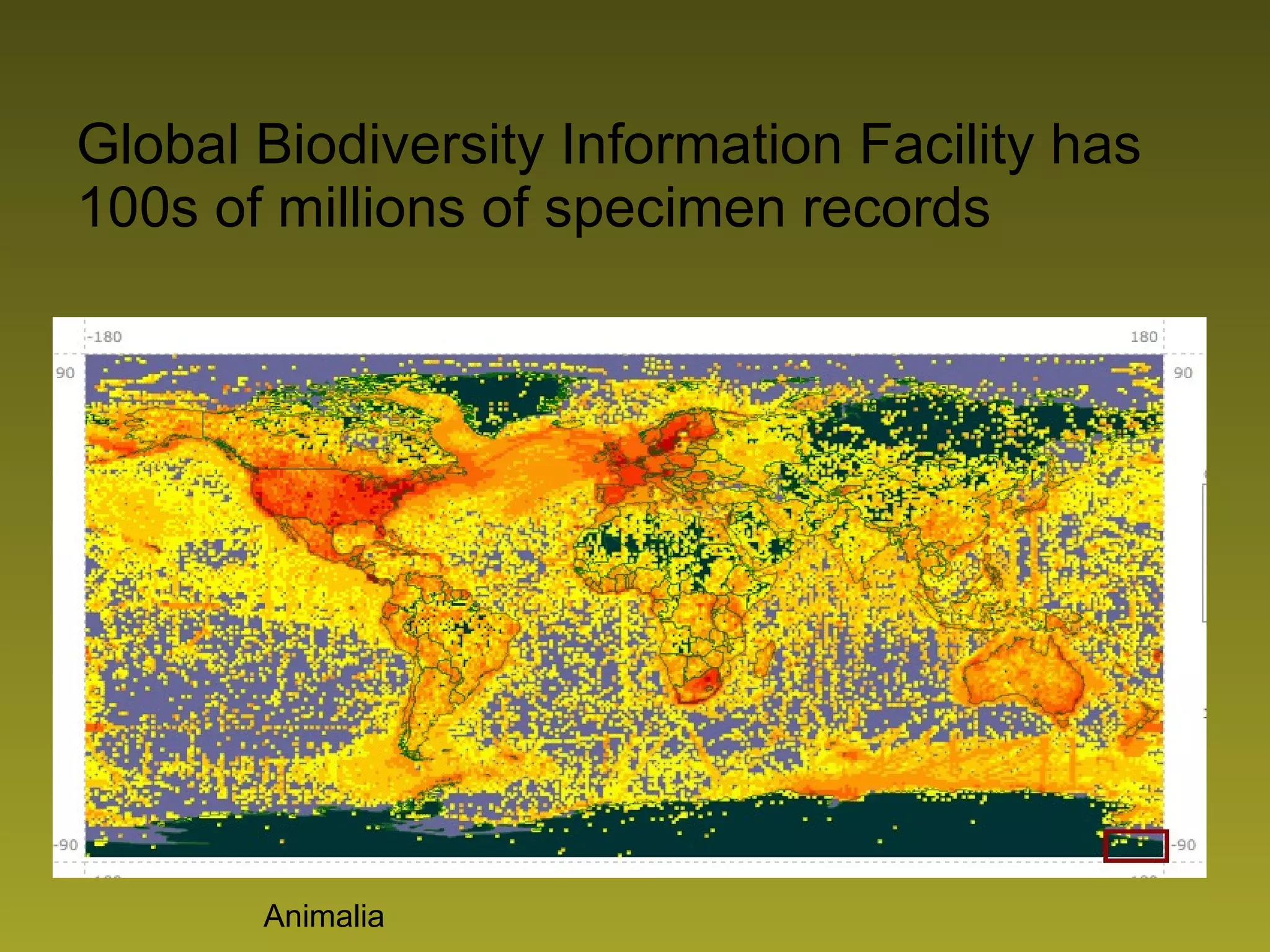
Global Biodiversity Information Facility has 100s of millions of specimen records Animalia
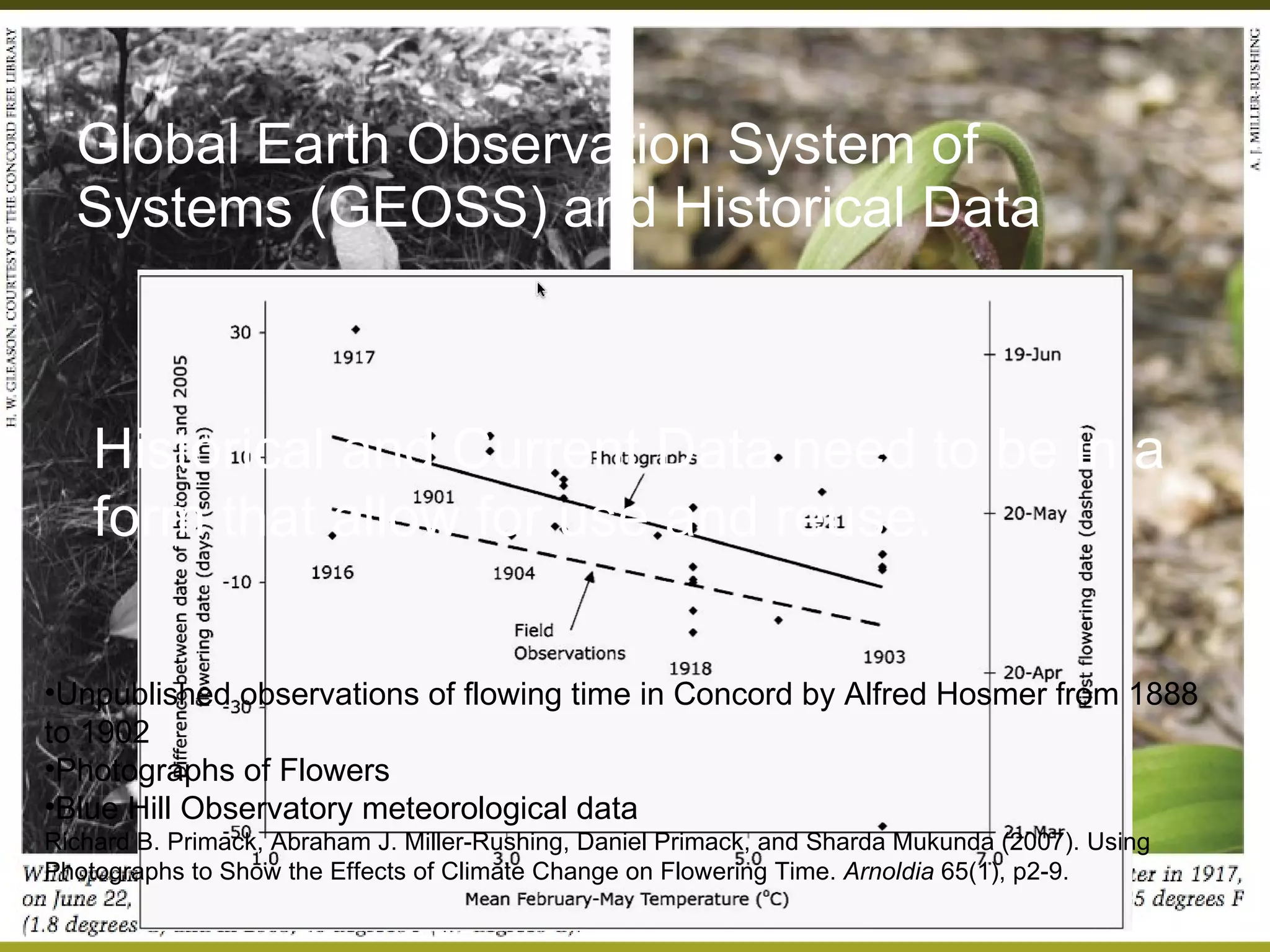
Global Earth Observation System of Systems (GEOSS) and Historical Data Unpublished observations of flowing time in Concord by Alfred Hosmer from 1888 to 1902 Photographs of Flowers Blue Hill Observatory meteorological data Richard B. Primack, Abraham J. Miller-Rushing, Daniel Primack, and Sharda Mukunda (2007). Using Photographs to Show the Effects of Climate Change on Flowering Time.  Arnoldia  65(1), p2-9. Historical and Current Data need to be in a form that allow for use and reuse.
Willis CG, Ruhfel BR, Primack RB, Miller-Rushing AJ, Losos JB, et al. 2010 Favorable Climate Change Response Explains Non-Native Species' Success in Thoreau's Woods. PLoS ONE 5(1): e8878. doi:10.1371/journal.pone.0008878  Favorable Climate Change Response Explains Non-Native Species’ Success in Thoreau’s Woods
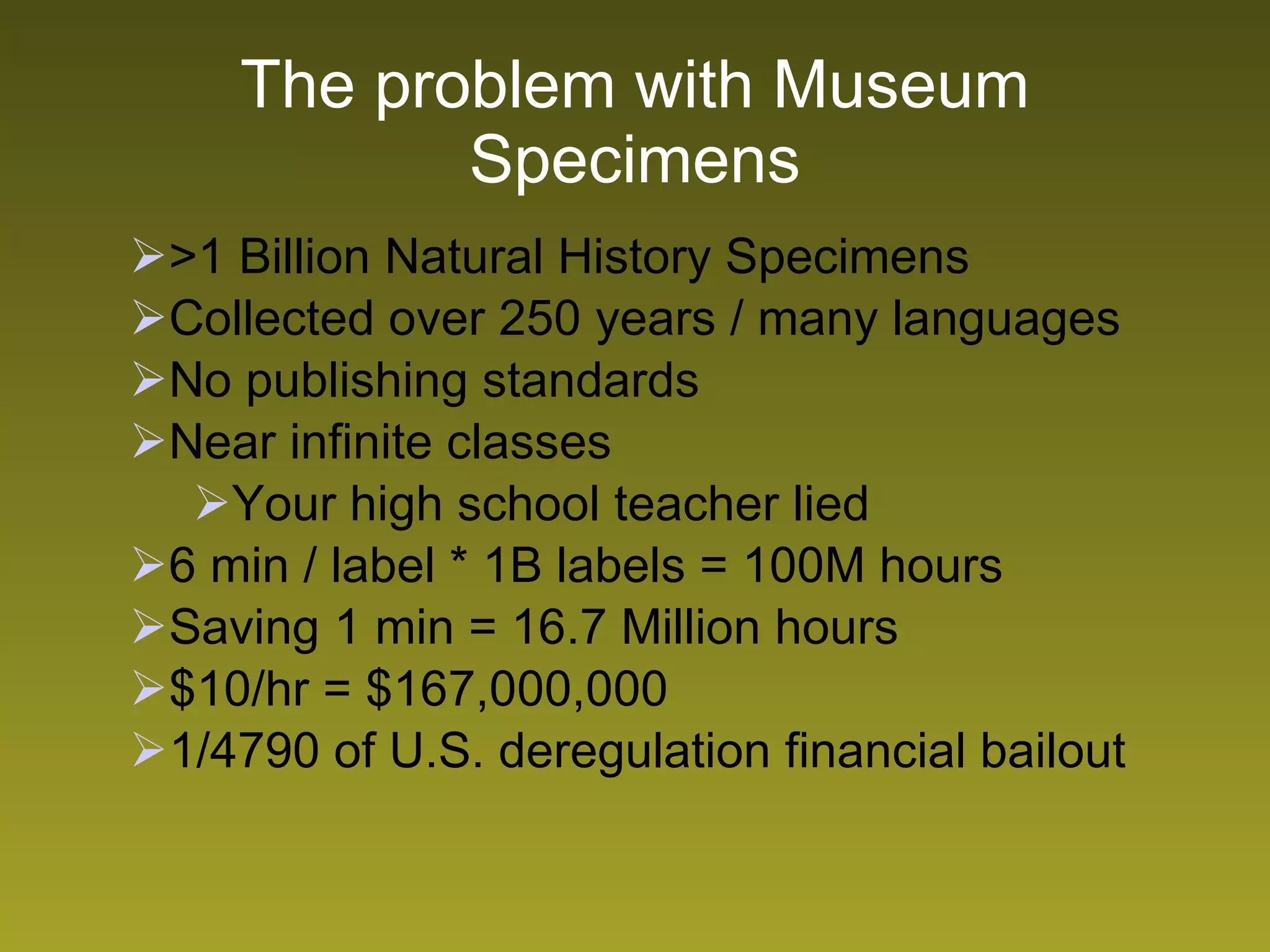
The problem with Museum Specimens >1 Billion Natural History Specimens Collected over 250 years / many languages No publishing standards Near infinite classes  Your high school teacher lied 6 min / label * 1B labels = 100M hours  Saving 1 min = 16.7 Million hours  $10/hr = $167,000,000 1/4790 of U.S. deregulation financial bailout
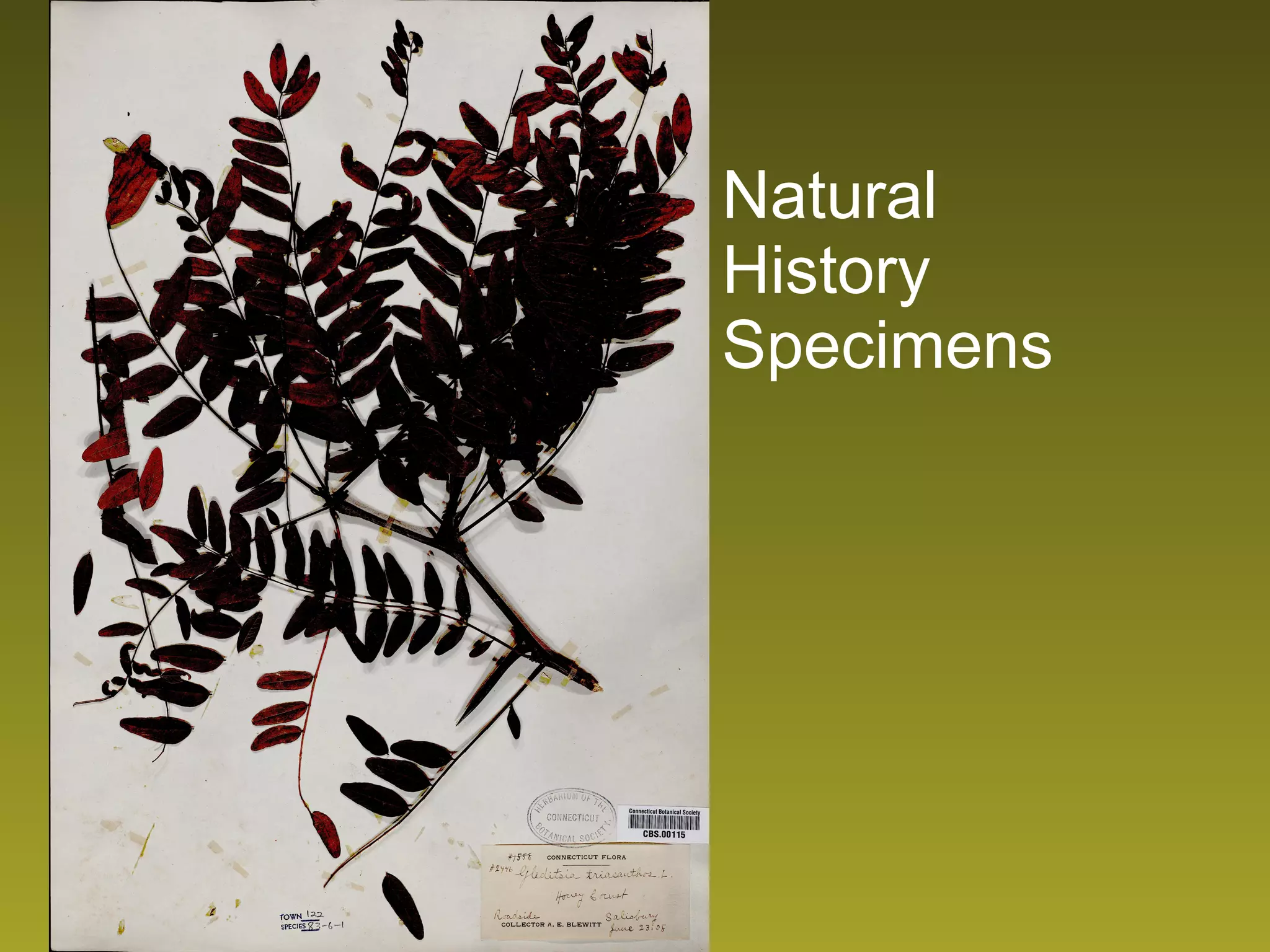
Natural History Specimens
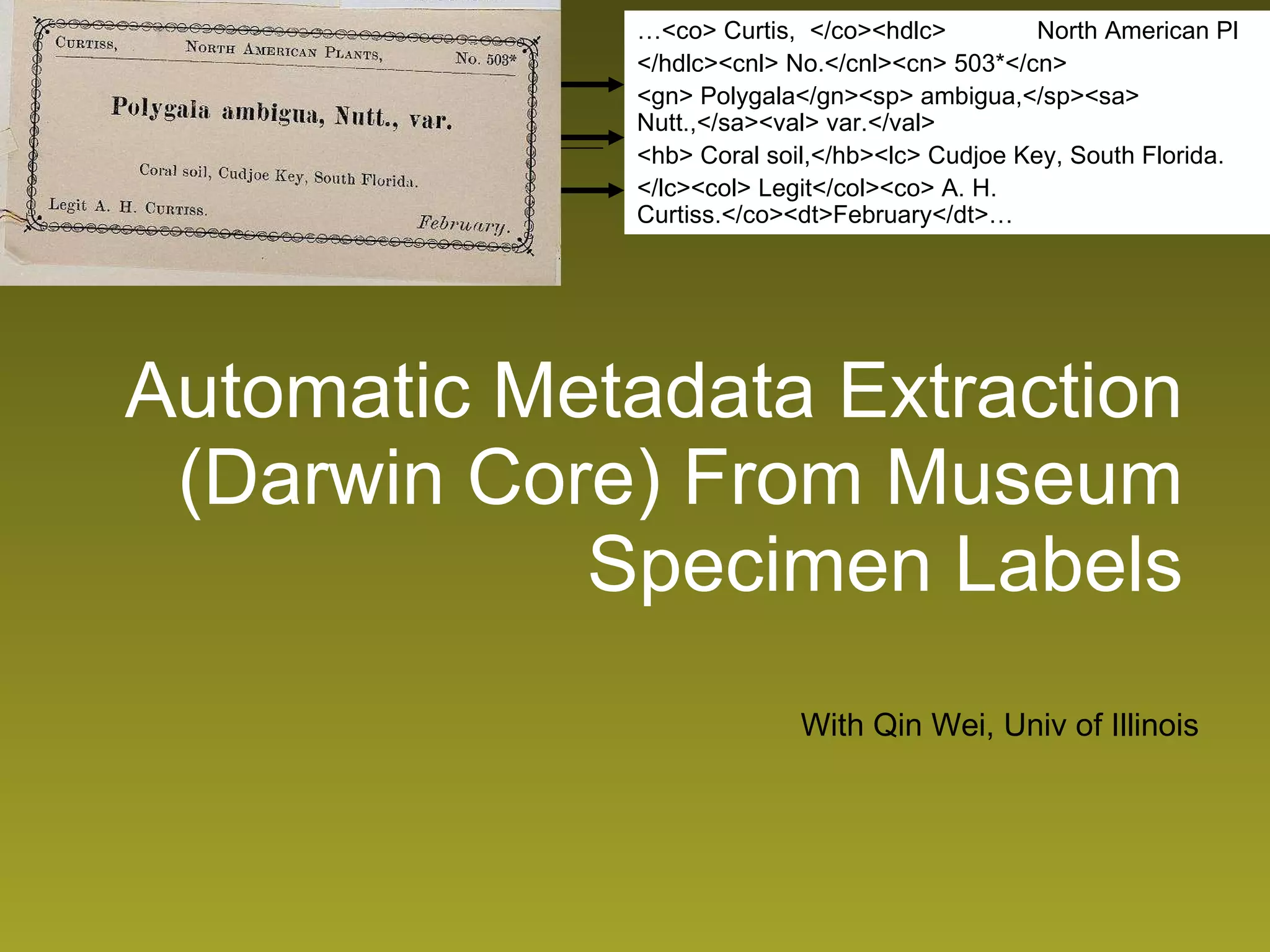
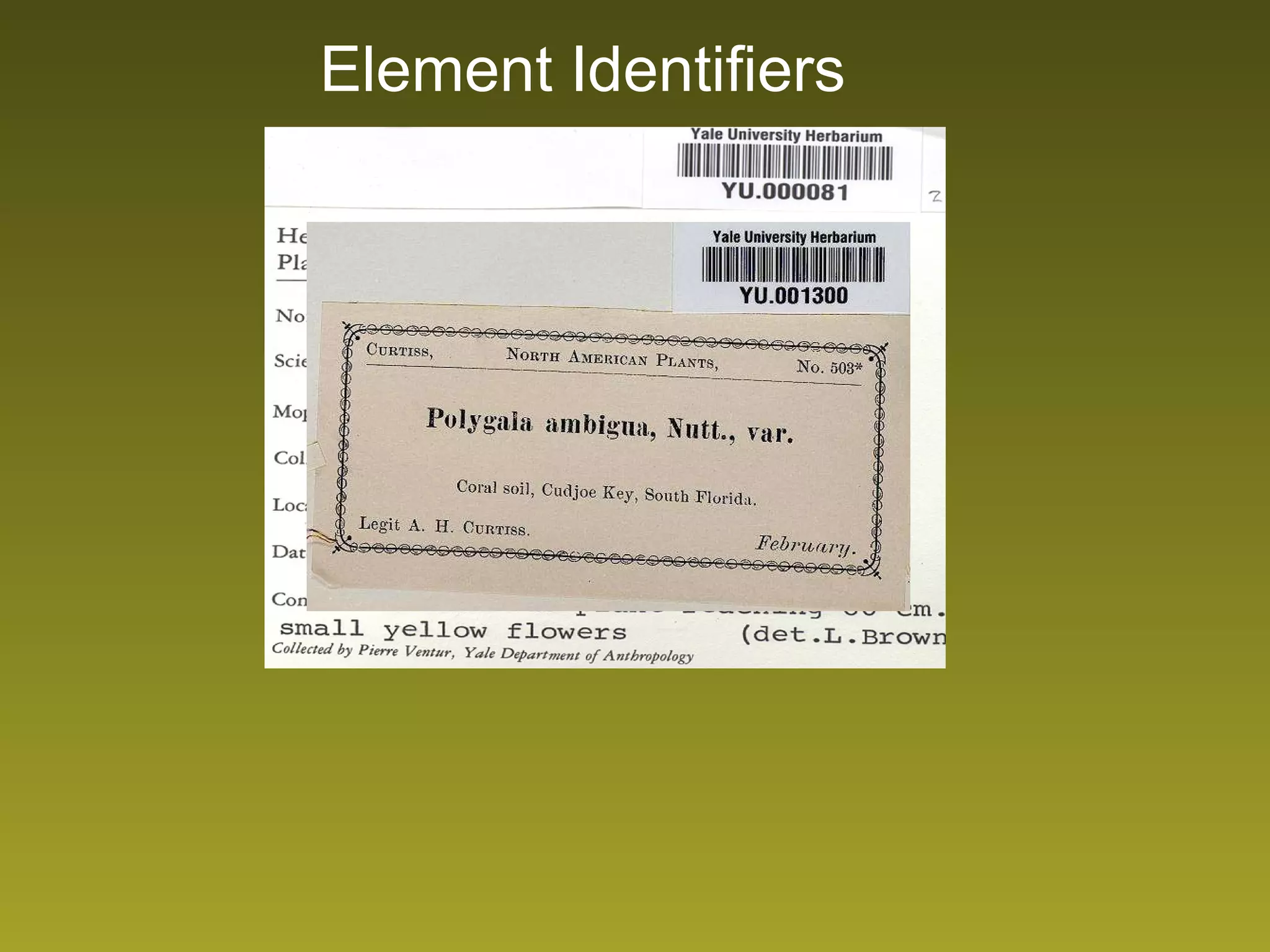
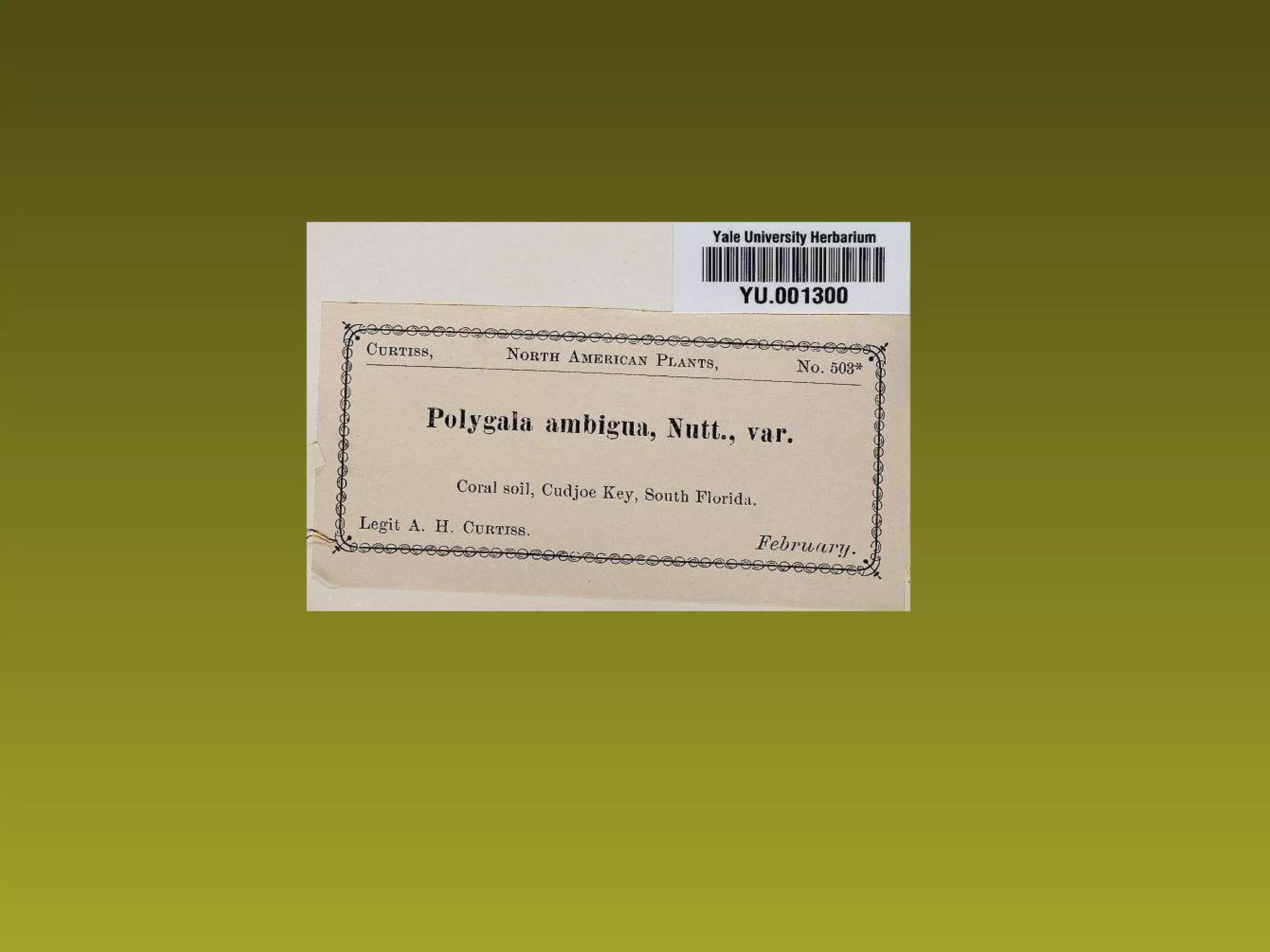
Automatic Metadata Extraction (Darwin Core) From Museum Specimen Labels … <co> Curtis,  </co><hdlc>  North American Pl </hdlc><cnl> No.</cnl><cn> 503*</cn> <gn> Polygala</gn><sp> ambigua,</sp><sa> Nutt.,</sa><val> var.</val> <hb> Coral soil,</hb><lc> Cudjoe Key, South Florida. </lc><col> Legit</col><co> A. H. Curtiss.</co><dt>February</dt>… With Qin Wei, Univ of Illinois
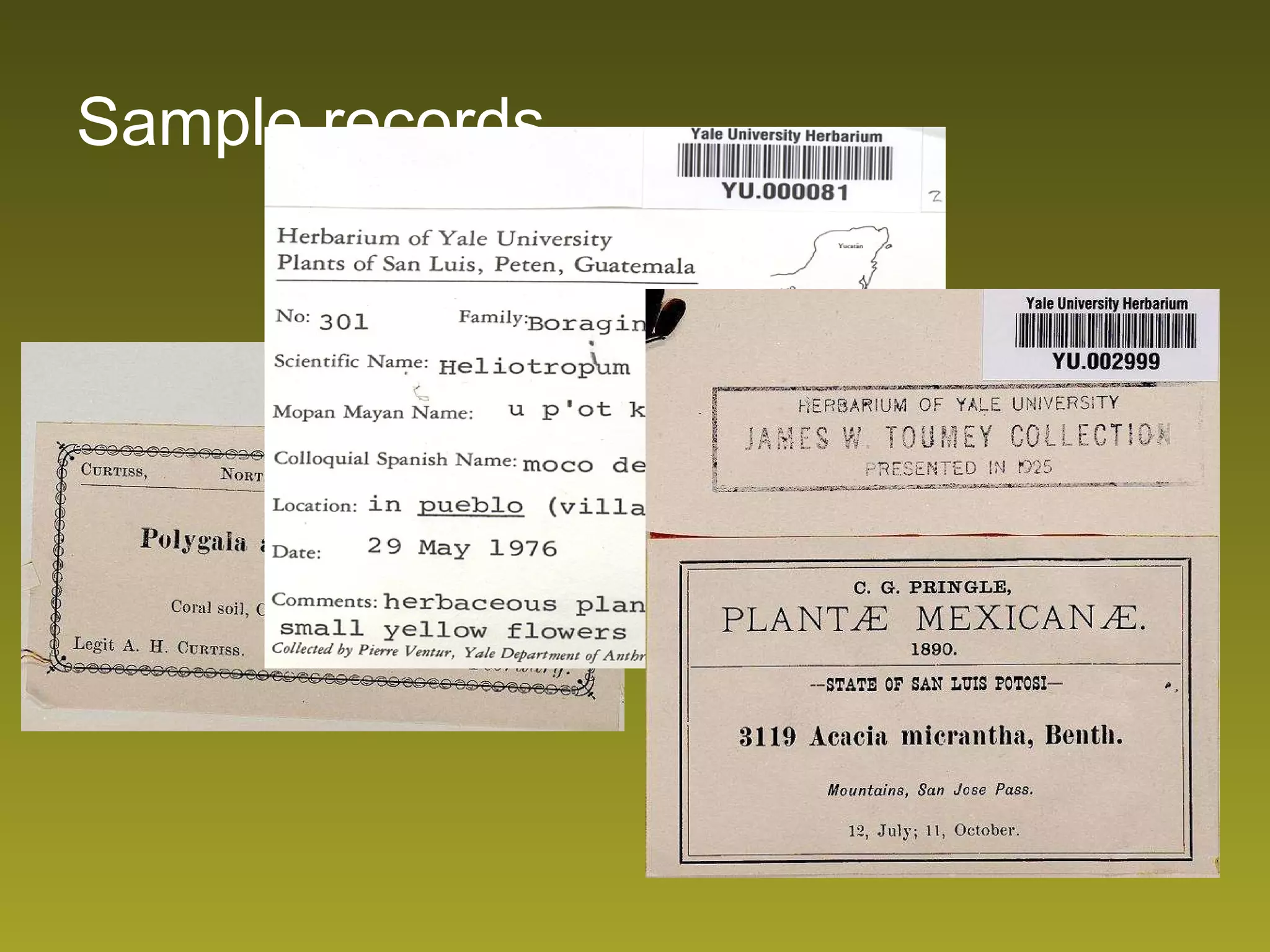
S ample records
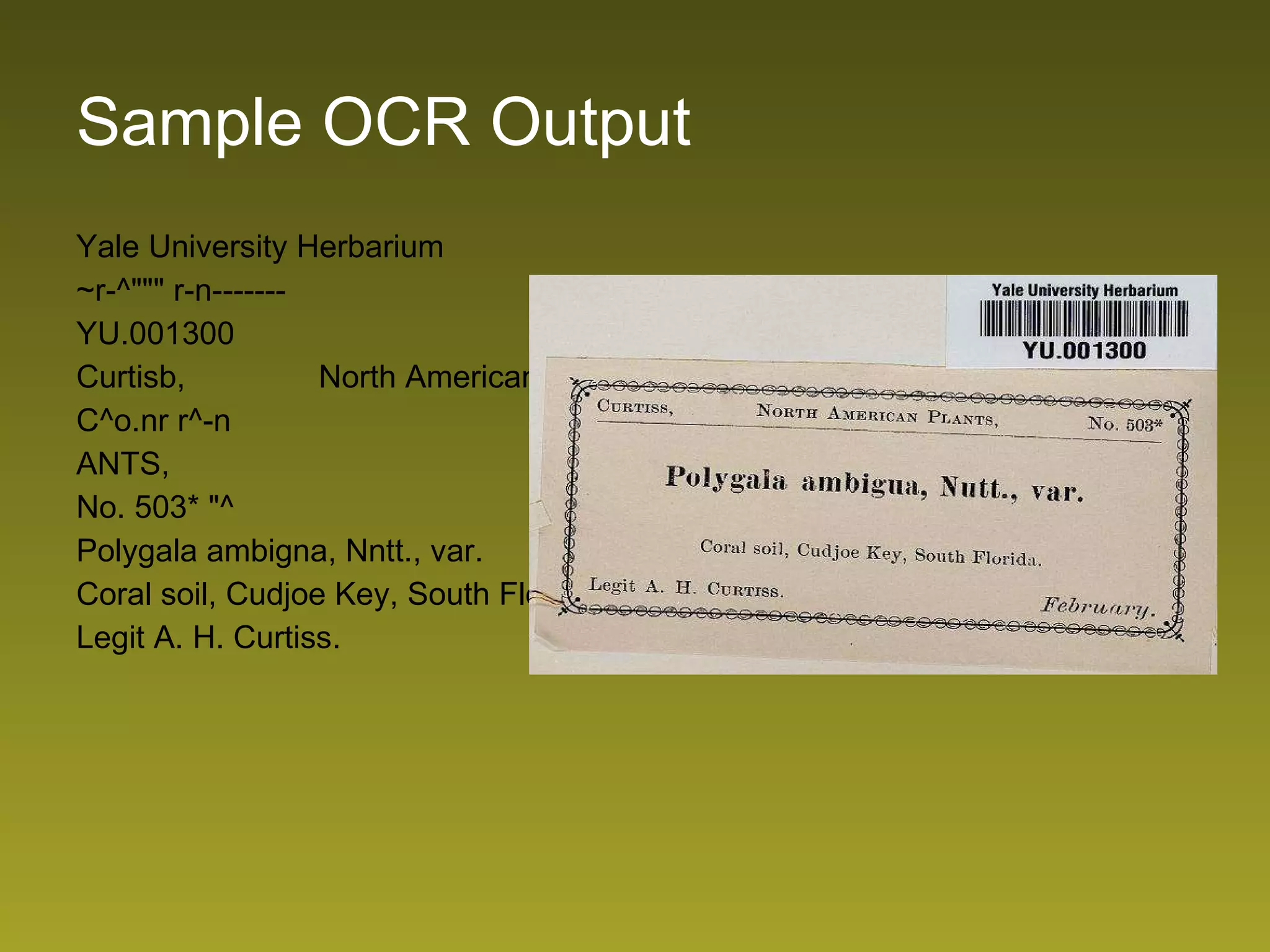
Sample OCR Output Yale University Herbarium ~r-^&quot;&quot;&quot; r-n------- YU.001300 Curtisb,  North American Pl C^o.nr r^-n ANTS, No. 503* &quot;^ Polygala ambigna, Nntt., var. Coral soil, Cudjoe Key, South Florida. Legit A. H. Curtiss.
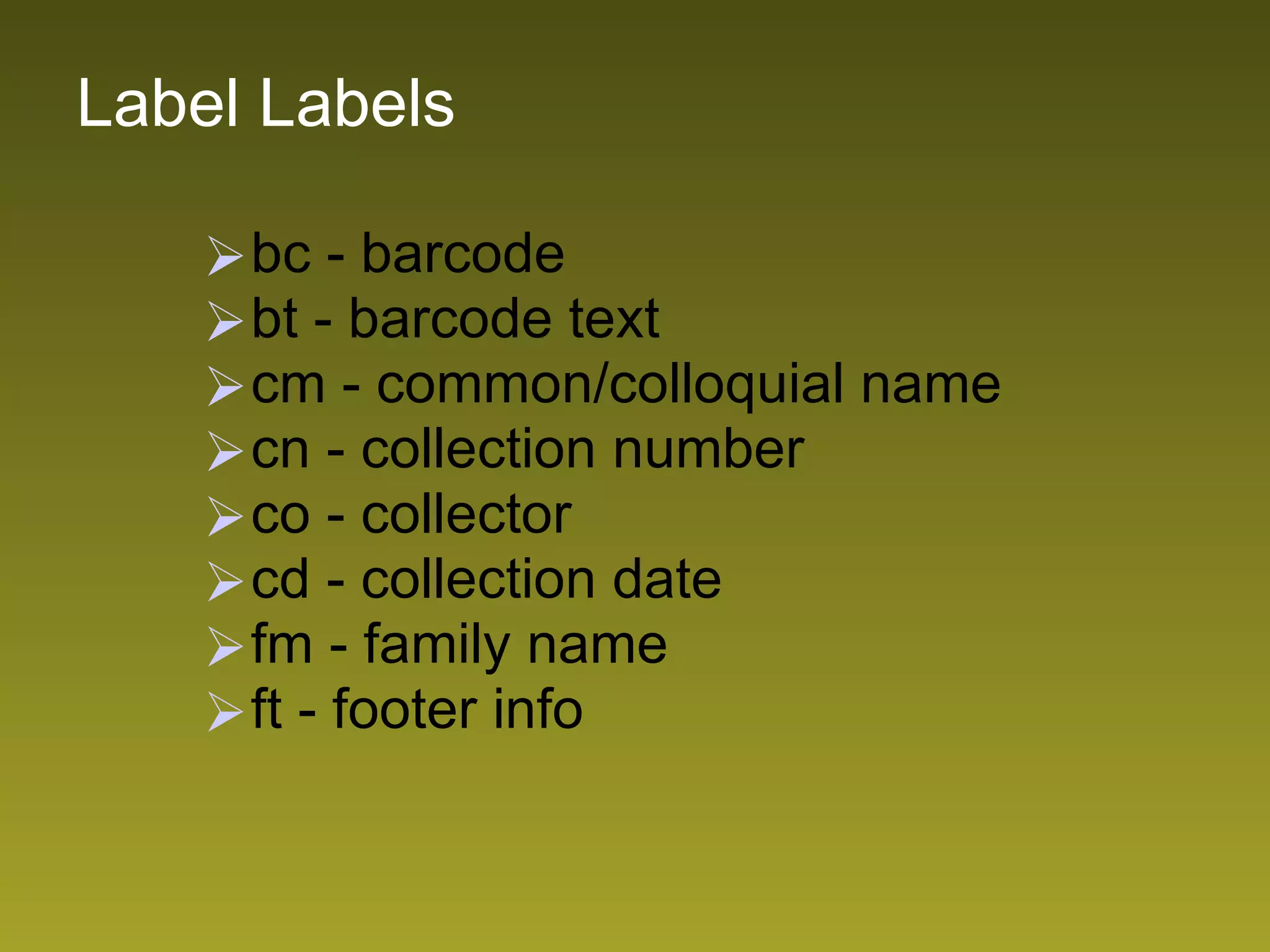
Label Labels bc - barcode bt - barcode text cm - common/colloquial name cn - collection number co - collector cd - collection date fm - family name ft - footer info
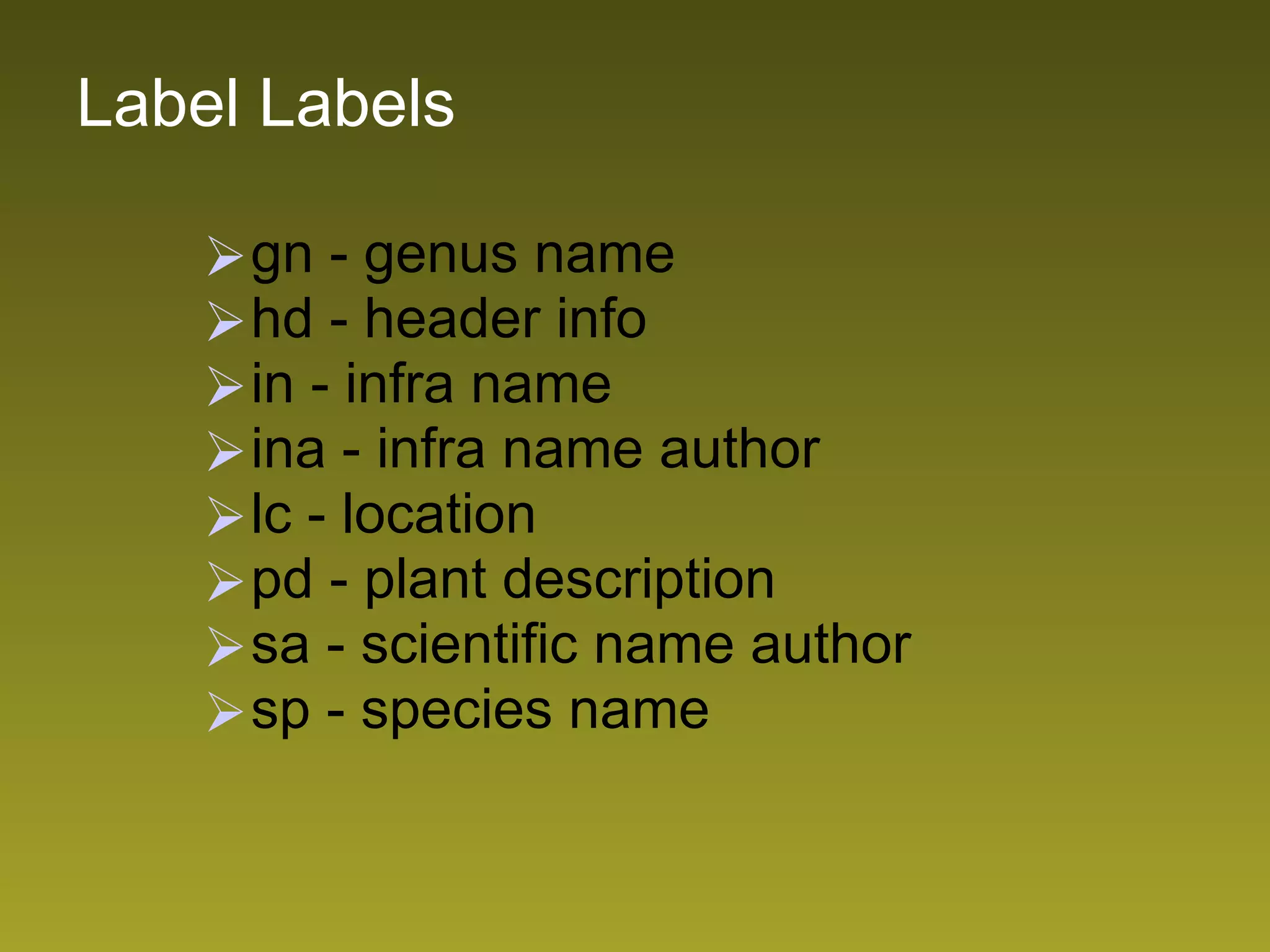
Label Labels gn - genus name  hd - header info in - infra name ina - infra name author lc - location  pd - plant description sa - scientific name author sp - species name
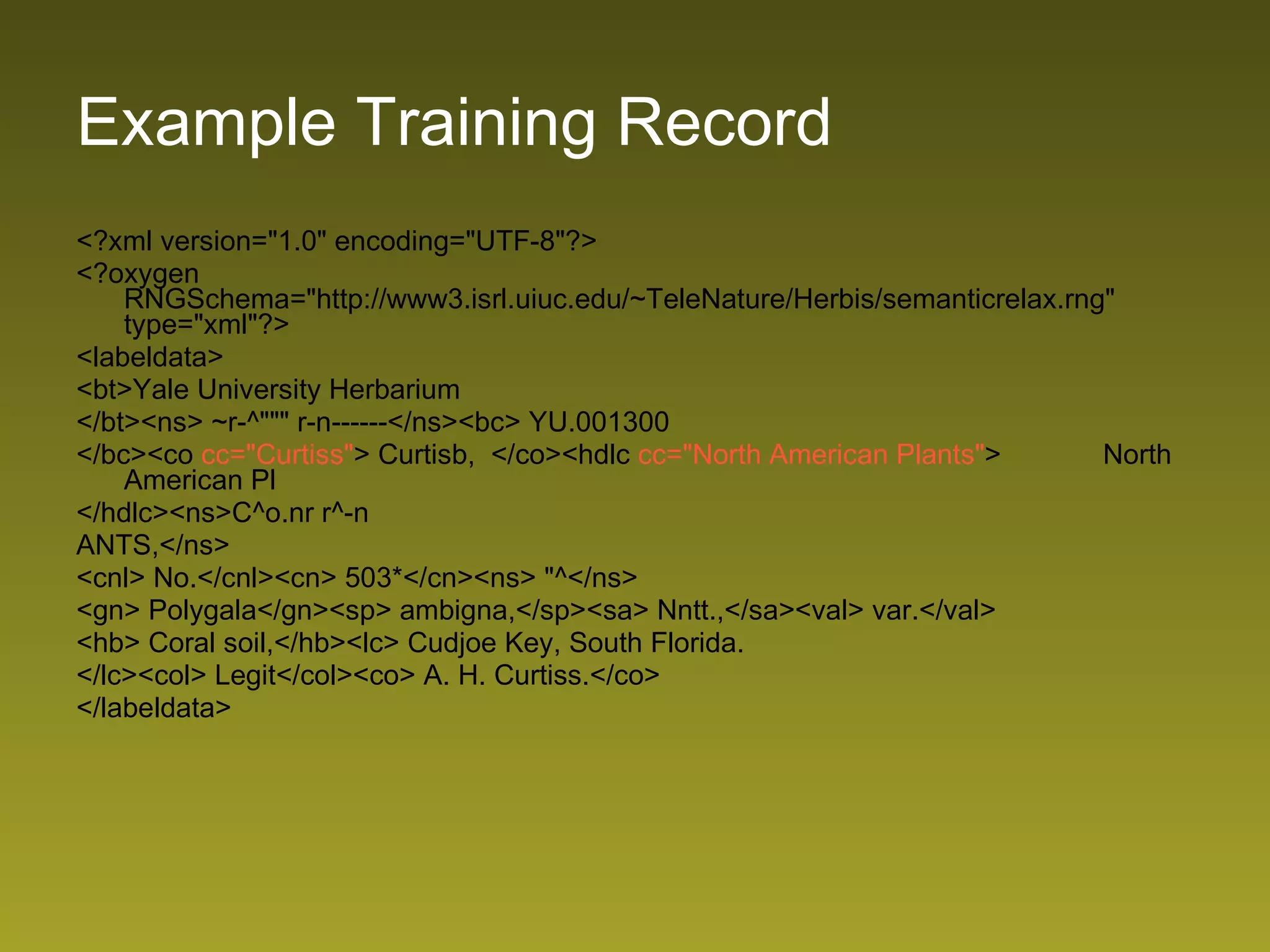
Example Training Record <?xml version=&quot;1.0&quot; encoding=&quot;UTF-8&quot;?> <?oxygen RNGSchema=&quot;http://www3.isrl.uiuc.edu/~TeleNature/Herbis/semanticrelax.rng&quot; type=&quot;xml&quot;?> <labeldata> <bt>Yale University Herbarium </bt><ns> ~r-^&quot;&quot;&quot; r-n------</ns><bc> YU.001300 </bc><co  cc=&quot;Curtiss&quot; > Curtisb,  </co><hdlc  cc=&quot;North American Plants&quot; >  North American Pl </hdlc><ns>C^o.nr r^-n ANTS,</ns> <cnl> No.</cnl><cn> 503*</cn><ns> &quot;^</ns> <gn> Polygala</gn><sp> ambigna,</sp><sa> Nntt.,</sa><val> var.</val> <hb> Coral soil,</hb><lc> Cudjoe Key, South Florida. </lc><col> Legit</col><co> A. H. Curtiss.</co> </labeldata>
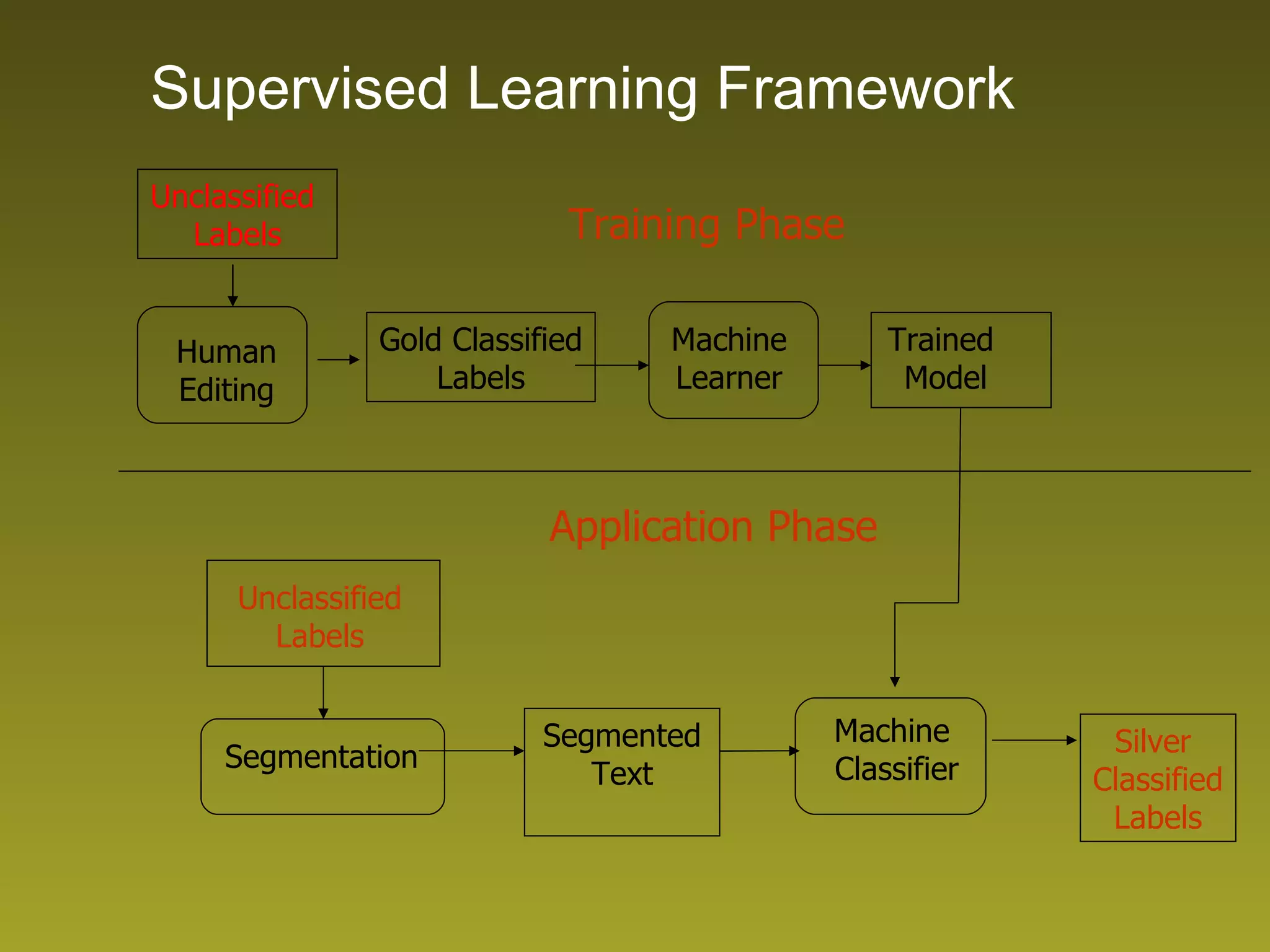
Supervised Learning Framework Gold Classified Labels Training Phase Application Phase Machine Learner Unclassified Labels Segmented Text Silver  Classified Labels Segmentation  Machine  Classifier Unclassified  Labels Human Editing Trained  Model
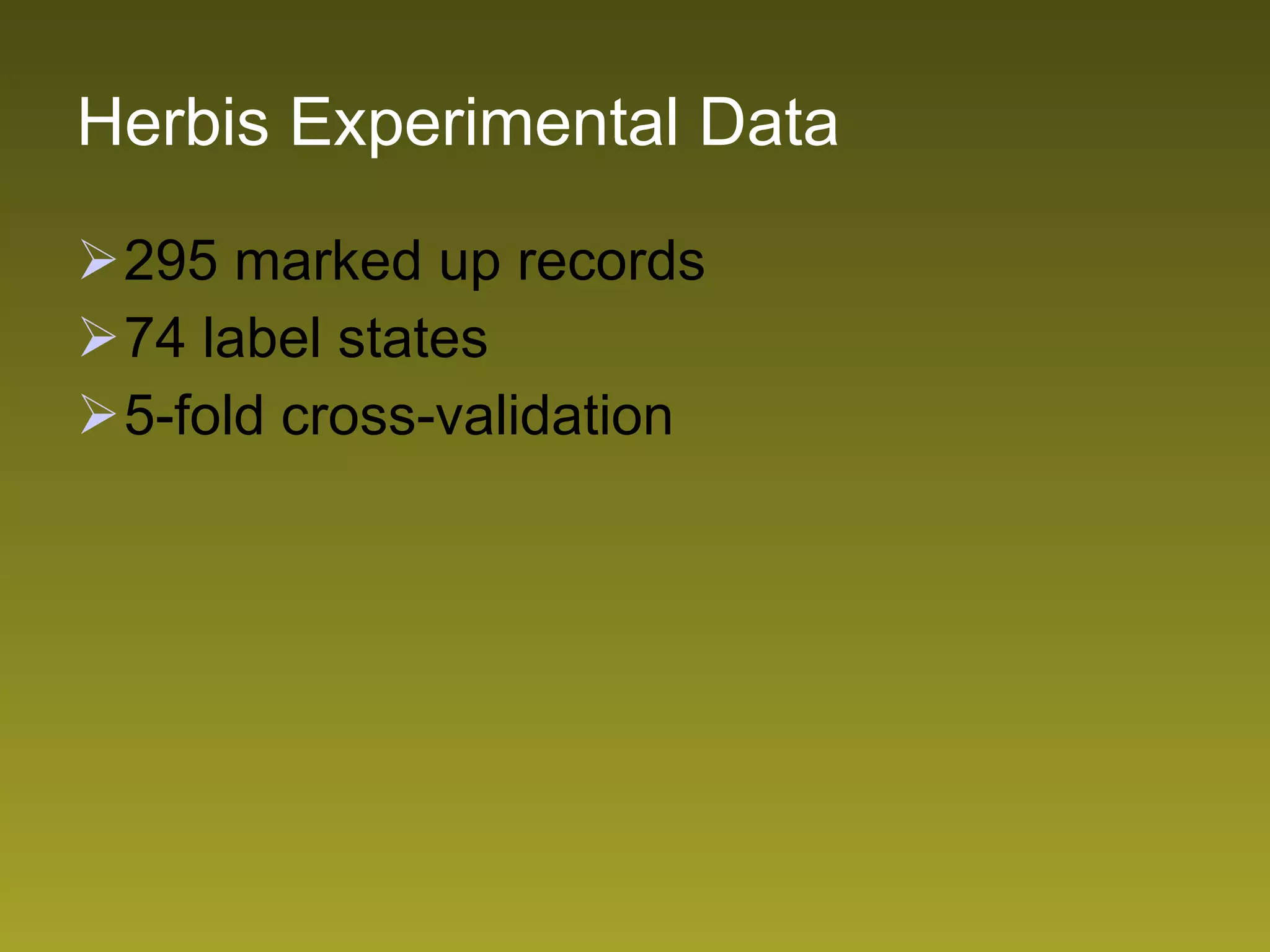
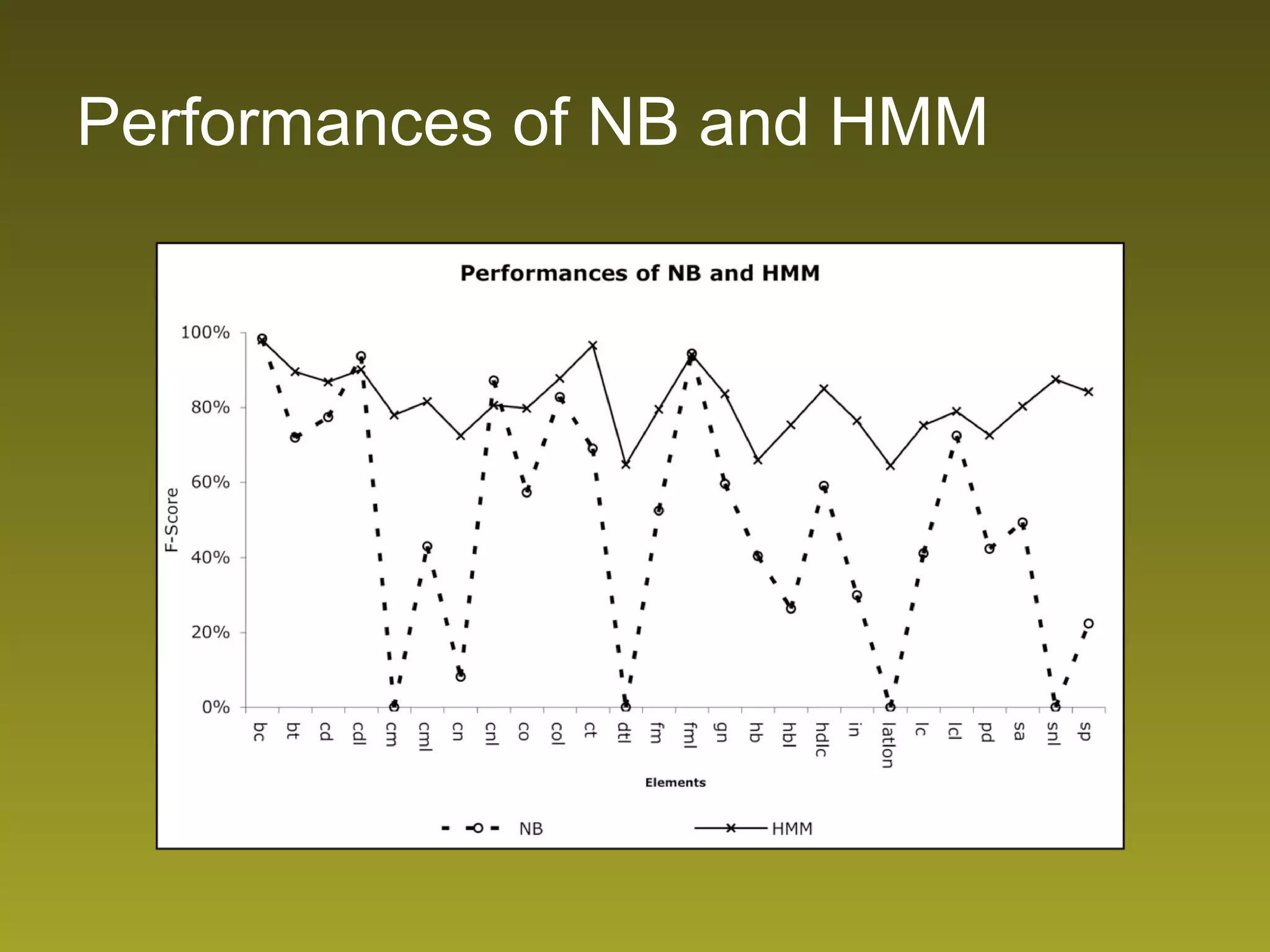
Herbis Experimental Data 295  marked up records 74 label states 5-fold cross-validation
Performances of NB and HMM
Element Identifiers
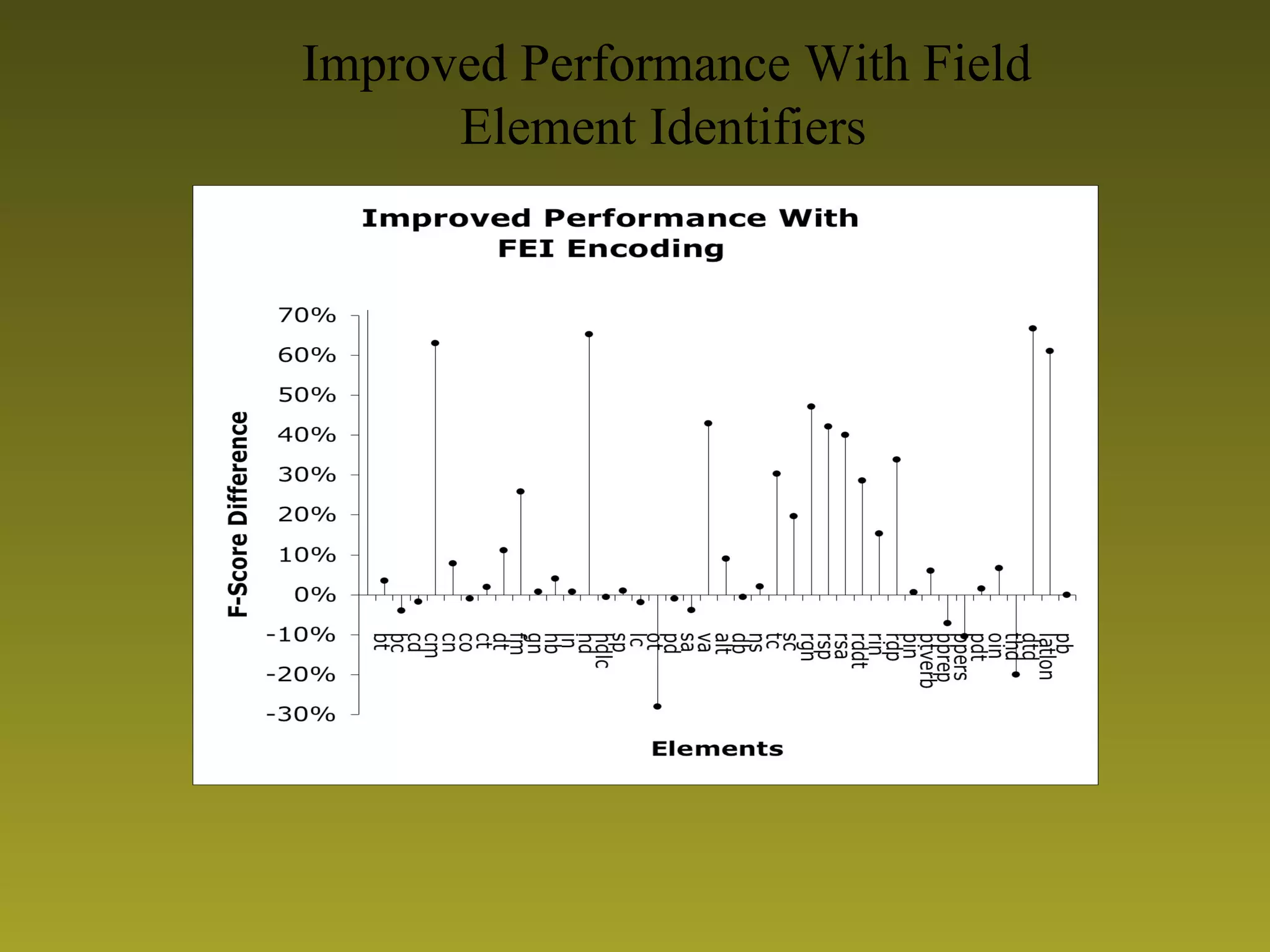
Improved Performance With Field Element Identifiers
 
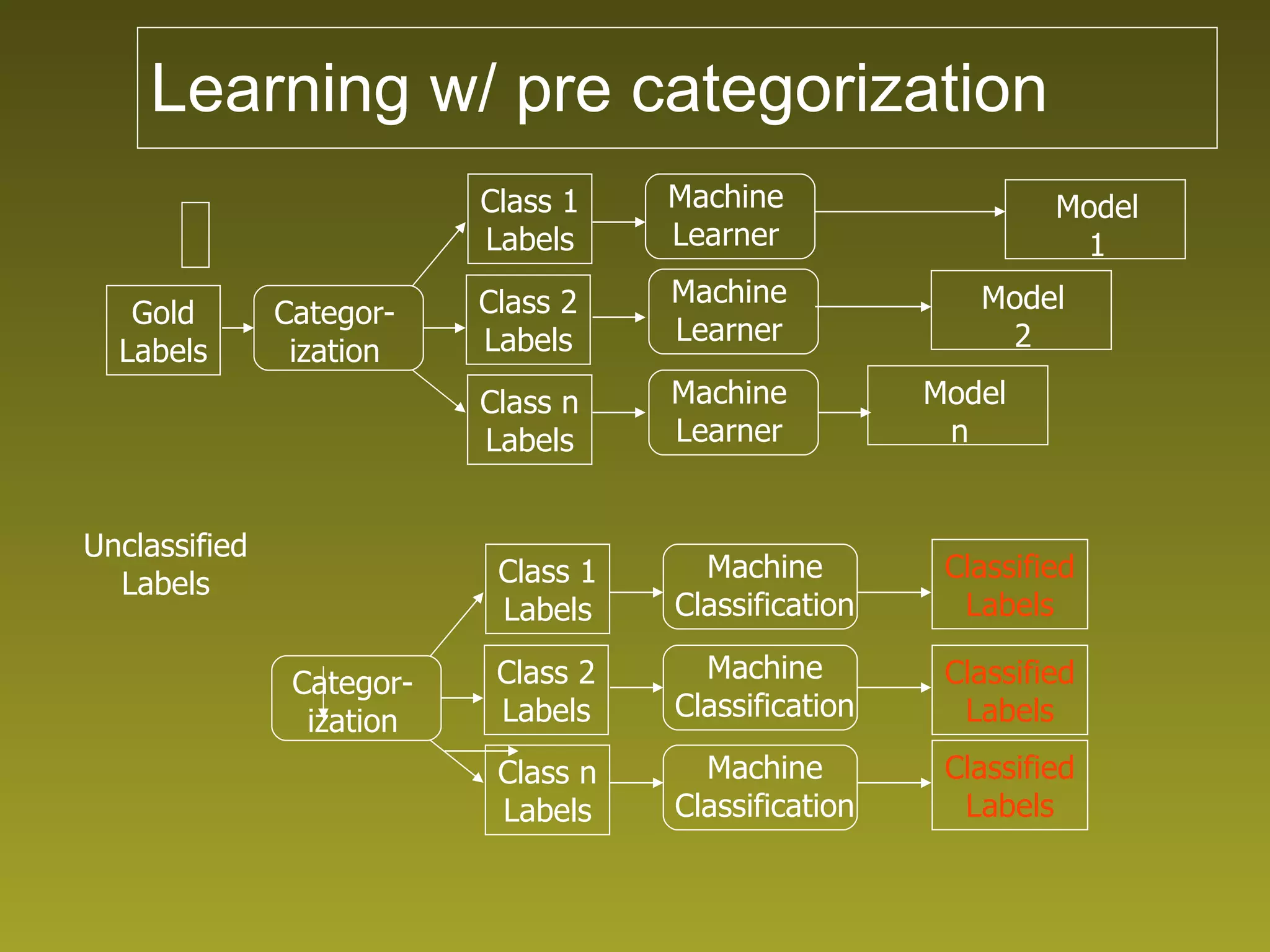
Learning w/ pre categorization Gold Labels Machine Learner Model n Classified Labels Class 1 Labels Categor- ization Class 2 Labels Class n Labels Machine Learner Machine Learner Model 2 Model 1 Class 1 Labels Categor- ization Class 2 Labels Class n Labels Machine Classification Machine Classification Machine Classification Classified Labels Classified Labels Unclassified Labels
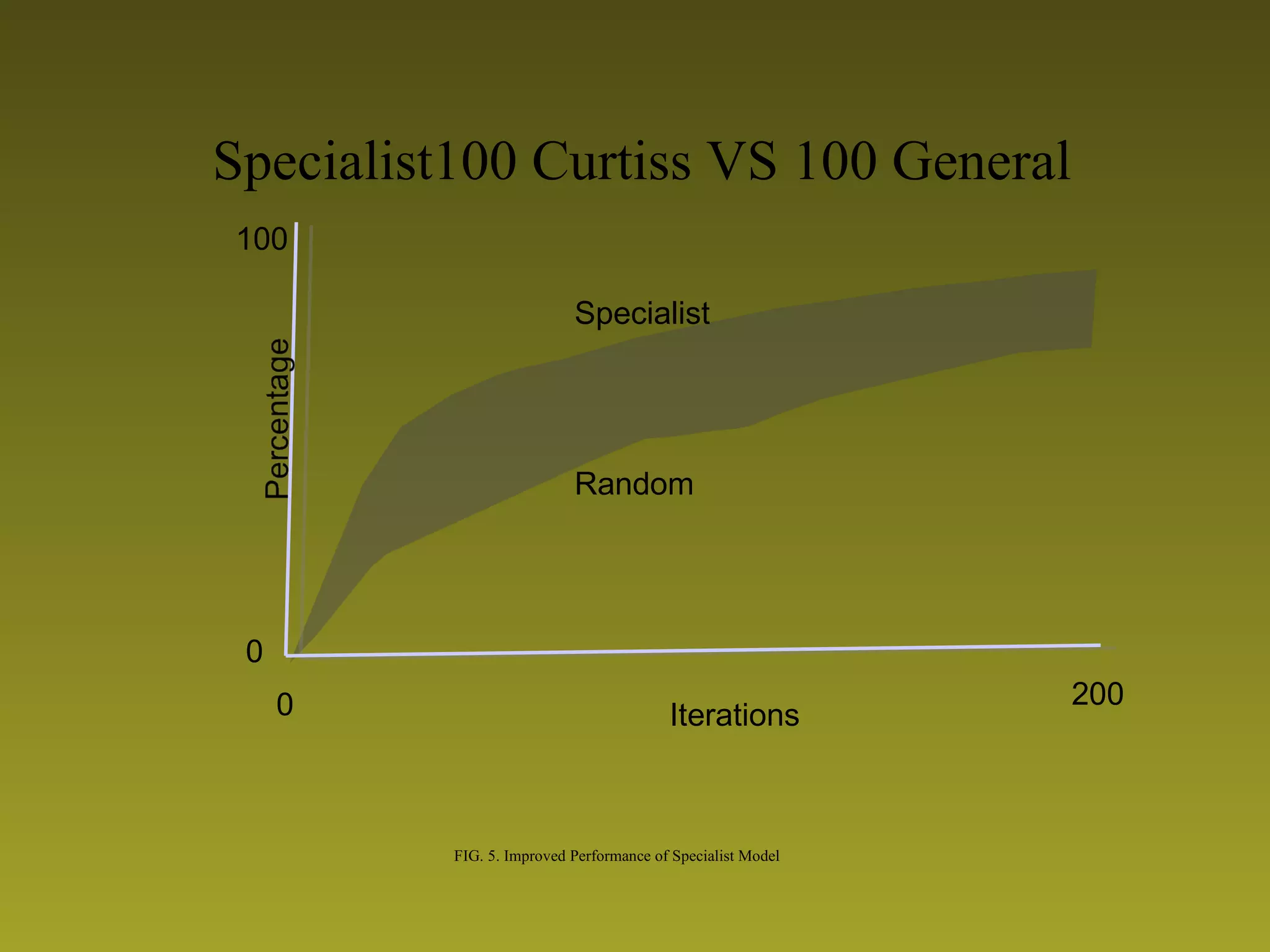
FIG. 5. Improved Performance of Specialist Model Specialist100 Curtiss VS 100 General Iterations 0 200 0 100 Specialist Random
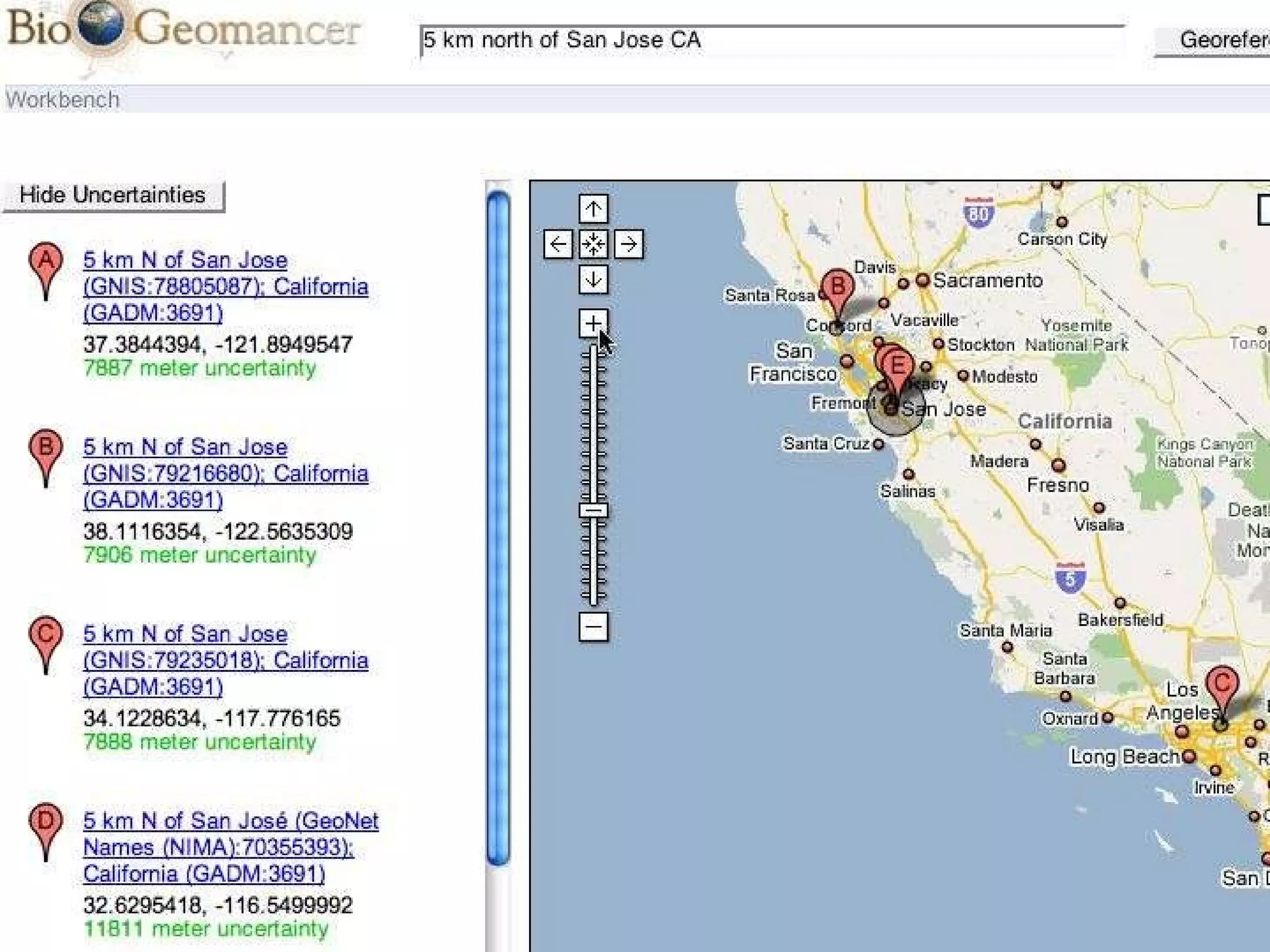
P. Bryan Heidorn 1 , Hong Zhang 1 , Eugene Chung 2   and   BGWG 1 Graduate School of Library and Information Science,  2 Linguistics, University of Illinois  Machine Learning in BioGeomancer’s Locality Specification SPNHC & NSCA 2006
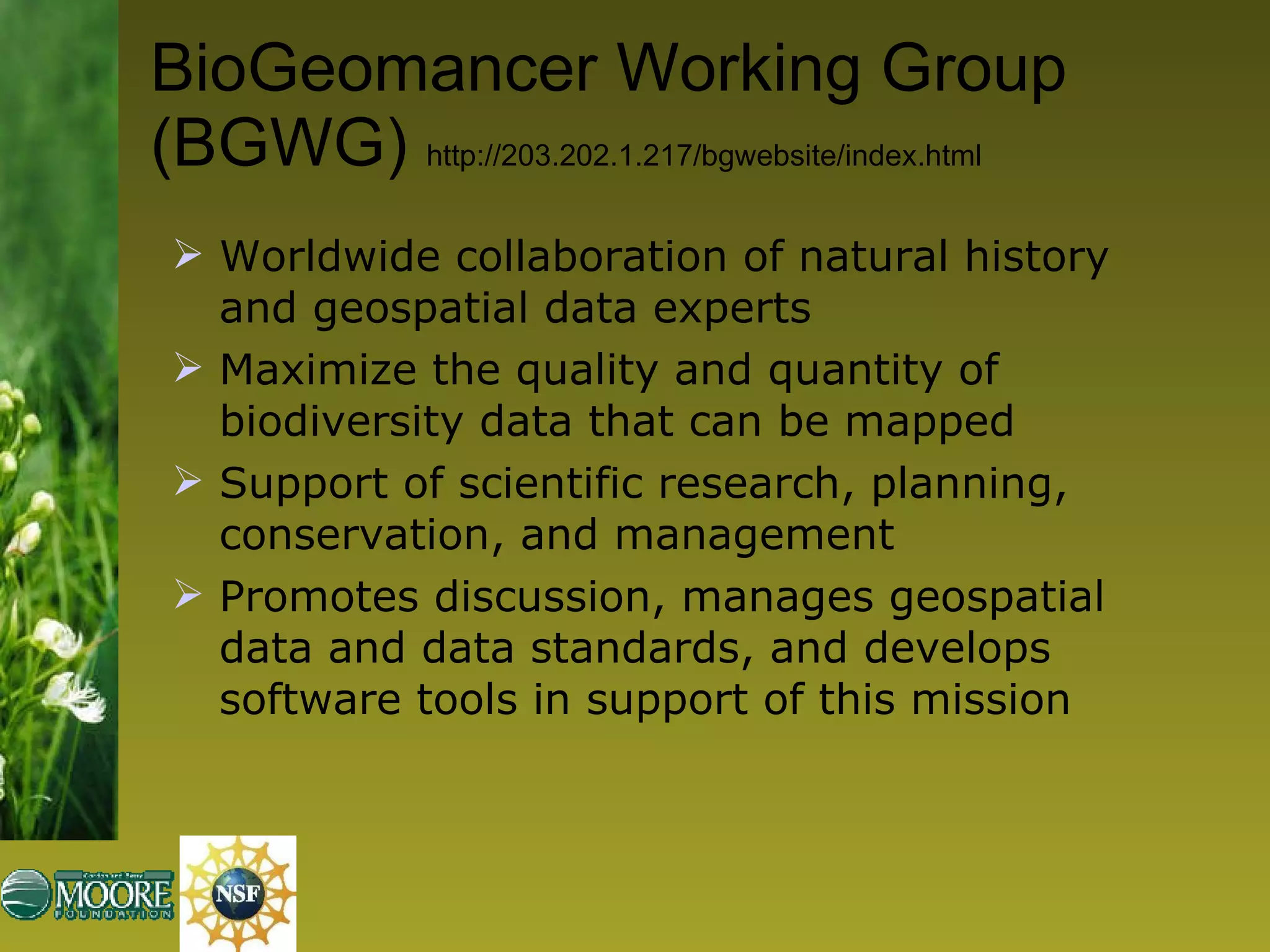
BioGeomancer Working Group (BGWG)  http://203.202.1.217/bgwebsite/index.html Worldwide collaboration of natural history and geospatial data experts Maximize the quality and quantity of biodiversity data that can be mapped  Support of scientific research, planning, conservation, and management Promotes discussion, manages geospatial data and data standards, and develops software tools in support of this mission
Participants
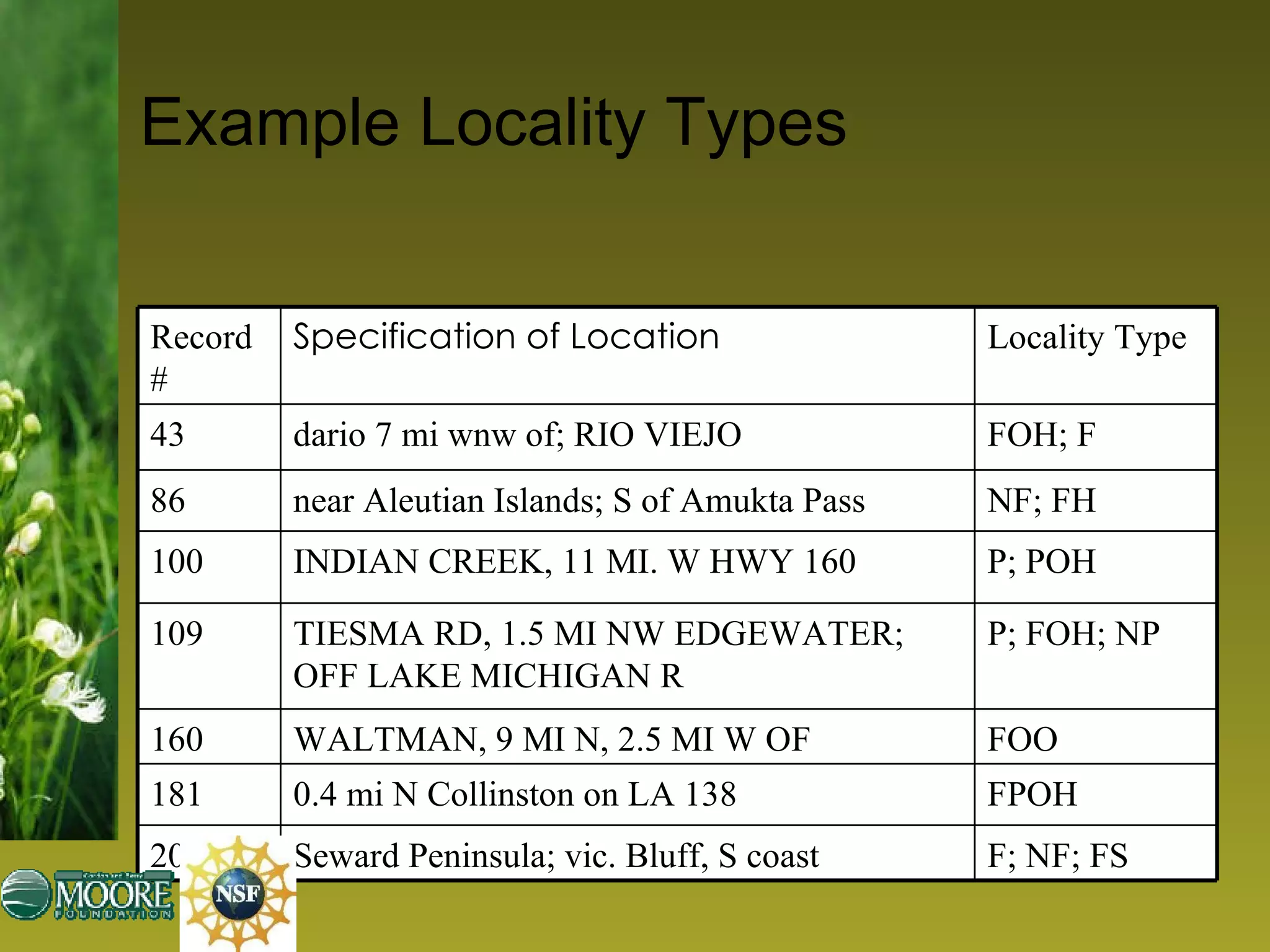
Example Locality Types Record # Specification of Location   Locality  Type 43 dario 7 mi wnw of; RIO VIEJO FOH; F 86 near Aleutian Islands; S of Amukta Pass  NF; FH 100 INDIAN CREEK, 11 MI. W HWY 160 P; POH 109 TIESMA RD, 1.5 MI NW EDGEWATER; OFF LAKE MICHIGAN R  P; FOH; NP 160 WALTMAN, 9 MI N, 2.5 MI W OF  FOO 181 0.4 mi N Collinston on LA 138 FPOH 204 Seward Peninsula; vic. Bluff, S coast F; NF; FS
 
JOH :  offset from a junction at heading e.g. 0.5 mi. W Sandhill and Hagadorn Roads [ FEATURE [  CITY =  Sandhill   ]] [ FEATURE [  ROAD=  Hagadorn Roads  ]] OFFSET   VALUE  = 0.5     DIRECTION= W   UNIT   = mile   JUNCITON  [ FEATURE [  CITY =  Sandhill   ]]   [ FEATURE [  ROAD=  Hagadorn Roads  ]] FRAME
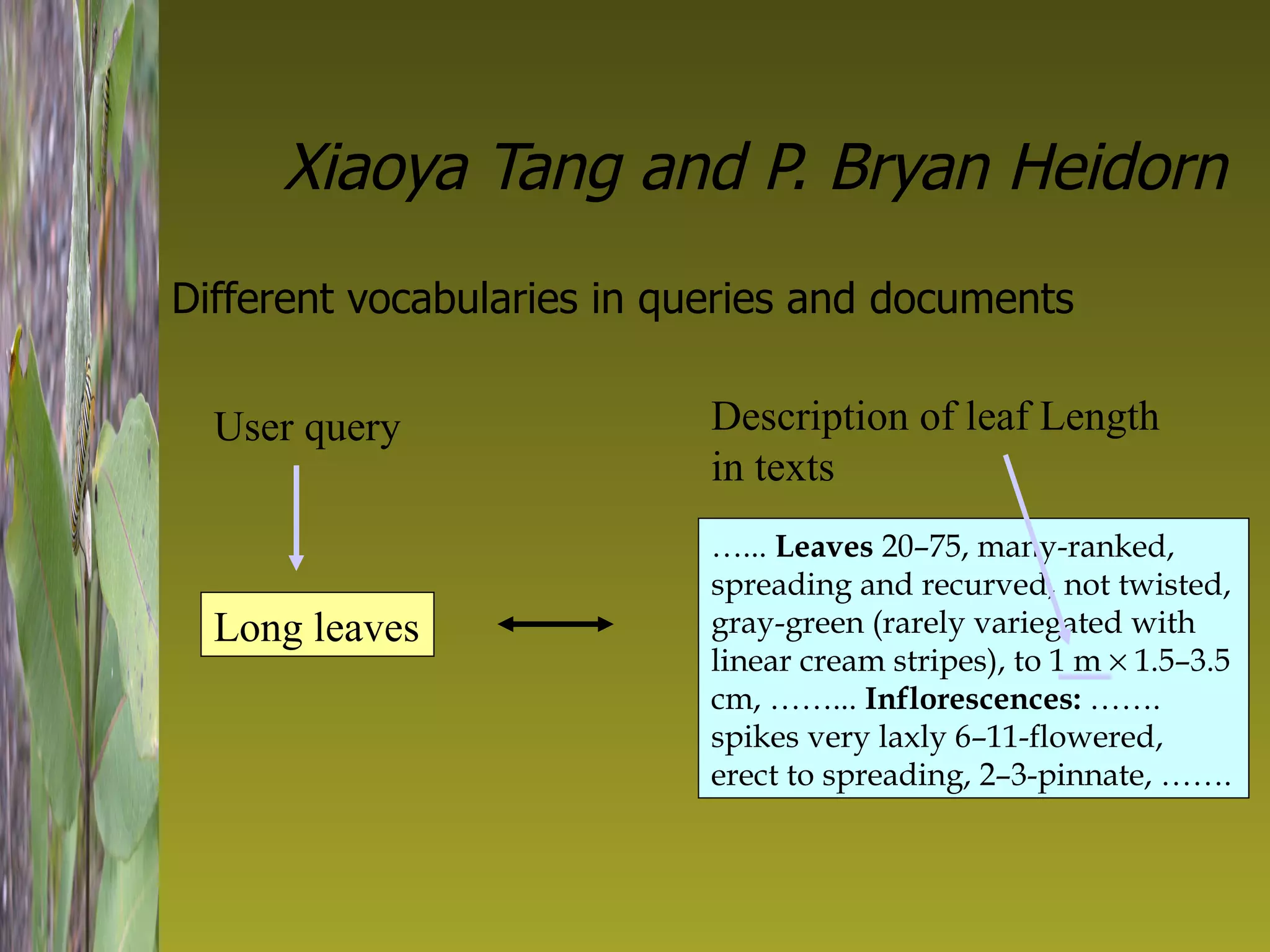
Xiaoya Tang and P. Bryan Heidorn Different vocabularies in queries and documents Long leaves … ...  Leaves  20–75, many-ranked, spreading and recurved, not twisted, gray-green (rarely variegated with linear cream stripes), to 1 m    1.5–3.5 cm, ……...  Inflorescences:  ……. spikes very laxly 6–11-flowered, erect to spreading, 2–3-pinnate, ……. User query Description of leaf Length in texts
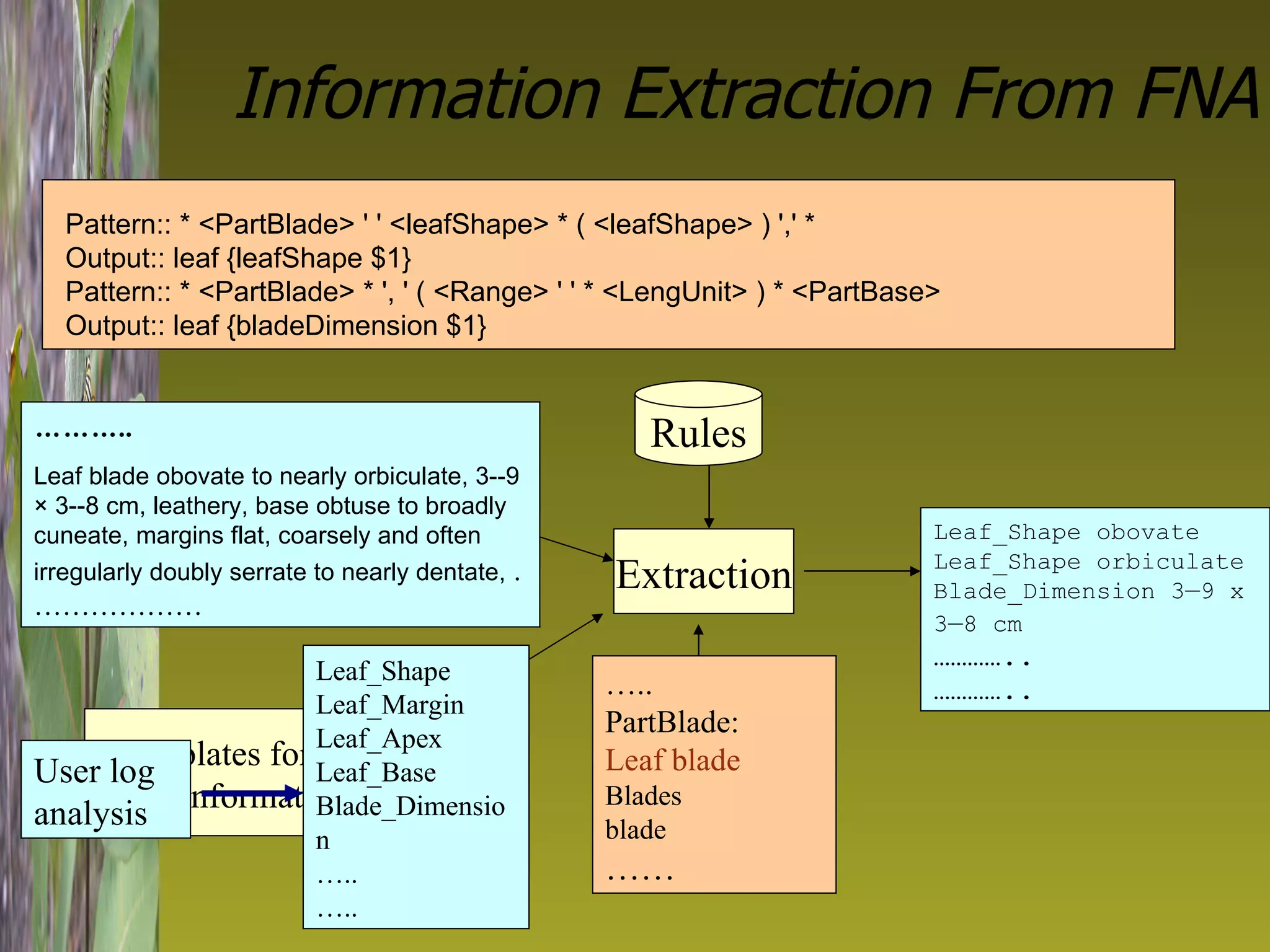
Information Extraction From FNA Templates for  useful information Extraction Rules Structured  information  Leaf_Shape obovate Leaf_Shape orbiculate Blade_Dimension 3—9 x 3—8 cm   ………… .. ………… .. Original documents ……… .. Leaf blade obovate to nearly orbiculate, 3--9 × 3--8 cm, leathery, base obtuse to broadly cuneate, margins flat, coarsely and often irregularly doubly serrate to nearly dentate,   . ……………… Knowledge bases … .. PartBlade: Leaf blade Blades blade …… Pattern:: * <PartBlade> ' ' <leafShape> * ( <leafShape> ) ',' *  Output:: leaf {leafShape $1} Pattern:: * <PartBlade> * ', ' ( <Range> ' ' * <LengUnit> ) * <PartBase> Output:: leaf {bladeDimension $1} User log analysis Leaf_Shape Leaf_Margin Leaf_Apex     Leaf_Base Blade_Dimension … .. … .. 
Results – System Performance NT: number of tasks accomplished in total NTH: number of tasks accomplished per hour TSR: task success rate SSR: search success rate NSST: number of searches to accomplish a task TST: time spent to accomplish a task NDVST: number of documents viewed to  accomplish a task Group NT NTH TSR SSR NSST TST NDVST SEARFA 6.75 8.078 0.860 0.210 4.779 338.8 11.16 SEARF 4.50 3.598 0.568 0.053 9.584 435.2 14.75 Sig.(ANOVA) 0.005 0.005 0.000 0.011 0.000 0.72 0.162
Education Programs Biological Information Specialist Concentration in Data Curation (MSLIS) Certificate of Advanced Study in Data Curation Information and professional education in biodiversity informatics
Biological Information Specialists At present: Biologists at all degree levels self-trained in information technology Information technologists at all degree levels self-trained in biology  (both with gaps in knowledge for many months, years) Differing roles of BIS in large and small
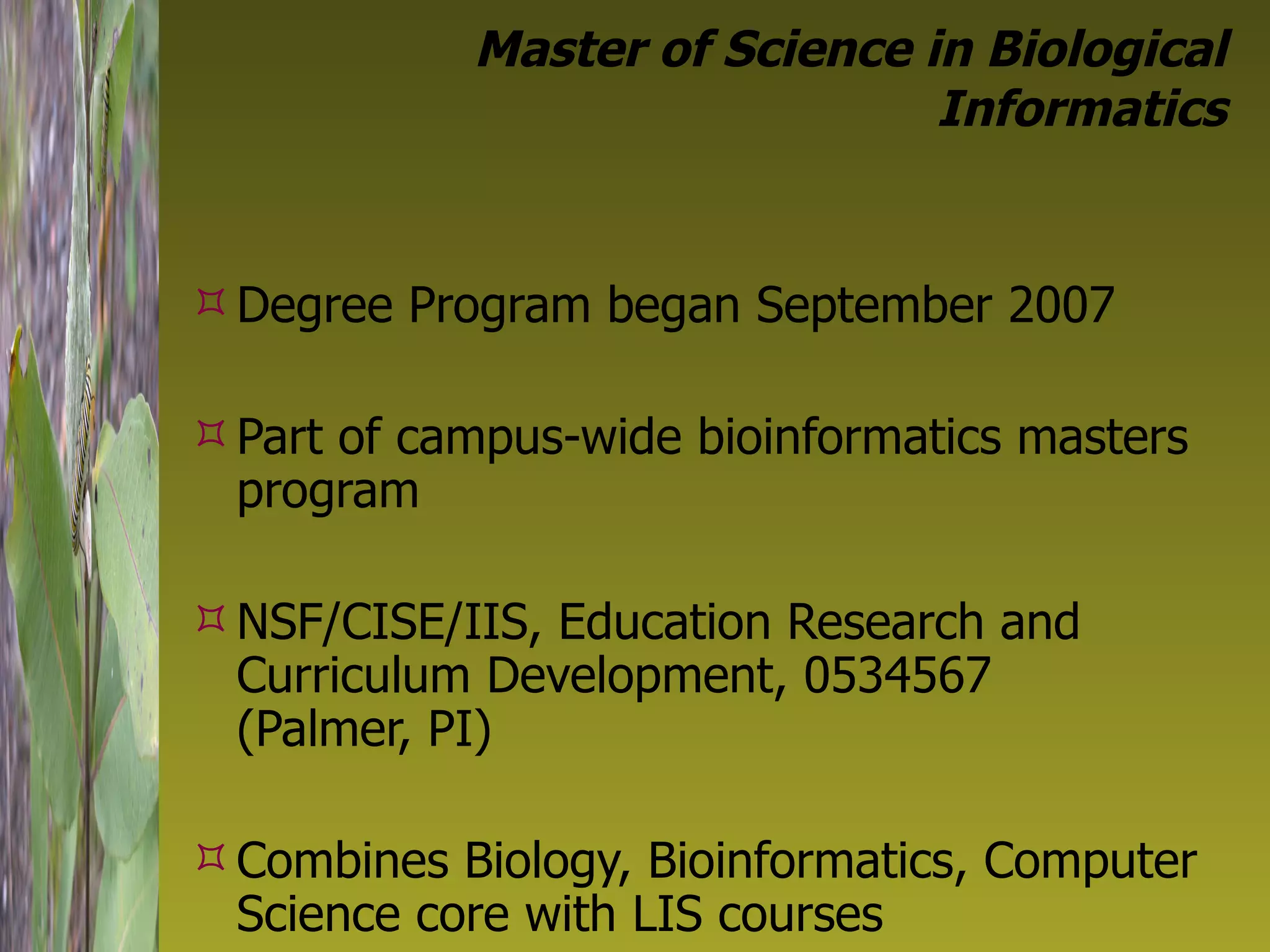
Master of Science in Biological Informatics Degree Program began September 2007  Part of campus-wide bioinformatics masters program NSF/CISE/IIS, Education Research and Curriculum Development, 0534567  (Palmer, PI) Combines Biology, Bioinformatics, Computer Science core with LIS courses
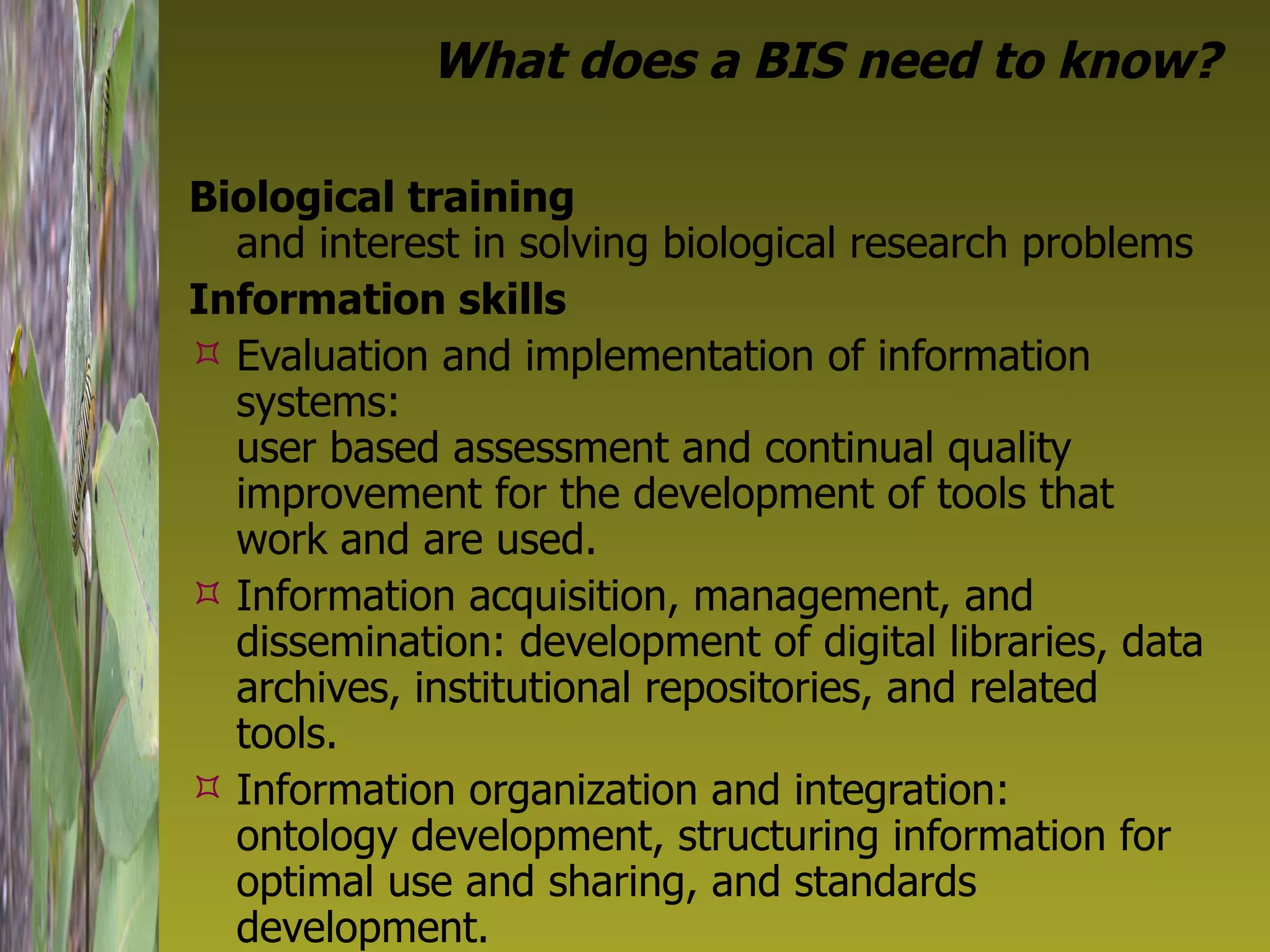
What does a BIS need to know? Biological training   and interest in solving biological research problems Information skills   Evaluation and implementation of information systems:  user based assessment and continual quality improvement for the development of tools that work and are used. Information acquisition, management, and dissemination: development of digital libraries, data archives, institutional repositories, and related tools. Information organization and integration:  ontology development, structuring information for optimal use and sharing, and standards development.
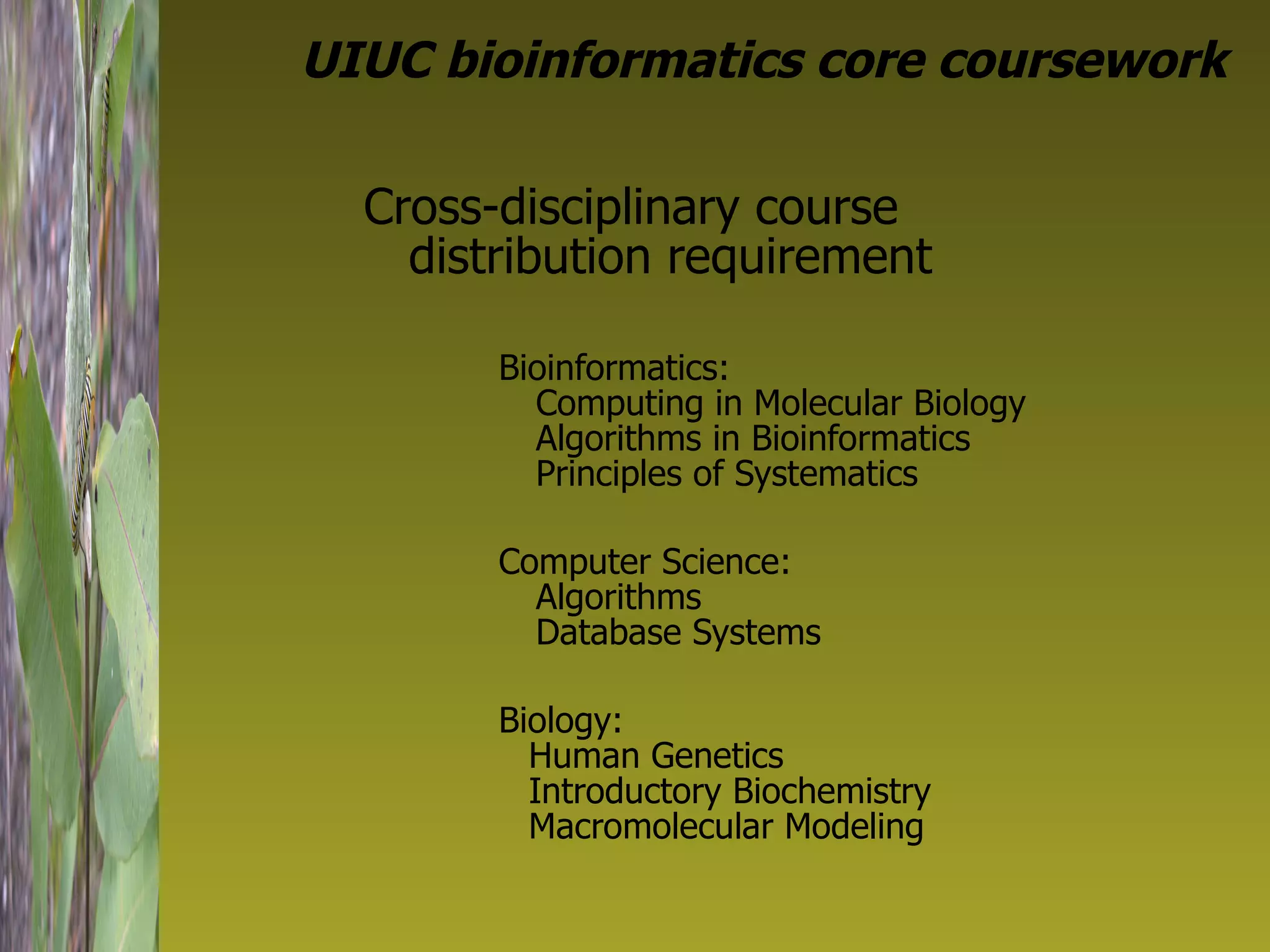
UIUC bioinformatics core coursework Cross-disciplinary course distribution requirement Bioinformatics:  Computing in Molecular Biology Algorithms in Bioinformatics Principles of Systematics Computer Science:  Algorithms Database Systems Biology: Human Genetics Introductory Biochemistry Macromolecular Modeling
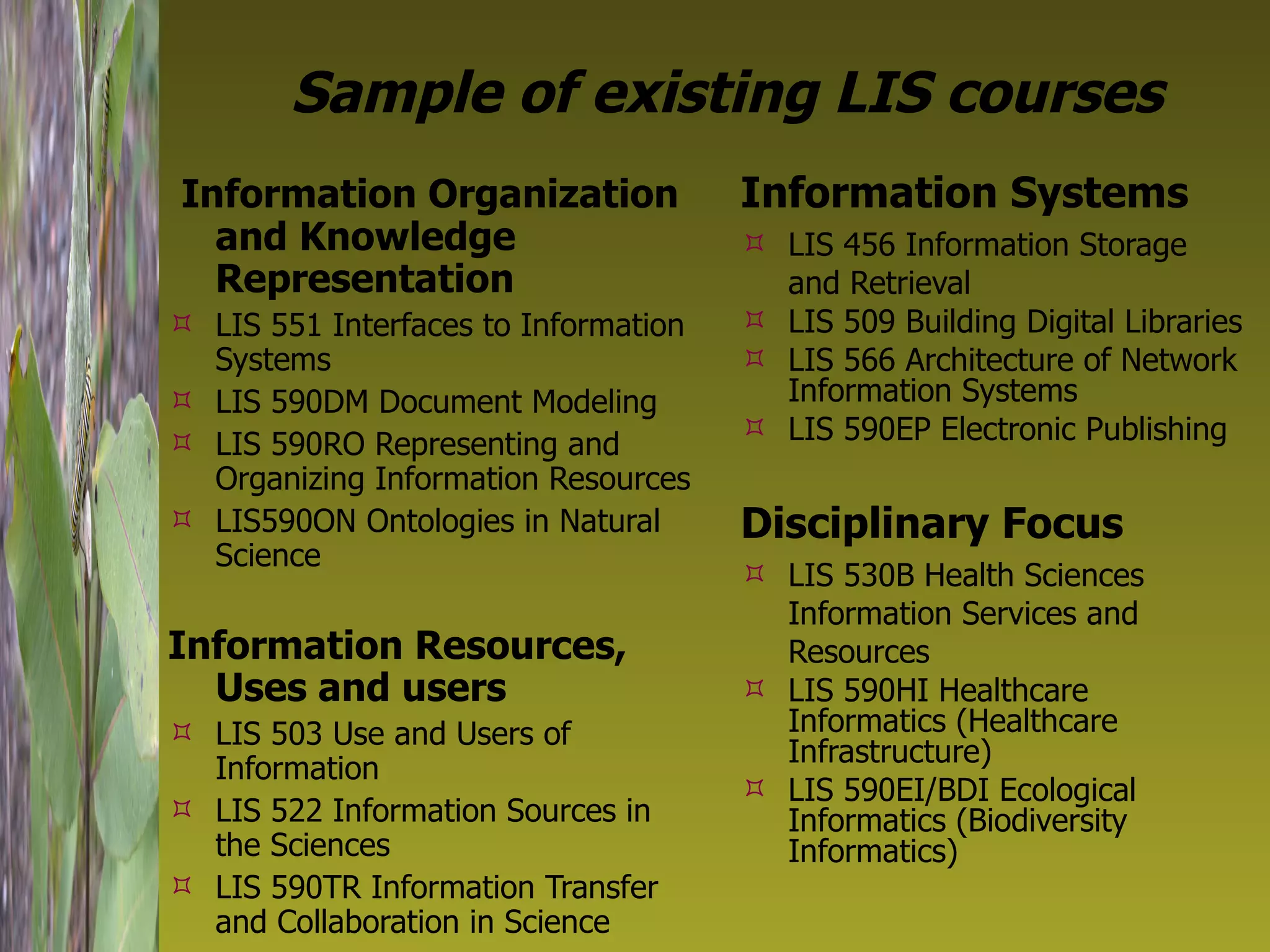
Sample of existing LIS courses Information Organization and Knowledge Representation LIS 551 Interfaces to Information Systems LIS 590DM Document Modeling LIS 590RO Representing and Organizing Information Resources LIS590ON Ontologies in Natural Science Information Resources, Uses and users LIS 503 Use and Users of Information LIS 522 Information Sources in the Sciences LIS 590TR Information Transfer and Collaboration in Science Information Systems LIS 456 Information Storage and Retrieval LIS 509 Building Digital Libraries LIS 566 Architecture of Network Information Systems LIS 590EP Electronic Publishing Disciplinary Focus LIS 530B Health Sciences Information Services and Resources LIS 590HI Healthcare Informatics (Healthcare Infrastructure) LIS 590EI/BDI Ecological Informatics (Biodiversity Informatics)
MSLIS Data Curation Concentration Data Curation Educational Program  (DCEP) IMLS – Laura Bush 21 st  Century Librarian Program,  RE-05-06-0036-06  (Heidorn, PI) Students with the DC concentration will be trained to add value to data and promote sharing across labs and disciplinary specializations
New research directions IGERT Interactive Keys? Focus on integration and scale  Informatics infrastructure as competitive edge Sample areas of development Landinformatics Group Atmospheric science, hydrology, nutrient balance, carbon cycle,  ecology, agronomy BREC Focus on data integration problems across larger range of sciences
Example Service JRS Biodiversity Foundation National Science Foundation Taxonomic Database Working Group
JRS Biodiversity Foundation History: The J.R.S. Biodiversity Foundation was created in January 2004 when the nonprofit publishing company, BIOSIS was sold to Thomson Scientific.  The proceeds from that sale were applied to fund an endowment and create a new grant-making foundation. Mission: The Foundation defined a mission within the field of biodiversity:  To enhance knowledge and promote the understanding of biological diversity for the benefit and sustainability of life on earth. JRS Biodiversity Foundation
JRS Biodiversity Foundation Scope: To further advance the Foundation’s mission a scope was developed as:  Interdisciplinary activities primarily carried out via collaborations in developing countries and economies in transition.  The Foundation Board of Trustees has expressed a particular interest in focusing its grant-making in Africa. Strategic Interest: Within those bounds a considered course has been chosen to:  Advance projects, or parts of biodiversity projects that focus on: (1) collecting data, (2) aggregating, synthesizing, publishing data, and making it more widely available to potential end users, and (3) interpreting and gaining insight from data to inform policy-makers
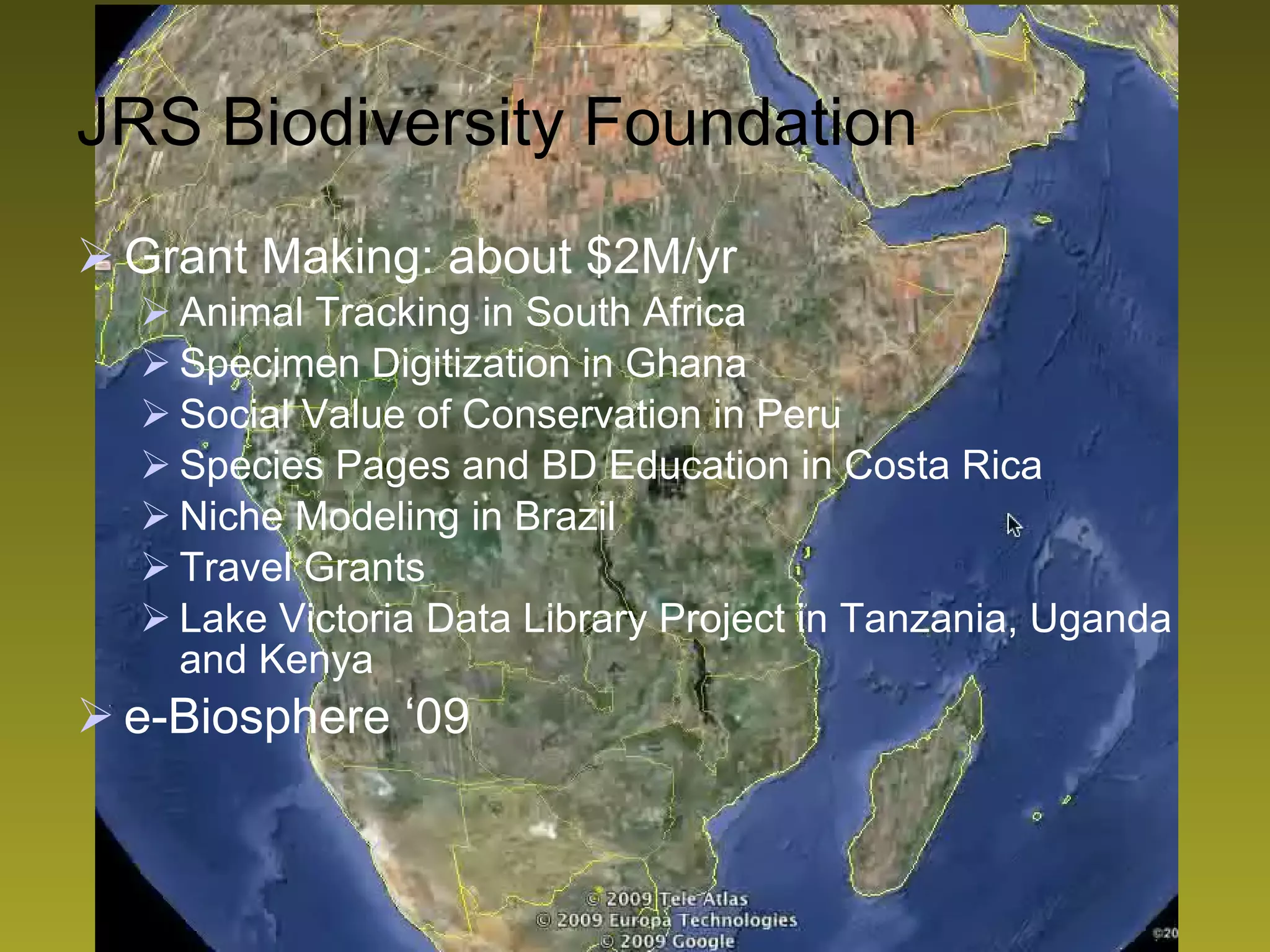
Grant Making: about $2M/yr Animal Tracking in South Africa Specimen Digitization in Ghana Social Value of Conservation in Peru Species Pages and BD Education in Costa Rica Niche Modeling in Brazil Travel Grants Lake Victoria Data Library Project in Tanzania, Uganda and Kenya e-Biosphere ‘09 JRS Biodiversity Foundation
National Science Foundation Advances in Biological Informatics Data Working Group Plant Science Cyberinfrastructure Center (iPlant) Cyber-enabled Discovery and Innovation Hiring Committees Division of Biological Infrastructure Planning
 
 
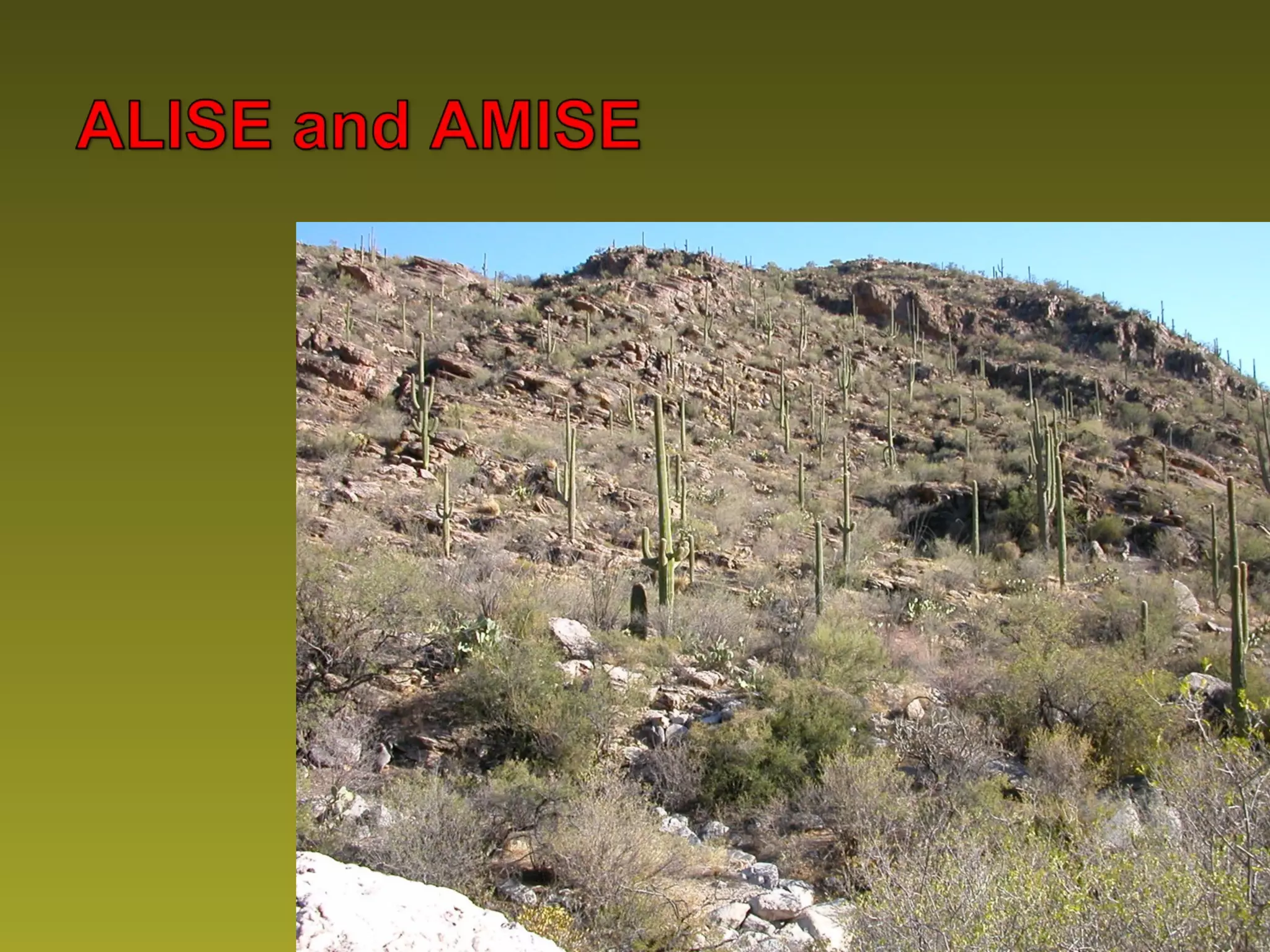
ALISE and AMISE Historical Analysis of 100 Years back Use Library and Museum Resources Prepare for Blitz  K-12 / Graduate / Hobbyist BioDiversity Blitz Build time capsule for Bicentenial in Cultural Heritage Institutions  **Libraries and Museums**

Mblwhoil2010 Heidorn

  • 1.
    Biodiversity Informatics: MiningUntapped Resources February 8, 2010 Marine Biology Laboratory and Woods Hole Oceanographic Institute Library P. Bryan Heidorn Director University of Arizona School of Information Resources and Library Science
  • 2.
    Biodiversity Information DiversityWrongly perceived as bioinformatics and two sets of base-pairs Biodiversity = Data Complexity Requires new information theory and cyberinfrastructure Largely unrecognized as an interesting problem are in computer science
  • 3.
    The problem Informationis not in accessible Computer Science, Information Science and Technology has not addressed the problem
  • 4.
    Dark data isthe data that we know is/was there but we can’t see it. Hubble Space Telescope composite image &quot;ring&quot; of dark matter in the galaxy cluster Cl 0024+17
  • 5.
    Naive View ofScience Data GenBank PDB f ( x )= ax k + o ( x k ) Power Law of Science Data f ( x )= ax k + o ( x k )| X<.20 Data Volume Science Projects and Initiatives
  • 6.
    Does NSF’s DataFollow the Power Law? I do not know but if $1 = X bytes…..
  • 7.
    20-80 RuleThe small are big! Total Grants 9347 $2,137,636,716 20% 80% Number Grants 1869 7478 Total Dollars $1,199,088,125 $938,548,595 Range $6,892,810-$350,000 $350,000- $831
  • 8.
    Related Ideas JohnPorter: Deep verses Wide databases Swanson: Undiscovered Public Knowledge Science Commons: Big Verses Small science
  • 9.
    Where to finddark data Literature/Biodiversity Heritage Library Museum Specimens Field notes (Un)Experimental data sets Citizen Observations
  • 10.
    What is darkdata good for? Ecological Niche Modeling Climate Change niche change prediction Taxonomic Name Resolution Literature Search Support Taxonomic intelligence Key-like – character searching Phenology and Phenology change Food-web / trophic level
  • 11.
    Global Biodiversity InformationFacility has 100s of millions of specimen records Animalia
  • 12.
    Global Earth ObservationSystem of Systems (GEOSS) and Historical Data Unpublished observations of flowing time in Concord by Alfred Hosmer from 1888 to 1902 Photographs of Flowers Blue Hill Observatory meteorological data Richard B. Primack, Abraham J. Miller-Rushing, Daniel Primack, and Sharda Mukunda (2007). Using Photographs to Show the Effects of Climate Change on Flowering Time. Arnoldia 65(1), p2-9. Historical and Current Data need to be in a form that allow for use and reuse.
  • 13.
    Willis CG, RuhfelBR, Primack RB, Miller-Rushing AJ, Losos JB, et al. 2010 Favorable Climate Change Response Explains Non-Native Species' Success in Thoreau's Woods. PLoS ONE 5(1): e8878. doi:10.1371/journal.pone.0008878 Favorable Climate Change Response Explains Non-Native Species’ Success in Thoreau’s Woods
  • 14.
    The problem withMuseum Specimens >1 Billion Natural History Specimens Collected over 250 years / many languages No publishing standards Near infinite classes Your high school teacher lied 6 min / label * 1B labels = 100M hours Saving 1 min = 16.7 Million hours $10/hr = $167,000,000 1/4790 of U.S. deregulation financial bailout
  • 15.
  • 16.
    Automatic Metadata Extraction(Darwin Core) From Museum Specimen Labels … <co> Curtis, </co><hdlc> North American Pl </hdlc><cnl> No.</cnl><cn> 503*</cn> <gn> Polygala</gn><sp> ambigua,</sp><sa> Nutt.,</sa><val> var.</val> <hb> Coral soil,</hb><lc> Cudjoe Key, South Florida. </lc><col> Legit</col><co> A. H. Curtiss.</co><dt>February</dt>… With Qin Wei, Univ of Illinois
  • 17.
  • 18.
    Sample OCR OutputYale University Herbarium ~r-^&quot;&quot;&quot; r-n------- YU.001300 Curtisb, North American Pl C^o.nr r^-n ANTS, No. 503* &quot;^ Polygala ambigna, Nntt., var. Coral soil, Cudjoe Key, South Florida. Legit A. H. Curtiss.
  • 19.
    Label Labels bc- barcode bt - barcode text cm - common/colloquial name cn - collection number co - collector cd - collection date fm - family name ft - footer info
  • 20.
    Label Labels gn- genus name hd - header info in - infra name ina - infra name author lc - location pd - plant description sa - scientific name author sp - species name
  • 21.
    Example Training Record<?xml version=&quot;1.0&quot; encoding=&quot;UTF-8&quot;?> <?oxygen RNGSchema=&quot;http://www3.isrl.uiuc.edu/~TeleNature/Herbis/semanticrelax.rng&quot; type=&quot;xml&quot;?> <labeldata> <bt>Yale University Herbarium </bt><ns> ~r-^&quot;&quot;&quot; r-n------</ns><bc> YU.001300 </bc><co cc=&quot;Curtiss&quot; > Curtisb, </co><hdlc cc=&quot;North American Plants&quot; > North American Pl </hdlc><ns>C^o.nr r^-n ANTS,</ns> <cnl> No.</cnl><cn> 503*</cn><ns> &quot;^</ns> <gn> Polygala</gn><sp> ambigna,</sp><sa> Nntt.,</sa><val> var.</val> <hb> Coral soil,</hb><lc> Cudjoe Key, South Florida. </lc><col> Legit</col><co> A. H. Curtiss.</co> </labeldata>
  • 22.
    Supervised Learning FrameworkGold Classified Labels Training Phase Application Phase Machine Learner Unclassified Labels Segmented Text Silver Classified Labels Segmentation Machine Classifier Unclassified Labels Human Editing Trained Model
  • 23.
    Herbis Experimental Data295 marked up records 74 label states 5-fold cross-validation
  • 24.
  • 25.
  • 26.
    Improved Performance WithField Element Identifiers
  • 27.
  • 28.
    Learning w/ precategorization Gold Labels Machine Learner Model n Classified Labels Class 1 Labels Categor- ization Class 2 Labels Class n Labels Machine Learner Machine Learner Model 2 Model 1 Class 1 Labels Categor- ization Class 2 Labels Class n Labels Machine Classification Machine Classification Machine Classification Classified Labels Classified Labels Unclassified Labels
  • 29.
    FIG. 5. ImprovedPerformance of Specialist Model Specialist100 Curtiss VS 100 General Iterations 0 200 0 100 Specialist Random
  • 30.
    P. Bryan Heidorn1 , Hong Zhang 1 , Eugene Chung 2 and BGWG 1 Graduate School of Library and Information Science, 2 Linguistics, University of Illinois Machine Learning in BioGeomancer’s Locality Specification SPNHC & NSCA 2006
  • 31.
    BioGeomancer Working Group(BGWG) http://203.202.1.217/bgwebsite/index.html Worldwide collaboration of natural history and geospatial data experts Maximize the quality and quantity of biodiversity data that can be mapped Support of scientific research, planning, conservation, and management Promotes discussion, manages geospatial data and data standards, and develops software tools in support of this mission
  • 32.
  • 33.
    Example Locality TypesRecord # Specification of Location Locality Type 43 dario 7 mi wnw of; RIO VIEJO FOH; F 86 near Aleutian Islands; S of Amukta Pass NF; FH 100 INDIAN CREEK, 11 MI. W HWY 160 P; POH 109 TIESMA RD, 1.5 MI NW EDGEWATER; OFF LAKE MICHIGAN R P; FOH; NP 160 WALTMAN, 9 MI N, 2.5 MI W OF FOO 181 0.4 mi N Collinston on LA 138 FPOH 204 Seward Peninsula; vic. Bluff, S coast F; NF; FS
  • 34.
  • 35.
    JOH : offset from a junction at heading e.g. 0.5 mi. W Sandhill and Hagadorn Roads [ FEATURE [ CITY = Sandhill ]] [ FEATURE [ ROAD= Hagadorn Roads ]] OFFSET VALUE = 0.5 DIRECTION= W UNIT = mile JUNCITON [ FEATURE [ CITY = Sandhill ]] [ FEATURE [ ROAD= Hagadorn Roads ]] FRAME
  • 36.
    Xiaoya Tang andP. Bryan Heidorn Different vocabularies in queries and documents Long leaves … ... Leaves 20–75, many-ranked, spreading and recurved, not twisted, gray-green (rarely variegated with linear cream stripes), to 1 m  1.5–3.5 cm, ……... Inflorescences: ……. spikes very laxly 6–11-flowered, erect to spreading, 2–3-pinnate, ……. User query Description of leaf Length in texts
  • 37.
    Information Extraction FromFNA Templates for useful information Extraction Rules Structured information Leaf_Shape obovate Leaf_Shape orbiculate Blade_Dimension 3—9 x 3—8 cm ………… .. ………… .. Original documents ……… .. Leaf blade obovate to nearly orbiculate, 3--9 × 3--8 cm, leathery, base obtuse to broadly cuneate, margins flat, coarsely and often irregularly doubly serrate to nearly dentate, . ……………… Knowledge bases … .. PartBlade: Leaf blade Blades blade …… Pattern:: * <PartBlade> ' ' <leafShape> * ( <leafShape> ) ',' * Output:: leaf {leafShape $1} Pattern:: * <PartBlade> * ', ' ( <Range> ' ' * <LengUnit> ) * <PartBase> Output:: leaf {bladeDimension $1} User log analysis Leaf_Shape Leaf_Margin Leaf_Apex    Leaf_Base Blade_Dimension … .. … .. 
  • 38.
    Results – SystemPerformance NT: number of tasks accomplished in total NTH: number of tasks accomplished per hour TSR: task success rate SSR: search success rate NSST: number of searches to accomplish a task TST: time spent to accomplish a task NDVST: number of documents viewed to accomplish a task Group NT NTH TSR SSR NSST TST NDVST SEARFA 6.75 8.078 0.860 0.210 4.779 338.8 11.16 SEARF 4.50 3.598 0.568 0.053 9.584 435.2 14.75 Sig.(ANOVA) 0.005 0.005 0.000 0.011 0.000 0.72 0.162
  • 39.
    Education Programs BiologicalInformation Specialist Concentration in Data Curation (MSLIS) Certificate of Advanced Study in Data Curation Information and professional education in biodiversity informatics
  • 40.
    Biological Information SpecialistsAt present: Biologists at all degree levels self-trained in information technology Information technologists at all degree levels self-trained in biology (both with gaps in knowledge for many months, years) Differing roles of BIS in large and small
  • 41.
    Master of Sciencein Biological Informatics Degree Program began September 2007 Part of campus-wide bioinformatics masters program NSF/CISE/IIS, Education Research and Curriculum Development, 0534567 (Palmer, PI) Combines Biology, Bioinformatics, Computer Science core with LIS courses
  • 42.
    What does aBIS need to know? Biological training and interest in solving biological research problems Information skills Evaluation and implementation of information systems: user based assessment and continual quality improvement for the development of tools that work and are used. Information acquisition, management, and dissemination: development of digital libraries, data archives, institutional repositories, and related tools. Information organization and integration: ontology development, structuring information for optimal use and sharing, and standards development.
  • 43.
    UIUC bioinformatics corecoursework Cross-disciplinary course distribution requirement Bioinformatics: Computing in Molecular Biology Algorithms in Bioinformatics Principles of Systematics Computer Science: Algorithms Database Systems Biology: Human Genetics Introductory Biochemistry Macromolecular Modeling
  • 44.
    Sample of existingLIS courses Information Organization and Knowledge Representation LIS 551 Interfaces to Information Systems LIS 590DM Document Modeling LIS 590RO Representing and Organizing Information Resources LIS590ON Ontologies in Natural Science Information Resources, Uses and users LIS 503 Use and Users of Information LIS 522 Information Sources in the Sciences LIS 590TR Information Transfer and Collaboration in Science Information Systems LIS 456 Information Storage and Retrieval LIS 509 Building Digital Libraries LIS 566 Architecture of Network Information Systems LIS 590EP Electronic Publishing Disciplinary Focus LIS 530B Health Sciences Information Services and Resources LIS 590HI Healthcare Informatics (Healthcare Infrastructure) LIS 590EI/BDI Ecological Informatics (Biodiversity Informatics)
  • 45.
    MSLIS Data CurationConcentration Data Curation Educational Program (DCEP) IMLS – Laura Bush 21 st Century Librarian Program, RE-05-06-0036-06 (Heidorn, PI) Students with the DC concentration will be trained to add value to data and promote sharing across labs and disciplinary specializations
  • 46.
    New research directionsIGERT Interactive Keys? Focus on integration and scale Informatics infrastructure as competitive edge Sample areas of development Landinformatics Group Atmospheric science, hydrology, nutrient balance, carbon cycle, ecology, agronomy BREC Focus on data integration problems across larger range of sciences
  • 47.
    Example Service JRSBiodiversity Foundation National Science Foundation Taxonomic Database Working Group
  • 48.
    JRS Biodiversity FoundationHistory: The J.R.S. Biodiversity Foundation was created in January 2004 when the nonprofit publishing company, BIOSIS was sold to Thomson Scientific. The proceeds from that sale were applied to fund an endowment and create a new grant-making foundation. Mission: The Foundation defined a mission within the field of biodiversity: To enhance knowledge and promote the understanding of biological diversity for the benefit and sustainability of life on earth. JRS Biodiversity Foundation
  • 49.
    JRS Biodiversity FoundationScope: To further advance the Foundation’s mission a scope was developed as: Interdisciplinary activities primarily carried out via collaborations in developing countries and economies in transition. The Foundation Board of Trustees has expressed a particular interest in focusing its grant-making in Africa. Strategic Interest: Within those bounds a considered course has been chosen to: Advance projects, or parts of biodiversity projects that focus on: (1) collecting data, (2) aggregating, synthesizing, publishing data, and making it more widely available to potential end users, and (3) interpreting and gaining insight from data to inform policy-makers
  • 50.
    Grant Making: about$2M/yr Animal Tracking in South Africa Specimen Digitization in Ghana Social Value of Conservation in Peru Species Pages and BD Education in Costa Rica Niche Modeling in Brazil Travel Grants Lake Victoria Data Library Project in Tanzania, Uganda and Kenya e-Biosphere ‘09 JRS Biodiversity Foundation
  • 51.
    National Science FoundationAdvances in Biological Informatics Data Working Group Plant Science Cyberinfrastructure Center (iPlant) Cyber-enabled Discovery and Innovation Hiring Committees Division of Biological Infrastructure Planning
  • 52.
  • 53.
  • 54.
    ALISE and AMISEHistorical Analysis of 100 Years back Use Library and Museum Resources Prepare for Blitz K-12 / Graduate / Hobbyist BioDiversity Blitz Build time capsule for Bicentenial in Cultural Heritage Institutions **Libraries and Museums**

Editor's Notes

  • #14 Figure 1. Bar graphs depicting phylogenetically corrected mean differences between species groups for two climate change response traits: the correlation coefficient between first flowering day and annual spring temperature for the time period of 1888–1902 (A; i.e., flowering time tracking ), and the shift in mean first flowering day during the period exhibiting the most dramatic increase in mean annual temperature, from 1900–2006 (B; i.e., flowering time shift ).
  • #18 Not handwriting
  • #49 Insert lake victoria overlay
  • #50 Insert lake victoria overlay
  • #51 Insert lake victoria overlay