Mastering the TM
Technique: A
Comprehensive Guide
 The TM technique, also known as Transcendental Meditation, is a widely practiced form of
meditation with deep roots in ancient traditions. Over the years, it has gained significant
attention due to its simplicity, effectiveness, and the profound benefits it offers to both the mind
and body. In this article, we will delve deep into the TM technique, exploring its origins, how it
works, and the remarkable ways it can improve your life.
What is the TM Technique?
Transcendental Meditation (TM) is a simple and natural technique that allows the mind to settle
inward, transcending thought to experience pure awareness. Unlike other forms of meditation
that may require intense concentration or specific postures, TM is effortless and can be practiced
by anyone, regardless of experience. The practice typically involves sitting comfortably with the
eyes closed for about 20 minutes twice a day.
The Origins of TM: A Rich History
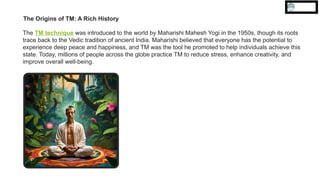
The TM technique was introduced to the world by Maharishi Mahesh Yogi in the 1950s, though its roots
trace back to the Vedic tradition of ancient India. Maharishi believed that everyone has the potential to
experience deep peace and happiness, and TM was the tool he promoted to help individuals achieve this
state. Today, millions of people across the globe practice TM to reduce stress, enhance creativity, and
improve overall well-being.
How Does TM Differ From Other Meditation Techniques?
While many meditation practices focus on mindfulness or concentration, TM allows the mind to
effortlessly transcend into a state of restful alertness. The key difference lies in the use of a mantra
— a specific word or sound that is silently repeated during the meditation session. This mantra acts
as a vehicle for the mind to move beyond surface thoughts and reach a deeper level of
consciousness.
Key Differences between TM and Other Meditation Techniques:
No Focus on Breath Control: Unlike mindfulness practices that often emphasize deep breathing,
TM requires no conscious effort to regulate breath.
Effortlessness: While some meditations require focus or contemplation, TM involves no forced
effort or concentration.
Scientific Backing: TM has been extensively researched, with numerous studies supporting its
effectiveness in reducing stress, anxiety, and improving overall health.
The Science
behind the TM
Technique
One of the reasons TM has gained such widespread popularity is due to the
vast amount of scientific research supporting its benefits. Over 600 studies
have been conducted on the TM technique, showing that regular practice leads
to significant improvements in mental, emotional, and physical health.
Brainwave Changes during TM
Stress Reduction and Cortisol Levels
The Psychological Benefits of TM
Enhances Emotional Stability
Reduces Anxiety and Depression
The Physical
Benefits of
TM
Beyond its psychological benefits, TM also has significant physical
advantages. Regular practice has been shown to improve cardiovascular
health, boost the immune system, and even slow the aging process.
Improved Heart Health
Boosts the Immune System
Slows Aging
How to Get
Started with
TM
If you’re interested in trying TM, it’s important to receive proper instruction
from a certified TM teacher. Unlike other forms of meditation that can be self-
taught, TM is best learned through a personalized course, which typically
includes four days of one-on-one instruction.
Step-by-Step Guide to Learning TM:
Find a Certified TM Teacher
Receive Personalized Instruction
Practice Regularly
Incorporate TM Into Your Daily Routine
Common
Misconception
s about TM
Despite its growing popularity, there are several misconceptions about TM that
need to be addressed.
1. TM is religious or Spiritual
While TM has its roots in ancient traditions, it is not a religious or spiritual
practice. TM is a secular, non-religious technique that can be practiced by
individuals of any belief system or background.
2. TM is Difficult to Learn
Some people assume that TM is complicated or requires years of practice to
master. In reality, TM is one of the easiest meditation techniques to learn and
practice. Its simplicity is what makes it so accessible to people of all ages and
backgrounds.
3. You Need to Sit in a Special Posture
Unlike some meditation practices that require specific postures, TM can be
done while sitting comfortably in a chair. There are no physical demands,
making it a perfect technique for individuals with physical limitations.
Conclusion
The TM technique is a powerful tool for enhancing mental, emotional, and
physical well-being. Its simplicity, combined with its scientifically proven
benefits, makes it one of the most accessible and effective forms of meditation
available today. Whether you’re looking to reduce stress, improve focus, or
boost your overall health, practicing TM can lead to profound positive changes
in your life. By incorporating TM into your daily routine, you can experience a
deep sense of peace, clarity, and inner fulfillment that extends beyond your
meditation sessions.
Transcendental Meditation is more than just a relaxation technique—it's a way
to unlock your full potential and achieve a greater sense of balance and
harmony in your life.
Source Blog:
https://medium.com/@tmgujmeditation/mastering-the-tm-tec
hnique-a-comprehensive-guide-83c717427b14

Mastering the TM Technique: A Comprehensive Guide

  • 1.
    Mastering the TM Technique:A Comprehensive Guide
  • 2.
     The TMtechnique, also known as Transcendental Meditation, is a widely practiced form of meditation with deep roots in ancient traditions. Over the years, it has gained significant attention due to its simplicity, effectiveness, and the profound benefits it offers to both the mind and body. In this article, we will delve deep into the TM technique, exploring its origins, how it works, and the remarkable ways it can improve your life. What is the TM Technique? Transcendental Meditation (TM) is a simple and natural technique that allows the mind to settle inward, transcending thought to experience pure awareness. Unlike other forms of meditation that may require intense concentration or specific postures, TM is effortless and can be practiced by anyone, regardless of experience. The practice typically involves sitting comfortably with the eyes closed for about 20 minutes twice a day.
  • 3.
    The Origins ofTM: A Rich History The TM technique was introduced to the world by Maharishi Mahesh Yogi in the 1950s, though its roots trace back to the Vedic tradition of ancient India. Maharishi believed that everyone has the potential to experience deep peace and happiness, and TM was the tool he promoted to help individuals achieve this state. Today, millions of people across the globe practice TM to reduce stress, enhance creativity, and improve overall well-being.
  • 4.
    How Does TMDiffer From Other Meditation Techniques? While many meditation practices focus on mindfulness or concentration, TM allows the mind to effortlessly transcend into a state of restful alertness. The key difference lies in the use of a mantra — a specific word or sound that is silently repeated during the meditation session. This mantra acts as a vehicle for the mind to move beyond surface thoughts and reach a deeper level of consciousness. Key Differences between TM and Other Meditation Techniques: No Focus on Breath Control: Unlike mindfulness practices that often emphasize deep breathing, TM requires no conscious effort to regulate breath. Effortlessness: While some meditations require focus or contemplation, TM involves no forced effort or concentration. Scientific Backing: TM has been extensively researched, with numerous studies supporting its effectiveness in reducing stress, anxiety, and improving overall health.
  • 5.
    The Science behind theTM Technique One of the reasons TM has gained such widespread popularity is due to the vast amount of scientific research supporting its benefits. Over 600 studies have been conducted on the TM technique, showing that regular practice leads to significant improvements in mental, emotional, and physical health. Brainwave Changes during TM Stress Reduction and Cortisol Levels The Psychological Benefits of TM Enhances Emotional Stability Reduces Anxiety and Depression
  • 6.
    The Physical Benefits of TM Beyondits psychological benefits, TM also has significant physical advantages. Regular practice has been shown to improve cardiovascular health, boost the immune system, and even slow the aging process. Improved Heart Health Boosts the Immune System Slows Aging
  • 7.
    How to Get Startedwith TM If you’re interested in trying TM, it’s important to receive proper instruction from a certified TM teacher. Unlike other forms of meditation that can be self- taught, TM is best learned through a personalized course, which typically includes four days of one-on-one instruction. Step-by-Step Guide to Learning TM: Find a Certified TM Teacher Receive Personalized Instruction Practice Regularly Incorporate TM Into Your Daily Routine
  • 8.
    Common Misconception s about TM Despiteits growing popularity, there are several misconceptions about TM that need to be addressed. 1. TM is religious or Spiritual While TM has its roots in ancient traditions, it is not a religious or spiritual practice. TM is a secular, non-religious technique that can be practiced by individuals of any belief system or background. 2. TM is Difficult to Learn Some people assume that TM is complicated or requires years of practice to master. In reality, TM is one of the easiest meditation techniques to learn and practice. Its simplicity is what makes it so accessible to people of all ages and backgrounds. 3. You Need to Sit in a Special Posture Unlike some meditation practices that require specific postures, TM can be done while sitting comfortably in a chair. There are no physical demands, making it a perfect technique for individuals with physical limitations.
  • 9.
    Conclusion The TM techniqueis a powerful tool for enhancing mental, emotional, and physical well-being. Its simplicity, combined with its scientifically proven benefits, makes it one of the most accessible and effective forms of meditation available today. Whether you’re looking to reduce stress, improve focus, or boost your overall health, practicing TM can lead to profound positive changes in your life. By incorporating TM into your daily routine, you can experience a deep sense of peace, clarity, and inner fulfillment that extends beyond your meditation sessions. Transcendental Meditation is more than just a relaxation technique—it's a way to unlock your full potential and achieve a greater sense of balance and harmony in your life. Source Blog: https://medium.com/@tmgujmeditation/mastering-the-tm-tec hnique-a-comprehensive-guide-83c717427b14